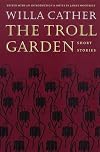
The Troll Garden
by Willa Cather 
On This Page
Description
Virginia-born writer Willa Cather burst onto the American literary scene with this riveting collection of short stories, all loosely yoked together via the theme of the arts, artists, and creativity. Fans of Cather's later work will be surprised at the sophistication of these assured, mannered early pieces, which hint strongly of her admiration for the fiction of Henry James..
Tags
Recommendations





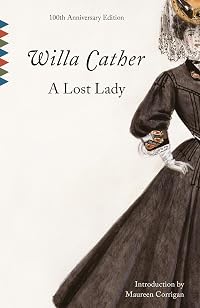
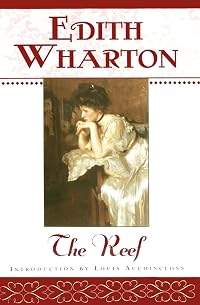


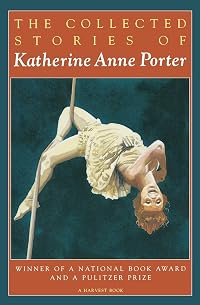










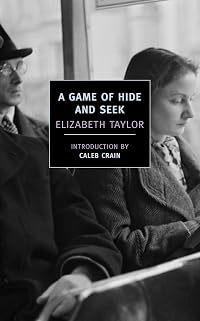













Member Recommendations

aprille Both posit a dichotomy between the gifted artist and the conventional masses
Member Reviews
Willa Cather’s first collection of short stories (originally published in 1905) remains a vital introduction to her style, interests, cultural milieu, and emotional commitments. Katherine Anne Porter’s afterword to this edition is itself distinctively mannered, forthright, and clear-eyed. Cather’s protagonists are often artists, either musicians or painters. They are either cut off from their art through impoverished distance (“A Wagner Matinee”) or through illness (“A Death in the Desert”) or death itself (“The Sculptor’s Funeral” and “The Marriage of Phaedra”). Sometimes wealth is a bar to one’s artistic resonances (“The Garden Lodge”). At other times it is clear that wealth proffers no route to artistic show more sensibility (“Flavia and Her Artists”).
However, the story for which the collection remains known (“Paul’s Case”) is only tangentially connected to the arts. Unless how one lives one’s life could be considered an artistic creation. If so, then Paul has a singular vision of how he wishes to perceive himself and his world, and how he wants to be seen or, perhaps, unseen. His mechanism of achieving this vision (grand theft) ensures its demise. But for that brief period, isn’t he truly alive? Until, that is, he is truly dead. No doubt many young “cases” have been compared to Paul’s case. No doubt many more will. It’s an unsettling and still unsettled debate.
There is a great deal to think about in these stories, some of which have dated. One thing that struck me on this reading was Cather’s assumption, or insistence, that even those living in poverty or near poverty on the American frontier would be longing for, had a right to, the cultural and artistic richness of the whole world. And nothing save distance and means cuts them off from what is after all part of their human condition. I fear that is a viewpoint now vanished.
Still worth reading. show less
However, the story for which the collection remains known (“Paul’s Case”) is only tangentially connected to the arts. Unless how one lives one’s life could be considered an artistic creation. If so, then Paul has a singular vision of how he wishes to perceive himself and his world, and how he wants to be seen or, perhaps, unseen. His mechanism of achieving this vision (grand theft) ensures its demise. But for that brief period, isn’t he truly alive? Until, that is, he is truly dead. No doubt many young “cases” have been compared to Paul’s case. No doubt many more will. It’s an unsettling and still unsettled debate.
There is a great deal to think about in these stories, some of which have dated. One thing that struck me on this reading was Cather’s assumption, or insistence, that even those living in poverty or near poverty on the American frontier would be longing for, had a right to, the cultural and artistic richness of the whole world. And nothing save distance and means cuts them off from what is after all part of their human condition. I fear that is a viewpoint now vanished.
Still worth reading. show less
The Troll Garden was Willa Cather’s first published collection of short stories, it included:
Flavia and Her Artists, The Sculptor’s Funeral , A Death in the Desert, The Garden Lodge, The Marriage of Phaedra, A Wagner Matinee, Paul’s Case
Four of these “The Sculptor’s Funeral,” “A Death in the Desert,” “A Wagner Matinee,” and “Paul’s Case”—were revised and included in Cather’s next collection of stories; Youth and the Bright Medusa, published in 1920. My kindle edition however includes four more stories positioned before the seven stories of The Troll Garden, On the Divide, Eric Hermannson’s Soul, The Enchanted Bluff and The Bohemian Girl.
Those first four stories like her novels My Antonia and O Pioneers! show more Concern themselves primarily with the people of the Frontier prairie towns, the European immigrants and their descendants. While the seven stories that make up The Troll Garden concern the role of the Artist in American society, with their ambitions, disappointments, pretensions and passions. In a way those first four stories don’t really fit with the seven stories of The Troll Garden as the themes differ quite widely, although as The Troll Garden is quite a slight collection, it is nice to have four more stories added to it. I am not going to attempt to review each of the eleven stories in detail, but to give a flavour.
In ‘On the Divide’ and ‘Eric Hermannson’s Soul’ Cather captures the loneliness of immigrant farmers and the influence of religion over these small communities. The Enchanted Bluff is a short, beautiful rendering of childhood dreams. As the six boys who dream of adventure at the start of the story grow up, their dreams are replaced by responsibility and changed fortunes, one of them however, is able to pass on that childhood spirit of adventure to his son.
The Bohemian girl was one of my favourites of these eleven stories, slightly reminiscent for me of My Antonia, it is also the longest. Nils Ericson returns to his childhood home after twelve years away. During his absence, the family has been managed by his indomitable mother and his brothers received land to farm from their father under the terms of the one will that was found, however it is believed that there was a second will, a will some members of the family believe Nils to have. Nils return is therefore greeted with some suspicion by some, although there are some pleased to see him. Clara Vavrika is one, she was the friend and confident of Nils’ childhood, a woman with whom Nils fell in love before he went away. Now Clara is married to Nils’ brother Olaf. Clara’s father keeps and bar nearby and here enjoys Nils’ company while Nils’ younger and impressionable brother is just over-awed to have his exotic wandering brother back home. Nils’ soon realises that his feelings for Clara are not merely in the past, and asks her to run away with him.
In Flavia and her Artists, the first story of the The Troll Garden stories, Flavia is portrayed as a rather delusional woman, seeing herself as the centre of society; she enjoys hosting parties of artists and writers at her home. Her husband Arthur struggles to fit into this society, but when one of her prized guests leaves her party early, only for an article satirising Flavia to appear in print soon after, it is Arthur who proves himself a better person, unknown to the still deluded Flavia.
The Sculptor’s Funeral tells in retrospect the poignant story of Harvey Merrick, a famous sculptor. On a snowy evening a few men gather at the railway sidings to welcome Merrick’s body which is being transported home by train. The locals gather in his family home before the funeral, and it soon appears that only two men really mourn the passing of Harvey Merrick, who in his life had become a ridiculed figure by the people of his home town.
“Just then a distant whistle sounded, and there was a shuffling of feet on the platform. A number of lanky boys of all ages appeared as suddenly and slimily as eels wakened by the crack of thunder; some came from the waiting room, where they had been warming themselves by the red stove, or half-asleep on the slat benches; others uncoiled themselves from baggage trucks or slid out of express wagons. Two clambered down from the driver’s seat of a hearse that stood backed up against the siding. They straightened their stooping shoulders and lifted their heads, and a flash of momentary animation kindled their dull eyes at that cold, vibrant scream, the world-wide call for men. It stirred them like the note of a trumpet; just as it had often stirred the man who was coming home tonight, in his boyhood.”
(from The Sculptor’s funeral)
In the subsequent stories of A Death in the Desert, The Garden Lodge and The Marriage of Phaedra, we meet a singer, dying in Wyoming, a musician reminded of her once more glorious youth by a visiting tenor, and a London artist’s assistant desperate to save the last unfinished work of his master. The penultimate story is A Wagner Matinee – another of my favourites, it’s quite short but absolutely perfectly crafted. It tells the story of a young man from Boston, visited by his now elderly aunt, she who once loved and taught music before rashly marrying a Nebraskan farmer and giving up forever the glories she had known in Boston. The young man sees his aunt is much changed, nothing like the woman she once was, she is dressed oddly, hunched over, and the life seems almost to have gone out of her. Her nephew has arranged to take her to a concert, as the concert progresses a change slowly comes over her.
“Soon after the tenor began the “Prize Song,” I heard a quick drawn breath and turned to my aunt. Her eyes were closed, but the tears were glistening on her cheeks, and I think, in a moment more, they were in my eyes as well. It never really died, then– the soul that can suffer so excruciatingly and so interminably; it withers to the outward eye only; like that strange moss which can lie on a dusty shelf half a century and yet, if placed in water, grows green again. She wept so throughout the development and elaboration of the melody.”
(from A Wagner Matinee)
The final story; Paul’s Case, tells the rather tragic tale of a young man who comes to scorn the teachers at his school and the people of Pittsburgh where he grows up. He feels himself meant for something better. Drawn to the theatre Paul gets work as an Usher at Carnegie Hall which his father makes him give up, finding him work instead in his own company. Paul takes desperate action to escape the life he both despises and fears. Cather’s understanding of her character Paul here is breath-taking; there is a surprising psychological element to this story of a rather damaged young man.
Each of these stories is beautifully evocative and so well written, that it is easy to forget that they form part of some of Willa Cather’s earliest work. show less
Flavia and Her Artists, The Sculptor’s Funeral , A Death in the Desert, The Garden Lodge, The Marriage of Phaedra, A Wagner Matinee, Paul’s Case
Four of these “The Sculptor’s Funeral,” “A Death in the Desert,” “A Wagner Matinee,” and “Paul’s Case”—were revised and included in Cather’s next collection of stories; Youth and the Bright Medusa, published in 1920. My kindle edition however includes four more stories positioned before the seven stories of The Troll Garden, On the Divide, Eric Hermannson’s Soul, The Enchanted Bluff and The Bohemian Girl.
Those first four stories like her novels My Antonia and O Pioneers! show more Concern themselves primarily with the people of the Frontier prairie towns, the European immigrants and their descendants. While the seven stories that make up The Troll Garden concern the role of the Artist in American society, with their ambitions, disappointments, pretensions and passions. In a way those first four stories don’t really fit with the seven stories of The Troll Garden as the themes differ quite widely, although as The Troll Garden is quite a slight collection, it is nice to have four more stories added to it. I am not going to attempt to review each of the eleven stories in detail, but to give a flavour.
In ‘On the Divide’ and ‘Eric Hermannson’s Soul’ Cather captures the loneliness of immigrant farmers and the influence of religion over these small communities. The Enchanted Bluff is a short, beautiful rendering of childhood dreams. As the six boys who dream of adventure at the start of the story grow up, their dreams are replaced by responsibility and changed fortunes, one of them however, is able to pass on that childhood spirit of adventure to his son.
The Bohemian girl was one of my favourites of these eleven stories, slightly reminiscent for me of My Antonia, it is also the longest. Nils Ericson returns to his childhood home after twelve years away. During his absence, the family has been managed by his indomitable mother and his brothers received land to farm from their father under the terms of the one will that was found, however it is believed that there was a second will, a will some members of the family believe Nils to have. Nils return is therefore greeted with some suspicion by some, although there are some pleased to see him. Clara Vavrika is one, she was the friend and confident of Nils’ childhood, a woman with whom Nils fell in love before he went away. Now Clara is married to Nils’ brother Olaf. Clara’s father keeps and bar nearby and here enjoys Nils’ company while Nils’ younger and impressionable brother is just over-awed to have his exotic wandering brother back home. Nils’ soon realises that his feelings for Clara are not merely in the past, and asks her to run away with him.
In Flavia and her Artists, the first story of the The Troll Garden stories, Flavia is portrayed as a rather delusional woman, seeing herself as the centre of society; she enjoys hosting parties of artists and writers at her home. Her husband Arthur struggles to fit into this society, but when one of her prized guests leaves her party early, only for an article satirising Flavia to appear in print soon after, it is Arthur who proves himself a better person, unknown to the still deluded Flavia.
The Sculptor’s Funeral tells in retrospect the poignant story of Harvey Merrick, a famous sculptor. On a snowy evening a few men gather at the railway sidings to welcome Merrick’s body which is being transported home by train. The locals gather in his family home before the funeral, and it soon appears that only two men really mourn the passing of Harvey Merrick, who in his life had become a ridiculed figure by the people of his home town.
“Just then a distant whistle sounded, and there was a shuffling of feet on the platform. A number of lanky boys of all ages appeared as suddenly and slimily as eels wakened by the crack of thunder; some came from the waiting room, where they had been warming themselves by the red stove, or half-asleep on the slat benches; others uncoiled themselves from baggage trucks or slid out of express wagons. Two clambered down from the driver’s seat of a hearse that stood backed up against the siding. They straightened their stooping shoulders and lifted their heads, and a flash of momentary animation kindled their dull eyes at that cold, vibrant scream, the world-wide call for men. It stirred them like the note of a trumpet; just as it had often stirred the man who was coming home tonight, in his boyhood.”
(from The Sculptor’s funeral)
In the subsequent stories of A Death in the Desert, The Garden Lodge and The Marriage of Phaedra, we meet a singer, dying in Wyoming, a musician reminded of her once more glorious youth by a visiting tenor, and a London artist’s assistant desperate to save the last unfinished work of his master. The penultimate story is A Wagner Matinee – another of my favourites, it’s quite short but absolutely perfectly crafted. It tells the story of a young man from Boston, visited by his now elderly aunt, she who once loved and taught music before rashly marrying a Nebraskan farmer and giving up forever the glories she had known in Boston. The young man sees his aunt is much changed, nothing like the woman she once was, she is dressed oddly, hunched over, and the life seems almost to have gone out of her. Her nephew has arranged to take her to a concert, as the concert progresses a change slowly comes over her.
“Soon after the tenor began the “Prize Song,” I heard a quick drawn breath and turned to my aunt. Her eyes were closed, but the tears were glistening on her cheeks, and I think, in a moment more, they were in my eyes as well. It never really died, then– the soul that can suffer so excruciatingly and so interminably; it withers to the outward eye only; like that strange moss which can lie on a dusty shelf half a century and yet, if placed in water, grows green again. She wept so throughout the development and elaboration of the melody.”
(from A Wagner Matinee)
The final story; Paul’s Case, tells the rather tragic tale of a young man who comes to scorn the teachers at his school and the people of Pittsburgh where he grows up. He feels himself meant for something better. Drawn to the theatre Paul gets work as an Usher at Carnegie Hall which his father makes him give up, finding him work instead in his own company. Paul takes desperate action to escape the life he both despises and fears. Cather’s understanding of her character Paul here is breath-taking; there is a surprising psychological element to this story of a rather damaged young man.
Each of these stories is beautifully evocative and so well written, that it is easy to forget that they form part of some of Willa Cather’s earliest work. show less
I am reading all of Willa Cather. I started last year when I was here. They have her complete works in 2 books. I have finished the first book.
En los cuentos que componen El jardín de los gnomos, su primer libro, Willa Cather evoca los sueños románicos, devastados, que obsesionan a sus personajes.
Aug 24, 2021Spanish
Ratings
Members
- Recently Added By
Lists

Books Read in 2024
4,727 works; 128 members
Author Information

154+ Works 46,203 Members
Willa Siebert Cather was born in 1873 in the home of her maternal grandmother in western Virginia. Although she had been named Willela, her family always called her "Willa." Upon graduating from the University of Nebraska in 1895, Cather moved to Pittsburgh where she worked as a journalist and teacher while beginning her writing career. In 1906, show more Cather moved to New York to become a leading magazine editor at McClure's Magazine before turning to writing full-time. She continued her education, receiving her doctorate of letters from the University of Nebraska in 1917, and honorary degrees from the University of Michigan, the University of California, Columbia, Yale, and Princeton. Cather wrote poetry, short stories, essays, and novels, winning awards including the Pulitzer Prize for her novel, One of Ours, about a Nebraska farm boy during World War I. She also wrote The Professor's House, My Antonia, Death Comes for the Archbishop, and Lucy Gayheart. Some of Cather's novels were made into movies, the most well-known being A Lost Lady, starring Barbara Stanwyck. In 1961, Willa Cather was the first woman ever voted into the Nebraska Hall of Fame. She was also inducted into the Hall of Great Westerners in Oklahoma in 1974, and the National Women's Hall of Fame in Seneca, New York in 1988. Cather died on April 24, 1947, of a cerebral hemorrhage, in her Madison Avenue, New York home, where she had lived for many years. (Bowker Author Biography) show less
Willa Cather has a Legacy Library. Legacy libraries are the personal libraries of famous readers, entered by LibraryThing members from the Legacy Libraries group.
Some Editions
Work Relationships
Is contained in
Common Knowledge
- Canonical title*
- El duende del jardín y otros cuentos
- Original title
- The Troll Garden and Selected Stories
- Original publication date
- 1905
- Quotations*
- «La religión sana cientos de corazones por cada uno que amarga, pero cuando destruye, su trabajo es rápido y letal, y allá donde la agonía de la cruz llega, ninguna alegría regresa.»
- Original language*
- Inglés
*Some information comes from Common Knowledge in other languages. Click "Edit" for more information.
Classifications
Statistics
- Members
- 287
- Popularity
- 112,845
- Reviews
- 4
- Rating
- (3.53)
- Languages
- English, Spanish
- Media
- Paper, Ebook
- ISBNs
- 69
- ASINs
- 16