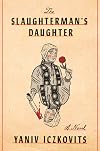
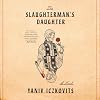
The Slaughterman's Daughter
by Yaniv Iczkovits
On This Page
Description
"An enthralling, picaresque tale of two Jewish sisters in late nineteenth-century Russia, filled with "boundless imagination, wit, and panache" (David Grossman), and enough intrigue and misadventure to stupefy the Cohen brothers. With her reputation as a vilde chaya, a wild beast, Fanny Keismann isn't like the other women in her shtetl-certainly not her obedient and anxiety-ridden sister, Mende, whose "philosopher" of a husband, Zvi-Meir, has run off to Minsk, abandoning her and their two show more children in a small village in Russia's Pale of Settlement. As a young girl, Fanny felt an inexorable pull toward the profession of her father, Grodno's ritual slaughterer, who reluctantly took her under his wing and trained her to be a master shochet-incredibly skilled with a knife. It's a knife that Fanny keeps tied to her right leg even now, as a married woman, cheese farmer, and mother of five, long after she's given up that unsuitable profession. Horrified by her brother-in-law's actions and heedless of the dangers facing a Jewish woman travelling alone in Czarist Russia, Fanny decides that enough is enough and sets off to track down Zvi-Meir and bring him home-with the help of the mute and mysterious ferryman, Zizek Breshov, an ex-soldier with his own sensational past. In irresistible prose, Israeli novelist Yaniv Iczkovits spins a family drama into a far-reaching comedy of errors that soon pits the Czar's army against the Russian secret police and threatens the foundations of the Russian Empire. The Slaughterman's Daughter is a rollicking and unforgettable work of fiction"-- show lessTags
Recommendations



















Member Recommendations
Member Reviews
I no longer recall where I first read about this book but for a long time I kept running into positive (or better) reviews. Then, having bought the book, I kept putting it off because I wasn’t ready to commit myself to a 500-page book. The first thing I should note is that the book reads very easily and quickly; the English translation is largely excellent, though I think it would have benefitted from a glossary (or notes) because its depiction of Jewish life in late 19th-century Russia frequently relies on the use of Yiddish (or less often, Russian) words. The translation is largely good at working a rough explanation into the text but I cannot help wonder how much of the meaning will be lost on someone unfamiliar with the setting. show more Although the story line is simple—a woman embarks on a journey to find her brother-in-law in order to get his consent to a divorce from her sister—most of the book involves a large cast of characters, each of whom is the subject of a substantial backstory. Iczkovits’s accomplishment is to draw a moving portrait of life (primarily, but not only, Jewish life) in that time and place. The narrative is propulsive and clever, the writing is compelling. Best of all, Iczkovits displays a deep understanding of and sensitivity for his subject—and his remarkably diverse—characters. show less
Holy rollicking folk tale cum adventure story cum crime story. What a fun read. Set in the Pale of Settlement in western Russia in the 1800s, this sprawling novel about a few weeks in the lives of some loosely connected Jewish residents of the town of Motal drew me in from the first page.
The slaughterman actually had two daughters and the story relates how Fanny tried to help her sister Mende, whose life has been turned down when her husband decided to leave her and their two children and go to Minsk where he has the idea that he can preach better than anyone anywhere about the Jewish faith. He is so full of himself that he doesn't realize he's a complete buffoon. But why spend time talking about him when this novel overflows with show more unique, outlandish and thoroughly entertaining characters who interact and produce shenanigans like you seldom see in literature.
Fanny, for instance. Her father trained her well and when she decides that the use of the knife she has stashed in her underwear is needed, well, someone is going to end up dead. She allies herself with the nearly mute Zizek Breshof, whose claim to fame is that he takes his boat from one shore of the Yaselda across to the other without saying a word. But Zizek has a pretty big secret, as do many, er, most of the characters. At any rate, they set off for Minsk, to find and drag home Mende's wayward husband. Along the way, it's just one wild adventure after another involving the Russian Secret Police, the Russian Army and before you know it Fanny and her accomplices (oh yes, she picks up a couple of additional cohorts) are wanted for a series of crimes.
Sometimes the author had so much to say that he got in his own way trying to describe a situation and between the Jewish terms, the conditions in the Army and the vast area in Russia that the book covered, there was a bit of research needed. But this was an absolutely wonderful and enjoyable novel. If you like the Coen Brothers movies, this may be a book for you. show less
The slaughterman actually had two daughters and the story relates how Fanny tried to help her sister Mende, whose life has been turned down when her husband decided to leave her and their two children and go to Minsk where he has the idea that he can preach better than anyone anywhere about the Jewish faith. He is so full of himself that he doesn't realize he's a complete buffoon. But why spend time talking about him when this novel overflows with show more unique, outlandish and thoroughly entertaining characters who interact and produce shenanigans like you seldom see in literature.
Fanny, for instance. Her father trained her well and when she decides that the use of the knife she has stashed in her underwear is needed, well, someone is going to end up dead. She allies herself with the nearly mute Zizek Breshof, whose claim to fame is that he takes his boat from one shore of the Yaselda across to the other without saying a word. But Zizek has a pretty big secret, as do many, er, most of the characters. At any rate, they set off for Minsk, to find and drag home Mende's wayward husband. Along the way, it's just one wild adventure after another involving the Russian Secret Police, the Russian Army and before you know it Fanny and her accomplices (oh yes, she picks up a couple of additional cohorts) are wanted for a series of crimes.
Sometimes the author had so much to say that he got in his own way trying to describe a situation and between the Jewish terms, the conditions in the Army and the vast area in Russia that the book covered, there was a bit of research needed. But this was an absolutely wonderful and enjoyable novel. If you like the Coen Brothers movies, this may be a book for you. show less
Enough Already
Translated by Orr Scharf
Read by Tovah Feldshuh
Length: 17 hrs and 53 mins
The story starts in the shtetl of Motal in Pale. For readers unfamiliar with the life of Ashkenazi Jews and Russia in the late 19th century, parts of The Slaughterman’s Daughter may seem confusing at first. But in that case, you’ll quickly work it out as you join Mende and Zizek and The Matchstick on their journey from Motel to Minsk and back in the late 19th century Pale.
Zvi-Mei, Mende’s husband has done the unthinkable for the tight-knit community of Motel. He’s run away and no one knows where he is or why left. And if that’s not enough, Mende’s sister Fanny has also left her spouse and their three children at two minutes past midnight, show more crossing the Yazelda river which divides Motel from the lands of the gentiles with the help of the mute ferryman Zizek, an ex-soldier of the Czar’s army.
In case the gentiles among you may be thinking you’ll never get used to the names and terminology, you will. Plus you’ll be helped along by the occasional use of nicknames. Such as “The Matchstick”, the emaciated cantor who cannot sing. The Matchstick earns his money from donations made by those unlucky enough to hear him singing and who pay for him to stop.
The story follows the journey of Fanny and Zizel who are traveling from Motel to Minsk in search of Mende’s Zvi-Mei. Unfortunately no one back in Motel knows Fanny’s motive for leaving, so the scandals of the families of Zvi-Mei and Fanny remain the talk of the town for many days. “Who leaves their husband at two minutes after midnight?” the shtetl gossips ask of Fanny.
The journey from Motel to Minsk takes many days as the mode of travel is horse and cart. And although there’s not much in the way of conversation, Zizek being mute, things get lively along the way and there are many adventures as Mende and Zizek meet and largely overcome inevitable obstacles.
Fanny is forced to kill several gentile bandits and thus becomes a wanted woman. After she and the ferryman flee from the scene of the slaughter, they pick up a few fellow travelers, one of which is The Matchstick. They manage to hide out in safe-houses and at times they are forced to camp. During his time in one of the hiding places, The Matchstick takes a wife. She consists of two planks of wood connected by a piece of tattered fabric. His love for Olga is deep and true. It lasts throughout the trip to Minsk, and back.
Being as it’s during the time of the Russian Czar, there’s the Imperial Army, the rebel army, and Russian Secret Police, as well as local administrations both Jewish and gentile. Throw them all into the pot and you have some story.
It’s a story well-told. Life in the shtetl of Motel is exquisitely described. The reader can imagine the market square and the various stall-holders. The daily life of the people of Motel comes to life and it is as if we are watching a picture being painted of a time past. Knowing from our vantage point what would happen fifty years on to the people of shtetls such of Motel adds to our feelings for these fellow humans who lived not so long ago.
It’s a book full of irony, humor, adventure and a deep look in a light-heated way, at the human condition.
I highly recommend this book. show less
Translated by Orr Scharf
Read by Tovah Feldshuh
Length: 17 hrs and 53 mins
The story starts in the shtetl of Motal in Pale. For readers unfamiliar with the life of Ashkenazi Jews and Russia in the late 19th century, parts of The Slaughterman’s Daughter may seem confusing at first. But in that case, you’ll quickly work it out as you join Mende and Zizek and The Matchstick on their journey from Motel to Minsk and back in the late 19th century Pale.
Zvi-Mei, Mende’s husband has done the unthinkable for the tight-knit community of Motel. He’s run away and no one knows where he is or why left. And if that’s not enough, Mende’s sister Fanny has also left her spouse and their three children at two minutes past midnight, show more crossing the Yazelda river which divides Motel from the lands of the gentiles with the help of the mute ferryman Zizek, an ex-soldier of the Czar’s army.
In case the gentiles among you may be thinking you’ll never get used to the names and terminology, you will. Plus you’ll be helped along by the occasional use of nicknames. Such as “The Matchstick”, the emaciated cantor who cannot sing. The Matchstick earns his money from donations made by those unlucky enough to hear him singing and who pay for him to stop.
The story follows the journey of Fanny and Zizel who are traveling from Motel to Minsk in search of Mende’s Zvi-Mei. Unfortunately no one back in Motel knows Fanny’s motive for leaving, so the scandals of the families of Zvi-Mei and Fanny remain the talk of the town for many days. “Who leaves their husband at two minutes after midnight?” the shtetl gossips ask of Fanny.
The journey from Motel to Minsk takes many days as the mode of travel is horse and cart. And although there’s not much in the way of conversation, Zizek being mute, things get lively along the way and there are many adventures as Mende and Zizek meet and largely overcome inevitable obstacles.
Fanny is forced to kill several gentile bandits and thus becomes a wanted woman. After she and the ferryman flee from the scene of the slaughter, they pick up a few fellow travelers, one of which is The Matchstick. They manage to hide out in safe-houses and at times they are forced to camp. During his time in one of the hiding places, The Matchstick takes a wife. She consists of two planks of wood connected by a piece of tattered fabric. His love for Olga is deep and true. It lasts throughout the trip to Minsk, and back.
Being as it’s during the time of the Russian Czar, there’s the Imperial Army, the rebel army, and Russian Secret Police, as well as local administrations both Jewish and gentile. Throw them all into the pot and you have some story.
It’s a story well-told. Life in the shtetl of Motel is exquisitely described. The reader can imagine the market square and the various stall-holders. The daily life of the people of Motel comes to life and it is as if we are watching a picture being painted of a time past. Knowing from our vantage point what would happen fifty years on to the people of shtetls such of Motel adds to our feelings for these fellow humans who lived not so long ago.
It’s a book full of irony, humor, adventure and a deep look in a light-heated way, at the human condition.
I highly recommend this book. show less
Set in Russia’s Pale of Settlement in the 1800s, this wild tale is centered on sisters Mende and Fanny. Several months earlier, Mende’s husband Zvi-Meir left his family and is reportedly in Minsk. Distressed at seeing her sister in such a distraught and lonely state, Fanny steals away in the middle of the night to find Zvi-Meir and hold him to account. Leaving behind her husband and children, she enlists help from Zizek, a mute ex-soldier with a mysterious past who makes his living as a ferryman. Early in their journey Fanny and Zizek encounter a nefarious trio, and let’s just say Fanny employs skills learned from her father. Now the police are on their trail, but the investigation makes the proverbial mountain of a molehill with show more both tragic and comic consequences.
I found the narrative difficult to follow at first because of its large cast, unfamiliar references, and a general sense of confusion intentionally created by the author. Once I powered through this early stage, I found myself caught up in a crazy caper. I was particularly impressed with the translation which brought this tale to life. Although I felt a bit exhausted by the end, this was a unique reading experience with some unforgettable characters. show less
I found the narrative difficult to follow at first because of its large cast, unfamiliar references, and a general sense of confusion intentionally created by the author. Once I powered through this early stage, I found myself caught up in a crazy caper. I was particularly impressed with the translation which brought this tale to life. Although I felt a bit exhausted by the end, this was a unique reading experience with some unforgettable characters. show less
Unusual book filled with great characters, fascinating plot, interesting setting. Fanny Feismann's sister's husband just left her in their small Russian village in the late 19th Century. Fanny is determined to go to Minsk to get him to sign a paper of divorce so that her sister can get on with her life. As the daugther of the Jewish slaugherman, Fanny has taken up his trade and has been known as the "wild child" even as a mother of four.
Fanny somehow convinces the ferryman to accompany her on her journey to Minsk. Along the way, they are set upon by bandits and Fanny uses her slaughtering knife and kills several. She and Zizek, the ferryman are now outlaws soon to be hunted down by an obsessive head of the Russian Secret Police, Novak. show more Novak sees some sort of treason everywhere he looks and he and his hapless assistant take after Fanny and Zizek.
As the story unfolds, Zizek isn't really Zizek but a boy who was taken from his Jewish home to serve in the army. The pair takes refuge in a tavern run by Zizek's life time "friend/acquaintance" who has rejected his Jewish heritage. Soon three are on the run and then joined by a strange Jewish cantor who can't sing who gets caught up in the mess.
A mess it is! The story has so many twists and turn, so many funny situations, and so many stories behind the story. There are many Jewish terms, etc. that I had to look up, but it was a totally enjoyable read. Funny in the form of a Coen Brothers movie.
And, it had two endings! show less
Fanny somehow convinces the ferryman to accompany her on her journey to Minsk. Along the way, they are set upon by bandits and Fanny uses her slaughtering knife and kills several. She and Zizek, the ferryman are now outlaws soon to be hunted down by an obsessive head of the Russian Secret Police, Novak. show more Novak sees some sort of treason everywhere he looks and he and his hapless assistant take after Fanny and Zizek.
As the story unfolds, Zizek isn't really Zizek but a boy who was taken from his Jewish home to serve in the army. The pair takes refuge in a tavern run by Zizek's life time "friend/acquaintance" who has rejected his Jewish heritage. Soon three are on the run and then joined by a strange Jewish cantor who can't sing who gets caught up in the mess.
A mess it is! The story has so many twists and turn, so many funny situations, and so many stories behind the story. There are many Jewish terms, etc. that I had to look up, but it was a totally enjoyable read. Funny in the form of a Coen Brothers movie.
And, it had two endings! show less
Set in the Pale of Settlement of Russia in 1894, where the majority of the country’s Jewish population resides, the novel The Slaughterman’s Daughter presents the story of Fanny, who decides to leave her family to pursue her sister’s husband after he abandons his wife and children. Fanny’s father’s profession as a butcher engaged in ritual slaughter of animals has taught her how to use a blade to precisely kill. From her childhood, she has kept a knife strapped to her hip for protection, and it is a weapon she will put to good use as this adventure develops.
Joining her is another Jew, a former Russian soldier who has become renowned as “the Father” throughout the country’s military, along with several other Jews picked show more up along the way. It makes for an engaging cast. In pursuit of them for supposed crimes committed along the way is a secret policeman, Colonel Piotr Novik. He ultimately becomes the story’s primary character.
The novel presents a rich tapestry of the Russian czarist regime and its discrimination against the Jewish population living in the Pale. Novik, in his hunt to capture Fanny and her companions, begins to question the guilt of the individuals he is seeking to capture, and his doubts play a major part in the book’s conclusion.
While at times the plot seems overblown, Iczkovits’ engaging and colorful tale captures the tenure of the times. It proves to be an adventure with plenty of twists and turns, guaranteed to keep readers delightfully on the edge of their seats. show less
Joining her is another Jew, a former Russian soldier who has become renowned as “the Father” throughout the country’s military, along with several other Jews picked show more up along the way. It makes for an engaging cast. In pursuit of them for supposed crimes committed along the way is a secret policeman, Colonel Piotr Novik. He ultimately becomes the story’s primary character.
The novel presents a rich tapestry of the Russian czarist regime and its discrimination against the Jewish population living in the Pale. Novik, in his hunt to capture Fanny and her companions, begins to question the guilt of the individuals he is seeking to capture, and his doubts play a major part in the book’s conclusion.
While at times the plot seems overblown, Iczkovits’ engaging and colorful tale captures the tenure of the times. It proves to be an adventure with plenty of twists and turns, guaranteed to keep readers delightfully on the edge of their seats. show less
The reviewers were far more enthusiastic about this book than I was. The pace was glacial, and I could not relate at all to the characters. Maybe it is the translation - or maybe it is just not for me. I have had two attempts at reading this - and once again I have given up.
Members
- Recently Added By
Lists

Top Five Books of 2021
604 works; 180 members

Anticipated 2021 Reads
231 works; 7 members

Economist Books of the Year 2020
41 works; 5 members
Author Information

6 Works 187 Members
Yaniv Iczkovits is Post-doctoral researcher at Columbia University, USA, and the New School for Social Research. He has been researching and teaching Wittgenstein and early twentieth century moral philosophy for the past ten years. Iczkovits is a published writer whose books have been translated into several languages, and a political activist for show more human and animal rights. show less
Some Editions
Awards and Honors
Common Knowledge
- Canonical title
- The Slaughterman's Daughter
- Original title
- תיקון אחר חצות
- Original publication date
- 2015-06
- Important places
- Belarus
- Dedication*
- Voor mijn dochters Darja en Alona
- First words*
- Uit het Hebreeuwse weekblad Hamagid (De Prediker) nummer 6, donderdag 2 adar 5654 (8 februari 1894):
NOODKREET VAN EEN ONGELUKKIGE VROUW
Mijn smeekbede aan de geachte lezers om erbarmen te hebben met mij,... (show all) een eenzame, bedroefde vrouw, wier man haar heeft verlaten met Pesach, slechts vijf jaar na ons huwelijk, en wij hebben drie gezonde kinderen. - Last words*
- (Click to show. Warning: May contain spoilers.)Zjizjek knikt haar toe en roeit door naar de andere oever.
- Original language
- Hebrew
*Some information comes from Common Knowledge in other languages. Click "Edit" for more information.
Classifications
- Genres
- Fiction and Literature, General Fiction, Historical Fiction, Mystery
- DDC/MDS
- 892.437 — Literature & rhetoric Literatures of other languages Afro-Asiatic literatures Jewish, Israeli, and Hebrew Hebrew fiction 2000–
- LCC
- PJ5055.24 .C94 .T5513 — Language and Literature Oriental languages and literatures Oriental philology and literature Hebrew Literature Individual authors and works
- BISAC
Statistics
- Members
- 176
- Popularity
- 186,425
- Reviews
- 7
- Rating
- (3.97)
- Languages
- 5 — Dutch, English, French, German, Italian
- Media
- Paper, Audiobook, Ebook
- ISBNs
- 15
- ASINs
- 4