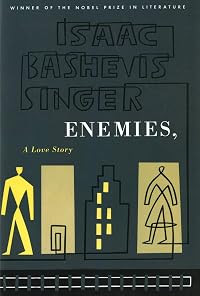
Enemies, A Love Story
by Isaac Bashevis Singer
On This Page
Description
A Jewish refugee who escaped Hitler's Holocaust and is living in New York with his second wife faces a dilemma when he discovers that his first wife is still alive.Tags
Recommendations






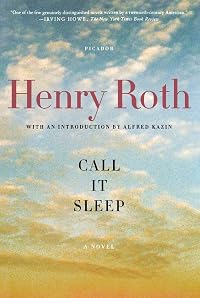
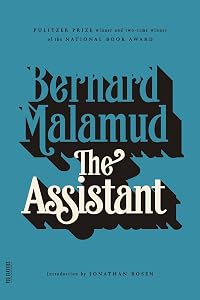
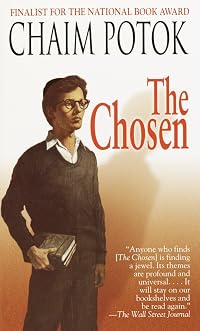

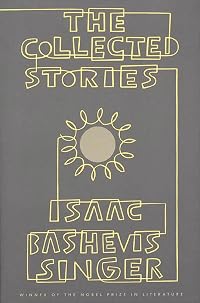









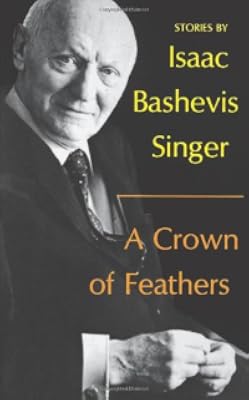





Member Recommendations

Member Reviews
The Wondering Jew
Narrated by Ray Hagen
Length: ~7 hours
Written in 1966 in Yiddish and published in 1977 in English, Enemies, a Love Story tells of the lives of Jewish refugees in New York in the aftermath of WWII. The main characters are Herman and his three wives.
Herman Broder, a non-observant Jew and Talmudic scholar has settled in Coney Island. He has lost his family including his wife and two children to the Holocaust. He survived by hiding in a hayloft, aided by Yadwiga, a Polish peasant, a gentile who had served in his father’s house in Poland prior to the Nazi invasion.
Herman is a man who contemplates the meaning of life, constantly wondering and in wonder. When he looks at the moon, he wonders how did it get there? He tries to show more imagine a god who has given man free will without choice. He wonders how a god could create such a world where Nazis killed whole families. Was god a sadist? And who was the devil and why didn’t god kill him.
I was intrigued by the character of Herman. He’s a man of intelligence, humor, compassion and is an unapologetic liar. At times as he contemplates life, it’s as if he’s a child, seeing the world for the first time. There’s an endearing quality in this complex man.
The plot is a bit of fun. If being hidden in a hayloft in fear of the SS can be described as humorous, then Isaac B Singer is the one to do it.
Before the war Herman was married and had two children. After the war, believing his Jewish wife dead, he brings Yadwiga the Polish peasant who sheltered him, to the U.S. on his visa and sets up house with her. She’s ignorant, superstitious, follows the old ways and is at first ignored by the other apartment dwellers, all Jewish immigrants who mainly speak Yiddish. Yadwiga cant speak English or Yiddish and her rough peasant Polish is barely understandable even by Herman. But he marries her. After all his wife is dead and what else is he to do with her. She can’t survive in New York alone.
Herman lies to Yadwiga and, pretending to be a traveling salesman to cover up his long absences from their Coney Island home. He has an affair with a Jewish woman who lives in the Bronx. Masha also a Holocaust survivor spent the war years in an extermination camp. She’s a drama queen, volatile and sexual. She’s always complaining about the Bronx apartment that Herman has rented for her - “In the camp, at least we had hope”.
Yadwiga has meanwhile learned how to cook Jewish foods such as matzo balls with borscht, and is converting to Judaism. She loves Herman with all her heart. For his part he feels some responsibility and gratitude for her, but not love. At times she annoys him and he mocks her, calling her a peasant. They share no interests and only occasionally, a bed.
As Herman juggles his life between the two women, traveling between Coney Island and the Bronx on the subway, he also has to earn a quid, which he does by ghost-writing speeches for a fraud of a rabbi who he also lies to. While Yadwiga is busy learning Jewish rites, Herman marries Masha, both civilly and under Jewish law.
And suddenly out of the blue, Herman’s Jewish wife, Tamara turns up. She’s found him by advertising in the New York Yiddish newspaper. There was so much dislocation in the immediate post-war years and whole families had been separated by the war, and the paper’s classifieds were full of people looking for family members.
Herman’s life is full of lies. He can’t go on living like this. He owes Yadwiga now pregnant, loves Masha, and is committed to Tamara who probably knows him best.
He can have no rest. He spends his nights imagining bombing Nazis, and staring at the moon. Who put it there? Who is this god? In the days he moves around New York to his various commitments on the subways, a nightmare to this day for any New Yorker.
He lies to the rabbi as to when he’ll complete his speeches. He lies to each of his three wives, and tries to spend time with each one.
The situation cannot go on and how it pans out cannot be told here. But it’s a great book. The characters are impeccably described. There’s humor, some of it gallows. There’s the plot intricacies. There’s the description of post-war New York with its immigrants, humor, decay and the Yiddish culture.
I didn’t read any reviews till I’d finished reading and was astounded at the lack of understanding of a couple of the LT reviewers.
“Herman is a cowardly little Jew who hid out in a haystack while his people were gassed in the Holocaust” one wrote.
Singer is even described as sexist: “Her calves were muscular, hard as stone. . . . Her breasts were full and white; her hips were round” Singer wrote of Herman’s thoughts on meeting Masha. Cannot a man find a woman sexy any more?
“I found his portrayal of survivors offensive”. wrote another reviewer. Obviously he was offended but no offense was intended. Humor is a coping mechanism. But perhaps it was Herman’s denial of god offended him.
Enemies, a Love Story is a moving intelligent and very funny book. It is indeed a love story. Highly recommended. show less
Narrated by Ray Hagen
Length: ~7 hours
Written in 1966 in Yiddish and published in 1977 in English, Enemies, a Love Story tells of the lives of Jewish refugees in New York in the aftermath of WWII. The main characters are Herman and his three wives.
Herman Broder, a non-observant Jew and Talmudic scholar has settled in Coney Island. He has lost his family including his wife and two children to the Holocaust. He survived by hiding in a hayloft, aided by Yadwiga, a Polish peasant, a gentile who had served in his father’s house in Poland prior to the Nazi invasion.
Herman is a man who contemplates the meaning of life, constantly wondering and in wonder. When he looks at the moon, he wonders how did it get there? He tries to show more imagine a god who has given man free will without choice. He wonders how a god could create such a world where Nazis killed whole families. Was god a sadist? And who was the devil and why didn’t god kill him.
I was intrigued by the character of Herman. He’s a man of intelligence, humor, compassion and is an unapologetic liar. At times as he contemplates life, it’s as if he’s a child, seeing the world for the first time. There’s an endearing quality in this complex man.
The plot is a bit of fun. If being hidden in a hayloft in fear of the SS can be described as humorous, then Isaac B Singer is the one to do it.
Before the war Herman was married and had two children. After the war, believing his Jewish wife dead, he brings Yadwiga the Polish peasant who sheltered him, to the U.S. on his visa and sets up house with her. She’s ignorant, superstitious, follows the old ways and is at first ignored by the other apartment dwellers, all Jewish immigrants who mainly speak Yiddish. Yadwiga cant speak English or Yiddish and her rough peasant Polish is barely understandable even by Herman. But he marries her. After all his wife is dead and what else is he to do with her. She can’t survive in New York alone.
Herman lies to Yadwiga and, pretending to be a traveling salesman to cover up his long absences from their Coney Island home. He has an affair with a Jewish woman who lives in the Bronx. Masha also a Holocaust survivor spent the war years in an extermination camp. She’s a drama queen, volatile and sexual. She’s always complaining about the Bronx apartment that Herman has rented for her - “In the camp, at least we had hope”.
Yadwiga has meanwhile learned how to cook Jewish foods such as matzo balls with borscht, and is converting to Judaism. She loves Herman with all her heart. For his part he feels some responsibility and gratitude for her, but not love. At times she annoys him and he mocks her, calling her a peasant. They share no interests and only occasionally, a bed.
As Herman juggles his life between the two women, traveling between Coney Island and the Bronx on the subway, he also has to earn a quid, which he does by ghost-writing speeches for a fraud of a rabbi who he also lies to. While Yadwiga is busy learning Jewish rites, Herman marries Masha, both civilly and under Jewish law.
And suddenly out of the blue, Herman’s Jewish wife, Tamara turns up. She’s found him by advertising in the New York Yiddish newspaper. There was so much dislocation in the immediate post-war years and whole families had been separated by the war, and the paper’s classifieds were full of people looking for family members.
Herman’s life is full of lies. He can’t go on living like this. He owes Yadwiga now pregnant, loves Masha, and is committed to Tamara who probably knows him best.
He can have no rest. He spends his nights imagining bombing Nazis, and staring at the moon. Who put it there? Who is this god? In the days he moves around New York to his various commitments on the subways, a nightmare to this day for any New Yorker.
He lies to the rabbi as to when he’ll complete his speeches. He lies to each of his three wives, and tries to spend time with each one.
The situation cannot go on and how it pans out cannot be told here. But it’s a great book. The characters are impeccably described. There’s humor, some of it gallows. There’s the plot intricacies. There’s the description of post-war New York with its immigrants, humor, decay and the Yiddish culture.
I didn’t read any reviews till I’d finished reading and was astounded at the lack of understanding of a couple of the LT reviewers.
“Herman is a cowardly little Jew who hid out in a haystack while his people were gassed in the Holocaust” one wrote.
Singer is even described as sexist: “Her calves were muscular, hard as stone. . . . Her breasts were full and white; her hips were round” Singer wrote of Herman’s thoughts on meeting Masha. Cannot a man find a woman sexy any more?
“I found his portrayal of survivors offensive”. wrote another reviewer. Obviously he was offended but no offense was intended. Humor is a coping mechanism. But perhaps it was Herman’s denial of god offended him.
Enemies, a Love Story is a moving intelligent and very funny book. It is indeed a love story. Highly recommended. show less
From the moment I started this novel I was drawn in by the beauty of the writing. For a few pages I was worried that the plot was solely going to be the aftermath of the Holocaust (not that that's not a valid plot, but it wasn't what I was in the mood for reading), but I needn't have worried as wham! - Singer hits us between the eyes with an early plot twist. The fallout and impact of the Holocaust on the various characters is definitely central as a backdrop to this novel, but Singer still has fun with the plot, and we're never quite sure how it's going to play out.
It's a wonderfully paced book, that manages to somehow balance humour with the dark shadow the Holocaust has cast on the lives of the characters. Like the best of show more protagonists, Herman Broder is desperately flawed; inherently he's a decent man who lacks the strength to make difficult decisions, and in doing so and trying to people please ends up getting himself deeper and deeper into a ridiculous domestic mess and web of lies.
I expect that Jewish readers get an additional layer of enjoyment from this novel that non-Jewish readers will miss - I was conscious that there were references and phrases that had no context for me which I expect bring another level of familiarity and amusement to Jewish readers (such as conflict over holiday rituals), but I would say that's an additional enhancement for some readers and it certainly didn't detract from the enjoyment of the novel as a non-Jewish reader.
4.5 stars - a wonderful, crazy story. I thoroughly enjoyed this. show less
It's a wonderfully paced book, that manages to somehow balance humour with the dark shadow the Holocaust has cast on the lives of the characters. Like the best of show more protagonists, Herman Broder is desperately flawed; inherently he's a decent man who lacks the strength to make difficult decisions, and in doing so and trying to people please ends up getting himself deeper and deeper into a ridiculous domestic mess and web of lies.
I expect that Jewish readers get an additional layer of enjoyment from this novel that non-Jewish readers will miss - I was conscious that there were references and phrases that had no context for me which I expect bring another level of familiarity and amusement to Jewish readers (such as conflict over holiday rituals), but I would say that's an additional enhancement for some readers and it certainly didn't detract from the enjoyment of the novel as a non-Jewish reader.
4.5 stars - a wonderful, crazy story. I thoroughly enjoyed this. show less
I had never read anything by this author before, but this was an interesting, humorous and slightly frustrating story. Herman Broder is a Holocaust survivor in New York in the early 1950s. His wife Tamara and their children were killed by the Nazis and he now lives in an apartment with Yadwiga, a Polish peasant woman who saved his life by hiding him in her hayloft for three years. At the same time though, Herman is having an affair with Masha, another Holocaust survivor, who is separated from her husband and living with her mother. As if this wasn't complicated enough, he finds out that Tamara has managed to survive (though sadly not their children). She is now in New York too, and living with her uncle and aunt. He must dodge between show more these three women, and this throws up a range of humorous sitcom-like situations, though with a blackly comedic tinge as the characters are mentally scarred by their wartime experiences, feeling survivor guilt and often deep scepticism of their religion for "allowing" the Holocaust to happen. A number of them characters veer between a determination to create new lives and relationships, and suicidal ideation or reckless promiscuity. I enjoyed seeing how things would turn out, but I found the ending a bit disappointing and ambiguous. I would read more by this author. show less
Enemies, a Love Story was first published in Yiddish in The Jewish Forward in 1966 and had its English translation publication in 1972. This is the first of Singer's novels to be set in the U.S. (New York City, specifically). The story is set within the community of Jewish Holocaust survivors, mostly Polish, who have finally found their way to America after surviving Nazi Concentration camps and ghettos, displaced person camps, and perilous post-war journeys across Europe. Some had escaped from Germany into Soviet Russia, where they were greeted with suspicion and immediately sent off to work camps in places like Kazakhstan, only later being released to make their way to America. Confusion, fear, relief and survivor's guilt abound. Some show more cannot let loose of the memories of the horrors of their ordeals. Some try to cling to the comforts of the traditional old world ways and Jewish religious beliefs. Some try to get on with life as Americans.
Our protagonist is ne'er do well Herman Broder. When the Nazis invade Poland, Herman, a scholar of philosophy, is in the family home outside of Warsaw, while his wife and two children are off visiting relatives. As Jews are being rounded up to be sent off or murdered on the spot, Herman is hidden in a hayloft by Yadwiga, the family's young Polish servant. Soon he receives word that an eye-witness has seen his wife and children shot by Nazi soldiers. There, in the hayloft, Herman stays for three years, with Yadwiga tending to him and keeping his presence secret, even from her own family. At war's end, in gratitude and affection, Herman marries Yadwiga despite her not being Jewish. As the novel opens, the couple is living in a Coney Island apartment with Yadwiga's mother. Herman has a job ghost writing religious books and articles for a prominent rabbi who has no congregation and spends most of his time lecturing (giving speeches that Herman has written for him) and making real estate deals. But in the meantime, during the journey across Europe on the way to the U.S., Herman has spent time in post-war Germany, where he has met and fallen for the worldly, beautiful and Jewish Masha. Separated from her husband, Masha now lives in an apartment in Brooklyn with her mother. Yadwiga thinks that Herman, in addition to his work for the rabbit, is a traveling book salesman. He spends the time he's supposedly traveling on sales calls in Brooklyn with Masha. Masha, of course, knows about Yadwiga, while Herman, as carefully as he can, keeps knowledge of his affair from Yadwiga. Or so he thinks.
While this might seem like a simple story of a rake living in constant fear of his comeuppance, the ways in which Herman is (and all of the characters are) damaged, the ways in which they question God, religion, fate and the cruelty of the world add a depth and breadth to the narrative. We are told at the narrative's beginning that where and how he would hide when the Nazis show up at his Coney Island flat, and he keeps an eye out for possible hiding places wherever he goes. Herman's knowledge of the great philosophical thinkers and writers, rather than helping him make sense of things, just add to his confusion and his self-loathing for his weaknesses and the muddle he's making of his new life in America. He cannot identify with the religious Jews around him, for his disgust with God's cruelty is comprehensive, though he cannot shake off his belief in God. But the Jews he meets who are anxious to assimilate and shave their Jewishness down to a thin veneer alienate him as well.
Just when we fear the novel is becoming static, with Herman living in his head while running back and forth to his two lovers, the complications in Herman's life begin to accumulate, and his world becomes ever more fraught. The second half of this novel, and particularly the final third, flew by for me, as I got caught up, not just in wondering how it would all turn out for Herman, Yadwiga and Masha, but how in the end they, and others, would all navigate their balancing acts of dealing with the horror of the past and the guilt and uncertainties of their new, bewildering, present.
The story is told with Singer's reliably consistent sense of humor, his keen eye and compassion for the human condition in general and for his characters in particular, and his grand capacity for description. I think it's to Singer's credit that Herman isn't a particularly likable character, and in some ways I think his weaknesses are a central part of Singer's point, here.
Lest we lean into the understandable tendency to ascribe some sort of symbolic values to each of the characters here, Singer tells us in his brief author's note at the front of the book, "I hasten to say that this novel is by no means the story of the typical refugee, his life, and struggle. Like most of my fictional works, this book presents an exceptional case with unique heroes and a unique combination of events. The characters are not only Nazi victims, but victims of their own personalities and fates. If they fit into the general picture, it is because the exception is rooted in the rule. As a matter of fact, in literature the exception is the rule."
Anyway, I highly recommend Enemies, a Love Story. show less
Our protagonist is ne'er do well Herman Broder. When the Nazis invade Poland, Herman, a scholar of philosophy, is in the family home outside of Warsaw, while his wife and two children are off visiting relatives. As Jews are being rounded up to be sent off or murdered on the spot, Herman is hidden in a hayloft by Yadwiga, the family's young Polish servant. Soon he receives word that an eye-witness has seen his wife and children shot by Nazi soldiers. There, in the hayloft, Herman stays for three years, with Yadwiga tending to him and keeping his presence secret, even from her own family. At war's end, in gratitude and affection, Herman marries Yadwiga despite her not being Jewish. As the novel opens, the couple is living in a Coney Island apartment with Yadwiga's mother. Herman has a job ghost writing religious books and articles for a prominent rabbi who has no congregation and spends most of his time lecturing (giving speeches that Herman has written for him) and making real estate deals. But in the meantime, during the journey across Europe on the way to the U.S., Herman has spent time in post-war Germany, where he has met and fallen for the worldly, beautiful and Jewish Masha. Separated from her husband, Masha now lives in an apartment in Brooklyn with her mother. Yadwiga thinks that Herman, in addition to his work for the rabbit, is a traveling book salesman. He spends the time he's supposedly traveling on sales calls in Brooklyn with Masha. Masha, of course, knows about Yadwiga, while Herman, as carefully as he can, keeps knowledge of his affair from Yadwiga. Or so he thinks.
While this might seem like a simple story of a rake living in constant fear of his comeuppance, the ways in which Herman is (and all of the characters are) damaged, the ways in which they question God, religion, fate and the cruelty of the world add a depth and breadth to the narrative. We are told at the narrative's beginning that where and how he would hide when the Nazis show up at his Coney Island flat, and he keeps an eye out for possible hiding places wherever he goes. Herman's knowledge of the great philosophical thinkers and writers, rather than helping him make sense of things, just add to his confusion and his self-loathing for his weaknesses and the muddle he's making of his new life in America. He cannot identify with the religious Jews around him, for his disgust with God's cruelty is comprehensive, though he cannot shake off his belief in God. But the Jews he meets who are anxious to assimilate and shave their Jewishness down to a thin veneer alienate him as well.
Just when we fear the novel is becoming static, with Herman living in his head while running back and forth to his two lovers, the complications in Herman's life begin to accumulate, and his world becomes ever more fraught. The second half of this novel, and particularly the final third, flew by for me, as I got caught up, not just in wondering how it would all turn out for Herman, Yadwiga and Masha, but how in the end they, and others, would all navigate their balancing acts of dealing with the horror of the past and the guilt and uncertainties of their new, bewildering, present.
The story is told with Singer's reliably consistent sense of humor, his keen eye and compassion for the human condition in general and for his characters in particular, and his grand capacity for description. I think it's to Singer's credit that Herman isn't a particularly likable character, and in some ways I think his weaknesses are a central part of Singer's point, here.
Lest we lean into the understandable tendency to ascribe some sort of symbolic values to each of the characters here, Singer tells us in his brief author's note at the front of the book, "I hasten to say that this novel is by no means the story of the typical refugee, his life, and struggle. Like most of my fictional works, this book presents an exceptional case with unique heroes and a unique combination of events. The characters are not only Nazi victims, but victims of their own personalities and fates. If they fit into the general picture, it is because the exception is rooted in the rule. As a matter of fact, in literature the exception is the rule."
Anyway, I highly recommend Enemies, a Love Story. show less
For me, one of the best short novels ever. Perhaps the ideal so-called "Jewish novel," or one of them. Steeped in Jewish tradition (though the protagonist is mostly urbane), bristling with life and (post-war) despair, humor, (often gallows) philosophy, written with utterly masterful style, confidence, intelligence, real-life wisdom, and elegantly ironic leavenings. I felt honored to receive this almost as an intentional, loving gift. Inspires me to go back and read more Singer.
It's 1948 or so, soon after the birth of Israel. Herman Broder, who is Jewish, lives in New York with the shiksa who saved him from the Holocaust. This woman, Yadwiga, a Polish peasant with calloused hands, hid him in a hayloft for four years. She brought him food. She carried away his waste. Naturally, when the war ends and he hears the terrible news that his wife and children were gunned down in a trench, he acts upon his gratitude and marries Yadwiga. He brings her to New York City. They settle in Coney Island, home of the Cyclone, Wonder Wheel, and Parachute Jump, the sandy boardwalk with its many concessions, fortune tellers, tchochke shops and beach.
Herman, who has never been at ease in this world, even before the Nazis, is death show more saturated. Moreover, he has, as do many of his companions, something that the psychologists call survival guilt. He regrets that he did not die in the war. Why is he alive? He is extremely unhappy, anxiety-ridden, and given to delusions in which the Nazis have invaded or are about to invade New York. His response to this condition is visceral. He sleeps around as much as he can. In addition to Yadwiga, in Brooklyn, he has Masha, in the Bronx. Both Masha and her mother are survivors, too. Eventually, by the novel's end, Herman is sleeping with and married to three women. Wherever he goes he plans an escape route, just in case. His experience during the war has rendered him Godless, yet he finds work writing devotional books and sermons for a local Rabbi, his training in the Talmud being deep. Most of the time however he is going from one woman's bed to the next. Yet he refuses to have any more children. No one, he believes, should have children in a world which allows them to be gunned down in trenches. That frustrated or blocked fertility/virility is the book's central metaphor.
There's something a little old fashioned about the book which I liked. The narrative is straightforward chronology. Singer avoids the use of flashbacks for the most part. Too, the story is steeped in the old-world shtetl values in which, of course, marriage was a holy and sacred trust. So I think some of the book worked as comedy for a previous generation in a way it no longer works for most present-day readers. Herman's polygamy is meant to be seen as the ultimate sign of his despair. But even with that bit of cultural comedy neutralized, there is much to impress. Singer has a compressed style which (here translated from the Yiddish) is charmingly sustained. His spot on characterizations run very deep. Enemies: A Love Story is a superb novel even if it no longer functions in precisely the way Singer intended. Highly recommended. show less
Herman, who has never been at ease in this world, even before the Nazis, is death show more saturated. Moreover, he has, as do many of his companions, something that the psychologists call survival guilt. He regrets that he did not die in the war. Why is he alive? He is extremely unhappy, anxiety-ridden, and given to delusions in which the Nazis have invaded or are about to invade New York. His response to this condition is visceral. He sleeps around as much as he can. In addition to Yadwiga, in Brooklyn, he has Masha, in the Bronx. Both Masha and her mother are survivors, too. Eventually, by the novel's end, Herman is sleeping with and married to three women. Wherever he goes he plans an escape route, just in case. His experience during the war has rendered him Godless, yet he finds work writing devotional books and sermons for a local Rabbi, his training in the Talmud being deep. Most of the time however he is going from one woman's bed to the next. Yet he refuses to have any more children. No one, he believes, should have children in a world which allows them to be gunned down in trenches. That frustrated or blocked fertility/virility is the book's central metaphor.
There's something a little old fashioned about the book which I liked. The narrative is straightforward chronology. Singer avoids the use of flashbacks for the most part. Too, the story is steeped in the old-world shtetl values in which, of course, marriage was a holy and sacred trust. So I think some of the book worked as comedy for a previous generation in a way it no longer works for most present-day readers. Herman's polygamy is meant to be seen as the ultimate sign of his despair. But even with that bit of cultural comedy neutralized, there is much to impress. Singer has a compressed style which (here translated from the Yiddish) is charmingly sustained. His spot on characterizations run very deep. Enemies: A Love Story is a superb novel even if it no longer functions in precisely the way Singer intended. Highly recommended. show less
I tend to think of Singer as old -- Old World, old school, old religion. Clearly, I've been reading the wrong Singer. "Enemies" is an amazing story of post-Holocaust life, love, and psychopathology in New York. It's sparingly written -- detailed, but only as necessary -- and conveys the oddities of a multi-lingual environment very effectively. More importantly, it is in its way a thoroughly modern story of a man and his wives, and the challenges of belief after the near-total destruction of European Jewry. One of the best and most moving books I have read in a long time, with an unpredictable ending. Highly recommend it.
Members
- Recently Added By
Lists

The Guardian's 1000 Novels Everyone Must Read
1,005 works; 550 members

Jewish Books
367 works; 24 members

1960s, Best books published therein
254 works; 22 members

Book Riot's 100 must-read works of Jewish Fiction
100 works; 8 members
National Book Award Finalists - Fiction
377 works; 12 members

100 knjiga
100 works; 1 member
Author Information

387+ Works 23,939 Members
Isaac Bashevis Singer (1904-91) was the author of many novels, stories, children's books, and memoirs. He received the Nobel Prize in Literature in 1978. (Publisher Provided) Isaac Bashevis Singer was born in Radzymin, Poland on July 14, 1904. He received a traditional Jewish education, including training at the rabbinical seminary in Warsaw. He show more began writing in Hebrew while he worked for 10 years as a proofreader and translator in Warsaw. In 1935, he immigrated to New York, where he became a journalist for the Daily Forward, America's largest Yiddish newspaper. Most of his stories were originally published in this newspaper in serial form. His first novel, The Family Moskat, was published in 1950. His other works include The Magician of Lublin, The Spinoza of Market Street, The Slave, and A Friend of Kafka. A Day of Pleasure: Stories of a Boy Growing Up in Warsaw won the National Book Award for children's literature. He received numerous awards during his lifetime including the Nobel Prize for Literature in 1978 and the Gold Medal for Fiction in 1989. He died after suffering a series of strokes on July 24, 1991. (Bowker Author Biography) show less
Some Editions
Awards and Honors
Awards
Distinctions
Series
Belongs to Publisher Series
Work Relationships
Is contained in
Has the adaptation
Common Knowledge
- Canonical title*
- Vijanden
- Original title
- Sonim, di Geshichte fun a Liebe
- Original publication date
- 1966
- People/Characters
- Herman Broder
- Important places
- New York, New York, USA
- Related movies
- Enemies: A Love Story (1989 | IMDb)
- First words
- Herman Broder turned over and opened one eye.
- Quotations
- But that was the way with facts. They punctured every bubble of conceit, shattered theories, destroyed convictions. (Chap. 6 (2))
- Last words
- (Click to show. Warning: May contain spoilers.)And Tamara had replied, "Perhaps, in the next world -- to Herman."
- Publisher's editor
- Shub, Elizabeth; MacKenzie, Rachel; Giroux, Robert
- Original language
- Yiddish
- Disambiguation notice
- "The novel was first published in The Jewish Daily Forward in 1966 under the title "Sonim, di Geshichte fun a Liebe." Author's note
*Some information comes from Common Knowledge in other languages. Click "Edit" for more information.
Classifications
- Genres
- General Fiction, Fiction and Literature
- DDC/MDS
- 839.0933 — Literature & rhetoric German & related literatures Other Germanic literatures - Yiddish Fiction 1860-
- LCC
- PJ5129 .S49 .E — Language and Literature Oriental languages and literatures Oriental philology and literature Hebrew Other languages used by Jews Yiddish
- BISAC
Statistics
- Members
- 1,145
- Popularity
- 21,976
- Reviews
- 19
- Rating
- (3.92)
- Languages
- 19 — Czech, Danish, Dutch, English, Finnish, French, German, Hebrew, Hungarian, Italian, Japanese, Norwegian (Bokmål), Polish, Portuguese, Russian, Spanish, Swedish, Turkish, Yiddish
- Media
- Paper, Ebook
- ISBNs
- 56
- ASINs
- 20