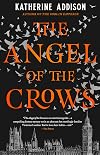
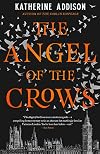
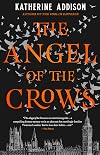
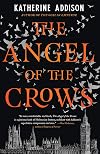
The Angel of the Crows
by Katherine Addison
On This Page
Description
Katherine Addison, author of The Goblin Emperor, returns with The Angel of the Crows, a fantasy of alternate 1880s London, where killers stalk the night and the ultimate power is naming.This is not the story you think it is. These are not the characters you think they are. This is not the audiobook you are expecting.
In an alternate 1880s London, angels inhabit every public building, and vampires and werewolves walk the streets with human beings in a well-regulated truce. A fantastic show more utopia, except for a few things: Angels can Fall, and that Fall is like a nuclear bomb in both the physical and metaphysical worlds. And human beings remain human, with all their kindness and greed and passions and murderous intent.
Jack the Ripper stalks the streets of this London too. But this London has an Angel. The Angel of the Crows.
A Macmillan Audio production from Tor Books
. show less
Tags
Recommendations


















Member Reviews
Lovely Sherlock pastiche, with angels and werewolves and vampires, and it probably shouldn't work, adding the supernatural to the hyper-rational world of Sherlock Holmes, but it does, it's just that the rules are different, and mysteries can be solved so long as the rules are consistent and subject to reasoning and logic. Wonderfully well written, it rings all sorts of fun changes on classic stories while adding a few historical murders here and there just for jolly wouldn't you.
So - I dislike Sherlock Holmes, he's an arrogant know-it-all. I dislike Jack the Ripper stories...possibly for the same reason Crow doesn't like the newspaper stories. I do like urban fantasy. And this urban fantasy version of a Sherlock Holmes-ish catching - among others - Jack the Ripper completely captivated me. The world is complex and fascinating - Angels and Fallen and Nameless, werewolves and vampires and less familiar types of...creatures? People? Both, really. Dr. Doyle is very interesting - lots of secrets. Crow (the Angel who is the Sherlock Holmes character) has even more secrets, and the slow reveal of both his personal secrets and who and what the Angels are kept me reading way too late at night. Katherine Addison is show more amazing, and the only problem is that she doesn't have enough books out yet. Looking forward to reading anything else she puts out. show less
I downloaded the ARC sometime ago and then promptly forgot what it was about, so when I started reading this, it was a revelation. I think that's a good way to come to it, actually, with no expectations, or idea of what it will be about. I loved it. Really, really loved it.
I wasn't expecting Sherlock Holmes, and once I confirmed in my mind that that was where we were going, I was delighted at the world I had fallen into. As per usual, Addison writes good worlds, with very interesting twists and characters and unusual interpretations. Angels as I've never seen them, a somewhat kinder, gentler Sherlock, and a really capital Watson. The cases felt fresher than most Holmesian rewrites, the paranormal elements worked very well for me, and I show more even liked the inclusion of the Ripper case, lurking sullenly in the background. I found it delightful.
Advanced Reader's copy provided by Edelweiss. show less
I wasn't expecting Sherlock Holmes, and once I confirmed in my mind that that was where we were going, I was delighted at the world I had fallen into. As per usual, Addison writes good worlds, with very interesting twists and characters and unusual interpretations. Angels as I've never seen them, a somewhat kinder, gentler Sherlock, and a really capital Watson. The cases felt fresher than most Holmesian rewrites, the paranormal elements worked very well for me, and I show more even liked the inclusion of the Ripper case, lurking sullenly in the background. I found it delightful.
Advanced Reader's copy provided by Edelweiss. show less
This is a brilliant and amusing foray into Holmesiana and beyond.
Addison/Monette may be, in a sense, a worthy successor to Walter Jon Williams in that her novels are successively different. The Doctrine of Labyrinths is not much like The Goblin Emperor, and this is different yet again.
In a world where the Sherlock Holmes analogue is an angel and the Watson analogue was injured, not by a bullet, but by a fallen angel, both the historical murders of late Victorian London (notably the Jack the Ripper murders) and close analogues to Doyle's fictional cases play out.
The Watson analogue (Doyle) is brighter and more of an agent, and things have to be different in a world where the obvious first hypothesis involving the Hound of the show more Baskervilles is that there really is a hell-hound involved. Crow - the Holmes analogue - is both like and unlike the original, in a carefully thought out way. Unlike with many pieces of spec fic Holmesiana, Addison leaves much of the cases essentially intact (although changed somewhat by their different context): this is not a mystery novel, but one of which the pleasure lies in seeing how the changes are rung on Doyle's canon. show less
Addison/Monette may be, in a sense, a worthy successor to Walter Jon Williams in that her novels are successively different. The Doctrine of Labyrinths is not much like The Goblin Emperor, and this is different yet again.
In a world where the Sherlock Holmes analogue is an angel and the Watson analogue was injured, not by a bullet, but by a fallen angel, both the historical murders of late Victorian London (notably the Jack the Ripper murders) and close analogues to Doyle's fictional cases play out.
The Watson analogue (Doyle) is brighter and more of an agent, and things have to be different in a world where the obvious first hypothesis involving the Hound of the show more Baskervilles is that there really is a hell-hound involved. Crow - the Holmes analogue - is both like and unlike the original, in a carefully thought out way. Unlike with many pieces of spec fic Holmesiana, Addison leaves much of the cases essentially intact (although changed somewhat by their different context): this is not a mystery novel, but one of which the pleasure lies in seeing how the changes are rung on Doyle's canon. show less
Let me be clear: I really liked this book. But two things kept me from enjoying it as much as I should have, and so this review will be spent mainly on those. I will, however, try to summarise some of the many, many positives before I close.
As with "The Goblin Emperor", Addison's storytelling sucked me in here as few books do. I enjoyed the book immensely, found myself reading for longer than I usually do every sitting until I'd finished it. Alas, as with "The Goblin Emperor", I found the ending lacklustre. It's not bad (nor was the one in "Goblin Emperor"), but it feels small and unsatisfactory. Everything just sort of works out. There are no major reveals, no major emotional conflict or unexpected obstacle. The end of "Angel of the show more Crows" is sweet and lovely, but it does so by repeating a theme the novel has already done several times (that of the particular love and friendship between the protagonists), and the ending otherwise doesn't add anything particularly new or interesting. The choice to use the Jack the Ripper killings as a framing plot around the various retellings of Sherlock Holmes mysteries is compelling, but the resolution to it, sadly, feels predictable, perfunctory and underwhelming. I was hoping for some kind of twist in the narrative that would tie the disparate elements of the various plotlines earlier in the book together ine some shape or form, and while that's obviously on me for projecting my expectations onto the narrative, it definitely hurt my overall impression and left me a bit underwhelmed.
But it's a shame, because up until this, it was a wonderful story. My main other gripe (minor in comparison) is that Addison is throwing (for my tastes) way too many unnecessary fantastic elements into the world. I'm meant to believe that a world with one or two supernatural aspects happen to develop a Victorian London virtually identical to the historical one? Fine. I can suspend disbelief enough for that. But it gradually becomes apparent it's not one or two supernatural elements -- it's every single one. Ghosts, fetches, automatons, werewolves, hemophages, necrophages, clairvoyants, the book is brimming with supernatural entities that amount to little more than cameos. This lessens the impact, the awe and the interest in the ones that actually matter to the narrative: angels (including fallen ones), and to a lesser extent hellhounds and vampires. The story could easily have consolidated and in many cases even removed all these elements, without being much changed. These thingss are admittedly each of them fun in isolation, but when all put together they make each other lesser, and also can't help but leave the deductions of Crow (the Sherlock Holmes-standin) seeming prosaic and pointless. A detective is only so impressive when you can interview the ghosts, seek the motive with clairvoyants, and track the villain with a werewolf's nose. And in fact, the Holmes-character rarely contributes much to any of the stories, here. The Watson-equivalent is (and I liked this) much more active and intelligent than the original Watson, and between that and the flashy supernatural elements, the brilliant detective often felt to me almost pointless except as a device to drive the protagonist's interest in mysteries. His contributions to actually solving the mysteries were strangely anonymous, usually boiling down to "I have better eyesight and hearing than humans", and I wish he'd gotten to dazzle with his brilliance more.
The Sherlock Holmes-character cameos are a bit odd to me -- some are just themselves with no real change (Lestrade, for instance), others are hugely changed (Moriarty), while yet others are renamed entirely (Holmes, Watson, Mycroft). This kind of irritated my sense of tidiness, I wish they'd all either have kept their names or been reinvented. Changing some of them and not others sort of gave me the impression early on this would end up somehow mattering, but it gradually became apparent it never would. It took me a bit out of the story, and I'd rather they were all treated the same way (hidden cameos or direct, named analogies) so as not to distract me with meta-narrative questions. But that's probably just a personal preference.
Ah well. To be clear once again, the book is stuffed full of good stuff. The almost seemless switching between real world murder mysteries and Sherlock Holmes-retellings is captivating (though a bit glaring in that the real world ones nearly always are the ones to go unsolved). The characters are sympathetic, engaging and well-drawn, and their relationships are endearing and touching. The supernatural elements that actually matter -- notably the angels -- are well thought out and fascinating, and even the ones that don't are captivatingly described. The automatons, for instance, which second only to the ghosts undermine the reality and plausibility of the world the most for me, are incredibly cool and fun when they appear. Furthermore, the prose is engaging, the portrayal of the period immersive without being oppressively hammered home at all times, and the protagonist's first person narrative sucked me in from the very beginning. I wish there were more of a through-line in the story than there was -- the ending made me feel like I'd been reading a short story collection pretending to be a novel -- but considering there wasn't, it sure did make me keep flipping the pages at a great speed. show less
As with "The Goblin Emperor", Addison's storytelling sucked me in here as few books do. I enjoyed the book immensely, found myself reading for longer than I usually do every sitting until I'd finished it. Alas, as with "The Goblin Emperor", I found the ending lacklustre. It's not bad (nor was the one in "Goblin Emperor"), but it feels small and unsatisfactory. Everything just sort of works out. There are no major reveals, no major emotional conflict or unexpected obstacle. The end of "Angel of the show more Crows" is sweet and lovely, but it does so by repeating a theme the novel has already done several times (that of the particular love and friendship between the protagonists), and the ending otherwise doesn't add anything particularly new or interesting. The choice to use the Jack the Ripper killings as a framing plot around the various retellings of Sherlock Holmes mysteries is compelling, but the resolution to it, sadly, feels predictable, perfunctory and underwhelming. I was hoping for some kind of twist in the narrative that would tie the disparate elements of the various plotlines earlier in the book together ine some shape or form, and while that's obviously on me for projecting my expectations onto the narrative, it definitely hurt my overall impression and left me a bit underwhelmed.
But it's a shame, because up until this, it was a wonderful story. My main other gripe (minor in comparison) is that Addison is throwing (for my tastes) way too many unnecessary fantastic elements into the world. I'm meant to believe that a world with one or two supernatural aspects happen to develop a Victorian London virtually identical to the historical one? Fine. I can suspend disbelief enough for that. But it gradually becomes apparent it's not one or two supernatural elements -- it's every single one. Ghosts, fetches, automatons, werewolves, hemophages, necrophages, clairvoyants, the book is brimming with supernatural entities that amount to little more than cameos. This lessens the impact, the awe and the interest in the ones that actually matter to the narrative: angels (including fallen ones), and to a lesser extent hellhounds and vampires. The story could easily have consolidated and in many cases even removed all these elements, without being much changed. These thingss are admittedly each of them fun in isolation, but when all put together they make each other lesser, and also can't help but leave the deductions of Crow (the Sherlock Holmes-standin) seeming prosaic and pointless. A detective is only so impressive when you can interview the ghosts, seek the motive with clairvoyants, and track the villain with a werewolf's nose. And in fact, the Holmes-character rarely contributes much to any of the stories, here. The Watson-equivalent is (and I liked this) much more active and intelligent than the original Watson, and between that and the flashy supernatural elements, the brilliant detective often felt to me almost pointless except as a device to drive the protagonist's interest in mysteries. His contributions to actually solving the mysteries were strangely anonymous, usually boiling down to "I have better eyesight and hearing than humans", and I wish he'd gotten to dazzle with his brilliance more.
The Sherlock Holmes-character cameos are a bit odd to me -- some are just themselves with no real change (Lestrade, for instance), others are hugely changed (Moriarty), while yet others are renamed entirely (Holmes, Watson, Mycroft). This kind of irritated my sense of tidiness, I wish they'd all either have kept their names or been reinvented. Changing some of them and not others sort of gave me the impression early on this would end up somehow mattering, but it gradually became apparent it never would. It took me a bit out of the story, and I'd rather they were all treated the same way (hidden cameos or direct, named analogies) so as not to distract me with meta-narrative questions. But that's probably just a personal preference.
Ah well. To be clear once again, the book is stuffed full of good stuff. The almost seemless switching between real world murder mysteries and Sherlock Holmes-retellings is captivating (though a bit glaring in that the real world ones nearly always are the ones to go unsolved). The characters are sympathetic, engaging and well-drawn, and their relationships are endearing and touching. The supernatural elements that actually matter -- notably the angels -- are well thought out and fascinating, and even the ones that don't are captivatingly described. The automatons, for instance, which second only to the ghosts undermine the reality and plausibility of the world the most for me, are incredibly cool and fun when they appear. Furthermore, the prose is engaging, the portrayal of the period immersive without being oppressively hammered home at all times, and the protagonist's first person narrative sucked me in from the very beginning. I wish there were more of a through-line in the story than there was -- the ending made me feel like I'd been reading a short story collection pretending to be a novel -- but considering there wasn't, it sure did make me keep flipping the pages at a great speed. show less
Honestly I wouldn't have picked this up if I didn't adore "Doctrine of Labyrinths", since I'm not a Sherlock Holmes fan. That being said, it was a very enjoyable book, and despite letting it sit for about a month after reading the first chapter or so, I read the bulk of it in about a day. It's not as good as DoL, but it is very enjoyable.
Perhaps the greatest compliment I have is that this took a story I only remember detesting when I read it in college - "The Hound of the Baskervilles" - and made it an enjoyable adventure/mystery romp. Admittedly I'm not very well-read on the original Sherlock Holmes mythos, but I have read this one, and reviewers saying the book is a beat-for-beat retread but with angels seem to have not been reading show more the same book I was. TAotC is largely split three ways: solving a mystery, character-focus, and diving into the supernatural worldbuilding. All three elements work very well together.
I really enjoyed diving into the supernatural world created in TAotC. Perhaps reviewers who felt the story doesn't dive enough into it should pick up D&D manuals for that deeper dive they seem to want, or just ask for a sequel or other story set in the universe. Addison spends a great deal of time with many supernatural creatures and their place in this universe: angels, hell-hounds, vampires, werewolves, hemophages, with some added details with ghosts, clairvoyance, Jenny Greenteeth, and others. And she does all this while keeping us tied into the story of Doyle, Crow, and the cast of characters they've been tangled up in for the latest mystery. Yes, Addison created a fascinating supernatural AU Earth, with a version of angels and vampires I haven't seen before, and does some great stuff with hell-hounds. But the world is there to contain the characters, not just... exist like a museum exhibit.
I really like how this version of the Holmes mythos tackles not!Watson's disability. A few others I'm familiar with have done things with it, but this one treats it in a unique way that's really enjoyable to read. Given DoL had almost four books of Mildmay dealing with a similar disability, and that was done quite well, I'm not surprised. My favorite scene in the book is when Crow is helping Doyle with something related to this, and it's one of several very enjoyable character interaction moments between them. Their relationship is lovely, and honestly just made me smile while reading.
The story also does some really interesting things with gender, that kind of feel like a cross between "Steven Universe" and "Elementary", but is really its own thing and I feel is quite good. I'm neither nonbinary nor genderfluid, so I can't speak to the quality of those depictions on that front, but as a piece of writing, I did enjoy it.
My primary criticism really isn't Addison's fault, it's just another reason for why I wouldn't pick up a story like this if not for the writer that wrote it: I don't enjoy mystery stories. I find them boring and tend to zone out. So in the parts of this where it really dove into the mystery solving/theorizing portions and cut back on the character building or world development (e.g., here's a neat way vampires or werewolves or magic was incorporated), I did sometimes zone out or skim, although the moments were brief and Addison did an excellent job of keeping me invested. I'm currently reading a slog of a book, so it honestly speaks to the quality of TAotC that I find mystery stories boring but practically finished TAotC in a day. If I was truly bored, I'd probably still be letting this sit on my printer, waiting to be finished.
The Jack the Ripper story was a bit slow to build in the beginning, but the climax is very enjoyable, mostly because of the character building. There should also be a caveat for this book - this story is really more not!Watson's tale than it is not!Sherlock's. While Watson was the lens through which we originally met Sherlock, so of course it is meant to arguably be as much his story as it is Holmes, there are large portions of the tale where not!Sherlock is absent. The story is not poorer for it - Doyle is an enjoyable POV character, and gets through a number of adventures by seemingly being a largely decent, intelligent, empathetic person, with a great deal of personal trials and tribulations to sort through. But perhaps someone expecting yet another spin on how utterly amazing Sherlock Holmes is should know that this is very much a John Watson story. Crow is a wonderful character, and enjoyable to read about, but Doyle is the star. It is truly a partnership story, with both of them needing each other, whether it's rent or companionship or emotional support or whatever. And it's wonderful to read.
I was even thinking "well, it sucks that it's another tale about how awful lawyers are", but Addison just flipped the script on me there, too, so well done on that level.
Overall, a very enjoyable read. A very enjoyable adaptation of what I understand to be some of the original Sherlock Holmes tales, and the Jack the Ripper plotline. A good character study, a fun supernatural romp with all sorts of creatures, and a great story. show less
Perhaps the greatest compliment I have is that this took a story I only remember detesting when I read it in college - "The Hound of the Baskervilles" - and made it an enjoyable adventure/mystery romp. Admittedly I'm not very well-read on the original Sherlock Holmes mythos, but I have read this one, and reviewers saying the book is a beat-for-beat retread but with angels seem to have not been reading show more the same book I was. TAotC is largely split three ways: solving a mystery, character-focus, and diving into the supernatural worldbuilding. All three elements work very well together.
I really enjoyed diving into the supernatural world created in TAotC. Perhaps reviewers who felt the story doesn't dive enough into it should pick up D&D manuals for that deeper dive they seem to want, or just ask for a sequel or other story set in the universe. Addison spends a great deal of time with many supernatural creatures and their place in this universe: angels, hell-hounds, vampires, werewolves, hemophages, with some added details with ghosts, clairvoyance, Jenny Greenteeth, and others. And she does all this while keeping us tied into the story of Doyle, Crow, and the cast of characters they've been tangled up in for the latest mystery. Yes, Addison created a fascinating supernatural AU Earth, with a version of angels and vampires I haven't seen before, and does some great stuff with hell-hounds. But the world is there to contain the characters, not just... exist like a museum exhibit.
I really like how this version of the Holmes mythos tackles not!Watson's disability. A few others I'm familiar with have done things with it, but this one treats it in a unique way that's really enjoyable to read. Given DoL had almost four books of Mildmay dealing with a similar disability, and that was done quite well, I'm not surprised. My favorite scene in the book is when Crow is helping Doyle with something related to this, and it's one of several very enjoyable character interaction moments between them. Their relationship is lovely, and honestly just made me smile while reading.
The story also does some really interesting things with gender, that kind of feel like a cross between "Steven Universe" and "Elementary", but is really its own thing and I feel is quite good. I'm neither nonbinary nor genderfluid, so I can't speak to the quality of those depictions on that front, but as a piece of writing, I did enjoy it.
My primary criticism really isn't Addison's fault, it's just another reason for why I wouldn't pick up a story like this if not for the writer that wrote it: I don't enjoy mystery stories. I find them boring and tend to zone out. So in the parts of this where it really dove into the mystery solving/theorizing portions and cut back on the character building or world development (e.g., here's a neat way vampires or werewolves or magic was incorporated), I did sometimes zone out or skim, although the moments were brief and Addison did an excellent job of keeping me invested. I'm currently reading a slog of a book, so it honestly speaks to the quality of TAotC that I find mystery stories boring but practically finished TAotC in a day. If I was truly bored, I'd probably still be letting this sit on my printer, waiting to be finished.
The Jack the Ripper story was a bit slow to build in the beginning, but the climax is very enjoyable, mostly because of the character building. There should also be a caveat for this book - this story is really more not!Watson's tale than it is not!Sherlock's. While Watson was the lens through which we originally met Sherlock, so of course it is meant to arguably be as much his story as it is Holmes, there are large portions of the tale where not!Sherlock is absent. The story is not poorer for it - Doyle is an enjoyable POV character, and gets through a number of adventures by seemingly being a largely decent, intelligent, empathetic person, with a great deal of personal trials and tribulations to sort through. But perhaps someone expecting yet another spin on how utterly amazing Sherlock Holmes is should know that this is very much a John Watson story. Crow is a wonderful character, and enjoyable to read about, but Doyle is the star. It is truly a partnership story, with both of them needing each other, whether it's rent or companionship or emotional support or whatever. And it's wonderful to read.
I was even thinking "well, it sucks that it's another tale about how awful lawyers are", but Addison just flipped the script on me there, too, so well done on that level.
Overall, a very enjoyable read. A very enjoyable adaptation of what I understand to be some of the original Sherlock Holmes tales, and the Jack the Ripper plotline. A good character study, a fun supernatural romp with all sorts of creatures, and a great story. show less
Firstly, this is a Holmes/Watson pastiche, in an alternate 1880s London.
The Watson character is Dr. J.H. Doyle, MD, recently returned from Afghanistan, wounded in an encounter with a Fallen Angel, and very lucky to be alive. The damage to his leg is lasting and painful, but we will gradually learn that it's the lesser injury. Doyle has brought back another consequence of that encounter that will affect every decision he has to make, and will keep him in London, where he can lose himself in the crowd.
Under that, there's another secret, but that one, Dr. Doyle had brought with him to Afghanistan.
The Sherlock character is an Angel.
Not a Fallen Angel. Not an Angel in good standing, with a building for his Habitation and responsibility, and show more his name likely taken from it, such as the Angel of Scotland Yard, or the Angel of Whitehall. Not a Nameless, wandering London with little or no sense of identity or genuine, consecutive memory. No, though he was once the Angel of the Sherlock Arms, he's a bit of a rogue Angel, not Fallen, but one who, when the Sherlock Arms was torn down, took a bit of marble from the balustrade, refused to fade back into the Nameless, and kept the name of Crow that he'd almost accidentally acquired.
He also calls himself the Angel of London, taking on a certain responsibility for the safety of the city's inhabitants.
When we meet Crow and Doyle, they are both in need of a flatmate who can put up with their unavoidable eccentricities, in order to split the costs of a reasonably comfortable flat in a reasonably respectable neighborhood. You know where this is going, though the landlady's name is Mrs. Climpson.
I really thoroughly enjoyed this book. Of course a number of Holmes'Watson stories are adapted to the setting, starting with "The Sign of the Four," very little different, and gradually growing more divergent, more affected by the changed setting, where vampires and werewolves exist in a negotiated truce with humans, clairvoyance is a skill most respectable young ladies learn, and various kinds of magic users exist in varying degrees of respectability and legality.
Oh, and there are hellhounds. This turns out to be very important.
We see something of the caste system among Angels, something of the workings of vampiric clans, called "hunts," less of the workings of werewolf packs, but like vampires, werewolves can live peacefully and legally among humans. There's potential for interesting stories in which we learn a lot more about these groups, and the relations between and among them, including the political roles played by some of the higher-ranking Angels, including Whitehall. But we do see something of these things, and we are also seeing the building of the relationship between Crow and Doyle, and between the flatmates and Lestrade, Gregson, and other London police inspectors.
I'm carefully not saying anything more specific about Doyle's second secret, the one he had even before going to Afghanistan. That would be a significant spoiler, but I found it to be a really interesting twist on the tale Arthur Conan Doyle gave us. Of course, A. Conan Doyle would probably be appalled, but that's okay. I really like it.
The Jack the Ripper story is also woven through the entire book, and it's the source of much of the interaction with Lestrade. Given the time, and the prominence of Jack the Ripper even today, it could hardly be ignored.
The character development, and the changes Addison has rung on 1880s London, are well done and absorbing. Highly recommended.
I bought this audiobook. show less
The Watson character is Dr. J.H. Doyle, MD, recently returned from Afghanistan, wounded in an encounter with a Fallen Angel, and very lucky to be alive. The damage to his leg is lasting and painful, but we will gradually learn that it's the lesser injury. Doyle has brought back another consequence of that encounter that will affect every decision he has to make, and will keep him in London, where he can lose himself in the crowd.
Under that, there's another secret, but that one, Dr. Doyle had brought with him to Afghanistan.
The Sherlock character is an Angel.
Not a Fallen Angel. Not an Angel in good standing, with a building for his Habitation and responsibility, and show more his name likely taken from it, such as the Angel of Scotland Yard, or the Angel of Whitehall. Not a Nameless, wandering London with little or no sense of identity or genuine, consecutive memory. No, though he was once the Angel of the Sherlock Arms, he's a bit of a rogue Angel, not Fallen, but one who, when the Sherlock Arms was torn down, took a bit of marble from the balustrade, refused to fade back into the Nameless, and kept the name of Crow that he'd almost accidentally acquired.
He also calls himself the Angel of London, taking on a certain responsibility for the safety of the city's inhabitants.
When we meet Crow and Doyle, they are both in need of a flatmate who can put up with their unavoidable eccentricities, in order to split the costs of a reasonably comfortable flat in a reasonably respectable neighborhood. You know where this is going, though the landlady's name is Mrs. Climpson.
I really thoroughly enjoyed this book. Of course a number of Holmes'Watson stories are adapted to the setting, starting with "The Sign of the Four," very little different, and gradually growing more divergent, more affected by the changed setting, where vampires and werewolves exist in a negotiated truce with humans, clairvoyance is a skill most respectable young ladies learn, and various kinds of magic users exist in varying degrees of respectability and legality.
Oh, and there are hellhounds. This turns out to be very important.
We see something of the caste system among Angels, something of the workings of vampiric clans, called "hunts," less of the workings of werewolf packs, but like vampires, werewolves can live peacefully and legally among humans. There's potential for interesting stories in which we learn a lot more about these groups, and the relations between and among them, including the political roles played by some of the higher-ranking Angels, including Whitehall. But we do see something of these things, and we are also seeing the building of the relationship between Crow and Doyle, and between the flatmates and Lestrade, Gregson, and other London police inspectors.
I'm carefully not saying anything more specific about Doyle's second secret, the one he had even before going to Afghanistan. That would be a significant spoiler, but I found it to be a really interesting twist on the tale Arthur Conan Doyle gave us. Of course, A. Conan Doyle would probably be appalled, but that's okay. I really like it.
The Jack the Ripper story is also woven through the entire book, and it's the source of much of the interaction with Lestrade. Given the time, and the prominence of Jack the Ripper even today, it could hardly be ignored.
The character development, and the changes Addison has rung on 1880s London, are well done and absorbing. Highly recommended.
I bought this audiobook. show less
Members
- Recently Added By
Lists

Gaslamp Fantasy
87 works; 15 members

Sherlock Holmes Reinvented
13 works; 5 members

Favorite Books Based on Sherlock Holmes Stories
20 works; 10 members

Books Read in 2020
4,379 works; 124 members

Animals in the Title
498 works; 11 members

Biggest Disappointments
606 works; 168 members

Recommended by G.
14 works; 1 member
Author Information

63+ Works 12,648 Members

Sarah Monette is a LibraryThing Author, an author who lists their personal library on LibraryThing.
Awards and Honors
Awards
Work Relationships
Common Knowledge
- Canonical title
- The Angel of the Crows
- Original title
- The Angel of the Crows
- Original publication date
- 2020-06-23
- People/Characters
- Jack the Ripper; Crow; J. H. Doyle, Dr.
- Important places
- London, England, UK
- Important events
- Whitechapel Murders
- Epigraph
- SHERLOCK: I may be on the side of the angels, but don’t think for one second that I am one of them. —STEVE THOMPSON, “THE REICHENBACH FALL,” SHERLOCK 2.3
Nothing is more deceptive than an obvious fact. —SIR ARTHUR CONAN DOYLE, “THE BOSCOMBE VALLEY MYSTERY” - Dedication
- this book is
absolutely
for Beth Meacham - First words
- When I left London in 1878, I intended never to return. I had my medical degree and a commission in Her Majesty's Imperial Armed Forces Medical Corps. If I died on the plains of Afghanistan in the service of my Queen, I would... (show all) ask for nothing better. And if I did not die and somehow the war with Russia ended, one great truth of the world is that there is always need for doctors, whether you are in England, India, or Brazil. I could go wherever I pleased and be sure of earning a living. -Chapter 1, The Exile's Relucant Return
- Last words
- (Click to show. Warning: May contain spoilers.)“I think you’ve got that backwards, too,” Crow said, and smiled like sunrise after the nightmare-dark.
- Blurbers
- Gladstone, Max; Wilde, Fran; Dean, Pamela; Klages, Ellen; Scalzi, John; Powers, Tim
- Original language
- English US
- Canonical DDC/MDS
- 813.6
- Canonical LCC
- PS3601.D4655
Classifications
Statistics
- Members
- 668
- Popularity
- 43,038
- Reviews
- 36
- Rating
- (3.94)
- Languages
- English
- Media
- Paper, Audiobook, Ebook
- ISBNs
- 8
- ASINs
- 5