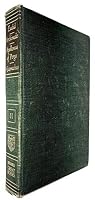
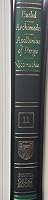
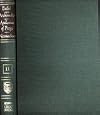
Britannica Great Books: Euclid, Archimedes, Apollonius, Nicomachus
by Encyclopedia Britannica, Apollonius (Contributor), Archimedes (Contributor), Euclid (Contributor), Nicomachus (Contributor)
427 Members (4.10)
On This Page
Tags
Recommendations























Member Reviews
Members
- Recently Added By
Lists

Western Canon
206 works; 2 members
Author Information

589+ Works 14,706 Members

Archimedes was a mathematician and inventor, born in Syracuse, Sicily, about 287 B.C. He became famous for his law of the lever and for inventing the catapult, parabolic mirror, and the mechanical crane that was capable of capsizing a ship by overturning it. These inventions were designed to defend Syracuse during the Second Punic War, which were show more waged between Rome and Carthage. While Archimedes made fundamental contributions to physics, his greatest contributions were to theoretical mathematics. Some of his works have come down to us. When Syracuse was taken in 212 B.C., Archimedes was killed by the Roman soldiers, being at the time intent upon a mathematical problem. show less

Little is known about the life of Euclid, an important Greek mathematician. He lived at Alexandria, in the time of the first Ptolemy, 323-283 B.C. He was the founder of a school of mathematics there. Euclid's compilation of the major results of ancient geometry in a comprehensive axiomatic framework remains a classic and easily the most show more influential scientific work of all time. Beginning with definitions, axioms, and postulates, the Elements deduces hundreds of general theorems about plane and solid geometry, including the famous Pythagorean theorem. It is claimed that, when asked by King Ptolemy if he could make his solutions easier to follow, Euclid said, "There is no royal road to geometry," In 1570, Sir Henry Billingsley first translated the Elements into English. (Bowker Author Biography) show less

All Editions
Series
Belongs to Publisher Series
Work Relationships
Common Knowledge
- Canonical title
- Britannica Great Books: Euclid, Archimedes, Apollonius, Nicomachus
- First words
- 1. A point is that which has no part.
- Last words
- (Click to show. Warning: May contain spoilers.)[5] And let this be sufficient concerning the phenomena and properties of number, for a first Introduction.
- Disambiguation notice
- This omnibus of mathematical works should not be combined with any of the individual works, which are:
- The Thirteen Books of Euclid's Elements, by Euclid
- On the Sphere and Cylinder, by Archime... (show all)des
- Measurement of a Circle, by Archimedes
- On Conoids and Spheroids, by Archimedes
- On Spirals, by Archimedes
- On the Equilibrium of Planes, by Archimedes
- The Sand-Reckoner, by Archimedes
- The Quadrature of the Parabola, by Archimedes
- On Floating Bodies, by Archimedes
- Book of Lemmas, by Archimedes
- The Method Treating of Mechanical Problems, by Archimedes
- On Conic Sections, by Apollonius of Perga
- Introduction to Arithmetic, by Nicomachus of Gerasa
Classifications
- Genres
- Nonfiction, General Nonfiction, Science & Nature, History, Philosophy
- DDC/MDS
- 513 — Natural sciences & mathematics Mathematics Arithmetic
- LCC
- AC1 .G72 — General Works Collections. Series. Collected works Collections. Series. Collected works Collections of monographs, essays, etc. American and English
Statistics
- Members
- 427
- Popularity
- 71,896
- Rating
- (4.10)
- Languages
- English
- Media
- Paper
- ISBNs
- 1
- ASINs
- 27