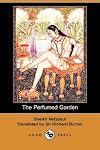
The Perfumed Garden
by Sheik Nefzawi
On This Page
Description
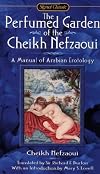
The Perfumed Garden is a sex manual written in erotic prose. It gives advice on bodily appearance, sexual technique, and also on the symptoms and remedies for sexual diseases. Al-Nafzawi also describes the sex of animals and interprets dreams. The advice and technical descriptions are interspersed with stories which should give the manual context and amuse the reader..
Tags
Recommendations



























Member Recommendations

Member Reviews
Muhammad ibn Muhammad al-Nafzawi's 15th-century treatise Er Roud el Aater p'nezaha el Khater on the amatory arts is consciously written in the tradition of the Kama Sutra, and he refers respectfully to the existing Indian literature on his topic. I found it abundantly more entertaining than the Indian texts, though. For one thing, it is chock full of anecdotes and parables, and this narrative element gives it a richness that is lacking in the esteemed Indian classic.
Nor is it short on technical detail. When the author provides instruction in the postures most suitable to coitus between short and tall, fat and thin, it seems helpful enough, but when he goes on to different sorts of hunchbacks I began to wonder if he was just trying to show more dazzle with his encyclopaedism. Modern readers will also be justly skeptical of the abundant apothecary recommendations. The medical lore of Nafzawi includes a pronounced fear that any fluid might ever enter the male urethra, with warnings of the dire consequences. In a related trope, he also often emphasizes the desirability of dryness of the vagina, even during the act of coition (viz. Chapter 13).
Chapter 11 "On the Deceits and Treacheries of Women" contains some of the most delightful stories. Whether their moralization (and similar remarks throughout the book) points to Nefzawi's own misogyny or to the anticipated chauvanism of his readership is impossible to determine, but they can be read quite differently than to "Appreciate ... the deceitfulness of women, and what they are capable of." In his description of "Women who Deserve to be Praised," Nefzawi emphasizes their deference and dependence, which is no mark in his favor, but also is at odds with some of the narrative elements. A feminist Straussian reading of this book would be incredibly tendentious, but great fun nevertheless!
My favorite part of the book was chapters 8 & 9 "On the Sundry Names Given to the Sexual Parts" of men and women, respectively. The various titles might be used as secretly auspicious nicknames for people, and Nefzawi goes a far sight beyond Aleister Crowley's "Glossary of Synonyms and Phrases from 'The Nameless Novel,'" in that the Arabic author provides specific characterizations expounding on the qualities indicated by each name.
My copy is the Castle Books edition of the Burton translation, which provides no editorial framing whatsoever beyond the front flap of the dust jacket, with its three paragraphs of sales copy. show less
Nor is it short on technical detail. When the author provides instruction in the postures most suitable to coitus between short and tall, fat and thin, it seems helpful enough, but when he goes on to different sorts of hunchbacks I began to wonder if he was just trying to show more dazzle with his encyclopaedism. Modern readers will also be justly skeptical of the abundant apothecary recommendations. The medical lore of Nafzawi includes a pronounced fear that any fluid might ever enter the male urethra, with warnings of the dire consequences. In a related trope, he also often emphasizes the desirability of dryness of the vagina, even during the act of coition (viz. Chapter 13).
Chapter 11 "On the Deceits and Treacheries of Women" contains some of the most delightful stories. Whether their moralization (and similar remarks throughout the book) points to Nefzawi's own misogyny or to the anticipated chauvanism of his readership is impossible to determine, but they can be read quite differently than to "Appreciate ... the deceitfulness of women, and what they are capable of." In his description of "Women who Deserve to be Praised," Nefzawi emphasizes their deference and dependence, which is no mark in his favor, but also is at odds with some of the narrative elements. A feminist Straussian reading of this book would be incredibly tendentious, but great fun nevertheless!
My favorite part of the book was chapters 8 & 9 "On the Sundry Names Given to the Sexual Parts" of men and women, respectively. The various titles might be used as secretly auspicious nicknames for people, and Nefzawi goes a far sight beyond Aleister Crowley's "Glossary of Synonyms and Phrases from 'The Nameless Novel,'" in that the Arabic author provides specific characterizations expounding on the qualities indicated by each name.
My copy is the Castle Books edition of the Burton translation, which provides no editorial framing whatsoever beyond the front flap of the dust jacket, with its three paragraphs of sales copy. show less
If nothing else, this book of short stories that serve as examples of the best ways to treat love and the lovelorn are amusing. The appetites represented range form heterosexual to homosexual to beastial. Not nor all tastes and not completely to mine. But an interesting insight into adifferent culture.
Repetitive, dull, and only exciting to those who do little and are shock by much. Islamic porn - "God be merciful to them as well as to all Mussulmans! Amen". Addressed only to men, about women and that curious entanglement they call "sex". It turns out it is actual "union". It is contract. You cannot disguise it with harems and multiple wives and servanthoods.
Book Charity
«On ne sait pas grand-chose du cheikh Nafzâwî, sinon qu’il vécut en Tunésie et qu’il composa, à la demande expresse du sultan de Tunis vers 1420 la plus célèbre des oeuvres érotiques arabe. La Prairie parfumée où s'ébattent les plaisirs (al-Rawd al-'âtir fî nuzhat al-khâtir) est un manuel d’érotologie, un livre d’enseignement écrit par un homme et destiné aux hommes. La leçon peut se résumer ainsi : le plaisir masculin ne s'entend pas sans celui des femmes et Dieu n'en est pas jaloux. J'en veux pour exemple ce conseil :
« Ne conjoins la femme qu’après avoir badiné avec elle, jusqu’à ce que son eau soit près de descendre. Ce qui permettra la réunion de son eau avec la tienne, provoquant son plaisir. show more Il est préférable d’agir ainsi, ton corps se trouvant plus à l’aise dans ce conditions, la saveur chez elle devenant plus exquise --- et la santé de son corps y gagnant. Quand tu aura obtenu ce que tu voulais, ne te lève pas aussitôt pour la quitter. Tu te sépareras d’elle avec douceur, retirant ton instrument après qu’il a fini sa tâche. Descends sans hâte de dessus elle du côté droit. Auparavant tu lui enjoindras d’étendre ses jambes, de serrer ses cuisses sur l’instrument afin qu’il se retire bien sec, en passant par un orifice étroit. Tu le dégaineras d’elle peu à peu. Enfin elle prendra une serviette souple et l’essuiera avec précaution.
Si la femme éprouve de l’affection pour l’homme, elle embrassera son époux après la fin de l’opération, lui manifestera sa joie de le voir auprès d’elle, à cause du plaisir qu’elle aura tiré de sa rencontre avec lui. Alors l’amour que l’homme porte à la femme s’intensifiera dans son coeur. Il n’y a d’aide véritable que celle qui vient de Dieu. »
On trouve pêle-mêle, dans la Prairie parfumée, des considérations sur l’art de la séduction, une discussion sur les différentes formes et tailles des organes génitaux masculins et féminins, des conseils sur les différentes façons de « conjoindre », la liste des mets qui incitent à l’amour et surtout des contes fortement érotiques dont la liberté de ton est inconnue en Occident à la même époque et qu’on n’y retrouvera que trois cent, voire quatre cent ans plus tard. Alors que dans la chrétienté l’amour charnel, frappé par le sceau du péché originel, est considéré comme un mal nécessaire à la reproduction de l’espèce, le cheikh Nafzâwî présente la sexualité, en accord avec les paroles du prophète, comme un don de Dieu à ceux et celles qui s’aiment.
En ces temps où l’islamisme radical occupe toutes les tribunes, il est plus que réjouissant de découvrir en l’Islam une voie où la copulation, qu’elle mène ou non à la procréation, est licite et même encensée. show less
« Ne conjoins la femme qu’après avoir badiné avec elle, jusqu’à ce que son eau soit près de descendre. Ce qui permettra la réunion de son eau avec la tienne, provoquant son plaisir. show more Il est préférable d’agir ainsi, ton corps se trouvant plus à l’aise dans ce conditions, la saveur chez elle devenant plus exquise --- et la santé de son corps y gagnant. Quand tu aura obtenu ce que tu voulais, ne te lève pas aussitôt pour la quitter. Tu te sépareras d’elle avec douceur, retirant ton instrument après qu’il a fini sa tâche. Descends sans hâte de dessus elle du côté droit. Auparavant tu lui enjoindras d’étendre ses jambes, de serrer ses cuisses sur l’instrument afin qu’il se retire bien sec, en passant par un orifice étroit. Tu le dégaineras d’elle peu à peu. Enfin elle prendra une serviette souple et l’essuiera avec précaution.
Si la femme éprouve de l’affection pour l’homme, elle embrassera son époux après la fin de l’opération, lui manifestera sa joie de le voir auprès d’elle, à cause du plaisir qu’elle aura tiré de sa rencontre avec lui. Alors l’amour que l’homme porte à la femme s’intensifiera dans son coeur. Il n’y a d’aide véritable que celle qui vient de Dieu. »
On trouve pêle-mêle, dans la Prairie parfumée, des considérations sur l’art de la séduction, une discussion sur les différentes formes et tailles des organes génitaux masculins et féminins, des conseils sur les différentes façons de « conjoindre », la liste des mets qui incitent à l’amour et surtout des contes fortement érotiques dont la liberté de ton est inconnue en Occident à la même époque et qu’on n’y retrouvera que trois cent, voire quatre cent ans plus tard. Alors que dans la chrétienté l’amour charnel, frappé par le sceau du péché originel, est considéré comme un mal nécessaire à la reproduction de l’espèce, le cheikh Nafzâwî présente la sexualité, en accord avec les paroles du prophète, comme un don de Dieu à ceux et celles qui s’aiment.
En ces temps où l’islamisme radical occupe toutes les tribunes, il est plus que réjouissant de découvrir en l’Islam une voie où la copulation, qu’elle mène ou non à la procréation, est licite et même encensée. show less
Mar 1, 2014French
« Louange à Dieu qui a mis le plus grand plaisir des hommes dans les parties naturelles des femmes, et qui a fait consister celui des femmes dans les parties naturelles des hommes ! » En l'an 925 de l'Hégire (début XVIe siècle), le cheikh Mohammed Nefzaoui, natif de Nefzaoua, au sud de la Tunisie, selon la légende condamné à mort par le bey de Tunis, sauva sa vie en rédigeant un ouvrage destiné à réveiller les sens fatigués du monarque en l'initiant aux mystères de l'érotisme. Arrawdh al âlir fî nuyhatil khâtir, en français Le Jardin parfumé, s'adresse aux hommes comme aux femmes ; il s'appuie sur un savoir ancestral où l'érotisme exalte l'amour, où la pharmacopée tient une place essentielle à côté du verbe show more utilisé à des fins incantatoires.
Écrit dans une langue raffinée et savoureuse, qui nous introduit dans un jardin ludique de sensations olfactives et tactiles, d'imaginaire et de spiritualité, Le jardin parfumé représente le grand classique de la littérature érotique dans une authentique tradition islamique. show less
Écrit dans une langue raffinée et savoureuse, qui nous introduit dans un jardin ludique de sensations olfactives et tactiles, d'imaginaire et de spiritualité, Le jardin parfumé représente le grand classique de la littérature érotique dans une authentique tradition islamique. show less
Aug 13, 2010French
Indeholder "Indledning", "Kapitel 1, der handler om prisværdige mænd", "Kapitel 2, der handler om prisværdige kvinder", "Kapitel 3, der handler om foragtelige mænd", "Kapitel 4, der handler om foragtelige kvinder", "Kapitel 5, der handler om kønsakten", "Kapitel 6, der handler om alt det, der er gunstigt for samleje", "Kapitel 7, der handler om det, der er skadeligt for kønsakten", "Kapitel 8, der handler om det mandlige lems forskellige navne", "Kapitel 9, der handler om de kvindelige kønsdeles forskellige navne", "Kapitel 10, der handler om kønsdelene hos dyr", "Kapitel 11, der handler om kvinders list og bedragerier", "Kapitel 12, der handler om forskellige nyttige sager både for mænd og kvinder", "Kapitel 13, der handler show more om de ting, der gør kønsakten behagelig", "Kapitel 14, er en beskrivelse af den golde livmoder og dens særlige behandling", "Kapitel 15, der handler om svangerskabsafbrydende midler", "Kapitel 16, der handler om impotens hos mænd", "Kapitel 17, der angår behandlingen af impotens", "Kapitel 18, der fortæller, hvordan man kan udvikle lemmet og give det et smukt udseende", "Kapitel 19, om hvordan en kvinde fjerner dårlig lugt fra sine armhuler og sin skede, og hvordan hun får denne til at trække sig sammen", "Kapitel 20, der handler om svangerskab og de tegn, der viser barnets køn", "Kapitel 21, hvori værket afsluttes, og vigtigheden af at spise æg omtales".
Pudsigt skrift, som er en blanding af seksualoplysning og hyldest til Allah for at have skabt kvinden og manden således at de har glæde ved hinanden. show less
Pudsigt skrift, som er en blanding af seksualoplysning og hyldest til Allah for at have skabt kvinden og manden således at de har glæde ved hinanden. show less
Jun 16, 2013 (Edited)Danish
Members
- Recently Added By
Lists

Sex in the past
26 works; 4 members

Arab and Arab Diaspora Literature We Recommend
112 works; 53 members
Author Information
9 Works 807 Members
Some Editions
Series
Belongs to Publisher Series
Work Relationships
Is an adaptation of
Has the adaptation
Common Knowledge
- Canonical title
- The Perfumed Garden
- Original title
- Rawd al-`atir fi nuzhat al-khatir
- Alternate titles
- Rawd al-`atir fi nuzhat al-khatir. English
- Original publication date
- 1410-1434
- Important events
- 16th century (1500s); Late Victorian Era (1880s)
- Original language*
- Arabisch
*Some information comes from Common Knowledge in other languages. Click "Edit" for more information.
Classifications
Statistics
- Members
- 782
- Popularity
- 35,475
- Reviews
- 8
- Rating
- (3.37)
- Languages
- 14 — Arabic, Danish, Dutch, English, Finnish, French, German, Greek, Hungarian, Italian, Norwegian (Bokmål), Portuguese (Portugal), Spanish, Swedish
- Media
- Paper, Audiobook, Ebook
- ISBNs
- 80
- ASINs
- 53