
Richard Francis Burton (1821–1890)
Author of The Rubáiyát of Omar Khayyám
About the Author
Richard Francis Burton was an explorer, translator, writer, soldier, spy, fencer, and diplomat. He is most famous for his translations of One Thousand and One Sights and the Kama Sutra and for having been the first European to visit the Great Lakes of Africa. He once traveled to Mecca in disguise show more and spoke nearly thirty languages. He died in 1890. show less
Series
Works by Richard Francis Burton
The Arabian Nights: Tales from a Thousand and One Nights [Modern Library] (2001) — Translator — 1,934 copies, 24 reviews
Arabian Nights: The Marvels And Wonders Of The Thousand And One Nights (Signet Classics) (1991) — Translator — 626 copies, 6 reviews
The Book of the Sword: With 293 Illustrations (Dover Military History, Weapons, Armor) (1884) 373 copies, 2 reviews
The Illustrated Kama Sutra : Ananga-Ranga and Perfumed Garden - The Classic Eastern Love Texts (1987) 200 copies, 1 review
Vikram and The Vampire: Classic Hindu Tales of Adventure, Magic, and Romance (1870) 173 copies, 5 reviews
The Arabian Nights, Volume I: The Marvels and Wonders of The Thousand and One Nights (Signet Classics, 1/2) (2007) — Translator — 151 copies
The Arabian Nights: Tales from a Thousand and One Nights (Modern Library Classics) (1978) — Translator — 116 copies, 2 reviews
The City of the Saints: Among the Mormons and Across the Rocky Mountains to California (1971) 94 copies
The Arabian Nights: The Book of the Thousand Nights and a Night, all 16 volumes, with active table of contents (1978) 90 copies
Tales From The Arabian Nights: Selected from The Book Of The Thousand Nights And A Night (1983) 86 copies, 2 reviews
Arabian Nights: The Book of a Thousand Nights and a Night (Collector's Library Editions) (2007) 65 copies
Favorite Tales from the Arabian Nights' Entertainments (Dover Thrift Editions) (2002) 60 copies, 1 review
THE ARABIAN NIGHTS ENTERTAINMENT: THE BOOK OF THE THOUSAND NIGHTS AND A NIGHT - VOLS. I - VI - THE COMPLETE BURTON TRANSLATION WITH COMPLETE BURTON NOTES, THE TERMINAL ESSAY, A… (1962) 50 copies, 1 review
Book of the Thousand and One Nights [selection, ed. Newby] (1959) — Translator — 39 copies, 1 review
The Book Of The Thousand Nights And A Night: A Plain and Literal Translation of the Arabian Nights Entertainments: Volume XV (2008) 38 copies
The Book Of The Thousand Nights And A Night: A Plain and Literal Translation of the Arabian Nights Entertainments: Volume XI (Supplement) (2008) 36 copies
The Book of the Thousand Nights and a Night (Complete Arabian Nights) Volume 10 (Volume 10) (2008) 35 copies
The Book Of The Thousand Nights And A Night: A Plain and Literal Translation of the Arabian Nights Entertainments: Volume XIII (2003) 34 copies
One Thousand and One Nights - Complete Arabian Nights Collection (Delphi Classics) (2015) 34 copies, 1 review
The Book Of The Thousand Nights And A Night: A Plain and Literal Translation of the Arabian Nights Entertainments: Volume VIII (2008) 33 copies
The Book of the Thousand Nights and a Night (Complete Arabian Nights) Volume 14 (Volume 14) (2008) 33 copies
The Book Of The Thousand Nights And A Night: A Plain and Literal Translation of the Arabian Nights Entertainments: Volume XII (Supplement) (2008) 32 copies
The Book Of The Thousand Nights And A Night: A Plain and Literal Translation of the Arabian Nights Entertainments: Volume IX (2008) 30 copies
Historia ilustrada de las formas artisticas/ illustrated History of the Artistic Shapes: Egipto (Spanish Edition) (1990) 28 copies, 1 review
The Book Of The Thousand Nights And A Night: A Plain and Literal Translation of the Arabian Nights Entertainments: Volume III (2010) 27 copies, 1 review
Sir Richard Burton's Travels in Arabia and Africa: Four Lectures from a Huntington Library Manuscript (1990) 26 copies
The Book Of The Thousand Nights And A Night: A Plain and Literal Translation of the Arabian Nights Entertainments: Volume V (2001) 23 copies
The Book Of The Thousand Nights And A Night: A Plain and Literal Translation of the Arabian Nights Entertainments: Volume IV (2001) 23 copies
Delphi Collected Works of Sir Richard Francis Burton (Illustrated) (Delphi Series Seven Book 19) (2016) 18 copies
The Book Of The Thousand Nights And A Night: A Plain and Literal Translation of the Arabian Nights Entertainments: Volume VII (1885) 17 copies
Tales from the Arabian Nights: Selected from the Book of a Thousand Nights and a Night (Centenary Edition) (1985) 16 copies
The Arabian Nights' Entertainments: Or the Book of a Thousand Nights and a Night (An Adult Selection) (1959) 16 copies
The Book of the Thousand Nights and a Night (Complete Arabian Nights) Volume 17 (Volume 17) (2011) 15 copies
The Book of the Thousand Nights and a Night: the Complete Burton Translation (Heritage 3 Vols) 15 copies
The Arabian Nights: The Book of a Thousand Nights and a Night (The great tales) [abridged] [Naxos Audiobook] (1995) 12 copies
Selected Papers on Anthropology, Travel and Exploration (1972) — Author; Author — 9 copies, 1 review
Tales from the Book of the Thousand Nights and a Night: A Plain and Literal Translation of the Arabian Nights Entertainments (2011) 7 copies
Supplemental Nights (Volume 1) 6 copies
Wit and Wisdom from West Africa: A Book of Proverbial Philosophy, Idioms, Enigmas, and Laconisms (1969) 5 copies
Book of the Thousand Nights and a Night: A Plain and Literal Translation of the Arabian Nights Entertainments; Vols. I-X [no supplement] (1903) 5 copies
The Nile Basin 4 copies
The Vice: Containing Sir Richard Burton's Sotadic Zone and Extracts from Dr. Jacobus' Untrodden Fields of Anthropology (SC) (1967) 4 copies
Sindbad the Sailor 3 copies
THE BOOK OF THE Thousand Nights and a Night. VOLUME I: 1885 (London "Burton Club" edition), illustrated (2017) 3 copies
The Arabian nights' entertainments; or, The book of a thousand nights and a night; a selection of the most famous and r (1932) 2 copies
Arabian Nights: Tales Of Thousand Nights & A Night Vol 1 [Mar 01, 2017] Burton, Richard F. (2017) 2 copies
THE BOOK OF THE Thousand Nights and a Night VOLUME III: 1885 "Burton Club" edition, illustrated (2017) 2 copies
Personal Narrative of a Pilgrimage to Al-Madinah & Meccah; By Sir Richard F. Burton Volume 1 (2013) 2 copies
THE BOOK OF THE Thousand Nights and a Night VOLUME IV: 1885 "Burton Club" edition, illustrated (2017) 2 copies
THE BOOK OF THE Thousand Nights and a Night. VOLUME II: 1885 "Burton Club" edition, illustrated (2017) 2 copies
Unexplored Syria: Visits to the Libanus, the Tulul el Safa, the Anti-Libanus, the northern Libanus, and the 'Alah (2012) 2 copies
The Richard Burton Poetry Collection 2 copies
Richard Burton's Arabian Nights and Victorian Books of Exploration and Travel in Asia and Africa (2002) 1 copy
Tusen og en natt 1 copy
Roc 1 copy
The Tales from the Arabian nights — Translator — 1 copy
Mystery of the Sacred Shroud 1 copy
THE ARABIAN NIGHTS ENTERTAINMENTS, THE SECOND VOLUME, & NOTES ON THE SECOND VOLUME, IN TWO VOLUMES. 1 copy
The Gold-Mines of Midian and the Ruined Midianite Cities: A Fortnight's Tour in North-Western Arabia (Classic Reprint) (2015) 1 copy
The Book of a Thousand Nights and One Night (Reprinted with permisiion form the 1934 edition. Volumes III and IV) (1934) 1 copy
Thousand Nights and a Night 1 copy
Supplemental Nights Volume Four: To the Book of the Thousand and One Nights with Notes Anthropological and Explanatory (2014) 1 copy
The Arabian Knights 1 copy
Supplemental Nights to the Book of the Thousand Nights and a Night, Seven volumes [Vol. 2 missing] 1 copy
THE BOOKS OF THE Thousand Nights and a Night VOLUME 1-17 1885 "Burton Club" edition, illustrated (2017) 1 copy
The Arabian Nights 1 copy
The Kama Sutra of Vatsyayana. Edited with a preface by W.G. Archer. Introduction by K.M. Panikkar. 1 copy
Yahudi, Çingene ve Müslümanlar Üzerine Bir İnceleme 1853-1891;Binbir Gece Masalları'nın Yazarında... (2024) 1 copy
The Kama Sutra of Vatsvavana 1 copy
The Book of the Thousand Nights and a Night - A Plain and Literal Translation of the Arabian Nights Entertainments: Volume 5 (1920) 1 copy
Bilješke o Istri 1 copy
Burton's Reisen Nach Medina Und Mekka Und in Das Somaliland Nach Härrär in Ost-Afrika (German Edition) (2012) 1 copy
Associated Works
The Best of the West: An Anthology of Classic Writing from the American West (1991) — Contributor — 289 copies, 1 review
Major Problems in the History of the American West: Documents and Essays (1989) — Contributor — 67 copies
Arabian Nights: Four Tales from a Thousand and One Nights (Pegasus Library) (1988) — Editor, some editions — 48 copies
The Carmina of Caius Valerius Catullus / now first completely Englished into verse and prose, the metrical part by Capt. Sir. Richard F. Burton ; the prose portion, introduction,… (0084) — Translator, some editions — 3 copies
Tagged
Common Knowledge
- Canonical name
- Burton, Richard Francis
- Legal name
- Burton, Sir Richard Francis
- Other names
- El-Yezdi, Haji Abdu (pseudonym)
Sir Richard Burton - Birthdate
- 1821-03-19
- Date of death
- 1890-10-20
- Gender
- male
- Education
- Trinity College, Oxford
- Occupations
- explorer
translator
geographer
writer
soldier
orientalist (show all 7)
diplomat - Organizations
- East India Company
Anthropological Society of London - Awards and honors
- National Institute of Arts and Letters (1908)
Order of St Michael and St George (1886)
Royal Geographical Society (Fellow) - Relationships
- Burton, Isabel (wife)
Stisted, Georgiana M. (niece) - Short biography
- Sir Richard Francis Burton 19 March 1821 – 20 October 1890) was a British explorer, geographer, translator, writer, soldier, orientalist, cartographer, ethnologist, spy, linguist, poet, fencer, and diplomat. He was famed for his travels and explorations in Asia, Africa and the Americas, as well as his extraordinary knowledge of languages and cultures. According to one count, he spoke 29 European, Asian and African languages.
Burton's best-known achievements include: a well-documented journey to Mecca in disguise, at a time when Europeans were forbidden access on pain of death; an unexpurgated translation of One Thousand and One Nights (commonly called The Arabian Nights in English after early translations of Antoine Galland's French version); the publication of the Kama Sutra in English; a translation of The Perfumed Garden, the Arab Kama Sutra; and a journey with John Hanning Speke as the first Europeans to visit the Great Lakes of Africa in search of the source of the Nile.
His works and letters extensively criticised colonial policies of the British Empire, even to the detriment of his career. Although he aborted his university studies, he became a prolific and erudite author and wrote numerous books and scholarly articles about subjects including human behaviour, travel, falconry, fencing, sexual practices and ethnography. A characteristic feature of his books is the copious footnotes and appendices containing remarkable observations and information. William Henry Wilkins wrote: "So far as I can gather from all I have learned, the chief value of Burton’s version of The Scented Garden lay not so much in his translation of the text, though that of course was admirably done, as in the copious notes and explanations which he had gathered together for the purpose of annotating the book. He had made this subject a study of years. For the notes of the book alone he had been collecting material for thirty years, though his actual translation of it only took him eighteen months."
Burton was a captain in the army of the East India Company, serving in India, and later briefly in the Crimean War. Following this, he was engaged by the Royal Geographical Society to explore the east coast of Africa, where he led an expedition guided by locals and was the first European known to have seen Lake Tanganyika. In later life, he served as British consul in Fernando Pó (now Bioko, Equatorial Guinea), Santos in Brazil, Damascus (Ottoman Syria) and finally in Trieste. He was a Fellow of the Royal Geographical Society and was awarded a knighthood in 1886. - Cause of death
- heart attack
- Nationality
- UK
- Birthplace
- Torquay, Devon, England, UK
- Places of residence
- Tours, Indre-et-Loire, Centre-Val-de-Loire, France
Trieste, Austria-Hungary
Elstree, Hertfordshire, England, UK - Place of death
- Trieste, Austria-Hungary
- Burial location
- St Mary Magdalen Church, Mortlake, London, Middlesex, England, UK
- Map Location
- England, UK
Members
Discussions
Petrarch Press - Rubaiyat of Omar Khayyam announcement in Fine Press Forum (February 2023)
Sir Richard Francis Burton in Legacy Libraries (April 2015)
Rubáiyát of Omar Khayyám: Khorasan Edition in Tattered but still lovely (September 2012)
Reviews

Voz da antiga Pérsia, rimar com o cheiro do vinho... Poeta que conta estrelas, Omar da cor do rubi. Khayyam, ó Khayyam... Sabias que a tua fala de barro ainda ronda o meu coração? Chocam-se os copos, os risos se ouvem e o vinho, teu adorado vinho se derrama nos cálices... E a copeira! Ai, os olhos dessa donzela! Cai a noite, a lua vai aparecendo e do cofre do Nada voltou a surgir o jogo, o caminhar que nunca termina... Será o crescer da relva, o canto do rouxinol... Ou o eco de um show more rubaiyat? Oleiro dos Céus, torno que nunca paras... O Livro folheias novamente... E eu apenas desejo esses lábios que me esperam e poder me enredar nos cabelos da minha doce bem-amada. Dá-me o vinho dos teus versos! Canta em minha alma... Omar Khayyam! show less

I have more editions of the Rubáiyát of Omar Khayyám than any other book. I mainly buy new (to me, that is, as most of them are second-hand volumes) editions based upon either the quality of a book as an artefact, or due to the illustrations. The former is a relatively common bibliophilic phenomenon, of which I imagine many reading this review will recognise in themselves. The latter is, I think, due to an unfortunate tendency towards orientalism, a by-product of the cultural context of show more my youthful upbringing. I try to offset this tendency by somewhat extending my knowledge and (hopefully) understanding of other cultures, by which I justify my indulgence. So much for the mea culpas (culpi?).
What attracts me to FitzGerald's rendition is the beauty of his language, particularly in the first edition, and his ordering of the verses to develop themes (perhaps beyond what Khayyám intended? I'm not scholar enough to know for sure). FitzGerald/Khayyám building effects by re-presentation of the concepts of the impermanence of life; the fleeting nature of human existence; the sadness inherent in mortality; the essentially unknowable fate of us all, despite what the "two-and-seventy jarring sects" might say; the logic (that seems the right word, Khayyám being a mathematician, and FitzGerald a student of Greek philosophy) of living in the moment; the consolations of a right good piss-up (this last I might have blasphemously expressed if some interpretations of Khayyám are accepted).
I've no doubt myself that Khayyám was an atheist, notwithstanding claims that there is an underlying Sufi spiritual message in his poetry, though my belief is, admittedly, based upon a rendition of his works by a Westerner stepped in a Christian tradition, even if that tradition was one he ultimately rejected (not to avoid mentioning that I am an atheist myself, so possibly inclined to such a reading of the verses). I find something deeply human about this, looking to ourselves for meaning, or even an acceptance of being in a meaningless universe from which we are required to carve our own temporary meaning if we are to live as persons, even for so brief a time as we have to experience it. I feel in this a connection with Khayyám, though aware that it is mediated through FitzGerald. I've read a literal translation of Khayyám, which did not touch me so deeply. Perhaps it was the more direct phrasing and lack of a distinct thematic thread that I found lacking, or that I was distracted by trying to figure out which quatrains were the basis got FitzGerald's versions. I should read the direct translation again, I think, without the rose-tinted spectacles. show less
What attracts me to FitzGerald's rendition is the beauty of his language, particularly in the first edition, and his ordering of the verses to develop themes (perhaps beyond what Khayyám intended? I'm not scholar enough to know for sure). FitzGerald/Khayyám building effects by re-presentation of the concepts of the impermanence of life; the fleeting nature of human existence; the sadness inherent in mortality; the essentially unknowable fate of us all, despite what the "two-and-seventy jarring sects" might say; the logic (that seems the right word, Khayyám being a mathematician, and FitzGerald a student of Greek philosophy) of living in the moment; the consolations of a right good piss-up (this last I might have blasphemously expressed if some interpretations of Khayyám are accepted).
I've no doubt myself that Khayyám was an atheist, notwithstanding claims that there is an underlying Sufi spiritual message in his poetry, though my belief is, admittedly, based upon a rendition of his works by a Westerner stepped in a Christian tradition, even if that tradition was one he ultimately rejected (not to avoid mentioning that I am an atheist myself, so possibly inclined to such a reading of the verses). I find something deeply human about this, looking to ourselves for meaning, or even an acceptance of being in a meaningless universe from which we are required to carve our own temporary meaning if we are to live as persons, even for so brief a time as we have to experience it. I feel in this a connection with Khayyám, though aware that it is mediated through FitzGerald. I've read a literal translation of Khayyám, which did not touch me so deeply. Perhaps it was the more direct phrasing and lack of a distinct thematic thread that I found lacking, or that I was distracted by trying to figure out which quatrains were the basis got FitzGerald's versions. I should read the direct translation again, I think, without the rose-tinted spectacles. show less
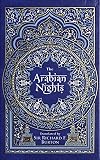
This abridged edition of the Arabian Nights by Burton has a number of entertaining but simple stories. The use of language is very enjoyable and I have to wonder how much of the original is lost in translation. It is worth noting that many of the stories in this edition are very non-PC to modern sensibilities. For example, a common theme seems to be woman cheating on their husbands with black men who are depicted in a less than flattering light (arriving / departing via climbing trees, etc). show more I found it interesting that in one of the stories, Sindbad shows no compunction in murdering those who fall into the tomb he is trapped in in order to obtain supplies to survive a few more days. A more modern story would probably feel obligated to show some remorse or to justify the protagonist's actions. show less

The Arabian Nights, also familiar in the West as One Thousand and One Nights is a collection of Middle Eastern folktales whose origins reach back more than a thousand years. The tales begin with a king, Shahryar, who discovers his wife's infidelity, and he vows to marry a new woman each night but have her killed the next morning to eliminate the possibility of being betrayed again. This goes on for some time (the carnage is certainly piling up) when Shahrazad, daughter of his right-hand man show more and who has a few tricks up her sleeve, offers herself as his next bride. Her cunning strategy is to tell a folktale each night with the suggestion of more to come, leaving Shahryar so curious about what happens next in the narrative that he will allow her to live another night in order to find out. What follows make up what has been a rich Middle Eastern oral and literary tradition that includes, among many others, such well-known tales as Sindbad the Seaman, Alaeddin, and Ali Baba and the Forty Thieves.
The translation I read was Burton's 1889 edition, which was written in archaic language such as "thee," "thou," "quoth" and "doest," and abounded with unfamiliar vocabulary like "wot," "haply," "gugglet," "rede" and "weet." Including notes, it is 872 very dense pages (virtually no paragraph breaks) and to digest more than 10-15 pages in a sitting was a challenge in focus. For that reason I used it to fulfill the Read Harder 2021 category 'a book you've been intimidated to read.' Modern readers may find the sheer amount of racism, misogyny, incest, slavery, murder and other disturbingly cruel violence, theft and backstabbing in these stories uncomfortable. There is also much tearing of clothes and heaving of dust onto one's head, which I surmise is how grief is depicted, as well as truly endless numbers of shipwrecks (Sindbad was a glutton for punishment in a most baffling way). It should be noted that a remarkable number of times it is women and their cooler heads who save the day! I feel something of an accomplishment to have finally, successfully made my way through this book, so I'm feeling pretty triumphant about that, as well as pleased to know a little more about this legendary icon of world literature. show less
The translation I read was Burton's 1889 edition, which was written in archaic language such as "thee," "thou," "quoth" and "doest," and abounded with unfamiliar vocabulary like "wot," "haply," "gugglet," "rede" and "weet." Including notes, it is 872 very dense pages (virtually no paragraph breaks) and to digest more than 10-15 pages in a sitting was a challenge in focus. For that reason I used it to fulfill the Read Harder 2021 category 'a book you've been intimidated to read.' Modern readers may find the sheer amount of racism, misogyny, incest, slavery, murder and other disturbingly cruel violence, theft and backstabbing in these stories uncomfortable. There is also much tearing of clothes and heaving of dust onto one's head, which I surmise is how grief is depicted, as well as truly endless numbers of shipwrecks (Sindbad was a glutton for punishment in a most baffling way). It should be noted that a remarkable number of times it is women and their cooler heads who save the day! I feel something of an accomplishment to have finally, successfully made my way through this book, so I'm feeling pretty triumphant about that, as well as pleased to know a little more about this legendary icon of world literature. show less
Lists
Folio Society (3)
Favourite Books (1)
Epic Fiction (1)
Unread books (1)
Awards


You May Also Like


Associated Authors
Statistics
- Works
- 326
- Also by
- 35
- Members
- 15,257
- Popularity
- #1,495
- Rating
- 3.8
- Reviews
- 147
- ISBNs
- 749
- Languages
- 24
- Favorited
- 3


