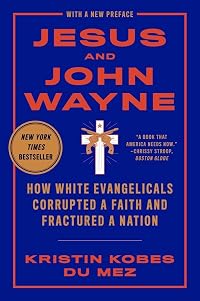
Jesus and John Wayne: How White Evangelicals Corrupted a Faith and Fractured a Nation
by Kristin Kobes Du Mez
On This Page
Description
Politics. Religion & Spirituality. Sociology. Nonfiction. How did a libertine who lacks even the most basic knowledge of the Christian faith win 81 percent of the white evangelical vote in 2016? And why have white evangelicals become a presidential reprobate's staunchest supporters? These are among the questions acclaimed historian Kristin Kobes Du Mez asks in Jesus and John Wayne, which explains how white evangelicals have brought us to our fractured political moment. Jesus and John Wayne show more is a sweeping account of the last seventy-five years of white evangelicalism, showing how American evangelicals have worked for decades to replace the Jesus of the Gospels with an idol of rugged masculinity and Christian nationalism. Evangelical popular culture is teeming with muscular heroes-mythical warriors and rugged soldiers, men like Oliver North, Ronald Reagan, Mel Gibson, and the Duck Dynasty clan, who assert white masculine power in defense of "Christian America." Chief among these evangelical legends is John Wayne, an icon of a lost time when men were uncowed by political correctness, unafraid to tell it like it was, and did what needed to be done. A much-needed reexamination, Jesus and John Wayne explains why evangelicals have rallied behind the least-Christian president in American history and how they have transformed their faith in the process, with enduring consequences for all of us. show lessTags
Recommendations




















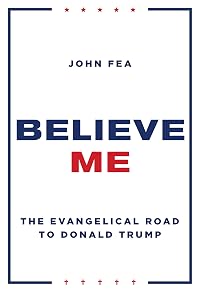
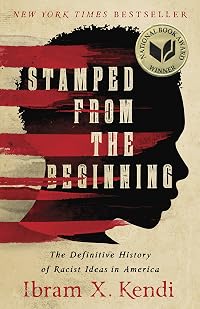
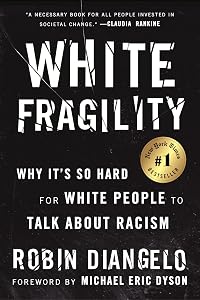
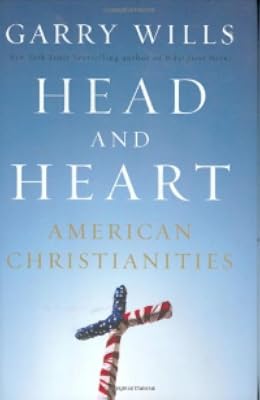


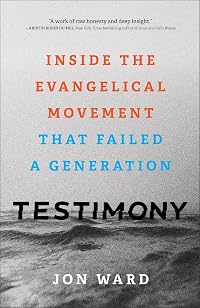
Member Recommendations
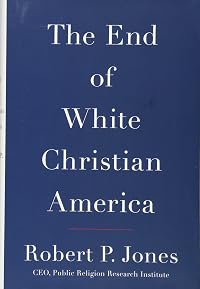
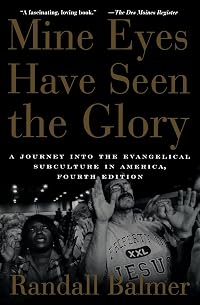
ReadHanded Discuss some similar trends and concepts, but with different perspectives
30
Emilyt804 Kuhner rips through several academic disciplines inside of a sentence to explain why Trump became an American political phenomenon, and why we can expect more of the same types of bad politics/law absent a revolution of moral thought. Kristin Kobes duMez uses the lenses of theology and gender studies to explain why so many white male evangelicals justify support for Donald Trump and other badly-behaved, toxic politicians and hangers-on. If you need one of these books for an essay or a research paper, I recommend them both.
Member Reviews
It was The Patriarchy all along. Or, at least, that's the through-line of this book, which looks at over 75 years of White Evangelicalism, popular culture, and politics, and the intersection thereof.
I'm still trying to figure it out, guys. I'm trying hard to understand why the Evangelicals I have known all my life have made such incomprehensible (to me) political decisions. The Evangelicalism that I grew up in (and left over 20 years ago) is the other side of the coin from Kobes Du Mez's Calvinist, complementarian background (mine was Wesleyan, egalitarian), so while I'm fascinated by her research and conclusions, I don't think it's quite as simple as she would have it. Don't get me wrong, I am totally not giving The Patriarchy a pass, show more nor do I deny the racism inherent in the system. I do feel that I have a much more thorough understanding of how Evangelical leaders have been in bed with (and in the pockets of) politicians, mostly Republican ones, since the 1950s. Parts of this book made me angry as heck, while explaining so many things. But I still feel like there's something I'm missing. I don't think anyone has figured it out yet. show less
I'm still trying to figure it out, guys. I'm trying hard to understand why the Evangelicals I have known all my life have made such incomprehensible (to me) political decisions. The Evangelicalism that I grew up in (and left over 20 years ago) is the other side of the coin from Kobes Du Mez's Calvinist, complementarian background (mine was Wesleyan, egalitarian), so while I'm fascinated by her research and conclusions, I don't think it's quite as simple as she would have it. Don't get me wrong, I am totally not giving The Patriarchy a pass, show more nor do I deny the racism inherent in the system. I do feel that I have a much more thorough understanding of how Evangelical leaders have been in bed with (and in the pockets of) politicians, mostly Republican ones, since the 1950s. Parts of this book made me angry as heck, while explaining so many things. But I still feel like there's something I'm missing. I don't think anyone has figured it out yet. show less
I didn’t read this book expecting revelation. By 2020, most of us watching American evangelicalism closely had already seen what Kristin Kobes Du Mez documented so thoroughly: a movement that traded spiritual substance for cultural dominance. Her core thesis—that white evangelicalism reshaped Jesus into a warrior figure and sanctified power as virtue—wasn’t shocking.
What was shocking was how little resistance that thesis met.
Five years later, the reason is obvious. She wasn’t issuing a warning—she was transcribing what had already become doctrine.
The Myth Becomes the Message
The transformation she charts—of Christ into conqueror, and faith into grievance—didn’t just shape sermons. It shaped institutions, elections, and show more foreign policy. Today, that same ideology underwrites Christian nationalism: a civil religion in which masculinity, militarism, and moral panic stand in for theology. What was once fringe rhetoric is now Republican campaign language.
Her central claim is clear: evangelicalism didn’t lose its way. It followed its incentives. Churches, publishers, and men’s ministries didn’t simply believe in the warrior Christ—they marketed him. Outrage became the fuel. Identity, the product.
And institutions that depend on grievance don’t reform. They replicate.
Key Points
The Ethical Vacuum
Du Mez maps the evangelical cultural machine with precision—but stops short of offering a path forward. That’s not a flaw. It’s simply the limit of the work she set out to do.
But for anyone serious about reform, the implications are unavoidable: if you teach people that obedience is strength and certainty is virtue, don’t be surprised when they abandon reflection for force.
What this moment demands is not a better narrative, but a better ethic. One that grounds moral strength in disciplined judgment. One that sees integrity not as loyalty to tribe, but as fidelity to truth.
Lessons for Today
Final Assessment
Jesus and John Wayne is not just a cultural history—it’s a moral autopsy. Du Mez reveals how a movement obsessed with control lost command of its own character. The book is persuasive, unflinching, and urgently relevant.
But the work it begins isn’t enough. What’s needed now is not a gentler faith or a better myth—but a stronger ethic. One rooted in autonomy, rational judgment, and the courage to live without illusion.
If Christianity wants to remain credible in public life, it has to get its house in order. The loudest voices—evangelical or otherwise—are giving the faith a reputation it may not recover from. It’s not persecution that threatens the Church’s future. It’s the conduct of those claiming to defend it.
This book tells us how we got here. The next step is choosing who we intend to become. show less
What was shocking was how little resistance that thesis met.
Five years later, the reason is obvious. She wasn’t issuing a warning—she was transcribing what had already become doctrine.
The Myth Becomes the Message
The transformation she charts—of Christ into conqueror, and faith into grievance—didn’t just shape sermons. It shaped institutions, elections, and show more foreign policy. Today, that same ideology underwrites Christian nationalism: a civil religion in which masculinity, militarism, and moral panic stand in for theology. What was once fringe rhetoric is now Republican campaign language.
Her central claim is clear: evangelicalism didn’t lose its way. It followed its incentives. Churches, publishers, and men’s ministries didn’t simply believe in the warrior Christ—they marketed him. Outrage became the fuel. Identity, the product.
And institutions that depend on grievance don’t reform. They replicate.
Key Points
- Obedience is not strength. Real strength requires independent judgment, not submission to doctrine or authority.
- Grievance is scalable. Cultural outrage is easy to market and hard to reform—it corrodes integrity as it builds identity.
- Power without principle corrupts. When domination becomes virtue, institutions become instruments of fear, not guardians of purpose.
- Moral reform begins with agency. Systems don’t regain integrity until individuals reclaim the responsibility to think and choose.
- Faith demands integrity. Without the courage to confront contradiction, belief becomes spectacle—ritual without substance.
The Ethical Vacuum
Du Mez maps the evangelical cultural machine with precision—but stops short of offering a path forward. That’s not a flaw. It’s simply the limit of the work she set out to do.
But for anyone serious about reform, the implications are unavoidable: if you teach people that obedience is strength and certainty is virtue, don’t be surprised when they abandon reflection for force.
What this moment demands is not a better narrative, but a better ethic. One that grounds moral strength in disciplined judgment. One that sees integrity not as loyalty to tribe, but as fidelity to truth.
Lessons for Today
- Don’t confuse branding with belief. Du Mez shows how evangelicalism often chose optics over orthodoxy. Today’s ideological movements—religious or secular—must be judged by the ideas they live, not the symbols they wear.
- Examine the incentives. Institutions don’t drift into dysfunction. They are built around what they reward. Reform requires more than values—it requires structural realignment.
- Guard against the decentralization of dogma. When ideology spreads through networks of influencers, accountability disappears. Platforms are not a substitute for principles.
- Challenge emotional certainty. Movements that prioritize identity over inquiry make reflection dangerous. The antidote is reason, not reaction.
- Strengthen by confronting fear. Leadership built on fear breeds fragility. Whether in pulpits, politics, or platforms, resilience begins with the courage to say: we were wrong.
Final Assessment
Jesus and John Wayne is not just a cultural history—it’s a moral autopsy. Du Mez reveals how a movement obsessed with control lost command of its own character. The book is persuasive, unflinching, and urgently relevant.
But the work it begins isn’t enough. What’s needed now is not a gentler faith or a better myth—but a stronger ethic. One rooted in autonomy, rational judgment, and the courage to live without illusion.
If Christianity wants to remain credible in public life, it has to get its house in order. The loudest voices—evangelical or otherwise—are giving the faith a reputation it may not recover from. It’s not persecution that threatens the Church’s future. It’s the conduct of those claiming to defend it.
This book tells us how we got here. The next step is choosing who we intend to become. show less
This history describes how evangelical culture and its attitudes about masculinity have shaped white Christianity and American politics. In so doing, it tries to describe why evangelical Christians, supposedly the among the most devout and religious, have chosen to support a politician who is anything but devout and resembling the Bible’s Jesus. Frankly, Kristin Kobes du Mez, a minister’s daughter, does an honest, thorough job. The evangelicalism she describes is wedded more closely to patriarchy than the Christian tradition. How readers respond to her critique will tell more about themselves than her, I suggest.
I came from a home where evangelicalism was foundational in my parent’s marriage. As a youth, I read widely, but no one show more seemed to care what I thought or how I struggled so long as I supported an evangelical church. Looking to the Bible for guidance on how to live, I found its contents out of sync with the dynamics of my Southern Baptist church. For a while, I tried to support nontraditional churches on the fringe of evangelicalism that incorporated thought from wider society. I love reading historical, orthodox Christian theology, but again, find it out of sync with contemporary evangelical trends. In late 2015, I was appalled when trends in my former church overtook the national news. Today, I confess a Christian creed and value its Good News, but no longer consider myself an evangelical. I’m not sure I can trust the movement ever again. Thus, this book helped me come to terms with my personal struggles.
For me, this book reinforced and deepened many longstanding reservations about the movement. I’m more scholarly by nature, and the militant masculinity described here simply does not fit me culturally. I’ve always been the intellectual oddball in evangelical churches, and I’ve grown to believe that’s their problem, not mine. She describes how so many evangelical leaders in recent decades appeal to their masculine identity for authority. Despite appealing to “family values,” their actions do not support family members. Deep tribalism causes people to overlook or excuse others’ faults and prevent reform. Latent racism can make white evangelicals offensive and insulting to black Christians.
Obviously, this book has been and remains controversial. It’s also religious, so opinions will abound. I suggest it continues to deserve a fair hearing. I tired of reading so much history about toxic masculinity, but I think that’s the point. We need to move on from harmful attempts to control and dominate each other. This book gives us much to think about in the form of a fact-driven history. Many histories of evangelicalism stop somewhere in the 1980s or 1990s. Kobes du Mez brings us right up to the first Trump administration. Although historians will undoubtedly rewrite that narrative in coming decades, her first draft more than supplements the newspapers as a first draft. show less
I came from a home where evangelicalism was foundational in my parent’s marriage. As a youth, I read widely, but no one show more seemed to care what I thought or how I struggled so long as I supported an evangelical church. Looking to the Bible for guidance on how to live, I found its contents out of sync with the dynamics of my Southern Baptist church. For a while, I tried to support nontraditional churches on the fringe of evangelicalism that incorporated thought from wider society. I love reading historical, orthodox Christian theology, but again, find it out of sync with contemporary evangelical trends. In late 2015, I was appalled when trends in my former church overtook the national news. Today, I confess a Christian creed and value its Good News, but no longer consider myself an evangelical. I’m not sure I can trust the movement ever again. Thus, this book helped me come to terms with my personal struggles.
For me, this book reinforced and deepened many longstanding reservations about the movement. I’m more scholarly by nature, and the militant masculinity described here simply does not fit me culturally. I’ve always been the intellectual oddball in evangelical churches, and I’ve grown to believe that’s their problem, not mine. She describes how so many evangelical leaders in recent decades appeal to their masculine identity for authority. Despite appealing to “family values,” their actions do not support family members. Deep tribalism causes people to overlook or excuse others’ faults and prevent reform. Latent racism can make white evangelicals offensive and insulting to black Christians.
Obviously, this book has been and remains controversial. It’s also religious, so opinions will abound. I suggest it continues to deserve a fair hearing. I tired of reading so much history about toxic masculinity, but I think that’s the point. We need to move on from harmful attempts to control and dominate each other. This book gives us much to think about in the form of a fact-driven history. Many histories of evangelicalism stop somewhere in the 1980s or 1990s. Kobes du Mez brings us right up to the first Trump administration. Although historians will undoubtedly rewrite that narrative in coming decades, her first draft more than supplements the newspapers as a first draft. show less
Usually I will stay away from books on religion. Everyone’s passions overtake their judgment, facts are few, fleeting and ignored, and no minds are changed in the reading. But the pop culture intersection of American politics and American evangelicalism proved tempting, and thankfully, most worthwhile. For a title like Jesus and John Wayne, I broke my rule.
“To be an evangelical, according to the National Association of Evangelicals, is to uphold the Bible as one’s ultimate authority, to confess the centrality of Christ’s atonement, to believe in a born-again conversion experience, and to actively work to spread this good news and reform society accordingly.” There is no mention of watching Fox News or voting Republican show more straight ticket, carrying guns, supporting the patriarchy or proselytizing the military. But those facets have taken over evangelicalism. The rest of the requirements have pretty much dropped away.
Kristin Kobes Du Mez hails from this environment, so she is intimately familiar with it and how it operates. She has written an exhaustive study of the evolution of American evangelicalism, with emphasis on its political effects. She has assembled all the top personalities and all the turning points in a fast-moving, if stomach-churning history that ultimately explains how America adopted Donald Trump. It is less than pretty.
Putting John Wayne and Jesus Christ in the same box takes a little work (for the uninitiated, like me). Wayne was a philanderer, married three times in an era when divorce was shameful. He was hard-smoking and swearing. He was a racist who claimed the Indians got what they deserved because whites needed more land and Indians were selfishly occupying it. For all his patriotic ballyhoo, he avoided the draft and never served. You might not see how this would be the ideal role model for evangelical Christians. But then, millions would say the same of Donald Trump. And that is the point.
Wayne was a swashbuckler onscreen. He took no guff from anyone. He was his own man; everyone else be damned. That is what evangelicals aspire to. They demand it of their president. And they also attribute all these qualities to Jesus Christ.
Throughout the last hundred years, evangelicals have glommed on to very flawed, most un-Christian characters as their heroes. Du Mez examines the histories of numerous televangelists who bilked millions from their viewers, only to be humiliated out of business by sex scandals. Two-faced politician-hypocrites are nothing new, and whoring Hollywood stars are the kinds of people evangelicals want everyone to look up to. Trump is not a difficult case to rationalize; he fits the cast perfectly.
Evangelicals believe in the patriarchy. Men rule, women are submissive. Men need to be serviced, women are only there to serve and support. Men are wild conquerors, saving and protecting the family. Women prefer it this way, needing to be swept off their feet by a bold knight in shining armor, rather than a pretty Prince Charming. There is stability and order in the patriarchy; equality means chaos.
Evangelicals are against anything that dilutes the power of men. They are against abortion (women having control over anything), women dressing like men, working outside the home or in politics. They are against (most) immigration and any form of foreign government they object to. This means constant war, the main thing they seem devoted to.
Two things can be drawn from this: 1) America can never be seen as wimpy. It must strike fear in the hearts of all other nations, and go to war to prove it, repeatedly. And stay until it wins completely. 2) America’s leader must be a warrior-king: loud, bold, unafraid, hard-nosed and direct. Evangelicals will vote against anyone who doesn’t fit that description. So Jimmy Carter, despite being an evangelical himself, had to go. So did George H.W. Bush. Trump over Clinton was an easy choice. And when they vote, it is en bloc, like north of 80% of them voting for this caricature of a president.
The other thing all their requirements spell out is White Supremacy. Guns are for all whites (44% of evangelicals have one), but not for blacks. Immigration is for white Europeans, not Central Americans. John Wayne cleared those people out of his path, and so must evangelicals – and their presidents. And they insist Jesus was like that too.
Evangelicals have twisted Christianity to fit their needs. For them, Jesus was a warrior, more Rambo than Mister Rogers. Fearsome, not loving. As Jerry Falwell said in 2004 – “God is Pro-War.” And millions took that to heart. At several points in the book, evangelicals refer to Jesus as a “badass”. This aggressive interpretation has led evangelicals to the US military. Not to serve, but to convert. They get onto military bases, give lectures, show Christian films (Mel Gibson is the new John Wayne), and actively work on individual soldiers. Today, 40% of active duty servicemen consider themselves evangelicals, fighting for Jesus, the patriarchy and White Supremacy.
This is also closely tied to the rape culture so prominent in the military. Women are there for the taking, and not for active duty service. Victims are hounded out of the service. A favorite strategy is to blame the victim for being there at all. With evangelists, there is always a woman to blame. In one of the numerous sex scandals among celebrity evangelists, blame was assigned to the preacher’s wife, who clearly hadn’t satisfied her husband sufficiently to keep his eye from wandering. He was clearly innocent.
Which brings out another of the many distasteful aspects of evangelicals: sexual hypocrisy. While busy telling the faithful how to have sex, they themselves are total pigs. Du Mez examines numerous scandals around numerous evangelists. They blame the victim, they deny, they ignore, they get away with it (though they often have to resign – for a while). It is astonishing how low quality so many evangelists are. As inspirations and moral models, they are total failures.
What they are good at is profit. The God business is booming. All the celebrity evangelists have built massive multimedia empires that funnel cash back to the center. They write Christian books by the thousands. (They love to write highly instructive sex manuals for men and women, the juicier and more explicit the better). They have theme parks, museums and tours like rockstars. As a friend of mine told me just yesterday – any shepherd will tell you, the flock must be fleeced as often as possible.
Evangelicals maintain they are conservatives. They abhor government participation in anything they do. Unless it involves free money, like federal funds for the sexual abstinence for teens effort. They lobby government, cozy up to politicians, and press a religious agenda. In this, they are obviously and blatantly hypocritical and totally un-Christian. The rights of no one else count worth a damn.
They venerate the Bible, but are most selective in what they follow. Turning the other cheek is out, as is never coveting another man’s wife. The Golden Rule is ignored in favor of violent deaths. Bearing false witness? Please. Love thy neighbor? Only if they’re white evangelical Republican Americans.
There is a ton of irony throughout the book. My own favorite is from Phyllis Schlafly (one of the very few women evangelicals respected). She said of Bill Clinton’s impeachment that if he got away with lying, “Americans can look forward to a succession of TV charlatans and professional liars occupying the White House.” She was correct. In another bout of irony, 77% of evangelical leaders believe Islam is “dedicated to world domination.” Takes one to know one, I’ve heard say.
The “family values” evangelicals propound are just a cover for patriarchy, submissive women and masculine power, Du Mez says. In the “always a woman to blame” mode, not satisfying husband’s sexual needs led him to abuse children. He is innocent. She is the guilty party. Evangelicals pressure women to restore violent and abusive husbands and fathers to the family. They knowingly allow child abusers and rapists to marry in the church and are surprised when there is trouble later. Counseling will be needed – from the church. They have created a mountain of abuse cases by themselves. In this Me Too era, 700 victims came forward in the Southern Baptist Conference alone.
All in all, Jesus and John Wayne makes Christian evangelicals look like a very ugly cult. Unlike so many others that bloom, fester and disappear, this one has staying power. It is successful, and it is a shame.
David Wineberg show less
“To be an evangelical, according to the National Association of Evangelicals, is to uphold the Bible as one’s ultimate authority, to confess the centrality of Christ’s atonement, to believe in a born-again conversion experience, and to actively work to spread this good news and reform society accordingly.” There is no mention of watching Fox News or voting Republican show more straight ticket, carrying guns, supporting the patriarchy or proselytizing the military. But those facets have taken over evangelicalism. The rest of the requirements have pretty much dropped away.
Kristin Kobes Du Mez hails from this environment, so she is intimately familiar with it and how it operates. She has written an exhaustive study of the evolution of American evangelicalism, with emphasis on its political effects. She has assembled all the top personalities and all the turning points in a fast-moving, if stomach-churning history that ultimately explains how America adopted Donald Trump. It is less than pretty.
Putting John Wayne and Jesus Christ in the same box takes a little work (for the uninitiated, like me). Wayne was a philanderer, married three times in an era when divorce was shameful. He was hard-smoking and swearing. He was a racist who claimed the Indians got what they deserved because whites needed more land and Indians were selfishly occupying it. For all his patriotic ballyhoo, he avoided the draft and never served. You might not see how this would be the ideal role model for evangelical Christians. But then, millions would say the same of Donald Trump. And that is the point.
Wayne was a swashbuckler onscreen. He took no guff from anyone. He was his own man; everyone else be damned. That is what evangelicals aspire to. They demand it of their president. And they also attribute all these qualities to Jesus Christ.
Throughout the last hundred years, evangelicals have glommed on to very flawed, most un-Christian characters as their heroes. Du Mez examines the histories of numerous televangelists who bilked millions from their viewers, only to be humiliated out of business by sex scandals. Two-faced politician-hypocrites are nothing new, and whoring Hollywood stars are the kinds of people evangelicals want everyone to look up to. Trump is not a difficult case to rationalize; he fits the cast perfectly.
Evangelicals believe in the patriarchy. Men rule, women are submissive. Men need to be serviced, women are only there to serve and support. Men are wild conquerors, saving and protecting the family. Women prefer it this way, needing to be swept off their feet by a bold knight in shining armor, rather than a pretty Prince Charming. There is stability and order in the patriarchy; equality means chaos.
Evangelicals are against anything that dilutes the power of men. They are against abortion (women having control over anything), women dressing like men, working outside the home or in politics. They are against (most) immigration and any form of foreign government they object to. This means constant war, the main thing they seem devoted to.
Two things can be drawn from this: 1) America can never be seen as wimpy. It must strike fear in the hearts of all other nations, and go to war to prove it, repeatedly. And stay until it wins completely. 2) America’s leader must be a warrior-king: loud, bold, unafraid, hard-nosed and direct. Evangelicals will vote against anyone who doesn’t fit that description. So Jimmy Carter, despite being an evangelical himself, had to go. So did George H.W. Bush. Trump over Clinton was an easy choice. And when they vote, it is en bloc, like north of 80% of them voting for this caricature of a president.
The other thing all their requirements spell out is White Supremacy. Guns are for all whites (44% of evangelicals have one), but not for blacks. Immigration is for white Europeans, not Central Americans. John Wayne cleared those people out of his path, and so must evangelicals – and their presidents. And they insist Jesus was like that too.
Evangelicals have twisted Christianity to fit their needs. For them, Jesus was a warrior, more Rambo than Mister Rogers. Fearsome, not loving. As Jerry Falwell said in 2004 – “God is Pro-War.” And millions took that to heart. At several points in the book, evangelicals refer to Jesus as a “badass”. This aggressive interpretation has led evangelicals to the US military. Not to serve, but to convert. They get onto military bases, give lectures, show Christian films (Mel Gibson is the new John Wayne), and actively work on individual soldiers. Today, 40% of active duty servicemen consider themselves evangelicals, fighting for Jesus, the patriarchy and White Supremacy.
This is also closely tied to the rape culture so prominent in the military. Women are there for the taking, and not for active duty service. Victims are hounded out of the service. A favorite strategy is to blame the victim for being there at all. With evangelists, there is always a woman to blame. In one of the numerous sex scandals among celebrity evangelists, blame was assigned to the preacher’s wife, who clearly hadn’t satisfied her husband sufficiently to keep his eye from wandering. He was clearly innocent.
Which brings out another of the many distasteful aspects of evangelicals: sexual hypocrisy. While busy telling the faithful how to have sex, they themselves are total pigs. Du Mez examines numerous scandals around numerous evangelists. They blame the victim, they deny, they ignore, they get away with it (though they often have to resign – for a while). It is astonishing how low quality so many evangelists are. As inspirations and moral models, they are total failures.
What they are good at is profit. The God business is booming. All the celebrity evangelists have built massive multimedia empires that funnel cash back to the center. They write Christian books by the thousands. (They love to write highly instructive sex manuals for men and women, the juicier and more explicit the better). They have theme parks, museums and tours like rockstars. As a friend of mine told me just yesterday – any shepherd will tell you, the flock must be fleeced as often as possible.
Evangelicals maintain they are conservatives. They abhor government participation in anything they do. Unless it involves free money, like federal funds for the sexual abstinence for teens effort. They lobby government, cozy up to politicians, and press a religious agenda. In this, they are obviously and blatantly hypocritical and totally un-Christian. The rights of no one else count worth a damn.
They venerate the Bible, but are most selective in what they follow. Turning the other cheek is out, as is never coveting another man’s wife. The Golden Rule is ignored in favor of violent deaths. Bearing false witness? Please. Love thy neighbor? Only if they’re white evangelical Republican Americans.
There is a ton of irony throughout the book. My own favorite is from Phyllis Schlafly (one of the very few women evangelicals respected). She said of Bill Clinton’s impeachment that if he got away with lying, “Americans can look forward to a succession of TV charlatans and professional liars occupying the White House.” She was correct. In another bout of irony, 77% of evangelical leaders believe Islam is “dedicated to world domination.” Takes one to know one, I’ve heard say.
The “family values” evangelicals propound are just a cover for patriarchy, submissive women and masculine power, Du Mez says. In the “always a woman to blame” mode, not satisfying husband’s sexual needs led him to abuse children. He is innocent. She is the guilty party. Evangelicals pressure women to restore violent and abusive husbands and fathers to the family. They knowingly allow child abusers and rapists to marry in the church and are surprised when there is trouble later. Counseling will be needed – from the church. They have created a mountain of abuse cases by themselves. In this Me Too era, 700 victims came forward in the Southern Baptist Conference alone.
All in all, Jesus and John Wayne makes Christian evangelicals look like a very ugly cult. Unlike so many others that bloom, fester and disappear, this one has staying power. It is successful, and it is a shame.
David Wineberg show less
Jesus and John Wayne: How White Evangelicals Corrupted a Faith and Fractured a Nation by Kristen Kobes Du Mez delves into the heart of teachings that influenced the people around me and therefore me, particularly when I was growing up. The insidious power of a narrative weaves throughout Jesus and John Wayne highlighting the contradictions of teachings within Christianity. Du Mez illustrates how those narratives slide into everyday language coercing the public into taking them on even when they contradict their own beliefs, goals, and even reality. Seeing so many of the scandals that have rocked the evangelical community, the forgiveness, the excuses, the misplaced blame, contained in the pages of a single book really drove home the show more hypocrisy of the powerful and the elite within the evangelical community. Jesus and John Wayne is a well-written and interesting examination of how a religion was coopted by a group of white men with an agenda and thirst for power and used to pit people against one another to push that agenda on people they wanted to control and a nation they wanted to mold. show less
There’s not much to say besides this is an excellently researched book that if nothing else made me feel vindication for my utter contempt of these people. It helped me understand where they came from via history and somewhat how they’re surviving still (basically with a ton of hatred guiding their way). There’s no changing them though; minus the few escapees who have deprogrammed themselves, I truly don’t know where we’d go from here, and it’s a wretched situation. The author’s final sentences in the book are “Appreciating how this ideology developed over time is also essential for those who wish to dismantle it. What was once done might also be undone.” I’m not so sure of that, but I guess some speck of hope was show more needed to combat the bleakness. show less
What a timely, well-researched, fascinating, gripping book Du Mez has written. It traces the rise of white Christian evangelicalism from a small and fringe group to the powerhouse that dominates huge swaths of commerce, politics, and education. And how this group's view of Jesus is not that of the gentle, robed man who advocated "love thy neighbor," but instead a warrior whose mighty sword will swiftly kill millions of enemies.
The myth of the heroic warrior male in American history starts with Teddy Roosevelt, a short, high-voiced man who chose the cowboy persona and became President and patron of the West. But it didn't stop there, and morphed from Teddy Roosevelt to John Wayne to Ronald Reagan to Trump. None of these men were show more evangelical, but that does not seem to matter to this movement: they are brash, swaggering, and insistent that women stay in their appointed places. Boys are bullied into being men, girls are brainwashed into total submission, and any difference from these norms, including sexual assault, are the victims' fault. And her father's, because he did not protect "his" daughter/property well enough.
It is a quick read by a professor who has done an extraordinary amount of what must have been difficult research, and documents how we came to be where we are now. show less
The myth of the heroic warrior male in American history starts with Teddy Roosevelt, a short, high-voiced man who chose the cowboy persona and became President and patron of the West. But it didn't stop there, and morphed from Teddy Roosevelt to John Wayne to Ronald Reagan to Trump. None of these men were show more evangelical, but that does not seem to matter to this movement: they are brash, swaggering, and insistent that women stay in their appointed places. Boys are bullied into being men, girls are brainwashed into total submission, and any difference from these norms, including sexual assault, are the victims' fault. And her father's, because he did not protect "his" daughter/property well enough.
It is a quick read by a professor who has done an extraordinary amount of what must have been difficult research, and documents how we came to be where we are now. show less
Members
- Recently Added By
Lists

Top Five Books of 2020
982 works; 350 members

US White Christian Nationalism
24 works; 1 member

Books Read in 2025
4,091 works; 97 members
Author Information

3 Works 1,587 Members
Kristin Kobes Du Mez is a professor of history at Calvin University and the author of A New Gospel for Women. She has written for the Washington Post, Christianity Today, Christian Century, and Religion Politics, among other publications. She lives in Grand Rapids, Michigan.
Awards and Honors
Common Knowledge
- Original publication date
- 2020-05-19
- People/Characters
- Roger Ailes; Zacharah Anani; Dianna Anderson; Leith Anderson; John Ankerberg; Antichrist (show all 346); David Antoon; Yasser Arafat; Michele Bachmann; Jim Bakker; Tammy Faye Bakker; Charles Baldwin; Bruce Barton; Gary Bauer; Alan Bean; Glenn Beck; Sarah Bessey; Robert Bly; Dietrich Bonhoeffer; Pat Boone; Wellington Boone; William G. Boykin; Paul Bremer; Bill Bright; David Brody; Garth Brooks; William Broomfield; Helen Gurley Brown; Anita Bryant; Pat Buchanan; William J. Buckley, Jr.; Archie Bunker; Denny Burk; George H. W. Bush; George W. Bush; Jeb Bush; William Calley; John Calvin; Stephen Cambone; Kirk Cameron; Campus Crusade for Christ; Ergun Caner; Emir Caner; Ben Carson; D.A. Carson; Jimmy Carson; Johnny Cash; T.F. Charlton; Christian Booksellers Association; Christian Coalition; Christian Men's Network; Christian Military Fellowship; Christian Right; Richard Cizik; Bill Clinton; Hillary Rodham Clinton; Dan Coats; Michael Cohen; Edwin Louis Cole; Charles Colson; Christopher Columbus; Roberta Combs; Concerned Women for America; Paul Coughlin; Council for National Policy; Council on Biblical Manhood and Womanhood; W.A. Criswell; Davy Crockett; Ted Cruz; Robert Lewis Dabney; Gordon Dalbey; Jim Daly; Stormy Daniels; Tom Daschle; Kim Davis; Mark DeMoss; Rachael Danhollander; Brent Detweiler; Mark Dever; Richard DeVoss; James Dobson; Ryan Dobson; Mark Driscoll; Joanne Dru; Stephen Ducat; Michael Dukakis; Eagle Forum; Sherwood Eddy; Jonathan Edwards; Dwight D. Eisenhower; John Eldredge; Elisabeth Elliot; Dale Evans; Mike Evans; Rachel Held Evans; Tony Evans; Jerry Falwell; Jerry Falwell, Jr.; Steve Farrar; Michael Farris; The Fellowship; Fellowship Christian Athletes; Will Ferrell; Samantha Field; Nathan Finn; Frances FitzGerald; Focus on the Family; Christine Blasey Ford; Nathan Bedford Forrest; Betty Friedan; Charles Fuller; Chip Gaines; Joanna Gaines; Gaither Vocal Band; Michael Gerson; Mel Gibson; George Gilder; Darrell Gilyard; Newt Gingrich; James Glass; Voyle Glover; Berry Goldwater; Mikhail Gorbachev; Marvin Gorman; The Gospel Coalition; Bill Gothard; Billy Graham; Franklin Graham; Robert Grant; John S. Grinalds; John Hagee; Ted Haggard; Jessica Hahn; Stuart Hamblem; Billy James Hargis; John Harris; Mark Hatfield; Jen Hatmaker; Jack Hayford; United States Department of Health, Education, and Welfare; Wallace Henley; Carl Henry; Carl Herbster; Anita Hill; E.V. Hill; Adolf Hitler; Chuck Holton; House Un-American Activities Committee; Doug Howard; Mike Huckabee; Saddam Hussein; Bill Hybels; Dave Hyles; Jack Hyles; Patricia Ireland; Stonewall Jackson; Don Jacobson; Robert Jeffress; Jesus Christ; John Birch Society; Lyndon Baines Johnson; Bob Jones III; Mike Jones; Robert P. Jones; Carl Jung; Brett Kavanaugh; D. James Kennedy; John F. Kennedy; Robert F. Kennedy; Martin Luther King, Jr.; Linda Kay Klein; Walter Knott; John Kmox; Ron Kovic; Kris Kristofferson; Ku Klux Klan; Beverly LaHaye; Tim LaHaye; George Lakoff; Scott Lamb; Richard Land; Tom Landry; David Lane; Adam LaRoche; League of Nations; Richard Lee; Robert E. Lee; Monica Lewinsky; C.S. Lewis; Sinclair Lewis; Rush Limbaugh; Abraham Lincoln; Hal Lindsey; Ron Luce; Douglas MacArthur; John Macarthur; James MacDonald; C.J. Mahaney; Malcolm X; Ferdinand Marcos; Imelda Marcos; George Marsden; John McCain; Bill McCartney; John McDougall; George McGovern; Carl McIntire; Brian McLaren; H.L. Mencken; Eric Metaxas; Joyce Meyer; Marion Miller; George Mitchell; Al Mohler; Beth Moore; Roy Moore; Russell Moore; Moral Majority; Marabel Morgan; Motion Picture Alliance for the Preservation of American Ideals; Rich Mouw; Mark Mulder; David Murrow; Penny Nance; Larry Nassar; National Association of Evangelicals; National Organization for Women; National Rifle Association; David Neff; Pete Newman; Richard M. Nixon; Larry Norman; Oliver North; Barack Obama; Michelle Obama; Harold John Ockenga; Officers' Christian Fellowship; Gary Oliver; Ted Olsen; Roger Olson; Bill O'Reilly; Sarah Palin; Rosa Parks; Joe Paterno; Darrin Patrick; Paige Patterson; George S. Patton; Paul, the Apostle, of Tarsus "Saul"; Leanne Payne; Mike Pence; Saint Peter; Rick Perry; H. Ross Perot; Tony Perkins; John Perkins; Doug Phillips; Holly Phillips; Randy Phillips; John Piper; Paul Pressler; John Price; Promise Keepers; Vladimir Putin; Paul Rader; Dave Ramsey; Ronald D. Ray; Ronald Reagan; Ralph Reed; Religious Right; Religious Roundtable; John R. Rice; Cecil Robertson; James Robison; Roy Rogers; Theodore Roosevelt; Rough Riders; Julie Roys; Marco Rubio; Donald H. Rumsfeld; Rousas John Rushdoony; Jim Ryun; Ned Ryun; Rebecca St. James; Abdul Saleeb; Kamal Saleem; Jerry Sandusky; Sandinistas; Andy Savage; Antonin Scalia; Jack Schaap; Francis Schaeffer; Phyllis Schlafly; Robert Schuller; Fred Schwartz; Norman Schwarzkopf; Jeff Sessions; Jeff Sharlet; Walid Shoebat; Silent Majority; Steven Sitler; Tom Skinner; James K. A. Smith; Michael W. Smith; Benjamin Spock; R. C. Sproul; Charles Spurgeon; Todd Starnes; Ed Stetzer; Aldlai Stevenson; Brad Stine; Randy Stinson; Billy Sunday; Sun Myung Moon; Jimmy Swaggart; Clarence Thomas; John Thune; Strom Thurmond; Together for the Gospel; Alexis de Tocqueville; Lourdes Torres-Manteufel; Harry S. Truman; Donald Trump; Bob Vander Plaats; Richard Viguerie; Jerry Vines; Vision Forum; Edwin Walker; Scott Walker; George Wallace; William Wallace; Jim Wallis; Rus Walton; Bruce Ware; Rick Warren; Aissa Wayne; George Washington; John Wayne; Stu Weber; Johnny A. Weida; Mikey Weinstein; Bobby Welch; Robert Welch; Bob Wells; Paul Weyrich; Jeremiah Wright; Youth for Christ
- Important places
- Afghanistan; Bob Jones University; California, USA; Christian Reformed Church; Colorado Springs, Colorado, USA; First Baptist Church, Hammond, Indiana, USA (show all 42); First Baptist Church, Dallas, Texas, USA; Fuller Seminary; Hobby Lobby; Iran; Iraq; Kanakuk Kamps; Knott's Berry Farm, Buena Park, California, USA; Liberty University, Lynchburg, Virginia, USA; Mars Hill Church, Seattle, Washington, USA; Nazarene Bible College; New Life Church; Nicaragua; Pepperdine College; Soviet Union; Southern Seminary; U.S. Supreme Court, Washington, D.C., USA; Thomas Road Baptist Church; Unification Church; United Nations Headquarters, New York, New York, USA; United States of America; United States Air Force Academy, Colorado, USA; United States Naval Academy; Wheaton College; Joe White; Reggie White; George Whitefield; John W. Whitehead; John A. Wickham, Jr.; Jamin Wight; Douglas Wilson; Nate Wilson; Frank Wolf; Paul Wolfowitz; Jules Woodson; World Prayer Center; Xtreme Ministries
- Important events
- Roe v. Wade; Affordable Care Act; War in Afghanistan; Brown v. Board of Education; Christian Reconstructionism; Civil Rights Act of 1964 (show all 41); Civil Rights Movement, USA; American Civil War; Cold War; Comprehensive Child Development Bill; Danvers Statement; Desiring God Conference; Domestic Violence Act; Education Amendment Act; Equal Rights Amendment; Explo '72; Fairness Doctrine; Family Research Council; Gulf War, 1990-1991; Kent State shootings; National Prayer Breakfast; Nicaraguan Contra War; Operation Desert Storm; Phoenix Program; Prohibition; Quiverfull Movement; 1980; Scopes Trial; September 11 Attacks; Southern Baptist Convention; Spanish-American War; Victorian Era; Vietnam War; Violence Against Women Act; War on Christmas; War on Terror; Watergate Scandal; White House Conference on the Family; World Conference on Women; World War I; World War II
- Dedication
- This one is for Jack.
- First words
- On a bitterly cold day in January 2016, Donald Trump stood on the stage of an auditorium at a small Christian college in Iowa. (Introduction)
The path that ends with John Wayne as an icon of Christian masculinity is strewn with a colorful cast of characters, from the original cowboy president to a baseball-player-turned-preacher to a singing cowboy and a dashing yo... (show all)ung evangelist. (Chapter 1) - Quotations
- The story that follows is one of world wars and presidential politics, of entrepreneurial preachers and theological innovation, of blockbuster movies, sex manuals, and self-help books. It does not begin with Donald Trump. Nor... (show all) will it end with him. (Introduction)
Not all evangelicals in Graham's day embraced such patriarchal teachings. Some believed Christ's atonement had nullified any “curse” placed on Eve in the Book of Genesis, opening the way to egalitarian gender roles; in th... (show all)e late nineteenth and early twentieth centuries, evangelicals in this tradition had been enthusiastic proponents of women's rights. (Chapter 1) - Last words
- (Click to show. Warning: May contain spoilers.)What was once done might also be undone.
- Publisher's editor
- Gerstle, Dan
- Original language
- English
- Canonical DDC/MDS
- 277.3083
Classifications
Statistics
- Members
- 1,534
- Popularity
- 14,980
- Reviews
- 39
- Rating
- (4.14)
- Languages
- English, Portuguese, Spanish
- Media
- Paper, Audiobook, Ebook
- ISBNs
- 11
- ASINs
- 4