On This Page
Description
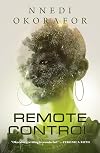
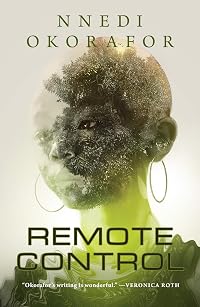
"The day Fatima forgot her name, Death paid a visit. From here on in she would be known as Sankofa--a name that meant nothing to anyone but her, the only tie to her family and her past. Her touch is death, and with a glance a town can fall. And she walks-alone, except for her fox companion-searching for the object that came from the sky and gave itself to her when the meteors fell and when she was yet unchanged; searching for answers. But is there a greater purpose for Sankofa, now that show more Death is her constant companion?"-- show lessTags
Recommendations








Member Reviews
I read through this in one day, and not just because it's short enough to make that not a difficult job. I kept reading, even as I walked around the library doing my job, because the story was compelling and hard to put down. The simplicity of the prose and of the plot when taken at face value was misleading; there's a lot lurking beneath the surface there, and one can't avoid thinking about it well after the story ends. Many of the reader's questions go unanswered primarily because they go unanswered for Sankofa--she can't use technology to learn what she wants to know, and so her ignorance becomes ours, and all the more unnerving for it.
I'll be thinking about this one for a while, and I've already recommended it to several patrons and show more coworkers. show less
I'll be thinking about this one for a while, and I've already recommended it to several patrons and show more coworkers. show less
Nearly from the first page on, I couldn't put down Okorafor's Remote Control. The poetry of Okorafor's prose, paired with the brilliant vision of character and plot, makes for a book which rings with all of the heart and breadth of a classic fairy tale, but through the offering of a fresh and ecologically aware tale built for today's world and reader. As short as the book is, there's a depth of thought that makes it feel far wider than it is in terms of the world it creates, and the main character is as otherworldly as she is important to be read.
I'd absolutely recommend this to any reader of speculative fiction or science fiction.
I'd absolutely recommend this to any reader of speculative fiction or science fiction.
Dark and brooding, Remote Control lacked the joyful surprises I hope for from futurism and magic realism (and that were present in Binti). Compelling as a fable, but not a story I need to revisit.
Series Info/Source: This is a stand alone book. I got an eGalley of this book through NetGalley to review.
Thoughts: I enjoyed this strange read about a young girl who gets turned into a sort of bringer of death by advanced technology. It was well done. I didn't like this quite as much as the Binti series but it was still a fun listen (I listened to this on audiobook).
Fatima acquired an object from the sky and after that she could emit a deadly strange light when she was harmed. The story starts in the present and then goes back to show us how Fatima, now known as Sankofa, acquired this strange power. We follow her story until we end up back in the present where we watch Fatima try to find some peace.
This was well done and has a lot of show more food for thought in it. I enjoyed listening to it on audiobook. The narration is well done, the narrator does speak with a heavy African accent which was a bit tough to understand when there was a lot of background noise around. However, it was pleasant to listen to and fit the tone of the book well.
My Summary (4/5): Overall I enjoyed this quite a bit. I liked Fatima and her story and the undercurrents about society, the environment and those they treat as outcasts. I didn't like this quite as much as the Binti series. I have also read the first book in the Nsibidi Scripts and didn't really enjoy that series. I would like to checkout some of Okorafor's other stories in the future. show less
Thoughts: I enjoyed this strange read about a young girl who gets turned into a sort of bringer of death by advanced technology. It was well done. I didn't like this quite as much as the Binti series but it was still a fun listen (I listened to this on audiobook).
Fatima acquired an object from the sky and after that she could emit a deadly strange light when she was harmed. The story starts in the present and then goes back to show us how Fatima, now known as Sankofa, acquired this strange power. We follow her story until we end up back in the present where we watch Fatima try to find some peace.
This was well done and has a lot of show more food for thought in it. I enjoyed listening to it on audiobook. The narration is well done, the narrator does speak with a heavy African accent which was a bit tough to understand when there was a lot of background noise around. However, it was pleasant to listen to and fit the tone of the book well.
My Summary (4/5): Overall I enjoyed this quite a bit. I liked Fatima and her story and the undercurrents about society, the environment and those they treat as outcasts. I didn't like this quite as much as the Binti series. I have also read the first book in the Nsibidi Scripts and didn't really enjoy that series. I would like to checkout some of Okorafor's other stories in the future. show less
Okorafor, Nnedi. Remote Control. Tordotcom, 2021.
Nigerian-American author Nnedi Okorafor sets her new novella Remote Control in a near-future Ghana, but the style gives it the ambiance of a folktale. In fact, the narrative is peppered with folktale versions of itself. Its heroine, Fatima, a.k.a. Sankofa, who may have been infected or possessed by an alien seed, wanders alone through Ghanaian villages bringing a quick death to those in mortal pain. The folktales say she is the adopted daughter of Death. The corporations may see her as an energy source or weapon. The book is so far a standalone, but its open ending suggests Sankofa’s story may continue. Whether or not that happens, Remote Control is a stylish little tone poem that will show more give you an uncanny frisson. 4 stars. show less
Nigerian-American author Nnedi Okorafor sets her new novella Remote Control in a near-future Ghana, but the style gives it the ambiance of a folktale. In fact, the narrative is peppered with folktale versions of itself. Its heroine, Fatima, a.k.a. Sankofa, who may have been infected or possessed by an alien seed, wanders alone through Ghanaian villages bringing a quick death to those in mortal pain. The folktales say she is the adopted daughter of Death. The corporations may see her as an energy source or weapon. The book is so far a standalone, but its open ending suggests Sankofa’s story may continue. Whether or not that happens, Remote Control is a stylish little tone poem that will show more give you an uncanny frisson. 4 stars. show less
In Remote Control, Okorafor has created another fascinating story using a mishmash of genres. Remote Control follows a young girl dubbed Sankofa who has embarked on a quest to find out how she became the Adopted Daughter of Death, and how she lost her parents, a transformation that's still a mystery to her. (The earliest events of Remote Control take place on a shea tree farm in Wulugu — a small village in northern Ghana. A strange green “seed” falls from the sky just by our protagonist's house and burrows under the tree she loves to sit in. Through unexplained means, the seed conveys fatal power to the young girl. The power has the side effect of making her luminous like a TV remote control in the dark, giving her one of her show more nicknames and the book its title). For the illumined Sankofa, a seed in a box may hold a key to the secret, but its mechanism is unclear. This quest drives Sankofa's actions, but it never coheres into a conventional plot.
Remote Control is episodic and organic. It's a cumulative narrative, a slow burn that is fused with emotional urgency, and vast worldbuilding. It's a sad work, one about the pain of becoming, the pain of growing up and a somewhat broken homecoming. There’s no escape for either Sankofa or the reader from her claustrophobic power but Sankofa learns to live with it and learns to belong, in her own strange way. And she is not interested at bending at the wills of techno-corporations or farmers. She wishes to live her life, in her own way.
As she says: "I am Sankofa, I belong wherever I want to belong."
It's important to note that Remote Control takes place in a near-future, science-fictional Africa. I think the book is very much about how an individual responds to the clashing of the past with the future, and how one is to forage an identity, in a world so quick to erasure. It is interesting that Sankofa kills others - literally destroying in a way their physical identity or erasing their physical identity from the earthly plane- while she is trying to forge her own personal identity. show less
Remote Control is episodic and organic. It's a cumulative narrative, a slow burn that is fused with emotional urgency, and vast worldbuilding. It's a sad work, one about the pain of becoming, the pain of growing up and a somewhat broken homecoming. There’s no escape for either Sankofa or the reader from her claustrophobic power but Sankofa learns to live with it and learns to belong, in her own strange way. And she is not interested at bending at the wills of techno-corporations or farmers. She wishes to live her life, in her own way.
As she says: "I am Sankofa, I belong wherever I want to belong."
It's important to note that Remote Control takes place in a near-future, science-fictional Africa. I think the book is very much about how an individual responds to the clashing of the past with the future, and how one is to forage an identity, in a world so quick to erasure. It is interesting that Sankofa kills others - literally destroying in a way their physical identity or erasing their physical identity from the earthly plane- while she is trying to forge her own personal identity. show less
CW: Girl loses control of her powers and kills people including her family
Well that was a remarkable and thought provoking fable-like story.
Nnedi pulled me in instantly with a character that needed love and community, but received only fear and ostracization. There are so many interesting ideas that are explored in this novella. It is human nature to seek comfort with others and this was the most emotional theme for me. Stories where young children are alone, confused, and seeking support and/or love, always hit me right in the heart. In essence however, this is a 'journey' story. Sankofa is on a physical and metaphorical journey to find her place and purpose in a futuristic, Ghana, whilst healing from the hurt of losing her loved ones show more and home.
I honestly don't know how I feel about how it concluded. I really want to be the person who sagely nods at the openness of the ending and is content with pondering on what comes next, but I am not. I really am not. I need a sequel. And I needed it yesterday. show less
Well that was a remarkable and thought provoking fable-like story.
Nnedi pulled me in instantly with a character that needed love and community, but received only fear and ostracization. There are so many interesting ideas that are explored in this novella. It is human nature to seek comfort with others and this was the most emotional theme for me. Stories where young children are alone, confused, and seeking support and/or love, always hit me right in the heart. In essence however, this is a 'journey' story. Sankofa is on a physical and metaphorical journey to find her place and purpose in a futuristic, Ghana, whilst healing from the hurt of losing her loved ones show more and home.
I honestly don't know how I feel about how it concluded. I really want to be the person who sagely nods at the openness of the ending and is content with pondering on what comes next, but I am not. I really am not. I need a sequel. And I needed it yesterday. show less
Members
- Recently Added By
Lists

2022 Hugo Awards -- Eligible Works -- Novellas
19 works; 7 members

Favourite Science Fiction Books of the 21st Century
47 works; 8 members

Top Five Books of 2021
604 works; 181 members

Female Author
1,234 works; 67 members

Anticipated SFF 2021
86 works; 3 members

Books Read in 2021
5,361 works; 113 members

Books Read in 2022
5,226 works; 115 members

SFF standalone novellas with female protagonists
101 works; 4 members

Global Reads: Books Set in Africa
19 works; 3 members

Books by Black Women
108 works; 2 members
Author Information

108+ Works 21,964 Members
Nnedi Okorafor was born on April 8, 1974 in Cincinnati, Ohio. She is a graduate of Clarion Writers Workshop in Lansing, Michigan and earned her PhD in English from the University of Illinois. Currently she is an associate professor of creative writing and literature at the University at Buffalo (SUNY). Her awards include a 2001 Hurston-Wright show more literary award for her story Amphibious Green, The Wole Soyinka Prize for Literature in Africa for Zahrah the Windseeker, the Carl Brandon Parallax Award for The Shadow Speaker, the 2007-08 winner of the Macmillan Writer's Prize for Africa for Long Juju Man, the 2011 World Fantasy Award for Best Novel for Who Fears Death, and her science fiction novella Binti won the 2016 Nebula Award (Best Novella) and the 2016 Hugo Awards for Best Novella. (Bowker Author Biography) show less

Nnedi Okorafor is a LibraryThing Author, an author who lists their personal library on LibraryThing.
Some Editions
Awards and Honors
Awards
Distinctions
Notable Lists
Series

Common Knowledge
- Canonical title
- Remote Control
- Original title
- Remote Control
- Original publication date
- 2021-01-19
- People/Characters
- Sankofa (Fatima Okwan); Fatima Okwan; Edgar; Ye; Movenpick the fox; Kwaku Samuel Agya (show all 15); Mr. Agya (brother of Kwaku Samuel Agya); Fenuko Okwan (brother of Fatima Okwan); Mr. Okwan (father of Fatima Okwan); Mrs. Okwan (mother of Fatima Okwan); Parliament Member Kusi; Kwesi; Alhaja Ujala; Sister Kumi; Steel Brother (robocop/traffic light)
- Important places
- Ghana; Tamale, Ghana; Wulugu, Ghana; RoboTown, Ghana
- Epigraph
- "You come at the king, you best not miss." -- Omar Little, The Wire
- First words
- The moon was just rising when Sankofa came up the dirt road.
- Last words
- (Click to show. Warning: May contain spoilers.)And this time, she did it on purpose.
- Publisher's editor
- Harris, Lee
- Blurbers
- Roth, Veronica
- Original language
- English
- Canonical DDC/MDS
- 813.6
- Canonical LCC
- PS3615.K67
Classifications
Statistics
- Members
- 908
- Popularity
- 29,648
- Reviews
- 61
- Rating
- (3.94)
- Languages
- English, Swedish
- Media
- Paper, Audiobook, Ebook
- ISBNs
- 5
- ASINs
- 4