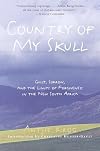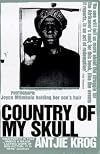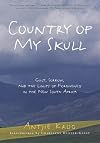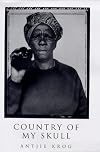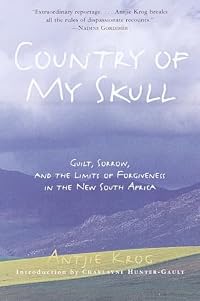
Country of My Skull: Guilt, Sorrow, and the Limits of Forgiveness in the New South Africa
by Antjie Krog
On This Page
Description
Ever since Nelson Mandela dramatically walked out of prison in 1990 after twenty-seven years behind bars, South Africa has been undergoing a radical transformation. In one of the most miraculous events of the century, the oppressive system of apartheid was dismantled. Repressive laws mandating separation of the races were thrown out. The country, which had been carved into a crazy quilt that reserved the most prosperous areas for whites and the most desolate and backward for blacks, was show more reunited. The dreaded and dangerous security force, which for years had systematically tortured, spied upon, and harassed people of color and their white supporters, was dismantled. But how could this country--one of spectacular beauty and promise--come to terms with its ugly past? How could its people, whom the oppressive white government had pitted against one another, live side by side as friends and neighbors? To begin the healing process, Nelson Mandela created the Truth and Reconciliation Commission, headed by the renowned cleric Archbishop Desmond Tutu. Established in 1995, the commission faced the awesome task of hearing the testimony of the victims of apartheid as well as the oppressors. Amnesty was granted to those who offered a full confession of any crimes associated with apartheid. Since the commission began its work, it has been the central player in a drama that has riveted the country. In this book, Antjie Krog, a South African journalist and poet who has covered the work of the commission, recounts the drama, the horrors, the wrenching personal stories of the victims and their families. Through the testimonies of victims of abuse and violence, from the appearance of Winnie Mandela to former South African president P. W. Botha's extraordinary courthouse press conference, this award-winning poet leads us on an amazing journey. Country of My Skull captures the complexity of the Truth Commission's work. The narrative is often traumatic, vivid, and provocative. Krog's powerful prose lures the reader actively and inventively through a mosaic of insights, impressions, and secret themes. This compelling tale is Antjie Krog's profound literary account of the mending of a country that was in colossal need of change. show lessTags
Recommendations









Member Reviews
1995, South Africa. Barely a year after the first free elections, which saw the victory of Mandela's ANC, a commission for 'Truth and Reconciliation' (TRC) was created in order to, not only investigate the crimes which had been committed under the Apartheid regime, but, also, facilitate the transition of the country towards democracy. Here was a sort of a national therapy, then, when after waking up from a long nightmare South Africa tried and turn itself towards a new future with a key concept in mind: reconciliation.
In 'Country of my Skull', we witness both some of the victims bringing up their testimonies about how horrendous was such racist Apartheid regime, and, some of the perpetrators, invited to explain themselves (some voicing show more their remorse -are they sincere?) so as to get an amnesty -a process then judged necessary to permit the reconstruction of the country, without falling back into hatred and murderous resent.
From unknown figures to the most mediatic cases (e.g. Steve Biko's murder, the Bisho massacre, Winnie Mandela's 'football team'...), from ordinary citizens to some of the most emblematic figures (Frederik de Klerk, P.W. Botha, Thabo Mbeki...), rich and poor, Whites and Blacks, the Apartheid is here exposed over a process which lasted about two years, and, through more than 20,000 voices, 2,000 public auditions, encompassing more than 8,000 submitted demands for amnesty. It was a major endeavour, that Antjie Krog, journalist, had then followed for a local radio.
'Country of my Skull', of course, retells the history behind such Commission (its creation, the debates about its legitimacy, its members, his process...). It goes, in fact, beyond a mere journalistic story-telling, since the author also makes such Commission her own, put it back into perspective in order to question the new country whose rebirth can be traced back here, like a tabula rasa to better start all over again. White Afrikaner whose political representatives were the ones in charge of such atrocities, she, indeed, faces herself and her identity, while raising questions about culpability and responsibility -political, criminal, moral. She also extrapolates her reflexions to this new South African society in becoming, facing this hard process involving as much understanding as attempts at forgiving.
Here are deep and serious ethical questioning, reflecting an exhausting work both physically and mentally (a dedicated psychological crisis cell was implemented for those involved) but, in the end, such insight from a critical and intelligent woman, fully engaged herself with the process, makes this part of history more relatable. Here's a book all in all moving, gripping, horrible, sensible, violent, revolting at times, but which, despite it all, constitutes a spark of hope too: even with hate as heritage, living together still remains possible. show less
In 'Country of my Skull', we witness both some of the victims bringing up their testimonies about how horrendous was such racist Apartheid regime, and, some of the perpetrators, invited to explain themselves (some voicing show more their remorse -are they sincere?) so as to get an amnesty -a process then judged necessary to permit the reconstruction of the country, without falling back into hatred and murderous resent.
From unknown figures to the most mediatic cases (e.g. Steve Biko's murder, the Bisho massacre, Winnie Mandela's 'football team'...), from ordinary citizens to some of the most emblematic figures (Frederik de Klerk, P.W. Botha, Thabo Mbeki...), rich and poor, Whites and Blacks, the Apartheid is here exposed over a process which lasted about two years, and, through more than 20,000 voices, 2,000 public auditions, encompassing more than 8,000 submitted demands for amnesty. It was a major endeavour, that Antjie Krog, journalist, had then followed for a local radio.
'Country of my Skull', of course, retells the history behind such Commission (its creation, the debates about its legitimacy, its members, his process...). It goes, in fact, beyond a mere journalistic story-telling, since the author also makes such Commission her own, put it back into perspective in order to question the new country whose rebirth can be traced back here, like a tabula rasa to better start all over again. White Afrikaner whose political representatives were the ones in charge of such atrocities, she, indeed, faces herself and her identity, while raising questions about culpability and responsibility -political, criminal, moral. She also extrapolates her reflexions to this new South African society in becoming, facing this hard process involving as much understanding as attempts at forgiving.
Here are deep and serious ethical questioning, reflecting an exhausting work both physically and mentally (a dedicated psychological crisis cell was implemented for those involved) but, in the end, such insight from a critical and intelligent woman, fully engaged herself with the process, makes this part of history more relatable. Here's a book all in all moving, gripping, horrible, sensible, violent, revolting at times, but which, despite it all, constitutes a spark of hope too: even with hate as heritage, living together still remains possible. show less
Country of My Skull is an astonishing book. Krog's attempt to embrace, explicate, and bear witness to South Africa's Truth and Reconciliation Commission is complicated, creative, flawed, distressing, inspiring. A supremely human book that doesn't resile from its truths, emotional and otherwise.
Krog is a radio journalist assigned to cover the 'make-or-break' Truth and Reconciliation Commission in the larval, apartheid-free South African state. But she is also a poet, an Afrikaner, a left-wing journalist, a woman, and more. As a microcosm of South African society passes through the commission, which lens will she view them with? How can one do justice to these people? - a question no less pressing for Krog than the Commission itself.
The show more answer to both questions varies a lot. Some parts of Country of My Skull are simply transcripts of the testimonies, followed by Krog's analysis or reaction. Others are hypothetical conversations with different facets of the South Africans she engages with about the Commission. Others still are internal monologues or prose poems. The tone overall is troubled, vulnerable, and also afraid of what the failure of the Commission might mean.
I really admired Krog's willingness to think about her own emotions, reactions and ultimately culpability as a white South African. This is not a book that shies away from much, and I feel like it really captures the confusion, incomprehension, and in some ways insanity, that apartheid engendered and has gifted the country with.
It doesn't have any easy answers - the answers it provides are woefully inadequate for everyone. There's no real arc or narrative, and it's hard to say whether the book ends on a high note or not - there's an inescapable sense of fragility throughout that undermines any idea of closure. Country of My Skull is a big book, and it's demanding, emotionally and mentally.
But this is perhaps the best way - the only way? - to write about the enormity of Apartheid, what it wrought and what that means in the "new" South Africa. Highly recommended. show less
Krog is a radio journalist assigned to cover the 'make-or-break' Truth and Reconciliation Commission in the larval, apartheid-free South African state. But she is also a poet, an Afrikaner, a left-wing journalist, a woman, and more. As a microcosm of South African society passes through the commission, which lens will she view them with? How can one do justice to these people? - a question no less pressing for Krog than the Commission itself.
The show more answer to both questions varies a lot. Some parts of Country of My Skull are simply transcripts of the testimonies, followed by Krog's analysis or reaction. Others are hypothetical conversations with different facets of the South Africans she engages with about the Commission. Others still are internal monologues or prose poems. The tone overall is troubled, vulnerable, and also afraid of what the failure of the Commission might mean.
I really admired Krog's willingness to think about her own emotions, reactions and ultimately culpability as a white South African. This is not a book that shies away from much, and I feel like it really captures the confusion, incomprehension, and in some ways insanity, that apartheid engendered and has gifted the country with.
It doesn't have any easy answers - the answers it provides are woefully inadequate for everyone. There's no real arc or narrative, and it's hard to say whether the book ends on a high note or not - there's an inescapable sense of fragility throughout that undermines any idea of closure. Country of My Skull is a big book, and it's demanding, emotionally and mentally.
But this is perhaps the best way - the only way? - to write about the enormity of Apartheid, what it wrought and what that means in the "new" South Africa. Highly recommended. show less
Rounding up. A mix of a journalistic and personal story-telling about the Truth and Reconciliation Commission in South Africa, the writing in this debut can be dense and sometimes the narrative is disjointed (in fairness, I felt the same about another book on the same topic - maybe these events defy sense-making.) Nevertheless, this is an important accounting of the TRC, a reflection on its limits, and the toll it took on the participants, commissioners and journalists. An essential read if you are interested in past/present South Africa.
2.5 stars
Shortly after Nelson Mandela became president of South Africa, the Truth and Reconciliation Committee was formed to listen to victims and perpetrators of apartheid. If perpetrators applied for and came clean, they would be given amnesty.
I didn't like the writing style. The author is putting a lot of herself into it, and I'm not interested in her. The stories are very short and it wasn't enough to keep me interested most of the time. There is also a lot more about the Truth and Reconciliation Committee itself and how the hearings are proceeding, how it works, etc – more than I'm interested in. I ended up reading it quite quickly because I skimmed so much of it, because it wasn't holding my interest. Some stories did hold my show more interest, but not nearly as many as I'd hoped. I did find it interesting that Nelson Mandela's ex-wife had a group of bodyguards (young boys) who terrorized and tortured people. Overall, though it's a topic that should be more interesting (and apparently it is to other people, just not to me, based on other reviews). show less
Shortly after Nelson Mandela became president of South Africa, the Truth and Reconciliation Committee was formed to listen to victims and perpetrators of apartheid. If perpetrators applied for and came clean, they would be given amnesty.
I didn't like the writing style. The author is putting a lot of herself into it, and I'm not interested in her. The stories are very short and it wasn't enough to keep me interested most of the time. There is also a lot more about the Truth and Reconciliation Committee itself and how the hearings are proceeding, how it works, etc – more than I'm interested in. I ended up reading it quite quickly because I skimmed so much of it, because it wasn't holding my interest. Some stories did hold my show more interest, but not nearly as many as I'd hoped. I did find it interesting that Nelson Mandela's ex-wife had a group of bodyguards (young boys) who terrorized and tortured people. Overall, though it's a topic that should be more interesting (and apparently it is to other people, just not to me, based on other reviews). show less
A must read for anyone who wants to grasp the true depth of the complexity of the relationships that exist between peoples of South Africa in the aftermath of Apartheid.
"...This is an astounding work of nonfiction. Antjie is one of South Africa’s most important Afrikaans poets. This was her first full book-length work of English prose. She worked as a journalist for the South African Broadcasting Corporation at the Truth and Reconciliation Commission, and she went around the country listening to testimony of victims of apartheid and families of people who had been killed by the apartheid security police. And this book is critical for an understanding of South Africa.
She takes you into the raw emotion that exists in South African to this day. And in terms of the emotional aspect, in terms of the feelings, the blood, the open wounds, the heartache and hope and hopelessness she expresses, she does it show more better than anyone else. She does pepper the book with her own reasons for staying committed to South Africa..." (reviewed by Kevin Bloom in FiveBooks).
The full interview is available here: http://fivebooks.com/interviews/kevin-bloom-on-post-apartheid-identity show less
She takes you into the raw emotion that exists in South African to this day. And in terms of the emotional aspect, in terms of the feelings, the blood, the open wounds, the heartache and hope and hopelessness she expresses, she does it show more better than anyone else. She does pepper the book with her own reasons for staying committed to South Africa..." (reviewed by Kevin Bloom in FiveBooks).
The full interview is available here: http://fivebooks.com/interviews/kevin-bloom-on-post-apartheid-identity show less
Members
- Recently Added By
Lists

Books Set In Africa
81 works; 4 members

Books With Body Parts in the Title
153 works; 9 members
Author Information

50+ Works 1,003 Members
Some Editions
Awards and Honors
Common Knowledge
- Canonical title*
- Terra del mio sangue
- Original publication date
- 1998
- People/Characters
- Antjie Krog; Desmond Tutu
- Important places
- South Africa
- Related movies
- Country of My Skull (2004 | IMDb)
- Dedication
- For every victim who had an Afrikaner surname on her lips
- First words
- Sunk low on their springs, three weathered white Sierras roar past the wrought-iron gates of Parliament.
- Quotations
- To seize the surge of language by its soft, bare skull. Beloved, do not die. Do not dare die! I, the survivor, wrap you in words so that the future inherits you. I snatch you from the death of forgetfulness.
- Last words
- (Click to show. Warning: May contain spoilers.)The reconciled diversity of our land forced each politician in search of votes - particularly those who assumed a mantle of leadership - to traverse our roads, to eat our foods, embrace all our children, and suddenly, almost, to speak all our languages. That, in this country, is surely a wondrous thing.
- Blurbers
- Tutu, Desmond; Brink, André; Brinkley, Douglas; Gordimer, Nadine
*Some information comes from Common Knowledge in other languages. Click "Edit" for more information.
Classifications
Statistics
- Members
- 557
- Popularity
- 52,909
- Reviews
- 9
- Rating
- (4.22)
- Languages
- Dutch, English, French, Italian
- Media
- Paper, Ebook
- ISBNs
- 14
- ASINs
- 2