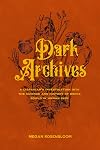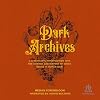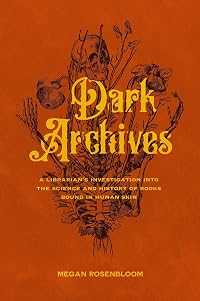
Dark Archives: A Librarian's Investigation into the Science and History of Books Bound in Human Skin
by Megan Rosenbloom
On This Page
Description
"A medical librarian presents a fascinating, terrifying look into history's rarest books-- those bound in human skin-- and the stories of their creation and collection"--Tags
Recommendations












Member Reviews
As a death-positive librarian and lover of all things morbid, this book is definitely right up my alley. Not only was I fascinated by the history of anthropodermic books, I was astonished to learn most of them are merely rumors. Very few have been tested, and the author of this book is on a mission to test all the purported human skin bound books that she can.
She is also a medical librarian and this book is full of thoughtful discussions of the complex moral issues surrounding anthropodermic books as well as the display and collection of other human artifacts. I hadn't really considered the origin of skin bound books, but I think I assumed it was mostly occult books. But in fact, not one occult book has been proven to be bound in human show more skin, although obviously this can change. Most books are medical in nature and have been created by doctors with skin likely stolen from their patients.
I found this book captivating from beginning to end and highly recommend it to those who share my particular morbid fascinations. show less
She is also a medical librarian and this book is full of thoughtful discussions of the complex moral issues surrounding anthropodermic books as well as the display and collection of other human artifacts. I hadn't really considered the origin of skin bound books, but I think I assumed it was mostly occult books. But in fact, not one occult book has been proven to be bound in human show more skin, although obviously this can change. Most books are medical in nature and have been created by doctors with skin likely stolen from their patients.
I found this book captivating from beginning to end and highly recommend it to those who share my particular morbid fascinations. show less
It’s called anthropodermic bibliopegy, but behind the jargon lurks an unsettling science – the art of binding books in tanned and treated human skin. Megan Rosenbloom, a librarian at UCLA, and her colleague Daniel Kirby, a chemist from Northeastern University, have pioneered a technique to determine whether the leather binding from a given book is human or some other mammal. It’s an eerie gig to be in, for sure, but knowing where a binding comes from gives a book that much more history.
Rosenbloom journeys across the United States and Europe to detail the histories and finding from testing various reputed human skin books. Each volume tested has a story, and those stories reveal a little more about both the makers and the takers. show more Some skin was used surreptitiously, some was used after being given purposefully.
There’s Dr. John Hough, who used the skin of a tuberculosis victim at his hospital to bind medical texts. And there’s James Allen, who recited his autobiography to Charles Lincoln on his deathbed in jail, and requested that his skin be used to bind two copies of the book: one for the stenographer and one for John Fenno, a man he tried to rob but turned the tables on Allen.
Rosenbloom’s investigations into the origins and ethics of human skin books are fascinating to say the least, and the questions she raises tend to reflect more modern sensibilities of bodily ownership and the limits of propriety. If this subject is the least bit interesting to you, I highly recommend this book. It reads quickly, but will linger longer than the afternoon it will take to finish. show less
Rosenbloom journeys across the United States and Europe to detail the histories and finding from testing various reputed human skin books. Each volume tested has a story, and those stories reveal a little more about both the makers and the takers. show more Some skin was used surreptitiously, some was used after being given purposefully.
There’s Dr. John Hough, who used the skin of a tuberculosis victim at his hospital to bind medical texts. And there’s James Allen, who recited his autobiography to Charles Lincoln on his deathbed in jail, and requested that his skin be used to bind two copies of the book: one for the stenographer and one for John Fenno, a man he tried to rob but turned the tables on Allen.
Rosenbloom’s investigations into the origins and ethics of human skin books are fascinating to say the least, and the questions she raises tend to reflect more modern sensibilities of bodily ownership and the limits of propriety. If this subject is the least bit interesting to you, I highly recommend this book. It reads quickly, but will linger longer than the afternoon it will take to finish. show less
When I was in grad school, a professor dedicated an entire day’s lecture to anthropodermic books. It was a fascinating talk that has always stuck in my mind, so—when I saw this book—I just had to pick up a copy. One should never judge a book by its cover, and—sadly—this book proves that old adage is true. Although the title would have you believe this book is about anthropodermic books, the topic actually gets scant attention at the hands of Megan Rosenbloom, who seems convinced that she is truly the star of the show. There is a lot of “I, I, I…me, me, me…my, my, my” going on in this book and, quite frankly, it’s boring as hell.
Dark Archives has three very distinct personalities. At first, it reads like an show more undergrad’s C+ term paper with lots of verbose prose that goes on for pages and pages, but actually says next to nothing.
Other times, it reads like an insecure teenager’s desperate plea for attention and validation. Rosenbloom spends so much time pointing out how freakishly disgusting her interests are, she sounds like a spinster aunt showing off for her six-year-old nephew’s cub scout troup, “I study books bound in human skin…isn’t that gross?...don’t I sound cool and edgy?…don’t I? don’t I?... Please, somebody think I’m cool and edgy!... Anybody?... Plleeeeaaase think I’m cool!”
Most of all, though, Dark Archives reads like the most longwinded job application imaginable. Rosenbloom is clearly of the opinion that her current job is not prestigious or high paying enough for someone of her caliber, so she uses this book to unabashedly troll for one that is. The reader is bombarded with a veritable résumé of Rosenbloom’s educational qualifications, job history, professional development, extracurricular activities, and leadership roles. She repeatedly clarifies how “my team” goes about identifying and verifying anthropodermic books around the country. (Are the other members of ‘her’ so-called team even aware that they are actually on a team led by Megan Rosenbloom? My guess is that most of them would say “No!” and laugh at the mere suggestion, but maybe I’m reading too much into Rosenbloom’s pretentious writing style.) In essence, Rosenbloom spends almost the entire book saying, “I wrote the book on anthropodermic books; I am just too glorious; Take note, influential institutions of the world, & hire me for the highfalutin position to which I feel entitled!” All I can say is, “Meh. Not impressed. I’d rather be reading about anthropodermic books.”
At the end of the day, this book is more about Megan Rosenbloom than it is about human bound books; and, unfortunately, she’s just not as interesting as she seems to think she is. show less
Dark Archives has three very distinct personalities. At first, it reads like an show more undergrad’s C+ term paper with lots of verbose prose that goes on for pages and pages, but actually says next to nothing.
Other times, it reads like an insecure teenager’s desperate plea for attention and validation. Rosenbloom spends so much time pointing out how freakishly disgusting her interests are, she sounds like a spinster aunt showing off for her six-year-old nephew’s cub scout troup, “I study books bound in human skin…isn’t that gross?...don’t I sound cool and edgy?…don’t I? don’t I?... Please, somebody think I’m cool and edgy!... Anybody?... Plleeeeaaase think I’m cool!”
Most of all, though, Dark Archives reads like the most longwinded job application imaginable. Rosenbloom is clearly of the opinion that her current job is not prestigious or high paying enough for someone of her caliber, so she uses this book to unabashedly troll for one that is. The reader is bombarded with a veritable résumé of Rosenbloom’s educational qualifications, job history, professional development, extracurricular activities, and leadership roles. She repeatedly clarifies how “my team” goes about identifying and verifying anthropodermic books around the country. (Are the other members of ‘her’ so-called team even aware that they are actually on a team led by Megan Rosenbloom? My guess is that most of them would say “No!” and laugh at the mere suggestion, but maybe I’m reading too much into Rosenbloom’s pretentious writing style.) In essence, Rosenbloom spends almost the entire book saying, “I wrote the book on anthropodermic books; I am just too glorious; Take note, influential institutions of the world, & hire me for the highfalutin position to which I feel entitled!” All I can say is, “Meh. Not impressed. I’d rather be reading about anthropodermic books.”
At the end of the day, this book is more about Megan Rosenbloom than it is about human bound books; and, unfortunately, she’s just not as interesting as she seems to think she is. show less
Dark Archives follows Megan Rosenbloom's investigations into anthropodermic bibliopegy, or the practice of binding books in human skin. Not only does it look at actual examples of the practice, but it also discusses the testing used to determine the real examples from the fakes, explains the stories of several real and fake examples, looks into historical medical ethics, how the practice was done, and current international laws on similar practices.
I found the book fascinating. There is so much that can be learned about the cultures of the people partaking in this by researching the practice. I don't agree with all of Rosenbloom's takes on the topic, but I was in particular agreement that these artifacts, both the real ones and the show more fakes, are actual parts of our human history and can be used to educate people on things like history, medical and legal ethics, culture, racism, and misogyny, and that these objects are inherently valuable because of this.
I think it would have been good for Rosenbloom to discuss in more detail the actual effects of racism and misogyny that this practice creates, as it seems like these were mostly glossed over in the book. A good first step in doing this would have been to be upfront with the results of the PMF testing before discussing the, sometimes alleged and sometimes real, stories of these books, as then the readers would know going into a story if it was an actual example or not. In not revealing the PMF results until the end of each book's story, it can make the reader confused as to which ones are real and which aren't, thereby lessening the impact on the reader of the racism and misogyny used to create the books.
The two biggest things this book could have done better are the aforementioned deeper discussions on how racism and misogyny impacted this practice, as well as including better transitions between chapters, as it occasionally felt a bit disjointed. That being said, there has been little research done on this practice, and this book is a good start into what could be an entire field of research. I would like to read more on this topic from a more intersectional lens, but I did thoroughly enjoy this book. show less
I found the book fascinating. There is so much that can be learned about the cultures of the people partaking in this by researching the practice. I don't agree with all of Rosenbloom's takes on the topic, but I was in particular agreement that these artifacts, both the real ones and the show more fakes, are actual parts of our human history and can be used to educate people on things like history, medical and legal ethics, culture, racism, and misogyny, and that these objects are inherently valuable because of this.
I think it would have been good for Rosenbloom to discuss in more detail the actual effects of racism and misogyny that this practice creates, as it seems like these were mostly glossed over in the book. A good first step in doing this would have been to be upfront with the results of the PMF testing before discussing the, sometimes alleged and sometimes real, stories of these books, as then the readers would know going into a story if it was an actual example or not. In not revealing the PMF results until the end of each book's story, it can make the reader confused as to which ones are real and which aren't, thereby lessening the impact on the reader of the racism and misogyny used to create the books.
The two biggest things this book could have done better are the aforementioned deeper discussions on how racism and misogyny impacted this practice, as well as including better transitions between chapters, as it occasionally felt a bit disjointed. That being said, there has been little research done on this practice, and this book is a good start into what could be an entire field of research. I would like to read more on this topic from a more intersectional lens, but I did thoroughly enjoy this book. show less
This book was everything I wanted it to be, and more.
I first heard about Dark Archives on the Morbid Anatomy podcast, and I knew immediately that I had to read it, but it wasn't due out until October (quite appropriate but SO FAR AWAY!) I started following the author, Megan Rosenbloom, on Twitter and discovered that the book was available on NetGalley. I requested it immediately and crossed my fingers.
Until I heard Megan speak on the podcast, I had NO IDEA that books bound in human skin was a thing. How had my macabre sensibilities missed this gem? However, this book is more than just Megan's quest to search out true anthropodermic bibliopegy (fancy words for "books made of human skin"), it's an education and procedural in antique show more books, it's' a study in medical ethics past and present, and a behind-the-scenes look at the exciting world of a medical librarian! You get to follow Megan around the globe as she hunts down various legendary tomes and testing them to see if they're the real deal. Some turn out to be made out of animal skins, but a handful turn out to be the real McCoy.
Amidst the "treasure" hunt, you receive a brief education on the history of medicine in western world, how far doctors have come from paying grave robbers for bodies to autopsy to now using bodies that have been donated. It's a gruesome truth that is riddled with controversy when you consider how medicine has advanced from the dark ages on the literal backs of the poor, the murdered, and minorities. Collectors and librarians juggle their want and need to conserve history whilst trying to respect the memory of those whose bodies were used to enrich someone's personal library.
Dark Archives is a fascinating read that brings together so many elements to create a well-rounded text that is as enjoyable as it is informative.
Many thanks to NetGalley for an advanced copy in exchange for an honest review. show less
I first heard about Dark Archives on the Morbid Anatomy podcast, and I knew immediately that I had to read it, but it wasn't due out until October (quite appropriate but SO FAR AWAY!) I started following the author, Megan Rosenbloom, on Twitter and discovered that the book was available on NetGalley. I requested it immediately and crossed my fingers.
Until I heard Megan speak on the podcast, I had NO IDEA that books bound in human skin was a thing. How had my macabre sensibilities missed this gem? However, this book is more than just Megan's quest to search out true anthropodermic bibliopegy (fancy words for "books made of human skin"), it's an education and procedural in antique show more books, it's' a study in medical ethics past and present, and a behind-the-scenes look at the exciting world of a medical librarian! You get to follow Megan around the globe as she hunts down various legendary tomes and testing them to see if they're the real deal. Some turn out to be made out of animal skins, but a handful turn out to be the real McCoy.
Amidst the "treasure" hunt, you receive a brief education on the history of medicine in western world, how far doctors have come from paying grave robbers for bodies to autopsy to now using bodies that have been donated. It's a gruesome truth that is riddled with controversy when you consider how medicine has advanced from the dark ages on the literal backs of the poor, the murdered, and minorities. Collectors and librarians juggle their want and need to conserve history whilst trying to respect the memory of those whose bodies were used to enrich someone's personal library.
Dark Archives is a fascinating read that brings together so many elements to create a well-rounded text that is as enjoyable as it is informative.
Many thanks to NetGalley for an advanced copy in exchange for an honest review. show less
Fair warning, if you are disturbed by descriptions of murder, surgery, and/or autopsies, this is probably not the book for you.
After having this book on my TBR list for over a year, I finally had a chance to read it over the weekend. While the specified topic of anthropodermic bibliopegy is covered very well, I liked that Rosenbloom added a great deal of detail about the intersection of criminal justice, medical practice, and social issues (such as women and race). This is a pretty extreme rabbit hole adventure as the actual instances of verified anthropodermic bibliopegy is a very small set; however, the overlapping nonverified and blatantly fake instances mean that the hunt for information means constantly checking and rechecking show more information. The book explains the science being used to verify books that have been identified. But the inclusion of the history of how the criminals justice system suppled cadavers for study and how graverobbers supplied bodies and the odd instance of serial killers supplying bodies created a clear picture of the era in which these books came to be. The discussion of how the view of a dead human body in the 19th century was quite different from what most people think now.
All in all, this was another book that provided an excellent cross section of many topics within a historical context. It is also a book ttat may raise questions about one's personal beliefs on the subject without being preachy about how the author views the topic. show less
After having this book on my TBR list for over a year, I finally had a chance to read it over the weekend. While the specified topic of anthropodermic bibliopegy is covered very well, I liked that Rosenbloom added a great deal of detail about the intersection of criminal justice, medical practice, and social issues (such as women and race). This is a pretty extreme rabbit hole adventure as the actual instances of verified anthropodermic bibliopegy is a very small set; however, the overlapping nonverified and blatantly fake instances mean that the hunt for information means constantly checking and rechecking show more information. The book explains the science being used to verify books that have been identified. But the inclusion of the history of how the criminals justice system suppled cadavers for study and how graverobbers supplied bodies and the odd instance of serial killers supplying bodies created a clear picture of the era in which these books came to be. The discussion of how the view of a dead human body in the 19th century was quite different from what most people think now.
All in all, this was another book that provided an excellent cross section of many topics within a historical context. It is also a book ttat may raise questions about one's personal beliefs on the subject without being preachy about how the author views the topic. show less
As good a treatment of books bound in human skin as we're likely to get. Rosenbloom's interest is obvious, and she manages to tread the fine line between making such a book too precious and too ghoulish. Her background and involvement with the ongoing scientific project to actually identify these bindings add much to the book.
Members
- Recently Added By
Lists

Ologies with Alie Ward reading list
42 works; 2 members

Stuff from Bard
70 works; 1 member

TBR of Books I Don't Own
132 works; 1 member

Weirdo Nonfiction
138 works; 3 members

Book Riot Read Harder 2026
80 works; 1 member
Author Information

2 Works 846 Members
Some Editions
Common Knowledge
- Original title
- Dark Archives
- Original publication date
- 2020
- People/Characters
- Bernhard Siegfried Albinus; American Medical Association; George Annas; Crispus Attucks; Nancy Attucks; Nicholson Baker (show all 232); Eliza Balsam; Louis Barles; Guy Bechtel; Adolphe Belot; Jermey Bentham; Detlef Bockenkamm; Tadeusz Borowski; Ludovic Bouland; Louise Bourgeois; Drew Bourn; Randal Brandt; André du Bouchet; Elma Brenner; Chang Bunker; Eng Bunker; William Burke; Christopher Calnan; Dale Carnegie; Mrs. Howard M. Chapin; Simon Chaplin; Nathaniel Chapman; Geoffrey Chaucer; Christopher Columbus; Nicolas-Jacques Conté; Sebastian Caroll Braganza de la Corilla; William Corder; Robert Couper; Frédérick Coxe; Ernest de Crauzat; George Creed; George Cudmore; Stanley Cushing; Jacques d'Agoty; Charles Darwin; Isaiah Dec; Abbott Jacques Delille; Wim Delvoye; Anna Dhody; Mary Docherty; Anne Dohrenwend; Charles Drelincourt; Liz Dube; Harry Eastlack; Jack Eckert; Ralph Waldo Emerson; Louis Félix Étienne; Hieronymus Fabricius ab Aquapendente; John Fenno; Sarah Fiddyment; Sebastian Finsterwalder; Lindsey Fitzharris; Father Paul Foik; Michel Foucault; Benjamin Franklin; Ruth Franklin; Freemasons; Lucian Freud; Hans Friedenthal; Galen; Henry Louis Gates, Jr.; Annabel Geddes; Ed Gein; Thomas Gibson; Alodia Girma; Anatol Girs; Barbara Girs; Joseph Goebbels; Johann Wolfgang von Goethe; Joseph L. Graves; Michael Grodin; Grolier Club; Charles Guillemeau; Jacques Guillemeau; AlistairGunn; G. J. Guthrie; Juan Gutiérrez; Michael Habib; Chares Hamm; William Hare; Richard Hark; Nathaniel Hawthorne; Charles Heartman; Patricia Heberer Rice; Oskar Heim; Heinrich Heine; King Henry IV of France; Heinrich Himmler; Hippocrates; Magnus Hirschfeld; Adolf Hitler; Hans Holbein the Younger; John Horwood; John Stockton Hough; Arsène Houssaye; Henry Hunt; William Hunt; John Hunt; Jack the Ripper; Mark Jacobson; Thomas Jefferson; Jews; Michael Johnson; Michael Joseph; Joseph the Miller; John F. Kennedy; Ted Kennedy; Paul Kersten; Daniel Kirby; Robert Knox; Ilse Kosh; Karl-Otto Kosh; Jan l'Admiral; Beth Lander; Bill Lane; Medeleine Le Despencer; Peter Lee; Russel Van Arsdale Lee; Joseph Leidy; Charles Lincoln; Robert Liston; Los Angeles County Medical Association; King Louis XIII of France; King Louis XV of France; King Louis XVI of France; Peter Low; Martin Luther; Mary Lynch; Thomas Mann; Marie de Bourbon, Duchess of Montpensier; Marie de' Medici; Tanya Marsh; Ann Marten; Maria Marten; Thomas Marten; Thomas McCloskey; Edward Merrifield; Jesse Meyers; Richard E. Meyers; John Milton; Alexander Monro; Michel de Montaigne; Abbott Guillaume Honoré Rocques de Montgaullard; Count de Montgillard; Moors; Ron Murrell; Napoleon Bonaparte; Bob Nash; National Association for the Preservation of Skin Art; National Socialist Physician's League; National Trust for Historic Preservation; Native Americans; Nazis; Paul Needham; Linda Nessworthy; Barack Obama; Philippe d'Orléans; Carol Orzel; William Osler; Ovid; Ambroise Paré; David Paterson; David Pearson; John Peters; Giovanni Pico della Mirandola; Edgar Allan Poe; John Pollack; Alexander Pope; Alan Puglia; Rik Reinking; Ruth Richardson; Abner Rogers; Lisa Rosner; Royal Society of Edinburgh; George Rugg; Frederick Ruysch; Marquis de Sade; Sanitary Commission; Gayet de Sansale; Fred Schafhirt; William Scheide; Arthur Schomburg; Sir Walter Scott; Bridgette Sheridan; Kyle Sherwood; Abigail Simpson; Bertram Smith; Mikel Snow; Soap Lady; Southern Califorina Society fof the History of Medicine; Johann Spurzheim; Harry Stein; John Steinbeck; Tim Steiner; Luke Swetland; Stephen Tabor; Telford Taylor; Lawrence S. Thompson; Jillian Tullis; Sébastien Vatinel; Paul Verlaine; Andreas Vesalius; Félix Vicq-d'Azyr; Pierre-Charles Villeneuve; François-Marie Arouet; George Walton; Henry Warburton; Alie Ward; Leonard Warren; George Washington; Harriet Washington; Blake Watson; Noah Webster; Henry Wellcome; John Wheatley; Phillis Wheatley; Susanna Wheatley; Elie Wiesel; Albert Monroe Wilson; Franklin T. Wilson; Benjamin Win; Charles Erskine Scott Wood; Francisco Jiménez de Cisneros; Warren Yamasita; Prince Younger; Joseph Zaehnsdorf; Zamorano Club
- Important places
- Africa; Alaska, USA; Auschwitz concentration camp, Oświęcim, Lesser Poland, Poland; Bancroft Library, California, USA; Berlin, Germany; Bibliothèque nationale de France, Paris, France (show all 114); Richelieu Library; Book Farm; Acres of Books; Boston, Massachusetts, USA; Boston Athenaeum, Boston, Massachusetts, USA; Boston Medical Library, Shrewsbury, Massachusetts, USA; British Museum, London, England, UK; Brown University, Providence, Rhode Island, USA; Bruckmann Printing Company; Buchenwald concentration camp, Weimar, Thuringia, Germany; Bury St Edmunds, Suffolk, England, UK; California Rare Book School; Cantin, Hauts-de-France, France; Château de Meudon, Meudon, Île-de-France, France; Cincinnati, Ohio, USA; Cincinnati Public Library; College of Physicians of Philadelphia, Philadelphia, Pennsylvania, USA; Countway Library of Medicine, Harvard University, Cambridge, Massachusetts, USA; Edinburgh, Scotland, UK; England, UK; Female Lunatic Asylum; Field Museum, Chicago, Illinois, USA; Firestone Library, Princeton University, Princeton, New Jersey, USA; Folger Shakespeare Library, Washington, D.C., USA; France; Germany; Granary Burying Ground, Tremont Street, Boston, Massachusetts, USA; Greece; Harvard Law School Library, Harvard University, Cambridge, Massachusetts, USA; Harvard Library, Harvard University, Cambridge, Massachusetts, USA; Hesburgh Library, University of Notre Dame, Notre Dame, Indiana, USA; Houghton Library, Harvard University, Cambridge, Massachusetts, USA; Hunterian Museum, Royal College of Surgeons of England, London, England, UK; Huntington Library; Indiana State University, Terre Haute, Indiana, USA; Institut für Sexualwissenschaft, Tiergarten, Berlin, Germany; Institute for Research on the Jewish Question; Ireland; Jack The Ripper Museum, London, England, UK; Jakob-Krause-Bund; John Hay Library, Providence, Rhode Island, USA; Juniata College; Keck Schoolof Medicine; Landesarchiv Berlin, Berlin, Germany; Lane Medical Library, Stanford University, Stanford, California, USA; London, England, UK; Manchester, England, UK; Massachusetts, USA; Mississippi, USA; Mount Moriah Cemetery, Philadelphia, Pennsylvania, USA; Mount Vernon, Virginia, USA; Moyse's Hall Museum, Bury St Edmunds, Suffolk, England, UK; Mullen's Tannery, Cecil County, Maryland, USA; Munger Research Center, San Marino, California, USA; Carnavalet Museum, Paris, France; Museum for German History; Mütter American Giant; Mütter Museum; New Jersey, USA; New Orleans, Louisiana, USA; New York, USA; New Zealand; Norris Medical Library, University of Southern California, Los Angeles, California, USA; Nuremberg, Bavaria, Germany; Paris, France; Peabody Museum of Archaeology and Ethnology, Harvard University, Cambridge, Massachusetts, USA; Philadelphia, Pennsylvania, USA; Philadelphia General Hospital School of Nursing, Philadelphia, Pennsylvania, USA; Philadelphia School of Anatomy, Philadelphia, Pennsylvania, USA; Portland Art Museum, Portland, Oregon, USA; Princeton, New Jersey, USA; Rome, Italy; Royal College of Surgeons, Edinburgh, Scotland, UK; Royal College of Surgeons, London, England, UK; Rutgers University, New Brunswick, New Jersey, USA; San Francisco, California, USA; Satterlee General Hospital, Philadelphia, Pennsylvania, USA; Scotland, UK; Sorbonne University, Paris, France; Spain; Stanford University, Stanford, California, USA; St. John's Health Center, Santa Monica, California, USA; Surgeons' Hall Museums, Royal College of Surgeons, Edinburgh, Scotland, UK; Surgeons' Square, University of Edinburgh, Edinburgh, Scotland, UK; Syracuse Public Library, Syracuse, New York, USA; Syracuse University Library, Syracuse, New York, USA; Temple University, Philadelphia, Pennsylvania, USA; United States Holocaust Memorial Museum, Washington, D.C., USA; University College London, London, England, UK; University of Berlin, Berlin, Germany; University of California, Berkeley, California, USA; University of Cincinnati, Cincinnati, Ohio, USA; University of Edinburgh, Edinburgh, Scotland, UK; University of Notre Dame; University of Paris, Paris, France; University of Pennsylvania, Philadelphia, Pennsylvania, USA; University of San Diego, San Diego, California, USA; University of Southern California, Los Angeles, California, USA; University of Southern Mississippi Libraries, Hattiesburg, Mississippi, USA; Wake Forest University, Winston-Salem, North Carolina; Wales, UK; Wellcome Collection, London, England, UK; Wellcome Library, London, England; Widener Library, Harvard University, Cambridge, Massachusetts, USA; Wistar Institute, Philadelphia, Pennsylvania, USA; Wyoming Valley, Pennsylvania, USA; Zentral- und Landesbibliothek Berlin, v; Zürich, Zürich, Switzerland
- Important events
- Murder Act of 1751; 1752; American Revolution; Burke and Hare murders; French Revolution; Anatomy Act (show all 28); Anthropodermic Book Project; Arch Street Bones Project; Boston Massacre; West Port Murders; American Civil War; Red Barn Murder; Declaration of Independence; Declaration of Helsinki; Holocaust; Human Tissue Act; Manifest Destiny; Mark Twain Project; Native American Graves Protection and Repatriation Act; Reich Health Council; Renaissance; Select Committee on Anatomy; Slavery; St. Edmundsbury Borough Council; Tuskegee syphilis study; Whitechapel Murders; World War II; World War I
- Canonical DDC/MDS
- 002
- Canonical LCC
- Z269.3.A58
Classifications
- Genres
- General Nonfiction, Nonfiction, History
- DDC/MDS
- 002 — Computer science, information & general works Computer science, knowledge & systems Books (Science and history of the book)
- LCC
- Z269.3 .A58 — Bibliography, Library Science and Information Resources Book industries and trade Bookbinding. Book decoration
- BISAC
Statistics
- Members
- 845
- Popularity
- 32,492
- Reviews
- 30
- Rating
- (4.08)
- Languages
- English, French, Polish
- Media
- Paper, Audiobook, Ebook
- ISBNs
- 10
- ASINs
- 3