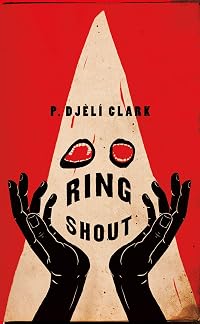
Ring Shout
by P. Djèlí Clark
On This Page
Description
"In this dark fantasy historical novella that gives a supernatural twist to the Ku Klux Klan's reign of terror, The Birth of a Nation cast a spell across America, swelling the Klan's ranks and drinking deep from the darkest thoughts of white folk. All across the nation they ride, spreading fear and violence among the vulnerable. They plan to bring Hell to Earth. Standing in their way is Maryse Boudreaux and her fellow resistance fighters, a foul-mouthed sharpshooter and a Harlem Hellfighter. show more Armed with blade, bullet, and bomb, they hunt their hunters and send the Klan's demons straight to Hell. But something awful's brewing in Macon, and the war on Hell is about to heat up. Can Maryse stop the Klan before it ends the world?"-- show lessTags
Recommendations


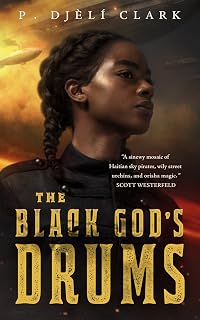
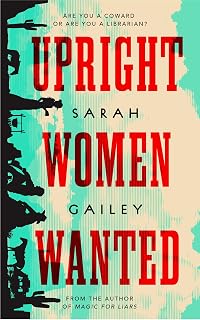
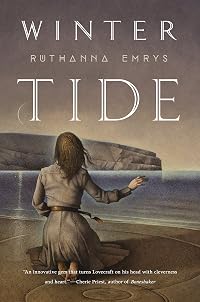
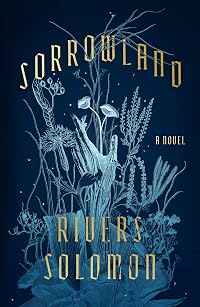






Member Recommendations
Member Reviews
It’s super unusual for me to rate a novella higher than 4 stars. It’s never as fun for me when books are short. I always feel let down when they end so quickly. This was a 4 star read for the vast majority until the end hit, and it hit me so strongly that I immediately (with tears pouring out of my eyes) bumped it up to 5 stars! I can’t stop thinking about that final climactic scene.
Ring Shout is set in an alternate 1920s American South, where the members of the KKK, monsters on the outside as well as the inside, are hunted by a team of determined women.
This feels like a glorious, unexpected combination of a Jordan Peele film, with its blend of dark comedy and grotesque horror, and Madeleine L’Engle (The Aunties are clearly a show more nod to A Wrinkle in Time’s Mrs. Who, Mrs. Whatsit, and Mrs. Which)!
The book is full of some really cool elements. The sword that Maryse uses that holds all the memories! The concept of the Ku Kluxes as actual monsters. The uniqueness of the characters. The explanations of the various Shouts! And our narrator and guide through the story, Maryse. Her voice is so strong and well written.
I highly recommend Ring Shout! And I'm looking forward to reading more P. Djèlí Clark. show less
Ring Shout is set in an alternate 1920s American South, where the members of the KKK, monsters on the outside as well as the inside, are hunted by a team of determined women.
This feels like a glorious, unexpected combination of a Jordan Peele film, with its blend of dark comedy and grotesque horror, and Madeleine L’Engle (The Aunties are clearly a show more nod to A Wrinkle in Time’s Mrs. Who, Mrs. Whatsit, and Mrs. Which)!
The book is full of some really cool elements. The sword that Maryse uses that holds all the memories! The concept of the Ku Kluxes as actual monsters. The uniqueness of the characters. The explanations of the various Shouts! And our narrator and guide through the story, Maryse. Her voice is so strong and well written.
I highly recommend Ring Shout! And I'm looking forward to reading more P. Djèlí Clark. show less
What brilliant piece of storytelling; Clark's gumbo of eldritch horror, historical fiction, action pacing, and outre dialect fires on all cylinders. The most outstanding thing about Ring Shout is that, despite its glorious weirdness, it is saying something loud and clear about our own times and society. Hate is something one chooses to let in, and it eats a person hollow.
This historical horror was somehow a complete surprise to me even though I've read Clark's other novels/novellas, but one thing came as no surprise: I loved it. Clark's fast-paced story-telling combined with his talent for living, breathing characters and intricate world-building came through on every page. Admittedly, I wouldn't have minded more spots slowing down so that I could live in the story with the characters a bit more, but this was a gorgeous thrill of a ride that ran at the seams with history.
I'd recommend it to any horror lover, and even to historical fiction lovers who simply want to dip into horror to see what's there.
I'd recommend it to any horror lover, and even to historical fiction lovers who simply want to dip into horror to see what's there.
The Publisher Says: Nebula, Locus, and Alex Award-winner P. Djèlí Clark returns with Ring Shout, a dark fantasy historical novella that gives a supernatural twist to the Ku Klux Klan's reign of terror.
D. W. Griffith is a sorcerer, and The Birth of a Nation is a spell that drew upon the darkest thoughts and wishes from the heart of America. Now, rising in power and prominence, the Klan has a plot to unleash Hell on Earth.
Luckily, Maryse Boudreaux has a magic sword and a head full of tales. When she's not running bootleg whiskey through Prohibition Georgia, she's fighting monsters she calls "Ku Kluxes." She's damn good at it, too. But to confront this ongoing evil, she must journey between worlds to face nightmares made flesh—and her show more own demons. Together with a foul-mouthed sharpshooter and a Harlem Hellfighter, Maryse sets out to save a world from the hate that would consume it.
I RECIEVED A REVIEW DRC OF THIS TITLE VIA NETGALLEY. THANK YOU.
My Review: Seriously, this would've been a full five-star read had it not been for nine, maybe ten, w-bombs dropped like seagull shit on a picnic.
That's where we start, mes vieux, that's all in the first thirty or so pages! You are in medias res, and no doubt in your mind that you're not gettin' the full burden of the lyric. To help you along, our generous cicerone Author Clark offers us, in the voice of a crossdressing Harlem Hellfighter, this perfect summation of how Griffith's sorcerous manipulation of the US took such easy hold:
Still works today. 45's vile "basket of deplorables" full up on that kind of scumbag. Hating people is as old as humanity, and the ones that're least like your sacred itty self are the easiest to get in the habit of downin' on. (I'm sure not innocent of this: I hate the Deplorables with a cold, contemptuous superiority. "Me? Like that no-class lowbrow hillbilly? I don't think so, and fuck you for thinking it.")
And then there's the delight, once you've figured out the Klans are people and the Ku Kluxes are actual, terrible monsters, of trying to get your head around why that should be, how that came about in our horrible-but-not-supernaturally-haunted time/space nexus. Author Clark got you covered:
She right on that. Can tell a Ku Klux straight away by all the water they drink. Colored folk who lived through the first Klans say they'd empty whole buckets, claiming they was the ghosts of soldiers from Shiloh. More water, they'd demand. Just come from hell, and plenty dry.
Can't be clearer than that...this isn't quite your (great-)grandmother's 1922. And yet has all the problems...none of the help.
Our story winds through Nana Jean, an old Gullah root woman, who sets up a team to fight the Ku Kluxes. She, and our narrator Maryse, are guided by three spirit-world women analogous to the Norns and other Triune Goddesses whose purpose is to maintain balance in their worlds. Maryse, Chef, and Sadie, all uniquely damaged and so able to access their existential rage, are the action arm of Nana Jean's ring-shout circle. Now, this is deep and old stuff, and there is not one single chance any of y'all reading this review have got the background in Vodoun, hoodoo, and all the other African and African-inflected spiritual practices to get every reference. I could link every third word in here, and that's just to the few little references I got. But don't feel too left out, twenty-first centurians, Author Clark uses a lot of literary references, too. Sethe, for example: a scientific type, aiding the group's scientist Molly, and proficient with a weapon. Honoring, I suppose I should say, Toni Morrison's immortal mother who loved her child so hard she made a haint of her. And haints there are in this story, plenty of them, their many, many songs of fear and betrayal and suffering powering Maryse's unique weapon of cleansing and destruction of evil and wrongness.
I have deliberately not reproduced Nana Jean's Gullah dialect. I consider it disrespectful for me to do so. You'll know when you see it whether you agree with me or not.
You're thinking that all this is going somewhere, but where...well, several places including through a forest of bottle trees, to an Angel Oak, into a place where there are Night Doctors of the *most*horrifying*sort* and whose lust for humanity's pain is unquenchable, and finally to a screening of The Birth of a Nation that is beyond your or my ability to conjure. It is a beautiful thing to be frightened by the capacity of people to hate. This book is a prayer to whatever force(s) rule the Simulation to open up our eyes.
There's a reason the last words spoken in the story are, "'Bout damn time!" show less
D. W. Griffith is a sorcerer, and The Birth of a Nation is a spell that drew upon the darkest thoughts and wishes from the heart of America. Now, rising in power and prominence, the Klan has a plot to unleash Hell on Earth.
Luckily, Maryse Boudreaux has a magic sword and a head full of tales. When she's not running bootleg whiskey through Prohibition Georgia, she's fighting monsters she calls "Ku Kluxes." She's damn good at it, too. But to confront this ongoing evil, she must journey between worlds to face nightmares made flesh—and her show more own demons. Together with a foul-mouthed sharpshooter and a Harlem Hellfighter, Maryse sets out to save a world from the hate that would consume it.
I RECIEVED A REVIEW DRC OF THIS TITLE VIA NETGALLEY. THANK YOU.
My Review: Seriously, this would've been a full five-star read had it not been for nine, maybe ten, w-bombs dropped like seagull shit on a picnic.
The Birth of a Nation came from a book. Two books really—The Clansman and The Leopard's Spots, by a man named Thomas Dixon. Dixon's father was a South Carolina slaveowner in the Confederacy. And a sorceror.
–and–
Sadie got it into her head that the Warren G. Harding government knows about Ku Kluxes. Say she pieced it together from the tabloids. That Woodrow Wilson was in on {D.W.} Griffith's plan, but it got out of hand. And now there's secret departments come about since the war, who go round studying Ku Kluxes. Girl got some imagination.
That's where we start, mes vieux, that's all in the first thirty or so pages! You are in medias res, and no doubt in your mind that you're not gettin' the full burden of the lyric. To help you along, our generous cicerone Author Clark offers us, in the voice of a crossdressing Harlem Hellfighter, this perfect summation of how Griffith's sorcerous manipulation of the US took such easy hold:
"Oh, I disagree," Chef {the Hellfighter} retorts. "White folk earn something from that hate. Might not be wages. But knowing we on the bottom and they set above us—just as good, maybe better.
Still works today. 45's vile "basket of deplorables" full up on that kind of scumbag. Hating people is as old as humanity, and the ones that're least like your sacred itty self are the easiest to get in the habit of downin' on. (I'm sure not innocent of this: I hate the Deplorables with a cold, contemptuous superiority. "Me? Like that no-class lowbrow hillbilly? I don't think so, and fuck you for thinking it.")
And then there's the delight, once you've figured out the Klans are people and the Ku Kluxes are actual, terrible monsters, of trying to get your head around why that should be, how that came about in our horrible-but-not-supernaturally-haunted time/space nexus. Author Clark got you covered:
"Thought you was a godless atheist{," Sadie smirked.}
"I am. But who's to say our universe is alone? Maybe there's others stacked beside us like sheets of paper. And those Ku Kluxes crossed over from somewhere else."
"They was conjured," Chef reminds.
"'Conjuring' is just a way to open a door. Explains why their anatomy is so different, and the extreme reactions to our elements."
"Why they like drinking water so," Sadie adds.
She right on that. Can tell a Ku Klux straight away by all the water they drink. Colored folk who lived through the first Klans say they'd empty whole buckets, claiming they was the ghosts of soldiers from Shiloh. More water, they'd demand. Just come from hell, and plenty dry.
Can't be clearer than that...this isn't quite your (great-)grandmother's 1922. And yet has all the problems...none of the help.
Our story winds through Nana Jean, an old Gullah root woman, who sets up a team to fight the Ku Kluxes. She, and our narrator Maryse, are guided by three spirit-world women analogous to the Norns and other Triune Goddesses whose purpose is to maintain balance in their worlds. Maryse, Chef, and Sadie, all uniquely damaged and so able to access their existential rage, are the action arm of Nana Jean's ring-shout circle. Now, this is deep and old stuff, and there is not one single chance any of y'all reading this review have got the background in Vodoun, hoodoo, and all the other African and African-inflected spiritual practices to get every reference. I could link every third word in here, and that's just to the few little references I got. But don't feel too left out, twenty-first centurians, Author Clark uses a lot of literary references, too. Sethe, for example: a scientific type, aiding the group's scientist Molly, and proficient with a weapon. Honoring, I suppose I should say, Toni Morrison's immortal mother who loved her child so hard she made a haint of her. And haints there are in this story, plenty of them, their many, many songs of fear and betrayal and suffering powering Maryse's unique weapon of cleansing and destruction of evil and wrongness.
I have deliberately not reproduced Nana Jean's Gullah dialect. I consider it disrespectful for me to do so. You'll know when you see it whether you agree with me or not.
You're thinking that all this is going somewhere, but where...well, several places including through a forest of bottle trees, to an Angel Oak, into a place where there are Night Doctors of the *most*horrifying*sort* and whose lust for humanity's pain is unquenchable, and finally to a screening of The Birth of a Nation that is beyond your or my ability to conjure. It is a beautiful thing to be frightened by the capacity of people to hate. This book is a prayer to whatever force(s) rule the Simulation to open up our eyes.
There's a reason the last words spoken in the story are, "'Bout damn time!" show less
Some books don’t quite live up to their hype, despite being very good indeed. ‘Ring Shout’ is one. It’s a novel I’ve been hyped to read for months Now that it’s out and I’ve devoured it in two sittings, I can’t help feeling slightly unsatisfied. That’s more about the nature of the publishing world’s publicity machine and my own tendency to get swept up in it, than it is about ‘Ring Shout’. It’s a very good book, and one that manages to walk the difficult tightrope between being fun and having a message.
Its success is largely down to two things: its brilliant premise and the furious spirit of the SF pulps that infuses every page. If you’ve been exposed to the same hype machine as I was, you’ll know the show more premise. Set in 1920s America, ‘Ring Shout’ centres on the idea that the Ku Klux Klan is literally populated with demons. Ku Kluxes are hideous inter-dimensional beings that disguise themselves as humans. Klans are humans willingly going along with them in their campaign of hate. Against them are pitted the heroes of the piece, chief amongst them Maryse, a young black woman with a big badass magic sword.
That brings me neatly to the pulp bit. Despite its strong anti-racist theme and its intelligent reinvention of American social history, ‘Ring Shout’ is at its heart a gloriously enjoyable fantasy. It has magic, monsters, epic action scenes and a brilliantly diverse mix of good guys. The writing is full of energy for the pulp parts but has an emotional depth and intelligence elsewhere. Maryse is an engaging character with a moving back story and very good reasons to hate the Ku Kluxes.
This all adds up to a really entertaining quick read, it might not be quite as good as the hype, but what it is these days? show less
Its success is largely down to two things: its brilliant premise and the furious spirit of the SF pulps that infuses every page. If you’ve been exposed to the same hype machine as I was, you’ll know the show more premise. Set in 1920s America, ‘Ring Shout’ centres on the idea that the Ku Klux Klan is literally populated with demons. Ku Kluxes are hideous inter-dimensional beings that disguise themselves as humans. Klans are humans willingly going along with them in their campaign of hate. Against them are pitted the heroes of the piece, chief amongst them Maryse, a young black woman with a big badass magic sword.
That brings me neatly to the pulp bit. Despite its strong anti-racist theme and its intelligent reinvention of American social history, ‘Ring Shout’ is at its heart a gloriously enjoyable fantasy. It has magic, monsters, epic action scenes and a brilliantly diverse mix of good guys. The writing is full of energy for the pulp parts but has an emotional depth and intelligence elsewhere. Maryse is an engaging character with a moving back story and very good reasons to hate the Ku Kluxes.
This all adds up to a really entertaining quick read, it might not be quite as good as the hype, but what it is these days? show less
Doing Battle with Haters
What would possess a people to such an extent they would hold another people in bondage, and when freed commit horrible acts to suppress them to guarantee their own status as superior beings? Regarding slavery and Jim Crow in America, several reasons existed, and continue to exist to this day. In P. Djèlí Clark’s raucous novel of vengeance and retribution, an answer is that the Ku Kluxes where monsters.
In this mythology, only a few can penetrate the Ku Kluxes’ guise of human white flesh, though at heart all who don the white sheets, or support the wearers, or simply stand by are monsters. These stalwart few work in bands in various cities throughout the U.S., and a small group of fighters, Gullah women, show more and socialists in Macon, GA, feature in Ring Shout. The novel effectively blends fantasy, spiritualism, and the supernatural into an explosion of fists, elbows, swords, and gunfire, not to mention the Ring Shout ritual, that will leave readers reaching for the aspirin to stop the ringing its sets off in their minds.
The novel follows the exploits of three intrepid young Black woman, Maryse, Sadie, and Chef as they lead the fight in Macon in 1922. It opens on a set piece of action, the crew doing battle with the Ku Kluxes while the white sheets march in that year’s Fourth of July parade. Maryse emerges as the leader of the group, and she’s the one armed with a supernatural sword packed with the full vengeance of a race enslaved and murdered. She’s also the one who enters a supernatural realm, where she discovers that something big is coming. Turns out the Ku Kluxes plan a giant rally at Stone Mountain, where they will watch The Birth of a Nation. As an aside here, when released in 1915, historians credit the film with the revival of Klan. This reiteration of the Klan occurred in that year at Stone Mountain, and the Klan held a rally there each year Labor Day for around 50 years. Back to the novel. After much intervening action, the Ring Shout culminates in a preternatural battle of good and evil on the mountain.
You might find yourself thinking that imbuing the Ku Kluxes with supernatural possession somehow excuses the actions of ordinary humans; that is, something para human drives their actions. However, Clark cleverly turns this so that hate already possesses regular Klan, and it’s this hate that the supernatural puppet masters feed off of, and that allow for the turning of hate filled monsters into actual monsters. In other words, hated robs you of your humanity. So true.
An all around enjoyable excursion into horror and fantasy and one some not usually readers of the genre might also enjoy. Also, if you watched and enjoyed HBO’s Lovecraft County or reimagined Watchmen, you may be an audience for Ring Shout. show less
What would possess a people to such an extent they would hold another people in bondage, and when freed commit horrible acts to suppress them to guarantee their own status as superior beings? Regarding slavery and Jim Crow in America, several reasons existed, and continue to exist to this day. In P. Djèlí Clark’s raucous novel of vengeance and retribution, an answer is that the Ku Kluxes where monsters.
In this mythology, only a few can penetrate the Ku Kluxes’ guise of human white flesh, though at heart all who don the white sheets, or support the wearers, or simply stand by are monsters. These stalwart few work in bands in various cities throughout the U.S., and a small group of fighters, Gullah women, show more and socialists in Macon, GA, feature in Ring Shout. The novel effectively blends fantasy, spiritualism, and the supernatural into an explosion of fists, elbows, swords, and gunfire, not to mention the Ring Shout ritual, that will leave readers reaching for the aspirin to stop the ringing its sets off in their minds.
The novel follows the exploits of three intrepid young Black woman, Maryse, Sadie, and Chef as they lead the fight in Macon in 1922. It opens on a set piece of action, the crew doing battle with the Ku Kluxes while the white sheets march in that year’s Fourth of July parade. Maryse emerges as the leader of the group, and she’s the one armed with a supernatural sword packed with the full vengeance of a race enslaved and murdered. She’s also the one who enters a supernatural realm, where she discovers that something big is coming. Turns out the Ku Kluxes plan a giant rally at Stone Mountain, where they will watch The Birth of a Nation. As an aside here, when released in 1915, historians credit the film with the revival of Klan. This reiteration of the Klan occurred in that year at Stone Mountain, and the Klan held a rally there each year Labor Day for around 50 years. Back to the novel. After much intervening action, the Ring Shout culminates in a preternatural battle of good and evil on the mountain.
You might find yourself thinking that imbuing the Ku Kluxes with supernatural possession somehow excuses the actions of ordinary humans; that is, something para human drives their actions. However, Clark cleverly turns this so that hate already possesses regular Klan, and it’s this hate that the supernatural puppet masters feed off of, and that allow for the turning of hate filled monsters into actual monsters. In other words, hated robs you of your humanity. So true.
An all around enjoyable excursion into horror and fantasy and one some not usually readers of the genre might also enjoy. Also, if you watched and enjoyed HBO’s Lovecraft County or reimagined Watchmen, you may be an audience for Ring Shout. show less
*I was provided an eARC of this book by TOR via NetGalley. All opinions are my own.*
Set in an alternative history in 1915, there's the Ku Klux Klan - and then there's the Ku Klux, hellish white creatures who look human, except to a few people that can see their true faces. Maryse has been called to fight these monsters with the help of a magical blade, fellow resistance fighters, a powerful root worker and the magic she gathers from the Shouters (of the title), and three spirit guides referred to as "the Aunties". As horrible as they are, there is worse yet to come.
I am awed at how much was packed into this novella, which is a mix of fantasy and horror: twisting fiction with historical events, African folklore, horrifying monsters, show more memorable characters, and an ass-kicking heroine with a magical blade. Clark has a fantastic narrative voice, delivering both a page-turning tale AND a powerful commentary on hate .
I read this in one sitting, and it was a story that followed me around for ages after I read the final page. A powerful message that is needed now more than ever mixed in with a page-turning read. show less
Set in an alternative history in 1915, there's the Ku Klux Klan - and then there's the Ku Klux, hellish white creatures who look human, except to a few people that can see their true faces. Maryse has been called to fight these monsters with the help of a magical blade, fellow resistance fighters, a powerful root worker and the magic she gathers from the Shouters (of the title), and three spirit guides referred to as "the Aunties". As horrible as they are, there is worse yet to come.
I am awed at how much was packed into this novella, which is a mix of fantasy and horror: twisting fiction with historical events, African folklore, horrifying monsters, show more memorable characters, and an ass-kicking heroine with a magical blade. Clark has a fantastic narrative voice, delivering both a page-turning tale AND a powerful commentary on hate .
I read this in one sitting, and it was a story that followed me around for ages after I read the final page. A powerful message that is needed now more than ever mixed in with a page-turning read. show less
Members
- Recently Added By
Published Reviews
Tananarive Due, in her essay 'Black Horror Rising,' discusses the role of racial trauma in horror fiction, writing that 'horror can help us allegorize racial monsters to help us to confront true-life fears.' ... One Black writer using the horror genre to its full potential is the award-winning P. Djèlí Clark, whose new novella, Ring Shout is a fantastical, brutal and thrilling triumph of the show more imagination ... Clark’s combination of historical and political reimagining is cathartic, exhilarating and fresh, casting a narrative spell as enchanting as HBO’s adaptation of Watchmen. It is the kind of reimagining of history that puts the act of storytelling, and the art of the horror genre, at the forefront of literary and political life. show less
added by Lemeritus
What if White supremacy was not only a monstrous philosophy, but was enabled by actual horrific monsters? Clark's feverishly inventive period adventure imagines this scenario in blunt and grisly detail....Clark’s novel is at once rousing, boisterous, and clever. He channels the kitschy motifs of early-20th-century pulp horror into a narrative that both spoofs and exalts that flamboyant show more tradition. In the process, he cunningly and pithily weaves in African folklore, American history, and sociopolitical tropes that resonate with our present-day racial upheaval. Devotees of Lovecraft Country, Get Out, and other horror adventures with African American themes: Take note....Thrills, chills, macabre humor, and engaging heroines to root for: What more could a reader want? show less
added by Lemeritus
Lists

2021 Hugo Eligible Novellas
29 works; 8 members

Female Protagonist
1,056 works; 57 members

Diversity in Fantasy and Science Fiction
219 works; 33 members

BbBooBooks
28 works; 2 members

LGBTQ+ Speculative Fiction
821 works; 51 members

ScaredyKIT 2022
15 works; 1 member

Diverse Horror
262 works; 6 members

LIBROS DE CIENCIA FICCIÓN Y FANTASIA
60 works; 1 member

Books Set in Georgia
11 works; 4 members

Fiction: Thriller
78 works; 1 member

Fiction: BLM
60 works; 1 member

Books Read in 2024
4,623 works; 126 members

Stuff from Bard
70 works; 1 member

GoodReads Horror Choice Awards
160 works; 4 members

Books Read in 2020
4,379 works; 123 members
Fiction Published in 2020
32 works; 1 member
Nebula Award
111 works; 14 members

SFF standalone novellas with female protagonists
101 works; 4 members

Books Read in 2022
5,168 works; 114 members

Books Read in 2021
5,361 works; 114 members

Books for Dustin
19 works; 1 member
Author Information

33+ Works 7,352 Members
Some Editions
Awards and Honors
Awards
Distinctions
Notable Lists
RUSA CODES Listen List (Listen-Alike – Listen-Alike to “The Only Good Indians” by Stephen Graham Jones – 2021)
Series
Belongs to Publisher Series
Common Knowledge
- Canonical title*
- Ring shout : Cantique rituel
- Original title
- Ring Shout
- Alternate titles
- Hunting Ku Kluxes in the End Times
- Original publication date
- 2020-10-13
- People/Characters
- Maryse Boudreaux; Cordelia Lawrence "Chef"; Sadie Watkins; Molly; Butcher Clyde; Auntie Ondine (show all 14); Auntie Margaret; Auntie Jadine; Lester Henry; Nana Jean; Emma Krauss; Michael George; Antoine Bisset; Martin Boudreaux
- Important places
- Macon, Georgia, USA; Georgia, USA
- Dedication
- For Claude McKay: "If we must die let it not be like hogs."
And for Lulu Wilson's Maw: "My maw is in her cabin with a week-old baby and one night twelve Ku Kluxes done come to the place. They come in by ones and she whopped 'em one at a time." - First words
- Dear Readers,
There are some stories you want to write. Ring Shout felt like I had to.
-Preface
There's a Shout we do 'bout old pharaoh and Moses. The Lord part the Red Sea and all his people run through. Old pharaoh thinking to follow, but when he do them waters fall in on him! So we saw, Pharoah's host got lost, and S... (show all)hout 'bout all the fussing and crying he musta done to see it. -Notation 15
You ever seen a Klan march?
We don't have them as grand in Macon, like you might see in Atlanta. But there's Klans enough in this city of fifty-odd thought to put on a fool march when they get to feeling to.
Thi... (show all)s one on a Tuesday, the Fourth of July, which is today. -Chapter One - Quotations
- L'est temps de poser le monde en équilibre à la pointe d'une épée.
“Why you frettin', Maryse? Always says my Niggers with a big N.”
I glare at her. “And that make a difference how?”
She has the gall to frown like I'm simple. “Why with a big N, it's respectful like.â... (show all)€�
Seeing me at a loss, Chef intervenes. “And how can we tell if you using a big N or a common n?”
Now Sadie takes to staring at both of us, like we don't understand two plus two is four. “Why would I use a small n nigger? That's insulting!”
I can see Chef's stumped now too. They could get all the scientists the world over to try and figure out how Sadie's mind works—wouldn't do no good. Chef soldiers on anyway. “So can white folk ever use a big N Nigger?”
Sadie shakes her head, as if this is all settled scripture written down between Leviticus and Deuteronomy. “Never! White folk always mean the small n! And if they try to say it with the big N, you should put they front teeth in the back of they mouth. Honestly, you two! What kind of Niggers even need to ask me that?”
You see, the Second Klan was birthed on November 25 back in 1915. What we call D-Day, or Devil's Night—when William Joseph Simmons, a regular old witch, and fifteen others met up on Stone Mountain east of Atlanta. Stories s... (show all)ay they read from a conjuring book inked in blood on human skin. Can't vouch for that. But it was them that called up the monsters we call Ku Kluxes. And it all started with this damned movie. The Birth of a Nation comes from a book. Two books really—The Clansman and The Leopard's Spots, by a man named Thomas Dixon. Dixon's father was a South Carolina slaveowner in the Confederacy. And a sorcerer. Way I hear it, a heap of the big ups in the Confederacy was into sorcery. Dark stuff
Across the country, white folk who ain't even heard of the Klan surrendered to the spell of them moving pictures. Got them believing the Klans the true heroes of the South, and colored people the monsters. They say God is goo... (show all)d all the time. Seem he also likes irony.
“Oh see, I disagree,” Chef retorts. “White folk earn something from that hate. Might not be wages. But knowing we on the bottom and they set above us—just as good, maybe better.”
“My people make money and we are ‘greedy capitalists.' We call for an equitable society, and we are ‘dirty Bolsheviks.' Those who wish to hate Jews will always find justification.
Lie, he sneaky. He snatch up Truth's face and run off! Zip! Now Lie go around wearing Truth's face, fooling everybody he meet.” She stops stitching to fix me with stern eyes. “The enemy, they are the Lie. Plain and simple... (show all). The Lie running around pretending to be Truth.” - Last words
- (Click to show. Warning: May contain spoilers.)I pick up my sword, balancing it over one shoulder as I head back home, listening to Auntie Jadine cackling above, as I whistle a song of hunting Ku Kluxes in the end times.
- Publisher's editor
- Pho, Diana
- Blurbers
- LaValle, Victor; Maberry, Jonathan; Solomon, Rivers; Gailey, Sarah; Morrow, Bethany C.; Newitz, Annalee (show all 7); Onyebuchi, Tochi
- Original language
- English US; Gullah
- Canonical DDC/MDS
- 813.6
- Canonical LCC
- PS3603.L36843
*Some information comes from Common Knowledge in other languages. Click "Edit" for more information.
Classifications
Statistics
- Members
- 1,839
- Popularity
- 11,790
- Reviews
- 93
- Rating
- (4.04)
- Languages
- 7 — Catalan, English, French, Italian, Polish, Portuguese, Spanish
- Media
- Paper, Audiobook, Ebook
- ISBNs
- 14
- ASINs
- 6