
On This Page
Description
"In the holy city of Tova, the winter solstice is usually a time for celebration and renewal, but this year it coincides with a solar eclipse, a rare celestial event proscribed by the Sun Priest as an unbalancing of the world. Meanwhile, a ship launches from a distant city bound for Tova and is set to arrive on the solstice. The captain of the ship, Xiala, is a disgraced Teek whose song can calm the waters around her as easily as it can warp a man's mind. Her ship carries one passenger. show more Described as harmless, the passenger, Serapio, is a young man, blind, scarred, and cloaked in destiny. As Xiala well knows, when a man is described as harmless, he usually ends up being a villain.A god will return when the earth and sky converge under the black sun in the holy city of Tova."-- show lessTags
Recommendations






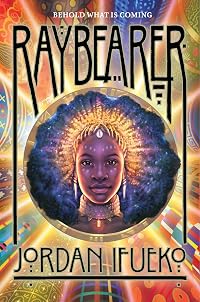
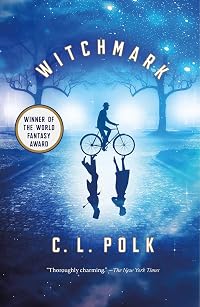
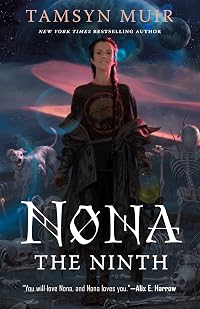
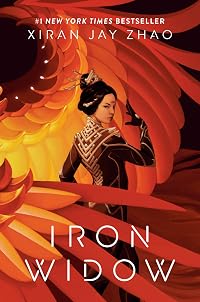
Member Recommendations
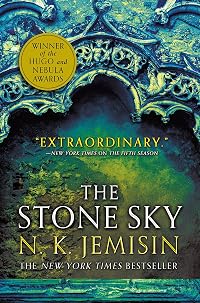
lottpoet The Broken Kingdoms is the second book in the trilogy. I chose it because it similarly deals with the fallout of fractured religions/worship/gods.
Member Reviews
At the time this novel was announced my honest reaction was should I even care. For me, there was sufficient diminishing returns between "Trail of Lightning" and "Storm of Locusts" that a new novel by Roanhorse did not peak my interest, considering the constant onslaught of new books that one has to read. I figured that the only reason I was going to give it a try is if it made the cut for one of the major awards.
So then, what one has here is a major advance in the author's craft and I really liked it. What Roanhorse really has going for her is the ability to come up with compelling POV characters and Naranpa (a senior cleric trying to reform her order), Xiala (a sea captain given an offer they can't refuse), Serapio (destined from show more birth to be the avatar of a god) are good ones. I had also been a little bit dubious about the mix of cultures that Roanhorse talked about using in this book, but she does a good job of filing off the serial numbers and making those influences her own. The result being that I'm really looking forward to the second book.
What, if anything, would I mark down this novel for? Very little actually. The effort of Xiala to get Serapio to a given city in a fixed span of time, as a means of building suspense, seemed a little contrived. Also, not really a fault, but the first chapter should come with a fistful of trigger warnings, and I suspect that a lot of readers are going to put down the book and not continue right after that. Then again, the level of violence George R.R. Martin has/had (presuming we ever see the concluding books) deployed in "A Song of Fire and Ice" hasn't hurt his bank account. show less
So then, what one has here is a major advance in the author's craft and I really liked it. What Roanhorse really has going for her is the ability to come up with compelling POV characters and Naranpa (a senior cleric trying to reform her order), Xiala (a sea captain given an offer they can't refuse), Serapio (destined from show more birth to be the avatar of a god) are good ones. I had also been a little bit dubious about the mix of cultures that Roanhorse talked about using in this book, but she does a good job of filing off the serial numbers and making those influences her own. The result being that I'm really looking forward to the second book.
What, if anything, would I mark down this novel for? Very little actually. The effort of Xiala to get Serapio to a given city in a fixed span of time, as a means of building suspense, seemed a little contrived. Also, not really a fault, but the first chapter should come with a fistful of trigger warnings, and I suspect that a lot of readers are going to put down the book and not continue right after that. Then again, the level of violence George R.R. Martin has/had (presuming we ever see the concluding books) deployed in "A Song of Fire and Ice" hasn't hurt his bank account. show less
For some reason, I often dread opening an epic fantasy novel. I've convinced myself I don't like the genre. But then I start reading it and I'm really into it: I love the way you bounce between disparate characters and, between them, slowly start to assemble a picture of the world—a picture that the very nature of the genre means the main characters are seeking to change. The early stages of Black Sun do this kind of thing very well, and I was utterly absorbed; I found this much more up my street than I did Roanhorse's previous Hugo Award for Best Novel finalist, Trail of Lightning. The world was complex and interesting, and like a lot of recent sff, paid good attention to the interaction between cultures and issues of show more colonization.
Yet, somewhere this book lost me. I think it's because ultimately the characters' actions stopped ringing true at some point. There's a mercenary ship captain on a mission, a mission which becomes increasingly difficult. At a certain point, it became impossible for me to believe that she had a motivation to keep going. Now, I could imagine that even though she clearly wasn't going to make any money anymore, some point of pride or hidden nobility would make her keep going on regardless... but Roanhorse didn't convince me of this if that is what she was going for. Similarly, there's a high priestess who never remotely convinced me that she had the political savvy to become a high priestess in the first place; she gets outwitted by her opponents at every turn. There's one viewpoint character who's in the book so little, and who does so little, that it felt to me like all his scenes must have been added in rewrites very late in the composition process to set up a role in book two.
Anyway, I guess what I'm saying is this book has the things I like about epic fantasy... but in the end it made me remember why it's a genre I typically don't read very much of. show less
Yet, somewhere this book lost me. I think it's because ultimately the characters' actions stopped ringing true at some point. There's a mercenary ship captain on a mission, a mission which becomes increasingly difficult. At a certain point, it became impossible for me to believe that she had a motivation to keep going. Now, I could imagine that even though she clearly wasn't going to make any money anymore, some point of pride or hidden nobility would make her keep going on regardless... but Roanhorse didn't convince me of this if that is what she was going for. Similarly, there's a high priestess who never remotely convinced me that she had the political savvy to become a high priestess in the first place; she gets outwitted by her opponents at every turn. There's one viewpoint character who's in the book so little, and who does so little, that it felt to me like all his scenes must have been added in rewrites very late in the composition process to set up a role in book two.
Anyway, I guess what I'm saying is this book has the things I like about epic fantasy... but in the end it made me remember why it's a genre I typically don't read very much of. show less
I'm pleased that so many authors are moving away from Euro-centric fantasy. I don't have a problem with the Euro/Celtic works, but it's nice to read stories based on more diverse cultures. There's Xiala, a sea captain of the Teek race, Narapa, the Sun priest who is an exception to the rule of class, Serapio, a young man maimed to become a god, and Okoa, the Shield of the matron of the Crow clan. The author slips between these four POVs to provide different aspects of this enthralling book based on pre-Columbian Central America.
The author does a nice job in world-building and describing her settings. Her characters are different and mostly compelling; Okoa gets short shrift in this volume but I expect we may see more of him in the next show more book. I'm definitely hooked and have already pre-ordered Fevered Star. show less
The author does a nice job in world-building and describing her settings. Her characters are different and mostly compelling; Okoa gets short shrift in this volume but I expect we may see more of him in the next show more book. I'm definitely hooked and have already pre-ordered Fevered Star. show less
There are a million things to absolutely love about this book, but here are a few of my top reasons:
1. No castles. No knights. In other words, we get a fresh perspective on a genre that hasn't incorporated much other than old dead white European guys for FAR too long.
2. Character-development. This is absolutely a character-driven book, which is my favorite kind of book to read, by leagues. I find all the best books are about massive human questions whittled down to their roots. It really is about a few people, on a quest to find something out about themselves that matters. So, no epic battles with thousands of troops and pages and overly descriptive fighting that no one wants to read. (Who has time for that nonsense these days when we show more can just turn on the news?)
3. Gender fluid characters that are natural and not called out for being "other" than.
4. Who doesn't love sirens and other such fantastical creatures coming to life on the page?
One of my favorite reads of the last several years. You should definitely read it! show less
1. No castles. No knights. In other words, we get a fresh perspective on a genre that hasn't incorporated much other than old dead white European guys for FAR too long.
2. Character-development. This is absolutely a character-driven book, which is my favorite kind of book to read, by leagues. I find all the best books are about massive human questions whittled down to their roots. It really is about a few people, on a quest to find something out about themselves that matters. So, no epic battles with thousands of troops and pages and overly descriptive fighting that no one wants to read. (Who has time for that nonsense these days when we show more can just turn on the news?)
3. Gender fluid characters that are natural and not called out for being "other" than.
4. Who doesn't love sirens and other such fantastical creatures coming to life on the page?
One of my favorite reads of the last several years. You should definitely read it! show less
For over 400 years, the Sun Priests have dominated the Meridian. Rare challenges are met with swift brutality, leaving them secure in their authority to observe the skies, keep the star charts, and order the continent according to the will of the heavens. But with great power comes great complacency. Ancient prophecies of a dead god’s return in vengeance are of little interest to a priesthood absorbed with infighting, but some of the people believe: and the convergence is coming.
“Black Sun” is a strong opener for Rebecca Roanhorse’s “Between Earth and Sky,” an epic fantasy built on pre-Columbian Mesoamerica rather than bog-standard medieval Europe. The novel opens by quoting the Florentine Codex, a famous Spanish ethnography show more of Mexico; the map of the Meridian, with its arc of cities hugging the Crescent Sea, is clearly inspired by the Gulf of Mexico; and the little touches (e.g., the use of cacao as currency) are deep cuts for those who know their Mesoamerican history.
Roanhorse knows how to draw the reader in at the start and hold her to the end. From the outset, Roanhorse sets a claustrophobic tone, opening with a shocking ritual of blood magic and heading each chapter with a countdown to the convergence. No matter what else is happening, the reader can never shake the sensation of a world slowly tilting toward something inevitable.
“Black Sun” is driven by strong characters whose gradually interlocking destinies serve to unfold the Meridian’s lore organically (despite early data dumps that disconcerted me). At first I struggled with Xiala, the sea captain who starts off looking like a stereotypically hard-drinking oversexed rogue with a heart of gold. Only as her story unfolds do we discover not only that her people are among the strangest of the Meridian, but also that there’s a reason for her self-destructive flippancy.
Naranpa, the progressive but beleaguered Sun Priest risen up from the mean streets, provides an important view from inside the hollow shell of the Celestial Tower. I never quite vibed with her story, as crucial as it is; perhaps the priesthood is just less interesting than the shadow coming for it. Even less compelling is Okoa, student at the Hokaia war college and scion of Clan Carrion Crown. This is probably just a function of time, since he shows up too late to do much more than offer a glimpse at the cultists who want to recruit him. He seems like a standup guy, and I’m sure he’ll have more to do.
By far, Serapio is the most fascinating and unsettling character, both in-universe and for the reader. The pivot on which the fate of the Meridian turns, he’s a sympathetic character as a thoughtful and sensitive man forced through pain and mutilation toward a destiny he did not choose. But he’s also disquieting in his capacity for calm and unspeakable violence toward those he deems a threat.
It’s nice to read a fantasy series that isn’t all knights and dragons, and it pairs nicely with reading I’ve done in colonial Mexican history. Pre-Columbian societies, from the Nahua to the Mayans, were often constructed around maintenance of the cosmic order through rituals of calendar and sacrifice. I look forward to finding out what happens when the priests fail and the order falls. show less
“Black Sun” is a strong opener for Rebecca Roanhorse’s “Between Earth and Sky,” an epic fantasy built on pre-Columbian Mesoamerica rather than bog-standard medieval Europe. The novel opens by quoting the Florentine Codex, a famous Spanish ethnography show more of Mexico; the map of the Meridian, with its arc of cities hugging the Crescent Sea, is clearly inspired by the Gulf of Mexico; and the little touches (e.g., the use of cacao as currency) are deep cuts for those who know their Mesoamerican history.
Roanhorse knows how to draw the reader in at the start and hold her to the end. From the outset, Roanhorse sets a claustrophobic tone, opening with a shocking ritual of blood magic and heading each chapter with a countdown to the convergence. No matter what else is happening, the reader can never shake the sensation of a world slowly tilting toward something inevitable.
“Black Sun” is driven by strong characters whose gradually interlocking destinies serve to unfold the Meridian’s lore organically (despite early data dumps that disconcerted me). At first I struggled with Xiala, the sea captain who starts off looking like a stereotypically hard-drinking oversexed rogue with a heart of gold. Only as her story unfolds do we discover not only that her people are among the strangest of the Meridian, but also that there’s a reason for her self-destructive flippancy.
Naranpa, the progressive but beleaguered Sun Priest risen up from the mean streets, provides an important view from inside the hollow shell of the Celestial Tower. I never quite vibed with her story, as crucial as it is; perhaps the priesthood is just less interesting than the shadow coming for it. Even less compelling is Okoa, student at the Hokaia war college and scion of Clan Carrion Crown. This is probably just a function of time, since he shows up too late to do much more than offer a glimpse at the cultists who want to recruit him. He seems like a standup guy, and I’m sure he’ll have more to do.
By far, Serapio is the most fascinating and unsettling character, both in-universe and for the reader. The pivot on which the fate of the Meridian turns, he’s a sympathetic character as a thoughtful and sensitive man forced through pain and mutilation toward a destiny he did not choose. But he’s also disquieting in his capacity for calm and unspeakable violence toward those he deems a threat.
It’s nice to read a fantasy series that isn’t all knights and dragons, and it pairs nicely with reading I’ve done in colonial Mexican history. Pre-Columbian societies, from the Nahua to the Mayans, were often constructed around maintenance of the cosmic order through rituals of calendar and sacrifice. I look forward to finding out what happens when the priests fail and the order falls. show less
This book has been a long time coming. I added it to my tbr when I first heard of it, was very excited when I got the arc and also got the audiobook immediately upon release. But I never did get to reading it because my head was a mess last year, and I completely avoided reading all books which I had high expectations for. But I finally braved it this month, at a time when I am again in a bad reading slump, but this had me completely in its grips from the first word and wouldn’t let me go till I was done.
What a refreshing world the author managed to create here. While creating European inspired worlds is pretty common in the fantasy genre, I have tried to diversify my reading in the past year or two to try and pick books where the show more worlds are created by authors with Asian or African heritage, taking inspiration from their own cultures and mythologies. However, I never even gave a thought that a world could be based on pre-Columbian indigenous American cultures, and I was completely in awe as I discovered with epic wide world created by the author. We have cities and towns and tribes, each with its own set of cultures and belief systems, bound by a treaty to ensure peace in the world, and watched over by a priesthood who believe themselves capable of reading the stars and predicting the future. I am obviously ignorant about the history and couldn’t discern which aspect of the world building was inspired by which culture, but nevertheless the author managed to create something which felt real and lived in, and very much a part of the daily lives of its people. The various magic systems are also lightly described and I was amazed by the scenes where it came into play, but I also have a feeling that this aspect will be more prominent in the next book. And also except for some personal prejudices/superstitions, this is also a very queernormative world, with all forms of genders and sexualities just accepted as part of the normal and where this aspect of a character doesn’t drive the plot.
The writing is really engaging and mesmerizing from the get go. All the descriptions were quite vivid and I could feel the cold, the pain, and the fear that the characters were experiencing; as well as the feeling of being on the sea in the middle of a ship killing story, the air hitting your face when on the back of a giant corvid, and the dread of being on the edge of a cliff just before falling down. The pacing is also just right, never slacking off even for a bit, making me excited to keep turning the page without ever putting the book down. I was frankly quite surprised by the use of neopronouns, because I have personally never encountered them before, but they felt very organic to the world that the author created. All the POVs are woven seamlessly through the story, and I was so glad that I loved everyone equally and was looking forward to read about each of their adventures. Listening to the first half of the book on audio also helped because the full cast of narrators are brilliant, and I loved getting to know how to pronounce the words correctly.
The way the collective history and the trauma of the people is told through this story felt very raw and painful. Each of the clans or tribes has suffered in the past and while there maybe peace currently, the hurts nor the pain have been forgotten, and every generation inherits this trauma, alongwith a deep seated need for vengeance (or justice) for their peoples. Add to this a dose of religious fanaticism and belief in vengeful prophecies, and it makes for a powder keg of a world which is always on the verge of the next riot, or maybe even outright war. I thought the author’s handling of the topic of generational trauma and the cycle of revenge was very realistic and hit me quite hard.
And it was this writing that made me very empathetic towards most of the characters, despite whatever action they were keen on taking. Serapio’s life has been traumatic since his birth, first with his mother treating him like a vessel to fulfill her goals, and his father ignoring him either out of fear or disgust. He has been told and trained and prepared to fulfill his destiny, but I couldn’t help but feel bad that he never got much of a choice. It was hard to see him determined to achieve his goal as vengeance for a people whom he didn’t even know, but at the same time I also wanted him to succeed.
Xiala on the other hand was a delight. Belonging to a people who are feared because of their abilities, she has to navigate a lot of misogyny, prejudice and fear to be able to work as the captain of a ship. She is also open with her affections, just wanting to have a good time with some drink and a chat with the people around her. But it’s not always easy to find that camaraderie that she so desires, and that’s why I really loved her developing relationship with Serapio.
And the last one is the sun priest, Narampa. She is admirable for having risen up to her position despite being from a humble background, and believing so thoroughly in the responsibility of her role and the priesthood as a whole. But she is also naive enough to think only her beliefs are right, as well as that she alone can reform an age old status quo. I honestly wasn’t surprised to see her encounter many obstacles, and despite her sometimes questionable decisions, I did want her to be safe.
There are also a good number of side characters as well as creatures who make this a very memorable read, and though most of them had very less page time, I can assure you that they leave an indelible mark and it hurts when something bad happens to them.
In conclusion, this is what epic fantasy feels like. A vast world with scope for being more expansive, characters who are not always likable but still very much will find a place in your heart, a fast paced plot with multiple threads that all converge with an impending sense of doom, and an unexpected ending where you are left wondering if any of your favorites made it. I’m extremely happy that I seem to be having great luck with fantasies these days and I can only hope it continues. And now I’m eagerly waiting for the sequel news, which the author promised would be coming soon. show less
What a refreshing world the author managed to create here. While creating European inspired worlds is pretty common in the fantasy genre, I have tried to diversify my reading in the past year or two to try and pick books where the show more worlds are created by authors with Asian or African heritage, taking inspiration from their own cultures and mythologies. However, I never even gave a thought that a world could be based on pre-Columbian indigenous American cultures, and I was completely in awe as I discovered with epic wide world created by the author. We have cities and towns and tribes, each with its own set of cultures and belief systems, bound by a treaty to ensure peace in the world, and watched over by a priesthood who believe themselves capable of reading the stars and predicting the future. I am obviously ignorant about the history and couldn’t discern which aspect of the world building was inspired by which culture, but nevertheless the author managed to create something which felt real and lived in, and very much a part of the daily lives of its people. The various magic systems are also lightly described and I was amazed by the scenes where it came into play, but I also have a feeling that this aspect will be more prominent in the next book. And also except for some personal prejudices/superstitions, this is also a very queernormative world, with all forms of genders and sexualities just accepted as part of the normal and where this aspect of a character doesn’t drive the plot.
The writing is really engaging and mesmerizing from the get go. All the descriptions were quite vivid and I could feel the cold, the pain, and the fear that the characters were experiencing; as well as the feeling of being on the sea in the middle of a ship killing story, the air hitting your face when on the back of a giant corvid, and the dread of being on the edge of a cliff just before falling down. The pacing is also just right, never slacking off even for a bit, making me excited to keep turning the page without ever putting the book down. I was frankly quite surprised by the use of neopronouns, because I have personally never encountered them before, but they felt very organic to the world that the author created. All the POVs are woven seamlessly through the story, and I was so glad that I loved everyone equally and was looking forward to read about each of their adventures. Listening to the first half of the book on audio also helped because the full cast of narrators are brilliant, and I loved getting to know how to pronounce the words correctly.
The way the collective history and the trauma of the people is told through this story felt very raw and painful. Each of the clans or tribes has suffered in the past and while there maybe peace currently, the hurts nor the pain have been forgotten, and every generation inherits this trauma, alongwith a deep seated need for vengeance (or justice) for their peoples. Add to this a dose of religious fanaticism and belief in vengeful prophecies, and it makes for a powder keg of a world which is always on the verge of the next riot, or maybe even outright war. I thought the author’s handling of the topic of generational trauma and the cycle of revenge was very realistic and hit me quite hard.
And it was this writing that made me very empathetic towards most of the characters, despite whatever action they were keen on taking. Serapio’s life has been traumatic since his birth, first with his mother treating him like a vessel to fulfill her goals, and his father ignoring him either out of fear or disgust. He has been told and trained and prepared to fulfill his destiny, but I couldn’t help but feel bad that he never got much of a choice. It was hard to see him determined to achieve his goal as vengeance for a people whom he didn’t even know, but at the same time I also wanted him to succeed.
Xiala on the other hand was a delight. Belonging to a people who are feared because of their abilities, she has to navigate a lot of misogyny, prejudice and fear to be able to work as the captain of a ship. She is also open with her affections, just wanting to have a good time with some drink and a chat with the people around her. But it’s not always easy to find that camaraderie that she so desires, and that’s why I really loved her developing relationship with Serapio.
And the last one is the sun priest, Narampa. She is admirable for having risen up to her position despite being from a humble background, and believing so thoroughly in the responsibility of her role and the priesthood as a whole. But she is also naive enough to think only her beliefs are right, as well as that she alone can reform an age old status quo. I honestly wasn’t surprised to see her encounter many obstacles, and despite her sometimes questionable decisions, I did want her to be safe.
There are also a good number of side characters as well as creatures who make this a very memorable read, and though most of them had very less page time, I can assure you that they leave an indelible mark and it hurts when something bad happens to them.
In conclusion, this is what epic fantasy feels like. A vast world with scope for being more expansive, characters who are not always likable but still very much will find a place in your heart, a fast paced plot with multiple threads that all converge with an impending sense of doom, and an unexpected ending where you are left wondering if any of your favorites made it. I’m extremely happy that I seem to be having great luck with fantasies these days and I can only hope it continues. And now I’m eagerly waiting for the sequel news, which the author promised would be coming soon. show less
Thanks to the previous two books I read by Rebecca Roanhorse, both part of her Sixth World series, I had come to expect a good, absorbing story from her newest work, but Black Sun proved to be so much more than I had anticipated and it took me completely by surprise. An enthralling, delightful surprise. Set in a world that takes inspiration from pre-colombian cultures and then adds many original details, combining them into a fascinating, complex background, Black Sun follows the journey of four main characters destined to converge in the city of Tova on a very special day, as yearly festivities and an ominous prophecy will merge with unpredictable results.
Xiala is a mercenary sea captain and a Teek, which means she comes from a show more matriarchal seafaring society from which she was exiled after a tragic event: imprisoned after a violent altercation with her former employer and a drunken night on the town, she is released after accepting to transport a young man to the city of Tova in time for Convergence, the winter solstice that this year will also see the alignment of Earth, Sun and Moon. The passenger is Serapio, molded from infancy to be the vessel of a vengeful god and for this reason deeply scarred and blinded - but not helpless, not at all. Naranpa is the highest priest in the city of Tova, but her role is in constant jeopardy because of the inner political maneuvers inside the priesthood, and their inability to accept her humble origins. And then there is Okoa, son of the Carrion Crow clan’s matron: back in Tova from the military academy, he finds himself dealing with family problems and uneasy alliances.
The novel unfolds through time jumps that don’t feel at all confusing as they are wielded with great skill and keep adding new information to the very complex tapestry that is this story: seeing this world through the different points of view also confers great depth to it and its history, turning it into a vivid, three-dimensional creation that is very easy to slip into, just as it’s difficult to move out of, because it tends to entangle you into its awesome complexity. Moreover, the time jumps keep enhancing the sense of impending doom that becomes more and more palpable as the day of Convergence draws near.
The setting is indeed fascinating, not just because of the different locations visited as the characters engage in their travels, but because it’s created through a blend of vivid descriptions and fascinating legends that shape the world into something tangible and vibrant, gifted with a definite cinematic quality. If this is true for all descriptions in the novel, it is even more so where the city of Tova is concerned: a place of high peaks and deep chasms spanned by aerial bridges that can give you vertigo by proxy, a city teeming with life and at the same time rife with the danger of death, a death that can come through accidents - like slipping down an icy bridge into a bottomless ravine - or through malice - like being killed by a hired assassin or the member of a rival clan. There is a definite sense of urgency in Tovan day-to-day activities, be they the comfortable kind enjoyed by the elite or the hand-to-mouth existence of the dwellers in the Maw, the lowest level of the city where poverty, crime and the offer of illicit pleasures are a way of life. It does not take long for the reader to perceive that Tova is like a pressure cooker ready to explode, that social strain and the priesthood’s iron rule and inner conflicts, together with never-ending clan rivalries, are bringing that pressure to the boiling point: add to that the long-held thirst for revenge harbored by Carrion Crow for the Night of Knives, when the priesthood tried to exterminate the clan, and you know it’s all fated to end in blood.
In this tense but intriguing situation the characters shine and add a further level of allure to the story, even though Okoa is mostly kept on the sidelines in favor of the other three, with some hope he will play a bigger role as the story moves forward. Naranpa is the one who required more time for me to truly appreciate her, but I guess it was mostly because I was still orienting myself in this world: once I got to know her better I could only admire her tenacity in clinging to her exalted post, despite her own self-doubts and the insecurities carried over from an impoverished childhood. Nara, as she’s often called, does not care so much for power in itself or for politics, but rather for the good of the city: she understands that to bring peace and prosperity to Tova things have to change, and for that she is challenged every step of the way by her fellow priests, when she is not actually threatened with death. Nara’s journey throughout Black Sun is a hard one, and while many times I felt frustrated in witnessing the obstacles she had to face, I cannot wait to see what Rebecca Roanhorse has in store for her along the way.
If Nara is an outsider with little chances of ever blending in, Xiala and Serapio are just as isolated, even though in different ways. I liked Xiala from the very beginning: her personality is a mix of defiance and vulnerability, accentuated by the way people relate to her as a Teek, a woman whose mysterious Song can placate stormy waters, call favorable winds and keep at bay dangerous creatures. For this reason Teeks are highly sought after, but at the same time despised and feared, and even killed for their precious bones gifted with magical properties: all this comes to the fore in the course of the sea voyage to Tova, when Xiala shows a very peculiar talent and the crew mutinies out of fear. It’s therefore not surprising when she forms a bond with Serapio, an outcast like herself, and that they can understand each other on a deeper level, as shown by the exchange of stories and myths during the long nights over the sea.
Serapio might very well be the central character here, a sort of anti-hero who is at the same time powerful and vulnerable: shaped from childhood to be an instrument of vengeance, leading a loveless life as he was being molded into the desired weapon, he nonetheless shows a form of quiet humanity, a sort of sad gentleness that managed to break my heart, particularly when he contemplates what will be his ultimate destiny,
[he] hoped that the pain would not be too great. He had made friends with it, yes, but it was a wary friendship.
a destiny he did not choose himself but at the same time one he has accepted as the only possible one. The author describes his journey in such a way that even as he fulfills his preordained role in a frenzied dance of violence and blood I could not help myself and felt only pity for him.
When all is said and done, Black Sun will certainly attract you because of the exotic background that sets it apart from the usual epic fantasy offerings, but it’s through the strength and human depth of its characters that it will keep you coming back for more. show less
Xiala is a mercenary sea captain and a Teek, which means she comes from a show more matriarchal seafaring society from which she was exiled after a tragic event: imprisoned after a violent altercation with her former employer and a drunken night on the town, she is released after accepting to transport a young man to the city of Tova in time for Convergence, the winter solstice that this year will also see the alignment of Earth, Sun and Moon. The passenger is Serapio, molded from infancy to be the vessel of a vengeful god and for this reason deeply scarred and blinded - but not helpless, not at all. Naranpa is the highest priest in the city of Tova, but her role is in constant jeopardy because of the inner political maneuvers inside the priesthood, and their inability to accept her humble origins. And then there is Okoa, son of the Carrion Crow clan’s matron: back in Tova from the military academy, he finds himself dealing with family problems and uneasy alliances.
The novel unfolds through time jumps that don’t feel at all confusing as they are wielded with great skill and keep adding new information to the very complex tapestry that is this story: seeing this world through the different points of view also confers great depth to it and its history, turning it into a vivid, three-dimensional creation that is very easy to slip into, just as it’s difficult to move out of, because it tends to entangle you into its awesome complexity. Moreover, the time jumps keep enhancing the sense of impending doom that becomes more and more palpable as the day of Convergence draws near.
The setting is indeed fascinating, not just because of the different locations visited as the characters engage in their travels, but because it’s created through a blend of vivid descriptions and fascinating legends that shape the world into something tangible and vibrant, gifted with a definite cinematic quality. If this is true for all descriptions in the novel, it is even more so where the city of Tova is concerned: a place of high peaks and deep chasms spanned by aerial bridges that can give you vertigo by proxy, a city teeming with life and at the same time rife with the danger of death, a death that can come through accidents - like slipping down an icy bridge into a bottomless ravine - or through malice - like being killed by a hired assassin or the member of a rival clan. There is a definite sense of urgency in Tovan day-to-day activities, be they the comfortable kind enjoyed by the elite or the hand-to-mouth existence of the dwellers in the Maw, the lowest level of the city where poverty, crime and the offer of illicit pleasures are a way of life. It does not take long for the reader to perceive that Tova is like a pressure cooker ready to explode, that social strain and the priesthood’s iron rule and inner conflicts, together with never-ending clan rivalries, are bringing that pressure to the boiling point: add to that the long-held thirst for revenge harbored by Carrion Crow for the Night of Knives, when the priesthood tried to exterminate the clan, and you know it’s all fated to end in blood.
In this tense but intriguing situation the characters shine and add a further level of allure to the story, even though Okoa is mostly kept on the sidelines in favor of the other three, with some hope he will play a bigger role as the story moves forward. Naranpa is the one who required more time for me to truly appreciate her, but I guess it was mostly because I was still orienting myself in this world: once I got to know her better I could only admire her tenacity in clinging to her exalted post, despite her own self-doubts and the insecurities carried over from an impoverished childhood. Nara, as she’s often called, does not care so much for power in itself or for politics, but rather for the good of the city: she understands that to bring peace and prosperity to Tova things have to change, and for that she is challenged every step of the way by her fellow priests, when she is not actually threatened with death. Nara’s journey throughout Black Sun is a hard one, and while many times I felt frustrated in witnessing the obstacles she had to face, I cannot wait to see what Rebecca Roanhorse has in store for her along the way.
If Nara is an outsider with little chances of ever blending in, Xiala and Serapio are just as isolated, even though in different ways. I liked Xiala from the very beginning: her personality is a mix of defiance and vulnerability, accentuated by the way people relate to her as a Teek, a woman whose mysterious Song can placate stormy waters, call favorable winds and keep at bay dangerous creatures. For this reason Teeks are highly sought after, but at the same time despised and feared, and even killed for their precious bones gifted with magical properties: all this comes to the fore in the course of the sea voyage to Tova, when Xiala shows a very peculiar talent and the crew mutinies out of fear. It’s therefore not surprising when she forms a bond with Serapio, an outcast like herself, and that they can understand each other on a deeper level, as shown by the exchange of stories and myths during the long nights over the sea.
Serapio might very well be the central character here, a sort of anti-hero who is at the same time powerful and vulnerable: shaped from childhood to be an instrument of vengeance, leading a loveless life as he was being molded into the desired weapon, he nonetheless shows a form of quiet humanity, a sort of sad gentleness that managed to break my heart, particularly when he contemplates what will be his ultimate destiny,
[he] hoped that the pain would not be too great. He had made friends with it, yes, but it was a wary friendship.
a destiny he did not choose himself but at the same time one he has accepted as the only possible one. The author describes his journey in such a way that even as he fulfills his preordained role in a frenzied dance of violence and blood I could not help myself and felt only pity for him.
When all is said and done, Black Sun will certainly attract you because of the exotic background that sets it apart from the usual epic fantasy offerings, but it’s through the strength and human depth of its characters that it will keep you coming back for more. show less
Members
- Recently Added By
Lists

2021 Hugo Eligible Novels
37 works; 14 members

NPR Summer 2021: 50 Favorite Sci-Fi And Fantasy Books Of The Past Decade
50 works; 8 members

Epic fantasy by female authors
47 works; 7 members

Top Five Books of 2021
604 works; 181 members

Female Author
1,234 works; 67 members

Books Read in 2023
5,638 works; 147 members

LGBTQ+ Speculative Fiction
821 works; 51 members

Native American / Indigenous Literature
172 works; 100 members

Speculative Fiction to Read
706 works; 32 members

Fantasy by Women Who Broke Away from Europe
144 works; 12 members

Books Read in 2021
5,361 works; 114 members

DWI Members Recommendations
25 works; 1 member

Neuro Pride Book Club Book Shares
98 works; 1 member

At the Library
217 works; 1 member

Kindle Fantasy/Science Fiction
206 works; 1 member

Books Read in 2024
4,727 works; 128 members
Author Information

30+ Works 9,731 Members
Rebecca Roanhorse is a speculative fiction writer, based in Northern New Mexico. Her background is Ohkay Owingeh/Black, Navajo in-law. She is a graduate of Yale University and a lawyer. Her novels include Trail of Lightning (2018), which is the first book in the Sixth World series, and Storm of Locusts (2019). She is the author of Welcome to your show more Authentic Indian Experience, which won the 2018 Hugo Award and Nebula Award for best novelette. (Bowker Author Biography) show less
Some Editions
Awards and Honors
Awards
Distinctions
Notable Lists
Series

Common Knowledge
- Canonical title
- Black Sun
- Original publication date
- 2020-10-13
- People/Characters
- Serapio (Odo Sedoh); Xiala; Naranpa; Okoa
- Important places
- Tova; Cuecola
- Dedication
- For that kid in Texas
who always dreamed in epic - First words
- Today he would become a god.
- Last words
- (Click to show. Warning: May contain spoilers.)We're going home.
- Publisher's editor
- Monti, Joe
- Blurbers
- Liu, Ken; Jones, Stephen Graham; Chakraborty, S. A.; Kuang, R. F.; Ireland, Justina; Onyebuchi, Tochi (show all 10); Shepherd, Peng; Anders, Charlie Jane; Wilde, Fran; de Bodard, Aliette
- Original language
- English
Classifications
Statistics
- Members
- 2,894
- Popularity
- 6,234
- Reviews
- 92
- Rating
- (3.99)
- Languages
- English, French, Italian
- Media
- Paper, Audiobook, Ebook
- ISBNs
- 16
- ASINs
- 6