The Roaring Girl
by Thomas Middleton, Thomas Dekker (Author)
On This Page
Description
The titular "Roaring Girl" of Thomas Middleton and Thomas Dekker's comedy is Moll Cutpurse, a fictionalized version of Mary Frith, who attained legendary status in London by flouting gendered dress conventions, illegally performing onstage, and engaging in all manner of transgressive behavior from smoking and swearing to stealing. In the course of The Roaring Girl's lively and complex plot of seduction and clever ruses, Moll shares her views on gender and sexuality, defends her honor in a show more duel, and demonstrates her knowledge of London's criminal underworld. This edition of the play offers an informative introduction, thorough annotation, and a substantial selection of contextual materials from the period. show lessTags
Recommendations















Member Recommendations
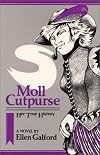
CurrerBell Thomas Middleton and Thomas Dekker's play The Roaring Girl (1611) is a fictionalized account of Mary Frith, popularly known as "Moll Cutpurse," who is the subject of Ellen Galford's historical fiction Moll Cutpurse Her True History. Middleton and Dekker appear as supporting characters in the Galford novel, and an episode toward the end of the Galford novel depicts a performance of The Roaring Girl with Moll in attendance.
Member Reviews
In 1611 two experienced London playwrights collaborated on a new play dramatizing a real-life contemporary wonder, Mary Frith, known as Moll Cutpurse, "a sometime thief and notorious cross-dresser" (ix). In Feb 2023 at the Blackfriars theater in Staunton VA a group of enthusiastic amateur players offered a staged reading of the rarely performed play, prompting me to revisit it. It's at once clear why it has become popular in recent years, after almost 4 centuries of neglect.
The real-life Frith was charged with theft and a host of notoriously male behaviors - drunkenness, swearing, dueling, swaggering, and cross-dressing. Middleton and Dekker's Moll affects some of those behaviors but is presented sympathetically as an outspoken show more free-thinker transcending the rigid constraints of her class and gender. Such froward behavior attracts some undesired admirers to this "maddest, fantastical'st girl" (2.1.192) for her "heroic spirit and masculine womanhood" (2.1.336-7), but much of the play rehearses the knee-jerk attacks on one who "strays so from her kind [that] Nature repents she made her" (1.2.214-5). Her non-binary gender presentation is at the heart of her offense: "It is a thing One knows not how to name; . . . 'Tis woman more than man, Man more than woman, and . . . The sun gives her two shadows to one shape" (1.2.129-33). The fact that such attacks come from the play's senex, Sir Alexander Wengrave, who blocks a heterosexual pair of true lovers from wedded bliss, makes clear where the plot's sympathies rest.
The play offers Moll several memorable bits of stage business. Twice in act 3 when in male garb she draws her weapon to engage with and defeat male opponents. Then act 4 finds her placing a viol da gamba between her trousered legs to perform two songs about transgressive wives, and in act 5 she engages in a bout of "canting," a slang duel that ends with yet another song.
Her verbal climax comes earlier, in an articulate attack on a would-be seducer, the poorly endowed Laxton (lacks stone): "Thou'rt one of those That thinks each woman thy fond flexible whore. . . . What durst move you, sir, To think me whorish? . . . "Cause, you'll say, I'm given to sport, I'm often merry, jest? Had mirth no kindred in the world but lust? . . . I scorn to prostitute myself to a man, I that can prostitute a man to me. . . she that has wit and spirit May scorn to live beholding to her body for meat Or for apparel . . . Base is the mind that kneels unto her body . . . My spirit shall be mistress of this house As long as I have time in't" (3.1.72-140).
Though Moll is the play's featured character, her part in the love-plot is relatively small. It is mostly limited to unmasking plotters and dodging entrapment while allying with the young lover Sebastian Wengrave to cozen his father and marry his true love Mary (about whom the roaring girl says "I pitied her for name's sake, that a Moll Should be so crossed in love" (4.1.68-9). Much of the play is taken up with the misadventures of two city gallants, whose attempts to "wap, niggle and fadoodle" (5.1.189-95) with two housewives and bamboozle their husbands are thwarted by the wives themselves.
In the end, though this city comedy flirts with transgression at every turn, it ends up affirming heterosexual marriage and wifely wiles. Sir Alexander the senex apologizes for his errors and praises Moll as "a good wench" and the foxy housewives as "kind gentlewomen, whose sparkling presence Are glories set in marriage" (5.2.268-9). Perhaps the chief roarer speaks for her sisters as well as herself when she proclaims, "I please myself, and care not else who loves me" (5.1.332). show less
The real-life Frith was charged with theft and a host of notoriously male behaviors - drunkenness, swearing, dueling, swaggering, and cross-dressing. Middleton and Dekker's Moll affects some of those behaviors but is presented sympathetically as an outspoken show more free-thinker transcending the rigid constraints of her class and gender. Such froward behavior attracts some undesired admirers to this "maddest, fantastical'st girl" (2.1.192) for her "heroic spirit and masculine womanhood" (2.1.336-7), but much of the play rehearses the knee-jerk attacks on one who "strays so from her kind [that] Nature repents she made her" (1.2.214-5). Her non-binary gender presentation is at the heart of her offense: "It is a thing One knows not how to name; . . . 'Tis woman more than man, Man more than woman, and . . . The sun gives her two shadows to one shape" (1.2.129-33). The fact that such attacks come from the play's senex, Sir Alexander Wengrave, who blocks a heterosexual pair of true lovers from wedded bliss, makes clear where the plot's sympathies rest.
The play offers Moll several memorable bits of stage business. Twice in act 3 when in male garb she draws her weapon to engage with and defeat male opponents. Then act 4 finds her placing a viol da gamba between her trousered legs to perform two songs about transgressive wives, and in act 5 she engages in a bout of "canting," a slang duel that ends with yet another song.
Her verbal climax comes earlier, in an articulate attack on a would-be seducer, the poorly endowed Laxton (lacks stone): "Thou'rt one of those That thinks each woman thy fond flexible whore. . . . What durst move you, sir, To think me whorish? . . . "Cause, you'll say, I'm given to sport, I'm often merry, jest? Had mirth no kindred in the world but lust? . . . I scorn to prostitute myself to a man, I that can prostitute a man to me. . . she that has wit and spirit May scorn to live beholding to her body for meat Or for apparel . . . Base is the mind that kneels unto her body . . . My spirit shall be mistress of this house As long as I have time in't" (3.1.72-140).
Though Moll is the play's featured character, her part in the love-plot is relatively small. It is mostly limited to unmasking plotters and dodging entrapment while allying with the young lover Sebastian Wengrave to cozen his father and marry his true love Mary (about whom the roaring girl says "I pitied her for name's sake, that a Moll Should be so crossed in love" (4.1.68-9). Much of the play is taken up with the misadventures of two city gallants, whose attempts to "wap, niggle and fadoodle" (5.1.189-95) with two housewives and bamboozle their husbands are thwarted by the wives themselves.
In the end, though this city comedy flirts with transgression at every turn, it ends up affirming heterosexual marriage and wifely wiles. Sir Alexander the senex apologizes for his errors and praises Moll as "a good wench" and the foxy housewives as "kind gentlewomen, whose sparkling presence Are glories set in marriage" (5.2.268-9). Perhaps the chief roarer speaks for her sisters as well as herself when she proclaims, "I please myself, and care not else who loves me" (5.1.332). show less
I'm rating this 5***** based on the quality of the Norton Critical Edition, and note that this review applies specifically to the NCE. (There's also a New Mermaid edition with which I'm not familiar, and anyone who just wants a quickie read-through of the play might well be contented with the Kindle freebie.)
The Roaring Girl is a reasonably good play – not great by any means, mind you, but still quite good. It's of particular interest, though, to the archaeology of gender studies, and readers might be interested in reading this Norton Critical Edition in tandem with Ellen Galford's quite entertaining novel Moll Cutpurse: Her True History published in 1993 by Virago Press. This Norton Critical Edition is superb for its supplementary show more materials, including Jacobean pamphlets attacking cross-dressing, accounts of Moll herself published in her own lifetime or shortly after her death, and twentieth and twenty-first century critical studies of The Roaring Girl primarily from the perspective of gender studies but with some other topics such as underworld cant on the Jacobean stage. show less
The Roaring Girl is a reasonably good play – not great by any means, mind you, but still quite good. It's of particular interest, though, to the archaeology of gender studies, and readers might be interested in reading this Norton Critical Edition in tandem with Ellen Galford's quite entertaining novel Moll Cutpurse: Her True History published in 1993 by Virago Press. This Norton Critical Edition is superb for its supplementary show more materials, including Jacobean pamphlets attacking cross-dressing, accounts of Moll herself published in her own lifetime or shortly after her death, and twentieth and twenty-first century critical studies of The Roaring Girl primarily from the perspective of gender studies but with some other topics such as underworld cant on the Jacobean stage. show less
New Mermaids are modern-spelling, fully-annotated editions of important English plays. Each volume includes a critical introduction, biography of the author, discussions of dates & sources, textual details, & information about staging the play.
Ratings
Members
- Recently Added By
Lists

Best Early Modern Plays Not By Shakespeare
78 works; 8 members

Early Modern (Shakesperean)
64 works; 2 members
My Play Collection
769 works; 3 members
Author Information

69+ Works 4,755 Members
Thomas Middleton, 1580-1627 Middleton wrote in a wide variety of genres and styles, and was a thoroughly professional dramatist. His comedies were generally based on London life but seen through the perspective of Roman comedy, especially those of Plautus. Middleton is a masterful constructor of plots. "A Chaste Maid in Cheapside" (1630) is show more typical of Middleton's interests. It is biting and satirical in tone: the crassness of the willing cuckold Allwit is almost frightening. Middleton was very preoccupied with sexual themes, especially in his tragedies, "The Changeling" (1622), written with William Rowley, and "Women Beware Women" (1621). The portraits of women in these plays are remarkable. Both Beatrice-Joanna in "The Changeling" and Bianca in "Women Beware Women" move swiftly from innocence to corruption, and Livia in "Women Beware Women" is noteworthy as a feminine Machiavelli and manipulator. In his psychological realism and his powerful vision of evil, Middleton resembles Shakespeare. (Bowker Author Biography) show less

Dekker was a popular, prolific writer who had a hand in at least 40 plays, which he wrote for Philip Henslowe, the theatrical entrepreneur. In the plays that seem to be completely by Dekker, he shows himself as a realist of London life, but even his most realistic plays have a strong undertone of romantic themes and aspirations. The Shoemaker's show more Holiday (1600), for example, glorifies the gentle craft of the shoemaker, and the character Simon Eyre speaks in an extravagant, hyperbolic style that is far from realistic. Dekker also wrote such prose pamphlets as the Bellman of London (1608) and The Gull's Hornbook (1609), the latter an entertaining account of the behavior of a country yokel and dupe in London. He died in debt. (Bowker Author Biography) show less
Some Editions
Series
Belongs to Publisher Series
Work Relationships
Common Knowledge
- Canonical title
- The Roaring Girl
- Original publication date
- 1611
- People/Characters
- Moll Cutpurse
- Important places
- London, England, UK
- First words
- A play expected long makes the audience look / For wonders, that each scene should be a book, / Composed to all perfection.
Classifications
Statistics
- Members
- 195
- Popularity
- 167,847
- Reviews
- 3
- Rating
- (3.48)
- Languages
- English
- Media
- Paper, Ebook
- ISBNs
- 20
- ASINs
- 4