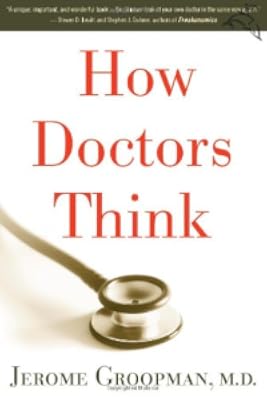
How Doctors Think
by Jerome Groopman
On This Page
Description
A New Yorker staff writer, bestselling author, and professor at Harvard Medical School unravels the mystery of how doctors figure out the best treatments-or fail to do so. This book describes the warning signs of flawed medical thinking and offers intelligent questions patients can ask.On average, a physician will interrupt a patient describing her symptoms within eighteen seconds. In that short time, many doctors decide on the likely diagnosis and best treatment. Often, decisions made this show more way are correct, but at crucial moments they can also be wrong-with catastrophic consequences. In this myth-shattering book, Jerome Groopman pinpoints the forces and thought processes behind the decisions doctors make. He explores why doctors err and shows when and how they can- with our help-avoid snap judgments, embrace uncertainty, communicate effectively, and deploy other skills that can have a profound impact on our health. This book is the first to describe in detail the warning signs of erroneous medical thinking, offering direct, intelligent questions patients can ask their doctors to help them get back on track.Groopman draws on a wealth of research, extensive interviews with some of the country's best physicians, and his own experiences as a doctor and as a patient. He has learned many of the lessons in this book the hard way, from his own mistakes and from errors his doctors made in treating his own debilitating medical problems.How Doctors Think reveals a profound new view of twenty-first-century medical practice, giving doctors and patients the vital information they need to make better judgments together. show lessTags
Recommendations
















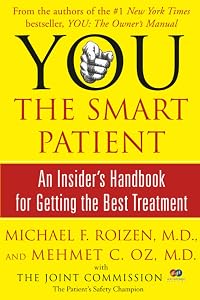


Member Recommendations
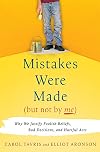
Mistakes Were Made (But Not By Me): Why We Justify Foolish Beliefs, Bad Decisions and Hurtful Acts by Carol Tavris
espertus Two interesting books filled with case studies demonstrating how trained professionals make incorrect decisions based on various types of cognitive errors.
Member Reviews
It makes perfect sense when you reflect on it, but Groopman's description of the Bayesian indoctrination of doctor training provides a lot of insight into the common conflicts or deficits of medical interaction. The takeaways aren't simplistic so much as simply reinforcing that patients and peers should remember that doctors are human. Cognitive errors are common, no matter how elite and trained a professional is. Patient advocacy and a deeper engagement with a specialist's rationale is not easy to appreciate or apply until you realize just how often common medical conventions prevent them from even being considered.
There are doctors that follow the tune that the Medical Industrial Complex plays, and there are ones who buck the trend. Dr. Groopman is one of the latter, thankfully.
In How Doctors Think, The New Yorker staff writer and Harvard professor of medicine & researcher Dr. Groopman offers a distinctive look into the structure of Big Medica in search for what exactly is the type of mindset Doctors employ when practicing their jobs.
Groopman does a compelling job throughout the book in making sure he relates the plights plaguing medicine from both sides of the coin, from the patients perspective, as well as from the perspective of a physician. This aids in the book not being one sided. It helps greatly that he’s also a Doctor with experience show more in this very field.
From medical, money, marketing, uncertainty, dogma, to various other components of medicine, Groopman attempts to turn over as many stones as possible in his search for what issues are the ones plaguing Doctors the most.
A notable point in the book that hit close to home, which many people will relate to is the emotional tension that can arise at times between patients and their doctors. Essentially, whether patients and doctors like each other. Groopman relates what Social Psychologist, Judy Hall discovered regarding emotional tension:
“..that those feelings are hardly secret on either side of the table. In studies of primary care physicians and surgeons, patients knew remarkably accurately how the doctor actually felt about them. Much of this, of course, comes from nonverbal behavior: the physician’s facial expressions, how he is seated, whether his gestures are warm and welcoming or formal and remote. “The doctor is supposed to be emotionally neutral and evenhanded with everybody,” Hall said, “and we know that’s not true.”[1]
What’s worse, is that Hall’s research indicated:
“…that the sickest patients are the least liked by doctors, and that very sick people sense this disaffection. Overall, doctors tend to like healthier people more.”[2] So much for quality health care.
Along with the above example, the author additionally notes many other examples of issues that arise due to a crisis in communication which can arrive in myriad ways.
In fact, one of these issues that Groopman relates is that:
“…on average, physicians interrupt patients within eighteen seconds of when they begin telling their story.”[3]
Another salient aspect of Big Medica that the author sunk his teeth into was the psychological aspect of medicine. Predictably, far too often doctors/western medicine view the patients psychological components as being apart from the body, rather than taking a much-needed holistic approach.
Additionally, the institutional dogma that reigns down from the top is also touched upon in a few instances by the author. Open-mindedness is scoffed at, while conformity was expected.
Recounting an example of choosing between the availability of multiple medical options regarding a particular treatment, Groopman relates something noted by physician Jay Katz, who taught at Yale Law school at the time:
“In both [treatments]…we were educated for dogmatic certainty, for adopting one school of thought or the other, and for playing the game according to the venerable, but contradictory, rules that each institution sought to impose on staff, students and patients.”[4]
Another disturbing component that doctors acquiesce to that is covered by Groopman is how doctors far too often give into to corporate interests. This very issue has covered by other doctors such as Dr. Brogan, Dr. Breggin, Dr. Mercola and many others.
This book sheds much needed light into the inner workings of how doctors operate – how they think. While the author notes that a sizeable amount of the issues have a variety of roots at the outset, such as communication, what he conveys still leads to much concern within the Medical Industrial Complex.
In the end, individuals will need to become much more proactive/responsible in their health if they plan to breakaway from the conventional medical system that puts profits over people.
____________________________________________________________________________________
Sources & References:
[1] Dr. Jerome Groopman, M.D., How Doctors Think, pg. 19.
[2] Ibid., pg. 19
[3] Ibid., pg. 17
[4] Ibid., pg. 153 show less
In How Doctors Think, The New Yorker staff writer and Harvard professor of medicine & researcher Dr. Groopman offers a distinctive look into the structure of Big Medica in search for what exactly is the type of mindset Doctors employ when practicing their jobs.
Groopman does a compelling job throughout the book in making sure he relates the plights plaguing medicine from both sides of the coin, from the patients perspective, as well as from the perspective of a physician. This aids in the book not being one sided. It helps greatly that he’s also a Doctor with experience show more in this very field.
From medical, money, marketing, uncertainty, dogma, to various other components of medicine, Groopman attempts to turn over as many stones as possible in his search for what issues are the ones plaguing Doctors the most.
A notable point in the book that hit close to home, which many people will relate to is the emotional tension that can arise at times between patients and their doctors. Essentially, whether patients and doctors like each other. Groopman relates what Social Psychologist, Judy Hall discovered regarding emotional tension:
“..that those feelings are hardly secret on either side of the table. In studies of primary care physicians and surgeons, patients knew remarkably accurately how the doctor actually felt about them. Much of this, of course, comes from nonverbal behavior: the physician’s facial expressions, how he is seated, whether his gestures are warm and welcoming or formal and remote. “The doctor is supposed to be emotionally neutral and evenhanded with everybody,” Hall said, “and we know that’s not true.”[1]
What’s worse, is that Hall’s research indicated:
“…that the sickest patients are the least liked by doctors, and that very sick people sense this disaffection. Overall, doctors tend to like healthier people more.”[2] So much for quality health care.
Along with the above example, the author additionally notes many other examples of issues that arise due to a crisis in communication which can arrive in myriad ways.
In fact, one of these issues that Groopman relates is that:
“…on average, physicians interrupt patients within eighteen seconds of when they begin telling their story.”[3]
Another salient aspect of Big Medica that the author sunk his teeth into was the psychological aspect of medicine. Predictably, far too often doctors/western medicine view the patients psychological components as being apart from the body, rather than taking a much-needed holistic approach.
Additionally, the institutional dogma that reigns down from the top is also touched upon in a few instances by the author. Open-mindedness is scoffed at, while conformity was expected.
Recounting an example of choosing between the availability of multiple medical options regarding a particular treatment, Groopman relates something noted by physician Jay Katz, who taught at Yale Law school at the time:
“In both [treatments]…we were educated for dogmatic certainty, for adopting one school of thought or the other, and for playing the game according to the venerable, but contradictory, rules that each institution sought to impose on staff, students and patients.”[4]
Another disturbing component that doctors acquiesce to that is covered by Groopman is how doctors far too often give into to corporate interests. This very issue has covered by other doctors such as Dr. Brogan, Dr. Breggin, Dr. Mercola and many others.
This book sheds much needed light into the inner workings of how doctors operate – how they think. While the author notes that a sizeable amount of the issues have a variety of roots at the outset, such as communication, what he conveys still leads to much concern within the Medical Industrial Complex.
In the end, individuals will need to become much more proactive/responsible in their health if they plan to breakaway from the conventional medical system that puts profits over people.
____________________________________________________________________________________
Sources & References:
[1] Dr. Jerome Groopman, M.D., How Doctors Think, pg. 19.
[2] Ibid., pg. 19
[3] Ibid., pg. 17
[4] Ibid., pg. 153 show less
This book was interesting for me, given that my dad's a hematologist, which is the specialty of the author of this book. I've learned throughout my life in grad school and dealing with doctors occasionally that everybody -- even so called "smart" people -- aren't always on the ball, and sometimes you have to be skeptical of an expert's opinion. This book pretty much lays that out.
HOWEVER, why is it that in the year 2007, the author can't seem to use a single female pronoun in the entire book when referring to a generic person? (Actually he does, once, at the end, to refer to a generic patient.) And then he has the gall to mention that female doctors don't get taken seriously. Well, if everybody writes books and articles referring to show more doctors as "he," it's no wonder that stereotype continues to this day. show less
HOWEVER, why is it that in the year 2007, the author can't seem to use a single female pronoun in the entire book when referring to a generic person? (Actually he does, once, at the end, to refer to a generic patient.) And then he has the gall to mention that female doctors don't get taken seriously. Well, if everybody writes books and articles referring to show more doctors as "he," it's no wonder that stereotype continues to this day. show less
My first impression was to dismiss it as being anecdotal, but after finishing the book (because my father asked me to read it all) I have become newly sensitive to the role critical thinking must play in the choices we make about health care.
This book is written to try to explain how doctor's think for anyone who's ever been a patient. Groopman has thoroughly researched this topic, both by interviewing doctors and gathering as much relevant information on medical decision-making as he could. In short, he explains why doctor's make mistakes in diagnosis. It all comes down to being human.
In each chapter, Groopman describes an interesting case study in order to show a cognitive 'flaw' in diagnosis. I'll just list a few:
Doctors are taught to use Occam's razor, to find one answer whenever possible instead of two. But of course, sometimes a person really does have two conditions, lactose intolerance and irritable bowel syndrome, for instance, or Lyme disease complicating an old show more injury.
Doctors are taught to use statistics. If symptoms x, y, and z mean A 90% of the time, then they are taught to suspect A. In reality of course, 10% of their patients will have B, but it's hard to break out of the odds and insurance companies of course insist upon probabilistic methods.
Human beings are influenced by recent experience. If a doctor made a mistake in diagnosis once, he is much more likely to look for that combination of symptoms again, possibly over-compensating.
The power of positivity: if a test show something wrong (a mass on the MRI/ bad blood chemistry), a doctor may attribute the current symptoms to that condition, even though they could be unrelated.
No single doctor can know all existing medical knowledge. Thus, specialists view problems in terms of their specialty and generalists have less depth in any one field. Especially for obscure conditions, this can make diagnosis difficult.
Groopman goes on at great length, but the list is actually quite an interesting attempt to explain how people, not just doctors, deduce things. Many of the flaws Groopman points out are unavoidable. If there is a flaw in the book itself, it is that he is too little an apologist. That is, he seems to think doctors can learn to avoid these mistakes (true to some extent) and that if you just keep looking long enough you'll find a doctor who can give you the right diagnosis to your problem. Doesn't anyone remember anymore that we don't actually have an explanation for everything? If we did, we could pack up and go home. They could just reissue the same edition of all medical texts year after year. No, we are still learning, so even the best doctor, even the best collection of doctors, may not have an answer.
What Groopman does well is give the patient power to be part of the decision, to ask his doctor to think outside the box, to know no one is infallible, to participate. All in all, this was an interesting book, well-researched and with some very good observations. show less
In each chapter, Groopman describes an interesting case study in order to show a cognitive 'flaw' in diagnosis. I'll just list a few:
Doctors are taught to use Occam's razor, to find one answer whenever possible instead of two. But of course, sometimes a person really does have two conditions, lactose intolerance and irritable bowel syndrome, for instance, or Lyme disease complicating an old show more injury.
Doctors are taught to use statistics. If symptoms x, y, and z mean A 90% of the time, then they are taught to suspect A. In reality of course, 10% of their patients will have B, but it's hard to break out of the odds and insurance companies of course insist upon probabilistic methods.
Human beings are influenced by recent experience. If a doctor made a mistake in diagnosis once, he is much more likely to look for that combination of symptoms again, possibly over-compensating.
The power of positivity: if a test show something wrong (a mass on the MRI/ bad blood chemistry), a doctor may attribute the current symptoms to that condition, even though they could be unrelated.
No single doctor can know all existing medical knowledge. Thus, specialists view problems in terms of their specialty and generalists have less depth in any one field. Especially for obscure conditions, this can make diagnosis difficult.
Groopman goes on at great length, but the list is actually quite an interesting attempt to explain how people, not just doctors, deduce things. Many of the flaws Groopman points out are unavoidable. If there is a flaw in the book itself, it is that he is too little an apologist. That is, he seems to think doctors can learn to avoid these mistakes (true to some extent) and that if you just keep looking long enough you'll find a doctor who can give you the right diagnosis to your problem. Doesn't anyone remember anymore that we don't actually have an explanation for everything? If we did, we could pack up and go home. They could just reissue the same edition of all medical texts year after year. No, we are still learning, so even the best doctor, even the best collection of doctors, may not have an answer.
What Groopman does well is give the patient power to be part of the decision, to ask his doctor to think outside the box, to know no one is infallible, to participate. All in all, this was an interesting book, well-researched and with some very good observations. show less
Like being inside Dr. House's head - well, if he also had a bedside manner. Oh, and admitted mistakes. Also, blessed with humility. If there's a double, overarching takeaway from this book, it's to a) speak your mind and voice your concerns, b) get a second opinion.
Book on CD read by Michael Prichard
3***
Groopman did a wealth of research and extensive interviews with some of America’s best doctors, as well as used his own experiences as a physician and as a patient, to craft this treatise on the thought processes behind the decisions made by physicians. He expounds on the cognitive pitfalls that might cause misguided care: premature closure, framing effect, search satisfaction. He also explores the tendency to rely on algorithms and statistical profiles rather than on the changes and nuances of a particular patient’s illness.
The case studies he presents show, for the most part, good physicians trying their best, but occasionally blinded by their own small mistakes. For example, if your doctor show more writes an order to “rule out pulmonary embolism” the radiologist reading your studies might look ONLY for that possible diagnosis, and miss the real cause of your symptoms. Or a physician relying on credible studies that confirm that treatment A is the best treatment for patients in a certain phase of a cancer might fail to take into account the particular presentation of the disease in this patient and be reluctant to try a treatment that is NOT on the “recommended” list.
Groopman’s primary conclusion is that the patient can and should be a partner in the care given/received. Patients can help their physicians think more broadly by asking some basic questions: What else could it be? Is there anything that doesn’t fit this diagnosis? Is it possible I have more than one problem?
Prichard does an adequate job reading the audio book. His voice has a certain droning quality, however, which did nothing to make this sound interesting. I enjoy medical literature, so this didn’t deter me, but I did read a few of the chapters rather than listen to Prichard’s somewhat boring recitation. show less
3***
Groopman did a wealth of research and extensive interviews with some of America’s best doctors, as well as used his own experiences as a physician and as a patient, to craft this treatise on the thought processes behind the decisions made by physicians. He expounds on the cognitive pitfalls that might cause misguided care: premature closure, framing effect, search satisfaction. He also explores the tendency to rely on algorithms and statistical profiles rather than on the changes and nuances of a particular patient’s illness.
The case studies he presents show, for the most part, good physicians trying their best, but occasionally blinded by their own small mistakes. For example, if your doctor show more writes an order to “rule out pulmonary embolism” the radiologist reading your studies might look ONLY for that possible diagnosis, and miss the real cause of your symptoms. Or a physician relying on credible studies that confirm that treatment A is the best treatment for patients in a certain phase of a cancer might fail to take into account the particular presentation of the disease in this patient and be reluctant to try a treatment that is NOT on the “recommended” list.
Groopman’s primary conclusion is that the patient can and should be a partner in the care given/received. Patients can help their physicians think more broadly by asking some basic questions: What else could it be? Is there anything that doesn’t fit this diagnosis? Is it possible I have more than one problem?
Prichard does an adequate job reading the audio book. His voice has a certain droning quality, however, which did nothing to make this sound interesting. I enjoy medical literature, so this didn’t deter me, but I did read a few of the chapters rather than listen to Prichard’s somewhat boring recitation. show less
Members
- Recently Added By
Lists

Best Medical Nonfiction
79 works; 29 members

So you want to get into medicine
29 works; 6 members

2008-2012 Notable Books for Adults
127 works; 10 members

Houghton Mifflin Harcourt
45 works; 1 member
Author Information

12+ Works 3,092 Members
Jerome Groopman, M.D., is chief of experimental medicine at Beth Israel Deaconess Medical Center in Boston
Awards and Honors
Awards
Distinctions
Work Relationships
Common Knowledge
- Canonical title
- How Doctors Think
- Original publication date
- 2007
- Epigraph
- We carve out order by leaving the disorderly parts out. -- William James
- Dedication
- For my mother - Ayshet chayil (a woman of valor)
- First words
- Anne Dodge had lost count of all the doctors she had seen over the past fifteen years. She guessed it was close to thirty. Now, two days after Christmas 2004, on a surprisingly mild morning, she driving again into Boston to s... (show all)ee yet another physician. (Introduction)
Classifications
Statistics
- Members
- 1,750
- Popularity
- 12,662
- Reviews
- 50
- Rating
- (3.72)
- Languages
- 7 — English, German, Indonesian, Italian, Portuguese, Spanish, Swedish
- Media
- Paper, Audiobook, Ebook
- ISBNs
- 18
- UPCs
- 1
- ASINs
- 9