On This Page
Description
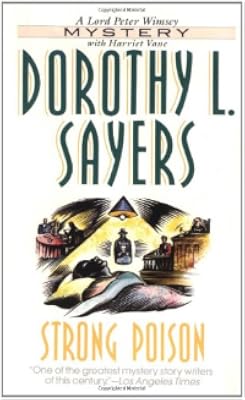
Dashing detective Lord Peter Wimsey is caught up in the murder trial of mystery writer Harriet Vane. Her fiancé has died of poisoning exactly as described in one of Harriet's novels—so naturally she is the prime suspect. As Peter looks on, he not only falls in love with the accused but eagerly helps with Harriet's defense when the first trial ends in a hung jury. Will she be convicted and executed for the crime, or can he save her life and win her hand in marriage? Strong Poison is the show more first of a series of Lord Peter Wimsey and Harriet Vane mysteries in which their complex romantic relationship is revealed in detail. This superb classic was originally published in 1930.. show less
Tags
Recommendations










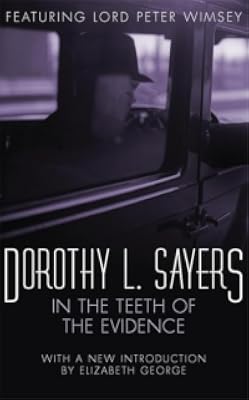
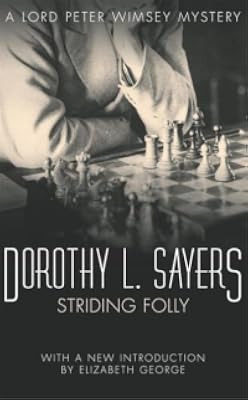


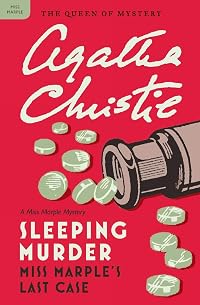
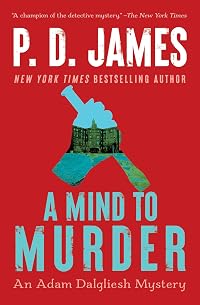

Member Recommendations
aulsmith This explains much about Harriet's predicament that I didn't previously understand.
11
Member Reviews
On my second foray into the series I think I can say now with some certainty that Sayers…or at least Wimsey…is never going to become a firm favourite for me.
Some of this is undoubtedly due to confirmation bias. I am the granddaughter of somewhat militant Irish immigrants and both my parents were at one time shop stewards for their respective unions. On what I have seen to date Lord Peter Wimsey embodies everything I innately find…irksome about the aristocracy (that’s much softer language than my family would use). He’s even more annoying than Downton Abbey‘s Lady Mary. But there’s also the fact that he displays the preposterous brilliance in all avenues of human endeavour that is popular among fictional sleuths and his show more preponderance for making up words (someone calls it piffling in the book). I know some people find this delightful and I wish I did (as happened whenever Douglas Adams engaged in the same practice) but somehow it all combines to make him tiresome to me. Even his Achilles’ heel, only hinted at during the text proper but revealed in an end note to be shell shock brought on by his war service, has a kind of self-serving ring to it. Like a job candidate who answers “unbridled perfectionism” when asked what their weakness is.
Putting aside for a moment my disdain for the ‘wealthy chap with the luxury of choosing how he spends his time and money’ character I did actually enjoy the read much more than my earlier foray into the series.
STRONG POISON opens with a Judge providing his instructions to the jury in the murder trial of a woman writer called Harriet Vane. She is accused of poisoning Phillip Boyes, a man she had lived with until a year or so before his death. At first I thought this an odd and potentially dull way to start a story but actually it works well. Not only does it provide a good summary of how things stand – bringing the reader immediately into the heart of the story – but gives a clear sense of how dire things are for Harriet Vane. It looks impossible that she will avoid the hangman’s noose and the reader can’t help but want to know how the seemingly impenetrable case will be turned on its head (as we all know it is sure to be).
Which is where our master sleuth enters the fray. For reasons that I don’t think are ever provided (or if so I missed them) Wimsey has been watching the trial. He is convinced of Vane’s innocence and reveals, when he wrangles a visit to the prisoner, that he has also fallen for her. As far as this goes he is rebuffed fairly stiffly, being the 47th person to propose marriage since Vane has been accused of the murder, but he does not let that dissuade him from his quest to prove her innocence. With the aid of his butler, a sympathetic police inspector of his acquaintance and his own typing agency of women who can turn their hand to many things, the impossible task is tackled with vigour and creativity.
What follows is a little uneven. For example we spend, for my liking, way too much time learning how one of Wimsey’s agency women inveigles her way into a key player’s life by pretending to speak to (or for?) the dead, but for the most part the story is engaging in the way it picks apart each of the pillars of the prosecution’s case. Sayers has managed to make this suspenseful even though no one can be in any doubt that Vane isn’t going to die at the end of it all and that is not an accomplishment to be sneezed at.
There is also a strong sense of Sayers’ undoubted feminist streak. I’m not convinced that Wimsey is really as enlightened as we are presumably meant to believe. When he proposes marriage for example he does so on the basis that Harriet would be different from the “ordinary kind [of wife] that is only keen on clothes and people“. But the women of this story make their presence felt despite Wimsey’s near-omnipotence. Although she hardly appears Harriet herself is a strong character – not only making her way in the world without the aid of a man – but failing to succumb to Wimsey’s charms. I was quite pleased that this thread did not resolve in the way that might have been expected and not only due to my dislike of Wimsey.
English actress Jane McDowell read this story to me very entertainingly and I must admit I am tempted to let her read me the next instalment of the Wimsey/Vane storyline even though I don’t particularly like the man himself. There is much delight in hearing great dialogue spoken properly and Sayers does have some terrific passages here (mostly the ones without the made up words). So perhaps I it turns out I can enjoy a book even if I don’t like its main character. show less
Some of this is undoubtedly due to confirmation bias. I am the granddaughter of somewhat militant Irish immigrants and both my parents were at one time shop stewards for their respective unions. On what I have seen to date Lord Peter Wimsey embodies everything I innately find…irksome about the aristocracy (that’s much softer language than my family would use). He’s even more annoying than Downton Abbey‘s Lady Mary. But there’s also the fact that he displays the preposterous brilliance in all avenues of human endeavour that is popular among fictional sleuths and his show more preponderance for making up words (someone calls it piffling in the book). I know some people find this delightful and I wish I did (as happened whenever Douglas Adams engaged in the same practice) but somehow it all combines to make him tiresome to me. Even his Achilles’ heel, only hinted at during the text proper but revealed in an end note to be shell shock brought on by his war service, has a kind of self-serving ring to it. Like a job candidate who answers “unbridled perfectionism” when asked what their weakness is.
Putting aside for a moment my disdain for the ‘wealthy chap with the luxury of choosing how he spends his time and money’ character I did actually enjoy the read much more than my earlier foray into the series.
STRONG POISON opens with a Judge providing his instructions to the jury in the murder trial of a woman writer called Harriet Vane. She is accused of poisoning Phillip Boyes, a man she had lived with until a year or so before his death. At first I thought this an odd and potentially dull way to start a story but actually it works well. Not only does it provide a good summary of how things stand – bringing the reader immediately into the heart of the story – but gives a clear sense of how dire things are for Harriet Vane. It looks impossible that she will avoid the hangman’s noose and the reader can’t help but want to know how the seemingly impenetrable case will be turned on its head (as we all know it is sure to be).
Which is where our master sleuth enters the fray. For reasons that I don’t think are ever provided (or if so I missed them) Wimsey has been watching the trial. He is convinced of Vane’s innocence and reveals, when he wrangles a visit to the prisoner, that he has also fallen for her. As far as this goes he is rebuffed fairly stiffly, being the 47th person to propose marriage since Vane has been accused of the murder, but he does not let that dissuade him from his quest to prove her innocence. With the aid of his butler, a sympathetic police inspector of his acquaintance and his own typing agency of women who can turn their hand to many things, the impossible task is tackled with vigour and creativity.
What follows is a little uneven. For example we spend, for my liking, way too much time learning how one of Wimsey’s agency women inveigles her way into a key player’s life by pretending to speak to (or for?) the dead, but for the most part the story is engaging in the way it picks apart each of the pillars of the prosecution’s case. Sayers has managed to make this suspenseful even though no one can be in any doubt that Vane isn’t going to die at the end of it all and that is not an accomplishment to be sneezed at.
There is also a strong sense of Sayers’ undoubted feminist streak. I’m not convinced that Wimsey is really as enlightened as we are presumably meant to believe. When he proposes marriage for example he does so on the basis that Harriet would be different from the “ordinary kind [of wife] that is only keen on clothes and people“. But the women of this story make their presence felt despite Wimsey’s near-omnipotence. Although she hardly appears Harriet herself is a strong character – not only making her way in the world without the aid of a man – but failing to succumb to Wimsey’s charms. I was quite pleased that this thread did not resolve in the way that might have been expected and not only due to my dislike of Wimsey.
English actress Jane McDowell read this story to me very entertainingly and I must admit I am tempted to let her read me the next instalment of the Wimsey/Vane storyline even though I don’t particularly like the man himself. There is much delight in hearing great dialogue spoken properly and Sayers does have some terrific passages here (mostly the ones without the made up words). So perhaps I it turns out I can enjoy a book even if I don’t like its main character. show less
Classic Golden Age crime romp with the redoubtable Lord Peter Wimsey.
A young crime writer with more than a passing resemblance to Dorothy Sayers herself is on trial for her life, charged with poisoning her former live-in lover and fellow writer with arsenic. She's even been recorded buying arsenic under an assumed name (research for her book she says, but she would wouldn't she?) The jury is out and even Inspector Charles Parker thinks its a cut-and-dried case. But Lord Peter, watching from the gallery, has his doubts. It only takes one stubborn juror to hold out for the trial to break down, and that gives Lord Peter just a month to get Harriet Vane off the hook.
It's all splendidly preposterous of course, but that's the whole joy of show more Lord Peter Wimsey and his team of irregular intelligence gatherers. There's even a fake séance allowing Sayers to have a dig at the contemporary fad for spiritualism. With this fifth volume in the Wimsey series, Dorothy Sayers is really getting into her stride. Cracking stuff. show less
A young crime writer with more than a passing resemblance to Dorothy Sayers herself is on trial for her life, charged with poisoning her former live-in lover and fellow writer with arsenic. She's even been recorded buying arsenic under an assumed name (research for her book she says, but she would wouldn't she?) The jury is out and even Inspector Charles Parker thinks its a cut-and-dried case. But Lord Peter, watching from the gallery, has his doubts. It only takes one stubborn juror to hold out for the trial to break down, and that gives Lord Peter just a month to get Harriet Vane off the hook.
It's all splendidly preposterous of course, but that's the whole joy of show more Lord Peter Wimsey and his team of irregular intelligence gatherers. There's even a fake séance allowing Sayers to have a dig at the contemporary fad for spiritualism. With this fifth volume in the Wimsey series, Dorothy Sayers is really getting into her stride. Cracking stuff. show less
I didn't think I could be surprised by this book. After all, I dived in two books later at 'Gaudy Night' so I already know Harriet Vane and I thought I understood her complex relationship with Peter Wimsey.
Yet the book did surprise me. Firstly because I saw no more of Harriet Vane that Wimsey did, which isn't much. Second, because the investigation to clear Vane's name and unmask the real killer is carried out not by Wimsey but by clever, resourceful women working for him. The final surprise was Wimsey himself. He carries a great deal more trauma with him than I had understood and his attraction to Vane goes beyond charmingly eccentric to desperate and obsessive until it seems that his love for her may be the 'Strong Poison' of the show more title. It took me a long time to see that, from Wimsey's point of view, he is not recognising Vane, she is rescuing him.
I'm not a fan of insta-love. It seems to me to be either a lazy plot device or a shared delusion. And yet, I could immediately see why Wimesy fell for Vane. She's tough, bright, educated, independent, honest with herself and capable simultaneously of dignity, humour and kindness. How could you not love that?
She is a woman under great pressure and with little hope and has just met for the first time an eccentric man who seems not to be playing with a full deck yet when Wimsey asks if he may call on her again in prison, she replies:
‘I will give the footman orders to admit you,’ said the prisoner, gravely; ‘you will always find me at home.’
Wimsey presents himself to Vane with all the grace of a new-born foal trying to learn to use its legs, but that's part of the fun. If you're going to propose to a woman the first time that you meet her, and that first time is when she's in prison for murder, then you go in knowing that, if you are to be honest, you cannot fail also to be absurd.
Yet, even in the midst of his awkwardness, the real man comes trough by asking one simple question. In his effort to assess the relationship between Vane and her former lover, who she is accused of having murdered, he asks:
'Were you friends?'
The question says a great deal about Wimsey's values and his insight into people. Vane's instant reply of 'No.' holds in it the doom of her relationship with her former lover and the 'repressed savagery' with which she delivers it explains a great deal about her and how she came to be in her current situation.
Given how clever and insightful Wimsey is and given that he has already said to Vane,
'you’ll understand that I’m not really such an ass as I’m looking at present.’
I'm a little unsure how much to take the charm of his marriage pitch to Vane at face value.
To a woman whose lover disdained friendship, he says
'I’d like somebody I could talk sensibly to, who would make life interesting. And I could give you a lot of plots for your books, if that’s any inducement.’
To a woman who has won her financial independence by writing fiction, he says that he would like a wife who writes books because
'...it would be great fun. So much more interesting than the ordinary kind that is only keen on clothes and people. Though, of course, clothes and people are all right too, in moderation.'
To a woman who has had her sexual history used against her in court and who reminds him that she has had a lover, he responds:
‘Oh, yes. So have I, if it comes to that. In fact, several. It’s the sort of thing that might happen to anybody.'
These remarks sound honest and innocent and most likely are both but are they not also artfully knowing and carefully persuasive?
If I were Harriet Vane, I'd want to believe in Wimsey's honesty but I'd find it hard to set aside his careful curation of his character.
After this initial encounter, the book stumbles a little as the unassailability of the case against Vane is established, one slow step at a time. Fortunately, that is the last problem with pace because, after that, I was introduced to The Cattery and its inmates and everything took off. show less
The Book Report: Lord Peter Wimsey, younger brother of the Duke of Denver, bibliophile, and dilettante in the arts and sciences of murder, meets his One True Love, the Other Half of His Soul; where else would he do this, but in court? Too bad she's the accused in a rather sensational murder trial, in which she is accused and about to be convicted of poisoning by arsenic her Illicit Lover, now ex- after having the *temerity* to propose honorable and legal marriage to her. He was, it turns out, having her on when he refused to countenance the idea of marriage; he was counting on his Peculiar Charms to sway his Muse and fellow novelist into revealing her true depths of devotion to him by setting this test. Having fallen (and Fallen) for show more it, Harriet felt (not at all unreasonably) that she'd been a right prat and, in umbrage extreme, slung the rotter out on his ear, refusing thereafter to treat his suit. Subsequent to their final meeting, unluckily, the rotter collapses and dies at his cousin's home, where he's been living for over a year since the end of the dream.
Lord Peter, attending the trial (as who would not?) with the Hon. Freddy and the Dowager Duchess of Denver (aka Mater), forms the simultaneous convictions that Harriet is innocent, and that she shall be Lady Wimsey as soon as the event can be fixed. How to forestall the hangman's deft attentions is his sole focus, needless to say, and he goes about proving the identity of the real culprit with his accustomed panache, energy, and cunning.
Ah, but stay the strain's of the Wedding March, dear readers, because Harriet...quite sensibly...is Once Bitten, Twice Shy re: matrimony. She offers herself as his leman, his dolly-bird, his bit o' stuff, but marriage? To a well-known aristocrat, with all the attendant hoo and pla? No, indeed. Wimsey is, well, not to fobbed off with mere sex when what he craves is glory and delight everlasting in matrimony golden, so he ankles off as soon as he sees her acquitted. The End. Only, of course, not so much. But that's another book.
My Review: A Certain Party, who shall remain nameless herein but is frequently addressed by me as "Horrible" and is known on LibraryThing as "karenmarie", has really, really put her foot in it this time. I mention, oh so casually in passing, that long, long ago I read and disliked this book. "Oh," burbles The Evil One, "I read that and found it both witty and amusing, don't you think it would be fun to re-read it?" I, ever the innocent and naive victim, forgot that the aforementioned Evil One has hooked me on ever-so many mystery series with her offhand cruelty, fell for it and re-read the book. Reader, beware! NEVER VENTURE NEAR HER! You'll end up reading long lists of (admittedly quite good) mysteries.
Wimsey is certainly not for every taste. His erudition, not notably fine for that era, is huge by modern standards, and so his references to poets, writers, and cultural furniture quite ordinary in the 1930s, will come across as condescending to thos of this less well-versed (!) time and place. His general attitude of privilege might cause some sensitive souls in the era of Political Correctness to flinch. And Sayers' lovely, steady, and quite dry prose will go down like a martini at a Salvation Army bash with the modern reader accustomed to gutter talk, explosions, gunshots, and generally seamy turpitude that passes for most modern mysteries.
And thank GOD for that. It's a breath of chamomile-scented mountain meadow air to me to re-find these books in a state and at a time when I can appreciate them. No one tell The Evil One, blast her eyes, that I am thoroughly glad to have read this book at 51 that I understood and so little of at 25. Loose lips sink ships! show less
Lord Peter, attending the trial (as who would not?) with the Hon. Freddy and the Dowager Duchess of Denver (aka Mater), forms the simultaneous convictions that Harriet is innocent, and that she shall be Lady Wimsey as soon as the event can be fixed. How to forestall the hangman's deft attentions is his sole focus, needless to say, and he goes about proving the identity of the real culprit with his accustomed panache, energy, and cunning.
Ah, but stay the strain's of the Wedding March, dear readers, because Harriet...quite sensibly...is Once Bitten, Twice Shy re: matrimony. She offers herself as his leman, his dolly-bird, his bit o' stuff, but marriage? To a well-known aristocrat, with all the attendant hoo and pla? No, indeed. Wimsey is, well, not to fobbed off with mere sex when what he craves is glory and delight everlasting in matrimony golden, so he ankles off as soon as he sees her acquitted. The End. Only, of course, not so much. But that's another book.
My Review: A Certain Party, who shall remain nameless herein but is frequently addressed by me as "Horrible" and is known on LibraryThing as "karenmarie", has really, really put her foot in it this time. I mention, oh so casually in passing, that long, long ago I read and disliked this book. "Oh," burbles The Evil One, "I read that and found it both witty and amusing, don't you think it would be fun to re-read it?" I, ever the innocent and naive victim, forgot that the aforementioned Evil One has hooked me on ever-so many mystery series with her offhand cruelty, fell for it and re-read the book. Reader, beware! NEVER VENTURE NEAR HER! You'll end up reading long lists of (admittedly quite good) mysteries.
Wimsey is certainly not for every taste. His erudition, not notably fine for that era, is huge by modern standards, and so his references to poets, writers, and cultural furniture quite ordinary in the 1930s, will come across as condescending to thos of this less well-versed (!) time and place. His general attitude of privilege might cause some sensitive souls in the era of Political Correctness to flinch. And Sayers' lovely, steady, and quite dry prose will go down like a martini at a Salvation Army bash with the modern reader accustomed to gutter talk, explosions, gunshots, and generally seamy turpitude that passes for most modern mysteries.
And thank GOD for that. It's a breath of chamomile-scented mountain meadow air to me to re-find these books in a state and at a time when I can appreciate them. No one tell The Evil One, blast her eyes, that I am thoroughly glad to have read this book at 51 that I understood and so little of at 25. Loose lips sink ships! show less
A nice, pacy Sayers, although there are some oddities that separate it from earlier books in the series. First, Lord Peter is in it less than, I think, any of the preceding four novels; there is a huge sidetrack with Miss Climpson, who has returned from Unnatural Death, and another smaller one with Miss Murchison, a new character - both operating as Wimsey's agents. That breaks up the story in an interesting way, but it also has the secondary effect of keeping Lord Peter at arm's length from much of the action, which is peculiar. That, combined with the metric ton of exposition right at the front of the book, might give readers the sense that they can't quite find their footing - it certainly did me. This might actually be an easier show more book to read the second time around.
Then there's the introduction of the much-lauded Harriet Vane. As I'm reading these chronologically, I've never "met" Harriet before, but I'm certainly aware of her importance to the series and to Lord Peter. In this book, she's largely contained to a few bantery conversations with Wimsey - while he visits her in prison! - which feels both totally artificial and so ridiculous as to almost be endearing. If Sayers didn't intend Harriet to be her "Mary Sue" - well, you couldn't tell it by this book. I don't know quite what she will be like outside of her brief appearances here, but I worry that Harriet is essentially Sayers' equivalent to Agatha Christie's Ariadne Oliver - a character Christie obviously liked more than her audience ever did. We'll see.
Of course, the introduction of Oliver came just as Christie was starting to become tired of her famous detective, Poirot, and while I can't say I think Sayers is at the same place with Wimsey, she certainly seems tired of a version of him. We can tell that because of how tired Wimsey is of himself. He's feeling his age, for once, and wondering about the inevitable transition away from playful, devil-may-care youth. In fact, he's already started transitioning without realizing it. That's interesting, and I hope Sayers keeps up the introspection rather than pushing Wimsey entirely to the side.
If I had one complaint, it's that I again find Miss Climpson fairly "full on." Sayers is obviously having a fun time writing her over-emphasized dialogue, but as so often happens, the delights of a fussy old lady character are lost on me. She's just irritating - and perhaps that's the point. She may even be Sayers' parody of someone in her life, which I could believe very easily: a frustrating personality on the surface, but a smart and loyal friend underneath.
Regardless of my little hangups, this is a good book and it's easy to get stuck in. As often happens with Sayers, there's only one real mystery to solve and a limited number of suspects, so it's perhaps more of a thriller than an outright mystery. More than anything, though, the character perspectives carry you on through. show less
Then there's the introduction of the much-lauded Harriet Vane. As I'm reading these chronologically, I've never "met" Harriet before, but I'm certainly aware of her importance to the series and to Lord Peter. In this book, she's largely contained to a few bantery conversations with Wimsey - while he visits her in prison! - which feels both totally artificial and so ridiculous as to almost be endearing. If Sayers didn't intend Harriet to be her "Mary Sue" - well, you couldn't tell it by this book. I don't know quite what she will be like outside of her brief appearances here, but I worry that Harriet is essentially Sayers' equivalent to Agatha Christie's Ariadne Oliver - a character Christie obviously liked more than her audience ever did. We'll see.
Of course, the introduction of Oliver came just as Christie was starting to become tired of her famous detective, Poirot, and while I can't say I think Sayers is at the same place with Wimsey, she certainly seems tired of a version of him. We can tell that because of how tired Wimsey is of himself. He's feeling his age, for once, and wondering about the inevitable transition away from playful, devil-may-care youth. In fact, he's already started transitioning without realizing it. That's interesting, and I hope Sayers keeps up the introspection rather than pushing Wimsey entirely to the side.
If I had one complaint, it's that I again find Miss Climpson fairly "full on." Sayers is obviously having a fun time writing her over-emphasized dialogue, but as so often happens, the delights of a fussy old lady character are lost on me. She's just irritating - and perhaps that's the point. She may even be Sayers' parody of someone in her life, which I could believe very easily: a frustrating personality on the surface, but a smart and loyal friend underneath.
Regardless of my little hangups, this is a good book and it's easy to get stuck in. As often happens with Sayers, there's only one real mystery to solve and a limited number of suspects, so it's perhaps more of a thriller than an outright mystery. More than anything, though, the character perspectives carry you on through. show less
Crime fiction novelist Harriet Vane is on trial for poisoning her lover, Philip Boyes. While observing the trial from the audience in the courtroom, Lord Peter Wimsey falls in love with Harriet. He is certain that his good friend, Inspector Parker, and his Scotland Yard colleagues came to the wrong conclusion and that Harriet is innocent. Wimsey has just 30 days to investigate the murder and discover what Scotland Yard had missed. The stakes have never been higher for him, for if he fails, the love of his life will go to the gallows. Harriet parries a besotted Wimsey’s advances in the same spirit they’re offered. However, tension undergirds the surface levity as the day of reckoning draws ever closer.
Although I had seen the TV show more adaptation of this book, I’m not sure I had read it before, unless I borrowed it from the library. I bought most of the Wimsey novels in my teens, but this one isn’t in my collection. Even though I had no memory of reading this book, I had no trouble spotting the means of the murder when it was first introduced.Like the murderer, Sayers drew too much attention to it. Between Wimsey and Harriet’s witty banter and Miss Climpson’s foray into spiritualism, I don’t know when I’ve laughed so much while reading a detective novel! show less
Although I had seen the TV show more adaptation of this book, I’m not sure I had read it before, unless I borrowed it from the library. I bought most of the Wimsey novels in my teens, but this one isn’t in my collection. Even though I had no memory of reading this book, I had no trouble spotting the means of the murder when it was first introduced.
It didn't matter a bit to me that it was obvious who the guilty party was in this sixth entry of the Lord Peter Wimsey mystery series. Plus, there was so much going on with the characters I didn't care if the case itself ever came to end. For starters, Lord Peter meets someone special in the least cute way possible and it’s up to him to save her from the gallows. He also gets some much needed help from a pair of spinster investigators and his gentleman’s gentleman manages to out‑Jeeves Jeeves. Btw, I got a kick out of Dorothy Sayers giving Bertie Wooster’s butler a brief nod in this book and I suspect there were a lot of similar references that I missed.
Members
- Recently Added By
Lists

Best Crime Fiction
262 works; 39 members

Golden Age of Detection
35 works; 10 members

Best of British Literature
226 works; 41 members

The Top 100 Crime Novels of All Time
100 works; 15 members

Crime and Mysteries to Read
746 works; 31 members

Read the book and saw the movie
1,170 works; 195 members

Books I've Read More Than Once
602 works; 49 members

Top 100 Mystery Novels of All Time
98 works; 9 members

Survey of Mysteries and Crime Fiction
96 works; 17 members

British Mystery
469 works; 14 members

Survey of Classic Crime
39 works; 7 members

In or About the 1930s
198 works; 27 members
the law is an ass
20 works; 5 members

Books About Murder
313 works; 7 members

Barzun and Taylor's Classics of Crime
93 works; 3 members
Detective Stories
343 works; 5 members

Books mentioned in Julian Symons’ Bloody Murder
438 works; 6 members

Books Read in 2022
5,226 works; 115 members

Books Read in 2006
424 works; 8 members
Art Bourgeau's Favorites [Mystery Lovers Companion, 1986]
124 works; 2 members

Books Read in 2024
4,727 works; 128 members

Recommendations for Rachel
35 works; 1 member
Folio Society
831 works; 53 members

Comedy of Manners
73 works; 1 member

Books Read in 2020
4,379 works; 124 members

Books Read in 2018
4,360 works; 110 members

Books Read in 2017
4,249 works; 130 members

Books Set in London
49 works; 3 members

Blue Pyramid 1,276 Best Books of All Time
1,248 works; 32 members

Books Read in 2014
2,344 works; 86 members

Read in 2006
140 works; 1 member
Author Information

282+ Works 71,111 Members
Dorothy Sayers's impressive reputation as a contemporary master of the classic detective story is eclipsed only by Agatha Christie's. Sayers was born in Oxford and attended Somerville College, where she received a B.A. in 1915 and an M.A. in 1920. During that period, Sayers worked as an instructor of modern languages at Hull High School for Girls show more in Yorkshire and as a reader for a publisher in Oxford. Her early literary work was in poetry; she published several volumes and served as an editor for the journal Oxford Poetry from 1917 to 1919. Sayers also worked as a copywriter for a major advertising firm in London. She was president of the Modern Language Association from 1939 to 1945 and of the Detection Club in the 1950s. Around 1920 Sayers developed the idea for her detective hero Lord Peter Wimsey, and she soon published her first mystery, Whose Body? (1923), in which Lord Peter is introduced. For the next dozen or so years, Sayers wrote prolifically about Wimsey, creating in the process what many critics of the genre consider to be the finest detective novels in the English language. Perhaps her most famous Wimsey mystery was The Nine Tailors (1934). Although Sayers essentially followed the classic form in her detective fiction---a formula in which the plot assumes a greater importance than do the characters---Sayers maintained that a detective hero's greatness depended on how effectively the character was portrayed. All but one of Sayers's mysteries feature Lord Peter Wimsey. By the late 1930s, Sayers had apparently tired of writing detective fiction. She stated in 1947 that she would write no more mysteries, that she wrote detective fiction only when she was young and in need of money. Thus saying, Sayers turned her attention to her early loves, medieval and religious literature, spending her remaining years lecturing on and translating Dante (see Vol. 2). (Bowker Author Biography) show less
Some Editions
Awards and Honors
Series


Belongs to Publisher Series
Wunderlich-Taschenbuch (26127)
Work Relationships
Is contained in
On the Case with Lord Peter Wimsey (Strong Poison / Have His Carcase / Unnatural Death) by Dorothy L. Sayers
Strong Poison | Have His Carcass | Murder Must Advertise | The Nine Tailors | Gaudy Night by Dorothy L. Sayers
Clouds of Witness / Murder Must Advertise / Strong Poison / Unnatural Death / Busman's Honeymoon by Dorothy L. Sayers
The Unpleasantness at the Bellona Club | Strong Poison | The Five Red Herrings | Have His Carcase by Dorothy L. Sayers
Clouds of Witness - The Unpleasantness at the Bellona Club - Strong Poison - Hangman's Holiday - Murder Must Advertise by Dorothy L. Sayers
Has the adaptation
Common Knowledge
- Canonical title
- Strong Poison
- Original title
- Strong Poison
- Alternate titles*
- Geheimnisvolles Gift
- Original publication date
- 1930-09
- People/Characters
- Peter Death Bredon Wimsey (Lord Peter Wimsey); Harriet Deborah Vane; Mervyn Bunter; Charles Parker (Inspector); Freddy Arbuthnot; Impey Biggs (show all 16); Caroline Booth; Philip Boyes; Miss Alexandra Katherine Climpson; Honoria Lucasta Delagardie (Dowager Duchess of Denver); Miss Murchison; Marjorie Phelps; Norman Urquhart; Ryland Vaughan; Mary Wimsey; Rosanna Wrayburn (Cremorna Garden)
- Important places
- London, England, UK; The Old Bailey, London, England, UK; HM Prison Holloway, Holloway, London, England, UK; 110A Piccadilly, London, England, UK; Westmorland, England, UK; Appleford, Windle, Cumbria, England, UK (show all 7); Tweedling Parva, England, UK (fictional)
- Important events
- Megatherium Trust crash (1928)
- Related movies
- "A Dorothy L. Sayers Mystery" Strong Poison: Episode One (1987 | IMDb); "A Dorothy L. Sayers Mystery" Strong Poison: Episode Two (1987 | IMDb); "A Dorothy L. Sayers Mystery" Strong Poison: Episode Three (1987 | IMDb)
- Epigraph
- "Where got ye your dinner, Lord Rendal, my son?
Where got ye your dinner, my handsome young man?"
"--O I dined with my sweetheart, Mother make my bed soon,
For I'm sick to the heart and I fain wad lie down."
"... (show all)Oh, that was strong poison, Lord Rendal, my son,
O that was strong poison, my handsome young man,"
"--O yes, I am poisoned, Mother; make my bed soon,
For I'm sick to the heart, and I fain wad lie down."
-- OLD BALLAD - First words
- There were crimson roses on the bench; they looked like splashes of blood.
- Quotations
- "I often wonder what we go to school for," said Wimsey. "We never seem to learn anything really useful...."
- Last words
- (Click to show. Warning: May contain spoilers.)"If she'll have me," said Lord Peter Wimsey.
(Click to show. Warning: May contain spoilers.)[Introduction] But for the balm that reassures one about surviving the vicissitudes of life, one could do no better than to anchor onto a Lord Peter Wimsey. - Blurbers
- Boucher, Anthony
- Original language*
- Englisch
*Some information comes from Common Knowledge in other languages. Click "Edit" for more information.
Classifications
Statistics
- Members
- 4,898
- Popularity
- 2,890
- Reviews
- 141
- Rating
- (4.07)
- Languages
- 21 — Czech, Danish, Dutch, English, Estonian, Finnish, French, German, Greek, Italian, Japanese, Korean, Norwegian (Bokmål), Norwegian, Polish, Russian, Slovak, Spanish, Swedish, Portuguese (Brazil), Chinese, simplified
- Media
- Paper, Audiobook, Ebook
- ISBNs
- 82
- UPCs
- 4
- ASINs
- 78