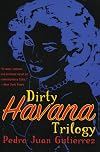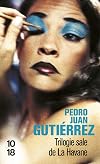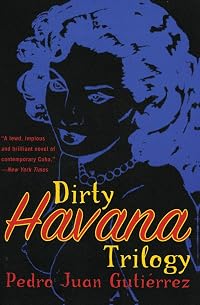
Dirty Havana Trilogy
by Pedro Juan Gutiérrez
On This Page
Description
Banned in Cuba but celebrated throughout the Spanish-speaking world, this picaresque novel in stories chronicles the misadventures of Pedro Juan, a former Cuban journalist living from hand to mouth in the squalor of contemporary Havana, half disgusted and half fascinated by the depths to which he has sunk. Like the lives of so many of his neighbors in the crumbling, once-elegant apartment houses that line Havana's waterfront, Pedro Juan's days and nights have been reduced by the so-called show more special times -- the harsh recession that followed the Soviet Union's collapse -- to the struggle of surviving the daily grit through the escapist pursuit of sex. Pedro Juan scrapes by under the shadow of hunger -- all the while observing his lovers and friends, strangers on the street, and their suffering with an unsentimental, mocking, yet sympathetic eye. show lessTags
Recommendations



















Member Recommendations
Member Reviews
Havana, early 1990s. In a disenchanted Cuba ruled by Castro, an island desperately leaking of its citizens -reduced to flee onboards dinghies towards the 'American Dream'- a country then ravaged by one of the worst famines of its history, Pedro Juan Gutiérrez keeps a diary.
Ex-journalist, he got fed up being reduced to being a puppy, barking miserable propaganda no one cared about anyway. He therefore slammed the door at the face of his career, and here he was, a poor among the poor, with not much of a future in sight, trying his best for a tomorrow to come...
Far, far from the Cuba as depicted in touristic brochures, Gutiérrez describes Havana as it was for its inhabitants -dirty, violent, obscene, sad, and, yet, sticking out of such show more morosity, peopled by individuals who refuse to give up, and fight to enjoy life even if without not much hope left. Everything is possible, everything is allowed, except from being defeated.
Vicious, passionate, tumultuous, it's been a while a book hadn't strike me so much! Hustling, black market, prostitution, prison, marijuana and rum, sex, a lot of sex, we follow his journey, he who, a self-confessed cynical man, refuse to sink into pessimism. He's not taking himself seriously, that's all. And, beyond the hangovers and the shags, beyond the portrayals -both shocking and pitiful- of the fauna he intermingles with, there's a lot here reminding, somehow, of Henry Miller...
True, his crude language, sharpened to describe a 'dirty' reality, won't appeal to everyone. As far as I am concerned, though, here's one of my favourites read! show less
Ex-journalist, he got fed up being reduced to being a puppy, barking miserable propaganda no one cared about anyway. He therefore slammed the door at the face of his career, and here he was, a poor among the poor, with not much of a future in sight, trying his best for a tomorrow to come...
Far, far from the Cuba as depicted in touristic brochures, Gutiérrez describes Havana as it was for its inhabitants -dirty, violent, obscene, sad, and, yet, sticking out of such show more morosity, peopled by individuals who refuse to give up, and fight to enjoy life even if without not much hope left. Everything is possible, everything is allowed, except from being defeated.
Vicious, passionate, tumultuous, it's been a while a book hadn't strike me so much! Hustling, black market, prostitution, prison, marijuana and rum, sex, a lot of sex, we follow his journey, he who, a self-confessed cynical man, refuse to sink into pessimism. He's not taking himself seriously, that's all. And, beyond the hangovers and the shags, beyond the portrayals -both shocking and pitiful- of the fauna he intermingles with, there's a lot here reminding, somehow, of Henry Miller...
True, his crude language, sharpened to describe a 'dirty' reality, won't appeal to everyone. As far as I am concerned, though, here's one of my favourites read! show less
Well, The Dirty Havana Trilogy is quite the ride. Be forewarned, it truly is dirty. Sounds better if one says ribald but dirty isn't inaccurate. If that kind of prose offends you, do not pick it up. But dirty/ribald is not all the book is. It's also a raw, eloquent, sad, heroic and honest portrait of ordinary people living in extraordinary circumstances. It is, by turns, funny, offensive, and painfully touching. The characters face poverty and hopelessness with an often riveting commitment to survival.
Many reviewers compare the work to Bukowski or Celine. It certainly warrants that comparison. I think, however, this work will not age as gracefully. Many modern readers will not be able to get past the ever-present racism, sexism, show more homophobia, and misogyny. The reality of their presence in the life of the characters is impossible to avoid. Yet, the book is tribute to the richness of life and the human struggle for meaning and survival.
At least one reviewer (from the National Review) wants to frame this as a political piece revealing the ugliness of "Communist" Cuba. A person can read the book from that perspective but that is most certainly not what this book is about. This tale would resonate with many readers throughout the Caribbean and, in fact, much of the developing world. To portray the book as a political tract does the book and the reader a great disservice. show less
Many reviewers compare the work to Bukowski or Celine. It certainly warrants that comparison. I think, however, this work will not age as gracefully. Many modern readers will not be able to get past the ever-present racism, sexism, show more homophobia, and misogyny. The reality of their presence in the life of the characters is impossible to avoid. Yet, the book is tribute to the richness of life and the human struggle for meaning and survival.
At least one reviewer (from the National Review) wants to frame this as a political piece revealing the ugliness of "Communist" Cuba. A person can read the book from that perspective but that is most certainly not what this book is about. This tale would resonate with many readers throughout the Caribbean and, in fact, much of the developing world. To portray the book as a political tract does the book and the reader a great disservice. show less
I found Pedro Juan Gutierrez's novel "Dirty Havana Trilogy" so disappointing.
This semi-autobiographical novel is about those who are down and out, living in poverty in Cuba in the 1990's. Such a great and interesting premise but it was hard to take the book particularly seriously since every single one of the loosely connected vignettes really becomes a detailing of Pedro Juan's sexcapades.
The book is incredibly raunchy and in an unbelievable way -- (I don't know any women personally who will drop anything to have sex at the mere sight of male genitalia but Guitierrez will have us believe that all women in Cuba are this way.... or at least all of the dozens and dozens of women Pedro Juan sleeps with in the course of the novel.) This show more unrealistic portrait of women calls everything in the novel into question for me. Glad to have this book (which is on the 1,001 Books to Read Before you Die list, out of the way.) show less
This semi-autobiographical novel is about those who are down and out, living in poverty in Cuba in the 1990's. Such a great and interesting premise but it was hard to take the book particularly seriously since every single one of the loosely connected vignettes really becomes a detailing of Pedro Juan's sexcapades.
The book is incredibly raunchy and in an unbelievable way -- (I don't know any women personally who will drop anything to have sex at the mere sight of male genitalia but Guitierrez will have us believe that all women in Cuba are this way.... or at least all of the dozens and dozens of women Pedro Juan sleeps with in the course of the novel.) This show more unrealistic portrait of women calls everything in the novel into question for me. Glad to have this book (which is on the 1,001 Books to Read Before you Die list, out of the way.) show less
Henry Miller may be the obvious point of comparison for Pedro Juan Gutierrrez's "Havana Trilogy," but I'm not sure how far this comparison can really be taken. Miller was a bohemian, and while Gutierrez shares his taste for alcohol, sex and exhilaration, he's also a world-class hustler, buying and selling anything he can get his hands on and happily fleecing the tourists he's able to scam or seduce. He's a sort of a worst case scenario for Castro's revolution: the exact opposite of what twentieth-century communists thought that the average citizen of a socialist state would be like. Also, in stark contrast to Miller's books, there's not much glamor here. From details about his demeaning day jobs to graphic descriptions of Havana's water show more shortages, impossibly crowded living conditions, and general filth, Gutierrez doesn't spare his readers' sensibilities, and he makes it pretty clear that nobody he knows lives the way they do by choice. Indeed, just about everyone seems to be just minutes from a nervous breakdown or in danger of a slow, painful death from starvation. The narrator isn't exactly a likable guy, and some readers will tire of his casual racism, his unabashed sexism and philandering, and disregard for the consequences of his actions. What comes through, albeit sometimes in a rather macho, Hemigway-esque way, is a deep desire to live, to overcome personal and societal stasis, and to survive. I think you could argue that "The Havana Trilogy" posits that a hedonistic, live-for-the-moment attitude isn't so much an aesthetic choice as the only possible response to a society filled with high-minded communist rhetoric but short of absolutely everything else. In its own perverse way, it's a novel of resistance. It's surprising, then, that so much of the book comes off as uninhibitedly joyful. Gutierrez's first-person prose is immediate, sensual and often bracingly beautiful, though some of the vignettes he tells third-person in the trilogy's final entry seem a bit too heavy-handedly morose and suggest that he might not have much range as a writer. Even so, this is a left-field classic that's well worth tracking down. show less
Well, The Dirty Havana Trilogy is quite the ride. Be forewarned, it truly is dirty. Sounds better if one says ribald but dirty isn't inaccurate. If that kind of prose offends you, do not pick it up. But dirty/ribald is not all the book is. It's also a raw, eloquent, sad, heroic and honest portrait of ordinary people living in extraordinary circumstances. It is, by turns, funny, offensive, and painfully touching. The characters face poverty and hopelessness with an often riveting commitment to survival.
Many reviewers compare the work to Bukowski or Celine. It certainly warrants that comparison. I think, however, this work will not age as gracefully. Many modern readers will not be able to get past the ever-present racism, sexism, show more homophobia, and misogyny. The reality of their presence in the life of the characters is impossible to avoid. Yet, the book is tribute to the richness of life and the human struggle for meaning and survival.
At least one reviewer (from the National Review) wants to frame this as a political piece revealing the ugliness of "Communist" Cuba. A person can read the book from that perspective but that is most certainly not what this book is about. This tale would resonate with many readers throughout the Caribbean and, in fact, much of the developing world. To portray the book as a political tract does the book and the reader a great disservice. show less
Many reviewers compare the work to Bukowski or Celine. It certainly warrants that comparison. I think, however, this work will not age as gracefully. Many modern readers will not be able to get past the ever-present racism, sexism, show more homophobia, and misogyny. The reality of their presence in the life of the characters is impossible to avoid. Yet, the book is tribute to the richness of life and the human struggle for meaning and survival.
At least one reviewer (from the National Review) wants to frame this as a political piece revealing the ugliness of "Communist" Cuba. A person can read the book from that perspective but that is most certainly not what this book is about. This tale would resonate with many readers throughout the Caribbean and, in fact, much of the developing world. To portray the book as a political tract does the book and the reader a great disservice. show less
Currently I'm reading The insatiable spiderman so another Gutierrez book review will probably soon follow this one. In some respects this work by Pedro Juan resembles a Bukowski kind of fictional world--one thinks here of Post Office and Factotum. There is more however of Havana Cuba in Dirty Havana Trilogy than there is of Los Angeles in either of the above mentioned Bukowski books and it gives to Pedro Juan's book a grittier feel. This is tell all or no holds barred auto-biographical fiction at its best--brazen and ribald but always with Pedro Juan very much in objective control of his material. It is often harsh but even more often hilarious--he describes the center of Havana as if it were a huge collosal garbage dump on a blazing show more hot and sticky day--with all varietes of human life swarming around the mess. It is a drunken and lecherous ride Pedro Juan takes us on but also an exhilarating and rewarding one. show less
Gutierrez's novel is often compared to Henry Miller's novels but whereas Miller's raucous depictions of his sexual exploits are infused with joy and exhilaration despite his dire economic situation, "Dirty Havana Trilogy" is a real downer. The sex is abundant and raunchy, but also desperate, joyless and depressing. Sex, like liquor and drugs, serves as an anesthetic for the horrible conditions the people in this novel live in. Be warned -- it also contains a very graphic depiction of a prolonged rape and assault. Not my cup of tea.
Members
- Recently Added By
Lists

Books Read in 2016
4,666 works; 199 members
Author Information

23 Works 1,335 Members
Pedro Juan Gutierrez began his working life at the age of eleven, as an ice-cream vendor and newsboy. The author of several published works of poetry, he lives in Havana, where he is employed as a magazine journalist. (Bowker Author Biography)
Some Editions
Awards and Honors
Series
Belongs to Publisher Series
Common Knowledge
- Canonical title
- Dirty Havana Trilogy
- Original title
- Trilogía sucia de La Habana
- Original publication date
- 1998
- People/Characters
- Pedro Juan
- Important places*
- L' Avana, Kuba
- First words
- Early that morning, there was a pink postcard sticking out of my mailbox, from Mark Pawson in London.
- Last words*
- (Click to show. Warning: May contain spoilers.)Nur weil ich die Deckung aufgegeben hatte.
- Original language
- Spanish
*Some information comes from Common Knowledge in other languages. Click "Edit" for more information.
Classifications
- Genres
- Fiction and Literature, General Fiction
- DDC/MDS
- 863.64 — Literature & rhetoric Spanish Literature Spanish fiction 20th Century 1945-2000
- LCC
- PQ7390 .G83 .T7513 — Language and Literature French, Italian, Spanish and Portuguese literatures Spanish literature Provincial, local, colonial, etc. Spanish America
- BISAC
Statistics
- Members
- 790
- Popularity
- 35,334
- Reviews
- 23
- Rating
- (3.43)
- Languages
- 14 — Dutch, English, Finnish, French, German, Greek, Italian, Norwegian (Bokmål), Polish, Portuguese, Romanian, Slovenian, Spanish, Swedish
- Media
- Paper, Audiobook, Ebook
- ISBNs
- 38
- ASINs
- 4