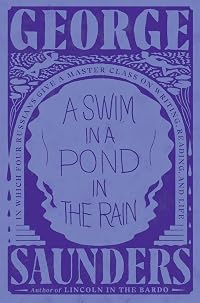
A Swim in a Pond in the Rain: In Which Four Russians Give a Master Class on Writing, Reading, and Life
by George Saunders
On This Page
Description
From the New York Times bestselling, Booker Prize-winning author of Lincoln in the Bardo and Tenth of December comes a literary master class on what makes great stories work and what they can tell us about ourselves--and our world today. For the last twenty years, George Saunders has been teaching a class on the Russian short story to his MFA students at Syracuse University. In A Swim in a Pond in the Rain, he shares a version of that class with us, offering some of what he and his students show more have discovered together over the years. Paired with iconic short stories by Chekhov, Turgenev, Tolstoy, and Gogol, the seven essays in this book are intended for anyone interested in how fiction works and why it's more relevant than ever in these turbulent times. In his introduction, Saunders writes, "We're going to enter seven fastidiously constructed scale models of the world, made for a specific purpose that our time maybe doesn't fully endorse but that these writers accepted implicitly as the aim of art--namely, to ask the big questions, questions like, How are we supposed to be living down here? What were we put here to accomplish? What should we value? What is truth, anyway, and how might we recognize it?" He approaches the stories technically yet accessibly, and through them explains how narrative functions; why we stay immersed in a story and why we resist it; and the bedrock virtues a writer must foster. The process of writing, Saunders reminds us, is a technical craft, but also a way of training oneself to see the world with new openness and curiosity. A Swim in a Pond in the Rain is a deep exploration not just of how great writing works but of how the mind itself works while reading, and of how the reading and writing of stories make genuine connection possible. *This audiobook includes a PDF of the tables, outlines, figures, and appendices from the book. show lessTags
Recommendations
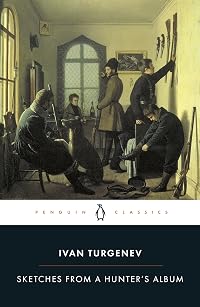

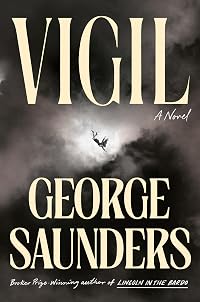
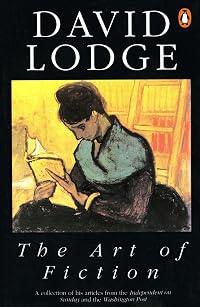
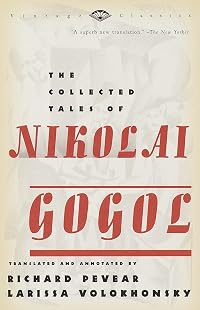



Member Recommendations
EMS_24 14 stories from the world literature explained, determined, the way they work.
Member Reviews
I'm left feeling more than a little inadequate after reading this book. Not just inadequate versus the skill of these Russian short story masters, but inadequate versus Saunders' skills of writing and literary criticism.
It's taken me a while to read this book. There was a lot to take in and concentrate on - the stories themselves and the two parts to Saunders' analysis afterwards. Saunders opened up every story in a way I was unable to do myself, and there was much to assimilate, particularly as a reader who did not take study literature at tertiary education level. Although I've always enjoyed Tolstoy's writing, I must admit that Chekhov's short stories have not always held my attention, but through Saunders' eyes I now have much more show more appreciation for them.
It's a rewarding read, and I suspect one which requires multiple reads for any aspiring writer. I wish I could retain all Saunders' golden nuggets of technique from these giants of literature; on a second read I think I would spend more time on each story, reading and rereading them with Saunders' criticism fresh in my mind.
4 stars - much to learn and take in, but after a full day at work it sometimes felt like brain overload. One I will return to at a later point when work is not so all-consuming. show less
It's taken me a while to read this book. There was a lot to take in and concentrate on - the stories themselves and the two parts to Saunders' analysis afterwards. Saunders opened up every story in a way I was unable to do myself, and there was much to assimilate, particularly as a reader who did not take study literature at tertiary education level. Although I've always enjoyed Tolstoy's writing, I must admit that Chekhov's short stories have not always held my attention, but through Saunders' eyes I now have much more show more appreciation for them.
It's a rewarding read, and I suspect one which requires multiple reads for any aspiring writer. I wish I could retain all Saunders' golden nuggets of technique from these giants of literature; on a second read I think I would spend more time on each story, reading and rereading them with Saunders' criticism fresh in my mind.
4 stars - much to learn and take in, but after a full day at work it sometimes felt like brain overload. One I will return to at a later point when work is not so all-consuming. show less
Back when the part of the pandemic where stores were closed, my favorite bookstore allowed people to book appointments for a half hour of shopping and I jumped on the chance to finally see the top part of a good friend's face as we bought more books than planned, out of an excess of joy at being out in the world for a short time. At the time this book had just been published and I eyed the book for several minutes before deciding to wait for the paperback. I will gleefully mark up a paperback, but will not so much as dog-ear the page of a hardcover, and this felt like a book I would want to at least underline a few passages.
I was right about it, this is a book that invites the reader to interact with it, to draw conclusions, to show more highlight sentences, and to tab the spots where they will want to return. Saunders presents seven short stories by Russian authors and then takes the reader through what the author was doing and how he did it. Along the way, there is discussion about everything from the predictable lessons on characterization and plotting, to how translation affects a work, to how a story might transcend the author's intentions.
I was reading other books as I worked my way through this and I found myself choosing short story collections and reading those stories differently, with a greater appreciation for the skill involved in making a character, or several characters, immediately an individual, and how the beats of a story are spaced and structured. Saunders is a gifted and generous teacher and I'm glad to have expanded my skills as a reader. I can see myself rereading this book in a few years. show less
I was right about it, this is a book that invites the reader to interact with it, to draw conclusions, to show more highlight sentences, and to tab the spots where they will want to return. Saunders presents seven short stories by Russian authors and then takes the reader through what the author was doing and how he did it. Along the way, there is discussion about everything from the predictable lessons on characterization and plotting, to how translation affects a work, to how a story might transcend the author's intentions.
I was reading other books as I worked my way through this and I found myself choosing short story collections and reading those stories differently, with a greater appreciation for the skill involved in making a character, or several characters, immediately an individual, and how the beats of a story are spaced and structured. Saunders is a gifted and generous teacher and I'm glad to have expanded my skills as a reader. I can see myself rereading this book in a few years. show less
It is such a pleasure to spend a few hours in George Saunders’ company. Here he shares a taster of what he has learned over the past 20 years teaching the 19th century Russian short story in the creative writing programme at Syracuse University. He is a thoughtful but challenging reader. And since he reads as a writer, he is constantly wondering why the writer of the story wrote that, or included that section, or didn’t tell us this but did tell us that, and so on. He is sensitive to even slight potential misunderstandings and fully aware that he is reading works in translation, yet marvelling that, even so, their strengths show through.
Seven stories by Chekhov, Turgenev, Tolstoy, and Gogol are presented in full and then considered show more at length. In each case, Saunders then offers an afterthought, which may challenge or even reverse his previous opinion. Revision, both in reading and in writing, is the key message. Though it might be better to say that, “Find your own writerly voice,” is the real message. However, revision — lots of it iterated over a lengthy period — is probably the quickest route to finding that voice. So the method, it seems, is to read great literature, think about what it says and how it says it, and then do the same thing with your own writing until it won’t bear further revision (and still have your voice). Saunders modestly acknowledges that this won’t be especially new advice for writers. Still, it is very encouraging to go through the process with him.
This isn’t a manual on how to write short stories. Nevertheless, almost any writer (or reader) could benefit from working with George Saunders. His gentle humanism, touching anecdotes about his own writing, and cautious advice on precisely what it is that writing fiction can actually accomplish anyway, serve as a fine model for the kind of mentorship many of us rather wish we’d had at some point (and through this book have found, in a way).
Warmly recommended for all writers and readers. show less
Seven stories by Chekhov, Turgenev, Tolstoy, and Gogol are presented in full and then considered show more at length. In each case, Saunders then offers an afterthought, which may challenge or even reverse his previous opinion. Revision, both in reading and in writing, is the key message. Though it might be better to say that, “Find your own writerly voice,” is the real message. However, revision — lots of it iterated over a lengthy period — is probably the quickest route to finding that voice. So the method, it seems, is to read great literature, think about what it says and how it says it, and then do the same thing with your own writing until it won’t bear further revision (and still have your voice). Saunders modestly acknowledges that this won’t be especially new advice for writers. Still, it is very encouraging to go through the process with him.
This isn’t a manual on how to write short stories. Nevertheless, almost any writer (or reader) could benefit from working with George Saunders. His gentle humanism, touching anecdotes about his own writing, and cautious advice on precisely what it is that writing fiction can actually accomplish anyway, serve as a fine model for the kind of mentorship many of us rather wish we’d had at some point (and through this book have found, in a way).
Warmly recommended for all writers and readers. show less
I think one might describe this as a book about writing, and I suppose it is. But for me it’s primarily a book about careful, mindful reading. Which makes a better writer, of course, but even for someone like myself who isn’t interested in writing, it makes reading itself much deeper and more rewarding. We often approach fiction in a passive kind of way—looking for relaxation, escape, fun. But Saunders wants to call our awareness to the richer experience that’s available just below the surface, if we’re willing to engage a bit more and with a bit of intentionality.
Honestly, the biggest shift might be just slowing the reading process down to notice more. Even just changing pace and stepping back from the work does tend to open show more it up and reveal what’s really going on. But Saunders also has some specific, valuable ideas—not least, that (especially in a short story) everything on the page is there because the author chose to put it there. I’ve read quite a bit, but I hadn’t ever really developed the habit of close reading that Saunders implicitly promotes here. To be honest, when I had done this kind of reading, it felt a bit artificial, overly analytical. But there’s something very different going on in Saunders’ approach—he reads with soft eyes, finding the wonder that lies in the author’s work. And his sense of wonder is catching. show less
Honestly, the biggest shift might be just slowing the reading process down to notice more. Even just changing pace and stepping back from the work does tend to open show more it up and reveal what’s really going on. But Saunders also has some specific, valuable ideas—not least, that (especially in a short story) everything on the page is there because the author chose to put it there. I’ve read quite a bit, but I hadn’t ever really developed the habit of close reading that Saunders implicitly promotes here. To be honest, when I had done this kind of reading, it felt a bit artificial, overly analytical. But there’s something very different going on in Saunders’ approach—he reads with soft eyes, finding the wonder that lies in the author’s work. And his sense of wonder is catching. show less
(I first must say that I started just skimming over Saunders’ commentaries in the back half of the book for reasons expressed below - I did read all the stories)
My feelings on this book exist on three levels:
First level: the highest praise I can give to Saunders is that he picked these stories well. All of them were mysteriously beautiful and affecting, and all of them accomplished in the highest degree what I think is the defining trait of great art, namely expressing a feeling or an idea that simply could not have been expressed any other way. At the end of Chekhov’s “Gooseberries” I couldn’t help but curse under my breath at the mastery and elegance of the thing, at sat down my phone for a few minutes just to think about show more what I read. If this book was just these stories, it would be five stars.
Second level: This is where I get petty. Saunders packs his “reflections” that follow each story with page after page of corny metaphors and “analysis” that’s as thick as frozen oatmeal. I was shocked to hear that every year he teaches Turgenev’s “Singers” his students complain that there is too much digression in the story. These aren’t undergrads either, but MFA in creative writing candidates; how could you gain admission to such a competitive program and still have such a dense and untenable opinion? Perhaps Saunders has been conditioned by these experiences to be a little gun-shy, to feel as if he has to serve as an apologist for ancient text that most readers won’t understand. He’s constantly trying to prove to us that these stories are good, but in doing so he resorts to all kinds of hackneyed language in what I can only imagine is an attempt to make the text more relatable. The end result is something like the explanation of a joke: many readers might, through his after thoughts, develop a greater appreciation for the “craftsmanship” of the joke, but they will never laugh; for those of us who are laughing already, it’s redundant and deeply lame.
Third level: All in all, I find this book to be a quintessential document of the rotting carcass of institutional education in America. What we have here is an accomplished author entering the world of college academia with the purported goal of teaching creativity. His students pay large sums of money to dissect and dismember great works of art in the name of a most self obsessed goal- becoming a great writer themselves. The true meaning of the work is lost when it is turned into a “strategy” or a “technique” to be mined. All of this stems from the modern rot brought about by the professionalization and institutionalization of art and education. Saunders technique as espoused in this book turns the mystical and unnamable process of creation into another quantifiable mode of production. In the same way, the MFA programs churn out homogenized graduates with mountains of debt and nothing gained except a vulture’s eye for “what makes a story work”.
It seems to me that the greatest criticism of this mode of thinking is baked right into the biographies of the great Russian writers that serve as the foundation for this book: did Chekhov, Tolstoy, Gogol, or Turgenev go to creative writing classes? This book exists as a totem to the narcissism underlying all of society: Saunders wants to make us better writers, when it would do us much more good to become better readers instead. show less
My feelings on this book exist on three levels:
First level: the highest praise I can give to Saunders is that he picked these stories well. All of them were mysteriously beautiful and affecting, and all of them accomplished in the highest degree what I think is the defining trait of great art, namely expressing a feeling or an idea that simply could not have been expressed any other way. At the end of Chekhov’s “Gooseberries” I couldn’t help but curse under my breath at the mastery and elegance of the thing, at sat down my phone for a few minutes just to think about show more what I read. If this book was just these stories, it would be five stars.
Second level: This is where I get petty. Saunders packs his “reflections” that follow each story with page after page of corny metaphors and “analysis” that’s as thick as frozen oatmeal. I was shocked to hear that every year he teaches Turgenev’s “Singers” his students complain that there is too much digression in the story. These aren’t undergrads either, but MFA in creative writing candidates; how could you gain admission to such a competitive program and still have such a dense and untenable opinion? Perhaps Saunders has been conditioned by these experiences to be a little gun-shy, to feel as if he has to serve as an apologist for ancient text that most readers won’t understand. He’s constantly trying to prove to us that these stories are good, but in doing so he resorts to all kinds of hackneyed language in what I can only imagine is an attempt to make the text more relatable. The end result is something like the explanation of a joke: many readers might, through his after thoughts, develop a greater appreciation for the “craftsmanship” of the joke, but they will never laugh; for those of us who are laughing already, it’s redundant and deeply lame.
Third level: All in all, I find this book to be a quintessential document of the rotting carcass of institutional education in America. What we have here is an accomplished author entering the world of college academia with the purported goal of teaching creativity. His students pay large sums of money to dissect and dismember great works of art in the name of a most self obsessed goal- becoming a great writer themselves. The true meaning of the work is lost when it is turned into a “strategy” or a “technique” to be mined. All of this stems from the modern rot brought about by the professionalization and institutionalization of art and education. Saunders technique as espoused in this book turns the mystical and unnamable process of creation into another quantifiable mode of production. In the same way, the MFA programs churn out homogenized graduates with mountains of debt and nothing gained except a vulture’s eye for “what makes a story work”.
It seems to me that the greatest criticism of this mode of thinking is baked right into the biographies of the great Russian writers that serve as the foundation for this book: did Chekhov, Tolstoy, Gogol, or Turgenev go to creative writing classes? This book exists as a totem to the narcissism underlying all of society: Saunders wants to make us better writers, when it would do us much more good to become better readers instead. show less
I believe that humans are hardwired to find -- well, a lot of things, but two things that seem relevant here: patterns and narratives. Which is another way of saying we seek, we need, meaning. Patterns and narratives help us understand our world.
Saunders is asking: how does fiction (built on patterns out of narratives) do what it does? How does it help us understand our world, if it does? How do those patterns and narratives work? He's prying open story and showing us how some of the parts fit together and what they do. (He's not breaking it down like an engine, though. It's more like he's opening an alien box he's been working on all his life and going: hey, these are the parts I think I've mostly figured out? This is what I think show more they do? Could be wrong, though.)
And here's the thing: I didn't agree with Saunders entirely; my guess is if you made me rate every statement, it would work out that I mostly agreed with about half of the book. But that doesn't matter, because what I'm into here is seeing someone else who is fascinated by story, who is trying to pick apart that alien box.
(Also, wow, Saunders and I, in addition to not agreeing about the whole of the alien box, sure don't agree about classic Russian short stories. Like. I read these stories closely and analytically, but not with my whole heart, because a) I don't trust these authors and b) these stories aren't, for the most part, capable of touching my whole heart. In pieces, yes, but mostly no. So I super enjoyed this entire book, loved all the analysis, found reading all the short stories worth it so I could follow the discussion of them, and I absolutely have not altered my stance that I can get along quite well without these, and without Tolstoy in particular. Man that guy frustrates me.)
Fully worth reading for anyone who loves close reading, story analysis, or writing. Loved it. show less
Saunders is asking: how does fiction (built on patterns out of narratives) do what it does? How does it help us understand our world, if it does? How do those patterns and narratives work? He's prying open story and showing us how some of the parts fit together and what they do. (He's not breaking it down like an engine, though. It's more like he's opening an alien box he's been working on all his life and going: hey, these are the parts I think I've mostly figured out? This is what I think show more they do? Could be wrong, though.)
And here's the thing: I didn't agree with Saunders entirely; my guess is if you made me rate every statement, it would work out that I mostly agreed with about half of the book. But that doesn't matter, because what I'm into here is seeing someone else who is fascinated by story, who is trying to pick apart that alien box.
(Also, wow, Saunders and I, in addition to not agreeing about the whole of the alien box, sure don't agree about classic Russian short stories. Like. I read these stories closely and analytically, but not with my whole heart, because a) I don't trust these authors and b) these stories aren't, for the most part, capable of touching my whole heart. In pieces, yes, but mostly no. So I super enjoyed this entire book, loved all the analysis, found reading all the short stories worth it so I could follow the discussion of them, and I absolutely have not altered my stance that I can get along quite well without these, and without Tolstoy in particular. Man that guy frustrates me.)
Fully worth reading for anyone who loves close reading, story analysis, or writing. Loved it. show less
I must say at the outset that I think it’s criminal that George Saunders didn’t include something from Pushkin or Dostoevsky in this set of seven short stories from Russia’s Golden Age of Literature, the 19th century. Perhaps the selections were geared towards the most teachable moments to aspiring writers, and indeed his breakdown and commentary is brilliant. His understanding of the craft, his view of the connection to the reader being nothing short of holy, and his overall humanism made reading his comments on my favorite period of literature a real treat. And, while I gripe a little about the selection, there are a couple of real masterpieces here – Master and Man, by Leo Tolstoy, and Gooseberries, by Anton Chekhov.
More show more importantly though, the insights Saunders brings make this a tiny window into what it must be like to be in his prestigious classroom at Syracuse, or to get an MFA degree. It really made me think about the artistry in writing, here and elsewhere, after having spent a lifetime reading without ever analyzing why I felt one way or another. There are times when he puts a finger precisely on why a particular passage works, and others that he confesses are impossible to articulate a response to. I didn’t always agree with his views, but he never rammed them down by throat – and in fact, was self-aware enough to understand they were just his views, and not necessarily universal. One metaphor I confess I wish he removed from his repertoire, however, was that of the two dogs f*ing, which I heard him repeat in an interview with Stephen Colbert.
For a better review of this work I might have kept a running summary of the little nuggets of wisdom he passes along, things to be aware of as both a writer and a reader, but alas, I didn’t and don’t have the energy to do that now. Suffice it to say that I think this is essential reading for anyone who wants to write, and is profoundly interesting for anyone who loves to read. Absolutely great stuff from George Saunders. show less
More show more importantly though, the insights Saunders brings make this a tiny window into what it must be like to be in his prestigious classroom at Syracuse, or to get an MFA degree. It really made me think about the artistry in writing, here and elsewhere, after having spent a lifetime reading without ever analyzing why I felt one way or another. There are times when he puts a finger precisely on why a particular passage works, and others that he confesses are impossible to articulate a response to. I didn’t always agree with his views, but he never rammed them down by throat – and in fact, was self-aware enough to understand they were just his views, and not necessarily universal. One metaphor I confess I wish he removed from his repertoire, however, was that of the two dogs f*ing, which I heard him repeat in an interview with Stephen Colbert.
For a better review of this work I might have kept a running summary of the little nuggets of wisdom he passes along, things to be aware of as both a writer and a reader, but alas, I didn’t and don’t have the energy to do that now. Suffice it to say that I think this is essential reading for anyone who wants to write, and is profoundly interesting for anyone who loves to read. Absolutely great stuff from George Saunders. show less
Members
- Recently Added By
Lists

Books Read in 2021
5,361 works; 114 members

Anticipated 2021 Reads
231 works; 7 members

2021
26 works; 1 member

Top Five Books of 2021
604 works; 181 members

Books Read in 2022
5,168 works; 114 members

Best Books on Writing for Writers
36 works; 19 members

Top Five Books of 2022
736 works; 272 members

Books Read in 2023
5,547 works; 145 members

Writing
81 works; 1 member

Reading Group 2022
6 works; 1 member

Books With Water Words in the Title
186 works; 12 members

2024-2025 Ezra Klein Guest Recommendations
213 works; 6 members

el
1,139 works; 1 member
Author Information

50+ Works 25,490 Members
George Saunders is the author of CivilWarLand in Bad Decline and Pastoralia. (Publisher Provided) George Saunders was born in Amarillo, Texas on December 2, 1958. He received a bachelor's degree in geophysical engineering and a master's degree in creative writing from Syracuse University. He is a professor at Syracuse University and a writer of show more short stories, essays, novellas, and children's books. He won the National Magazine Award for fiction in 1994, 1996, 2000, and 2004 His books include CivilWarLand in Bad Decline, Pastoralia, The Very Persistent Gappers of Frip, The Brief and Frightening Reign of Phil, In Persuasion Nation, and Tenth of December: Stories, which won the inaugural Folio Prize in 2014. His debut novel, Lincoln in the Bardo, received the Man Booker Prize in 2017. (Bowker Author Biography) show less
All Editions
Some Editions
Awards and Honors
Awards
Distinctions
Notable Lists
Work Relationships
Is contained in
Contains
Common Knowledge
- Canonical title
- A Swim in a Pond in the Rain: In Which Four Russians Give a Master Class on Writing, Reading, and Life
- Original publication date
- 2021
- Epigraph
- Ivan Ivanych came out of the cabin, plunged into the water which a splash and swam in the rain, thrusting his arms out wide; he raised waves on which white lilies swayed. He swam out to the middle of the river and dived and a... (show all) minute later came up in another spot and swam on and kept diving, trying to touch bottom. "By God!" he kept repeating delightedly, "by God!" He swam to the mill, spoke to the peasants there, and turned back and in the middle of the river lay floating, exposing his face to the rain. Burkin and Alyohim were already dressed and ready to leave, but he kept swimming and diving. "By God!" he kept exclaiming, "Lord, have mercy on me."
"You've had enough!" Burkin shouted to him.
–Anton Chekov, "Gooseberries" - Dedication
- To my students at Syracuse, past, present, and future
And in grateful memory of Susan Kamil - First words
- For the last twenty years, at Syracuse University, I've been teaching a class in the nineteenth-century Russian short story in translation.
- Last words
- (Click to show. Warning: May contain spoilers.)I thank you, from my heart, for the investment of time and energy that has brought you this far, and hope, sincerely, that something in here will benefit you.
- Publisher's editor
- Ward, Andy
- Original language
- English US
- Canonical DDC/MDS
- 891.708
- Canonical LCC
- PG3097
Classifications
- Genres
- Literature Studies and Criticism, Nonfiction
- DDC/MDS
- 891.708 — Literature & rhetoric Literatures of other languages East Indo-European and Celtic literatures Russian and East Slavic languages Russian literature Collections
- LCC
- PG3097 — Language and Literature Slavic languages and literatures. Baltic languages. Albanian language Slavic. Baltic. Albanian Russian literature History and criticism
- BISAC
Statistics
- Members
- 1,993
- Popularity
- 10,573
- Reviews
- 57
- Rating
- (4.46)
- Languages
- 6 — Dutch, English, German, Italian, Polish, Portuguese
- Media
- Paper, Audiobook, Ebook
- ISBNs
- 19
- ASINs
- 8