The Expression of the Emotions in Man and Animals
by Charles Darwin 
On This Page
Description
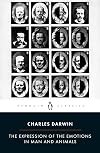
This second edition of The Expression of the Emotions in Man and Animals was edited by his son Francis Darwin and published in 1890. As Sir Francis notes in his brief preface, because the first edition did not sell out in Charles Darwin's lifetime, 'he had no opportunity of publishing the material collected with a view to a second edition.' This material, in the form of 'a mass of letters, extracts from and references to books' was utilised in the second edition, as were Darwin's pencilled show more corrections in his own volume of the first. The book is a study of the muscular movements of the face (both human and animal) triggered by the emotions being felt - a 'physical' response to a 'mental' sensation. Darwin's detailed analysis of what actually happens to a body in a state of fear, or joy, or anger is illustrated by photographic images. show lessTags
Recommendations























Member Recommendations

Member Reviews
Somewhere I read an essay by a biologist lamenting the decline of “natural history” – where the practitioner just went described what was going on in the world, without modeling or simulations or equations. The Origin of Species was given as an example – the seminal work of biology, but without any of the rigor that would be expected in modern work, such that it probably wouldn’t be accepted even as a master’s thesis in any university biology program today.
Darwin’s Expression of the Emotions in Man and Animals is a similar, if less exalted work. The question Darwin asks seems to be trivial, and his method of answering anecdotal: do all humans and (if appropriate) animals express themselves the same way when they have the show more same emotions? For example, if “we” (in this case, “we” being Victorian Englishmen) are happy, we smile. But does everybody? Frenchmen? Hottentots? Hindus? Cherokees? Blind people who have never seen a smile? Do babies smile from birth? Do monkeys smile? What about cats, rats, bats and elephants? And what about all the other emotions – rage, fear, love, disgust, etc.? Darwin watched his own children develop and noted when and how they first used facial expressions. He did the same for his neighbors and their children, for domestic animals, and for zoo animals. And he sent out questionnaires to missionaries, Foreign Service employees, and anyone else he could think of who lived abroad. (One of these was an “African chief”, Gaika, who seems to have given thoughtful and insightful answers to Darwin’s questions. I wish I knew more about Gaika; there’s a mention of a “Chief Gaika” being involved in the “Kaffir Wars” but it doesn’t seem likely it’s the same one). Darwin also made use of the relatively new photography technology to show respondents pictures of people in various emotional states, and asking them what emotion was represented. Interestingly, almost all his respondents could tell the difference between a “false” smile and a “true” one, and although not one was able to say how they knew.
This isn’t the last word on the subject, obviously; there’s a lot missing. Darwin goes into great detail on the exact facial muscles involved in expressions, but doesn’t go much of anywhere with the information (for example, he doesn’t investigate if a dog uses the same muscles to snarl that a human does to smile, or even if a dog has “smile muscles”). He doesn’t hit on the importance of diurnal versus nocturnal habitat for expression in animals (i.e., it doesn’t do any good to have elaborate facial expressions if it’s too dark to see them).
However, while not the last word, it is the first (or at least the first consolidation). Darwin finds that certain expressions are universal – everybody smiles, and they start doing it when they are just a few hours old. On the other hand, some gestures are not universal – different cultures have different methods for affirmation and negation – nodding the head for “Yes” and shaking it for “No” is local to Europe; some people shake for “Yes” and nod for “No”, and some don’t even involve the head and face at all, with “Yes” and “No” conveyed entirely by hand gestures and body posture.
The overall impression is similar to Origins; a work by a talented and astute observer, a “natural historian” if you will. The criticism of “lack of rigor” might be appropriate in a modern context – there are no equations or models. However, there’s a different kind of rigor here – the rigor of testing the null hypothesis. I imagine before Darwin nobody bothered to ask “Does everybody smile when they are happy? Does everybody weep when they are sad?” because it was expected that the answer would be “Well, of course they do!” Sometimes it takes a complicated mind to ask simple questions. show less
Darwin’s Expression of the Emotions in Man and Animals is a similar, if less exalted work. The question Darwin asks seems to be trivial, and his method of answering anecdotal: do all humans and (if appropriate) animals express themselves the same way when they have the show more same emotions? For example, if “we” (in this case, “we” being Victorian Englishmen) are happy, we smile. But does everybody? Frenchmen? Hottentots? Hindus? Cherokees? Blind people who have never seen a smile? Do babies smile from birth? Do monkeys smile? What about cats, rats, bats and elephants? And what about all the other emotions – rage, fear, love, disgust, etc.? Darwin watched his own children develop and noted when and how they first used facial expressions. He did the same for his neighbors and their children, for domestic animals, and for zoo animals. And he sent out questionnaires to missionaries, Foreign Service employees, and anyone else he could think of who lived abroad. (One of these was an “African chief”, Gaika, who seems to have given thoughtful and insightful answers to Darwin’s questions. I wish I knew more about Gaika; there’s a mention of a “Chief Gaika” being involved in the “Kaffir Wars” but it doesn’t seem likely it’s the same one). Darwin also made use of the relatively new photography technology to show respondents pictures of people in various emotional states, and asking them what emotion was represented. Interestingly, almost all his respondents could tell the difference between a “false” smile and a “true” one, and although not one was able to say how they knew.
This isn’t the last word on the subject, obviously; there’s a lot missing. Darwin goes into great detail on the exact facial muscles involved in expressions, but doesn’t go much of anywhere with the information (for example, he doesn’t investigate if a dog uses the same muscles to snarl that a human does to smile, or even if a dog has “smile muscles”). He doesn’t hit on the importance of diurnal versus nocturnal habitat for expression in animals (i.e., it doesn’t do any good to have elaborate facial expressions if it’s too dark to see them).
However, while not the last word, it is the first (or at least the first consolidation). Darwin finds that certain expressions are universal – everybody smiles, and they start doing it when they are just a few hours old. On the other hand, some gestures are not universal – different cultures have different methods for affirmation and negation – nodding the head for “Yes” and shaking it for “No” is local to Europe; some people shake for “Yes” and nod for “No”, and some don’t even involve the head and face at all, with “Yes” and “No” conveyed entirely by hand gestures and body posture.
The overall impression is similar to Origins; a work by a talented and astute observer, a “natural historian” if you will. The criticism of “lack of rigor” might be appropriate in a modern context – there are no equations or models. However, there’s a different kind of rigor here – the rigor of testing the null hypothesis. I imagine before Darwin nobody bothered to ask “Does everybody smile when they are happy? Does everybody weep when they are sad?” because it was expected that the answer would be “Well, of course they do!” Sometimes it takes a complicated mind to ask simple questions. show less
When Charles Darwin in 1859 finally made public his theory of evolution by natural selection in “On the Origin of Species”, he avoided writing about human evolution, except for saying that “Light will be thrown on the origin of man and his history.”
But by the early 1870s he felt confident enough to openly discuss the evolution of humans from animals. He did this in “The Descent of Man” (1871) and in this book, “The Expression of Emotions in Man and Animals” (1872).
In “The Expression of Emotions” Darwin’s main aim was to show that humans are not separate from animals. He shows the origins of human facial expressions in the animal world, and he argues that human expressions are innate and universal (the same in all show more cultures).
I would recommend this book to anyone who is interested in Darwin’s ideas. But in my view it is not Darwin at his best. It has been pointed out that there are two main weaknesses in the book. Firstly, Darwin focuses mainly on the emotional roots of facial expressions and says too little about the role of expressions in communication.
Secondly, despite having developed the revolutionary (and correct) theory of natural selection as the mechanism for evolutionary change, Darwin mistakenly allowed a subsidiary role for the Lamarckian idea of the inheritance of acquired characteristics. This book is unfortunately full of examples of this latter idea.
In recent decades the book has also featured in controversies over the so-called “nature versus nurture” debate. Social anthropologist Margaret Mead argued that human facial expressions are learned, not innate, and that they vary from one culture to another. Psychologist Paul Eckman, on the other hand, says that Mead has been proved wrong and that Darwin was correct in saying that human facial expressions are the same in all societies, reflecting their evolutionary and genetic rather than cultural origins.
But even if Ekman is correct on the specific issue of facial expressions, this does not mean that we can explain all other aspects of human behaviour primarily in genetic terms, as biological/genetic determinists claim. Ekman says that both nature and nurture play a part in determining human behaviour, which is clearly true, but he himself actually seems to lean much more towards the “nature” side. In fact he has claimed that “Darwin led the way not only in the biological sciences but in the social sciences as well.” Ekman seems to be using Darwin’s “Expressions” book as a stick with which to beat those who put forward social explanations of human behaviour.
In fact it is not just social scientists who argue that we cannot explain all human behaviour in biological terms. Evolutionary theorists like Stephen Jay Gould and Richard Lewontin also show that humans have evolved to be creatures which, because of their large brain, are very flexible in their behaviour. The result is that much of our behaviour (though perhaps not our facial expressions) is learned and therefore the result of social factors and interactions.
I am a great fan of Charles Darwin, and Darwin may well have been right about facial expressions being largely innate, but we should not try to use Darwinism to explain our society (and its problems). show less
But by the early 1870s he felt confident enough to openly discuss the evolution of humans from animals. He did this in “The Descent of Man” (1871) and in this book, “The Expression of Emotions in Man and Animals” (1872).
In “The Expression of Emotions” Darwin’s main aim was to show that humans are not separate from animals. He shows the origins of human facial expressions in the animal world, and he argues that human expressions are innate and universal (the same in all show more cultures).
I would recommend this book to anyone who is interested in Darwin’s ideas. But in my view it is not Darwin at his best. It has been pointed out that there are two main weaknesses in the book. Firstly, Darwin focuses mainly on the emotional roots of facial expressions and says too little about the role of expressions in communication.
Secondly, despite having developed the revolutionary (and correct) theory of natural selection as the mechanism for evolutionary change, Darwin mistakenly allowed a subsidiary role for the Lamarckian idea of the inheritance of acquired characteristics. This book is unfortunately full of examples of this latter idea.
In recent decades the book has also featured in controversies over the so-called “nature versus nurture” debate. Social anthropologist Margaret Mead argued that human facial expressions are learned, not innate, and that they vary from one culture to another. Psychologist Paul Eckman, on the other hand, says that Mead has been proved wrong and that Darwin was correct in saying that human facial expressions are the same in all societies, reflecting their evolutionary and genetic rather than cultural origins.
But even if Ekman is correct on the specific issue of facial expressions, this does not mean that we can explain all other aspects of human behaviour primarily in genetic terms, as biological/genetic determinists claim. Ekman says that both nature and nurture play a part in determining human behaviour, which is clearly true, but he himself actually seems to lean much more towards the “nature” side. In fact he has claimed that “Darwin led the way not only in the biological sciences but in the social sciences as well.” Ekman seems to be using Darwin’s “Expressions” book as a stick with which to beat those who put forward social explanations of human behaviour.
In fact it is not just social scientists who argue that we cannot explain all human behaviour in biological terms. Evolutionary theorists like Stephen Jay Gould and Richard Lewontin also show that humans have evolved to be creatures which, because of their large brain, are very flexible in their behaviour. The result is that much of our behaviour (though perhaps not our facial expressions) is learned and therefore the result of social factors and interactions.
I am a great fan of Charles Darwin, and Darwin may well have been right about facial expressions being largely innate, but we should not try to use Darwinism to explain our society (and its problems). show less
This is the work in which Darwin documents the universal nature of facial expressions. Published in the spring of 1872, and after he was diverted to complete publication of the 10-years of revisions to Origin of Species, Darwin proved that living creatures share certain "states of mind".
The proof was drawn from scientists' responses to his questionnaires propounded around the world, and with hundreds of photographs of actors, babies and "imbeciles" in an asylum. He also described his own observations, with particular empathy for the grief following a family death.
Here's the point: Animal Life SHARES feelings. Young and old, across widely different races and species, "express the same state of mind by the same movements."
{Darwin show more showed that ALL the so-called Races of humankind are not only emotionally identical, but we are very much the same as ANIMALS! This scientific evidence was in 100 years before the Nazis made the fiction of Race "differences" a matter of State Policy. The science clearly justifies criminalizing the mistreatment of people or animals.}
The evidence of shared evolution, and shared feelings, is in contrast to the ideology current in Darwin's day. Charles Bell's Anatomy and Physiology of Expression claimed that certain muscles in the face were divinely created to express man's exquisite feelings in a manner unique to those bearing God's Image.
The proofs, tackled by his daughter Henrietta and son Leo, needed major revision, which made Darwin "sick of the subject, and myself, and the world". It was to be one of the first books with photographs, with seven heliotype plates. The publisher Murray, warned that the plates "would poke a terrible hole in the profits". But Darwin was PROVING the fact that all animals share feelings. The Expression of Emotions in Man and Animals sold over 5,000 copies, a matter of popularity, profits, and proof. show less
The proof was drawn from scientists' responses to his questionnaires propounded around the world, and with hundreds of photographs of actors, babies and "imbeciles" in an asylum. He also described his own observations, with particular empathy for the grief following a family death.
Here's the point: Animal Life SHARES feelings. Young and old, across widely different races and species, "express the same state of mind by the same movements."
{Darwin show more showed that ALL the so-called Races of humankind are not only emotionally identical, but we are very much the same as ANIMALS! This scientific evidence was in 100 years before the Nazis made the fiction of Race "differences" a matter of State Policy. The science clearly justifies criminalizing the mistreatment of people or animals.}
The evidence of shared evolution, and shared feelings, is in contrast to the ideology current in Darwin's day. Charles Bell's Anatomy and Physiology of Expression claimed that certain muscles in the face were divinely created to express man's exquisite feelings in a manner unique to those bearing God's Image.
The proofs, tackled by his daughter Henrietta and son Leo, needed major revision, which made Darwin "sick of the subject, and myself, and the world". It was to be one of the first books with photographs, with seven heliotype plates. The publisher Murray, warned that the plates "would poke a terrible hole in the profits". But Darwin was PROVING the fact that all animals share feelings. The Expression of Emotions in Man and Animals sold over 5,000 copies, a matter of popularity, profits, and proof. show less
What I love about this book, so far, is the author shining through. And the Darwin who shines through is not Darwin the grand Victorian beard. This is Darwin still showing signs of being the young man his father despaired of, Darwin rough and tumbling with his terrier and playfully teasing his hound.
A classic work by the scientist who discovered natural selection. Typically Darwin, with myriads of examples from all over the globe. An interesting piece of history, much of which has been superseded by more up-to-date information, and tending to an unfortunate Lamarckism in his explanations for the evolution of emotional expressions.
This reprint of an early use of photography to explore and illustrate theory is an important work in the history of photography. The photographer, Rejlander, one of the most creative workers in the very early history of photography, used himself for some of the illustrations (the bald man in the plate opposite p264). Appropriate that Margaret Mead, herself an innovator in the experimental use of photography to support scientific investigations (see Bateson & Mead, Growth and Culture) should write an introduction to Darwin's earlier work. This book includes some examples from that work, photographed in Bali. Mead's partneter in this work, Gregory Bateson, later publicly disagreed about their methods. Ultimately he was the more seminal show more thinker. Despite the interesting use of photograph, the speculations of both Darwin and Mead have not stood the test of time. At the end of this version of Darwin's book are pictures of some well known academics of the mid-twentieth century at a conference. Another early application of photographic illustration. show less
Publicado originalmente em 1872, foi o último dos três livros publicados por Darwin que sustentam a teoria da seleção Natural. Neste livro Darwin se dedica a comparar o comportamento de homens e animais fazendo importantes contestações sobre nossas semelhanças e diferenças.
Members
- Recently Added By
Lists

Folio Society
831 works; 53 members

Trinity College Booklist (1951): Class One, Natural Science
98 works; 2 members

The Great Courses: Understanding Nonverbal Communication
10 works; 1 member

Favorite Animal Non-Fiction
293 works; 144 members
Author Information

344+ Works 32,648 Members
Charles Robert Darwin, born in 1809, was an English naturalist who founded the theory of Darwinism, the belief in evolution as determined by natural selection. Although Darwin studied medicine at Edinburgh University, and then studied at Cambridge University to become a minister, he had been interested in natural history all his life. His show more grandfather, Erasmus Darwin, was a noted English poet, physician, and botanist who was interested in evolutionary development. Darwin's works have had an incalculable effect on all aspects of the modern thought. Darwin's most famous and influential work, On the Origin of Species, provoked immediate controversy. Darwin's other books include Zoology of the Voyage of the Beagle, The Variation of Animals and Plants Under Domestication, The Descent of Man, and Selection in Relation to Sex. Charles Darwin died in 1882. (Bowker Author Biography) show less
Charles Darwin has a Legacy Library. Legacy libraries are the personal libraries of famous readers, entered by LibraryThing members from the Legacy Libraries group.
Some Editions
Awards and Honors
Notable Lists
Series
Belongs to Publisher Series
Work Relationships
Common Knowledge
- Canonical title
- The Expression of the Emotions in Man and Animals
- Original title
- The Expression of the Emotions in Man and Animals
- Original publication date
- 1872-11-26
- Epigraph
- Abraham. Do you bite your thumb at us, sir?
Sampson. No, sir, I do not bite my thumb at you sir; but I bite my thumb, sir.
Romeo and Juliet.
The Thinker's Library ed., 1934. - First words
- Sir Charles Bell, so illustrious for his discoveries in physiology, may be said not only to have laid the foundations of the anatomy and philosophy of "Expression" as a branch of science, but to have built up a noble structur... (show all)e.
Introduction.
I will begin by giving the three Principles which appear to me to account for most of the expressions and gestures involuntarily used by man and the lower animals under the influences of various emotions and sensations.
This is the most complete edition of The Expression of the Emotions in Man and Animals ever published.
Preface to the Third Edition.
Darwin wrote the Expression of the Emotions before physiologists had discovered the astonishing facts that the innermost moods of the mind - love, hate, fear, rage, etc. - together with their outermost manifestations, ... (show all)the muscular contractions of the limbs and face, are in great measure dependent upon the functioning, in appropriate spheres of action, of "chemical messengers," or hormones, which are despatched from specific "chemical factories" known as endocrine glands.
Foreword, by Charles M. Beadnell, to the Thinker's Library ed., 1934.
The Theory of Evolution, The Descent of Man, and The Struggle for Existence have become almost household words, and the association of Darwin's name with them, however vague, is irrovocably fixed in the minds of most people.<... (show all)br>
Foreword, by Maurice Burton, to the Thinker's Library ed., 3rd imp., 1948. - Quotations
- I have endeavoured to show in considerable detail that all the chief expressions exhibited by man are the same throughout the world. This fact is interesting, as it affords a new argument in favour of the several races being ... (show all)descended from a single parent-stock, which must have been almost completely human in structure, and to a large extent in mind, before the period at which the races diverged from each other.
- Last words
- (Click to show. Warning: May contain spoilers.)From these several causes, we may conclude that the philosophy of our subject has well deserved the attention which it has already received from several excellent observers, and that it deserves still further attention, especially from any able physiologist.
- Original language
- English
Classifications
Statistics
- Members
- 869
- Popularity
- 31,269
- Reviews
- 10
- Rating
- (3.80)
- Languages
- 12 — Catalan, Dutch, English, Finnish, French, German, Italian, Japanese, Portuguese, Russian, Spanish, Turkish
- Media
- Paper, Ebook
- ISBNs
- 84
- ASINs
- 20