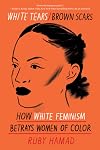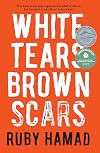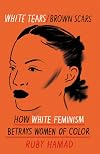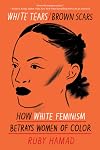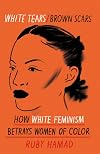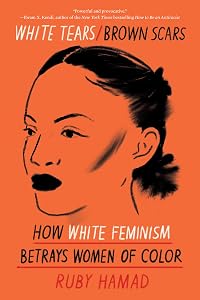
White Tears/Brown Scars: How White Feminism Betrays Women of Color
by Ruby Hamad
On This Page
Description
Called “powerful and provocative" by Dr. Ibram X. Kendi, author of the New York Times bestselling How to be an Antiracist, this explosive book of history and cultural criticism reveals how white feminism has been used as a weapon of white supremacy and patriarchy deployed against Black and Indigenous women, and women of color.Taking us from the slave era, when white women fought in court to keep “ownership” of their slaves, through the centuries of colonialism, when they offered a show more soft face for brutal tactics, to the modern workplace, White Tears/Brown Scars tells a charged story of white women’s active participation in campaigns of oppression. It offers a long overdue validation of the experiences of women of color.
Discussing subjects as varied as The Hunger Games, Alexandria Ocasio–Cortez, the viral BBQ Becky video, and 19th century lynchings of Mexicans in the American Southwest, Ruby Hamad undertakes a new investigation of gender and race. She shows how the division between innocent white women and racialized, sexualized women of color was created, and why this division is crucial to confront.
Along the way, there are revelatory responses to questions like: Why are white men not troubled by sexual assault on women? (See Christine Blasey Ford.) With rigor and precision, Hamad builds a powerful argument about the legacy of white superiority that we are socialized within, a reality that we must apprehend in order to fight.
"A stunning and thorough look at White womanhood that should be required reading for anyone who claims to be an intersectional feminist. Hamad’s controlled urgency makes the book an illuminating and poignant read. Hamad is a purveyor of such bold thinking, the only question is, are we ready to listen?" —Rosa Boshier, The Washington Post. show less
Tags
Recommendations






Member Reviews
Well this needs to be read by everyone, but it’s white women that need it the most to become aware of their complicity in white supremacy. The subtitle speaks of white feminism betraying women of color, but this book points out the history of all white women (not just feminists) doing the betraying. I have seen the tears Hamad speaks of from white women as a weird defense, and it’s always annoyed the crap out of me. I hope that more self-awareness can be gained from reading this book. As Hamad has perfectly put it at her conclusion: “White women can dry their tears and join us, or they can continue on the path of the damsel—a path that leads not toward the light of liberation but only into the dead end of the colonial past.”
This was not an easy book for me to read, although that is no comment on the author's skill. Even as I was made uncomfortable by the content, I was in awe of the author's ability to distill complex historical and cultural moments into digestible prose. This book is extremely clear and revelatory and it was so helpful to have names put to concepts so foundational as to be invisible to white readers.
The author's unflinching analysis of white supremacy's and specifically white femininity's impact on women of color is deeply needed context for white women. Although this book was relatively small, each chapter was so rich and I will be reflecting upon these topics for years to come as I continue to learn more.
I'm so grateful for the author's show more work in this arena as I know it has cost her so much. I hope to be worthy of her investment. show less
The author's unflinching analysis of white supremacy's and specifically white femininity's impact on women of color is deeply needed context for white women. Although this book was relatively small, each chapter was so rich and I will be reflecting upon these topics for years to come as I continue to learn more.
I'm so grateful for the author's show more work in this arena as I know it has cost her so much. I hope to be worthy of her investment. show less
With all the fuss over “Karens”, those insufferably vile American white women whose bigotry surpasses the worst of the all-male white supremacist alt right, it is very timely that Ruby Hamad is releasing her book White Tears/Brown Scars. Its thesis is that white women use tears as a first line weapon to deflect from their racism. This is a new angle for me; I’d never heard of it before. And certainly never seen it myself. It is as fascinating as it is horrifying.
Hamad, and a couple of dozen women of color from around the world whom she interviewed, have long noticed this curious phenomenon. At first, every one of them thought they had overstepped and offended a white woman, and thereby damaged an important relationship with a show more potentially useful and powerful ally. And so they pulled back rather than hurt their own cause. But over the years, they have come to realize they are not the problem, but that they have been the continual victims of a white female ruse. White women cry when accused of insensitivity or racism. They turn the tables on their accusers: “White feminists have learned to silence us by claiming that our pain is hurting them, “ Hamad says.
It is both amazing and sad how many times and ways this tool gets employed. It seems to be instinctive rather than conspiratorial. And it seems to work every time. Pity the poor white woman. Faced with a real victim – a woman of color – she instead positions herself as a lifelong victim, being accused of victimizing other women! How could anyone think that of her? And so she bursts into tears in the midst of the conversation, effectively ending it before any accusation can be examined for what it might be worth. It is one-upmanship over victimhood, like something out of Monty Python.
Hamad says it shows white women are part of the problem, not the solution. They have decided they are a rung above women of color, and have hitched their wagons to white males on the top wrung. It is more important for them to be associated with white supremacy than female equality. They would rather fit into the hierarchy of the patriarchy where they are a poor second, than with women of color, who are an even poorer third. Women of color are a lower caste, definitely not worth associating with. The result is this odd habit of white women suddenly bursting into tears when accused, challenged or even just discussing their own racism.
Hamad’s book, which evolved out of a magazine article that took her on a whirlwind of global interest, led of course to attracting all kinds of trolls, from whom she learned a lot. But it also gave her thesis depth. It led her to investigate the history of white feminism, going back in history and around the world. She found the same things everywhere she looked: white women dominating slaves and other women of color, crying crocodile tears, and posing as white supremacists beside their white supremacist males. And when it wasn’t tears, it was the damsel in distress. Poor, weak, innocent and fragile white woman in a hostile land. They carved their own little niche in the patriarchy, and defended (and continue to defend) it with every wile and tool at their disposal. Tears are easy for them to produce, and the results are quick to let them off the hook and deflect to another conversation, away from themselves.
To her credit, Hamad also found that racism is not merely white over color. All over the world, as I have written numerous times, master races dominate and discriminate against other races. The Malaysians discriminate against their Chinese co-citizens right in the constitution. Mexico has an entire caste system based on skin shades. So does India, where skin lighteners are in constant demand. Japanese men are simply superior to everyone else in the world, especially their own women. It’s not just American whites.
As for European whites, everywhere they settled, they dominated everyone else, by extreme force. Women could accuse any man of another color of assault or rape, and they would all but automatically be sentenced to death or long prison terms. Protecting the supposed virtue and saintliness of white women got baked into laws promulgated by top wrung white men. Raping a black woman wouldn’t raise an eyebrow (Jezebel that she must be). But accusing young black Emmett Till of just whistling at a white woman, even though it wasn’t even true, cost him his life. Simply bumping past a white woman in a crowded hallway could mean execution.
Hamad, who repeatedly mentions she is olive-skinned with voluminous hair she pointlessly struggled to tame for years, found her fellow victims attacked with the same labels: toxic, bully, hostile, troublemaker, aggressive, irrational, divisive. The coincidences are global. The so-called sisterhood of feminists is an exclusive club for hypocritical white women. They will climb the corporate ladder, pushing women of color aside and burying them, rather than mentoring them. Is it any wonder that so many women leading major corporations has not resulted in equality for women employees?
It doesn’t stop at tears, either. The claimants in most US racial discrimination lawsuits resulting from affirmative action are white women, Hamad found. It appears “We can be both targets of racial abuse and perpetrators of it.”
Ironically, perhaps, it is the women of color, most especially Indigenous women, who are at the forefront of environmental rights,” because their own rights are inseparable from the battle for the environment.” They don’t have time for the games white women play. Their families and their lives are at stake, and they make real headway and real progress without the drama white women engender. Because they have to.
Hamad ends with two contradictory thoughts, as befits this mind-numbing discovery: ”I’d be lying if I said I knew how to reconcile all this,” she says.
And “White women can dry their tears and join us, or they can continue on the path of the damsel, a path that leads not toward the light of liberation, but only into the dead end of the colonial past.”
David Wineberg show less
Hamad, and a couple of dozen women of color from around the world whom she interviewed, have long noticed this curious phenomenon. At first, every one of them thought they had overstepped and offended a white woman, and thereby damaged an important relationship with a show more potentially useful and powerful ally. And so they pulled back rather than hurt their own cause. But over the years, they have come to realize they are not the problem, but that they have been the continual victims of a white female ruse. White women cry when accused of insensitivity or racism. They turn the tables on their accusers: “White feminists have learned to silence us by claiming that our pain is hurting them, “ Hamad says.
It is both amazing and sad how many times and ways this tool gets employed. It seems to be instinctive rather than conspiratorial. And it seems to work every time. Pity the poor white woman. Faced with a real victim – a woman of color – she instead positions herself as a lifelong victim, being accused of victimizing other women! How could anyone think that of her? And so she bursts into tears in the midst of the conversation, effectively ending it before any accusation can be examined for what it might be worth. It is one-upmanship over victimhood, like something out of Monty Python.
Hamad says it shows white women are part of the problem, not the solution. They have decided they are a rung above women of color, and have hitched their wagons to white males on the top wrung. It is more important for them to be associated with white supremacy than female equality. They would rather fit into the hierarchy of the patriarchy where they are a poor second, than with women of color, who are an even poorer third. Women of color are a lower caste, definitely not worth associating with. The result is this odd habit of white women suddenly bursting into tears when accused, challenged or even just discussing their own racism.
Hamad’s book, which evolved out of a magazine article that took her on a whirlwind of global interest, led of course to attracting all kinds of trolls, from whom she learned a lot. But it also gave her thesis depth. It led her to investigate the history of white feminism, going back in history and around the world. She found the same things everywhere she looked: white women dominating slaves and other women of color, crying crocodile tears, and posing as white supremacists beside their white supremacist males. And when it wasn’t tears, it was the damsel in distress. Poor, weak, innocent and fragile white woman in a hostile land. They carved their own little niche in the patriarchy, and defended (and continue to defend) it with every wile and tool at their disposal. Tears are easy for them to produce, and the results are quick to let them off the hook and deflect to another conversation, away from themselves.
To her credit, Hamad also found that racism is not merely white over color. All over the world, as I have written numerous times, master races dominate and discriminate against other races. The Malaysians discriminate against their Chinese co-citizens right in the constitution. Mexico has an entire caste system based on skin shades. So does India, where skin lighteners are in constant demand. Japanese men are simply superior to everyone else in the world, especially their own women. It’s not just American whites.
As for European whites, everywhere they settled, they dominated everyone else, by extreme force. Women could accuse any man of another color of assault or rape, and they would all but automatically be sentenced to death or long prison terms. Protecting the supposed virtue and saintliness of white women got baked into laws promulgated by top wrung white men. Raping a black woman wouldn’t raise an eyebrow (Jezebel that she must be). But accusing young black Emmett Till of just whistling at a white woman, even though it wasn’t even true, cost him his life. Simply bumping past a white woman in a crowded hallway could mean execution.
Hamad, who repeatedly mentions she is olive-skinned with voluminous hair she pointlessly struggled to tame for years, found her fellow victims attacked with the same labels: toxic, bully, hostile, troublemaker, aggressive, irrational, divisive. The coincidences are global. The so-called sisterhood of feminists is an exclusive club for hypocritical white women. They will climb the corporate ladder, pushing women of color aside and burying them, rather than mentoring them. Is it any wonder that so many women leading major corporations has not resulted in equality for women employees?
It doesn’t stop at tears, either. The claimants in most US racial discrimination lawsuits resulting from affirmative action are white women, Hamad found. It appears “We can be both targets of racial abuse and perpetrators of it.”
Ironically, perhaps, it is the women of color, most especially Indigenous women, who are at the forefront of environmental rights,” because their own rights are inseparable from the battle for the environment.” They don’t have time for the games white women play. Their families and their lives are at stake, and they make real headway and real progress without the drama white women engender. Because they have to.
Hamad ends with two contradictory thoughts, as befits this mind-numbing discovery: ”I’d be lying if I said I knew how to reconcile all this,” she says.
And “White women can dry their tears and join us, or they can continue on the path of the damsel, a path that leads not toward the light of liberation, but only into the dead end of the colonial past.”
David Wineberg show less
This is exactly what feminist books are missing, the way white women cling to their race over their gender when push comes to shove. We have no solidarity with women of color and it's our own fault we keep failing to gain gender equality. This is excellent and anyone who considers themselves even a little feminist should read this.
A depressing and persuasive reminder that white women were complicit in the white man's burden of slavery, imperialism, and colonialism and despite their ongoing efforts for equal rights can still benefit from and leverage systemic racism today to the detriment of BIPOC women. The writing gets a little dry as it delves through centuries of history but is still enlightening and becomes very thought-provoking as it connects those distant events to the turmoil of recent years.
In the chapter "When Tears Become Weapons" there is a segment about a Twitter storm around some comments made by writer Mary Beard that totally reminded me of the recent Kate Clanchy debacle:
"Twitter pile-ons can be so over the top that separating the wheat of show more legitimate critique from the chaff of abusive trolling can sometimes feel like an exercise in futility, so I have no doubt that much of the criticism leveled at Beard got unnecessarily nasty. Nonetheless, there are attacks and there is constructive criticism, and Beard seemed to make no differentiation between the two. Apologizing not for the content or the implications of her tweet but for attempting to inject 'nuance' into the discussion, she posted a teary selfie of herself, pleading, 'I'm really not the nasty colonialist you think I am . . . If you must know I am sitting here crying.'"
Here's a link to the article that was the origin of this book:
https://www.theguardian.com/commentisfree/2018/may/08/how-white-women-use-strate... show less
In the chapter "When Tears Become Weapons" there is a segment about a Twitter storm around some comments made by writer Mary Beard that totally reminded me of the recent Kate Clanchy debacle:
"Twitter pile-ons can be so over the top that separating the wheat of show more legitimate critique from the chaff of abusive trolling can sometimes feel like an exercise in futility, so I have no doubt that much of the criticism leveled at Beard got unnecessarily nasty. Nonetheless, there are attacks and there is constructive criticism, and Beard seemed to make no differentiation between the two. Apologizing not for the content or the implications of her tweet but for attempting to inject 'nuance' into the discussion, she posted a teary selfie of herself, pleading, 'I'm really not the nasty colonialist you think I am . . . If you must know I am sitting here crying.'"
Here's a link to the article that was the origin of this book:
https://www.theguardian.com/commentisfree/2018/may/08/how-white-women-use-strate... show less
this was a really excellent, and really hard read. i will need to reread it, probably more than once, to both fully understand everything she is saying and to fully absorb and allow myself to see everything (most especially the harm i'm causing) she is saying. this is a powerful book.
it reminded me of when i started activism work around gendered violence, and how everything came back to that, and how people would joke that i was no fun anymore. but that didn't change the fact that everything i was noticing was true. this book is like that. there is so much to see and realize and it pervades everything, every aspect of society, so it's just everywhere. and that's no fun but no less true for it.
there is so much to take from this book if show more you're open to it. it's an eye-opening read. she is writing as an australian, but she infuses so much understanding into american politics as well. it's amazing how much other people know about our country while we know next to nothing of theirs. her analysis is really interesting and valuable. i took so much from this book.
the many correlations she makes between race and gender and race and sex here are rather stunning. she frames just about everything in a way that i'd never seen before, and so i'm looking at just about everything with a new perspective and a new reference point. the lens she uses to see with has changed the way i'm seeing everything.
"...what makes the distress of while women so powerful is its association with femininity and helplessness."
"White women can oscillate between their gender and their race, between being the oppressed and the oppressor. Women of color are never permitted to exist outside of these constraints: we are both women and people of color and we are always seen and treated as such."
"The peculiar logic of Eurocentrism was fueled by the rise of scientific racism in the nineteenth century, which regarded true differentiation of the sexes as a status that had only been achieved by the more highly evolved white Europeans. Although brown and black bodies were designated female and male, the science promoted by the American School of Evolution regarded sex difference as a racial characteristic and argued that only white European-derived people had evolved to the point of having distinctly separate male and female brains and dispositions."
"Binary sex is both function and feature of white supremacy."
"...white Europeans colonized the world on the presumption they were 'civilizing' it, but by strictly policing both race and sex, they did everything in their formidable power to ensure nonwhites were never able to penetrate the inner sanctum of white society even if they wanted to."
"White people set the standard for humanity by which they, and only they, could succeed."
"Sex work...was reviled not so much because it implied dubious ethical character as because it allowed white women a degree of independence that most could not access."
"This fiction of a white race unravels as soon as we consider that 'white' is the only racial category where any mixing automatically excludes one from the racial group."
"White people are not united by a shared ethnicity: they are united by access to institutional power."
"Whiteness is more than skin color. It is a system that privileges those racial, cultural, and religious identities that most resemble the typical characteristics associated with the white Western Europeans who created the system in their image. And this system of white supremacy is now so ingrained it can exist without white people." show less
it reminded me of when i started activism work around gendered violence, and how everything came back to that, and how people would joke that i was no fun anymore. but that didn't change the fact that everything i was noticing was true. this book is like that. there is so much to see and realize and it pervades everything, every aspect of society, so it's just everywhere. and that's no fun but no less true for it.
there is so much to take from this book if show more you're open to it. it's an eye-opening read. she is writing as an australian, but she infuses so much understanding into american politics as well. it's amazing how much other people know about our country while we know next to nothing of theirs. her analysis is really interesting and valuable. i took so much from this book.
the many correlations she makes between race and gender and race and sex here are rather stunning. she frames just about everything in a way that i'd never seen before, and so i'm looking at just about everything with a new perspective and a new reference point. the lens she uses to see with has changed the way i'm seeing everything.
"...what makes the distress of while women so powerful is its association with femininity and helplessness."
"White women can oscillate between their gender and their race, between being the oppressed and the oppressor. Women of color are never permitted to exist outside of these constraints: we are both women and people of color and we are always seen and treated as such."
"The peculiar logic of Eurocentrism was fueled by the rise of scientific racism in the nineteenth century, which regarded true differentiation of the sexes as a status that had only been achieved by the more highly evolved white Europeans. Although brown and black bodies were designated female and male, the science promoted by the American School of Evolution regarded sex difference as a racial characteristic and argued that only white European-derived people had evolved to the point of having distinctly separate male and female brains and dispositions."
"Binary sex is both function and feature of white supremacy."
"...white Europeans colonized the world on the presumption they were 'civilizing' it, but by strictly policing both race and sex, they did everything in their formidable power to ensure nonwhites were never able to penetrate the inner sanctum of white society even if they wanted to."
"White people set the standard for humanity by which they, and only they, could succeed."
"Sex work...was reviled not so much because it implied dubious ethical character as because it allowed white women a degree of independence that most could not access."
"This fiction of a white race unravels as soon as we consider that 'white' is the only racial category where any mixing automatically excludes one from the racial group."
"White people are not united by a shared ethnicity: they are united by access to institutional power."
"Whiteness is more than skin color. It is a system that privileges those racial, cultural, and religious identities that most resemble the typical characteristics associated with the white Western Europeans who created the system in their image. And this system of white supremacy is now so ingrained it can exist without white people." show less
Dang, I liked that. I don't often read feminist treatises written by people outside of the US, and it was great to get Hamad's perspective. This felt like sitting in on an awesome women and gender studies class--it satisfied my love for academic discussion, while providing relatable read world context. I expected I'd listen to this at quite a slower rate than I did, but I was hooked on Hamad's writing. As a white person, this pushes me further to identify how I utilize white feminism in my own life to transgress against people of color and work towards embracing a more inclusive feminism.
Members
- Recently Added By
Lists

Patriarchy and white supremacy de-programming
69 works; 1 member
Author Information

2 Works 590 Members
Awards and Honors
Awards
Common Knowledge
- Original publication date
- 2019-09-03
- People/Characters
- Ruby Hamad; Melissa Francis; Donald Trump; Heather Heyer; Harris Faulkner; Juan Williams (show all 166); Marie Harf; Lisa Benson; Christa Dubill; Jessica McMaster; Luvvie Ajayi; Sister Outsider; Robin DiAngelo; Richard Dyer; Rue (Hunger Games); Little Orphan Annie; Amanda Stenberg; Quvenzhané Wallis; Deborah Gray White; Harriet Jacobs; Thomas Jefferson; Sally Hemings; Solomon Northup; Mary Boykin Chesnut; Henry Lawson; Aileen Moreton-Robinson; Ann McGrath; bell hooks; Louisa Lawson; Edward Said; Gustave Flaubert; Jean Dumont; Edmondo de Amicis; Lady Montagu; Kuchuk Hanem; Hazel Simons; Pocahontas (Matoaka); John Smith; Powhatan; John Rolfe; Sonseeahray (portrayed by Debra Paget); Debra Paget; Tom Jeffords (portrayed by Jimmy Stewart); Jimmy Stewart; Weezer; Rivers Cuomo; Alexandria Ocasio-Cortez; Sharyn Holmes; The Dragon Lady (Terry and the Pirates); Kaiser Wilhelm II; Soong Mei-ling; Sandra Oh; Jonathan Fenby; Cristina Yang (portrayed by Sandra Oh ∙ of "Grey's Anatomy"); Lucy Liu; Ling Woo (portrayed by Lucy Liu ∙ of "Ally McBeal"); Nagini (portrayed by Kim Soo-hyn a/k/a Claudia Kim ∙ of Harry Potter); Kim Soo-hyn (a/k/a Claudia Kim); Lara Jean (of "To All the Boys I've Loved Before"); Carmen Miranda; Kyla Schuller; Sara Baartman; Evelyn Baring, 1st Earl of Cromer (Lord Cromer); Jack Shaheen; Amal Awad; Nazanin Boniadi; Catherine Keener; Salma Hayek; Franklin Delano Roosevelt; Irinia Gonzalez; Eva Longoria; Sofia Vergara; Suzan Harjo; Wendy Malick; Rami Malek; Mena Massoud; Alia Shawkat; Shannon Elizabeth (Shannon Elizabeth Fadal); Ramy Youssef; Peter Bardaglio; Ida B. Wells-Barnett; Hazel V. Carby; Frantz Fanon; Abby L. Ferber; Ann Stoler; Frances Ellen Watkins Harper; Emmett Till; Carolyn Bryant; Josefa Segovia; Permit Patty; Cornerstore Caroline; BBQ Becky; Christine Blasey Ford; Mary Beard; Paul Joseph Watson; Priyamvada Gopal; Flavia Dzodan; Anaïs Duong-Pedica; Helen Lewis; Hadley Freeman; Mamta Motwani Accapadi; Kristina Delgado; Nadine Chemali; Michael Flood; Meghan McCain; Ilhan Omar; Alana Kingston; Eliza Fraser; Shamim Aslani; Brett Kavanaugh; Roy Moore; Ellen DeGeneres; George W. Bush; Mark Ruffalo; Anne Summers; Melissa Lucashenko; Clare Wright; Margaret D. Jacobs; Lauren Southern; Estelle Reel; Zitkala-Ša; Daisy Corunna; Barbara Ramusack; Jenni White; Rahaf Mohammed; Sarah Hanson-Young; Stephanie Jones-Rogers; Elizabeth Cady Stanton; Angela Saini; Frederick Douglass; Jodie Whitaker; Margaret Atwood; Hillary Rodham Clinton; Sara Salem; Van Badham; Rashida Tlaib; Audre Lorde; Kimberlé Crenshaw; Sarita Srivastava; Kerri Anne Kennerley; Helen Lovejoy (The Simpsons); Charles Loring Brace; Jeremy Corbyn; John Strausbaugh; Nawal El Sadaawi; Bernie Sanders; Kehende Andrews; Tyson Yunkaporta; Josh Cerretti; Betty Cooper (Archie Comics/Riverdale); Bilal Skaf; Geoffrey Michael Haywood; Abhay Deol; Neha Mishra; Zwarte Piet; Sinterklaas; Haji Firuz; Jair Bolsonaro; Kim Crayton; Dean Obeidallah; Carl Bell; Cheryl Matias; Gloria Wekker; Maria Valdenice Nukini; Laura Nader; Combahee River Collective
- Important places
- Australia; Southern Rhodesia; USA
- Epigraph
- He hit me and wept...
Then he was first to protest.
--Arab proverb - Dedication
- for the forgotten ones
- First words
- Writing about race is a fraught business, as is writing about gender.
- Last words
- (Click to show. Warning: May contain spoilers.)White women can dry their tears and join us, or they can continue on the path of the damsel--a path that leads not toward the light of liberation but only into the dead end of the colonial past.
- Blurbers
- Hills, Rachel; Talkhani, Zeba; Awad, Amal; Kendi, Ibram X.
- Original language
- English
- Canonical DDC/MDS
- 305.8
- Canonical LCC
- HT1523.H36
Classifications
- Genres
- Sexuality and Gender Studies, Sociology, General Nonfiction, Nonfiction, Anthropology, History
- DDC/MDS
- 305.8 — Society, government, & culture Social sciences, sociology & anthropology Social group - Age, Gender, Ethnicity Ethnic and national groups
- LCC
- HT1523 .H36 — Social sciences Communities. Classes. Races Communities. Classes. Races Races
- BISAC
Statistics
- Members
- 589
- Popularity
- 50,074
- Reviews
- 13
- Rating
- (4.35)
- Languages
- English
- Media
- Paper, Audiobook, Ebook
- ISBNs
- 10
- ASINs
- 3