On This Page
Description
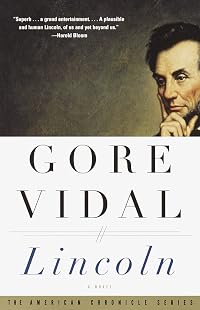
Fiction. Literature. Historical Fiction. HTML:Lincoln is the cornerstone of Gore Vidal's fictional American chronicle, which includes Burr, 1876, Washington, D.C., Empire, and Hollywood. It opens early on a frozen winter morning in 1861, when President-elect Abraham Lincoln slips into Washington, flanked by two bodyguards. The future president is in disguise, for there is talk of a plot to murder him. During the next four years there will be numerous plots to murder this man who has sworn to show more unite a disintegrating nation. Isolated in a ramshackle White House in the center of a proslavery city, Lincoln presides over a fragmenting government as Lee's armies beat at the gates. In this profoundly moving novel, a work of epic proportions and intense human sympathy, Lincoln is observed by his loved ones and his rivals. The cast of characters is almost Dickensian: politicians, generals, White House aides, newspapermen, Northern and Southern conspirators, amiably evil bankers, and a wife slowly going mad. Vidal's portrait of the president is at once intimateand monumental, stark and complex, drawn with the wit, grace, and authority of one of the great historical novelists.
With a new Introduction by the author. show less
Tags
Recommendations




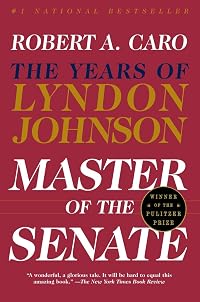
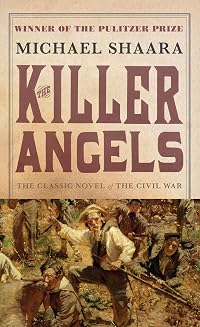


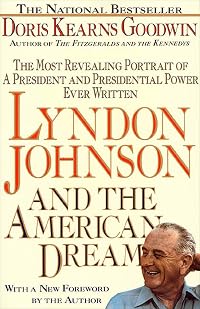
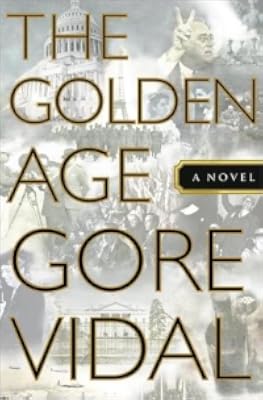








Member Recommendations

Member Reviews
In this rather massive tome, Vidal successfully gives us the feeling of being in Lincoln’s White House, surrounded by his “team of rivals” and confronted with the South seceding. He is strongest when he highlights the menagerie of people from the era, ranging from the better known, like the members of Lincoln’s cabinet, the ambitious Wiliam Seward and Salmon Chase, the timid general George McClellan, or the radical Republicans in congress like Thaddeus Stevens, but also in more obscure figures in Washington D.C. or the army at the time. He clearly did a lot of research here, and one certainly gets the sense for the time and place.
It’s far from a complete list, but random things which stood out for me included Lincoln’s use show more of the “blue mass” (upwards of 33% mercury) for severe constipation, and President’s Park with its unfinished Washington Monument being the site of the daily slaughter of cattle and pigs, which combined with the odor of a stagnant canal, led to overpowering odor. We also get a nuanced portrayal of Mary Todd Lincoln, who was a progressive voice in a slave-holding, secessionist family, yet with the fatal flaw of lavish spending, and having seances to speak to her dead son Willie, following his devastating death.
There are various details of the war of course, most of which I believe will be known to those who’ve studied the period, but Vidal does a reasonably good job at bringing them to life. The terrible nearness of the conflict is striking, a couple of times when Washington D.C. is vulnerable to an attack (which really makes one wonder ‘what if’), and when through binoculars Lincoln can see the large Confederate flag hanging at an inn in Alexandria, Virginia, the one that 24-year-old Elmer Ellsworth would die taking down, the first Union officer to die in the war. We also get quite a taste for the supreme difficulty Salmon Chase faced financing the war effort at a time when there was no income tax, in which he established a national banking system, issued paper currency, and sold war bonds to wealthy investors.
The main reason for not liking the book as much as I did when I started reading it, soaking up all of the history as I went, was that unfortunately Vidal repeats some of the falsehoods propagated by Lost Cause historians. It’s like he got lost in the details and missed the critical main points, or that he was so intent on not producing hagiography that he swung the pendulum too far in the other direction. Or, perhaps it’s because he grew up in the south, as he mentions in the preface.
The main sins of the book relate to what Vidal writes about the Constitutionality of secession, the reason for the war, the view of Lincoln as a dictator (and one operating without a higher moral cause), and the completely unexamined elephant in the room, the opinions and life in the South at the time.
On the Constitutionality of secession, Vidal goes from this exchange early in the book:
“But the Southern States regard the organization of the Union as a more casual affair. As they entered it of their own free will, so that can leave it.”
“But no provision was ever made in the Constitution for their leaving it.”
“They say that this right is implicit.”
“Nothing so astounding and fundamental would not be spelled out in the Constitution.”
To this load of crap at the end of the book:
“You see, the Southern states had every Constitutional right to go out of the Union. But Lincoln said, no. Lincoln said, this Union can never be broken.”
Vidal fails to mention that secession was illegal per the Constitution, for the clause that allowed it in the earlier Articles of Confederation had been removed, and as Lincoln put it, because no government provides for its own dissolution. He does not mention that Southern states agreed that secession was not a right in 1814, when New Englanders talked about doing so because of the War of 1812, or that Andrew Jackson opposed South Carolina’s threatened secession in 1832. He presents a view that it is Lincoln and Lincoln alone who has come up with this view, that everyone else would have let the South go.
Related to this, through a conversation between John Hay and newspaper editor Charles Eames, Vidal also regurgitates the Lost Cause falsehood about the reason for war. He has Hay aimlessly wondering what the war was about, that it was “like the fever; it came for no reason and left for no reason.” Eames then puts the war on Lincoln to preserve the Union, that only after the fighting did he “shift over to the slavery side,” and that the South was just “fighting for independence.” While it’s true that Lincoln’s motivation was to preserve the Union, what’s ridiculous in this dialogue is that it fails to mention that the South seceded for no other reason that slavery, which Southerners fully realized at the time, as evidenced in a myriad of their founding documents and articles from their leaders.
A page later he mentions a mulatto waiter “as loyal to the Confederacy as his employer,” and then a chapter later writes this: “Like most natives of Washington, David had been amazed by the Union soldiers’ hatred of all Negroes. By and large, Southerners got on well with them. After all, they grew up with their niggers; and they liked – even loved – the ones who kept their place. … After all, wasn’t that what the war was supposed to be about? How the institution of slavery gave the South an advantage over the North’s so-called free, if ill-paid, labor.”
Good grief. And this snippet may be the only place in the book where Southern life is mentioned at all. While there are references to Lincoln’s often contradictory views as he tried to navigate a moderate position within the progressive party of the period, there is never a single mention of the absolutely vile viewpoints of the South and how that mattered to what was going on. Instead we get a far from flattering view of the radical Republicans in Congress, men who were true heroes to the country in pushing progress before and after the war.
Vidal closes part two with William Seward mouthing the Southern viewpoint, that Lincoln had made himself into an “absolute dictator without ever letting anyone suspect that he was anything more than a joking, timid backwoods lawyer.” Later while Lincoln and Seward discuss the phrasing “government of the people, by the people, and for the people,” he has Seward wondering what “of the people” meant when it’s obviously a reference to not having a king, and then has Lincoln murmur that a “race of eagles,” e.g. an elite group, an alpha – like himself, like Bismarck – could suffice. Nothing could be farther from Lincoln’s views or the spirits of his writings.
Along these lines, Vidal overstates Lincoln’s suspension of habeas corpus as evidence of his wielding dictatorial power. The Constitution explicitly provides that “in cases of rebellion” that it may be suspended, a bar the secession clearly met, yet you’d never know it from the way Lincoln and his cabinet members talk about it. The Lincoln presented here is upholding the Union for the Union’s sake, damn the Constitution, and out of his own aggressive statesmanship, not because of his fidelity to its having a higher moral purpose, its dedication to the proposition that all men are created equal. Conveniently Vidal does not go into any depth on Lincoln’s efforts after the war to get the 13th Amendment passed.
In trying to build this into a type of Shakespearean tragedy, Vidal begins swaying more into things he imagines or wishes were true, vs. actual history. There are assassination attempts on Lincoln as he rides his horse at night, resulting in a bullet hole through his top hat not once but twice. He implies that Lincoln’s real grandfather was the slavery advocate John C. Calhoun, which was shaky at the time, and which has been refuted by DNA testing. It leads to a terrible final chapter that includes the insane (and highly melodramatic) view that Lincoln had “in some mysterious fashion, willed his own murder as a form of atonement for the great and terrible thing that he had done.” Good lord, this was perhaps the worst ending to a book I’ve ever read, let alone a historical drama.
Perhaps there is nothing more damning than the exchange between Herbert Mitgang and Vidal. Mitgang commented that Vidal had accepted the rather outrageous revisionist belief that "Lincoln really wanted the Civil War, with its 600,000 casualties, in order to eclipse the Founding Fathers and insure his own place in the pantheon of great presidents." In response to his, Vidal wrote, "Yes, that is pretty much what I came to believe."
If you’re interested in reading about Lincoln and want historical accuracy, I’d suggest Doris Kearn’s Goodwin’s Team of Rivals instead. If you’d like something poetic, but which captures the humanism of Lincoln far better than what Vidal did here, I’d recommend George Saunders’ Lincoln in the Bardo. While the details contained within Vidal’s writing are seductive, his overall conclusions and messages are insidious, and dangerously wrong. show less
It’s far from a complete list, but random things which stood out for me included Lincoln’s use show more of the “blue mass” (upwards of 33% mercury) for severe constipation, and President’s Park with its unfinished Washington Monument being the site of the daily slaughter of cattle and pigs, which combined with the odor of a stagnant canal, led to overpowering odor. We also get a nuanced portrayal of Mary Todd Lincoln, who was a progressive voice in a slave-holding, secessionist family, yet with the fatal flaw of lavish spending, and having seances to speak to her dead son Willie, following his devastating death.
There are various details of the war of course, most of which I believe will be known to those who’ve studied the period, but Vidal does a reasonably good job at bringing them to life. The terrible nearness of the conflict is striking, a couple of times when Washington D.C. is vulnerable to an attack (which really makes one wonder ‘what if’), and when through binoculars Lincoln can see the large Confederate flag hanging at an inn in Alexandria, Virginia, the one that 24-year-old Elmer Ellsworth would die taking down, the first Union officer to die in the war. We also get quite a taste for the supreme difficulty Salmon Chase faced financing the war effort at a time when there was no income tax, in which he established a national banking system, issued paper currency, and sold war bonds to wealthy investors.
The main reason for not liking the book as much as I did when I started reading it, soaking up all of the history as I went, was that unfortunately Vidal repeats some of the falsehoods propagated by Lost Cause historians. It’s like he got lost in the details and missed the critical main points, or that he was so intent on not producing hagiography that he swung the pendulum too far in the other direction. Or, perhaps it’s because he grew up in the south, as he mentions in the preface.
The main sins of the book relate to what Vidal writes about the Constitutionality of secession, the reason for the war, the view of Lincoln as a dictator (and one operating without a higher moral cause), and the completely unexamined elephant in the room, the opinions and life in the South at the time.
On the Constitutionality of secession, Vidal goes from this exchange early in the book:
“But the Southern States regard the organization of the Union as a more casual affair. As they entered it of their own free will, so that can leave it.”
“But no provision was ever made in the Constitution for their leaving it.”
“They say that this right is implicit.”
“Nothing so astounding and fundamental would not be spelled out in the Constitution.”
To this load of crap at the end of the book:
“You see, the Southern states had every Constitutional right to go out of the Union. But Lincoln said, no. Lincoln said, this Union can never be broken.”
Vidal fails to mention that secession was illegal per the Constitution, for the clause that allowed it in the earlier Articles of Confederation had been removed, and as Lincoln put it, because no government provides for its own dissolution. He does not mention that Southern states agreed that secession was not a right in 1814, when New Englanders talked about doing so because of the War of 1812, or that Andrew Jackson opposed South Carolina’s threatened secession in 1832. He presents a view that it is Lincoln and Lincoln alone who has come up with this view, that everyone else would have let the South go.
Related to this, through a conversation between John Hay and newspaper editor Charles Eames, Vidal also regurgitates the Lost Cause falsehood about the reason for war. He has Hay aimlessly wondering what the war was about, that it was “like the fever; it came for no reason and left for no reason.” Eames then puts the war on Lincoln to preserve the Union, that only after the fighting did he “shift over to the slavery side,” and that the South was just “fighting for independence.” While it’s true that Lincoln’s motivation was to preserve the Union, what’s ridiculous in this dialogue is that it fails to mention that the South seceded for no other reason that slavery, which Southerners fully realized at the time, as evidenced in a myriad of their founding documents and articles from their leaders.
A page later he mentions a mulatto waiter “as loyal to the Confederacy as his employer,” and then a chapter later writes this: “Like most natives of Washington, David had been amazed by the Union soldiers’ hatred of all Negroes. By and large, Southerners got on well with them. After all, they grew up with their niggers; and they liked – even loved – the ones who kept their place. … After all, wasn’t that what the war was supposed to be about? How the institution of slavery gave the South an advantage over the North’s so-called free, if ill-paid, labor.”
Good grief. And this snippet may be the only place in the book where Southern life is mentioned at all. While there are references to Lincoln’s often contradictory views as he tried to navigate a moderate position within the progressive party of the period, there is never a single mention of the absolutely vile viewpoints of the South and how that mattered to what was going on. Instead we get a far from flattering view of the radical Republicans in Congress, men who were true heroes to the country in pushing progress before and after the war.
Vidal closes part two with William Seward mouthing the Southern viewpoint, that Lincoln had made himself into an “absolute dictator without ever letting anyone suspect that he was anything more than a joking, timid backwoods lawyer.” Later while Lincoln and Seward discuss the phrasing “government of the people, by the people, and for the people,” he has Seward wondering what “of the people” meant when it’s obviously a reference to not having a king, and then has Lincoln murmur that a “race of eagles,” e.g. an elite group, an alpha – like himself, like Bismarck – could suffice. Nothing could be farther from Lincoln’s views or the spirits of his writings.
Along these lines, Vidal overstates Lincoln’s suspension of habeas corpus as evidence of his wielding dictatorial power. The Constitution explicitly provides that “in cases of rebellion” that it may be suspended, a bar the secession clearly met, yet you’d never know it from the way Lincoln and his cabinet members talk about it. The Lincoln presented here is upholding the Union for the Union’s sake, damn the Constitution, and out of his own aggressive statesmanship, not because of his fidelity to its having a higher moral purpose, its dedication to the proposition that all men are created equal. Conveniently Vidal does not go into any depth on Lincoln’s efforts after the war to get the 13th Amendment passed.
In trying to build this into a type of Shakespearean tragedy, Vidal begins swaying more into things he imagines or wishes were true, vs. actual history. There are assassination attempts on Lincoln as he rides his horse at night, resulting in a bullet hole through his top hat not once but twice. He implies that Lincoln’s real grandfather was the slavery advocate John C. Calhoun, which was shaky at the time, and which has been refuted by DNA testing. It leads to a terrible final chapter that includes the insane (and highly melodramatic) view that Lincoln had “in some mysterious fashion, willed his own murder as a form of atonement for the great and terrible thing that he had done.” Good lord, this was perhaps the worst ending to a book I’ve ever read, let alone a historical drama.
Perhaps there is nothing more damning than the exchange between Herbert Mitgang and Vidal. Mitgang commented that Vidal had accepted the rather outrageous revisionist belief that "Lincoln really wanted the Civil War, with its 600,000 casualties, in order to eclipse the Founding Fathers and insure his own place in the pantheon of great presidents." In response to his, Vidal wrote, "Yes, that is pretty much what I came to believe."
If you’re interested in reading about Lincoln and want historical accuracy, I’d suggest Doris Kearn’s Goodwin’s Team of Rivals instead. If you’d like something poetic, but which captures the humanism of Lincoln far better than what Vidal did here, I’d recommend George Saunders’ Lincoln in the Bardo. While the details contained within Vidal’s writing are seductive, his overall conclusions and messages are insidious, and dangerously wrong. show less
Like Burr, this is a clever, perceptive and well-argued bit of political historical fiction. The complex, evolving portrait of Lincoln as seen through the eyes of a selection of the people around him is fascinating. We are steered through the tortuous political and military history of the American civil war without feeling either baffled or patronised. I don't know enough about the subject to comment on Vidal's accuracy, but his account certainly comes over as coherent and confident.
Unfortunately, also as in Burr, Vidal's failing seems to be an inability to construct interesting minor characters. Since it is the minor characters through whose eyes we follow the story, to maintain our interest we need them to come alive and be more than show more stereotypes, something that rarely or never happens: moreover, a substantial proportion of this already overlong book is taken up with tedious and repetitive transitional passages re-introducing the minor characters whenever the viewpoint switches.
I wonder how much this apparent weakness is an inherent problem of the faceted approach to historical fiction? Maybe it is inevitable in a book like this that all the interest and complexity is sucked into the central character, and the viewpoint characters suffer accordingly. The more so since Vidal is clearly someone who is more interested in explaining the historical and political process than in entering imaginatively into the minds of the people involved. Fiction is a means for him, not an end in itself. He set himself a very difficult task here, writing what is in effect an American War and Peace: obviously something had to give somewhere.
This has obviously been a very influential book in terms of the way American presidents are represented in fiction. Amongst other echoes, I was struck by the way so much of Vidal's technique here was taken over by the writers of the recent television drama The West Wing (whether consciously or unconsciously). But multiple-POV is a more natural convention to work with on the screen than on paper, so it probably wouldn't be fair to say that The West Wing did a better job of making minor characters interesting. show less
Unfortunately, also as in Burr, Vidal's failing seems to be an inability to construct interesting minor characters. Since it is the minor characters through whose eyes we follow the story, to maintain our interest we need them to come alive and be more than show more stereotypes, something that rarely or never happens: moreover, a substantial proportion of this already overlong book is taken up with tedious and repetitive transitional passages re-introducing the minor characters whenever the viewpoint switches.
I wonder how much this apparent weakness is an inherent problem of the faceted approach to historical fiction? Maybe it is inevitable in a book like this that all the interest and complexity is sucked into the central character, and the viewpoint characters suffer accordingly. The more so since Vidal is clearly someone who is more interested in explaining the historical and political process than in entering imaginatively into the minds of the people involved. Fiction is a means for him, not an end in itself. He set himself a very difficult task here, writing what is in effect an American War and Peace: obviously something had to give somewhere.
This has obviously been a very influential book in terms of the way American presidents are represented in fiction. Amongst other echoes, I was struck by the way so much of Vidal's technique here was taken over by the writers of the recent television drama The West Wing (whether consciously or unconsciously). But multiple-POV is a more natural convention to work with on the screen than on paper, so it probably wouldn't be fair to say that The West Wing did a better job of making minor characters interesting. show less
Lincoln is our nation's savior and helped free an entire race of people from slavery. As such, he has risen to near-saint status. Most books by American historians - and even those takes like that in the British HG Well's A Short History of the World - essentially form a hagiography. Fortunately, our age has Gore Vidal's work of historical fiction, which places Lincoln as a politician and lawyer first. Lincoln, like all truly great politicians, was a realist and a pragmatist. He is not saint to Vidal, but cunning, wise, and shrewd.
Vidal captures Lincoln's spirit by frequently nicknaming him as the "Tycoon." Vidal captures Lincoln's racism (and the racism of others in that day) in portraying Lincoln's suggestion that slaves be sent to show more colonize another country. His rationale, however, proved true: The American South simply could not live with whites side-by-side with blacks.
American history's great unanswered question - what would have happened if Lincoln would have lived? - is briefly tackled at the end of this novel. The Radical Republicans in Congress would have been kept more at bay by the man who fulfilled their egalitarian dreams. Reconstruction would have gone easier. Perhaps Jim Crow laws would never have come about. Or perhaps this comprises more hagiography.
In truth, whites and blacks could not live side-by-side with each other in the rebellious south in 1865. It took a full century (and another American saint Dr. Martin Luther King) for this balance to be definitively reshaped. The fifty years since Dr. King reminds us that the American South's history may have been reshaped, but it cannot be erased. I suggest that Mr. Lincoln would not have been able to change this dynamic as much as one might hope. His present legacy as the best American President cannot be greater given history's unfolding. Vidal reminds us in his realistic take on Lincoln that Lincoln is a man - a rare man, but a man still. show less
Vidal captures Lincoln's spirit by frequently nicknaming him as the "Tycoon." Vidal captures Lincoln's racism (and the racism of others in that day) in portraying Lincoln's suggestion that slaves be sent to show more colonize another country. His rationale, however, proved true: The American South simply could not live with whites side-by-side with blacks.
American history's great unanswered question - what would have happened if Lincoln would have lived? - is briefly tackled at the end of this novel. The Radical Republicans in Congress would have been kept more at bay by the man who fulfilled their egalitarian dreams. Reconstruction would have gone easier. Perhaps Jim Crow laws would never have come about. Or perhaps this comprises more hagiography.
In truth, whites and blacks could not live side-by-side with each other in the rebellious south in 1865. It took a full century (and another American saint Dr. Martin Luther King) for this balance to be definitively reshaped. The fifty years since Dr. King reminds us that the American South's history may have been reshaped, but it cannot be erased. I suggest that Mr. Lincoln would not have been able to change this dynamic as much as one might hope. His present legacy as the best American President cannot be greater given history's unfolding. Vidal reminds us in his realistic take on Lincoln that Lincoln is a man - a rare man, but a man still. show less
A very weak book compared with Vidal's Burr, and I'm giving it generously 3***. Burr has a great narrative voice, with Aaron Burr's own unreliable narration embedded in Charlie Schuyler's unreliable narration. Although to a degree Lincoln is told from the point-of-view of the young John Hay (Lincoln's private secretary and future Secretary of State), the voice is an omniscient narration which doesn't match the voice of Burr.
Additionally, there's a tendency on Vidal's part to hop around from one episode to another, often without a great deal of narrative continuity. In Burr, Vidal was able to establish transitions based upon the style in Aaron Burr's own memoirs as presented by Charlie Schuyler, but this trick is unavailable to him in show more Lincoln given the omniscient voice.
One of the great treats, also, in Burr is the cattiness of Aaron Burr's own voice, which reminds me of Vidal's own cattiness. There's nothing equal to this amusement in Lincoln.
Altogether a rather pedestrian book. Not bad, but you'd probably be better off just getting a good Lincoln biography rather than this hodgepodge of biography and fiction. show less
Additionally, there's a tendency on Vidal's part to hop around from one episode to another, often without a great deal of narrative continuity. In Burr, Vidal was able to establish transitions based upon the style in Aaron Burr's own memoirs as presented by Charlie Schuyler, but this trick is unavailable to him in show more Lincoln given the omniscient voice.
One of the great treats, also, in Burr is the cattiness of Aaron Burr's own voice, which reminds me of Vidal's own cattiness. There's nothing equal to this amusement in Lincoln.
Altogether a rather pedestrian book. Not bad, but you'd probably be better off just getting a good Lincoln biography rather than this hodgepodge of biography and fiction. show less
For a book with this title, readers might rightly expect a book about The Civil War. And the war does play a central role, but it is not the primary focus. Many major events of the war scarcely get a few lines. Instead, Lincoln, the politician, is the focus. It is a book about Lincoln as a wily, creative, crafty politician who was led to decisions and habits of decision making by the exigencies of war. The book is historical, but like no history I’ve read on this subject. No doubt, the heightened appeal of the book is due largely to Gore Vidal as well, who is just a lovely, lovely writer. His characterizations and descriptions of Lincoln, Seward, Chase, and Stanton are so vivid. And the dialogue between these players is so well written.
(20) I am not sure why I haven't read Vidal before given my predilection for realistic historic fiction. This was a nice follow-up to 'Lincoln in the Bardo' and all my Civil War reading from years past. This was Lincoln's presidency from his inauguration on the eve of the Civil War until his assassination. It is predominantly narrated by John Hay who was his personal secretary. There were also parts narrated by David Herndon who is a young DC resident with Confederate sympathies who ultimately takes part in the assassination.
This novel is meaty and narrates the underbelly of Lincoln's decision-making and the political machinations he had to go through to avoid usurpation of his power. There were many plots to make him a puppet - of his show more ambitious Cabinet members, of Congress, even at times of his wife's shopoholic tendency. He is definitely NOT white-washed in this. Some blurbs suggested this book rattled and divided historians - I guess far from the image we have of him as a great emancipator - he was more about expediency and keeping the Union together and was decidedly not an abolitionist. Despite his mild manners, he usually got his way by being a brilliant politician and expert in human nature. His plan was to colonize Central America with the freed slaves and to reimburse Southern slave owners for the tribulations caused by the Emancipation Proclamation. And his suspension of habeas corpus is surely not expected work of the 'Honest Abe' the high school history books present. Nevertheless, his humanity and generosity of spirit shines through. He was indeed a fascinating man and to me the closest thing to a legend in our young country.
In terms of the writing - it was pretty dense but fairly engaging. There was a bit of an annoying habit of switching POV's without much warning - practically in the same paragraph and this was disarming and made me put the book down at times. Occasionally the details and names got a bit too much and I would lose track go who was who. But overall - a great historical fiction read and I will seek out more in this author's American Chronicle Series in the future. show less
This novel is meaty and narrates the underbelly of Lincoln's decision-making and the political machinations he had to go through to avoid usurpation of his power. There were many plots to make him a puppet - of his show more ambitious Cabinet members, of Congress, even at times of his wife's shopoholic tendency. He is definitely NOT white-washed in this. Some blurbs suggested this book rattled and divided historians - I guess far from the image we have of him as a great emancipator - he was more about expediency and keeping the Union together and was decidedly not an abolitionist. Despite his mild manners, he usually got his way by being a brilliant politician and expert in human nature. His plan was to colonize Central America with the freed slaves and to reimburse Southern slave owners for the tribulations caused by the Emancipation Proclamation. And his suspension of habeas corpus is surely not expected work of the 'Honest Abe' the high school history books present. Nevertheless, his humanity and generosity of spirit shines through. He was indeed a fascinating man and to me the closest thing to a legend in our young country.
In terms of the writing - it was pretty dense but fairly engaging. There was a bit of an annoying habit of switching POV's without much warning - practically in the same paragraph and this was disarming and made me put the book down at times. Occasionally the details and names got a bit too much and I would lose track go who was who. But overall - a great historical fiction read and I will seek out more in this author's American Chronicle Series in the future. show less
A flattering blurb on the cover from Harold Bloom and one inside from Joyce Carol Oates certainly underlines this is a serious book; it's also an engaging and entertaining one, one that portrays the personalities and political machinations during the Civil War. Lincoln isn't just a celebrated American president, one considered one of the greatest in our history, he's still polarizing and controversial on both sides of the political divide. He's accused of trampling on rights from that of states to leave the union to individual rights such as due process of law. Vidal doesn't gloss over any of that. He depicts the Lincoln administration's suspension of habeas corpus, shutting down of opposing newspapers, institution of the draft and fiat show more money and Lincoln's scheme to remove freed slaves to a foreign colony. Vidal, though, does put all that ugliness in the context of the desperate struggle to hold the country together. His Lincoln is cunning, ambitious, driven, obsessed with holding the union together no matter what the personal or national cost and a master politician.
The book's first part conveys just how precarious things were for Lincoln and the nation from the initial days of secession when he as President-elect had to sneak into Washington, a capitol surrounded on all sides by slave states on the brink of joining the conflict. The second part takes us from just after the first battle of Bull Run through Lincoln's attempts to find a general who'll energetically prosecute the war, the Emancipation Proclamation and Gettysburg. In the final Part Lincoln finds his general in Ulysses S. Grant and his destiny at Ford's Theater.
The story is told through various perspectives--though never Lincoln's. We mostly follow the perspectives of two cabinet level secretaries with presidential ambitions, the imperialist Seward and abolitionist Chase, and two young men with opposing loyalties, John Hay, one of Lincoln's personal secretaries, and David Herold, drawn into the conspiracy to assassinate Lincoln. I read this novel having recently read The Killer Angels, an excellent novelization of the Battle of Gettysburg. This made a wonderful compliment, giving me a view of the entire war centering upon Abraham Lincoln. Serious as the book is, it takes a satirical view at times of its characters (and a cynical view of politics), and one of the more humorous scenes is when Samuel Chase meets with job-seeking Walt Whitman. The book has an exuberance in the gossipy way it presents the various ambitious quirky personalities that keeps the story from being depressing despite the tragic events it treats, from national to personal. The picture of the troubled and troublesome First Lady Mary Todd Lincoln, unstable from the beginning and further unhinged by her son's death, is particularly vivid and poignant. The novel is a fascinating portrait of a complex man and his presidency. show less
The book's first part conveys just how precarious things were for Lincoln and the nation from the initial days of secession when he as President-elect had to sneak into Washington, a capitol surrounded on all sides by slave states on the brink of joining the conflict. The second part takes us from just after the first battle of Bull Run through Lincoln's attempts to find a general who'll energetically prosecute the war, the Emancipation Proclamation and Gettysburg. In the final Part Lincoln finds his general in Ulysses S. Grant and his destiny at Ford's Theater.
The story is told through various perspectives--though never Lincoln's. We mostly follow the perspectives of two cabinet level secretaries with presidential ambitions, the imperialist Seward and abolitionist Chase, and two young men with opposing loyalties, John Hay, one of Lincoln's personal secretaries, and David Herold, drawn into the conspiracy to assassinate Lincoln. I read this novel having recently read The Killer Angels, an excellent novelization of the Battle of Gettysburg. This made a wonderful compliment, giving me a view of the entire war centering upon Abraham Lincoln. Serious as the book is, it takes a satirical view at times of its characters (and a cynical view of politics), and one of the more humorous scenes is when Samuel Chase meets with job-seeking Walt Whitman. The book has an exuberance in the gossipy way it presents the various ambitious quirky personalities that keeps the story from being depressing despite the tragic events it treats, from national to personal. The picture of the troubled and troublesome First Lady Mary Todd Lincoln, unstable from the beginning and further unhinged by her son's death, is particularly vivid and poignant. The novel is a fascinating portrait of a complex man and his presidency. show less
Members
- Recently Added By
Published Reviews
ThingScore 25
As Vidal intended it to be, the work is literal, solid, and reverent. It is somber, for its subject is somber. Like Vidal himself, observers at the time saw Lincoln's obsession with funny stories as a homely screen behind which the sphinx sheltered his true face from the savageries of the time, savageries which were strangely organic to him and which grew as it were from his person. But the show more assiduity of Lincoln has a stodginess to it as well, as if the awesome subject has defeated all whimsy. Again, if Burr and 1876 had not prepared the reader, it would be hard to associate this novel with the dancing boy of American letters. show less
added by SnootyBaronet
'Rebirth to his nation' is probably, knowing Mr Vidal's cinematic background, a deliberate device to evoke the 14th Amendment, the carpetbaggers and the Klu Klux Klan. The interesting, or Vidalian, things are often on the margin in this novel, and all the rest is history sedulously followed and minimally dramatized. It is a novel not of great battles but of telegrams about them arriving at the show more White House...
Lincoln belongs to that popular and very American pseudo-fictional genre which Mr Vidal, concentrating particularly on Mr Wouk, condescendingly accepts as wholesome if simplistic teaching but condemns for pretending to be a kind of literature. Irving Stone has written on Michelangelo, Freud and Darwin in much the same way ('Sighing, he lighted a fresh cigar, and wrote his title: The Interpretation of Dreams'). James A. Michener has made a vast fortune out of blockbusting history tomes, well researched and indifferently written, which are presented as novels. There is something in the puritanical American mind which is scared of the imaginative writer but not of the pedantic one who seems to humanize facts without committing himself to the inventions which are really lies. show less
Lincoln belongs to that popular and very American pseudo-fictional genre which Mr Vidal, concentrating particularly on Mr Wouk, condescendingly accepts as wholesome if simplistic teaching but condemns for pretending to be a kind of literature. Irving Stone has written on Michelangelo, Freud and Darwin in much the same way ('Sighing, he lighted a fresh cigar, and wrote his title: The Interpretation of Dreams'). James A. Michener has made a vast fortune out of blockbusting history tomes, well researched and indifferently written, which are presented as novels. There is something in the puritanical American mind which is scared of the imaginative writer but not of the pedantic one who seems to humanize facts without committing himself to the inventions which are really lies. show less
added by SnootyBaronet
Lists

Best Historical Fiction
620 works; 262 members

Best Contemporary Literary Fiction (Around the Last 30 Years)
400 works; 124 members

Best Political Fiction
92 works; 12 members

Recommend the 20 best books you've read in the last five years
2,168 works; 603 members

Books Read in 2023
5,638 works; 147 members

real people in fiction circumstances
74 works; 10 members

in pursuit of power
17 works; 2 members

Blue Pyramid 1,276 Best Books of All Time
1,248 works; 32 members

Harold Bloom - The Western Canon: D. The Chaotic Age
833 works; 24 members

The Torchlight List
95 works; 1 member
Talk Discussions
Past Discussions
Dreams of President Abe Lincoln in Dreamers (February 2017)
Author Information

169+ Works 31,323 Members
Gore Vidal was born Eugene Luther Gore Vidal Jr. on October 3, 1925 at the U.S. Military Academy at West Point, New York. He did not go to college but attended St. Albans School in Washington and graduated from Phillips Exeter Academy in New Hampshire in 1943. He enlisted in the Army, where he became first mate on a freight supply ship in the show more Aleutian Islands. His first novel, Williwaw, was published in 1946 when he was twenty-one years old and working as an associate editor at the publishing company E. P. Dutton. The City and the Pillar was about a handsome, athletic young Virginia man who gradually discovers that he is homosexual, which caused controversy in the publishing world. The New York Times refused to advertise the novel and gave a negative review of it and future novels. He had such trouble getting subsequent novels reviewed that he turned to writing mysteries under the pseudonym Edgar Box and then gave up novel-writing altogether for a time. Once he moved to Hollywood, he wrote television dramas, screenplays, and plays. His films included I Accuse, Suddenly Last Summer with Tennessee Williams, Is Paris Burning? with Francis Ford Coppola, and Ben-Hur. His most successful play was The Best Man, which he also adapted into a film. He started writing novels again in the 1960's including Julian, Washington, D.C., Myra Breckenridge, Burr, Myron, 1876, Lincoln, Hollywood, Live From Golgotha: The Gospel According to Gore Vidal, and The Golden Age. He also published two collections of essays entitled The Second American Revolution, which won the National Book Critics Circle Award for criticism in 1982 and United States: Essays 1952-1992. In 2009, he received the National Book Awards lifetime achievement award. He died from complications of pneumonia on July 31, 2012 at the age of 86. (Bowker Author Biography) show less
Awards and Honors
Series

Work Relationships
Common Knowledge
- Canonical title
- Lincoln
- Original publication date
- 1984-05-12
- People/Characters
- Abraham Lincoln; Mary Todd Lincoln; William Henry Seward; Salmon P. Chase; John Hay; David Herold
- Important places
- Washington, D.C., USA
- Important events
- American Civil War (1861 | 1865); Assassination of Abraham Lincoln (1865-04)
- Related movies
- Lincoln (1988 | IMDb)
- First words
- Elihu B. Washburne opened his gold watch.
- Quotations
- In politics, as in love, opposites attract, and the misunderstandings that ensue tend to be as bitter and, as in love, as equally terminal.
It is my task always to know, particularly when I don’t. - Last words
- (Click to show. Warning: May contain spoilers.)"It will be interesting to see how Herr Bismarck ends his career," said Hay, who was now more than ever convinced that Lincoln, in some mysterious fashion, had willed his own murder as a form of atonement for the great and terible thing that he had done by giving so bloody and absolute a rebirth to his nation.
- Original language
- English
- Disambiguation notice
- ISBN 0375708766 is for the book; not the video.
Classifications
Statistics
- Members
- 2,886
- Popularity
- 6,283
- Reviews
- 45
- Rating
- (4.06)
- Languages
- 6 — Bulgarian, English, French, German, Korean, Spanish
- Media
- Paper, Audiobook, Ebook
- ISBNs
- 39
- UPCs
- 2
- ASINs
- 31