On This Page
Description
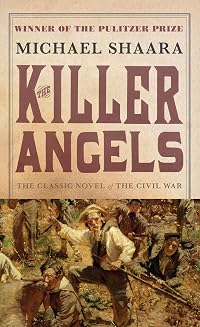
This Pulitzer Prize-winning classic is the finest historical dramatization of the Civil War. The book centers around the key battle of the war: the battle of Gettysburg. In July of 1863, the Confederate Army, led by General Robert E. Lee, invaded the North, in order to deal a fatal blow to the Union Army. Lee's right hand man was the loyal General Longstreet. Opposing them was General George Meade, an unknown quantity at best. In the four most bloody and courageous days of the Civil War, show more their armies fought, one side for freedom and the other side for tradition. As the bodies piled up on the gory field, so did the dreams and hopes of the dead. Their futures were the ultimate casualties of war. show lessTags
Recommendations

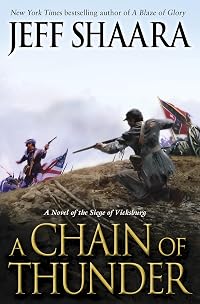
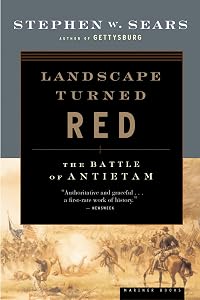
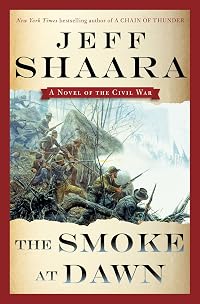

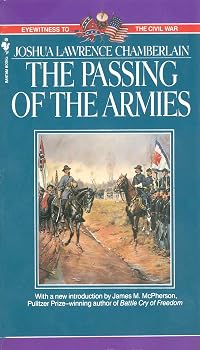


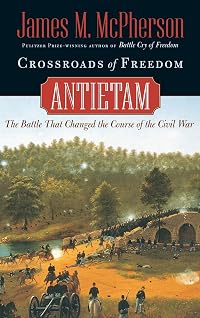


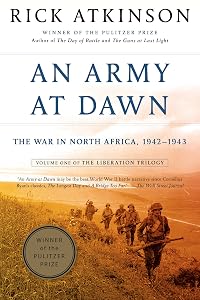
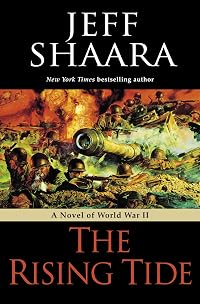
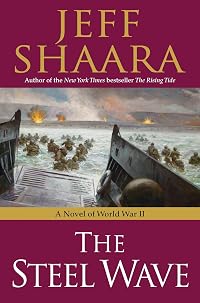


Member Recommendations
5hrdrive Narrative historical account of the entire war.
60
GCPLreader moving fictional account of the soldiers on the field after the battle
30

by mcenroeucsb
Member Reviews
If only most books and movies could be this well paced. An incredible story about the attack at Gettysburg, going through the different people in command, their ruminations about war, war strategy, what they're fighting for, their personal lifes; what are they leaving behind or expect to come back to. The quiet moments between the battles are as interesting and entertaining as the action set pieces. It is a remakable thing. And as in every war story nobody really ends up winning, if you know what I mean.
But he thought of Aristotle: pity and terror. So this is tragedy. Yes. He nodded. In the presence of real tragedy you feel neither pain nor joy nor hatred, only a sense of enormous space and time suspended, the great doors open to black show more eternity, the rising across the terrible field of that last enormous , unanswerable question. show less
But he thought of Aristotle: pity and terror. So this is tragedy. Yes. He nodded. In the presence of real tragedy you feel neither pain nor joy nor hatred, only a sense of enormous space and time suspended, the great doors open to black show more eternity, the rising across the terrible field of that last enormous , unanswerable question. show less
This Pulitzer Prize-winning novel is THE novel of the American Civil war and the battle of Gettysburg. It is meticulously researched, and there are no fictional storylines or fictional characters, other than a few NCOs and enlisted men in small supporting roles. (Shaara based the thoughts and conversations of the officers who are the primary characters primarily on their letters and diaries, and other than for officers, such relics are hard to come by.) The chapters are written from the perspective of various officers from both sides, including Robert E. Lee, but the primary perspectives are Joshua L. Chamberlain for the Union, and James Longstreet for the Confederacy. Chamberlain was not a professional soldier, but a Maine native, a show more college professor from Bowdoin College who ended up as a Colonel leading the 20th Maine infantry regiment. Longstreet was a professional soldier, who was forced to lead an offensive effort at Gettysburg designed by Lee that he felt was doomed to failure due to the overwhelming numbers and superior position of the Union forces. He did indeed prove correct.
The contrast of the two differing perspectives is excellently done. Chamberlain was an intellectual, viewing the situation philosophically and ethically, yet rose to the occasion to become a leader of men and a Medal of Honor winner at Little Round Top. The title actually references the title of a speech Chamberlain gave in his school days: "Man, The Killer Angel".
Particularly poignant to me was the dilemma of the professional soldiers on the Confederate side. With the exception of J. E. B. Stuart and George Pickett, they are shown as conflicted men who had sworn allegiance to the U.S. when serving in the regular Army and who had no particular love for the Southern "Cause" that led to secession, but felt they could not bear arms against the people of their home states, and could not leave them undefended when under a state of war. They were in a no-win position. Longstreet in particular believed that the war was unwinnable for the South, and that taking a defensive position was their best option, which did NOT make his popular among his fellow Southerners who did not serve in the Army.
It's a great book, and very readable for a story that deals solely with a battle that spread out over four days. It does not glorify warm, but does make the reader understand how some people can rise to meet a horrific situation with a certain greatness. show less
The contrast of the two differing perspectives is excellently done. Chamberlain was an intellectual, viewing the situation philosophically and ethically, yet rose to the occasion to become a leader of men and a Medal of Honor winner at Little Round Top. The title actually references the title of a speech Chamberlain gave in his school days: "Man, The Killer Angel".
Particularly poignant to me was the dilemma of the professional soldiers on the Confederate side. With the exception of J. E. B. Stuart and George Pickett, they are shown as conflicted men who had sworn allegiance to the U.S. when serving in the regular Army and who had no particular love for the Southern "Cause" that led to secession, but felt they could not bear arms against the people of their home states, and could not leave them undefended when under a state of war. They were in a no-win position. Longstreet in particular believed that the war was unwinnable for the South, and that taking a defensive position was their best option, which did NOT make his popular among his fellow Southerners who did not serve in the Army.
It's a great book, and very readable for a story that deals solely with a battle that spread out over four days. It does not glorify warm, but does make the reader understand how some people can rise to meet a horrific situation with a certain greatness. show less
Normally when I hear a book won a major literary prize I run screaming in the opposite direction, but the topic has always interested me and the way the author dealt with the subject had me turning the pages like a novel.
Being an Aussie, the American Civil war was just something I was taught at school, it had no real relevance. Undoubtedly, US citizens have a totally different perspective from their much closer connection. So I understand if for some of you the book is overload of stuff you've been exposed to all your life.
Killer Angels by Michael Shaara is not a new book, in fact it won the Pulitzer Prize for fiction back in 1975. It's based on the Battle of Gettysburg and looks at the action through the eyes of the significant show more characters of the different stages of the short but bloody battle.
In presenting history like this, the reader is very dependant on trusting the author to have done his research and is not cheating by switching a character's motivations or aims to fit the "story". In fact at times, I was imagining how Steven Spielberg would have filmed this. Would he have "killed off" certain characters just to make the drama more poignant?
It did read more like a novel. I couldn't wait to find out whether both Chamberlain brothers survived or whether Lee would ever admit his tactics were wrong.
If we can make the assumption that the author just "gives us the facts Ma'am", then after reading "Killer Angels" you definitely get a better insight not only into why one side lost and one side won, or why so many men were killed in senseless attacks, but it also tells you something about the stubbornness, courage and faith men can demonstrate.
To me the whole scenario in which the battle was fought seemed more like two macho guys arm wrestling in a pub to see who would take the pretty girl home. But maybe that's the whole point. The battle was senseless in some ways.
This wasn't for control of a strategic position or to capture a town and its produce, this was a war of attrition to see who could continue to field more men into the fight as carnage whittled away the numbers. Almost as if there was an underlying vote involved, but in this case, the winner was the one who could put the most bodies on the line.
The characters of the men involved shine through and in an epilogue we find out what happened to them afterwards. Having got to know them from the excellent way Michael Shaara got inside their heads to explain why they acted the way they did, we can extrapolate out how the rest of their life would have gone from the few facts included.
If more history was told like this, we'd all be clamoring to learn it at school. show less
Being an Aussie, the American Civil war was just something I was taught at school, it had no real relevance. Undoubtedly, US citizens have a totally different perspective from their much closer connection. So I understand if for some of you the book is overload of stuff you've been exposed to all your life.
Killer Angels by Michael Shaara is not a new book, in fact it won the Pulitzer Prize for fiction back in 1975. It's based on the Battle of Gettysburg and looks at the action through the eyes of the significant show more characters of the different stages of the short but bloody battle.
In presenting history like this, the reader is very dependant on trusting the author to have done his research and is not cheating by switching a character's motivations or aims to fit the "story". In fact at times, I was imagining how Steven Spielberg would have filmed this. Would he have "killed off" certain characters just to make the drama more poignant?
It did read more like a novel. I couldn't wait to find out whether both Chamberlain brothers survived or whether Lee would ever admit his tactics were wrong.
If we can make the assumption that the author just "gives us the facts Ma'am", then after reading "Killer Angels" you definitely get a better insight not only into why one side lost and one side won, or why so many men were killed in senseless attacks, but it also tells you something about the stubbornness, courage and faith men can demonstrate.
To me the whole scenario in which the battle was fought seemed more like two macho guys arm wrestling in a pub to see who would take the pretty girl home. But maybe that's the whole point. The battle was senseless in some ways.
This wasn't for control of a strategic position or to capture a town and its produce, this was a war of attrition to see who could continue to field more men into the fight as carnage whittled away the numbers. Almost as if there was an underlying vote involved, but in this case, the winner was the one who could put the most bodies on the line.
The characters of the men involved shine through and in an epilogue we find out what happened to them afterwards. Having got to know them from the excellent way Michael Shaara got inside their heads to explain why they acted the way they did, we can extrapolate out how the rest of their life would have gone from the few facts included.
If more history was told like this, we'd all be clamoring to learn it at school. show less
Michael Shaara’s son, Jeff, says that his father had a hard time convincing a publisher that a novel about the Civil War would sell to a Vietnam-wearied public. Shaara was shocked when The Killer Angels won the 1975 Pulitzer Prize without a major marketing campaign. Ken Burns says reading it in 1984 inspired him to do his Civil War documentary series (1990). Indeed, the book did not find its largest audience until it served as the basis for the more than four-hour movie Gettysburg in 1988.
If you look up The Battle of Gettysburg on Wikipedia, you find maps and links to photographs of officers standing rigidly in their dress uniforms, their faces usually concealed by the full beards of the time. The Killer Angels brings those pictures show more to life, letting us eavesdrop on their imagined inner lives as they plan, politic, and improvise their way through what they know is the defining event in their lives and American history, North and South.
We experience most of the drama through the eyes of Confederate General James Longstreet and Joshua Lawrence Chamberlain, a Union Colonel who won the Medal of Honor for his actions at Little Round Top. Chamberlain was a professor of rhetoric before he took command of a volunteer unit from Maine. He is our everyman hero, who is unaware of his own competence and heroism. He is by far the most fully developed of Shaara’s characters.
Shaara portrays Longstreet as a professional soldier who gave Lee good tactical advice he would not or could not take. He agrees to lead a doomed assault from a sense of duty. His encounter with Lee after the failure of Pickett’s Charge is one of the most moving scenes in the novel.
History is always a blend of imagination and documentation. Shaara makes us feel the value of historical imagination. show less
If you look up The Battle of Gettysburg on Wikipedia, you find maps and links to photographs of officers standing rigidly in their dress uniforms, their faces usually concealed by the full beards of the time. The Killer Angels brings those pictures show more to life, letting us eavesdrop on their imagined inner lives as they plan, politic, and improvise their way through what they know is the defining event in their lives and American history, North and South.
We experience most of the drama through the eyes of Confederate General James Longstreet and Joshua Lawrence Chamberlain, a Union Colonel who won the Medal of Honor for his actions at Little Round Top. Chamberlain was a professor of rhetoric before he took command of a volunteer unit from Maine. He is our everyman hero, who is unaware of his own competence and heroism. He is by far the most fully developed of Shaara’s characters.
Shaara portrays Longstreet as a professional soldier who gave Lee good tactical advice he would not or could not take. He agrees to lead a doomed assault from a sense of duty. His encounter with Lee after the failure of Pickett’s Charge is one of the most moving scenes in the novel.
History is always a blend of imagination and documentation. Shaara makes us feel the value of historical imagination. show less
This book is the second book in a trilogy about the American Civil War. It is the only one of the three written by Michael Shaara. The other two were written later by the author’s son, Jeff. I mention this to point out that The Killer Angels can easily be read as a standalone.
It is not a “history” of the Battle of Gettysburg (1863). Of course, being historical fiction, it does not need to be, but the book summary indicates it is a balanced view. It is not. It mostly contains the southern perspective, as Shaara’s main sources include Longstreet’s memoirs and Freemantle’s book.
For a book about Gettysburg, there is remarkably little about the actual battle – only Little Round Top and Pickett’s Charge are covered in any show more detail. And it covers only a small amount of strategy. It appears to be mostly a character study of two men, Confederate General James Longstreet and Union Colonel Joshua Lawrence Chamberlain. These officers and their peers do LOTS of talking.
On the southern side, we hear about Robert E. Lee, Lewis Armistead, and British observer Arthur Freemantle. On the Union side, John Buford appears on the first day. Chamberlain is covered to a greater degree, but he was not in a position to see the entire battlefield on the third day, when much of the action occurs.
I did enjoy it and there are many positives. It is very well-written. The characters are drawn in such a way that the reader understands their motivations. The battle scenes of the final day are particularly vivid and immersive. Published in 1974, this book won the Pulitzer Prize for Fiction the following year.
I listened to the audio book, competently read by Stephen Hoye. His voice acting in the last action-oriented chapter – prior to the summary of what happened to each character – is particularly moving. There are many glowing reviews of this book so perhaps my expectations were too high. show less
It is not a “history” of the Battle of Gettysburg (1863). Of course, being historical fiction, it does not need to be, but the book summary indicates it is a balanced view. It is not. It mostly contains the southern perspective, as Shaara’s main sources include Longstreet’s memoirs and Freemantle’s book.
For a book about Gettysburg, there is remarkably little about the actual battle – only Little Round Top and Pickett’s Charge are covered in any show more detail. And it covers only a small amount of strategy. It appears to be mostly a character study of two men, Confederate General James Longstreet and Union Colonel Joshua Lawrence Chamberlain. These officers and their peers do LOTS of talking.
On the southern side, we hear about Robert E. Lee, Lewis Armistead, and British observer Arthur Freemantle. On the Union side, John Buford appears on the first day. Chamberlain is covered to a greater degree, but he was not in a position to see the entire battlefield on the third day, when much of the action occurs.
I did enjoy it and there are many positives. It is very well-written. The characters are drawn in such a way that the reader understands their motivations. The battle scenes of the final day are particularly vivid and immersive. Published in 1974, this book won the Pulitzer Prize for Fiction the following year.
I listened to the audio book, competently read by Stephen Hoye. His voice acting in the last action-oriented chapter – prior to the summary of what happened to each character – is particularly moving. There are many glowing reviews of this book so perhaps my expectations were too high. show less
Not a Civil War buff by any means. I know nothing about the battle of Gettysburg, except the Union won. And I knew the names of some of the generals. So this story was all new to me.
Things that struck me: the ruminations among the generals about the cause of the war. Of course no Southerner claimed to be fighting for slavery, but for the Cause, which I guess meant the way of life in the South; the sense of privilege, the culture of colonial/plantation life, the chivalry and honor. But in truth, it was all based on slavery, as the Union officers recognized.
In the 20-teens, I worked in an office in Alaska with a man from the South (Texas, I think). I liked him. He was smart, helpful, and had a lot of personal integrity. But he swore by show more the Lost Cause, and called the Civil War the War of Northern Aggression. He would not admit that slavery played any role in the conflict, even though every one of the Confederate states spoke of the retention of slavery as paramount in their declarations of secession.
Another thing that struck me about the conflict was the futility of the final assault. It reminded me of accounts during WWI when British soldiers just walked to their deaths in hails of bullets. It was obvious to Longstreet (and to me, honestly) how futile such an assault would be. But Lee seemed blinded by the whole notion of honor and valor and the glory of war. I think that idea should have died with the invention of artillery, if not the rifle.
Despite not being a war aficionado, I did enjoy this novel. It had a few tics which were annoying, like Sharra constantly describing every character as grinning. Grinning all the time. And when they weren't grinning, they were crying.
The novel is 50 years old, and it has aged pretty well. show less
Things that struck me: the ruminations among the generals about the cause of the war. Of course no Southerner claimed to be fighting for slavery, but for the Cause, which I guess meant the way of life in the South; the sense of privilege, the culture of colonial/plantation life, the chivalry and honor. But in truth, it was all based on slavery, as the Union officers recognized.
In the 20-teens, I worked in an office in Alaska with a man from the South (Texas, I think). I liked him. He was smart, helpful, and had a lot of personal integrity. But he swore by show more the Lost Cause, and called the Civil War the War of Northern Aggression. He would not admit that slavery played any role in the conflict, even though every one of the Confederate states spoke of the retention of slavery as paramount in their declarations of secession.
Another thing that struck me about the conflict was the futility of the final assault. It reminded me of accounts during WWI when British soldiers just walked to their deaths in hails of bullets. It was obvious to Longstreet (and to me, honestly) how futile such an assault would be. But Lee seemed blinded by the whole notion of honor and valor and the glory of war. I think that idea should have died with the invention of artillery, if not the rifle.
Despite not being a war aficionado, I did enjoy this novel. It had a few tics which were annoying, like Sharra constantly describing every character as grinning. Grinning all the time. And when they weren't grinning, they were crying.
The novel is 50 years old, and it has aged pretty well. show less
The Killer Angels - Sharra
4 stars
Much has been written about the causes of the American Civil War. Nothing I’ve ever read has captured the cultural schism between the North and the South as well as Sharra’s description of the armies in his forward of this book. Of General Lee’s Army of Northern Virginia, “It is an army of remarkable unity, fighting for disunion.” And of the Army of the Potomac, “It is a strange new kind of army, a polyglot mass of vastly dissimilar men, fighting for union.”
When this book won the Pulitzer in 1975, the author’s narrative storytelling and intense character studies were apparently unusual in war fiction. There was very little actual battle description in this novel. Sharra captures the show more personalities of the prominent generals and their subordinates. When he described the pervasive physical hardships of heat, hunger, and fatigue that affected both armies, I felt the sweat and the exhaustion. More than anything I felt the emotional burden of friends who fought against each other. Sharra’s book may not be the most accurate or extensive analysis of the Battle of Gettysburg, but I came away with a sense of having lived the history. show less
4 stars
Much has been written about the causes of the American Civil War. Nothing I’ve ever read has captured the cultural schism between the North and the South as well as Sharra’s description of the armies in his forward of this book. Of General Lee’s Army of Northern Virginia, “It is an army of remarkable unity, fighting for disunion.” And of the Army of the Potomac, “It is a strange new kind of army, a polyglot mass of vastly dissimilar men, fighting for union.”
When this book won the Pulitzer in 1975, the author’s narrative storytelling and intense character studies were apparently unusual in war fiction. There was very little actual battle description in this novel. Sharra captures the show more personalities of the prominent generals and their subordinates. When he described the pervasive physical hardships of heat, hunger, and fatigue that affected both armies, I felt the sweat and the exhaustion. More than anything I felt the emotional burden of friends who fought against each other. Sharra’s book may not be the most accurate or extensive analysis of the Battle of Gettysburg, but I came away with a sense of having lived the history. show less
Members
- Recently Added By
Published Reviews
ThingScore 100
This is an account of how the book came to be written...
added by danielx
Lists

Best Historical Fiction
620 works; 261 members

Classics you know you should have read but probably haven't
421 works; 409 members

Pulitzer Prize Winners for Fiction
102 works; 54 members
Favourite Books
1,820 works; 316 members

Top Five Books of 2013
1,562 works; 721 members
Top-Rated Books on LibraryThing
272 works; 118 members

Unread books
1,063 works; 87 members

Great American Novels
158 works; 42 members

Best War Stories
87 works; 16 members

Stories of War and Revolution
146 works; 55 members

20th Century Literature
1,161 works; 55 members

War Literature
101 works; 19 members

Pulitzer Prize-Winning Books
42 works; 10 members

Blue Pyramid 1,276 Best Books of All Time
1,248 works; 32 members

Civil War Reading List
10 works; 1 member

Books Set in Pennsylvania
17 works; 5 members
Literary Travelogue of the United States Challenge
133 works; 6 members

Read This Next
120 works; 3 members

Books Read in 2003
261 works; 7 members

Historical Figures in Fiction
51 works; 5 members

The Art of Manliness' 100+ Books Every Man Should Read
108 works; 2 members

r/History Recommended Reading List
603 works; 12 members

Mustich's 1000 Books to Read Before You Die: A Life Changing List
1,001 works; 20 members
THE WAR ROOM
813 works; 24 members

Books We Love to Reread
695 works; 298 members

Books That Made Us Cry
278 works; 145 members

Books We Want To Read Again For The First Time
384 works; 160 members
School Made Us Read It
380 works; 196 members
Author Information

29+ Works 10,593 Members
Michael Shaara was a novelist, short story writer, and educator. He was born in Jersey City, New Jersey on June 23, 1928. Shaara earned a B.S. from Rutgers University and did graduate work at Columbia University and the University of Vermont. Shaara spent two years in the service, worked as a policeman and a sailor, and became associate professor show more at Florida State University in 1961. From 1961 to 1965 he wrote, produced, and performed in a show for educational television. Shaara published a novel in 1974 titled, The Killer Angels. The novel told the story of the Battle of Gettysburg from the point of view of the men fighting it. It received the Pulitzer Prize in 1975. In 1993, the novel was the basis for the motion picture Gettysburg. Shaara also published more than 70 short stories that appeared in several U.S. and foreign publications and wrote several more novels. Shaara died on May 5, 1988. (Bowker Author Biography) show less
Some Editions
Awards and Honors
Awards
Notable Lists
Series

Belongs to Publisher Series
Work Relationships
Is contained in
Has as a reference guide/companion
Common Knowledge
- Original title
- The Dark Angel
- Original publication date
- 1974
- People/Characters
- Lewis A. Armistead; John Buford; Joshua Lawrence Chamberlain; Jubal A. Early; Richard S. Ewell; Arthur Lyons Fremantle (show all 15); Richard Brooke Garnett; Winfield Scott Hancock; A. P. Hill (Ambrose Powell Hill); Robert E. Lee; James Longstreet; George Gordon Meade; George E. Pickett; John F. Reynolds (as John Reynolds); J. E. B. Stuart
- Important places
- Gettysburg, Pennsylvania, USA; Little Round Top, Gettysburg, Pennsylvania, USA; Pennsylvania, USA
- Important events
- American Civil War (1861 | 1865); Gettysburg Campaign (1863-06 | 1863-07); Battle of Gettysburg (1863-07-01 | 1863-07-03); Pickett's Charge (1863-07-03)
- Related movies
- Gettysburg (1993 | IMDb); Gods and Generals (2003 | IMDb)
- Epigraph
- "When men take up arms to set other men free, there is something sacred and holy in the warfare."
- Woodrow Wilson
"I hate the idea of causes, and if I had to choose between betraying my country and betraying my friend, I hope I should have the guts to betray my country."
- E. M. Forster
"With all my devotion to the Union and the feeling of loyalty and duty of an American citizen, I have not been able to raise my hand against my relatives, my children, my home. I have therefore resigned my commission in the A... (show all)rmy. . . ."
- from a letter of Robert E. Lee
Mr. Mason: How do you justify your acts?
John Brown: I think, my friend, you are guilty of a great wrong against God and humanity---I say it without wishing to be offensive---and it would be perfectly right for anyone to i... (show all)nterfere with you so far as to free those you willfully and wickedly hold in bondage. I do not say this insultingly.
Mr. Mason: I understand that.
- from an interview with John Brown after his capture
Mine eyes have seen the glory . . . - Dedication
- To Lila (old George)
. . . in whom I am well pleased - First words
- 1. THE SPY
He rode into the dark of the woods and dismounted. - Quotations
- ...Chamberlain remembered it still: "What a piece of work is man...in action how like an angel!" And the old man, grinning, had scratched his head an then said stiffly, "Well, boy, if he's an angel, he's sure a murderin' ange... (show all)l."
…[W]e have a country here where the past cannot keep a good man in chains, and that's the nature of the war. - Last words
- (Click to show. Warning: May contain spoilers.)The next day was Saturday, the Fourth of July.
- Blurbers
- Burns, Ken; McPherson, James M.; Oates, Stephen B.; Schwarzkopf, H. Norman
- Original language
- English
- Canonical DDC/MDS
- 813.54
- Canonical LCC
- PS3569.H2
Classifications
Statistics
- Members
- 9,829
- Popularity
- 1,036
- Reviews
- 197
- Rating
- (4.30)
- Languages
- English, Estonian, Spanish
- Media
- Paper, Audiobook, Ebook
- ISBNs
- 60
- UPCs
- 2
- ASINs
- 45