On This Page
Description
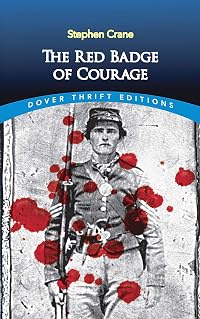
Hailed as one of American literature's most influential works, The Red Badge of Courage has a young recruit facing the trials and cruelties of war. Stephen Crane's 1895 novel is set in the American Civil War. Private Henry Fleming flees from battle and his battalion, considering all lost. Stumbling upon injured soldiers, he feels the shame of deserting and of not possessing the "red badge of courage", the wounds of war. But later when Henry rejoins his regiment and is ordered into a hopeless show more battle, he finds a chance to finally prove his courage as a man.. show less
Tags
Recommendations
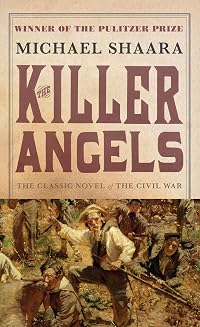

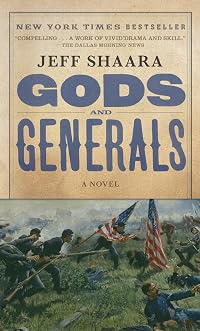
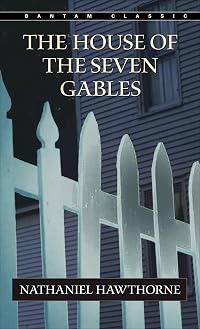
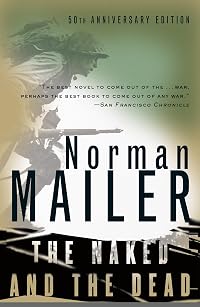
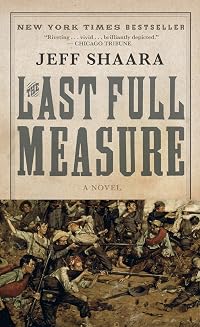

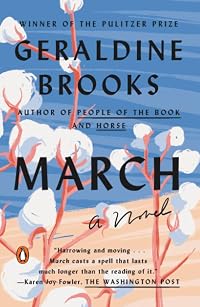





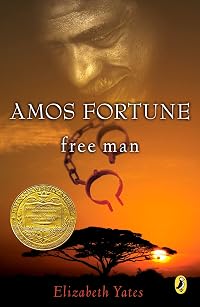
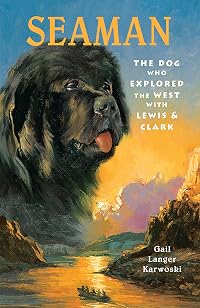
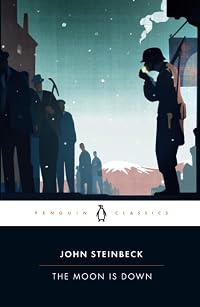
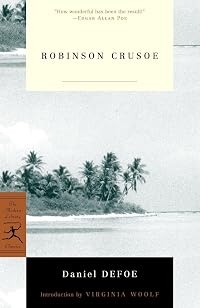

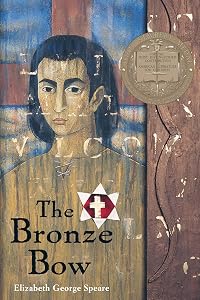
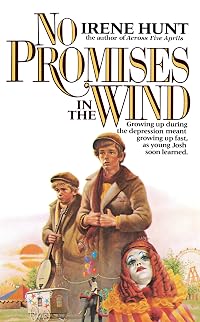
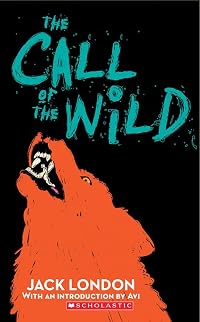

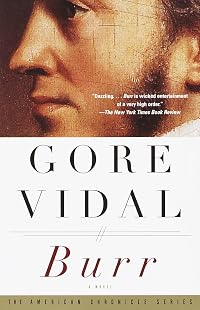
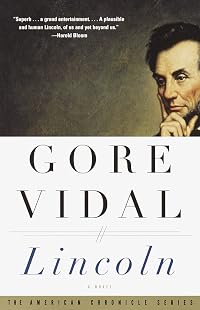

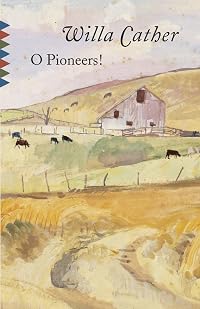
Member Recommendations

ancestorsearch A story that takes place in the Appalachian Mountains, mysterious gold and a story that spans over four generations that begins at the edge of the Civil War.
Member Reviews
A classic of war, this novel is what I imagined to be the antithesis to the brutality of war movies today. Crane pulls no punches when discussing the awful nature of the civil war. He hits on death, both abrupt and drawn out. He hits on fear, cowardice, and desertion. He hits on "manhood," and how young men view their part in a war.
My favorite detail about this is that it never outright states a battle or a location (I think). It is ambiguous enough to be any battle in the civil war, which makes it seem like it is every battle all at once. I'm sure historians can guess the battle based on details, but that's no fun.
My favorite detail about this is that it never outright states a battle or a location (I think). It is ambiguous enough to be any battle in the civil war, which makes it seem like it is every battle all at once. I'm sure historians can guess the battle based on details, but that's no fun.
The Red Badge of Courage assails from the very first line – "The cold passed reluctantly from the earth" – and doesn't let up until the sun appears through cloud on the final page, two days of battle later. Short on character and short on plot, author Stephen Crane's obsession here is with the sensory experience of battle, told from the perspective of a young American Civil War soldier about to fight his first action.
This it does very well. The young Crane didn't have any experience of battle (he wrote the novel at 24 and died of tuberculosis at 28) but you wouldn't know it from The Red Badge of Courage. He is excellent at portraying the thoughts a young man can spin for himself, as his protagonist, Henry Fleming, ties himself in show more knots and becomes his own worst enemy, rationalises his fears and his actions, and emerges from the emotional wringer altered in some unquantifiable ways. For all that Crane had no war experience – and was criticised for this from other writers of his time, including Civil War veterans – it is a very honest book. One can imagine the book as a thought experiment, with Crane imagining: 'How would it feel if I, green as I am, were to find myself in a battle? Would I stand it, or would I run?'
Crane must've had a very vivid imagination to be able to concoct this so successfully, and he grants this dubious boon to his protagonist. It is Henry's active imagination which encourages him to enlist – he has naïve, romantic dreams of glory and is disappointed when his crying mother says "nothing whatever about returning with his shield or on it", in the manner of the Spartan three hundred (pg. 13). It is this same imagination which unmans him when he's stood there, cold and afraid, facing powder and shot and the rebel yell. Crane is particularly good at the chaos of fighting, and the effects this has on the men fighting it. An exhausting march discourages the ranks of soldiers more than an enemy artillery barrage; a large part of young Henry's struggle is against the dangerous thoughts which intrude upon him in the moments of frenzied anticipation before battle even begins.
It is this lack of agency, not only for Henry but for the rest of the rank-and-file, which makes the war so hellish for them, and The Red Badge of Courage an early anti-war novel of the modern sensibility. The men are pushed from field to field, hill to hill, skirmish to skirmish, not knowing what they are meant to be doing – still less why – and this drains their courage. "It had begun to seem to them that events were trying to prove that they were impotent" (pg. 135). Ironically, it is only when they are cornered and have no options that they – both the protagonist and the soldiers as a unit – launch a successful charge and perform a collective heroic feat. In this ramshackle hell, this confusing "land of strange, squalling upheavals" (pg. 155) where officers are trying to impose some sort of order like "shepherds struggling with sheep" (pg. 123), we see the baldness of battlefield courage: too often, you didn't know what you were doing, and heroism or cowardice was only a label you could apply afterwards. If you survived.
Despite this success, Crane's book can be said to hinder itself by focusing so completely on this one aspect of writing. Though short, the book feels long and draining, as it is almost entirely descriptive writing with little in the way of plot and character. The absence of plot is forgivable, considering the nature of the piece. And our protagonist, Henry, gets some character development, of course – how could he not, when we are privy to his every thought and emotional response? – but his comrades do not. The moments when other soldiers die, or crawl away injured, should carry more emotional weight than they do, even as pen-portraits. For all his savant-like success in depicting battle, Crane's writing does have this noticeable imbalance of the inexperienced writer. Its descriptive writing is often good, but without economy: Crane catalogues each and every sensation, and won't move on from one sensation to another until he has described it in half-a-dozen ways. Nevertheless, it would be hard for even a supremely experienced writer to balance all this in a battle scenario, where chaos is the norm and a "number of emotions and events [are] crowded into such little space" (pg. 137). The book gets its intensity from this confined, bottle-like pressure, and to appreciate a book like this one you have to accept there are some things the author chooses not to do.
It is the emotional maelstrom, completely devoid of romance, combined with the general sensory experience of battle – its colours, its smoke and error, its fatigue – which is the greatest success of The Red Badge of Courage. But there are also other whispers of what would become the modern anti-war novel: the senior officer who glibly orders the men into an almost-certain-death manoeuvre as a mere feint, "speaking of the regiment as if he referred to a broom" (pg. 122), or the awareness of the battle's ultimate futility: "Individuals must have supposed that they were cutting the letters of their names deep into everlasting tablets or brass, or enshrining their reputations forever in the hearts of their countrymen, while, as to fact, the affair would appear in printed reports under a meek and immaterial title" (pg. 62). But in Crane's hands the title is far from meek and immaterial, and his prototypical success could be said to pave the way for modern war novelists like Remarque, Hemingway and the English war poets. Not bad for a 24-year-old New Yorker with no experience of battle. show less
This it does very well. The young Crane didn't have any experience of battle (he wrote the novel at 24 and died of tuberculosis at 28) but you wouldn't know it from The Red Badge of Courage. He is excellent at portraying the thoughts a young man can spin for himself, as his protagonist, Henry Fleming, ties himself in show more knots and becomes his own worst enemy, rationalises his fears and his actions, and emerges from the emotional wringer altered in some unquantifiable ways. For all that Crane had no war experience – and was criticised for this from other writers of his time, including Civil War veterans – it is a very honest book. One can imagine the book as a thought experiment, with Crane imagining: 'How would it feel if I, green as I am, were to find myself in a battle? Would I stand it, or would I run?'
Crane must've had a very vivid imagination to be able to concoct this so successfully, and he grants this dubious boon to his protagonist. It is Henry's active imagination which encourages him to enlist – he has naïve, romantic dreams of glory and is disappointed when his crying mother says "nothing whatever about returning with his shield or on it", in the manner of the Spartan three hundred (pg. 13). It is this same imagination which unmans him when he's stood there, cold and afraid, facing powder and shot and the rebel yell. Crane is particularly good at the chaos of fighting, and the effects this has on the men fighting it. An exhausting march discourages the ranks of soldiers more than an enemy artillery barrage; a large part of young Henry's struggle is against the dangerous thoughts which intrude upon him in the moments of frenzied anticipation before battle even begins.
It is this lack of agency, not only for Henry but for the rest of the rank-and-file, which makes the war so hellish for them, and The Red Badge of Courage an early anti-war novel of the modern sensibility. The men are pushed from field to field, hill to hill, skirmish to skirmish, not knowing what they are meant to be doing – still less why – and this drains their courage. "It had begun to seem to them that events were trying to prove that they were impotent" (pg. 135). Ironically, it is only when they are cornered and have no options that they – both the protagonist and the soldiers as a unit – launch a successful charge and perform a collective heroic feat. In this ramshackle hell, this confusing "land of strange, squalling upheavals" (pg. 155) where officers are trying to impose some sort of order like "shepherds struggling with sheep" (pg. 123), we see the baldness of battlefield courage: too often, you didn't know what you were doing, and heroism or cowardice was only a label you could apply afterwards. If you survived.
Despite this success, Crane's book can be said to hinder itself by focusing so completely on this one aspect of writing. Though short, the book feels long and draining, as it is almost entirely descriptive writing with little in the way of plot and character. The absence of plot is forgivable, considering the nature of the piece. And our protagonist, Henry, gets some character development, of course – how could he not, when we are privy to his every thought and emotional response? – but his comrades do not. The moments when other soldiers die, or crawl away injured, should carry more emotional weight than they do, even as pen-portraits. For all his savant-like success in depicting battle, Crane's writing does have this noticeable imbalance of the inexperienced writer. Its descriptive writing is often good, but without economy: Crane catalogues each and every sensation, and won't move on from one sensation to another until he has described it in half-a-dozen ways. Nevertheless, it would be hard for even a supremely experienced writer to balance all this in a battle scenario, where chaos is the norm and a "number of emotions and events [are] crowded into such little space" (pg. 137). The book gets its intensity from this confined, bottle-like pressure, and to appreciate a book like this one you have to accept there are some things the author chooses not to do.
It is the emotional maelstrom, completely devoid of romance, combined with the general sensory experience of battle – its colours, its smoke and error, its fatigue – which is the greatest success of The Red Badge of Courage. But there are also other whispers of what would become the modern anti-war novel: the senior officer who glibly orders the men into an almost-certain-death manoeuvre as a mere feint, "speaking of the regiment as if he referred to a broom" (pg. 122), or the awareness of the battle's ultimate futility: "Individuals must have supposed that they were cutting the letters of their names deep into everlasting tablets or brass, or enshrining their reputations forever in the hearts of their countrymen, while, as to fact, the affair would appear in printed reports under a meek and immaterial title" (pg. 62). But in Crane's hands the title is far from meek and immaterial, and his prototypical success could be said to pave the way for modern war novelists like Remarque, Hemingway and the English war poets. Not bad for a 24-year-old New Yorker with no experience of battle. show less
Crane's work, an early entry in the pantheon of American literature, can be read as either an anti-war polemic, or a pro-war piece of propaganda. Certainly the main character, who goes through a personal crisis when faced with battle, swings like a pendulum between the two extremes, and it is unclear by the end which side he settles on. For instance, is it good to fight the good fight because it is good, or because it is necessary?
L'écho lointain des batailles résonne jusqu'à la terme natale du jeune Henry Fleming : l'Amérique lutte pour retrouver l'unité perdue en 1861, quand onze États du Sud, farouches tenants de l'esclavage, ont rompu avec les États du Nord, partisans de son abolition. Mater les rebelles, sauver la fédération, tel est le but des armées en uniforme bleu que le Nord envoie se mesurer avec les a démons en gris ». Le jeune Henry a trop rêvé de gloire et d'exploits pareils à ceux des héros de l'Antiquité pour ne pas céder au désir de s'engager. Mais la guerre ressemble peu aux combats épiques d'antan et, lorsque vient son tour d'aller au feu, il est pris d'angoisse. Saura-t-il se conduire en brave? Le premier contact avec show more l'ennemi lui apporte la réponse : c'est non. Il se ressaisit pourtant et, sous la mitraille, fait tant bien que mal le lent apprentissage de la maîtrise de soi où la peur physique et morale cède à la vanité, à la vergogne ou à l'orgueil selon les périls de l'heure - et qui aboutit enfin à a la conquête du courage ». Ce récit sobre et prenant est une des meilleures œuvres de Stephen Crane. show less
Today's book is a classic that I have wanted to read for quite some time but never got around to...until now. Stephen Crane's The Red Badge of Courage covers the American Civil War from the point of view of a Union soldier. It's the gritty portrayal of life at the front and just what it's like to lay down your life for a cause that you don't fully understand. In fact, our protagonist has almost no clue what it is that he's fighting for or against. He joined up because it was the done thing which seems to be the case for the rest of his regiment as well. There are those that brag about their bravado but when the time comes for the bullets to fly they are the first to turn and run. At first, our soldier is condescending towards these show more 'cowards' as he sees them but he very quickly sees the futility of their regiment's actions as they seem to be merely feinting and arbitrarily gaining and losing ground. It is a gritty, raw description of battle and defeat which is undercut with confusion and fear. These are children playacting warfare but the injuries and death are very real. Crane's insistence on not holding back lends a realistic, deadening of the senses feel to what it's like on the battlefield when you are surrounded by death and horror at every turn. He was making a commentary on the futility of war and how those who are a part of the 'war machine' are generally lost as to the meaning of why and who they are fighting. I am immensely glad that I finally picked this book up and gave it a read. I encourage ya'll to do the same. It's a slim volume and will take no time at all (though I don't promise you'll want a break every now and again from the bloodshed). 9/10 show less
Stephen Crane's use of words is devastating. He puts words together in ways that you didn't think possible. 'Tattered soldier' and 'youthful summer' are just two of the many examples. His effective writing brings to life the atmosphere of the battlefield. You can almost hear all the bombing and gunshots as you read the book. Crane also depicts Henry's frame of mind well - fear, relief, pride, and condescension, and how all these states could change so rapidly depending on external circumstances. You will notice that at the end of several chapters, Crane always ends with the sun shining through. Even on a battlefield, there is always hope and cheer.
My last status update on this book may have confused a great deal of those following along with me. The four-out-of-five star rating was probably even more of a shocker for those of you watching me rant and rave, practically frothing and foaming at the mouth with madness as I slung curses like weapons--desiring and willing to accept nothing short of our main character's, Henry's, death and destruction. There is validity in this! Since we first meet Henry, this kid who wants to become a soldier for the glory's sake along with every other wrong reason you can contrive, I didn't like him. He was a self-serving, fame-seeking kid (again, I emphasize) who didn't give a rip about his mother's concern for his safety, and only the admiration of show more absolutely everyone around him. He goes behind her back, joins the army, and is disappointed when a "poetic" and beautifully scripted farewell scene isn't given the chance to play out because his mom is too busy lecturing him about the various dangers and giving him advice on how to SURVIVE before he goes! Yeesh what a prick!
But oh no, that's not the reason I hate him. No, that comes almost instantly afterwards and for the next SEVENTY PAGES. Considering the book is about 100pgs long? That means he spends more than half the time being a complete JACKWAGON. D8
And it goes ON, as I said, for the next TWO THIRDS of the book! GAH! I wanted to smack him and strangle him and MORE. At every--single--TURN he's doing something new that makes me want to throttle the living daylights out of him!!! And man, does he pull some incredible stunts of asininity. -__- Seriously, how far up your own butt do you have to be to think that highly of yourself? What a prick!!!
So why, you ask, did I give this book a four out of five? Well, because around the late 60 to early 70 page mark, I made an update saying that for once... Henry was acting the part of a man. There was a large gap after that one status update, where I had no further comments until I reached the end of the book. It was in those last thirty or so pages that something unexpected happened--what I had hoped would happen throughout most of the story: Henry became a man. There was no more of his philosophy, no more comparing himself to the other men around him. It was just a burning desire to enact what he had to; to get the task at hand done, and to do it with every fiber of his being. When he stopped thinking about himself, about some falsely claimed or obtained glory, and just did what needed to be done... when he didn't realize he was throwing himself right past the front lines, fully capable of being shot and killed at any moment... when he had no hesitance to run forth right into the bullets and try to claim the victory...! Those are the moments where he changed. Where, suddenly, he wasn't the little boy anxious for poetic depictions of battle and glory and praise. He was the man, throwing himself out there, regardless of the circumstances or the possible danger, the horrible outcomes, and growing up through those actions.
What's more that finally settled my mind about this? ...he admitted how ashamed he was. And... that he hated the thoughts of himself, when he looked back on how he had been when he first started out. Is there a fine line that's being trod here? Is the change too abrupt? ...perhaps, perhaps not.
Either way... it was stunning to see, and it... surprised me in a good way. It took me aback and... it made me realize that he did change. Those actions--they spoke louder than any words he ever uttered. And he uttered less and less of them the more he grew towards the end. I feel that, if only because of the ending, it was worthwhile. Boys go into wars and come out men. And... perhaps this is one of the best examples of that transformation, and how suddenly, how amazingly... it happens, without us even knowing it.
It's a truly amazing book in a way. I would definitely recommend it to be read. It was enjoyable, even if for the greatest part of it, I was a lunatic desiring our main character's death. *Chuckles* But hey... people change. And that's what is so fascinating and interesting about this book. That this kid who I thought for certain was going to be a stupid prick to the very end... ended up changing like that. Definitely read it, at some point or another. If you don't want to risk it, then take it out of a library or get it secondhand, but at the very least, it's a book that's worth a shot. show less
But oh no, that's not the reason I hate him. No, that comes almost instantly afterwards and for the next SEVENTY PAGES. Considering the book is about 100pgs long? That means he spends more than half the time being a complete JACKWAGON. D8
And it goes ON, as I said, for the next TWO THIRDS of the book! GAH! I wanted to smack him and strangle him and MORE. At every--single--TURN he's doing something new that makes me want to throttle the living daylights out of him!!! And man, does he pull some incredible stunts of asininity. -__- Seriously, how far up your own butt do you have to be to think that highly of yourself? What a prick!!!
So why, you ask, did I give this book a four out of five? Well, because around the late 60 to early 70 page mark, I made an update saying that for once... Henry was acting the part of a man. There was a large gap after that one status update, where I had no further comments until I reached the end of the book. It was in those last thirty or so pages that something unexpected happened--what I had hoped would happen throughout most of the story: Henry became a man. There was no more of his philosophy, no more comparing himself to the other men around him. It was just a burning desire to enact what he had to; to get the task at hand done, and to do it with every fiber of his being. When he stopped thinking about himself, about some falsely claimed or obtained glory, and just did what needed to be done... when he didn't realize he was throwing himself right past the front lines, fully capable of being shot and killed at any moment... when he had no hesitance to run forth right into the bullets and try to claim the victory...! Those are the moments where he changed. Where, suddenly, he wasn't the little boy anxious for poetic depictions of battle and glory and praise. He was the man, throwing himself out there, regardless of the circumstances or the possible danger, the horrible outcomes, and growing up through those actions.
What's more that finally settled my mind about this? ...he admitted how ashamed he was. And... that he hated the thoughts of himself, when he looked back on how he had been when he first started out. Is there a fine line that's being trod here? Is the change too abrupt? ...perhaps, perhaps not.
Either way... it was stunning to see, and it... surprised me in a good way. It took me aback and... it made me realize that he did change. Those actions--they spoke louder than any words he ever uttered. And he uttered less and less of them the more he grew towards the end. I feel that, if only because of the ending, it was worthwhile. Boys go into wars and come out men. And... perhaps this is one of the best examples of that transformation, and how suddenly, how amazingly... it happens, without us even knowing it.
It's a truly amazing book in a way. I would definitely recommend it to be read. It was enjoyable, even if for the greatest part of it, I was a lunatic desiring our main character's death. *Chuckles* But hey... people change. And that's what is so fascinating and interesting about this book. That this kid who I thought for certain was going to be a stupid prick to the very end... ended up changing like that. Definitely read it, at some point or another. If you don't want to risk it, then take it out of a library or get it secondhand, but at the very least, it's a book that's worth a shot. show less
Members
- Recently Added By
Published Reviews
ThingScore 25
What might have been made, by severe pruning and rigorous condensation, a strong sketch, becomes, when hammered out into the dimensions of a volume, a somewhat tedious, philosophizing essay on the different manner in which men confront the dangers of war.
added by aprille
Lists

The Guardian's 1000 Novels Everyone Must Read
1,005 works; 552 members

Classics you know you should have read but probably haven't
421 works; 407 members

Great American Novels
158 works; 40 members

Best Historical Fiction
620 works; 258 members

Favourite 19th century fiction
257 works; 62 members

Historical Fiction
889 works; 91 members
Southern Fiction
212 works; 52 members
Favourite Books
1,820 works; 311 members

The American Experience
173 works; 18 members
19th Century
190 works; 16 members

Short and Sweet
246 works; 24 members

War Literature
101 works; 19 members

Western World's Greatest Books - Project Gutenberg
295 works; 15 members
Harold Bloom - The Western Canon: C. The Democratic Age
336 works; 15 members

Pleasant Surprises: Books That Exceeded Our Expectations
418 works; 143 members
LibraryThingers' 1001 Books You Must Read Before You Die
442 works; 30 members
Out of Copyright
244 works; 14 members

Top Five Books of 2022
736 works; 272 members

Stories of War and Revolution
146 works; 55 members
Folio Society
831 works; 48 members
Best of American Literature
146 works; 9 members

1970s
657 works; 23 members

1964 College Preparatory Reading List
202 works; 8 members

The Guardian's 100 Best Novels Written in English
105 works; 13 members

100 World Classics
99 works; 15 members

100 Most Recommended Works
100 works; 11 members
Best First Lines
133 works; 8 members
The Well-Educated Mind Reading Challenge
75 works; 7 members

1890s
49 works; 6 members
Daria Morgendorffer's Bookshelf
70 works; 5 members
Mensa for Kids Excellence in Reading Award Program (Grades 9-12)
116 works; 5 members

Fiction Set During a Revolution
55 works; 24 members
Victorian Period
113 works; 10 members

Most Depressing Books
69 works; 16 members

Well-Educated Mind
150 works; 3 members

CCE 1000 Good Books List
1,033 works; 12 members
Racism and Race Relations in Literature
48 works; 9 members

Books Read in 2022
5,226 works; 112 members

100
56 works; 1 member

Books with Colourful Titles
171 works; 8 members
Trinity College Booklist (1951): Class Ten, English Literature
358 works; 5 members
American Lit for Eng 11 Research Project
368 works; 6 members

Tagged Civil War
16 works; 4 members

The Story of the World: Activity Book Four: The Modern Age
333 works; 2 members
The Well-Educated Mind, Susan Wise Bauer, 2016
179 works; 3 members

Recommended Reading : 600 Classics Reviewed, Editors of Salem Press, 2015
634 works; 6 members

The Complete Rory Gilmore Reading List
506 works; 5 members

DigitalDreamDoor top 300
300 works; 4 members
Great Short Books: A Year of Reading-Briefly
59 works; 4 members
School Made Us Read It
380 works; 197 members
bound
100 works; 1 member

Books Read in 2026
2,142 works; 70 members

Newark Public Library's 1904 List of a Thousand of the Best Novels
98 works; 5 members

Beautiful Feet Books
304 works; 7 members
Fiction (Mostly) in Selective Bibliography of American Literature 1775-1900
431 works; 3 members
Classical Conversations Challenge I Exposition
20 works; 1 member

Mustich's 1000 Books to Read Before You Die: A Life Changing List
1,001 works; 20 members
AP Lit
363 works; 6 members

Greatest Books, allegedly
484 works; 9 members

Tagged 19th Century
104 works; 7 members

Books Read in 2021
5,361 works; 113 members

Publisher's Weekly Bestsellers Part I - 1895-1939
399 works; 8 members

Sonlight Books
1,487 works; 25 members

Used books to buy next
565 works; 1 member

Honey For a Child's Heart
1,152 works; 25 members
Mensa for Kids Excellence in Reading Award Program (Grades 9-12)
116 works; 3 members

A Rainbow of Books: Colors in the Title
570 works; 24 members
English Literature Class
100 works; 1 member
Five star books
1,767 works; 109 members
Author Information

Stephen Crane authored novels, short stories, and poetry, but is best known for his realistic war fiction. Crane was a correspondent in the Greek-Turkish War and the Spanish American War, penning numerous articles, war reports and sketches. His most famous work, The Red Badge of Courage (1896), portrays the initial cowardice and later courage of a show more Union soldier in the Civil War. In addition to six novels, Crane wrote over a hundred short stories including "The Blue Hotel," "The Bride Comes to Yellow Sky," and "The Open Boat." His first book of poetry was The Black Riders (1895), ironic verse in free form. Crane wrote 136 poems. Crane was born November 1, 1871, in Newark, New Jersey. After briefly attending Lafayette College and Syracuse University, he became a freelance journalist in New York City. He published his first novel, Maggie: Girl of the Streets, at his own expense because publishers found it controversial: told with irony and sympathy, it is a story of the slum girl driven to prostitution and then suicide. Crane died June 5, 1900, at age 28 from tuberculosis. (Bowker Author Biography) show less

Stephen Crane has a Legacy Library. Legacy libraries are the personal libraries of famous readers, entered by LibraryThing members from the Legacy Libraries group.
Some Editions
Awards and Honors
Distinctions
Notable Lists
Daniel S. Burt's Novel 100 (053 – 53)
Series

Belongs to Publisher Series
Ventura classics (11)
Four Square Books (97)
Airmont Classics (3)
American Classics (10)
Tus libros (7)
Westvaco American Classics (1968)
The Pocket Library (PL-20)
Penguin American Library (PAL21)
Mirmanda (31)
Reader's Enrichment Series (RE 111)
Limited Editions Club (S:15.03)
El País Aventuras (50)
Doubleday Dolphin (C61)
Centopaginemillelire (133)
Modern Library (130.3)
Work Relationships
Is contained in
Prose and Poetry : Maggie, A Girl of the Streets / The Red Badge of Courage / Stories, Sketches, Journalism / The Black Riders / War Is Kind by Stephen Crane
Four Classic American Novels (The Scarlet Letter / The Adventures of Huckleberry Finn / The Red Badge of Courage / Billy Budd) by Willard Thorp
Three Great Novels of the Civil War: The Killer Angels / Andersonville / The Red Badge of Courage by Marc Jaffe
The Count of Monte Cristo, The Three Musketeers,The Red Badge of Courage,The Last of the Mohicans,The man in the Iron Mask (Classic Collections) by Alexandre Dumas père
Is retold in
Has the adaptation
Is abridged in
Has as a study
Has as a supplement
Has as a commentary on the text
Has as a student's study guide
Has as a teacher's guide
Common Knowledge
- Canonical title
- The Red Badge of Courage
- Original title
- The red badge of courage : an episode of the American civil war; The Red Badge of Courage
- Alternate titles*
- La roja insignia del valor
- Original publication date
- 1895
- People/Characters
- Henry Fleming (The Youth); The Tattered Soldier; Jim Conklin [The Red Badge of Courage]; Wilson [The Red Badge of Courage]; Lieutenant Hasbrouck; Henry Fleming's mother
- Important places
- USA; Chancellorsville, Virginia, USA
- Important events
- American Civil War (1861-1865); 19th century; Battle of Chancellorsville
- Related movies
- The Red Badge of Courage (1951 | IMDb); The Red Badge of Courage (1974 | IMDb)
- First words
- The cold passed reluctantly from the earth, and the retiring fogs revealed an army stretched out on the hills, resting.
- Quotations
- He wished that he, too, had a wound, a red badge of courage.
The battle was like the grinding of an immense and terrible machine to him. Its complexities and powers, its grim processes, fascinated him. He must go close and see it produce corpses. - Last words
- (Click to show. Warning: May contain spoilers.)Over the river a golden ray of sun came through the hosts of leaden rain clouds.
- Original language
- English; English US
*Some information comes from Common Knowledge in other languages. Click "Edit" for more information.
Classifications
- Genres
- Fiction and Literature, General Fiction, Historical Fiction
- DDC/MDS
- 813.4 — Literature & rhetoric American literature in English American fiction in English Later 19th Century 1861-1900
- LCC
- PS1449 .C85 .R3 — Language and Literature American literature American literature Individual authors 19th century
- BISAC
Statistics
- Members
- 13,518
- Popularity
- 570
- Reviews
- 138
- Rating
- (3.44)
- Languages
- 17 — Catalan, Chinese, Czech, Danish, Dutch, English, Finnish, French, German, Hebrew, Icelandic, Italian, Russian, Spanish, Swedish, Yiddish, Portuguese (Portugal)
- Media
- Paper, Audiobook, Ebook
- ISBNs
- 617
- UPCs
- 6
- ASINs
- 350