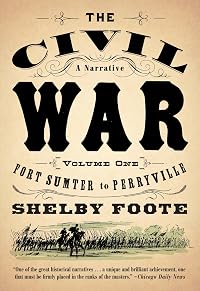
The Civil War: A Narrative, Volume 1: Fort Sumter to Perryville
by Shelby Foote
The Civil War: A Narrative (Original Publication — Original publication, Vol. 1)
On This Page
Description
Here begins one of the most remarkable works of history ever fashioned. All the great battles are here, of course, from Bull Run through Shiloh, the Seven Days Battles, and Antietam, but so are the smaller ones: Ball's Bluff, Fort Donelson, Pea Ridge, Island Ten, New Orleans, and Monitor versus Merrimac.The word "narrative" is the key to this extraordinary book's incandescence and its truth. The story is told entirely from the point of view of the people involved in it. One learns not only show more what was happening on all fronts but also how the author discovered it during his years of exhaustive research.
This first volume in Shelby Foote's comprehensive history is a must-listen for anyone interested in one of the bloodiest wars in America's history.
. show less
Tags
Recommendations


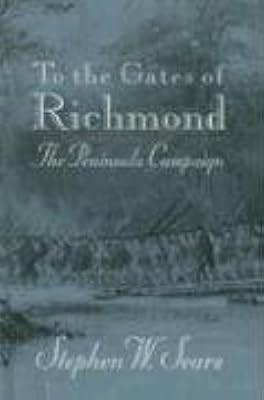


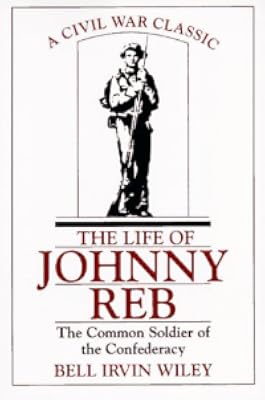


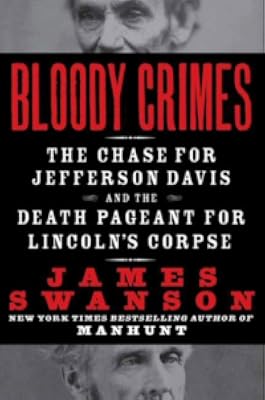
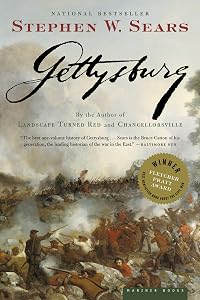










Member Recommendations

wildbill excellent reference work
Member Reviews
Three volumes, more than one thousand pages, one million five hundred thousand words, twenty years in the making. Not history in the usual sense (i.e., written by historians, for historians), nor a novel. It is a narrative, well-told. One of the essays in the accompanying booklet sums it up well: A flawed masterpiece.
It’s very much a “Battles and Leaders” account, notable for doing justice to other theaters besides Virginia.
Underlying this is a repeated juxtaposition of Jefferson Davis and Abraham Lincoln—this is what first drew me into the book. Before deciding to purchase, I borrowed volume one from the library. By the time I finished the prelude, with its parallel portraits of Davis and Lincoln as war clouds gathered, I knew show more I wanted my own set. It took a little searching to find out which editions were available; I chose the three-volume Modern Library set with the booklet of essays edited by Jon Meacham. Then I did something I rarely do when I own a printed book (a “real” book): I bought the e-reader version as well, so that I could keep moving forward even while traveling.
Foote’s fascination with contrasting Davis and Lincoln runs like a figured bass counterpoint beneath the long narrative, but it betrays him. The final section, “Lucifer in Starlight,” gives the impression that, in the end, Davis, unrepentant to the last, won simply by surviving nearly a quarter of a century longer than his opponent. It’s reminiscent of Satan in Milton’s Paradise Lost, who steals the spotlight in that book.
After the promising opening to volume one, the book settles into what it advertises itself to be, nothing more: a narrative of a war. But what a narrative! Foote is good at describing the tactical set-ups of each battle he treats. As part of his thorough preparation, he toured each site, often on the anniversary of the fight, with one of the knowledgeable National Park Service guides to lead him. Foote’s skill as a novelist makes him sensitive to landscape and weather, enabling him to sense what the combatants experienced and help the reader see it, too. Even more, he evokes what neither he nor the reader can experience: the hellish fury of booming cannons, clattering muskets, the shriek of the rebel yell, and the moans of the wounded and dying.
Foote’s insistence on covering all the theaters of the war—and from both sides as well—presented him with the challenge of juggling the narrative back and forth and deciding just how much to include of what the two presidents were facing in their respective capitals. Overall, I feel he met this well. A reader less familiar with the names and faces of all the generals might have trouble keeping them straight. However, I still have the multivolume Photographic History of the Civil War that I received as a Christmas present in 1957, the year it was reprinted, which I pored over as a child by the hour. So I was okay. Foote draws these characters with the skill of a novelist. His debt to Homer, who taught him a thing or two about keeping several narrative balls in the air, is also evident in his love of fixed circumlocutions to refer, leitmotif-like, to his characters. To my taste, he overdoes this; he could have omitted a few references to the one-legged Kentucky-born Texan and simply written “Hood.”
The passage of time between commencing and finishing this epic makes itself felt in changes of opinion from one book to the next. In volume one, Foote’s treatment of T. J. Jackson is ambivalent, down to the original application of the nickname “Stonewall” (it was not a compliment). By the time we reach Jackson’s death in volume two, a victim of friendly fire, the tone of Foote’s prose is hagiographic.
Such changes in tone might also be due to passing from documentary sources to secondary. As part of his preparation, Foote read all 128 volumes of War of the Rebellion; he may have been the only one of his generation to do so. This set collects dispatches, orders, and other documents of the time. As such, Foote assigned higher value to it than to the glut of memoirs through which Grant, Johnston, Longstreet, and others refought and reinterpreted the war in subsequent decades. But he supplemented this reading with secondary works. For instance, Strode’s three-volume paean to Jefferson Davis appeared in step with how far Foote was. Its influence may help explain Foote’s treatment of Davis.
One other change in volumes two and three, compared to volume one, is a tendency to write in circles. For instance, the narrative thrice refers to Jubal Early’s troops passing Jackson’s grave. Nor was it illuminating to read after any of a number of battles that it was not the Cannae one general or another had hoped for. It was revealing to read the essay by Bob Loomis, Foote’s editor at Random House, in the accompanying booklet. After the first volume, Loomis decided to dispense with the usual copy-editing, simply marking the manuscript for style. Quite a compliment to an author, but the set would be stronger if Loomis had decided otherwise.
Yet the judgment that this is a “flawed masterpiece” doesn’t rest on such stylistic quibbles. Instead, it’s a reflection of the stance Foote takes. Clearly, he strove to take an even-handed approach; Foote is by no means an apologist for the Southern side. Yet his reluctance to appear to be taking sides means he makes no comment on Davis’s claims that the Confederacy was fighting for honor and liberty. I can believe that Davis was blind to the irony that this “liberty” meant the freedom to enslave millions of fellow humans in perpetuity. But surely Foote sees this. Or does he?
This is even more striking when it comes to one of Foote’s heroes, Nathan Bedford Forrest, whom he famously called one of two geniuses produced by the war (the other was Lincoln). From these pages, the reader has no inkling of Forrest’s post-war infamy with the Ku Klux Klan.
Yet Foote did find room for many anecdotes that his vast reading turned up, to this reader’s delight. My favorite was Breckinridge’s reaction to the bottle of bourbon Sherman produced from his saddlebacks to open the negotiations for the surrender of the Army of Tennessee.
Aside from these vignettes, there was something else new to me. Before reading these volumes, I knew that while some Southern leaders, such as Alexander Stephens, openly admitted they went to war to preserve the institution of slavery, most were less straight-forward, referring to their “way of life” or, closer to the mark, “our Southern system of labor.” Like Jefferson Davis, they cloaked themselves in “honor” and “liberty.”
What I learned, however, was that as the war ground on, one Confederate general, Patrick Cleburne, proposed emancipating the slaves and arming them. That proposal went nowhere, nor did Cleburne’s career after that. Telling was Howell Cobb’s remark: “If slaves will make good soldiers our whole theory of slavery is wrong.”
Foote’s narrative shows there was ample skill and incompetence, nobility, and venality on both sides, although it’s clear that, on balance, the South had a higher proportion of good generals. And the men they led, the common soldiers, punched above their weight. But for what? Like Foote, I descend from men who fought for the Confederacy. Whenever I consider how many sons and grandsons my great (x 3) grandfather lost, I wonder why they fought. Foote quotes one farmer in western North Carolina who summed it up in 1863: “A rich man’s war and a poor man’s fight.” show less
It’s very much a “Battles and Leaders” account, notable for doing justice to other theaters besides Virginia.
Underlying this is a repeated juxtaposition of Jefferson Davis and Abraham Lincoln—this is what first drew me into the book. Before deciding to purchase, I borrowed volume one from the library. By the time I finished the prelude, with its parallel portraits of Davis and Lincoln as war clouds gathered, I knew show more I wanted my own set. It took a little searching to find out which editions were available; I chose the three-volume Modern Library set with the booklet of essays edited by Jon Meacham. Then I did something I rarely do when I own a printed book (a “real” book): I bought the e-reader version as well, so that I could keep moving forward even while traveling.
Foote’s fascination with contrasting Davis and Lincoln runs like a figured bass counterpoint beneath the long narrative, but it betrays him. The final section, “Lucifer in Starlight,” gives the impression that, in the end, Davis, unrepentant to the last, won simply by surviving nearly a quarter of a century longer than his opponent. It’s reminiscent of Satan in Milton’s Paradise Lost, who steals the spotlight in that book.
After the promising opening to volume one, the book settles into what it advertises itself to be, nothing more: a narrative of a war. But what a narrative! Foote is good at describing the tactical set-ups of each battle he treats. As part of his thorough preparation, he toured each site, often on the anniversary of the fight, with one of the knowledgeable National Park Service guides to lead him. Foote’s skill as a novelist makes him sensitive to landscape and weather, enabling him to sense what the combatants experienced and help the reader see it, too. Even more, he evokes what neither he nor the reader can experience: the hellish fury of booming cannons, clattering muskets, the shriek of the rebel yell, and the moans of the wounded and dying.
Foote’s insistence on covering all the theaters of the war—and from both sides as well—presented him with the challenge of juggling the narrative back and forth and deciding just how much to include of what the two presidents were facing in their respective capitals. Overall, I feel he met this well. A reader less familiar with the names and faces of all the generals might have trouble keeping them straight. However, I still have the multivolume Photographic History of the Civil War that I received as a Christmas present in 1957, the year it was reprinted, which I pored over as a child by the hour. So I was okay. Foote draws these characters with the skill of a novelist. His debt to Homer, who taught him a thing or two about keeping several narrative balls in the air, is also evident in his love of fixed circumlocutions to refer, leitmotif-like, to his characters. To my taste, he overdoes this; he could have omitted a few references to the one-legged Kentucky-born Texan and simply written “Hood.”
The passage of time between commencing and finishing this epic makes itself felt in changes of opinion from one book to the next. In volume one, Foote’s treatment of T. J. Jackson is ambivalent, down to the original application of the nickname “Stonewall” (it was not a compliment). By the time we reach Jackson’s death in volume two, a victim of friendly fire, the tone of Foote’s prose is hagiographic.
Such changes in tone might also be due to passing from documentary sources to secondary. As part of his preparation, Foote read all 128 volumes of War of the Rebellion; he may have been the only one of his generation to do so. This set collects dispatches, orders, and other documents of the time. As such, Foote assigned higher value to it than to the glut of memoirs through which Grant, Johnston, Longstreet, and others refought and reinterpreted the war in subsequent decades. But he supplemented this reading with secondary works. For instance, Strode’s three-volume paean to Jefferson Davis appeared in step with how far Foote was. Its influence may help explain Foote’s treatment of Davis.
One other change in volumes two and three, compared to volume one, is a tendency to write in circles. For instance, the narrative thrice refers to Jubal Early’s troops passing Jackson’s grave. Nor was it illuminating to read after any of a number of battles that it was not the Cannae one general or another had hoped for. It was revealing to read the essay by Bob Loomis, Foote’s editor at Random House, in the accompanying booklet. After the first volume, Loomis decided to dispense with the usual copy-editing, simply marking the manuscript for style. Quite a compliment to an author, but the set would be stronger if Loomis had decided otherwise.
Yet the judgment that this is a “flawed masterpiece” doesn’t rest on such stylistic quibbles. Instead, it’s a reflection of the stance Foote takes. Clearly, he strove to take an even-handed approach; Foote is by no means an apologist for the Southern side. Yet his reluctance to appear to be taking sides means he makes no comment on Davis’s claims that the Confederacy was fighting for honor and liberty. I can believe that Davis was blind to the irony that this “liberty” meant the freedom to enslave millions of fellow humans in perpetuity. But surely Foote sees this. Or does he?
This is even more striking when it comes to one of Foote’s heroes, Nathan Bedford Forrest, whom he famously called one of two geniuses produced by the war (the other was Lincoln). From these pages, the reader has no inkling of Forrest’s post-war infamy with the Ku Klux Klan.
Yet Foote did find room for many anecdotes that his vast reading turned up, to this reader’s delight. My favorite was Breckinridge’s reaction to the bottle of bourbon Sherman produced from his saddlebacks to open the negotiations for the surrender of the Army of Tennessee.
Aside from these vignettes, there was something else new to me. Before reading these volumes, I knew that while some Southern leaders, such as Alexander Stephens, openly admitted they went to war to preserve the institution of slavery, most were less straight-forward, referring to their “way of life” or, closer to the mark, “our Southern system of labor.” Like Jefferson Davis, they cloaked themselves in “honor” and “liberty.”
What I learned, however, was that as the war ground on, one Confederate general, Patrick Cleburne, proposed emancipating the slaves and arming them. That proposal went nowhere, nor did Cleburne’s career after that. Telling was Howell Cobb’s remark: “If slaves will make good soldiers our whole theory of slavery is wrong.”
Foote’s narrative shows there was ample skill and incompetence, nobility, and venality on both sides, although it’s clear that, on balance, the South had a higher proportion of good generals. And the men they led, the common soldiers, punched above their weight. But for what? Like Foote, I descend from men who fought for the Confederacy. Whenever I consider how many sons and grandsons my great (x 3) grandfather lost, I wonder why they fought. Foote quotes one farmer in western North Carolina who summed it up in 1863: “A rich man’s war and a poor man’s fight.” show less
WOOT W00T Rooty-toot-toot! I finished!!
THE CIVIL WAR: A NARRATIVE: FORT SUMTER TO PERRYVILLE by Shelby Foote
I did. I did. I read every word. Even when I despaired of ever finishing, I read and read and read. I gave it 5 stars too because it is a monument. Shelby marches every army over almost every mile of every day of the war from Jefferson Davis's farewell to the U.S. Senate to the aftermath of Perryville in 1862. His goal was to make the reader a participant, and he largely succeeded. I learned things that I never knew and more than I wanted to know about strategy and tactics and the sheer bloodiness of the war itself. I bogged down in swamps. I imagined marching the miles without shoes or food.
I was vastly relieved when the show more narrative turned itself to politics, whether Union or Confederate. I loved the Lincoln stories (could he borrow McLellan's army since he wasn't using it?) and the pictures of Stonewall Jackson sucking his lemon, and the appearance of Polk at Perryville at a Federal gun emplacement (he was wearing a new, dark uniform, and realized too late that the soldiers he was yelling at to stop firing at their own men were actually Yankees. He brazened out their questions and rode slowly away from them expecting a bullet at every heartbeat) and Bragg requisitioning supplies as commander and denying them to himself as quartermaster.
I came away astounded at how many men moved over huge distances. I was astounded also at the number of generals on both sides. I was astounded at how many mistakes were made because of miscommunications or some general deciding on his own to do something different from the battle plan. I was humbled and full of pity for the gallant, ignorant men on both sides who marched or ran into gunfire or turned tail and ran.
I wish that he had mentioned the year a little more often. I wish that he had included a listing of the generals by army (but I made my own). Otherwise, I find that I am glad to have spent the time I spent in this book, and I suspect that I'll move on to volume 2 next year when I've recovered.
ETA: DH reminds me that S. Foote wrote the whole thing with a nib pen - dip and write, dip and write, dip and write.
I see that volume 2 is even longer. show less
THE CIVIL WAR: A NARRATIVE: FORT SUMTER TO PERRYVILLE by Shelby Foote
I did. I did. I read every word. Even when I despaired of ever finishing, I read and read and read. I gave it 5 stars too because it is a monument. Shelby marches every army over almost every mile of every day of the war from Jefferson Davis's farewell to the U.S. Senate to the aftermath of Perryville in 1862. His goal was to make the reader a participant, and he largely succeeded. I learned things that I never knew and more than I wanted to know about strategy and tactics and the sheer bloodiness of the war itself. I bogged down in swamps. I imagined marching the miles without shoes or food.
I was vastly relieved when the show more narrative turned itself to politics, whether Union or Confederate. I loved the Lincoln stories (could he borrow McLellan's army since he wasn't using it?) and the pictures of Stonewall Jackson sucking his lemon, and the appearance of Polk at Perryville at a Federal gun emplacement (he was wearing a new, dark uniform, and realized too late that the soldiers he was yelling at to stop firing at their own men were actually Yankees. He brazened out their questions and rode slowly away from them expecting a bullet at every heartbeat) and Bragg requisitioning supplies as commander and denying them to himself as quartermaster.
I came away astounded at how many men moved over huge distances. I was astounded also at the number of generals on both sides. I was astounded at how many mistakes were made because of miscommunications or some general deciding on his own to do something different from the battle plan. I was humbled and full of pity for the gallant, ignorant men on both sides who marched or ran into gunfire or turned tail and ran.
I wish that he had mentioned the year a little more often. I wish that he had included a listing of the generals by army (but I made my own). Otherwise, I find that I am glad to have spent the time I spent in this book, and I suspect that I'll move on to volume 2 next year when I've recovered.
ETA: DH reminds me that S. Foote wrote the whole thing with a nib pen - dip and write, dip and write, dip and write.
I see that volume 2 is even longer. show less
Shelby Foote is a very gifted writer whose every sentence is a work of art. In this narrative history of the first couple of years of the Civil War, he is also irreproachably fair. He neither demonizes nor beatifies anyone, but he does lean toward treating everyone with respect (with the passing exception of some who committed atrocities against noncombatants).
From the first time I heard of him in my preteen years, General McClellan's raison d'etre seemed to be to fill the role of the hapless Washington Generals for the Harlem Globetrotters (in the form of President Lincoln) to dunk on. Canonical example: "If McClellan isn't using the army, I should like to borrow it." As described by Foote, McClellan was much more than a target for show more Lincoln's witticisms. He was an intelligent fighter, a leader who loved, and was loved by, his troops.
Foote uses without explanation some terminology with which I was not familiar: of the military, of the construction of ships, of American geography, etc. This may have been an issue for his readers 60 years ago, but not for us now, thanks to the Internet. The Internet also provides us with plenty of illustrations, making up for the lack thereof in the book.
A book on a bloody war of brother against brother might seem like a bad choice for reading in the depressing age of pandemic. But Foote writes with such grace that, oddly enough, the reader is rewarded with a renewed appreciation for humanity. show less
From the first time I heard of him in my preteen years, General McClellan's raison d'etre seemed to be to fill the role of the hapless Washington Generals for the Harlem Globetrotters (in the form of President Lincoln) to dunk on. Canonical example: "If McClellan isn't using the army, I should like to borrow it." As described by Foote, McClellan was much more than a target for show more Lincoln's witticisms. He was an intelligent fighter, a leader who loved, and was loved by, his troops.
Foote uses without explanation some terminology with which I was not familiar: of the military, of the construction of ships, of American geography, etc. This may have been an issue for his readers 60 years ago, but not for us now, thanks to the Internet. The Internet also provides us with plenty of illustrations, making up for the lack thereof in the book.
A book on a bloody war of brother against brother might seem like a bad choice for reading in the depressing age of pandemic. But Foote writes with such grace that, oddly enough, the reader is rewarded with a renewed appreciation for humanity. show less
My dad has always been a reader of military history, the Second World War and the War Between the States in particular, so, as a sort of rebellion, I never read much Civil War history. And then only when class beckoned. My first introduction to Shelby Foote, then, was in Ken Burns's great documentary.
This first volume in his magnum opus, then, came as a shock. Why? It is as stellarly good as people claim. Foote, a novelist (and he apologizes for that), writes his history so well it reads like a novel. He weaves his story so compellingly at times that even when I know the outcome of a battle (Shiloh, for instance, a Union victory), he makes me dramatically believe (suspend disbelief) that the other side might win. He paints his show more characters dramatically, gives back stories, and the like. I feel Longstreet's defensive nature, I know Sherman is fiery, I sense Jackson's quirky genius, I understand Lincoln's frustration with McClellan. Though a novelist, this work is good history too. Historians might fault him for not using footnotes (though he explains why he does not), or deride him for not discussing such arcane things as social history. But this isn't his purpose. He accomplishes what he sets out to do well. show less
This first volume in his magnum opus, then, came as a shock. Why? It is as stellarly good as people claim. Foote, a novelist (and he apologizes for that), writes his history so well it reads like a novel. He weaves his story so compellingly at times that even when I know the outcome of a battle (Shiloh, for instance, a Union victory), he makes me dramatically believe (suspend disbelief) that the other side might win. He paints his show more characters dramatically, gives back stories, and the like. I feel Longstreet's defensive nature, I know Sherman is fiery, I sense Jackson's quirky genius, I understand Lincoln's frustration with McClellan. Though a novelist, this work is good history too. Historians might fault him for not using footnotes (though he explains why he does not), or deride him for not discussing such arcane things as social history. But this isn't his purpose. He accomplishes what he sets out to do well. show less
I've been reading a lot of popular histories lately and more and more have become disenchanted with the kind of history book that tells a reader that a man's "heart beat faster" or "pupils flared" when to say the least, the chances the historian pulled that detail out of a diary or letter are low. And if you are going to get away with such embellishments, your style better have the panache of a Truman Capote, a Tom Wolfe or Erik Larson. Shelby Foote does have style--he's a novelist rather than a historian and he wrote he eschewed footnotes because he didn't want to interrupt the flow with them. His The Civil War then isn't really a work you could use as a scholarly reference, he doesn't note his sources--he calls it a "narrative." But show more it's often (even if not always) an absorbing narrative, with the strong prose of a gifted novelist, but often what I appreciated most was its restraint. Foote writes in the Bibliographical Note in the back that he "employed the novelist's methods without his license... Nothing is included here, either within or outside quotation marks without the authority of documentary evidence which I consider sound." Foote also said in that note that the historical record is so rich, he didn't feel any temptation to imagine details--what was difficult was what to omit. He never went over the line into details it would be hard to credit didn't come from the record.
I also thought his chronicle, at least in this first volume, pretty fair. Yes, from time to time I thought I could detect a Southern bias, particularly in the choices of words and certain emphases. Foote admits he's a son of Mississippi who knew some of the aged surviving Confederate veterans in his youth. But this isn't Gone With the Wind: it doesn't read as a crude apologia for the South. You do get the Southern point of view, yes, but at least in the first volume Lincoln, Grant and Sherman are treated not simply fairly but sympathetically and such Southern shibboleths as General Stonewall Jackson, General Robert E. Lee and President Jefferson Davis come in for a great deal of criticism. And if you read the book closely, you certainly can't brush away that slavery was the cause of the war or accept Davis' claim that "all we ask is to be left alone." The South seceded precisely because a president--Lincoln--was elected who was opposed to the expansion of slavery to new territories. Slavery--never explicitly mentioned in the United States Constitution (three-fifths clause notwithstanding)--was written right into the Confederate constitution. And Davis tried to expand the war--and his new nation--right into the new territories in the South West. Foote details the battles in New Mexico and Davis' ambitions to expand the Confederacy down to all of South America and across to Cuba.
What struck me were my own biases. I am a "Yankee," I suppose, having been born and raised and residing in New York. But I would have said I didn't have a dog in this fight. I know little of my father's background--but my mother's ancestors were still in Spain when the American Civil War was being fought. There are no Confederates--or boys in Blue--in my attic. But even with over 150 years having passed, I still gnashed my teeth over every victory of the Confederacy Foote detailed. I couldn't pass over a name like Nathan Bedford Forrest (presented not just sympathetically but by and large admiringly as a military genius) without wanting to hiss. Foote mentions in passing Forrest wasn't simply a slave owner but a slave trader. And though not mentioned in this volume covering only 1861 and 1862, I knew Forrest would help found and lead the Ku Klux Klan after the war. Foote could call the conflict "the Second Revolutionary War" a gazillion times--I could never forget it was a war waged by the Confederacy to keep and expand slavery and its leaders unapologetic slave owners. (As opposed to slave-owning Southern Founding Fathers who did have their regrets and doubts about the institution.) I could rarely feel sympathy for those who fought in gray. Yet I had no problem feeling sympathy for the British when I recently read books about the American Revolutionary War.
It probably didn't help that this is above all a battlefield history. Foote does give some of the political context, dealing with both presidents and their cabinets, but mostly the focus is on the armies and navies of the two belligerents, especially focusing on the generals. Not so much Grant and Lee in this first volume. Generals McClellan of the North and Beauregard of the South get much more space in this first volume since they were much more prominent in the opening years of the war. If I had more of the perspective of the rank and file soldier, such as the one Foote related who told the Union soldiers who captured him "I'm fighting because you're down here," maybe I could have felt more sympathy for the other side, fighting for their home and hearth against the invading forces. As it was, the Southern cause seemed such a criminal waste, all the more for the terrible damage the two armies inflicted upon each other. Foote noted that there were more casualties in the single battle of Shiloh than in all previous American wars combined--and later Antietam would overtake its place to become the bloodiest day of the war. Maybe the next two volumes, which would deal with the turning point of the war and the defeat of the South, would better engage my sympathy for both sides.
But my biggest problem was that I felt buried by the sheer length, and I'm not sure I'll ever continue on to the next two volumes. I admit I'm curious about Foote's take on Gettysburg and want to read the last chapter he wrote on Reconstruction to see his complaints. But even though I was riveted by Michael Shaara's The Killer Angels, a novel about the Battle of Gettysburg, I admit something this detailed going into battle after battle, even minor skirmishes, was numbing--and I've enjoyed books on military history. The first 300 pages I read with enthusiasm, but by page 500 (of 810) of the first volume I admit I was judiciously skimming. Some of this book was a page turner that educated me about aspects of the war I had never known--or at least knew little about. Such as the role of the Navy and the story of how Admiral David Farragut captured New Orleans, or the Battle of Hampton Roads where the ironclads Merrimack and Monitor squared off changing the nature of naval warfare forever. Or the battle for New Mexico and the attempt to expand the Confederacy westward. But so much was a slog. Especially given this wasn't told in strict chronological order and dates weren't always pinned down, all the names thrown at the reader were confusing--especially given Foote's fondness for calling them by epithets such as "the Creole." (There were two important Confederate Generals named Johnston. Since Foote would meander in and out of time, it was very hard to remember which was which. Was this the one who died in the battle of Shiloh some chapters back or another?) Moreover, Foote is fond of such words as defilade, gasconade, eupeptic, dyspepsia, and such classical allusions as the Battle of Cannae. Reading this certainly caused me to give my dictionary and google engine hard usage. So reading this book was definitely like running a marathon, and left me rather exhausted at the finish and unsure I can make myself undergo the ordeal again--let alone twice more to finish off this massive three-volume work. Perhaps next time I tackle it I'll take it in slower steps--a slow trek with stops for rest along the way rather than a race, and that might make all the difference. show less
I also thought his chronicle, at least in this first volume, pretty fair. Yes, from time to time I thought I could detect a Southern bias, particularly in the choices of words and certain emphases. Foote admits he's a son of Mississippi who knew some of the aged surviving Confederate veterans in his youth. But this isn't Gone With the Wind: it doesn't read as a crude apologia for the South. You do get the Southern point of view, yes, but at least in the first volume Lincoln, Grant and Sherman are treated not simply fairly but sympathetically and such Southern shibboleths as General Stonewall Jackson, General Robert E. Lee and President Jefferson Davis come in for a great deal of criticism. And if you read the book closely, you certainly can't brush away that slavery was the cause of the war or accept Davis' claim that "all we ask is to be left alone." The South seceded precisely because a president--Lincoln--was elected who was opposed to the expansion of slavery to new territories. Slavery--never explicitly mentioned in the United States Constitution (three-fifths clause notwithstanding)--was written right into the Confederate constitution. And Davis tried to expand the war--and his new nation--right into the new territories in the South West. Foote details the battles in New Mexico and Davis' ambitions to expand the Confederacy down to all of South America and across to Cuba.
What struck me were my own biases. I am a "Yankee," I suppose, having been born and raised and residing in New York. But I would have said I didn't have a dog in this fight. I know little of my father's background--but my mother's ancestors were still in Spain when the American Civil War was being fought. There are no Confederates--or boys in Blue--in my attic. But even with over 150 years having passed, I still gnashed my teeth over every victory of the Confederacy Foote detailed. I couldn't pass over a name like Nathan Bedford Forrest (presented not just sympathetically but by and large admiringly as a military genius) without wanting to hiss. Foote mentions in passing Forrest wasn't simply a slave owner but a slave trader. And though not mentioned in this volume covering only 1861 and 1862, I knew Forrest would help found and lead the Ku Klux Klan after the war. Foote could call the conflict "the Second Revolutionary War" a gazillion times--I could never forget it was a war waged by the Confederacy to keep and expand slavery and its leaders unapologetic slave owners. (As opposed to slave-owning Southern Founding Fathers who did have their regrets and doubts about the institution.) I could rarely feel sympathy for those who fought in gray. Yet I had no problem feeling sympathy for the British when I recently read books about the American Revolutionary War.
It probably didn't help that this is above all a battlefield history. Foote does give some of the political context, dealing with both presidents and their cabinets, but mostly the focus is on the armies and navies of the two belligerents, especially focusing on the generals. Not so much Grant and Lee in this first volume. Generals McClellan of the North and Beauregard of the South get much more space in this first volume since they were much more prominent in the opening years of the war. If I had more of the perspective of the rank and file soldier, such as the one Foote related who told the Union soldiers who captured him "I'm fighting because you're down here," maybe I could have felt more sympathy for the other side, fighting for their home and hearth against the invading forces. As it was, the Southern cause seemed such a criminal waste, all the more for the terrible damage the two armies inflicted upon each other. Foote noted that there were more casualties in the single battle of Shiloh than in all previous American wars combined--and later Antietam would overtake its place to become the bloodiest day of the war. Maybe the next two volumes, which would deal with the turning point of the war and the defeat of the South, would better engage my sympathy for both sides.
But my biggest problem was that I felt buried by the sheer length, and I'm not sure I'll ever continue on to the next two volumes. I admit I'm curious about Foote's take on Gettysburg and want to read the last chapter he wrote on Reconstruction to see his complaints. But even though I was riveted by Michael Shaara's The Killer Angels, a novel about the Battle of Gettysburg, I admit something this detailed going into battle after battle, even minor skirmishes, was numbing--and I've enjoyed books on military history. The first 300 pages I read with enthusiasm, but by page 500 (of 810) of the first volume I admit I was judiciously skimming. Some of this book was a page turner that educated me about aspects of the war I had never known--or at least knew little about. Such as the role of the Navy and the story of how Admiral David Farragut captured New Orleans, or the Battle of Hampton Roads where the ironclads Merrimack and Monitor squared off changing the nature of naval warfare forever. Or the battle for New Mexico and the attempt to expand the Confederacy westward. But so much was a slog. Especially given this wasn't told in strict chronological order and dates weren't always pinned down, all the names thrown at the reader were confusing--especially given Foote's fondness for calling them by epithets such as "the Creole." (There were two important Confederate Generals named Johnston. Since Foote would meander in and out of time, it was very hard to remember which was which. Was this the one who died in the battle of Shiloh some chapters back or another?) Moreover, Foote is fond of such words as defilade, gasconade, eupeptic, dyspepsia, and such classical allusions as the Battle of Cannae. Reading this certainly caused me to give my dictionary and google engine hard usage. So reading this book was definitely like running a marathon, and left me rather exhausted at the finish and unsure I can make myself undergo the ordeal again--let alone twice more to finish off this massive three-volume work. Perhaps next time I tackle it I'll take it in slower steps--a slow trek with stops for rest along the way rather than a race, and that might make all the difference. show less
More people know author and historian Shelby Foote from his appearance in the Ken Burns documentary The Civil War than from Foote's own writing. Foote's book The Civil War A Narrative takes up three volumes. This review only addresses the first volume, Fort Sumter to Perryville, it alone is 840 pages long including indexes. This work was published in 1958. Shelby Foote was as good a writer of narrative as he was a speaker and storyteller. When he writes about the personalities, backgrounds and conflicts of these historical figures he demonstrates a great command of knowledge and writing skill. Though he came from the South Foote wrote an even handed narrative, presenting both sides of the conflict. I knew a lot more about Jefferson show more Davis and many of the Generals on both sides when I finished reading this volume. Foote even gave me some new insights on Abraham Lincoln. If there is a weakness in these works it comes when this author describes the actually battles, movements of armies and geography of the events. I found the maps provided with the text to be less helpful than many I've seen. That however was easily overcome by keeping my copy of Mark Boatner's Civil War Dictionary at my side while I read Foote. Boatner's maps and descriptions of maneuvers and battles are better but as a narrator Shelby Foote is a master. I am looking forward to taking on the next two volumes. It may take awhile. show less
Shelby Foote puts context around the dry facts found in one-volume Civil War histories. For example, Foote's Battle of Antietam is preceded by an elaborate description of the campaign Lee planned -- before the Union's discovery of his battle orders foiled those plans. The campaign-that-might-have-been is a crucial piece of the story, because it explains why troops were placed where they were at the start of the battle. But you don't find it in the standard texts I have read; or if you do, it's so summmarized and brief that you can't really picture it.
This book has given me a much better feeling for the movement of troops across the landscape, versus other histories where the soldiers just magically appear right before the battle. And show more the extent to which success or failure depended on military politics is a revelation that is both shocking, and, now that I have absorbed it, obvious. I wish all histories were written like this -- detailed, colorful, thorough, accurate, compelling -- and with great maps. (The maps in the book were based on Foote's own drawings.) show less
This book has given me a much better feeling for the movement of troops across the landscape, versus other histories where the soldiers just magically appear right before the battle. And show more the extent to which success or failure depended on military politics is a revelation that is both shocking, and, now that I have absorbed it, obvious. I wish all histories were written like this -- detailed, colorful, thorough, accurate, compelling -- and with great maps. (The maps in the book were based on Foote's own drawings.) show less
Members
- Recently Added By
Lists

Favourite Books
1,820 works; 316 members

Books Read in 2014
2,344 works; 89 members

Shaykh Hamza's Book Recommendations
439 works; 3 members
Author Information

55+ Works 13,063 Members
Author and historian Shelby Foote was born in Greenville, Mississippi on November 17, 1916. He was educated at the University of North Carolina and served with the U.S. Army artillery during World War II. He was dismissed in 1944 for using a government vehicle against regulations. He later enlisted in the U.S. Marine Corps, but did not see active show more duty. After being discharged from the military, he briefly became a journalist. He has written short stories, plays, and longer works, but is best known for his three-volume narrative history of the Civil War. He was awarded Guggenheim fellowships in 1958, 1959, and 1960, a Ford Foundation grant in 1963, and the Dos Passos Prize for Literature in 1988. In 2003, Foote received the Peggy V. Helmerich Distinguished Author Award. The Helmerich Award is presented annually by the Tulsa Library Trust. He appeared in Ken Burns' PBS documentary The Civil War. He died at home in Memphis, Tennessee, on June 27, 2005 due to a heart attack. He was interred in Elmwood Cemetery in Memphis. (Bowker Author Biography) show less
Some Editions
Awards and Honors
Awards
Series

Work Relationships
Is contained in
Contains
The Civil War: A Narrative, Volume I: Fort Sumter to Kernstown - First Blood: The Thing Gets Underway by Shelby Foote
The Civil War: A Narrative, Volume II: Pea Ridge to the Seven Days - War Means Fighting, Fighting Means Killing by Shelby Foote
Common Knowledge
- Canonical title
- The Civil War: A Narrative, Volume 1: Fort Sumter to Perryville
- Original publication date
- 1958
- People/Characters
- Henry Adams; Joseph Reid Anderson; Richard Heron Anderson (as Richard H. Anderson); Robert Anderson; James J. Andrews; Frank Armstrong (show all 342); Alexander Asboth; Turner Ashby; William H. Aspinwall; Edward Dickinson Baker; Nathaniel P. Banks (as Nathaniel Prentiss Banks); Edward Bates; John R. Baylor; P. G. T. Beauregard; Barnard E. Bee (as Barnard Bee); Henry Ward Beecher; John Bell; Judah P. Benjamin (as Judah Philip Benjamin); Thomas Hart Benton; William H. Bissell (as W. H. Bissell); Francis Preston Blair (as Francis Blair); Montgomery Blair; Louis Blenker; John McKnight Bloss; Alexander Robinson Boteler (as A. R. Boteler); Braxton Bragg; Thomas Bragg; John Cabell Breckinridge; John M. Brooke; Preston Brooks; Albert Gallatin Brown; Isaac N. Brown (as Isaac Newton Brown); John Brown; Joseph E. Brown; William G. Brownlow; William Cullen Bryant; Franklin Buchanan; James Buchanan; Catharinus Putnam Buckingham (as C. P. Buckingham); Simon Bolivar Buckner; Don Carlos Buell; Ambrose E. Burnside; William Burton; Horace Bushnell; Benjamin F. Butler (as Benjamin Butler); John C. Calhoun; Simon Cameron; John A. Campbell; Edward R. S. Canby; Thomas Carlyle; Eugene Carr; Kit Carson; James R. Chalmers; Zachariah Chandler; Salmon P. Chase; Prince Robert, Duc de Chartres; Benjamin Franklin Cheatham (as Brigadier General B. F. Cheatham); Robert Hall Chilton (as R. H. Chilton); Henry Clay; Patrick Ronayne Cleburne; Thomas Cobb; Philip St. George Cooke; Samuel Cooper; George Crittenden (as George Bibb Crittenden); John J. Crittenden (as John Jordan Crittenden); Thomas L. Crittenden (as Thomas Leonidas Crittenden); Charles Cruft; Samuel R. Curtis; Caleb Cushing; Charles H. Davis (as Charles Henry Davis); Joseph Davis; Varina Howell Davis; Abner Doubleday; Stephen A. Douglas; Percival Drayton; Thomas F. Drayton; Ebenezer Dumont; Samuel Francis Du Pont; James B. Eads; Jubal A. Early; Alfred W. Ellet (as A. W. Ellet); Charles R. Ellet, Jr. (as Charles Ellet, Jr.); John W. Ellis; Alfred Ely; Arnold Elzey; Nathan G. Evans; Richard S. Ewell (as Richard Stoddert Ewell); D. MacNeill Fairfax; David Glasgow Farragut; William Pitt Fessenden; Charles Field; John B. Floyd (as John Buchanan Floyd); Andrew H. Foote (as Andrew Hull Foote); Henry Stuart Foote (as Henry S. Foote); Nathan Bedford Forrest; John G. Foster (as J. G. Foster); Stephen C. Foster; Gustavus Vasa Fox (as G. V. Fox); William B. Franklin (as William Buel Franklin); John Charles Frémont; Jessie Benton Frémont; William Allen Fuller (as W. A. Fuller); Samuel Garland; Richard Brooke Garnett (as Richard Garnett); Robert S. Garnett; James Sloan Gibbons; John Gibbon; Charles C. Gilbert; William Ewart Gladstone; Louis M. Goldsborough; George Henry Gordon; Nathaniel Gordon; Ulysses S. Grant; Horace Greeley; David McMurtrie Gregg (as David McMurtrie Maxcy Gregg); James Wilson Grimes (as J. W. Grimes); Henry W. Halleck (as Henry Wager Halleck); Hannibal Hamlin; Wade Hampton; Nancy Hanks Lincoln; William J. Hardee; James Harlan; Isham Harris; Thomas Harris; John P. Hatch; Ozias Mather Hatch (as O. M. Hatch); Richard Hawes; John Hay; Rutherford B. Hayes; Louis Hébert; Samuel P. Heintzelmann (as Samuel Peter Heintzelmann); Judith Henry; William Henry Herndon (as William L. Herndon); Henry Heth; Wild Bill Hickok; Thomas H. Hicks; A. P. Hill; Henry Hill; Thomas C. Hindman (as Thomas Carmichael Hindman); Ethan Allen Hitchcock; Theophilus H. Holmes; Oliver Wendell Holmes, Sr.; John Bell Hood; Joseph Hooker; Daniel Hough; Sam Houston; Julia Ward Howe; William Burr Howell; Benjamin Huger; John Hughes, Archbishop of New York; David Hunter; Robert M. T. Hunter (as Robert Mercer Taliaferro Hunter); Stephen A. Hurlbut; Claiborne Jackson (as Claiborne F. Jackson); Henry R. Jackson; James Streshly Jackson (as J. S. Jackson); Stonewall Jackson; Jesse James; John Johns; Catesby ap Roger Jones; John Robert Jones; Andrew Johnson; Bushrod R. Johnson (as Bushrod Johnson); Edward "Allegheny" Johnson; Herschel V. Johnson; Richard W. Johnson; Albert Sidney Johnston; George W. Johnston; Joseph E. Johnston (as Joseph Eggleston Johnston); Philip Kearny; James L. Kemper; Erasmus D. Keyes (as Erasmus Darwin Keyes); Rufus King; Ward Hill Lamon; James Lane (Jim Lane, "Zouaves d'Afrique"); Evander McIvor Law (as E. M. Law); Alexander Lawton; Fitzhugh Lee; Mary Custis Lee; as Robert Edward Lee; John Letcher; Abraham Lincoln; Eddie Lincoln; Mary Todd Lincoln; Robert Todd Lincoln; Sarah Bush Johnston Lincoln; Tad Lincoln; Thomas Lincoln; Willie Lincoln; James Longstreet; William W. Loring (as W. W. Loring); Mansfield Lovell; James Russell Lowell; William F. Lynch; Isaac Lynde; Nathaniel Lyon; George B. McCall; George B. McClellan; John A. McClernand; Alexander McDowell McCook; Ben McCulloch; Irvin McDowell; William McKinley; Lafayette McLaws; James N. Maffit; Beriah Magoffin; John B. Magruder; Stephen R. Mallory; A. Dudley Mann; Joseph K. F. Mansfield; Mahlon Manson; William L. Marcy; James M. Mason; Dabney Maury; Horace Maynard; Montgomery Meigs; Dixon S. Miles; Robert Milroy; Ormsby MacKnight Mitchel; Barton W. Mitchell; John K. Mitchell; James E. Montgomery (as Captain J. E. Montgomery); George W. Morgan; John Hunt Morgan; Oliver P. Morton; John Singleton Mosby; Napoleon III; William 'Bull' Nelson (as William Nelson); Edward O. C. Ord (as E. O. C. Ord); Peter J. Osterhaus (as Peter Osterhaus); Henry John Temple, 3rd Viscount Palmerston; John G. Parke (as John G. Park); Prince Philippe, Comte de Paris (as Captain Parry, Comte de Paris); Robert Patterson; Peter Pelican; John C. Pemberton; William N. Pendleton (as W. N. Pendleton); John J. Pettus; Wendell Phillips; Francis W. Pickens; Franklin Pierce; Albert Pike; Gideon J. Pillow; Allan Pinkerton; James Knox Polk; Leonidas Polk; John Pope; David Dixon Porter; Fitz-John Porter; William David Porter; Benjamin M. Prentiss; Sterling Price; Roger Pryor; Charles Quantrill; Charles Todd Quintard; George Wythe Randolph; Henry M. Rector; Jesse L. Reno; John F. Reynolds; Robert Barnwell Rhett, Sr.; Israel B. Richardson; William S. Rosecrans; Robert E. Rodes; Pierre A. Rost; Edmund Ruffin; Daniel Ruggles; John Russell, 1st Earl Russell; John M. Schofield; Carl Schurz; Dred Scott; Winfield Scott; James A. Seddon; John Sedgwick; Raphael Semmes; William Henry Seward; J. O. Shelby; Philip Henry Sheridan; William Tecumseh Sherman; James Shields; Henry H. Sibley; Franz Sigel; Joshua Sill; John Slidell; Charles F. Smith (as Charles Ferguson Smith); Gustavus W. Smith (as G. W. Smith); Kirby Smith; Edwin M. Stanton; Frederick Steele; Alexander H. Stephens; Henry K. Stevens (as Henry Stevens); Isaac I. Stevens (Isaac Ingalls Stevens, as I. I. Stevens); Charles P. Stone; J. E. B. Stuart; John Todd Stuart (as John T. Stuart); Charles Sumner; Edwin V. Sumner (as Edwin Vose Sumner); Leonard Swett; George Sykes; Josiah Tattnall; Richard L. Taylor (as Richard Taylor); Zachary Taylor; William Terrill; George H. Thomas; Lorenzo Thomas; M. Jeff Thompson; Lloyd Tilghman; David Tod; Robert Toombs; Isaac R. Trimble (as Isaac Trimble); Lyman Trumbull; John Basil Turchin; Samuel Langhorne Clemens; David E. Twiggs; Daniel Tyler; Erastus B. Tyler (as E. B. Tyler); John Tyler; Martin van Buren; Earl Van Dorn; Benjamin Franklin Wade; James Wadsworth; Henry Walke; John G. Walker; Leroy Pope Walker (as Leroy P. Walker); Lew Wallace (as Lewis Wallace); William H. L. Wallace; Elihu B. Washburne (as Elihu Washburne); Stand Watie; Gideon Welles; Roberdeau Wheat; Joseph Wheeler; Louis T. Wigfall; Cadmus M. Wilcox (as Cadmus Wilcox); John T. Wilder (as J. T. Wilder); Charles Wilkes; Alpheus S. Williams (as Alpheus Williams); Thomas Williams; Charles S. Winder; Henry A. Wise; John Wool (as John E. Wool); John L. Worden; William Lowndes Yancey; Felix Zollicoffer
- Important places
- Charleston Harbor, South Carolina, USA; Fort Sumter, Charleston Harbor, South Carolina, USA; Albemarle Sound, North Carolina, USA; Albuquerque, New Mexico, USA; Alexandria, Virginia, USA; Amissville, Virginia, USA (show all 24); Antietam Creek, Pennsylvania-Maryland, USA; Apalachicola, Florida, USA; Aquia Creek, Virginia, USA; Arlington Heights, Virginia, USA; Skyco, Roanoke Island, North Carolina, USA (as Ashby's Harbor, Roanoke Island, North Carolina, USA); Ball's Bluff, Virginia, USA; Barbourville, Kentucky, USA; Bardstown, Kentucky, USA; Baton Rouge, Louisiana, USA; Bay Point, Virginia, USA; Fort Beauregard, Virginia, USA; Beaver Dam Creek, Virginia, USA; Belmont, Missouri, USA; Big Bethel, Virginia, USA; Hampton, Virginia, USA; York County, Virginia, USA; Big Hill, Kentucky, USA; Atlanta, Georgia, USA
- Important events
- American Civil War; Battle of Fort Sumter (1861-04-12 | 1861-04-13); Battle of Philippi, West Virginia (1861-06-03); Battle of Big Bethel (1861-06-10); Battle of Hoke's Run / Falling Waters (1861-07-02); Battle of Rich Mountain (1861-07-11) (show all 61); Battle of Carrick's Ford (1861-07-13); First Battle of Bull Run (1861-07-21); Battle of Wilson's Creek (1861-08-10); First Battle of Lexington (1861-09-13 | 1861-09-20); Battle of the Head of Passes (1861-10-12); Battle of Ball's Bluff (1861-10-21 | 1861-10-22); Battle of Belmont, Missouri (1861-11-07); Battle of Port Royal (1861-11-07); Battle of Mill Springs (1862-01-19); Battle of Fort Henry (1862-02-06); Battle of Roanoke Island (1862-02-07 | 1862-02-08); Battle of Fort Donelson (1862-02-11 | 1862-02-16); Battle of Island Number Ten (1862-02-28 | 1862-04-08); Battle of Pea Ridge (1862-03-07 | 1862-03-08); Peninsula Campaign (1862-03 | 1862-07); Jackson's Valley Campaign (1862); First Battle of Kernstown (1862-03-23); Battle of Glorieta Pass (1862-03-26 | 1862-03-28); Battle of Shiloh (1862-04-06 | 1862-04-07); Battle of Fort Pulaski (1862-04-10 | 1862-04-11); Great Locomotive Chase (1862-04-12); Capture of New Orleans (1862-04-25 | 1862-05-01); Battle of Corinth, Mississippi (1862-04-29 | 1862-05-30); Battle of Williamsburg (1862-05-05); Battle of Eltham Landing (1862-05-07); Battle of McDowell (1862-05-08); Battle of Plum Run Bend (1862-05-10); Battle of Drewry's Bluff (1862-05-15); Battle of Front Royal (1862-05-23); First Battle of Winchester (1862-05-25); Battle of Hanover Court House (1862-05-27); Battle of Fair Oaks (1862-05-31 | 1862-06-01); First Battle of Memphis (1862-06-06); Battle of Cross Keys (1862-06-08); Battle of Port Republic (1862-06-09); Battle of Secessionville (1862-06-16); Battle of St. Charles, Arkansas (1862-06-17); Seven Days' Battles (1862-06-25 | 1862-07-01); Battle of Beaver Dam Creek (1862-06-26); Battle of Savage Station (1862-06-29); Battle of Glendale (1862-06-30); Northern Virginia Campaign (1862-07-19 | 1862-09-01); Battle of Baton Rouge (1862-08-05); Battle of Cedar Mountain (1862-08-09); Second Battle of Bull Run (1862-08-28 | 1862-08-30); Battle of Richmond, Kentucky (1862-08-29 | 1862-08-30); Battle of Chantilly (1862-09-01); Maryland Campaign (1862-09-04 | 1862-09-20); Battle of Harpers Ferry (1862-09-12 | 1862-09-15); Battle of South Mountain (1862-09-14); Battle of Munfordville (1862-09-14 | 1862-09-17); Battle of Antietam (1862-09-17); Battle of Iuka (1862-09-19); Battle of Perryville, Kentucky (1862-10-08); Battle of Pocotaligo (1862-10-22)
- First words
- It was a Monday in Washington, January 21: Jefferson Davis rose from his seat in the Senate.
- Quotations
- The point I would make is that the novelist and the historian are seeking the same thing: the truth--not a different truth: the same truth--only they reach, or try to reach it, by different routes. Whether the event took plac... (show all)e in a world now gone to dust, preserved by documents and evaluated by scholarship, or in the imagination, preserved by memory and distilled by the creative process, they both want to tell us how it was: to re-create it, by their separate methods, and make it live again in the world around them.
- Last words
- (Click to show. Warning: May contain spoilers.)"The way is plain, peaceful, generous, just--a way which, if followed, the world will forever applaud, and God must forever bless."
- Blurbers
- Davis, Burke
- Disambiguation notice
- THE CIVIL WAR : A NARRATIVE has been published in 3 volumes, but has also been subdivided differently to be published in 9 volumes and even 14 volumes. Consequently, there are different works numbered "volume 1". This volu... (show all)me 1, FORT SUMTER TO PERRYVILLE, is for the series as subdivided into 3 volumes.
Classifications
Statistics
- Members
- 2,675
- Popularity
- 6,998
- Reviews
- 28
- Rating
- (4.48)
- Languages
- English
- Media
- Paper, Audiobook, Ebook
- ISBNs
- 28
- ASINs
- 21