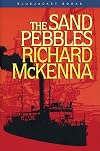
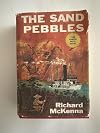
The Sand Pebbles
by Richard McKenna
On This Page
Description
The critically acclaimed New York Times-bestseller and the basis for the Academy Award- and Golden Globe-nominated film starring Steve McQueen. As a spirit of nationalism inspired by Chiang Kai-shek's leadership begins to sweep through China, the river gunship San Pablo is ordered to patrol the region and to protect US citizens. Jack Holman is a machinist aboard the San Pablo, who has joined the navy in order to avoid jail time. Because he is so fiercely independent, Jake remains a relative show more loner and is uncomfortable with navy protocol and discipline. McKenna's independent mind chafes against military hierarchy and also ensures that he does not share his shipmates' disdain for the Chinese. Instead, McKenna is fascinated with the culture and the people that surround him and develops emotional bonds that prove quite thorny when the circumstances become more tumultuous and more dire. The perspective of The Sand Pebbles is therefore both panoramic as well as personal. Like Lawrence of Arabia, the tension explored here is between the self as individual against the broader spectrum of social and historical forces against which we are all measured. show lessTags
Recommendations





















Member Recommendations


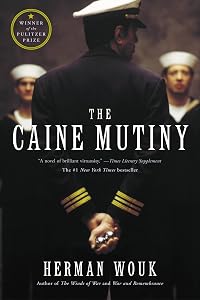
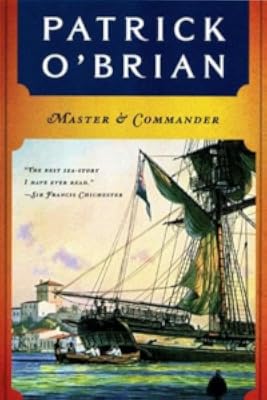
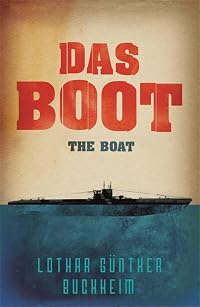
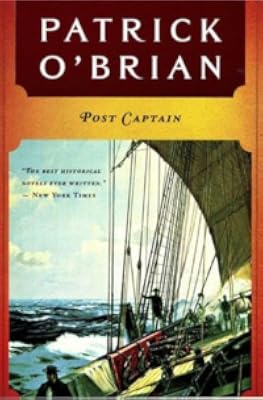
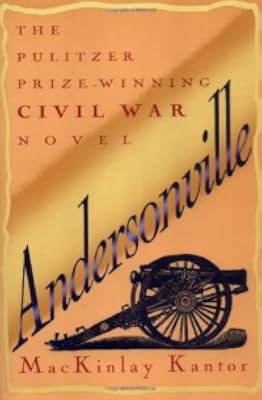
dypaloh Andre Malraux’s novel Man’s Fate, like The Sand Pebbles, is concerned with events happening during the revolution in China led by Chiang Kai-Shek and the Chinese Communist Party that eventually would be led by Mao Zedong (Mao Tse-tung). Malraux’s story focuses on the urban uprising in Shanghai.
Member Reviews
"What the hell are the unequal treaties, anyway?" Wilsey said once.
"They give us our treaty rights," Ellis said. "We got to stand up for our rights."
"What the hell ARE our rights?"
"I don't know. I guess the officers know," Ellis said.
__________________
And there in a nutshell is the crux of the book: the blind defenses of Western imperialism whether in military, industrial, or missionary form and the fates they ran into in China during the Northern Expedition revolution of 1926-7. The main story of the book is a strong one, clear in its portrait of the racism, the sheer overarching exploitation by the West in post-Imperial China; the _small_ stories do a better job of getting across the bigger picture than a command-level or political show more drama would. McKenna does a grand job of making the China of that day come alive.
But this book is not without its flaws. A couple are very prominent and I need to point them out; too many of the reviews I've seen apparently give McKenna a total mulligan on them.
First, this is a Man Book: women are totally glossed. The female lead, the supposedly strong-willed missionary Shirley Eckert, exists only as foil for a couple male characters and keeps thinking how she wants a man to take care of her. Women in "The Sand Pebbles" are chattel or poker chips. Maybe that's how McKenna saw the world, but I'd like to reference James Michener's "Tales of the South Pacific" as a similar story, but with its very dynamic women as a counterpoint.
Second, and more irritating to me, is the engine. For the first half of the book, the ship's engine and its nuts-and-bolts (literally) consume entire swaths of text; does McKenna expect readers to know all the parts, configurations, and workings of a coal-fired, triple-expansion steam engine? In Moby-Dick, Melville knows his readers don't know the workings of a whaling ship, so he explains the tools and ship configuration, and includes illustrations to make it clear. Melville's "stuff" remains in play for the rest of the book however, but McKenna just stops writing about the engine altogether halfway in, after having made it a character. Wasted time and space, then.
TSP is a really good book, but that's it. And I sure wish it included a map! Thank goodness for online search engines, now. You kind of need a library to follow along. show less
"They give us our treaty rights," Ellis said. "We got to stand up for our rights."
"What the hell ARE our rights?"
"I don't know. I guess the officers know," Ellis said.
__________________
And there in a nutshell is the crux of the book: the blind defenses of Western imperialism whether in military, industrial, or missionary form and the fates they ran into in China during the Northern Expedition revolution of 1926-7. The main story of the book is a strong one, clear in its portrait of the racism, the sheer overarching exploitation by the West in post-Imperial China; the _small_ stories do a better job of getting across the bigger picture than a command-level or political show more drama would. McKenna does a grand job of making the China of that day come alive.
But this book is not without its flaws. A couple are very prominent and I need to point them out; too many of the reviews I've seen apparently give McKenna a total mulligan on them.
First, this is a Man Book: women are totally glossed. The female lead, the supposedly strong-willed missionary Shirley Eckert, exists only as foil for a couple male characters and keeps thinking how she wants a man to take care of her. Women in "The Sand Pebbles" are chattel or poker chips. Maybe that's how McKenna saw the world, but I'd like to reference James Michener's "Tales of the South Pacific" as a similar story, but with its very dynamic women as a counterpoint.
Second, and more irritating to me, is the engine. For the first half of the book, the ship's engine and its nuts-and-bolts (literally) consume entire swaths of text; does McKenna expect readers to know all the parts, configurations, and workings of a coal-fired, triple-expansion steam engine? In Moby-Dick, Melville knows his readers don't know the workings of a whaling ship, so he explains the tools and ship configuration, and includes illustrations to make it clear. Melville's "stuff" remains in play for the rest of the book however, but McKenna just stops writing about the engine altogether halfway in, after having made it a character. Wasted time and space, then.
TSP is a really good book, but that's it. And I sure wish it included a map! Thank goodness for online search engines, now. You kind of need a library to follow along. show less
“The students say Buddha came to China on a white horse and Christ came on a cannonball.”
—The Sand Pebbles
Very likely no novel ever has devoted more prose to a ship’s engines than does The Sand Pebbles. Richard McKenna’s descriptions of the naval river gunboat San Pablo and its engine room recall Melville’s extensive detailing of the Pequod. It gives substance to the love for machinery felt by the book’s central character, Jake Holman, the ship’s testy engineer.
Engines obey well defined rules of repair and maintenance, rules controlling energy and forces, rules that Jake Holman finds congenial. However, the affairs of men and navy and politics, and the confusions they entail, not surprisingly prove of more matter. Rules show more will change. Jake, and the well portrayed commander of the gunboat, Lt. Collins, are central to how this plays out.
The “Sand Pebbles” are the men who form the official crew of the San Pablo. They are a rollicking group of navy guys with all the frictions and exuberance and tendencies to misbehavior that suggests. The San Pablo also has an unofficial crew of Chinese men who perform many of the regular duties on board normally assigned to Americans. It is a good business partnership for the Chinese crew and the interactions of the two crews catch one’s attention. Though he does less well in their portrayal, McKenna is much concerned with the Chinese, whether crew members or others. Their story is essential to everything the novel confronts.
The book’s dramatic pivot is when rules begin to change for everyone and the Sand Pebbles come to realize for the first time that the assumptions on which their military conduct is based no longer apply. The politics of China had been understood as conflicts of warlords attempting to assert control of regions and cities. When the “gearwheels” (nicknamed after the shape of a symbol on the flags carried by Chiang Kai-shek’s troops) appear, their activity is interpreted as yet another warlord struggle. It is not. The characters find themselves suddenly confronted with forces they are not positioned to understand, enmeshed in the armed revolution by which Chiang Kai-shek’s Kuomintang sought power. The novel portrays, in a different situation, the general struggle also described in André Malraux’s Man’s Fate.
Who are these gearwheels led by Chiang Kai-shek? Command explains:
“Who are they? I’ll tell you who they are. They are more than the simple, ignorant Chinese whom they are using. They are the clever, seeing ones anywhere in the world who fear and envy America . . .
“They are the people who hate America in their hearts,” he said harshly. “They can even be Americans themselves, and those are most devilish of all.”
It is a speech, in a novel published in 1962 about events of the 1920s, which recalls the one given by George W. Bush to Congress days after 9/11:
“Americans are asking ‘Why do they hate us?’…They hate our freedoms: our freedom of religion, our freedom of speech, our freedom to vote and assemble and disagree with each other.”
In China, though, it was not just the Americans inspiring hate. It was all the nations who were party to the Unequal Treaties that the Kuomintang opposed.
Unexpectedly, the ones who “can even be Americans…most devilish of all” include Christian missionaries at work in the Chinese countryside, the ones who have noticed the “great embarrassment…that mission-educated students were the most virulently anti-Christian”:
One of the “devilish” missionaries, the gentle Shirley Eckert, asks “Why can’t we just be citizens of the human race?”
Another “devilish” missionary, the sympathetic Gillespie, replies “Legally, no such human category is permissible.”
The “devilish” head of the Christian mission, Craddock, sums up the situation, saying “Those who put God ahead of country are all in a sense stateless persons.”
Conscience. Loyalty. Duty. These are issues at stake with no easy choices for the reverent or the profane, or for the dissident or the patriot, most especially when danger is pressing.
The author served 22 years in the navy, part of that service in China, and saw duty during World War II and in Korea. He knows his subject and must have given much thought to it. This long but well-paced novel (turned into a major motion picture) spurs the reader to think about it too. show less
—The Sand Pebbles
Very likely no novel ever has devoted more prose to a ship’s engines than does The Sand Pebbles. Richard McKenna’s descriptions of the naval river gunboat San Pablo and its engine room recall Melville’s extensive detailing of the Pequod. It gives substance to the love for machinery felt by the book’s central character, Jake Holman, the ship’s testy engineer.
Engines obey well defined rules of repair and maintenance, rules controlling energy and forces, rules that Jake Holman finds congenial. However, the affairs of men and navy and politics, and the confusions they entail, not surprisingly prove of more matter. Rules show more will change. Jake, and the well portrayed commander of the gunboat, Lt. Collins, are central to how this plays out.
The “Sand Pebbles” are the men who form the official crew of the San Pablo. They are a rollicking group of navy guys with all the frictions and exuberance and tendencies to misbehavior that suggests. The San Pablo also has an unofficial crew of Chinese men who perform many of the regular duties on board normally assigned to Americans. It is a good business partnership for the Chinese crew and the interactions of the two crews catch one’s attention. Though he does less well in their portrayal, McKenna is much concerned with the Chinese, whether crew members or others. Their story is essential to everything the novel confronts.
The book’s dramatic pivot is when rules begin to change for everyone and the Sand Pebbles come to realize for the first time that the assumptions on which their military conduct is based no longer apply. The politics of China had been understood as conflicts of warlords attempting to assert control of regions and cities. When the “gearwheels” (nicknamed after the shape of a symbol on the flags carried by Chiang Kai-shek’s troops) appear, their activity is interpreted as yet another warlord struggle. It is not. The characters find themselves suddenly confronted with forces they are not positioned to understand, enmeshed in the armed revolution by which Chiang Kai-shek’s Kuomintang sought power. The novel portrays, in a different situation, the general struggle also described in André Malraux’s Man’s Fate.
Who are these gearwheels led by Chiang Kai-shek? Command explains:
“Who are they? I’ll tell you who they are. They are more than the simple, ignorant Chinese whom they are using. They are the clever, seeing ones anywhere in the world who fear and envy America . . .
“They are the people who hate America in their hearts,” he said harshly. “They can even be Americans themselves, and those are most devilish of all.”
It is a speech, in a novel published in 1962 about events of the 1920s, which recalls the one given by George W. Bush to Congress days after 9/11:
“Americans are asking ‘Why do they hate us?’…They hate our freedoms: our freedom of religion, our freedom of speech, our freedom to vote and assemble and disagree with each other.”
In China, though, it was not just the Americans inspiring hate. It was all the nations who were party to the Unequal Treaties that the Kuomintang opposed.
Unexpectedly, the ones who “can even be Americans…most devilish of all” include Christian missionaries at work in the Chinese countryside, the ones who have noticed the “great embarrassment…that mission-educated students were the most virulently anti-Christian”:
One of the “devilish” missionaries, the gentle Shirley Eckert, asks “Why can’t we just be citizens of the human race?”
Another “devilish” missionary, the sympathetic Gillespie, replies “Legally, no such human category is permissible.”
The “devilish” head of the Christian mission, Craddock, sums up the situation, saying “Those who put God ahead of country are all in a sense stateless persons.”
Conscience. Loyalty. Duty. These are issues at stake with no easy choices for the reverent or the profane, or for the dissident or the patriot, most especially when danger is pressing.
The author served 22 years in the navy, part of that service in China, and saw duty during World War II and in Korea. He knows his subject and must have given much thought to it. This long but well-paced novel (turned into a major motion picture) spurs the reader to think about it too. show less
Published in 1962, The Sand Pebbles is book about the fictional U.S. Navy gunboat San Pablo, patrolling the rivers and ports of China in the 1920’s. As the story opens, protagonist Jake Holman is just arriving onboard. He is not a typical sailor – he resents the submission to authority and discipline required for military duty. He has been shuffled from one ship to another due to his attitude. He excels at maintaining the ship’s engines.
Holman, as an outsider, is not popular with the crew, but eventually makes a few loyal friends. He takes one of the Chinese laborers under his wing to teach him about engines. He helps another when the friend becomes involved with a local Chinese woman. Jake keeps in touch with a female Christian show more missionary and teacher he met on his way to his duty station. He forms genuine friendships for the first time in his life. He does not buy into the racist attitudes toward the Chinese and becomes a sympathetic character.
The first half of the book describes shipboard and shoreside life during the era of “gunboat diplomacy” and the second shows the changes brought about by the rise of Chinese Nationalism. Themes include identity, loyalty, courage, class, and power. It is a story of a country on the verge of revolution, and the impact on the forces that previously had the upper hand.
The author vividly portrays the time and place. The first half is relatively tame compared to the volatile second half. The characters are realistic, with strengths and flaws. Jake’s character is particularly well-formed. McKenna includes representatives of the many groups involved in this complex time. The climax is expertly constructed. The reader can sense the characters’ distress in dealing with torn loyalties and painful decisions. The story includes violence and tragedy, but also tenderness and compassion. It is Jake’s story but also provides insight into this period of China’s history. This was one of my grandfather’s favorite books. show less
Holman, as an outsider, is not popular with the crew, but eventually makes a few loyal friends. He takes one of the Chinese laborers under his wing to teach him about engines. He helps another when the friend becomes involved with a local Chinese woman. Jake keeps in touch with a female Christian show more missionary and teacher he met on his way to his duty station. He forms genuine friendships for the first time in his life. He does not buy into the racist attitudes toward the Chinese and becomes a sympathetic character.
The first half of the book describes shipboard and shoreside life during the era of “gunboat diplomacy” and the second shows the changes brought about by the rise of Chinese Nationalism. Themes include identity, loyalty, courage, class, and power. It is a story of a country on the verge of revolution, and the impact on the forces that previously had the upper hand.
The author vividly portrays the time and place. The first half is relatively tame compared to the volatile second half. The characters are realistic, with strengths and flaws. Jake’s character is particularly well-formed. McKenna includes representatives of the many groups involved in this complex time. The climax is expertly constructed. The reader can sense the characters’ distress in dealing with torn loyalties and painful decisions. The story includes violence and tragedy, but also tenderness and compassion. It is Jake’s story but also provides insight into this period of China’s history. This was one of my grandfather’s favorite books. show less
4.5 stars- rounded down.
It is China 1926. Chiang Kai Shek’s Kuomintang is on the rise and China is on the brink of eruption. Jake Holman is a sailor on the American gunship, San Pablo, and he and his shipmates will be at the center of the explosion, as the Chinese begin to expel foreign interests from their country.
Holman is a misfit. He loves and understands the engine, the machinery for which he is responsible on the ship, but he does not understand people very well and knows little or nothing of love. His feelings about the Chinese are not quite in line with his fellow seamen and he befriends and trains a coolie who helps him to see the Chinese as individuals rather than as a class of people to be exploited for labor or sex. He is show more more aware and more open than those around him, and that does not always serve him well in dealing with those he encounters.
Then there are the missionaries, and particularly Miss Eckert. If you have seen the movie made from this book (a wonderful thing starring the inimitable Steve McQueen), you will expect a more robust love story than you will get between these pages. The romantic angle works for the movie, but here McKenna seems to be making a much different point in having Miss Eckert as part of his tale. She is the unattainable dream and sometimes the motivating force for Holman, and even when he steeps himself in thoughts of her, she eludes him. For each of these men, trapped aboard a small ship in a world that they do not understand and of which they are truly not a part, there is something that pushes them through the frightening situation they are in, and for Holman it is Shirley Eckert.
There is a great deal of detail here about the workings of the engine, the daily lives of the crew and the onboard coolies, the marches and political dealings of the revolutionaries and the rules that operate between the powerful nations that seem to want to divide China between them and the Chinese who are its life’s blood. The details are never boring and always informative of the plot. Nothing is unnecessary or misplaced. I closed the book understanding much more about the era it addresses and the individual characters portrayed.
I have had this book sitting on my library shelf for a number of years, and I am so glad that I did not allow it to sit any longer. I gave a dollar for it on a bargain table...talk about getting your monies worth! show less
It is China 1926. Chiang Kai Shek’s Kuomintang is on the rise and China is on the brink of eruption. Jake Holman is a sailor on the American gunship, San Pablo, and he and his shipmates will be at the center of the explosion, as the Chinese begin to expel foreign interests from their country.
Holman is a misfit. He loves and understands the engine, the machinery for which he is responsible on the ship, but he does not understand people very well and knows little or nothing of love. His feelings about the Chinese are not quite in line with his fellow seamen and he befriends and trains a coolie who helps him to see the Chinese as individuals rather than as a class of people to be exploited for labor or sex. He is show more more aware and more open than those around him, and that does not always serve him well in dealing with those he encounters.
Then there are the missionaries, and particularly Miss Eckert. If you have seen the movie made from this book (a wonderful thing starring the inimitable Steve McQueen), you will expect a more robust love story than you will get between these pages. The romantic angle works for the movie, but here McKenna seems to be making a much different point in having Miss Eckert as part of his tale. She is the unattainable dream and sometimes the motivating force for Holman, and even when he steeps himself in thoughts of her, she eludes him. For each of these men, trapped aboard a small ship in a world that they do not understand and of which they are truly not a part, there is something that pushes them through the frightening situation they are in, and for Holman it is Shirley Eckert.
There is a great deal of detail here about the workings of the engine, the daily lives of the crew and the onboard coolies, the marches and political dealings of the revolutionaries and the rules that operate between the powerful nations that seem to want to divide China between them and the Chinese who are its life’s blood. The details are never boring and always informative of the plot. Nothing is unnecessary or misplaced. I closed the book understanding much more about the era it addresses and the individual characters portrayed.
I have had this book sitting on my library shelf for a number of years, and I am so glad that I did not allow it to sit any longer. I gave a dollar for it on a bargain table...talk about getting your monies worth! show less
This is one of my favor novels, one that I would want on the proverbial desert island. I re-read it about once every ten years, and it's always fresh. This is a novel that can be enjoyed on many levels. It is an historical action-adventure story, with lots of pushing, shoving and fighting. It's a historical romance, in the tradition of Sir Walter Scott: a hero in an exotic foreign land, a long time past, fighting for what's right. It's a novel about Navy life, with lots of Navy procedures and protocol.
But to me it's more than that. It's a philosophic novel that asks the question, `Who's life is this?' I believe that in all our lives, there is a tension between what we would like to do, what we would like to be, and what the rest of the show more world tells us what we ought to do, indeed, what we will do. Our family pushes and pulls us in one direction, our employer in another direction, our community in another direction. Where does my own autonomy fit with the countless demands everybody else is making on me?
This is the essence of `The Sand Pebbles,' with the Navy acting a surrogate for society. The protagonist of this book, Jake Holeman is a misfit in life, forced into the Navy to avoid reform school, he drifts through the Navy without meaning or purpose until he learns to work on the ship's engines. It is only while he works on the engines that he finds fulfillment. Jake is not an anti-hero, he is smart and likable but he chafes at the many impositions society and the Navy place in his way. Everything in life is something he has to endure, except working on the engines.
Like an unappreciated artist who must paint or write, Jake Holeman must work on machinery. Machinery doesn't care who a man is, where he was born, or how good his manners are. Unlike the rest of the world, machinery can't be flattered, cajoled or ordered. It only cares how much you know. If you know how it works, it will perform wonders; if you don't, if you try to con it, it could kill you. At first it appears Jake has found the perfect ship, a small gunboat patrolling some obscure river in an obscure part of China. Jake is the senior engineer, and as long as he keeps the ship running, life will be perfect. But no man can live is he chooses, there are always others who will tell you what you will do.
So what happens to when you decide to live life on their own terms, to answer only to your own conscience? The world strikes back, and the results are tragic. Yet the tension remains, if we are to live life instead of just exist in it, we have to, by our own nature, push and shove back. Everybody dies, but few actually live. It would be a shame if they book were forgotten.
This book was made into a great movie with Steve McQueen playing the lead character, but the books offers so much more detail. If you enjoyed the movie, you will be delighted with the book. Buy the book and re-read it every ten years to see how your life is going. show less
But to me it's more than that. It's a philosophic novel that asks the question, `Who's life is this?' I believe that in all our lives, there is a tension between what we would like to do, what we would like to be, and what the rest of the show more world tells us what we ought to do, indeed, what we will do. Our family pushes and pulls us in one direction, our employer in another direction, our community in another direction. Where does my own autonomy fit with the countless demands everybody else is making on me?
This is the essence of `The Sand Pebbles,' with the Navy acting a surrogate for society. The protagonist of this book, Jake Holeman is a misfit in life, forced into the Navy to avoid reform school, he drifts through the Navy without meaning or purpose until he learns to work on the ship's engines. It is only while he works on the engines that he finds fulfillment. Jake is not an anti-hero, he is smart and likable but he chafes at the many impositions society and the Navy place in his way. Everything in life is something he has to endure, except working on the engines.
Like an unappreciated artist who must paint or write, Jake Holeman must work on machinery. Machinery doesn't care who a man is, where he was born, or how good his manners are. Unlike the rest of the world, machinery can't be flattered, cajoled or ordered. It only cares how much you know. If you know how it works, it will perform wonders; if you don't, if you try to con it, it could kill you. At first it appears Jake has found the perfect ship, a small gunboat patrolling some obscure river in an obscure part of China. Jake is the senior engineer, and as long as he keeps the ship running, life will be perfect. But no man can live is he chooses, there are always others who will tell you what you will do.
So what happens to when you decide to live life on their own terms, to answer only to your own conscience? The world strikes back, and the results are tragic. Yet the tension remains, if we are to live life instead of just exist in it, we have to, by our own nature, push and shove back. Everybody dies, but few actually live. It would be a shame if they book were forgotten.
This book was made into a great movie with Steve McQueen playing the lead character, but the books offers so much more detail. If you enjoyed the movie, you will be delighted with the book. Buy the book and re-read it every ten years to see how your life is going. show less
During the 1925-1927 Chinese Revolution centered in Shanghai, an American gunboat on the Yangtze River Patrol steams between Hankow and Paoshan. Aboard the San Pablo is a machinist, Jake Holman, who develops mixed loyalties between his crew, who call themselves "Sand Pebbles" in an allusion to the ship's name, the local Chinese, and the "coolies" who do the heavy labor on the San Pablo. He also develops an attachment towards a teacher at an American mission and gradually comes to disassociate himself from his naval duties and even his beloved engines and machines.
This novel is a rather unique look at a period of American actions in China. Although the term "gunboat diplomacy" is still commonplace, its origins in 19th century European show more imperialism have faded somewhat. So, too, has the extraordinary history of the Yangtze River Patrol, where American gunboats steamed up and down China's Yangtze River for almost a century, from 1854 to 1949, giving armed reinforcement to American missionaries and business interests at treaty ports and European concessions. The separate American concessions themselves had a relatively short history, with only two ever in place and those two only in place in Shanghai from 1848 to 1863 and far to the north in Tianjin from 1860 to 1902.
Richard McKenna's overwhelming success at capturing the mood and atmosphere of the patrol during the 1920s is no surprise. McKenna himself was a machinist on an American gunboat on the Yangtze in the 1930s. He combined firsthand experience with the history and lore of the Chinese Revolution from a decade earlier. The result is a classic novel of those times, which was a bestseller in the early 1960s. And, of course, nowadays it is almost impossible to separate the book from the even more popular 1966 motion picture starring Steve McQueen as Jake Holman, Mako as Po-han, Candice Bergen as the missionary teacher, Richard Crenna as the LT, Richard Attenborough as Frenchy Burgoyne, Simon Oakland as Stawski, and the Thai actress/novelist Marayat Krasaesin (aka Emmanuelle Arsan) as Maily.
Central to the novel is the metaphor of the engine and the machines. At times they appear clean and scrubbed but have a fatal flaw within their inner operations. When Holman arrives, he discovers the "flaw," repairs it, and the ship runs harmoniously--until things are thrown out of balance once more, the coolies desert, and crew fragments. Even Holman deserts in his own way. At the end, the San Pablo is an afterthought, as is the way of military life that made her operation possible in the first place. show less
This novel is a rather unique look at a period of American actions in China. Although the term "gunboat diplomacy" is still commonplace, its origins in 19th century European show more imperialism have faded somewhat. So, too, has the extraordinary history of the Yangtze River Patrol, where American gunboats steamed up and down China's Yangtze River for almost a century, from 1854 to 1949, giving armed reinforcement to American missionaries and business interests at treaty ports and European concessions. The separate American concessions themselves had a relatively short history, with only two ever in place and those two only in place in Shanghai from 1848 to 1863 and far to the north in Tianjin from 1860 to 1902.
Richard McKenna's overwhelming success at capturing the mood and atmosphere of the patrol during the 1920s is no surprise. McKenna himself was a machinist on an American gunboat on the Yangtze in the 1930s. He combined firsthand experience with the history and lore of the Chinese Revolution from a decade earlier. The result is a classic novel of those times, which was a bestseller in the early 1960s. And, of course, nowadays it is almost impossible to separate the book from the even more popular 1966 motion picture starring Steve McQueen as Jake Holman, Mako as Po-han, Candice Bergen as the missionary teacher, Richard Crenna as the LT, Richard Attenborough as Frenchy Burgoyne, Simon Oakland as Stawski, and the Thai actress/novelist Marayat Krasaesin (aka Emmanuelle Arsan) as Maily.
Central to the novel is the metaphor of the engine and the machines. At times they appear clean and scrubbed but have a fatal flaw within their inner operations. When Holman arrives, he discovers the "flaw," repairs it, and the ship runs harmoniously--until things are thrown out of balance once more, the coolies desert, and crew fragments. Even Holman deserts in his own way. At the end, the San Pablo is an afterthought, as is the way of military life that made her operation possible in the first place. show less
I fell in love with the movie The Sand Pebbles long ago and have watched it many times. Steve McQueen was Jake Holman. But it took a long time for me to decide to read the book. I was afraid it would ruin the film for me, as happens so often. My fears were completely unfounded! I found the book made the movie come more to life as the changes in the film were mostly done to make the film something a 1960s American audience, little educated in Asian history, could follow with little clarification. The armies fighting one another in the film were Chinese and Japanese rather than the two factions of Democratic vs Bolshevik philosophies within China itself.
I find I love the book as much as I do the movie and, like the movie, will again relax show more with the characters, all so familiar now. show less
I find I love the book as much as I do the movie and, like the movie, will again relax show more with the characters, all so familiar now. show less
Members
- Recently Added By
Lists

Top Five Books of 2013
1,562 works; 721 members

Publisher's Weekly Bestsellers - Part II - 1940 - 1979
355 works; 6 members
Talk Discussions
Past Discussions
The Sand Pebbles by Richard McKenna in Second World War History (August 2012)
Author Information

12+ Works 607 Members
Awards and Honors
Awards
Distinctions
Series
Belongs to Publisher Series
Work Relationships
Has the adaptation
Common Knowledge
- Canonical title
- The Sand Pebbles
- Original publication date
- 1963
- People/Characters
- Jake Holman; Po-han; Lt. Collins; Ensign Bordelles; Miss Eckert; Frenchy Burgoyne (show all 7); Maily
- Important places
- USS San Pablo; China Light Mission; China
- Important events
- The Northern Expedition (1926-1928 | start of Chinese Civil War 1926-1950)
- Related movies
- The Sand Pebbles (1966 | IMDb)
- Dedication
- For Eva
- First words
- "Hello, ship," Jake Holman said under his breath.
- Quotations
- “We [the military personnel here] serve the flag. The trade we all follow is the give and take of death. It is for that purpose that the American people maintain us. Any one of us who believes he has a job like any other... (show all), for which he draws a money wage, is a thief of the food he eats and a trespasser of the bunk in which he lies down to sleep.”
- Last words
- (Click to show. Warning: May contain spoilers.)The flailing storm of lead crumpled and threw Jake Holman like a giant hand wadding wastepaper.
- Blurbers
- Michener, James A.
- Original language
- English
- Canonical DDC/MDS
- 813.54
- Canonical LCC
- PS3563.A3155
Classifications
Statistics
- Members
- 429
- Popularity
- 72,248
- Reviews
- 17
- Rating
- (4.17)
- Languages
- English, Finnish, Italian, Swedish
- Media
- Paper, Audiobook, Ebook
- ISBNs
- 11
- ASINs
- 22