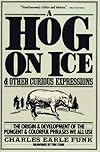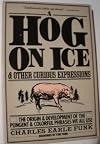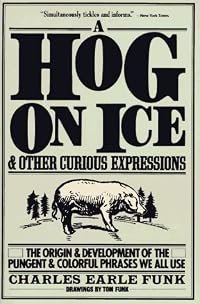
A Hog on Ice
by Charles E. Funk
On This Page
Description
Traces the sources of over four hundred expressions and sayings used in everyday speech.Tags
Recommendations
































Member Reviews
Tells the origins and meanings of many many sayings- over four hundred of them. It's a nice read especially if you are interested in etymology. The forward describes in detail how the author sought out the original meaning of the phrase "as independent as a hog on ice"; the rest of the entries simply outline what the final findings were. Most of the expressions I had heard before, a few were entirely unfamiliar to me. Some I had an idea where they came from, others it was the opposite of what I would have assumed. Lots are from political moments in history, old arcane practices, or mispronunciations of former word forms (many of the expressions are centuries old). In some cases the author found no evidence at all, so he surmised a best show more guess.
from the Dogear Diary show less
from the Dogear Diary show less
"A Hog On Ice simultaneously tickles and informs it's reader. Writing as the vaudevillian used to play the fiddle, for his own amazement, Dr.Funk has set down with humor and scholarship the best and most plausible explanations he could pry out of past records and living persons." - S.C. Gross, N.Y. Times
Ratings
Members
- Recently Added By
Author Information
39 Works 2,211 Members
Common Knowledge
- Canonical title
- A Hog on Ice
- Original publication date
- 1948
- Dedication
- To the memory
of my mother,
Cynthia Ellen Funk - First words
- in a blue funk
It would be interesting if, through family records, I could bring an unexpected source into view which would explain why this expression means 'in a state of dire panic,' or from another record ... (show all)why a stooge for an auctioneer, one who makes fictitious bids to stimulate higher bids, is called a 'Peter Funk'; but, alas, no such records are known. - Last words
- (Click to show. Warning: May contain spoilers.)Such a disorderly, deranged, shiftless place has "gone haywire", and this, from observation of numerous such places in Colorado mining camps, Wyoming ranches, and Idaho, Utah and California farms, I believe, gave rise to our expression.
Classifications
Statistics
- Members
- 458
- Popularity
- 66,377
- Reviews
- 3
- Rating
- (3.42)
- Languages
- English
- Media
- Paper
- ISBNs
- 4
- ASINs
- 6