On This Page
Description
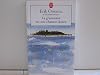
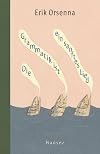
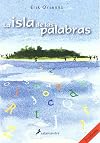
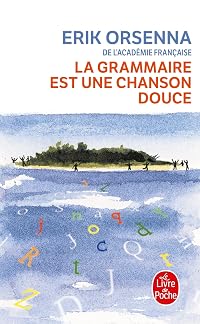
"In the spirit of The Little Prince, this fantasy about the adventures of a shipwrecked brother and sister is a book for young people best appreciated by grown-ups. At the heart of its message is an impassioned plea for the magic and power of words." "Jeanne, the tough-minded ten-year-old narrator, and Thomas, fourteen, are traveling to America on an ocean liner to visit one of their parents when a violent storm sinks their ship and tosses them up on an island. They are unhurt, but the shock show more of the experience leaves them unable to speak. Taken into the care of Monsieur Henri, an elderly islander, Jeanne and Thomas discover that the island is unlike any place they've ever been. There is the Word market, where Monsieur Henri visits the Poets' and Song-Writers' Corner to see if they have any rhymes for sweet and mom. At town hall, pairs of words are married by the mayor. Jeanne sneaks off to the Vocabulary of Love Shop, where a woman whose husband has left her wants to buy "a word that will make him understand how hurt I am, a mighty word that will make him ashamed.""--BOOK JACKET. show lessTags
Recommendations





























Member Recommendations
ljbwell Slim fantasies full of warmth and meaning.
Member Reviews
I'll preface this by saying I was reading the original French version, since some of these reviews are for the English translation.
This is a sweet, lyrical story which aims to "re-teach" us the magic and joy of language. The underlying message is fairly clearly aimed at the dry way in which French grammar is taught in French schools, and I have to say the "charabia" or gobbledygook quoted from French education ministry documents reminded me horribly of the grammar book we use in my French diploma class. Just trying to decipher the first few words, I feel my eyes glazing over, my brain turning to porridge and my stomach filling with lead. No wonder my standard of French grammar hasn't improved much over the past few years - it's not me, show more it's the bloody grammar book! Oh, for a factory of words such as Jeanne has to play with!
So, in summary, a very pleasant, interesting and easy to read book. Not quite up there with Le petit prince in terms of literary perfection, but still a lovely read. show less
This is a sweet, lyrical story which aims to "re-teach" us the magic and joy of language. The underlying message is fairly clearly aimed at the dry way in which French grammar is taught in French schools, and I have to say the "charabia" or gobbledygook quoted from French education ministry documents reminded me horribly of the grammar book we use in my French diploma class. Just trying to decipher the first few words, I feel my eyes glazing over, my brain turning to porridge and my stomach filling with lead. No wonder my standard of French grammar hasn't improved much over the past few years - it's not me, show more it's the bloody grammar book! Oh, for a factory of words such as Jeanne has to play with!
So, in summary, a very pleasant, interesting and easy to read book. Not quite up there with Le petit prince in terms of literary perfection, but still a lovely read. show less
This is an utterly charming little book about the joys of language. Jeanne and her brother, Thomas, are on a sea cruise during their Easter holidays when their ship is wrecked and they wash up on an island. They are so shocked by the disaster they underwent that they have "lost their words" -- fortunately, this island is filled with words that will help them recover. I enjoyed this book immensely. If you enjoy fables or Le petit prince, or if you love to play with language, then you will probably like this book.
Many thanks to IrishHolger for pointing out that an English version exists (I did not realize there was one): Grammar is a Sweet Gentle Song: http://www.amazon.ca/Grammar-Is-Sweet-Gentle-Song/dp/0807615315
Many thanks to IrishHolger for pointing out that an English version exists (I did not realize there was one): Grammar is a Sweet Gentle Song: http://www.amazon.ca/Grammar-Is-Sweet-Gentle-Song/dp/0807615315
What is the purpose of the Académie française in the 21st century? How can it rejuvenate its image to make it seem like a positive force for the French language, rather than a reactionary, prescriptivist, anti-American relic? This book, which has been translated into English as Grammar is a Sweet, Gentle Song, shows how one Académie member would answer the question: Language needs people to care for it, not in the way that museum curators preserve holy relics, but as nurses love and protect their delicate patients.
The plot is an airy fantasy: a brother and sister are shipwrecked on a desert island and lose their ability to speak, and must learn to "respeak" with the help of a kindly old man called Monsieur Henri. On their adventure, show more they meet an old woman who revives dying words in the dictionary; visit the village of words, where adjectives and nouns get married; and tour the sentence factory, whose machinery transforms meaning into grammar. There's also a villain whose laboratory takes the souls out of words through cold scientific analysis and brutal pedagogy (shades of The Golden Compass's "Gobblers"), but Orsenna cannot stand to look at such cruelty, so our heroine is promptly rescued.
It's clearly kid stuff; and when Monsieur Henri says, "If you don't love grammar by the end of the week, I'll smash my guitar," it's obviously Orsenna addressing his readers. Despite his saccharine Little Prince allegories, you can see that his heart is in the right place - and he speaks to an issue that is of clear professional importance and personal interest to me. (Just last week, I was complaining that I want language teaching to be treated as an art, while heartless bureaucrats are trying to make a science of it.)
As I was reading, I amused myself by considering the challenges of an English-language translation. Like any book on language, this book includes a few scenes that would really have to be re-envisioned to make the same impact on an English-speaking audience. In the village of words, for instance, the article's job is to announce the grammatical gender of the noun that employs it. In the evil lab, teachers are forced to read from publications of the French Ministry of Education (Orsenna's foray into politics). The secret back room in the factory hides the workshop where Saint-Exupery, Proust, and La Fontaine are secretly still writing. What would be the English and/or American equivalents? I'm curious to look at the existing translation; I suspect that the translator may have left it more or less French.
Original post on "All The Things I've Lost" show less
The plot is an airy fantasy: a brother and sister are shipwrecked on a desert island and lose their ability to speak, and must learn to "respeak" with the help of a kindly old man called Monsieur Henri. On their adventure, show more they meet an old woman who revives dying words in the dictionary; visit the village of words, where adjectives and nouns get married; and tour the sentence factory, whose machinery transforms meaning into grammar. There's also a villain whose laboratory takes the souls out of words through cold scientific analysis and brutal pedagogy (shades of The Golden Compass's "Gobblers"), but Orsenna cannot stand to look at such cruelty, so our heroine is promptly rescued.
It's clearly kid stuff; and when Monsieur Henri says, "If you don't love grammar by the end of the week, I'll smash my guitar," it's obviously Orsenna addressing his readers. Despite his saccharine Little Prince allegories, you can see that his heart is in the right place - and he speaks to an issue that is of clear professional importance and personal interest to me. (Just last week, I was complaining that I want language teaching to be treated as an art, while heartless bureaucrats are trying to make a science of it.)
As I was reading, I amused myself by considering the challenges of an English-language translation. Like any book on language, this book includes a few scenes that would really have to be re-envisioned to make the same impact on an English-speaking audience. In the village of words, for instance, the article's job is to announce the grammatical gender of the noun that employs it. In the evil lab, teachers are forced to read from publications of the French Ministry of Education (Orsenna's foray into politics). The secret back room in the factory hides the workshop where Saint-Exupery, Proust, and La Fontaine are secretly still writing. What would be the English and/or American equivalents? I'm curious to look at the existing translation; I suspect that the translator may have left it more or less French.
Original post on "All The Things I've Lost" show less
This is a short fantasy in which two children are shipwrecked on an island off the United States. The girl, Jeanne is the major focus as she is introduced to living letters and words which are combined grammatically to form words and sentences. Jeanne is struck speechless after the shipwreck and she must build back her confidence in language thorugh various experiences on the island. It's a nice story for younger persons, and is not really didactic.
LOVE this book. I didn't stop smiling the entire time I was reading it. What a sweet story.
I didn't know this book had been translated! What a feat. Must pick it up sometime.
Une jolie fable pleine de fantaisie, de rêve et de poésie pour dire la beauté et la richesse de la langue française. On y apprend par exemple que le verbe Aimer est bien malade d'être souvent si mal employé.
Oct 26, 2014French
Members
- Recently Added By
Author Information

Erik Orsenna is currently director of the International Center of the Sea.
Series

Belongs to Publisher Series
dtv (62402)
Common Knowledge
- Canonical title
- Grammar Is a Sweet, Gentle Song
- Original title
- La grammaire est une chanson douce
- Original publication date
- 2001
- People/Characters
- Jeanne; Thomas; Mademoiselle Laurencin; Monsieur Henri
- Dedication
- With thanks to Danielle Leeman, Professor of Grammar at the Université Paris X-Nanterre, whose friendly, mischievous erudition kept me company thoughout the journey
- First words
- Watch out!
I may look shy, mild mannered, dreamy, and small for a ten year old, but if you think that means you can mess around with me, forget it. - Last words*
- (Click to show. Warning: May contain spoilers.)Die Vögel, eifersüchtig auf all diese Ereignisse, schmollten hoch oben am Himmel.
- Blurbers
- Claire, Marie
- Original language*
- Französisch
*Some information comes from Common Knowledge in other languages. Click "Edit" for more information.
Classifications
Statistics
- Members
- 474
- Popularity
- 64,501
- Reviews
- 8
- Rating
- (3.72)
- Languages
- 7 — Catalan, English, French, German, Italian, Portuguese, Spanish
- Media
- Paper, Ebook
- ISBNs
- 17
- ASINs
- 6