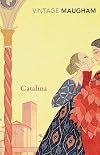
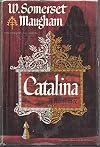
Catalina
by W. Somerset Maugham 
On This Page
Description
Crippled sixteen-year-old Catalina is the one person unable to join in the festivities of the Feast of the Assumption. But then she has a vision of the Virgin, and is miraculously cured. In the dark days of the Spanish Inquisition, such a claim to blessedness has serious consequences, especially when Catalina seems more inclined to obey her heart than the demands of the Church. The last of Maugham's novels, Catalina is a romantic celebration of Spain and a delightfully mischievous satire on show more absolutism. show lessTags
Recommendations






















Member Recommendations
anonymous user If Catalina is Maugham's best tribute to his beloved Spain in fiction, then Don Fernando, a curious blend of travel book, historical study and collection of essays, is his finest non-fiction tribute to Spain and, above all, Spaniards.
Member Reviews
Catalina is a 15 year old Spanish girl living in the time of the Inquisition. One day she is laying on the steps of the cathedral, crying because she cannot walk- one of her legs is permanently injured- to see the triumphant entry into the city of two of its favored sons. Of Don Juan de Valero’s three sons, two are famous- one a bishop, the other a warrior in the pay of the king. The third is a humble baker, who stayed to take care of his parents, raise a loving family, and help the poor. Suddenly a woman appears behind her, who asks her what is wrong. Catalina expresses her woe over her leg, including the fact that her inability to walk has caused her beloved to dump her in favor of another girl, one capable of the demanding physical show more labor of surviving and raising a family in those times. The woman tells her that she can be healed by the son of Don Juan de Valero who has served God the best, and vanishes. Obviously, the woman has to have been the Virgin Mary.
A good section of the book is devoted to describing the lives of the three sons, especially the Bishop. He has lived a life of extreme devotion, wearing a hair shirt and whipping himself for his sins. He is obviously the first choice for healing Catalina. After Catalina is healed, the head of the convent in town wants her to become a nun, feeling that the presence of a living miracle will add fame to the convent- and money in its coffers as pilgrims arrive. But Catalina has other ideas…
And here the story falls apart to me. The first part is a satire of the institutions of the medieval church and caste system, and I enjoyed it. But after Catalina is cured, we leave that frame of mind and end up in “Don Quixote”! Literally- Catalina and her small band of entertainers run into a group of actors from somewhere in Cervantes novel and spend a good bit of time with them. Now, that section of “Don Quixote” was pretty senseless to me, and it doesn’t improve in “Catalina”. So, the first half or more of this novel is witty and good; the last part just seems to fill up space (when I read “Don Quixote”, I wondered if Cervantes had been paid by the word). Three and a half stars. show less
A good section of the book is devoted to describing the lives of the three sons, especially the Bishop. He has lived a life of extreme devotion, wearing a hair shirt and whipping himself for his sins. He is obviously the first choice for healing Catalina. After Catalina is healed, the head of the convent in town wants her to become a nun, feeling that the presence of a living miracle will add fame to the convent- and money in its coffers as pilgrims arrive. But Catalina has other ideas…
And here the story falls apart to me. The first part is a satire of the institutions of the medieval church and caste system, and I enjoyed it. But after Catalina is cured, we leave that frame of mind and end up in “Don Quixote”! Literally- Catalina and her small band of entertainers run into a group of actors from somewhere in Cervantes novel and spend a good bit of time with them. Now, that section of “Don Quixote” was pretty senseless to me, and it doesn’t improve in “Catalina”. So, the first half or more of this novel is witty and good; the last part just seems to fill up space (when I read “Don Quixote”, I wondered if Cervantes had been paid by the word). Three and a half stars. show less
I would not have thought that an inquisitor could be a sympathetic character, but he is. Not by any means flawless, but human. Catalina herself, though, is fairly two dimensional. The bishop and the prioress are the meat of this book.
Catalina is a young woman who grows up after having a miracle cure from her leg being unusable. The downfall of this book is that it concentrates too much on the life of the Pope-type guy instead of on her life later as an actress. Too much setting , not enough plot.
1st American Edition
Fiction
Ratings
Members
- Recently Added By
Lists

The Novels of W. Somerset Maugham
22 works; 2 members

Authors from England
147 works; 4 members
Talk Discussions
Past Discussions
Catalina in friends of Maugham (March 2025)
Author Information

701+ Works 46,625 Members
Writer William Somerset Maugham was born in Paris on January 25, 1874. He attended St. Thomas's Medical School in London. A prolific writer, Maugham produced novels, short stories, plays, and an autobiographical novel, "Of Human Bondage." Although he remains popular for his novels and short stories, when he was alive his plays, now dated, were show more also popular, and in 1908 four of his plays ran simultaneously. Maugham died in Nice, France, on December 16, 1965. (Bowker Author Biography) show less
W. Somerset Maugham has a Legacy Library. Legacy libraries are the personal libraries of famous readers, entered by LibraryThing members from the Legacy Libraries group.
Awards and Honors
Distinctions
Series
Belongs to Publisher Series
Work Relationships
Is contained in
Common Knowledge
- Alternate titles
- Catalina: A Romance
- Original publication date
- 1948
- People/Characters
- Catalina
- Important places
- Spain
- First words
- It was a great day for the city of Castel Rodgriguez.
- Last words
- (Click to show. Warning: May contain spoilers.)So, with Catalina as it began, ends this strange, almost incredible, but edifying narrative. 25th January, 1947
- Original language
- English
Classifications
Statistics
- Members
- 484
- Popularity
- 62,667
- Reviews
- 5
- Rating
- (3.44)
- Languages
- 8 — Chinese, English, Estonian, French, German, Hungarian, Portuguese, Swedish
- Media
- Paper, Audiobook, Ebook
- ISBNs
- 17
- ASINs
- 42