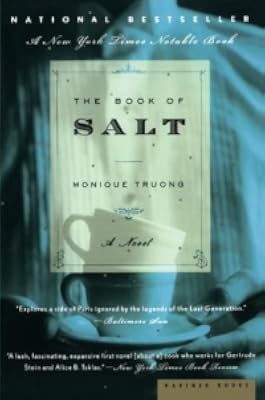
The Book of Salt
by Monique Truong
On This Page
Description
A novel of Paris in the 1930s from the eyes of the Vietnamese cook employed by Gertrude Stein and Alice B. Toklas, by the author of The Sweetest Fruits. Viewing his famous mesdames and their entourage from the kitchen of their rue de Fleurus home, Binh observes their domestic entanglements while seeking his own place in the world. In a mesmerizing tale of yearning and betrayal, Monique Truong explores Paris from the salons of its artists to the dark nightlife of its outsiders and exiles. show more She takes us back to Binh's youthful servitude in Saigon under colonial rule, to his life as a galley hand at sea, to his brief, fateful encounters in Paris with Paul Robeson and the young Ho Chi Minh. Winner of the New York Public Library Young Lions Fiction Award A Best Book of the Year: New York Times, Village Voice, Seattle Times, Miami Herald, San Jose Mercury News, and others "An irresistible, scrupulously engineered confection that weaves together history, art, and human nature...a veritable feast."--Los Angeles Times "A debut novel of pungent sensuousness and intricate, inspired imagination...a marvelous tale."--Elle "Addictive...Deliciously written...Both eloquent and original."--Entertainment Weekly "A mesmerizing narrative voice, an insider's view of a fabled literary household and the slow revelation of heartbreaking secrets contribute to the visceral impact of this first novel."--Publishers Weekly, starred review show lessTags
Recommendations










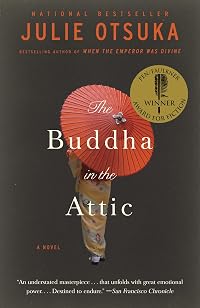
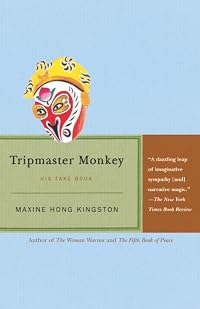
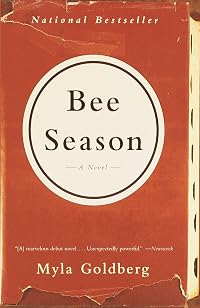
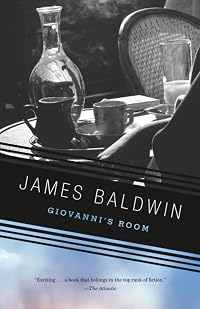
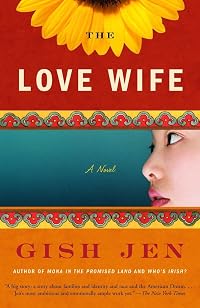

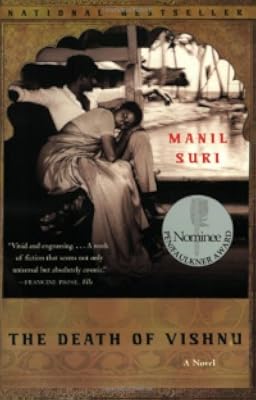
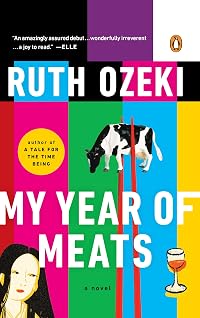

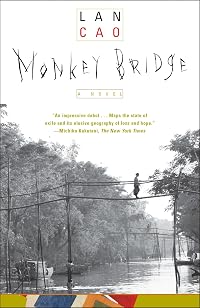






Member Recommendations

Member Reviews
Set in the 1920s and 1930s, protagonist and narrator Binh is a young gay Vietnamese cook living in Paris and working as personal chef for Gertrude Stein and her partner, Alice B. Toklas. He had to leave French Indochina due to a failed relationship and his father’s disapproval. He tells of his life and loves in Saigon and Paris, as he observes the interactions between Stein and Toklas.
This story is told in stream-of-consciousness in a non-linear timeline with frequent unannounced shifts. There is not much of a plot here, but there are two stories – one of Binh and his travails, and the other of the Stein-Toklas relationship. The writing is evocative and there are several emotionally moving scenes.
The portrayal of Binh as a voice of show more a marginalized person works particularly well. Binh knows about French cuisine, and this knowledge of food helps him break through some of the traditional stereotypes he often encounters. I liked the elegant writing and storylines, but the structure did not work all that well for me. I think this is a case where the style occasionally gets in the way. Still, I found it well worth reading. show less
This story is told in stream-of-consciousness in a non-linear timeline with frequent unannounced shifts. There is not much of a plot here, but there are two stories – one of Binh and his travails, and the other of the Stein-Toklas relationship. The writing is evocative and there are several emotionally moving scenes.
The portrayal of Binh as a voice of show more a marginalized person works particularly well. Binh knows about French cuisine, and this knowledge of food helps him break through some of the traditional stereotypes he often encounters. I liked the elegant writing and storylines, but the structure did not work all that well for me. I think this is a case where the style occasionally gets in the way. Still, I found it well worth reading. show less
Lovely-amazing! Fictional memoir of a gay Vietnamese cook employed by Gertrude Stein and Alice B. Toklas in Paris. The prose is beautiful; the storytelling richly woven back upon itself. As a narrator, Binh is scythingly perceptive, with a Parker-esque edge to his tongue. Class and power and empire and racism and sex and food and language and gender and family and--! The book narrates Binh's lifelong quest for love, both at home in Vietnam and as an exile. The book is full of walls -- language, class, race, expectations, shame -- and navigates the maze with a sense of bittersweet, painfully aware of the maze and separation created by these walls.
Set in the 1920s and 1930s, protagonist and narrator Binh is a young gay Vietnamese cook living in Paris and working as personal chef for Gertrude Stein and her partner, Alice B. Toklas. He had to leave French Indochina due to a failed relationship and his father’s disapproval. He tells of his life and loves in Saigon and Paris, as he observes the interactions between Stein and Toklas.
This story is told in stream-of-consciousness in a non-linear timeline with frequent unannounced shifts. There is not much of a plot here, but there are two stories – one of Binh and his travails, and the other of the Stein-Toklas relationship. The writing is evocative and there are several emotionally moving scenes.
The portrayal of Binh as a voice of show more a marginalized person works particularly well. Binh knows about French cuisine, and this knowledge of food helps him break through some of the traditional stereotypes he often encounters. I liked the elegant writing and storylines, but the structure did not work all that well for me. I think this is a case where the style occasionally gets in the way. Still, I found it well worth reading. show less
This story is told in stream-of-consciousness in a non-linear timeline with frequent unannounced shifts. There is not much of a plot here, but there are two stories – one of Binh and his travails, and the other of the Stein-Toklas relationship. The writing is evocative and there are several emotionally moving scenes.
The portrayal of Binh as a voice of show more a marginalized person works particularly well. Binh knows about French cuisine, and this knowledge of food helps him break through some of the traditional stereotypes he often encounters. I liked the elegant writing and storylines, but the structure did not work all that well for me. I think this is a case where the style occasionally gets in the way. Still, I found it well worth reading. show less
It's distinctly a debut novel. You can tell it's written in a state of transition, whether that's from poetry or from short stories to novels. The writing comes and goes in spurts, and no single story strand ever appears long enough to pick out a delicate pattern. It's just a mass of tangled threads at the end. But somehow the underlying fabric remains steady, and you're pulled through the narrative without meaning to be.The narrator, supposedly complex, is more a collection of traits than an individual. It's easy, almost too easy, to slip your conception of yourself in the clothes that hang too loose on Binh (that's what he's called, even if it's not his name). His history becomes yours, his desires become yours, and slowly, your show more impressions of last Tuesday's dinner creep into the story, and your memories of genius become intertwined with the portrayals in the prose, and your desire for a home becomes more important than anything Truong underscores. Your deficiencies, and your strengths, give Binh a body. He is nameless, transient, easily overpowered by reality. And I'm not certain that this is a bad thing. Unintentionally or intentionally, this sublimation of the individual through the prose echoes the sublimation of the individual through language, which echoes the sublimation of the individual through colonialism. I'm leaning favorably towards this reverberation. The ease by which all these flashing threads dazzle their way across the narrative, never quite settling down or allowing another to take center stage, makes this a fast read. It's a haphazard stream-of-consciousness, and that's not redundant. It's not stream-of-consciousness in that all thoughts just expel themselves onto the page. Binh's thoughts are still sheltered. But we read them, as if we were reading his face, as he remembers desire. The memories integrate themselves into our own consciousness so subtly that we're never sure if we're recalling his home, or ours. It doesn't matter. Neither of us has one.I loved reading this. I'm not sure if I loved digesting it, though. It packs a punch, without touching. show less
Vietnam
A lyrical and evocative reflection on colonialism, but reported as a story about desire and wholeness. The narrator, Binh, is Gertrude Stein and Alice B. Toklas's Vietnamese cook at 27 rue des Fleurus in Paris. Some reviewers have critiqued it for not being enough about Stein and Toklas; this is like criticizing A Connecticut Yankee in King Arthur's Court for not focusing on King Arthur. While Stein and Toklas provide a foil and a context, this is Binh's narrative. While Vietnam and France are the backdrop, he is a young man both literally and figuratively at sea.
Though I occasionally tripped over a bit of Truong's prose, overall the novel flows well, is a joy to read, and mixes sweet, sour, bitter, and salt as exactingly as any show more cook could wish. show less
A lyrical and evocative reflection on colonialism, but reported as a story about desire and wholeness. The narrator, Binh, is Gertrude Stein and Alice B. Toklas's Vietnamese cook at 27 rue des Fleurus in Paris. Some reviewers have critiqued it for not being enough about Stein and Toklas; this is like criticizing A Connecticut Yankee in King Arthur's Court for not focusing on King Arthur. While Stein and Toklas provide a foil and a context, this is Binh's narrative. While Vietnam and France are the backdrop, he is a young man both literally and figuratively at sea.
Though I occasionally tripped over a bit of Truong's prose, overall the novel flows well, is a joy to read, and mixes sweet, sour, bitter, and salt as exactingly as any show more cook could wish. show less
In 1934, the writer Gertrude Stein and her lover Alice B. Toklas lived at the famous address 27 rue de Fleurus in Paris, the epicenter of the expatriate artistic world. It is their story that is told in The Book of Salt except when it is not. The narrator of this slim, sensuous novel is neither Stein nor Toklas, but Binh Nguyen, the couple’s gay Vietnamese chef. As he decides whether he should move with “the Steins” to America after four years in France, or return instead to Vietnam after years of self-imposed exile, Binh gives us glimpses of his life and loves in Saigon and Paris, and the convoluted path that has led him from one to the other.
Binh is a fascinating character, sometimes unlikeable and always unreliable. His voice show more is confident and captivating, yet ultimately evasive. Most of the personal revelations this book holds, those about “the Steins” and Binh himself, are revealed through the dishes he creates, both in their kitchen and in kitchens long-ago and far-away. This book is a delight for the senses, a meditation on identity and truth and the essence of home. show less
Binh is a fascinating character, sometimes unlikeable and always unreliable. His voice show more is confident and captivating, yet ultimately evasive. Most of the personal revelations this book holds, those about “the Steins” and Binh himself, are revealed through the dishes he creates, both in their kitchen and in kitchens long-ago and far-away. This book is a delight for the senses, a meditation on identity and truth and the essence of home. show less
How can a book be both amazing and dull at the same time? The language was so fresh it pulled me in immediately, thinking "a major five-star read!" And much of the text was riveting with its rich details, scrumptious foods, romantic tension, and exotic (to me) locales. But the story started to bog down due, in part, to its frequent changes of time and place. And certain confusions (was the dad still alive in Vietnam, or speaking from the grave?).
Also, it seems that modern literary novels insist on long, dense paragraphs with no white space. That solid text may be the trend, but it is not so good for my tired eyes and distracted thoughts.
There were many good parts of the story. I loved eavesdropping on GertrudeStein and Alice, and their show more domestic habits and affections (whether fictionalized or not). Their prissy little dogs added humor. And Binh's "romantic" encounters were subtle and exquisite, though, of course, tragic in the end.
I'd like to read other books by this author with the same fresh language, but more of a plot. show less
Also, it seems that modern literary novels insist on long, dense paragraphs with no white space. That solid text may be the trend, but it is not so good for my tired eyes and distracted thoughts.
There were many good parts of the story. I loved eavesdropping on GertrudeStein and Alice, and their show more domestic habits and affections (whether fictionalized or not). Their prissy little dogs added humor. And Binh's "romantic" encounters were subtle and exquisite, though, of course, tragic in the end.
I'd like to read other books by this author with the same fresh language, but more of a plot. show less
Members
- Recently Added By
Lists

Historical Fiction
889 works; 91 members

Best 21st Century Books (So Far)
670 works; 86 members

Female Author
1,235 works; 67 members

Lives of the Poets (and Philosophers)
110 works; 5 members

real people in fiction circumstances
74 works; 10 members

Writers as Characters in Fiction
120 works; 19 members

Vulture's 100 Best Books of the 21st Century (So Far)
98 works; 9 members

feasting on fiction
24 works; 5 members
Good LGBT fiction for LGBT folk and friends
545 works; 54 members

Paris, City of Lights
103 works; 17 members
First Novels
373 works; 16 members

Food Fiction
24 works; 7 members

Left Bank Lit - Paris in the Interwar Decades
20 works; 2 members

Leah Eady's Book Mentions
18 works; 2 members

Asian American Literature
46 works; 6 members

Books whose title names an object usually found in the kitchen
171 works; 14 members

A Smorgasbord of Culinary Fiction
221 works; 94 members
Author Information

6+ Works 1,790 Members
Awards and Honors
Awards
Distinctions
Notable Lists
Work Relationships
Common Knowledge
- Canonical title
- The Book of Salt
- Original publication date
- 2003
- People/Characters
- Gertrude Stein; Alice B. Toklas; Ho Chi Minh
- Important places
- Paris, France; Vietnam
- Epigraph
- We had certainly luck in finding good cooks, though they had their weaknesses in other ways. Gertrude Stein liked to remind me that if they did not have such faults, they would not be working for us. -Alice B. Toklas
- First words
- On that day I have two photographs and, of course, my memories.
- Last words
- (Click to show. Warning: May contain spoilers.)I look up instinctually, as if someone has called out my name.
Classifications
Statistics
- Members
- 1,343
- Popularity
- 17,819
- Reviews
- 38
- Rating
- (3.50)
- Languages
- 9 — Dutch, English, French, German, Italian, Norwegian (Bokmål), Portuguese, Slovenian, Spanish
- Media
- Paper, Audiobook, Ebook
- ISBNs
- 26
- UPCs
- 2
- ASINs
- 10