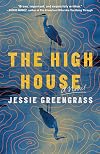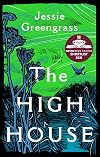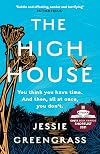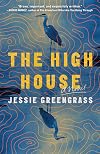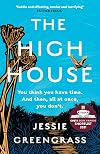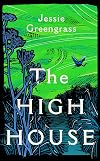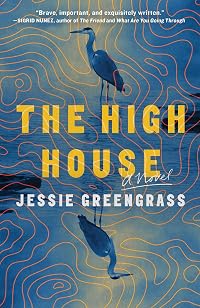
The High House
by Jessie Greengrass
On This Page
Description
Francesca is Caro's stepmother, and Pauly's mother. A scientist, she can see what is going to happen. The high house was once her holiday home; now looked after by locals Grandy and Sally, she has turned it into an ark, for when the time comes. The mill powers the generator; the orchard is carefully pruned; the greenhouse has all its glass intact. Almost a family, but not quite, they plant, store seed, and watch the weather carefully.Tags
Recommendations














Member Recommendations
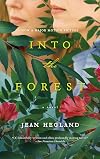
flippinpages As society collapses two sisters have to survive alone in the California forest. Book also made into a movie.
Member Reviews
Caro’s stepmother, Francesca, is an environmental expert and activist who can envision the dramatic impact of climate change and the likely timing of these effects. Armed with this insight, Francesca and Caro’s father spend weekends at their rural retreat, “the high house,” making preparations to ensure safety and security for Caro and her half-brother Pauly. And then the inevitable happens. Caro and Pauly move permanently to the high house, sharing it with Sally and her grandfather, Grandy,
the two remaining inhabitants of the village.
At several points in this book the author describes with chilling accuracy the public’s reaction to weather events in far-flung locations, and the certainty that these things could never happen show more to them … until they do. I, too, have had these thoughts. I want to believe individuals and governments can still influence the course of events, and that both my generation and the next will continue living comfortable lives. The High House was sufficiently realistic to leave me feeling unsettled.
Despite its ominous backdrop, this novel is also an uplifting story of family and community. Caro, Pauly, Sally, and Grandy need to adapt and learn how to live differently, and in doing so they also come to love and care for one another. The High House is a very thought-provoking book completely worthy of is nomination for the 2021 Costa Prize for Best Novel. show less
the two remaining inhabitants of the village.
At several points in this book the author describes with chilling accuracy the public’s reaction to weather events in far-flung locations, and the certainty that these things could never happen show more to them … until they do. I, too, have had these thoughts. I want to believe individuals and governments can still influence the course of events, and that both my generation and the next will continue living comfortable lives. The High House was sufficiently realistic to leave me feeling unsettled.
Despite its ominous backdrop, this novel is also an uplifting story of family and community. Caro, Pauly, Sally, and Grandy need to adapt and learn how to live differently, and in doing so they also come to love and care for one another. The High House is a very thought-provoking book completely worthy of is nomination for the 2021 Costa Prize for Best Novel. show less
The high house stands above a small East Anglian village, protected from the sea by the marshes, dunes and a shingle bank. As the climate crisis deepens, four people make their home within its walls. Sally and her grandfather 'Grandy' had for many years been the only permanent inhabitants of the village as it had become abandoned to second homes and rental cottages. Caro and her young half-brother Pauly find their way to the house following a desperate final phone call from their father. For the high house has been prepared as a refuge for her child by Pauly's mother Francesca, a prominent environmentalist who despite not believing that there was any hope to save the planet, continues to try.
While the collapse of the world around the show more house forms the background to the book, at its heart is the love felt by one human being for another: Francesca's love for her son, despite her almost constant absences during his childhood; Caro's love for Pauly to whom she has been almost a surrogate mother; Sally's and Grandy's love for each other; and Sally's love for the child Pauly, representing the child that she will never have.
This book deals perfectly with how it is possible to logically know the facts about the climate crisis and yet act on a day to day basis as if those facts didn't exist. These two passages in particular rang very true with me:
This is a beautifully written book that fully deserves its place on the Costa Best Novel shortlist. If I have reservations, it is in some of the practicalities of the growing crisis that do not quite seem to make sense to me at times. But strongly recommended, nevertheless. show less
While the collapse of the world around the show more house forms the background to the book, at its heart is the love felt by one human being for another: Francesca's love for her son, despite her almost constant absences during his childhood; Caro's love for Pauly to whom she has been almost a surrogate mother; Sally's and Grandy's love for each other; and Sally's love for the child Pauly, representing the child that she will never have.
This book deals perfectly with how it is possible to logically know the facts about the climate crisis and yet act on a day to day basis as if those facts didn't exist. These two passages in particular rang very true with me:
She didn’t have the habit that the rest of us were learning of having our minds in two places at once, of seeing two futures – that ordinary one of summer holidays and new school terms, of Christmases and birthdays and bank accounts in an endless, uneventful round, and the other one, the long and empty one we spoke about in hypotheticals, or didn’t speak about at all.
It is so hard to remember, now, what it felt like to live in that space between two futures, fitting our whole lives into the gap between fear and certainty – but I think that perhaps it was most like those dreams in which one struggles to wake but can’t, so that over and over again one slips back against the mattress, lets the duvet fall and shuts one’s eyes. There is a kind of organic mercy, grown deep inside us, which makes it so much easier to care about small, close things, else how could we live? As I grew up, crisis slid from distant threat to imminent probability and we tuned it out like static, we adjusted to each emergent normality and we did what we had always done – the commutes and holidays, the Friday big shops, day trips to the countryside, afternoons in the park. We did these things not out of ignorance, nor through thoughtlessness, but only because there seemed nothing else to do – and we did them as well because they were a kind of fine-grained incantation, made in flesh and time. The unexalted, tedious familiarity of our daily lives would keep us safe, we thought, and even Francesca, who saw it all so clearly – even she who would not let herself be gulled by hope – stood by the open fridge at five o’clock in the afternoon and swore because there was nothing to give the baby for his tea.
This is a beautifully written book that fully deserves its place on the Costa Best Novel shortlist. If I have reservations, it is in some of the practicalities of the growing crisis that do not quite seem to make sense to me at times. But strongly recommended, nevertheless. show less
I knew that [b:The High House|58438623|The High House|Jessie Greengrass|https://i.gr-assets.com/images/S/compressed.photo.goodreads.com/books/1639315106l/58438623._SY75_.jpg|86405057] would be a good climate change novel when I heard [a:Jessie Greengrass|13876320|Jessie Greengrass|https://images.gr-assets.com/authors/1534288232p2/13876320.jpg] speak at this event last year. During that she discussed acknowledgment of the existential threat of climate change as akin to acknowledging death, a parallel that the best recent climate fiction draws. [b:The Living Sea of Waking Dreams|54282408|The Living Sea of Waking Dreams|Richard show more Flanagan|https://i.gr-assets.com/images/S/compressed.photo.goodreads.com/books/1593219994l/54282408._SY75_.jpg|81442712] is a great example and so, it turns out, is [b:The High House|58438623|The High House|Jessie Greengrass|https://i.gr-assets.com/images/S/compressed.photo.goodreads.com/books/1639315106l/58438623._SY75_.jpg|86405057]. The cover and blurb may look cute, even twee, but this is a very powerful novel. It is told via the voices of three people surviving civilisational collapse in an isolated farmhouse. I've read quite a few post-apocalyptic novels with such a tight focus on a very limited number of characters and locations (e.g [b:My Name is Monster|40951767|My Name is Monster|Katie Hale|https://i.gr-assets.com/images/S/compressed.photo.goodreads.com/books/1543838534l/40951767._SY75_.jpg|63868340], [b:Into the Forest|86236|Into the Forest|Jean Hegland|https://i.gr-assets.com/images/S/compressed.photo.goodreads.com/books/1479868647l/86236._SY75_.jpg|595978], and [b:Under the Blue|54897735|Under the Blue|Oana Aristide|https://i.gr-assets.com/images/S/compressed.photo.goodreads.com/books/1610711138l/54897735._SY75_.jpg|85665590]). Although I would like there to be more sprawling climate change novels, this claustrophobic approach can be very effective and certainly is here. The reader gradually learns how the household came together as the world fell apart. It's important that the conflict driving the plot is not interpersonal; it is humans versus the environment they have destabilised.
I seek out climate change fiction and am often highly critical of it, so will pick out elements of [b:The High House|58438623|The High House|Jessie Greengrass|https://i.gr-assets.com/images/S/compressed.photo.goodreads.com/books/1639315106l/58438623._SY75_.jpg|86405057] that worked especially well. Firstly, the ambiguous time period it covered. The structure is essentially of flashbacks, which begin around now. It is of course unsettling to read about a supposedly fictional prolonged drought during the worst drought Europe has experienced in 500 years. Greengrass creates a strong link between climate change right now and how much worse it could rapidly get. Most climate novels either stick either to the now (e.g. [b:Weather|37506228|Weather|Jenny Offill|https://i.gr-assets.com/images/S/compressed.photo.goodreads.com/books/1566942482l/37506228._SY75_.jpg|59116540]) or a future of collapse (e.g. [b:Dreamland|54970000|Dreamland|Rosa Rankin-Gee|https://i.gr-assets.com/images/S/compressed.photo.goodreads.com/books/1618159442l/54970000._SX50_.jpg|85740154]); it isn't easy to bridge the two. By doing so, Greengrass is able to include powerful commentary on the present as well as depicting a catastrophic future. An excellent example of the former is this scene of family therapy:
This is unsettlingly insightful. Anxiety can certainly feel like a realistic survival mechanism, as well as sometimes a way of denying your own mortality. I was also struck by this, on observing climate change via the news:
Tonight I got an email about Oxfam's Pakistan floods appeal, after reading earlier that a third of the whole country is under water. Thus parts of the novel's narrative feel intensely and discomfortingly immediate, while others extrapolate convincingly. Another great strength is that subsistence life isn't cosy and reassuring:
This is no individualistic survivalist fantasy, something post-apocalyptic fiction frequently slips into (cf. [b:The Arrest|51179946|The Arrest|Jonathan Lethem|https://i.gr-assets.com/images/S/compressed.photo.goodreads.com/books/1582747341l/51179946._SY75_.jpg|73949073]). By focusing on a single household, Greengrass examines individual emotional responses to climate disaster without dismissing the significance of wider society. The character dynamics are endearing, moving, and, unusually, not centred upon romantic relationships. Instead themes of parental responsibility and found family are developed with sensitivity. The ending is very well judged and its brutal honesty really packs a punch.
I found [b:The High House|58438623|The High House|Jessie Greengrass|https://i.gr-assets.com/images/S/compressed.photo.goodreads.com/books/1639315106l/58438623._SY75_.jpg|86405057] very difficult to put down and finished it during my lunchbreak. This isn't recommended, as it was then difficult to snap myself out of existential dread and get back to work, but is the mark of an excellent novel. I think it reads well alongside Amitav Ghosh's book about the lack of climate fiction, [b:The Great Derangement: Climate Change and the Unthinkable|29362082|The Great Derangement Climate Change and the Unthinkable|Amitav Ghosh|https://i.gr-assets.com/images/S/compressed.photo.goodreads.com/books/1625688572l/29362082._SY75_.jpg|49607520]. Since that was published in 2016, more literary fiction dealing with climate themes is getting written and published. Most of what I've read isn't as incisive and powerful as this, though. I think [b:The High House|58438623|The High House|Jessie Greengrass|https://i.gr-assets.com/images/S/compressed.photo.goodreads.com/books/1639315106l/58438623._SY75_.jpg|86405057] could also be adapted into an excellent, devastating film. show less
I seek out climate change fiction and am often highly critical of it, so will pick out elements of [b:The High House|58438623|The High House|Jessie Greengrass|https://i.gr-assets.com/images/S/compressed.photo.goodreads.com/books/1639315106l/58438623._SY75_.jpg|86405057] that worked especially well. Firstly, the ambiguous time period it covered. The structure is essentially of flashbacks, which begin around now. It is of course unsettling to read about a supposedly fictional prolonged drought during the worst drought Europe has experienced in 500 years. Greengrass creates a strong link between climate change right now and how much worse it could rapidly get. Most climate novels either stick either to the now (e.g. [b:Weather|37506228|Weather|Jenny Offill|https://i.gr-assets.com/images/S/compressed.photo.goodreads.com/books/1566942482l/37506228._SY75_.jpg|59116540]) or a future of collapse (e.g. [b:Dreamland|54970000|Dreamland|Rosa Rankin-Gee|https://i.gr-assets.com/images/S/compressed.photo.goodreads.com/books/1618159442l/54970000._SX50_.jpg|85740154]); it isn't easy to bridge the two. By doing so, Greengrass is able to include powerful commentary on the present as well as depicting a catastrophic future. An excellent example of the former is this scene of family therapy:
-Sometimes,
the therapist said, breaking the long silence in the room,
-children are a kind of weathervane. They pick up on the currents in family life and... act them out.
-Voice them,
Francesca said, as if explaining to me, eyebrows raised.
-Or not.
The therapist smiled, a little thinly, a pale man in a pale sweater with black, square-framed glasses balanced halfway down his snub nose. He looked at me.
-Would you say you were an anxious family?
Afterwards, we went out for lunch. While we waited for our order, Pauly sat on my lap, colouring with crayons on some sheets of paper which Francesca had brought from home. I picked one of his drawings up and turned it over. An Analysis of Recent Climate Trends and the Increased Likelihood of Devastating Weather Events, I read. Francesca frowned.
-What they don't seem to understand,
She said,
-Is that anxiety is a perfectly reasonable response to what we are living through.
Pauly was drawing people, moon faces with stick bodies underneath, giant feet on the end of dangling legs. Father said,
-But Paul is only a child, and if he's picking up on your - our fears -
He tried again.
-We have to at least try to believe that he will have the chance to live an ordinary life.
Francesca said,
-We have to do no such thing.
And for a moment there was a gap in her fury, and she looked neither fierce nor righteous but only rather sad - as though she could already see how far she had failed, and wished only that the end would come, and let us all out.
This is unsettlingly insightful. Anxiety can certainly feel like a realistic survival mechanism, as well as sometimes a way of denying your own mortality. I was also struck by this, on observing climate change via the news:
After that, I watched an earthquake, and then it was an outbreak of cholera, a flood, a drought. Each time, people gave money, for a while, and then there was something else, and the last thing was forgotten by all except those who, presumably, still lived inside of it. To watch became a hobby or a habit, and I thought I was better for it, because at least I knew what was going on - but what difference did my knowledge make? Outside, in the garden, things went on. The owls hooted. A fox barked. In the morning, I ate my porridge and got dressed for school. We were no better than anyone else, Grandy and I. We noticed the changes, but we dismissed them, or said that they were only part of the inevitable, because doesn't the world always change, one way or another?
Tonight I got an email about Oxfam's Pakistan floods appeal, after reading earlier that a third of the whole country is under water. Thus parts of the novel's narrative feel intensely and discomfortingly immediate, while others extrapolate convincingly. Another great strength is that subsistence life isn't cosy and reassuring:
We are not self-sufficient. There is no such thing. We rely on the stores we have left in the barn. We rely on the chickens, but the flock is shrinking. We rely on the wheat, but one bad year and we will have none left to sow as seed. We rely on the tide pool and the generator which we cannot fix if it breaks. We rely on the high house, on its fabric, on its shelter and protection, but these things will not last forever. We rely on one another. I try not to be afraid, but I am.
This is no individualistic survivalist fantasy, something post-apocalyptic fiction frequently slips into (cf. [b:The Arrest|51179946|The Arrest|Jonathan Lethem|https://i.gr-assets.com/images/S/compressed.photo.goodreads.com/books/1582747341l/51179946._SY75_.jpg|73949073]). By focusing on a single household, Greengrass examines individual emotional responses to climate disaster without dismissing the significance of wider society. The character dynamics are endearing, moving, and, unusually, not centred upon romantic relationships. Instead themes of parental responsibility and found family are developed with sensitivity. The ending is very well judged and its brutal honesty really packs a punch.
I found [b:The High House|58438623|The High House|Jessie Greengrass|https://i.gr-assets.com/images/S/compressed.photo.goodreads.com/books/1639315106l/58438623._SY75_.jpg|86405057] very difficult to put down and finished it during my lunchbreak. This isn't recommended, as it was then difficult to snap myself out of existential dread and get back to work, but is the mark of an excellent novel. I think it reads well alongside Amitav Ghosh's book about the lack of climate fiction, [b:The Great Derangement: Climate Change and the Unthinkable|29362082|The Great Derangement Climate Change and the Unthinkable|Amitav Ghosh|https://i.gr-assets.com/images/S/compressed.photo.goodreads.com/books/1625688572l/29362082._SY75_.jpg|49607520]. Since that was published in 2016, more literary fiction dealing with climate themes is getting written and published. Most of what I've read isn't as incisive and powerful as this, though. I think [b:The High House|58438623|The High House|Jessie Greengrass|https://i.gr-assets.com/images/S/compressed.photo.goodreads.com/books/1639315106l/58438623._SY75_.jpg|86405057] could also be adapted into an excellent, devastating film. show less
It is so hard to remember, now, what it felt like to live in that space between two futures, fitting our whole lives into the gap between fear and certainty…
from The High House by Jessie Greengrass
Every week there is news about how the world is changing. The polar ice melting, flooding, wildfires, extreme weather. We have been warned for so many years about the future of the earth, and we still think it is in the future. But it is here.
When I imagine the lives our children and grandchildren will have, I am overwhelmed. Every time I turn the heat up a notch, open a delivered meal to discover Styrofoam and plastic containers, every time I run the washing machine or turn on the oven or take a warm shower, I am aware that these things I show more have done all my life are luxuries enjoyed by a few, over a short period of time, and have contributed to our impending crisis.
In The High House, Jessie Greengrass imagines how a few people adapt and survive the floods that overcome their village, isolated in a house on a hill.
Francesca loved her child so much, she traveled the world to warn about climate change, hoping it is not too late to stave off disaster. The boy, Pauly, is left in the care of his half-sister Caro, and he becomes more attached to her than his parents. Francesca and the children’s father renovate and outfit The High House as an escape when disaster strikes. She asks neighbors to be caretakers of the house on a hill, caring for the orchard and fields, gardens and hens. Gramps remembers the old world, and with his granddaughter Sally, are waiting at the house when Caro and Pauly are warned to flee London.
The four make up a new family, Gramps teaching the children skills for survival. Francesca had provided a hoard of essentials–clothes and medical supplies and even toys for Pauly– and a generator to last 100 years. It is a hard life, working every day to provide food and shelter. When the sea rises, the house becomes an island, and they are cut off from the world.
The whole complicated system of modernity that had held us up, away from the earth, was crumbling, and we were becoming again what we had used to be: cold, and frightened of the weather, and frightened of the dark.
from The High House by Jesse Greengrass
Caro and Sally vie to mother Pauly. Each needs him. Their maternal instincts keep him safe and healthy. He doesn’t remember the old world or his parents. He is content, adaptable.
The High House is an ark without two of everything. Gramps ages and passes. Some day, the girls will age and Pauly will be alone. Francesca has saved her child, but the story will end with him.
I enjoyed this novel’s beautiful writing, a story almost gentile, full of love, although about a horrendous and chilling future. It is a story about the love for a child, the maternal drive to save a child. If only we saw all children as our own, perhaps we would find the strength to change our lives and alter what seems to be an inevitable future.
I received an ARC from the publisher through a Goodreads giveaway. My review is fair and unbiased. show less
from The High House by Jessie Greengrass
Every week there is news about how the world is changing. The polar ice melting, flooding, wildfires, extreme weather. We have been warned for so many years about the future of the earth, and we still think it is in the future. But it is here.
When I imagine the lives our children and grandchildren will have, I am overwhelmed. Every time I turn the heat up a notch, open a delivered meal to discover Styrofoam and plastic containers, every time I run the washing machine or turn on the oven or take a warm shower, I am aware that these things I show more have done all my life are luxuries enjoyed by a few, over a short period of time, and have contributed to our impending crisis.
In The High House, Jessie Greengrass imagines how a few people adapt and survive the floods that overcome their village, isolated in a house on a hill.
Francesca loved her child so much, she traveled the world to warn about climate change, hoping it is not too late to stave off disaster. The boy, Pauly, is left in the care of his half-sister Caro, and he becomes more attached to her than his parents. Francesca and the children’s father renovate and outfit The High House as an escape when disaster strikes. She asks neighbors to be caretakers of the house on a hill, caring for the orchard and fields, gardens and hens. Gramps remembers the old world, and with his granddaughter Sally, are waiting at the house when Caro and Pauly are warned to flee London.
The four make up a new family, Gramps teaching the children skills for survival. Francesca had provided a hoard of essentials–clothes and medical supplies and even toys for Pauly– and a generator to last 100 years. It is a hard life, working every day to provide food and shelter. When the sea rises, the house becomes an island, and they are cut off from the world.
The whole complicated system of modernity that had held us up, away from the earth, was crumbling, and we were becoming again what we had used to be: cold, and frightened of the weather, and frightened of the dark.
from The High House by Jesse Greengrass
Caro and Sally vie to mother Pauly. Each needs him. Their maternal instincts keep him safe and healthy. He doesn’t remember the old world or his parents. He is content, adaptable.
The High House is an ark without two of everything. Gramps ages and passes. Some day, the girls will age and Pauly will be alone. Francesca has saved her child, but the story will end with him.
I enjoyed this novel’s beautiful writing, a story almost gentile, full of love, although about a horrendous and chilling future. It is a story about the love for a child, the maternal drive to save a child. If only we saw all children as our own, perhaps we would find the strength to change our lives and alter what seems to be an inevitable future.
I received an ARC from the publisher through a Goodreads giveaway. My review is fair and unbiased. show less
I couldn't put down this book about how to survive the climate apocalypse. The protagonists have as much preparation as seems possible, albeit second hand preparation, and their small scale survival in the High House is both difficult and beautiful against the backdrop of the world falling apart. There is no illusion this is a long term solution - it does not pull its punches about how impossible it is to be self sufficient without larger society - so it's a bit hopeless overall, but is hard to put down and thought provoking as a piece of speculation about how and why things will break down.
I love a good post-apocalypse book, it’s why I signed up to read this as an ARC.
But its not about found family surviving. It's about found family sadly, passively and wistfully wasting away due to lack of competence.
It has a nice prose style. The author is clearly a fine writer. But it's not really post-apocalyptic fiction and it's not deep or thinky, like it seems to want to be. It's very surfacy and everyone's interactions are extremely limited. The people as shown have zero internal lives and in their surfacy lives, they're mostly selfish and so, so limited in viewpoint it's like they've all been lobotomized. It's like reading a script. And if this is how the author views people, I'm sad about that.
It’s not a bad book, exactly. show more It's not badly written. It reads nicely.
But if you like competent characters acting in competent ways who still have bad things happen to them from forces beyond their control...This is not that. It’s incompetent, entitled characters having bad things happen to them and they feel sorry for themselves about it. It made me actively angry.
I’m sure other people, who like sad, elegiac musings on things lost will eat it up with a spoon. But I spent the entire thing wanting to smack the shit out of every character and boggling at the complete and utter stupidity of a post-apocalyptic CLIMATE CHANGE novel that is set at the seaside. Because that’s where I’d go in a world where water levels are meant to rise 3% overall and all coastal areas are in jeopardy for flooding and salt seepage into the water table. Yeah, that makes total sense.
My family is from the middle of a national forest, one of the most remote areas in the United States. I have lived without power for days and weeks at a time after huge storms knock trees down on power lines. I have helped grow and harvest and preserve food in land unsuitable for farming where everyone still had massive lush gardens full of surplus despite constant threats from deer, raccoons and the like. I have gathered wild foodstuffs. I have fished for the table. Other family members have hunted. I have had to travel miles to a spring to get drinking water. I have cut wood to heat the house. I have had to heat bathing water on a wood stove. I knew better how to care for myself than anyone in this novel when I was 10. It is offensively stupid to be this ill-prepared for disaster to anyone who has ever lived in a remote area.
And the preparations listed in this novel by the supposed climate change scientist with loads of cash do include things like seasonal clothes for a certain amount of time into the future – but not enough. Toys for her child as he grew. A small boat for fishing. A means of generating limited tidal electricity but no solar panels or small wind power – because there’s never a breeze or sunshine at the SEASHORE or anything. I mean solar panels are cheap and plentiful as are small wind turbines. FFS. You need that and an inverter and batteries. One wood stove for an entire house and it doesn’t have a boiler feature to make hot water. The dumbass list goes on and on. Where’s the library of How To books? Where are the extra seeds in case of crop failure?
There are chickens, but no goats or sheep. I can see how a cow might be too hard on limited resources, but goats for milk and cheese and meat and sheep for wool and meat only make sense especially as it is stated there is pasture available. I mean, it’s ENGLAND, there are more sheep than people in some areas. Get some damned sheep at least.
Instead, they’re eating up all the chickens and huddling around the single stove in constant cold. And no one seems to hunt or fish for anything, either, though they do get shellfish from the beach.
But again, what are they doing by the seaside in the first place? This book offends me on pure lack of common sense even though the author makes a stab at explaining why the (remote) area was chosen.
And everyone’s passive acceptance of their fate and musings about do they deserve to survive and which one will be the last one as they slowly starve from their own bad planning and incompetence just makes me want to smack them all. They don’t deserve to survive with those attitudes. They can’t die soon enough.
But again, many will enjoy this book because of its elegiac tone and wistful, passive contemplation of impending climate doom in a place they should have gotten away from to permanent (remote) high ground. But honestly, if this were to actually happen nearly anyone would be better prepared and able to survive. show less
But its not about found family surviving. It's about found family sadly, passively and wistfully wasting away due to lack of competence.
It has a nice prose style. The author is clearly a fine writer. But it's not really post-apocalyptic fiction and it's not deep or thinky, like it seems to want to be. It's very surfacy and everyone's interactions are extremely limited. The people as shown have zero internal lives and in their surfacy lives, they're mostly selfish and so, so limited in viewpoint it's like they've all been lobotomized. It's like reading a script. And if this is how the author views people, I'm sad about that.
It’s not a bad book, exactly. show more It's not badly written. It reads nicely.
But if you like competent characters acting in competent ways who still have bad things happen to them from forces beyond their control...This is not that. It’s incompetent, entitled characters having bad things happen to them and they feel sorry for themselves about it. It made me actively angry.
I’m sure other people, who like sad, elegiac musings on things lost will eat it up with a spoon. But I spent the entire thing wanting to smack the shit out of every character and boggling at the complete and utter stupidity of a post-apocalyptic CLIMATE CHANGE novel that is set at the seaside. Because that’s where I’d go in a world where water levels are meant to rise 3% overall and all coastal areas are in jeopardy for flooding and salt seepage into the water table. Yeah, that makes total sense.
My family is from the middle of a national forest, one of the most remote areas in the United States. I have lived without power for days and weeks at a time after huge storms knock trees down on power lines. I have helped grow and harvest and preserve food in land unsuitable for farming where everyone still had massive lush gardens full of surplus despite constant threats from deer, raccoons and the like. I have gathered wild foodstuffs. I have fished for the table. Other family members have hunted. I have had to travel miles to a spring to get drinking water. I have cut wood to heat the house. I have had to heat bathing water on a wood stove. I knew better how to care for myself than anyone in this novel when I was 10. It is offensively stupid to be this ill-prepared for disaster to anyone who has ever lived in a remote area.
And the preparations listed in this novel by the supposed climate change scientist with loads of cash do include things like seasonal clothes for a certain amount of time into the future – but not enough. Toys for her child as he grew. A small boat for fishing. A means of generating limited tidal electricity but no solar panels or small wind power – because there’s never a breeze or sunshine at the SEASHORE or anything. I mean solar panels are cheap and plentiful as are small wind turbines. FFS. You need that and an inverter and batteries. One wood stove for an entire house and it doesn’t have a boiler feature to make hot water. The dumbass list goes on and on. Where’s the library of How To books? Where are the extra seeds in case of crop failure?
There are chickens, but no goats or sheep. I can see how a cow might be too hard on limited resources, but goats for milk and cheese and meat and sheep for wool and meat only make sense especially as it is stated there is pasture available. I mean, it’s ENGLAND, there are more sheep than people in some areas. Get some damned sheep at least.
Instead, they’re eating up all the chickens and huddling around the single stove in constant cold. And no one seems to hunt or fish for anything, either, though they do get shellfish from the beach.
But again, what are they doing by the seaside in the first place? This book offends me on pure lack of common sense even though the author makes a stab at explaining why the (remote) area was chosen.
And everyone’s passive acceptance of their fate and musings about do they deserve to survive and which one will be the last one as they slowly starve from their own bad planning and incompetence just makes me want to smack them all. They don’t deserve to survive with those attitudes. They can’t die soon enough.
But again, many will enjoy this book because of its elegiac tone and wistful, passive contemplation of impending climate doom in a place they should have gotten away from to permanent (remote) high ground. But honestly, if this were to actually happen nearly anyone would be better prepared and able to survive. show less
Publisher’s synopsis
“Crisis slid from distant threat to imminent probability and we tuned it out like static…”
Francesca is Caro's stepmother, and Pauly's mother. A scientist, she can see what is going to happen.
The high house was once her holiday home; now looked after by locals Grandy and Sally, she has turned it into an ark, for when the time comes. The mill powers the generator; the orchard is carefully pruned; the greenhouse has all its glass intact. Almost a family, but not quite, they plant, store seed, and watch the weather carefully.
A stunning novel of the extraordinary and the everyday, The High House explores how we get used to change that once seemed unthinkable, how we place the needs of our families against the show more needs of others - and it asks us who, if we had to, we would save.
As this somewhat sobering novel begins the reader is immediately aware that disaster has already struck and that the high house has now become the refuge Francesca had so presciently prepared for her young son and her stepdaughter. Caro was fourteen when Pauly was born but, as Francesca was often away, she had spent a lot of time looking after her half-brother so her relationship with him was almost that of a surrogate mother. Her bond with him was strengthened by her criticism of her stepmother for apparently putting ‘the hypothetical, general needs of a population above the real and specific ones of her family’, without knowing that some of Francesca’s absences had been because she’d been preparing the high house for their future safety. Caro had just turned eighteen when she received an evening phone call from her father (who was at a conference in America with Francesca) telling her to pack their bags and take the early morning train to the high house, where Sally and Grandy are already living.
At the end of her last visit to the house, just as she was leaving, Francesca had said to Sally ‘My stepdaughter might come … and my son … Take care of them … please.’ That time has finally arrived and the lives of these four characters are now inextricably intertwined and, through the alternating first-person narratives of Caro, Sally and, in time, Pauly, the story moves backwards and forwards in time to reveal the details of the events which had led up to the need to seek sanctuary in the house, as well as those which follow as each of the characters attempts to adjust to all the uncertainties their new life together will bring.
Although the exact location is never spelled out, there are many clues which suggest it is somewhere along the coast of East Anglia, certainly the descriptions of the landscape surrounding the house were reminiscent of that part of the country. However, although I initially found it helpful to be able to visualise a specific area as I was reading, I think that by the time I turned the final page I was so caught up in the apocalyptic nature of this disturbingly prophetic story that the location had become totally irrelevant. I think this was probably because so much of the thought-provoking nature of Jessie Greengrass’s novel has its roots in a couple of Caro’s reflections. The first, about Francesca, … ‘She didn’t have the habit that the rest of us were learning of having our minds in two places at once, of seeing two futures – that ordinary one of summer holidays and new school terms, of Christmases and birthdays and bank accounts in an endless, uneventful round, and the other one, the long and empty one we spoke about in hypotheticals, or didn’t speak about at all.’ The second, post-disaster, when she rationalises this denial in her reflection … ‘We did these things not out of ignorance, nor through thoughtlessness, but only because there seemed nothing else to do.’
I’m sure that these uncomfortable truths are ones which most of us will, possibly rather shamefacedly, recognise. In the face of uncertainty, the need to hold on to what we know, what is familiar is a powerful defensive mechanism, even when it’s bound to leave us unprepared to grasp the magnitude of the loss we’re facing. Through exploring her characters’ struggles with adjusting to the disaster, their gradual realisation that, although they had survived, their future remained uncertain because the world as they’d known it no longer existed, the author very powerfully evoked not only their increasingly urgent sense of unease, uncertainty and fear, but also their discomfort with feelings of guilt that they are survivors when so many others aren’t. Equally well-evoked were not only the inevitable tensions which arose between the characters as a result of their enforced intimacy in what had become their shared home, but also how they were at times able to put these aside, to show care, compassion and love to one another and to still find delight in the minutiae of everyday life. Although the familiar rhythms of their old lives had to change, they found comfort in establishing new ones, a reminder that with familiarity comes a sense of security, however illusory that might be.
Throughout my reading I appreciated how Caro, Sally and Pauly’s different perspectives not only allowed me to get to know and understand them, but also added layers of depth to the unfolding story. I especially enjoyed discovering how Caro, and later Sally, focused so much attention on caring for Pauly as he was growing up. Although there was, almost inevitably, some rivalry between the two women, their love for him was never in doubt. However, I did feel some disappointment that I got to know Grandy, such a wise, compassionate and likeable character, only through their eyes and wondered why the author chose not to give him his own narrative voice.
I’m left feeling full of admiration for the way in which the author has used such elegant, hauntingly elegiac prose
to create a story which is so disturbingly thought-provoking and challenging. Despite the fact that its central message about the potentially catastrophic effects of uncontrolled climate change is a dark, the author managed to inject some lovely light, joyous moments into her characters’ lives, although I have to admit that these became fewer as I, along with Caro, Sally and Pauly, faced the reality of what their longer-term future looked like – as one character reflected … ‘You think you have time. And then all at once you don’t.’ show less
“Crisis slid from distant threat to imminent probability and we tuned it out like static…”
Francesca is Caro's stepmother, and Pauly's mother. A scientist, she can see what is going to happen.
The high house was once her holiday home; now looked after by locals Grandy and Sally, she has turned it into an ark, for when the time comes. The mill powers the generator; the orchard is carefully pruned; the greenhouse has all its glass intact. Almost a family, but not quite, they plant, store seed, and watch the weather carefully.
A stunning novel of the extraordinary and the everyday, The High House explores how we get used to change that once seemed unthinkable, how we place the needs of our families against the show more needs of others - and it asks us who, if we had to, we would save.
As this somewhat sobering novel begins the reader is immediately aware that disaster has already struck and that the high house has now become the refuge Francesca had so presciently prepared for her young son and her stepdaughter. Caro was fourteen when Pauly was born but, as Francesca was often away, she had spent a lot of time looking after her half-brother so her relationship with him was almost that of a surrogate mother. Her bond with him was strengthened by her criticism of her stepmother for apparently putting ‘the hypothetical, general needs of a population above the real and specific ones of her family’, without knowing that some of Francesca’s absences had been because she’d been preparing the high house for their future safety. Caro had just turned eighteen when she received an evening phone call from her father (who was at a conference in America with Francesca) telling her to pack their bags and take the early morning train to the high house, where Sally and Grandy are already living.
At the end of her last visit to the house, just as she was leaving, Francesca had said to Sally ‘My stepdaughter might come … and my son … Take care of them … please.’ That time has finally arrived and the lives of these four characters are now inextricably intertwined and, through the alternating first-person narratives of Caro, Sally and, in time, Pauly, the story moves backwards and forwards in time to reveal the details of the events which had led up to the need to seek sanctuary in the house, as well as those which follow as each of the characters attempts to adjust to all the uncertainties their new life together will bring.
Although the exact location is never spelled out, there are many clues which suggest it is somewhere along the coast of East Anglia, certainly the descriptions of the landscape surrounding the house were reminiscent of that part of the country. However, although I initially found it helpful to be able to visualise a specific area as I was reading, I think that by the time I turned the final page I was so caught up in the apocalyptic nature of this disturbingly prophetic story that the location had become totally irrelevant. I think this was probably because so much of the thought-provoking nature of Jessie Greengrass’s novel has its roots in a couple of Caro’s reflections. The first, about Francesca, … ‘She didn’t have the habit that the rest of us were learning of having our minds in two places at once, of seeing two futures – that ordinary one of summer holidays and new school terms, of Christmases and birthdays and bank accounts in an endless, uneventful round, and the other one, the long and empty one we spoke about in hypotheticals, or didn’t speak about at all.’ The second, post-disaster, when she rationalises this denial in her reflection … ‘We did these things not out of ignorance, nor through thoughtlessness, but only because there seemed nothing else to do.’
I’m sure that these uncomfortable truths are ones which most of us will, possibly rather shamefacedly, recognise. In the face of uncertainty, the need to hold on to what we know, what is familiar is a powerful defensive mechanism, even when it’s bound to leave us unprepared to grasp the magnitude of the loss we’re facing. Through exploring her characters’ struggles with adjusting to the disaster, their gradual realisation that, although they had survived, their future remained uncertain because the world as they’d known it no longer existed, the author very powerfully evoked not only their increasingly urgent sense of unease, uncertainty and fear, but also their discomfort with feelings of guilt that they are survivors when so many others aren’t. Equally well-evoked were not only the inevitable tensions which arose between the characters as a result of their enforced intimacy in what had become their shared home, but also how they were at times able to put these aside, to show care, compassion and love to one another and to still find delight in the minutiae of everyday life. Although the familiar rhythms of their old lives had to change, they found comfort in establishing new ones, a reminder that with familiarity comes a sense of security, however illusory that might be.
Throughout my reading I appreciated how Caro, Sally and Pauly’s different perspectives not only allowed me to get to know and understand them, but also added layers of depth to the unfolding story. I especially enjoyed discovering how Caro, and later Sally, focused so much attention on caring for Pauly as he was growing up. Although there was, almost inevitably, some rivalry between the two women, their love for him was never in doubt. However, I did feel some disappointment that I got to know Grandy, such a wise, compassionate and likeable character, only through their eyes and wondered why the author chose not to give him his own narrative voice.
I’m left feeling full of admiration for the way in which the author has used such elegant, hauntingly elegiac prose
to create a story which is so disturbingly thought-provoking and challenging. Despite the fact that its central message about the potentially catastrophic effects of uncontrolled climate change is a dark, the author managed to inject some lovely light, joyous moments into her characters’ lives, although I have to admit that these became fewer as I, along with Caro, Sally and Pauly, faced the reality of what their longer-term future looked like – as one character reflected … ‘You think you have time. And then all at once you don’t.’ show less
Members
- Recently Added By
Lists

Top Five Books of 2022
736 works; 272 members
Author Information

7+ Works 442 Members
Some Editions
Awards and Honors
Awards
Distinctions
The Guardian Book of the Day (2021-04-09)
Common Knowledge
- Canonical title
- The High House
- Important places*
- England
- Epigraph
- Who sang, sea takes,
brawn brine, bone grit.
Keener the kittiwake.
—Basil Bunting, Briggflatts - First words
- In the morning, I wake earlier than the others.
- Last words
- (Click to show. Warning: May contain spoilers.)The last will lie here, forever, in the high house, which is our sanctuary, and will be our grave.
- Blurbers*
- Johnson, Daisy
- Original language*
- English
- Canonical DDC/MDS
- 823.92
*Some information comes from Common Knowledge in other languages. Click "Edit" for more information.
Classifications
Statistics
- Members
- 196
- Popularity
- 167,171
- Reviews
- 21
- Rating
- (3.96)
- Languages
- English
- Media
- Paper, Audiobook, Ebook
- ISBNs
- 14
- ASINs
- 4