On This Page
Description
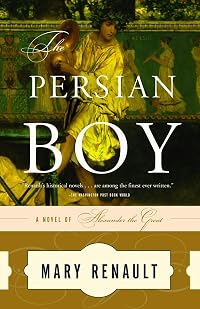
The Persian Boy centers on the most tempestuous years of Alexander the Great's life, as seen through the eyes of his lover and most faithful attendant, Bagoas. When Bagoas is very young, his father is murdered and he is sold as a slave to King Darius of Persia. Then, when Alexander conquers the land, he is given Bagoas as a gift, and the boy is besotted. This passion comes at a time when much is at stake-Alexander has two wives, conflicts are ablaze, and plots on the Macedon king's life show more abound. The result is a riveting account of a great conqueror's years of triumph and, ultimately, heartbreak. The Persian Boy is the second volume of the Novels of Alexander the Great trilogy, which also includes Fire from Heaven and Funeral Games. This ebook features an illustrated biography of Mary Renault including rare images of the author. show lessTags
Recommendations
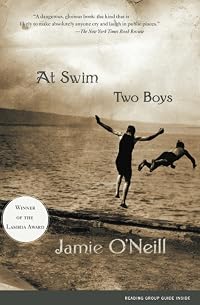

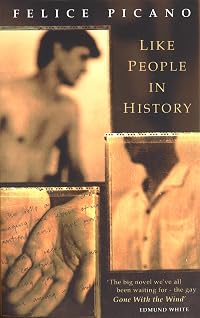
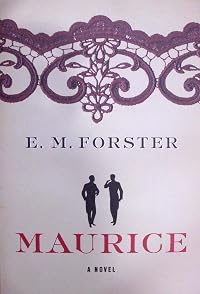
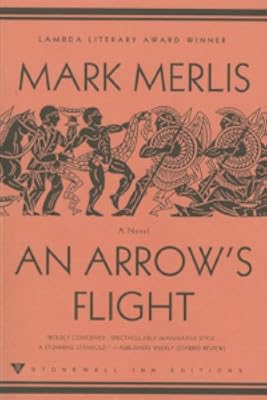












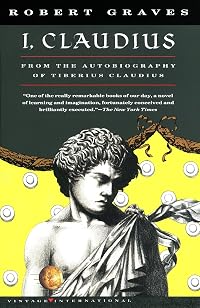


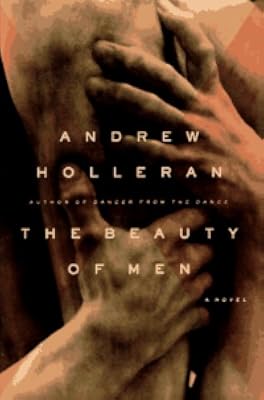
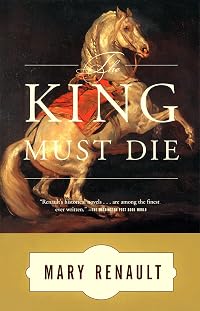


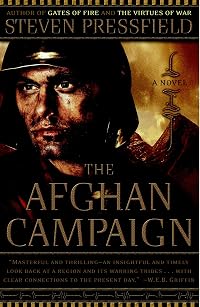









Member Recommendations
emanate28 Maybe they are too similar... But both The Persian Boy and The Song of Achilles are heartbreaking and beautiful stories of legendary heroes told from the perspective of their devoted boy lovers. The ancient heroes come alive and one is transported back into those times.
Also recommended by jbvm
21

aulsmith Set earlier in Persian history, Creation covers some of the same territory as Renault's book. Vidal's writing is somewhat drier.
11
Member Reviews
My introduction to Mary Renault was The King Must Die, the first of two novels about Theseus--it was actually assigned reading in high school. What impressed me so much there was how she took a figure out of myth and grounded him historically. After that I quickly gobbled up all of Renault's works of historical fiction set in Ancient Greece. The two novels about Theseus and the trilogy centered on Alexander the Great are undoubtedly her most famous of those eight novels.
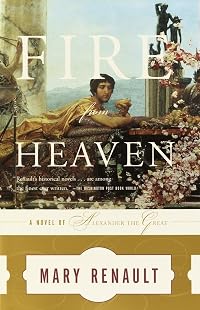
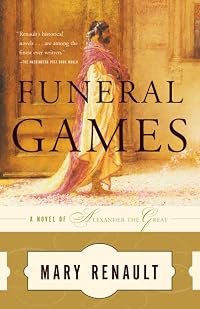
The first book of that trilogy Fire from Heaven, is about the young Alexander of Macedon before his famous conquests. What we have in the second book is the conqueror of the Persian empire--as seen through the eyes of Bagoas, the "Persian boy" of the title--a eunuch--and show more one of Alexander's lovers. That was probably a shock to me as a sheltered young teen, pre-AIDS when homosexuality just wasn't very visible. What was amazing was the picture of a society where this was not just tolerated but completely accepted, and this novel (and her novel The Last of the Wine) also featuring a homosexual relationship) made an indelible impression on me--more than any kind of lecture on tolerance.
And this was one of those books that cemented my love of historical fiction and fascination with Ancient Greece. If I have any criticism, it's that Renault's Alexander is too much the paragon. You get the feeling Renault was more than in love with her Alexander. But it's certainly not a criticism that occurred to me while I was reading this--given how fully I was under Renault's spell. Nor am I the only one entranced by these books--you can definitely see the influence of the Alexander trilogy on such books as Jo Graham's Stealing Fire about the wake of Alexander's death and Madeline Miller's Song of Achilles. show less
The first book of that trilogy Fire from Heaven, is about the young Alexander of Macedon before his famous conquests. What we have in the second book is the conqueror of the Persian empire--as seen through the eyes of Bagoas, the "Persian boy" of the title--a eunuch--and show more one of Alexander's lovers. That was probably a shock to me as a sheltered young teen, pre-AIDS when homosexuality just wasn't very visible. What was amazing was the picture of a society where this was not just tolerated but completely accepted, and this novel (and her novel The Last of the Wine) also featuring a homosexual relationship) made an indelible impression on me--more than any kind of lecture on tolerance.
And this was one of those books that cemented my love of historical fiction and fascination with Ancient Greece. If I have any criticism, it's that Renault's Alexander is too much the paragon. You get the feeling Renault was more than in love with her Alexander. But it's certainly not a criticism that occurred to me while I was reading this--given how fully I was under Renault's spell. Nor am I the only one entranced by these books--you can definitely see the influence of the Alexander trilogy on such books as Jo Graham's Stealing Fire about the wake of Alexander's death and Madeline Miller's Song of Achilles. show less
It's not very often that you come across a historical novel that portrays events from the vantage point of a eunuch. It's not the easiest perspective for an author to immerse themselves in, but Renault pulls it off with convincing surety.
The narrator of The Persian Boy is Bagoas (based on a real historical person), who was a favorite of Persian king Darius III and went on to become the erômenos or beloved of Alexander the Great. Not much is known about him beyond that but Renault makes him into a very real character, with his own passions and motivations.
The perspective on Alexander the Great is also very interesting. Not everyone may agree with Renault's interpretation, but never-the-less, this is quite possibly the most nuanced and show more thorough fictional rendering of a very mysterious and complex man.
The complicated emotional triangle between Alexander, Bagoas, and Hephaestion is adroitly imagined. There is some definite homosexuality, some sensuous scenes of such, but nothing particularly explicit.
It's not all psychological drama though, there's plenty of action and colorful battle scenes to keep the reader turning pages. As historical novels go, this one is well above average. show less
The narrator of The Persian Boy is Bagoas (based on a real historical person), who was a favorite of Persian king Darius III and went on to become the erômenos or beloved of Alexander the Great. Not much is known about him beyond that but Renault makes him into a very real character, with his own passions and motivations.
The perspective on Alexander the Great is also very interesting. Not everyone may agree with Renault's interpretation, but never-the-less, this is quite possibly the most nuanced and show more thorough fictional rendering of a very mysterious and complex man.
The complicated emotional triangle between Alexander, Bagoas, and Hephaestion is adroitly imagined. There is some definite homosexuality, some sensuous scenes of such, but nothing particularly explicit.
It's not all psychological drama though, there's plenty of action and colorful battle scenes to keep the reader turning pages. As historical novels go, this one is well above average. show less
Fire from heaven followed a young Alexander through multiple other people’s eyes, so I was surprised to have a single narrator here.
The narrator is still telling about Alexander as if he is a perfect mythical figure who can do no wrong, but I think that is reasonable given who the narrator is.
Bagoas was a slave and after a life of being abused, latches onto whoever is kind to him.
I really enjoyed following Alexander on his campaigns. After the end of book 1, I wanted to see what the young king would do, and this was it. Part of me would have liked to see it from the point of view of someone closer to Alexander so I could get inside his head a bit, but I also understand that Bagoas who is an important servant is more of an eyewitness. show more He doesn’t shape events, he follows them. That creates a helpless kind of suspense, because he watches events unfold with the reader, but it also makes him a bit boring. All he does is being endlessly devoted to Alexander?
Apparently this book is marketed as a love story, which I don’t really get. This is a great story, but I wouldn’t say it’s a romantic one.
It isn’t necessarily the feelings of love that I cannot get behind, Bagoas being in love with Alexander makes a lot of sense, but the way that this is presented as a deep romantic attachment.
I definitely believe that these two genuinely cared for each other, but Alexander has the whole world while Bagoas’s world is Alexander only.
D.A.2. 13 dec 2025 show less
The narrator is still telling about Alexander as if he is a perfect mythical figure who can do no wrong, but I think that is reasonable given who the narrator is.
Bagoas was a slave and after a life of being abused, latches onto whoever is kind to him.
I really enjoyed following Alexander on his campaigns. After the end of book 1, I wanted to see what the young king would do, and this was it. Part of me would have liked to see it from the point of view of someone closer to Alexander so I could get inside his head a bit, but I also understand that Bagoas who is an important servant is more of an eyewitness. show more He doesn’t shape events, he follows them. That creates a helpless kind of suspense, because he watches events unfold with the reader, but it also makes him a bit boring. All he does is being endlessly devoted to Alexander?
Apparently this book is marketed as a love story, which I don’t really get. This is a great story, but I wouldn’t say it’s a romantic one.
It isn’t necessarily the feelings of love that I cannot get behind, Bagoas being in love with Alexander makes a lot of sense, but the way that this is presented as a deep romantic attachment.
I definitely believe that these two genuinely cared for each other, but Alexander has the whole world while Bagoas’s world is Alexander only.
D.A.2. 13 dec 2025 show less
I love Mary Renault and all her writings. I've probably read "Fire From Heaven" twenty times.
The Persian Boy is a lush read, sucking you into a different time and place where rules are completely different from our modern sensibilities. Everything in this book flows and you're captured and pulled into the past, into the lives of Bagoas and through him Alexander.
Even knowing how things were going to turn out, I was drawn into this story. And more than anything I wished that I could yell at them and change the way things happened so I could get my HEA.
Still, an incredibly beautiful book, highlighting the fact that Mary Renault was way ahead of her time.
The Persian Boy is a lush read, sucking you into a different time and place where rules are completely different from our modern sensibilities. Everything in this book flows and you're captured and pulled into the past, into the lives of Bagoas and through him Alexander.
Even knowing how things were going to turn out, I was drawn into this story. And more than anything I wished that I could yell at them and change the way things happened so I could get my HEA.
Still, an incredibly beautiful book, highlighting the fact that Mary Renault was way ahead of her time.
"We shall have crossed the world to its furthest end"
By sally tarbox on 9 September 2017
Format: Audible Audio Edition
Narrated by the eponymous Persian youth, Bagoas, this is an account of the exploits of Alexander the Great - from Persia, across Central Asia and into India. Bagoas, son of a nobleman, is captured in his youth, castrated and sold as a eunuch slave. From his wretched first position, 'hired' out to local men by his master, he later enters the court of King Darius... and ultimately that of Alexander.
Bagoas is utterly smitten with his final master; self-effacing but watchful, silently agonizingly jealous of the King's other intimates. He relates the Macedonian's progress across Asia - the glorious life at court, the king's show more friendly, first-name terms rapport with his men, the boundless ambition and the affection the two share. But set against this are bloody campaigns, court intrigues and feuds, a desperate journey through an Indian desert..
It's quite a long read but totally brings to life an era in history that I knew little about. show less
By sally tarbox on 9 September 2017
Format: Audible Audio Edition
Narrated by the eponymous Persian youth, Bagoas, this is an account of the exploits of Alexander the Great - from Persia, across Central Asia and into India. Bagoas, son of a nobleman, is captured in his youth, castrated and sold as a eunuch slave. From his wretched first position, 'hired' out to local men by his master, he later enters the court of King Darius... and ultimately that of Alexander.
Bagoas is utterly smitten with his final master; self-effacing but watchful, silently agonizingly jealous of the King's other intimates. He relates the Macedonian's progress across Asia - the glorious life at court, the king's show more friendly, first-name terms rapport with his men, the boundless ambition and the affection the two share. But set against this are bloody campaigns, court intrigues and feuds, a desperate journey through an Indian desert..
It's quite a long read but totally brings to life an era in history that I knew little about. show less
This was one of the most difficult to read books I've dealt with in a long while- the prose was clunky, the story wasn't especially interesting (I'm an ancient civ major specializing in the Near East so...take that as you will), and the people and places were nearly impossible to differentiate. It took me five months to slog through this book for the simple fact that although I am a huge lover of Alexander the Great and love stories in general, this felt like a chore to read and was ultimately a disappointment.
All of that aside- I wept through the final ten pages. The foreshadowing in this book in the final chapters are some of the most artfully done I've ever come across (and truly, I envy any readers who don't have a significant show more background in the topic, as they must have felt them all the more strongly not knowing what would come).
Had this story been stripped down and presented less as a warped history of Al'skander's triumphs and follies and more as what it was- a great love story, it would have been much more successful. It's distressing to know that Mary Renault is passed because she could have been a prolific non-fiction scholar had she written more than two books in the genre in favor of the historical fiction she has left us with.
All in all I wouldn't recommend this book to many if only because it's fairly tedious and there's more grissle than meat but at its core, it's a beautiful story and I'm thankful it was told. show less
All of that aside- I wept through the final ten pages. The foreshadowing in this book in the final chapters are some of the most artfully done I've ever come across (and truly, I envy any readers who don't have a significant show more background in the topic, as they must have felt them all the more strongly not knowing what would come).
Had this story been stripped down and presented less as a warped history of Al'skander's triumphs and follies and more as what it was- a great love story, it would have been much more successful. It's distressing to know that Mary Renault is passed because she could have been a prolific non-fiction scholar had she written more than two books in the genre in favor of the historical fiction she has left us with.
All in all I wouldn't recommend this book to many if only because it's fairly tedious and there's more grissle than meat but at its core, it's a beautiful story and I'm thankful it was told. show less
This is the second book in the trilogy on Alexander the Great by Mary Renault, and I am not as impressed with it as I was with the first; or as impressed as I am of the other great books she has written. Although her prose and description are poetic and almost musical on every page, and her intimate knowledge of Greek history emanates in this book, I am still a little disappointed.
Why? Because it leans too much on the homo-erotic relationship of Alexander and his pretty Persian eunuch. Too much detail is a turn-off for me, but I still like her work. I must admit I read the book through to the end.
Why? Because it leans too much on the homo-erotic relationship of Alexander and his pretty Persian eunuch. Too much detail is a turn-off for me, but I still like her work. I must admit I read the book through to the end.
Members
- Recently Added By
Lists

Best Historical Fiction
620 works; 261 members

Historical Fiction
889 works; 89 members

Best historical fiction set in the ancient world
126 works; 40 members

20th Century Literature
1,161 works; 54 members

Female Author
1,235 works; 67 members

Bibliography for Among Others
159 works; 15 members

Expand Your Reading Demographics!
47 works; 15 members

Asia
178 works; 7 members

Middle East Fiction
179 works; 16 members

Five star books
1,756 works; 108 members

1970s
657 works; 23 members

Publishing Triangle 100 Best Lesbian and Gay Novels
97 works; 6 members

Good LGBT fiction for LGBT folk and friends
545 works; 54 members

al.vick-wishlist-historical fiction
128 works; 1 member

THE WAR ROOM
813 works; 24 members
School Made Us Read It
380 works; 196 members
Author Information

25+ Works 18,969 Members
Some Editions
Awards and Honors
Series

Belongs to Publisher Series
Work Relationships
Is contained in
Common Knowledge
- Canonical title
- The Persian Boy
- Original title
- The Persian boy
- Original publication date
- 1972
- People/Characters
- Alexander the Great; Bagoas; Hephaestion; Darius III; Ptolemy I Soter; Roxane (show all 14); Nabarzanes; Sisygambis; Philotas; Kallisthenes; Kleitos; Perdikkas; Parmenion; Oromedon
- Important places
- Greece (Ancient); Persian Empire; Susa, Persia
- Important events
- Battle of Gaugamela
- Epigraph
- If anyone has the right to be measured by the standards of his own time, it is Alexander.
Hermann Bengtson: The Greeks and the Persians - First words
- Lest anyone should suppose I am a son of nobody, sold off by some peasant father in a drought year, I may say our line is an old one, though it ends with me.
- Last words
- (Click to show. Warning: May contain spoilers.)I lit the night-lamp and set it by the bed, and watched with him, till at morning the embalmers came to take him from me, and fill him with everlasting myrrh.
- Original language
- English
Classifications
Statistics
- Members
- 2,564
- Popularity
- 7,427
- Reviews
- 43
- Rating
- (4.12)
- Languages
- 13 — Catalan, Chinese, Czech, Danish, Dutch, English, French, German, Greek, Italian, Spanish, Swedish, Portuguese (Portugal)
- Media
- Paper, Audiobook, Ebook
- ISBNs
- 58
- ASINs
- 28