On This Page
Description
This book is a philosophical exploration of the concept of thinking by Martin Heidegger. It consists of lectures given at the University of Freiburg during the winter semester of 1951-1952 and the summer semester of 1952. Heidegger examines the nature of thought, the human capacity for thinking, and the distinction between true thinking and mere philosophical interest. He argues that despite the apparent interest in philosophy, real thinking is still lacking in today's problematic world. show more Heidegger emphasizes the importance of learning to think, understanding what deserves thought, and recognizing the essential nature of thinking. The book is intended for readers interested in philosophy and intellectual inquiry. show lessTags
Recommendations
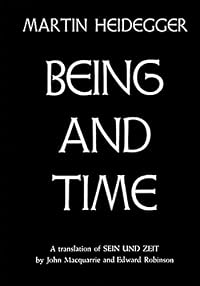
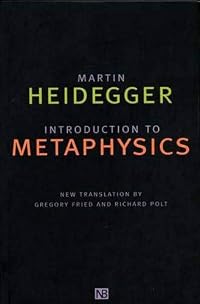
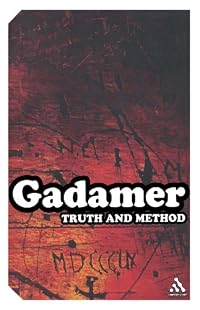
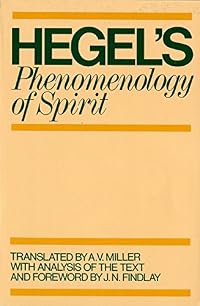







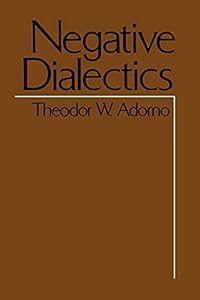
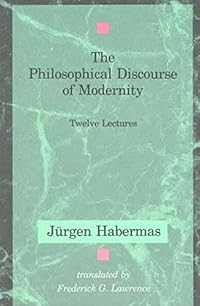
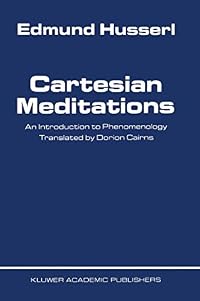
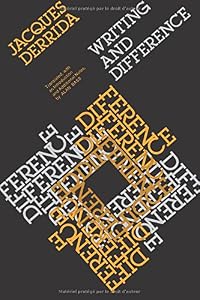



Member Recommendations


Member Reviews
This is a transcript of lectures given relatively late in the author's life and is a good representation of his later thought. It starts off with a discussion of thinking as phenomenon, and poses a series of questions about the different ways thinking is approached and referred to. A discussion of Nietzsche takes up much of the middle part, and a philologically inspired discussion of some Ancient Greek and other words for thinking follows. Overall it's pretty abstruse, and there is a certain mystical quality throughout which makes things hard to understand, and which might be unexpected if you're looking for a more straightforward book about reflexive cognition or epistemology. If you haven't read Being and Time it's probably a good show more idea to do so before taking on this one. show less
"Zeit ist freilich ein Kommen, aber ein Kommen, das geht, indem es vergeht. Das Kommende der Zeit kommt nie, um zu bleiben, sondern um zu gehen."
Leid entsteht laut Heidegger durch Kontrollverlust von dem "was war".
"Diesen Rechnen mit der Zeit begann in dem Augenblick, da der Mensch plötzlich in die Un-Ruhe kam, dass er keine Zeit mehr hatte. Dieser Augenblick ist der Beginn der Neuzeit."
Durch das Leben im immerwährenden Jetzt schaffen wir es, mehr zu sein.
Leid entsteht laut Heidegger durch Kontrollverlust von dem "was war".
"Diesen Rechnen mit der Zeit begann in dem Augenblick, da der Mensch plötzlich in die Un-Ruhe kam, dass er keine Zeit mehr hatte. Dieser Augenblick ist der Beginn der Neuzeit."
Durch das Leben im immerwährenden Jetzt schaffen wir es, mehr zu sein.
No se piensa sino cuando algo desconocido nos llama a pensar, entonces uno es en el Ser. Dice Hegel el ser es pensamiento. Heidegger recomienda a los que planeen estudiar a Nietzsche, pasar 15 años entendiendo a Aristoteles. Primero responder: ¿qué llama al pensamiento?
Nov 4, 2011Spanish
> Babelio : https://www.babelio.com/livres/Heidegger-Quappelle-t-on-penser-/4163
> Burgelin Pierre. Martin Heidegger, Qu'appelle-t-on penser ? traduit par Aloys Becker et Gérard Granel, 1959.
In: Revue d'histoire et de philosophie religieuses, 40e année n°1,1960. Le Problème de la Tradition. pp. 93-94. … ; (en ligne),
URL : https://www.persee.fr/doc/rhpr_0035-2403_1960_num_40_1_3614_t1_0093_0000_2
> « Nous ne pouvons jamais apprendre, nous modernes surtout,
que si du même mouvement nous désapprenons. Pour ce qui nous occupe,
nous ne pouvons apprendre la pensée que si nous désapprenons radicalement
son essence traditionnelle. Mais il est pour cela nécessaire que nous fassions
en même temps sa connaissance. »
—Martin Heidegger, show more Qu'appelle-t-on penser ? (1954), PUF, 1988. show less
> Burgelin Pierre. Martin Heidegger, Qu'appelle-t-on penser ? traduit par Aloys Becker et Gérard Granel, 1959.
In: Revue d'histoire et de philosophie religieuses, 40e année n°1,1960. Le Problème de la Tradition. pp. 93-94. … ; (en ligne),
URL : https://www.persee.fr/doc/rhpr_0035-2403_1960_num_40_1_3614_t1_0093_0000_2
> « Nous ne pouvons jamais apprendre, nous modernes surtout,
que si du même mouvement nous désapprenons. Pour ce qui nous occupe,
nous ne pouvons apprendre la pensée que si nous désapprenons radicalement
son essence traditionnelle. Mais il est pour cela nécessaire que nous fassions
en même temps sa connaissance. »
—Martin Heidegger, show more Qu'appelle-t-on penser ? (1954), PUF, 1988. show less
Dec 14, 2022French
""
Sep 2, 2015French
Ratings
Members
- Recently Added By
Published Reviews
"For an acquaintance with the thought of Heidegger, What Is Called Thinking? is as important as Being and Time. It is the only systematic presentation of the thinker's late philosophy and . . . it is perhaps the most exciting of his books."--Hannah Arendt
added by kirstenlund
Lists

Blue Pyramid 1,276 Best Books of All Time
1,248 works; 32 members
Author Information

454+ Works 23,427 Members
Martin Heidegger was born in Messkirch, Baden, Germany on September 22, 1889. He studied Roman Catholic theology and philosophy at the University of Frieburg before joining the faculty at Frieburg as a teacher in 1915. Eight years later Heidegger took a teaching position at Marburg. He taught there until 1928 and then went back to Frieburg as a show more professor of philosophy. As a philosopher, Heidegger developed existential phenomenology. He is still widely regarded as one of the most original philosophers of the 20th century. Influenced by other philosophers of his time, Heidegger wrote the book, Being in Time, in 1927. In this work, which is considered one of the most important philosophical works of our time, Heidegger asks and answers the question "What is it, to be?" Other books written by Heidegger include Basic Writings, a collection of Heidegger's most popular writings; Nietzsche, an inquiry into the central issues of Friedrich Nietzsche's philosophy; On the Way to Language, Heidegger's central ideas on the origin, nature and significance of language; and What is Called Thinking, a systematic presentation of Heidegger's later philosophy. Since the 1960s, Heidegger's influence has spread beyond continental Europe and into a number of English-speaking countries. Heidegger died in Messkirch on May 26, 1976. (Bowker Author Biography) show less
All Editions
Some Editions
Series

Belongs to Publisher Series
Common Knowledge
- Canonical title*
- Was heißt Denken?
- Original title
- Was heißt Denken?
- Original publication date
- 1954 (original German) (original German); 1968 (English: Gray) (English: Gray)
- Original language*
- Duits
*Some information comes from Common Knowledge in other languages. Click "Edit" for more information.
Classifications
Statistics
- Members
- 782
- Popularity
- 35,482
- Reviews
- 6
- Rating
- (4.16)
- Languages
- 10 — Czech, Danish, Dutch, English, French, German, Italian, Polish, Spanish, Turkish
- Media
- Paper, Ebook
- ISBNs
- 23
- ASINs
- 11