On This Page
Description
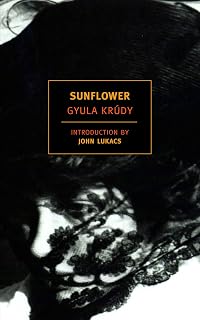
Shooting parties in great country houses, turbulent scenes in parliament and the luxury life in Budapest provide the backdrop for this gripping, prescient novel, forming a chilling indictment of upper-class frivolity and political folly in which good manners cloak indifference and brutality. Abady becomes aware of the plight of a group of Romanian mountain peasants and champions their cause, while Gyeroffy dissipates his resources at the gaming tables, mirroring the decline of the show more Austro-Hungarian empire itself. show lessTags
Recommendations


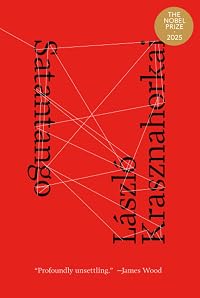
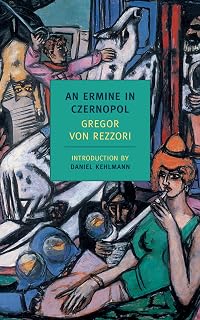








Member Recommendations

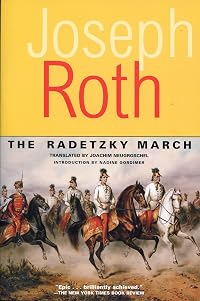
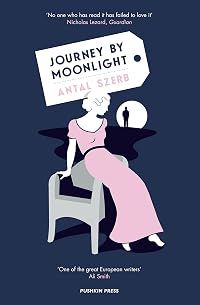
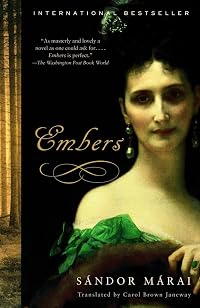
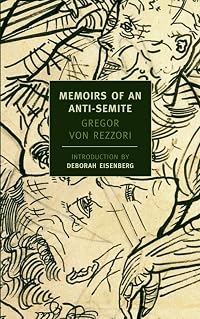
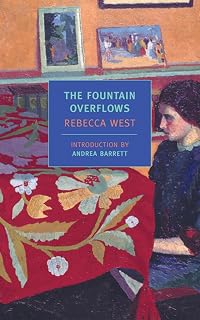
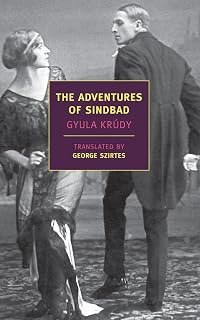
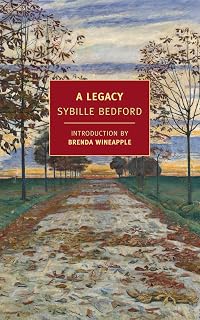
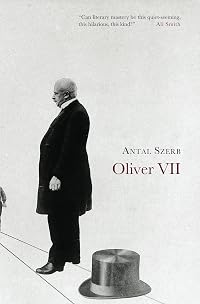
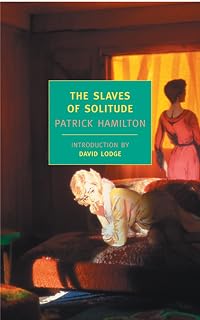
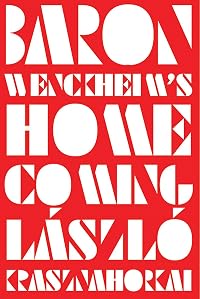
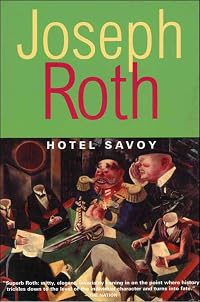
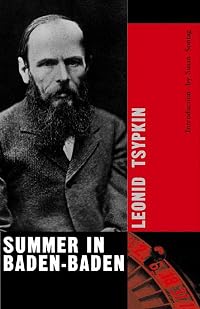
WirSindAlive Both books give us an interesting and detailed insight in the life of the social upper layer, to which both authors also belonged.
20
WirSindAlive Both works share the thrilling stories in a the historical setting of the hight aristocracy, mixed with some political background.
20
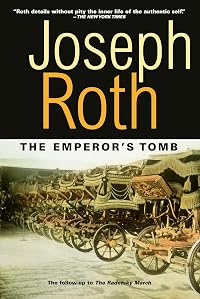
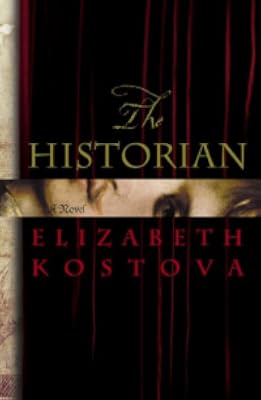
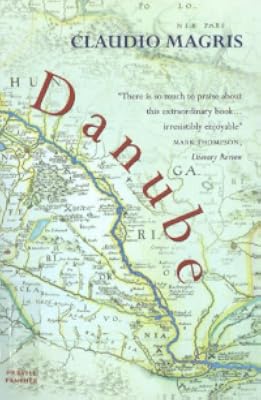
Lirmac Patrick Leigh Fermor walks through much of the same terrain and meets similar characters to those found in Bánffy's great work.
Member Reviews
Set among the Transylanian and broader Hungarian nobility a decade or so before WWI, but written in the mid-thirties, this is a Tolstoyan tale of personal and political upheaval. Through the dual foci of Counts (and, like seemingly everyone in the novel, cousins) Balint Abady and Laszlo Gyeroffy, and switching between Kolozsvár (modern Cluj) and Budapest, with excursions into the mountainous, forested Translyvanian backcountry, Banffy illuminates the incestuousness and myopia of the junior Hungarian partner in the Austro-Hungarian joint venture. Hungarian parliamentarians bicker about petty symbols of national identity, oblivious to the looming geopolitical stormclouds; provincial gentry divert themselves with the traditional balls, show more hunts, card games, affairs, and duels while middle-class opportunists and Romanian interlopers take quiet advantage.
This is very much a late flowering of the 19th Century novel. The narrative voice is richly omniscient; elaborate set-piece social gatherings serve as high-intensity incubators of plot, character and setting; the story develops organically and at leisure. Balint tries to live in accordance with a quasi-feudal code of honour, attempting to improve the peasants who occupy his forested estates with progressive schemes a la Levin in Anna Karenina (although he's much more realistic than Tolstoy's deluded alter-ego), while struggling without much success to contain his love for his unhappily-married cousin Adrienne. Banffy's portrayal of the trauma inflicted on her by her "satanic", abusive husband has a surprisingly modern ring to it. Gyeroffy's, also in love with a cousin (you'd need a PhD in genealogy to map the characters in this book), has his life torn apart by a gambling addiction whose progression is described in exquisite, inevitable detail.
I love stories of decline and stories set on the cusp of some great turning point or tragedy, and this is a very superior example of both. It's filled with deep-pocketed eccentrics (another thing I love to read about) and contains some glittering, transcendent, snowy wilderness scenes that made my skin prickle. I can't wait to read volumes II and III. show less
This is very much a late flowering of the 19th Century novel. The narrative voice is richly omniscient; elaborate set-piece social gatherings serve as high-intensity incubators of plot, character and setting; the story develops organically and at leisure. Balint tries to live in accordance with a quasi-feudal code of honour, attempting to improve the peasants who occupy his forested estates with progressive schemes a la Levin in Anna Karenina (although he's much more realistic than Tolstoy's deluded alter-ego), while struggling without much success to contain his love for his unhappily-married cousin Adrienne. Banffy's portrayal of the trauma inflicted on her by her "satanic", abusive husband has a surprisingly modern ring to it. Gyeroffy's, also in love with a cousin (you'd need a PhD in genealogy to map the characters in this book), has his life torn apart by a gambling addiction whose progression is described in exquisite, inevitable detail.
I love stories of decline and stories set on the cusp of some great turning point or tragedy, and this is a very superior example of both. It's filled with deep-pocketed eccentrics (another thing I love to read about) and contains some glittering, transcendent, snowy wilderness scenes that made my skin prickle. I can't wait to read volumes II and III. show less
“How simple everything could seem if one looked only at the figures, those cold statistics that took no account of people's feelings and traditions…What of the myriad individual characteristics, passions, aspirations, triumphs and disappointments that together made one people different from another? How could anyone ignore all the different threads of experience that, over the centuries, had formed and deepened the differences that distinguished each nation?”
Published in 1934, this book covers a wide swath of Hungarian and Romanian history. It is set in 1905 in Transylvania, which was then part of Austro-Hungarian Empire and is now in Romania. Protagonist Count Balint Abády lives in castle Denestornya, his family’s estate, in show more the countryside near Kolozsvár. He is part of the upper class and an elected official in Parliament. He is in love with Adrienne, an unhappily married woman. His cousin, Count László Gyeroffy, is in love with the beautiful Klara Kollonich, but his habitual gambling comes between them. It is a sweeping saga of society, love, and the political situation in Austria-Hungary at the time.
There are many characters in this book, but the main storyline focuses on a few, and these few are well-developed. The pace is a bit slow at the start but becomes steady once the characters are introduced. The perspective is third person omniscient, so the reader is privy to their inner thoughts. There are many miscommunications, people out for revenge, duels, hunting parties, balls, gossip, horse races, political intrigue, servants delivering private messages, romantic liaisons, trips abroad, and ventures into rural areas where we see how people of lesser means are living. It portrays the lead-up to WWI and how warning signs were ignored, while the upper classes continued their lavish lifestyles.
This book is wonderfully written. Count Abády is a particularly well-crafted character – he lives by an honor code, wants to help the people living on his land, and struggles with his shortcomings. It is easy to picture the social gatherings – which apparently lasted all night and broke up in the early hours of the morning. It contains beautiful descriptions of the countryside.
“As Balint stood there, motionless, rapt in a new sense of delight and exaltation, seven fallow deer appeared slowly from a group of pines. They were wading knee-high through the morning haze, two does with their fawns and three young females, and if they saw Balint they did not take any notice of him but just walked quietly and sedately on until, after a few moments, they disappeared again into the shadow of the trees. Their sudden appearance in the distance in front of him, and just as sudden disappearance a moment or two later contributed strongly to Balint's sense of wonder and enchantment.”
This book would make a great mini-series. It reminded me of a Hungarian/Romanian version of Downton Abbey. It provides an opportunity to learn about the history of Transylvania in an entertaining manner without the gothic overtones normally attributed to the area. Though it is lengthy at around 700 pages, I was always anxious to pick it up.
4.5 show less
Published in 1934, this book covers a wide swath of Hungarian and Romanian history. It is set in 1905 in Transylvania, which was then part of Austro-Hungarian Empire and is now in Romania. Protagonist Count Balint Abády lives in castle Denestornya, his family’s estate, in show more the countryside near Kolozsvár. He is part of the upper class and an elected official in Parliament. He is in love with Adrienne, an unhappily married woman. His cousin, Count László Gyeroffy, is in love with the beautiful Klara Kollonich, but his habitual gambling comes between them. It is a sweeping saga of society, love, and the political situation in Austria-Hungary at the time.
There are many characters in this book, but the main storyline focuses on a few, and these few are well-developed. The pace is a bit slow at the start but becomes steady once the characters are introduced. The perspective is third person omniscient, so the reader is privy to their inner thoughts. There are many miscommunications, people out for revenge, duels, hunting parties, balls, gossip, horse races, political intrigue, servants delivering private messages, romantic liaisons, trips abroad, and ventures into rural areas where we see how people of lesser means are living. It portrays the lead-up to WWI and how warning signs were ignored, while the upper classes continued their lavish lifestyles.
This book is wonderfully written. Count Abády is a particularly well-crafted character – he lives by an honor code, wants to help the people living on his land, and struggles with his shortcomings. It is easy to picture the social gatherings – which apparently lasted all night and broke up in the early hours of the morning. It contains beautiful descriptions of the countryside.
“As Balint stood there, motionless, rapt in a new sense of delight and exaltation, seven fallow deer appeared slowly from a group of pines. They were wading knee-high through the morning haze, two does with their fawns and three young females, and if they saw Balint they did not take any notice of him but just walked quietly and sedately on until, after a few moments, they disappeared again into the shadow of the trees. Their sudden appearance in the distance in front of him, and just as sudden disappearance a moment or two later contributed strongly to Balint's sense of wonder and enchantment.”
This book would make a great mini-series. It reminded me of a Hungarian/Romanian version of Downton Abbey. It provides an opportunity to learn about the history of Transylvania in an entertaining manner without the gothic overtones normally attributed to the area. Though it is lengthy at around 700 pages, I was always anxious to pick it up.
4.5 show less
I really enjoyed the political realm, it wasn't given a lot of attention but it was given enough to be interesting and also works well for Balint's characterisation who doesn't really care about politics despite being a politician. I also really enjoyed Balint's side adventure in developing his lands and the co-operative. The intrigues between Azbej and Simo in how lower level individuals gain power in an aristocratic world. The short but ever present shadowy appearance of Slawata was really interesting and really emphasised how scary it must have been for Hungarian nobility to be deprived of their privileges if Austria wanted to enforce direct rule. The Romanian lawyer was also really interesting and his idea on creating a Romanian show more middle class was fascinating. So there is a lot of meat in this book.
However, most of this book is ultimately a love story. Gyeroffy's story with Klara was great and it showed how a gambling addiction can ultimately ruin everything from your true love to your social status. Balint's story with Adrienne however was infuriating. He should not be with her. I deeply understand why he loves her but he shouldn't be with her when she's so unwilling to be passionate with him and is so reluctant to bring the relationship further. I'm glad they decided to split up and her decision to not commit suicide (as her sister Judith attempted) but to keep on living.
The Wickwitz storyline was interesting as well. He's most certainly the 'villain' in this book but the book does a good job in showing his side of the story and how it's not exactly an easy choice to make if you have debts but still want to be in the position you're in - he didn't lack morals outright, he just approached dealing with his debts in the worst way of trying to get marriage and let them pay off his debts. I suppose that's pretty immoral actually. He was a great character I think.
Balint is a great character, I just didn't like him very much when he was with Adrienne and I think he knows that himself, especially all the instances of wondering if he can break free of her spell. Overall he's a great character.
Great book overall and a great snapshot in 20th century Hungarian aristocracy. show less
However, most of this book is ultimately a love story. Gyeroffy's story with Klara was great and it showed how a gambling addiction can ultimately ruin everything from your true love to your social status. Balint's story with Adrienne however was infuriating. He should not be with her. I deeply understand why he loves her but he shouldn't be with her when she's so unwilling to be passionate with him and is so reluctant to bring the relationship further. I'm glad they decided to split up and her decision to not commit suicide (as her sister Judith attempted) but to keep on living.
The Wickwitz storyline was interesting as well. He's most certainly the 'villain' in this book but the book does a good job in showing his side of the story and how it's not exactly an easy choice to make if you have debts but still want to be in the position you're in - he didn't lack morals outright, he just approached dealing with his debts in the worst way of trying to get marriage and let them pay off his debts. I suppose that's pretty immoral actually. He was a great character I think.
Balint is a great character, I just didn't like him very much when he was with Adrienne and I think he knows that himself, especially all the instances of wondering if he can break free of her spell. Overall he's a great character.
Great book overall and a great snapshot in 20th century Hungarian aristocracy. show less
The Transylvanian Trilogy isn’t what you think it is. Assuming you were thinking it involved vampires.
It’s natural that you might suppose so. The one thing everyone knows about Transylvania is that it’s the home of Bram Stoker’s fictional Count Dracula. Most also know that it’s an actual territory in Romania. That’s true now, and has been for many decades, but it’s not the whole story. We tend, or at least I do, to get stuck on a concept of world geography that was formed by the globes and maps that we used in elementary school, and think of those borders as more or less permanently fixed. Nothing could be further from the truth, of course.
But I’m not here to talk about my general ignorance, just one example of it. Or show more rather, one former example of it. Through an informal program of reading where one book leads accidentally to another, I have lately been traveling down the Danube into central and eastern European history, and I’ve learned a lot about Transylvania. Did you know that this region was for a thousand years, from the turn of the first millennium to the early 20th century, an essential part of Hungary? The trans-sylvan “land beyond the forest” was wide and wild, and its residents were seen as more rugged and authentic than those closer to the capital city of Budapest–it seems to have occupied much the same place in the Magyar imagination that the American West does in ours. The handing over of Transylvania to Romania in the aftermath of World War I was a devastating blow.
That national calamity is what Miklós Bánffy slowly, deliciously works his way toward in his sweeping trilogy. The individual volumes borrow their titles from the famous writing on the wall in the biblical book of Daniel, a prophecy about the collapse of a legendary kingdom–They Were Counted, They Were Found Wanting, They Were Divided–and together they describe the decline of a fascinating real place.
The story begins as a young nobleman (a Bánffy stand-in) returns from diplomatic service abroad and is flung back into the social and political Hungarian swirl. Tempted by selfish interests but dedicated to the betterment of his society, he charts a course toward the future, beset on all sides by frivolity and obliviousness. Old ladies gossip and young ladies angle to win marital competitions while generals compare mustaches and bicker pettily about their junior status in the Austro-Hungarian Empire, all unaware that their lives are about to turn upside down.
Though written in the 1930s, the trilogy is both in style and substance the last of the great 19th-century novels, grand and stately and ambitious and utterly immersive. The characters, including the upright Count Abady, the captivating Adrienne with her “flame-colored shift,” and the doomed artist Laszlo, are playthings of their omniscient author but also fully dimensional, and the set pieces they occupy will not soon be forgotten by anyone with the leisure to read them. Hunting parties, parliamentary debates, duels, intrigues, stolen moments of romance, midnight sledge rides through the snow … it’s positively sumptuous. The lush surface enraptures, but there’s also an underlying seriousness that appeals, an insistent moral drumbeat that asks What Is the Right Way to Live? There’s simply too much to this epic to do it proper justice here, so I’ll just flippantly call it a cross between Gone with the Wind and War and Peace with an added dash of paprika. show less
It’s natural that you might suppose so. The one thing everyone knows about Transylvania is that it’s the home of Bram Stoker’s fictional Count Dracula. Most also know that it’s an actual territory in Romania. That’s true now, and has been for many decades, but it’s not the whole story. We tend, or at least I do, to get stuck on a concept of world geography that was formed by the globes and maps that we used in elementary school, and think of those borders as more or less permanently fixed. Nothing could be further from the truth, of course.
But I’m not here to talk about my general ignorance, just one example of it. Or show more rather, one former example of it. Through an informal program of reading where one book leads accidentally to another, I have lately been traveling down the Danube into central and eastern European history, and I’ve learned a lot about Transylvania. Did you know that this region was for a thousand years, from the turn of the first millennium to the early 20th century, an essential part of Hungary? The trans-sylvan “land beyond the forest” was wide and wild, and its residents were seen as more rugged and authentic than those closer to the capital city of Budapest–it seems to have occupied much the same place in the Magyar imagination that the American West does in ours. The handing over of Transylvania to Romania in the aftermath of World War I was a devastating blow.
That national calamity is what Miklós Bánffy slowly, deliciously works his way toward in his sweeping trilogy. The individual volumes borrow their titles from the famous writing on the wall in the biblical book of Daniel, a prophecy about the collapse of a legendary kingdom–They Were Counted, They Were Found Wanting, They Were Divided–and together they describe the decline of a fascinating real place.
The story begins as a young nobleman (a Bánffy stand-in) returns from diplomatic service abroad and is flung back into the social and political Hungarian swirl. Tempted by selfish interests but dedicated to the betterment of his society, he charts a course toward the future, beset on all sides by frivolity and obliviousness. Old ladies gossip and young ladies angle to win marital competitions while generals compare mustaches and bicker pettily about their junior status in the Austro-Hungarian Empire, all unaware that their lives are about to turn upside down.
Though written in the 1930s, the trilogy is both in style and substance the last of the great 19th-century novels, grand and stately and ambitious and utterly immersive. The characters, including the upright Count Abady, the captivating Adrienne with her “flame-colored shift,” and the doomed artist Laszlo, are playthings of their omniscient author but also fully dimensional, and the set pieces they occupy will not soon be forgotten by anyone with the leisure to read them. Hunting parties, parliamentary debates, duels, intrigues, stolen moments of romance, midnight sledge rides through the snow … it’s positively sumptuous. The lush surface enraptures, but there’s also an underlying seriousness that appeals, an insistent moral drumbeat that asks What Is the Right Way to Live? There’s simply too much to this epic to do it proper justice here, so I’ll just flippantly call it a cross between Gone with the Wind and War and Peace with an added dash of paprika. show less
I almost gave up on this book soon after I started it, because I wasn't that interested in the big party of aristocrats at a Hungarian castle in the early years of the 20th century with which it begins. But I kept at it and soon I was hooked, because Bánffy is a marvelous story teller. It is a sprawling tale, with two cousins at its center, but involving dozens of other characters and their relationships, romantic and otherwise, and politics. What makes the book so fascinating, aside from or despite the almost soap-opera-ish aspects of some of the subplots, is the look at the vanished (perhaps deservedly so) world of pre-World War I Hungary and, in particular, the often fought-over province of Transylvania, then under Hungarian rule show more but largely peopled by ethnic Romanians. These were the waning years of the Austro-Hungarian empire, much written about by Austrians such as Joseph Roth, but this book is told from the Hungarian perspective, and the Hungarians very much felt themselves second-class citizens in the empire. The descriptions of political events, many presumably based on real ones, since Bánffy had himself been a politician from an ancient aristocratic family, show the futility of the political arguments of the time, all focused on the Hungarians' resentment of the Austrian rulers, completely oblivious to the changes in the world outside. (It is my understanding that the next two volumes of this trilogy lead up to and end with the killing of Archduke Ferdinand and the beginning of first world war, which was the death knell of the Austro-Hungarian empire.)
While the stories of the cousins and their families, their lovers and those they want to to be their lovers, their land and their financial issues are, along with the politics, the heart of the novel, I also found the parts dealing with the beauty of the Transylvanian landscape and the lives of peasants, especially those in the mountains, very interesting. What was also interesting, and depressing, was the extremely limited lives women had to lead in those times, the still existing emphasis on the role and importance of the hereditary aristocracy, and the power those aristocrats had over the lives of others.
Despite the blurbs on the copy I have, which compare Bánffy to Tolstoy, this isn't in the same literary league. Part of this may be due to the translation since the English translator (who worked with Bánffy's daughter) says in his introduction not only that he cut parts of the book because it was so long and politically detailed, but also that he realized that "a literal translation in English would give none of the quality of the original and would fail completely to give any idea of the idiom and feeling of the first years of this century in Central Europe . . . anyone tackling it would have to make an English version rather than a literal translation." Nonetheless, it is a compellingly readable story and I am eager to read the next two volumes.
Finally, the edition I read is marred by sloppy proofreading -- words missing, words where they don't belong, typos and/or missed punctuation. It's a shame. show less
While the stories of the cousins and their families, their lovers and those they want to to be their lovers, their land and their financial issues are, along with the politics, the heart of the novel, I also found the parts dealing with the beauty of the Transylvanian landscape and the lives of peasants, especially those in the mountains, very interesting. What was also interesting, and depressing, was the extremely limited lives women had to lead in those times, the still existing emphasis on the role and importance of the hereditary aristocracy, and the power those aristocrats had over the lives of others.
Despite the blurbs on the copy I have, which compare Bánffy to Tolstoy, this isn't in the same literary league. Part of this may be due to the translation since the English translator (who worked with Bánffy's daughter) says in his introduction not only that he cut parts of the book because it was so long and politically detailed, but also that he realized that "a literal translation in English would give none of the quality of the original and would fail completely to give any idea of the idiom and feeling of the first years of this century in Central Europe . . . anyone tackling it would have to make an English version rather than a literal translation." Nonetheless, it is a compellingly readable story and I am eager to read the next two volumes.
Finally, the edition I read is marred by sloppy proofreading -- words missing, words where they don't belong, typos and/or missed punctuation. It's a shame. show less
This is an enjoyable read for those who like Tolstoy or Joseph Roth, especially the latter as it covers some of the same ground -- the waning days of the Austro-Hungarian empire. The locales are not limited to Transylvania, but most of the action and descriptive prose are focused thereabouts. It pretty much leaves you hanging at the end; there are major plot lines that have yet to be resolved, so I guess I'll have to continue reading the trilogy.
I first came across this writer when researching the homeland of my maternal grandparents, who both grew up near Sibiu, which in those days was called Hermannstadt. Since they both emigrated in their late teens just a couple of years after the time frame in which the trilogy takes place, I show more thought it might give me some additional insights into what life there was like for them as Romanian peasants. And this book was marvelous in its descriptions of the landscape and the people living there.
Now that I have finished this part of the story, I am struck by how much the world in general has changed since 1905. (To be fair, life in many parts of Transylvania is not terribly different than it was then. This part of Romania remains an agrarian backwater that has few opportunities to export food or other products.) The world my grandparents lived in is starting to disappear, but books like this tell us what it was like when they were children, which I find priceless. An author cannot know how his/her writing may affect a reader in ways that the author could not possibly anticipate. This book (and most likely the entire trilogy) is destined for classic status in the Hungarian canon.
One caveat: the Arcadia Press edition of this book has numerous typos, and the translators at times have awkward sentence constructs. Try the Everyman's Library version instead. show less
I first came across this writer when researching the homeland of my maternal grandparents, who both grew up near Sibiu, which in those days was called Hermannstadt. Since they both emigrated in their late teens just a couple of years after the time frame in which the trilogy takes place, I show more thought it might give me some additional insights into what life there was like for them as Romanian peasants. And this book was marvelous in its descriptions of the landscape and the people living there.
Now that I have finished this part of the story, I am struck by how much the world in general has changed since 1905. (To be fair, life in many parts of Transylvania is not terribly different than it was then. This part of Romania remains an agrarian backwater that has few opportunities to export food or other products.) The world my grandparents lived in is starting to disappear, but books like this tell us what it was like when they were children, which I find priceless. An author cannot know how his/her writing may affect a reader in ways that the author could not possibly anticipate. This book (and most likely the entire trilogy) is destined for classic status in the Hungarian canon.
One caveat: the Arcadia Press edition of this book has numerous typos, and the translators at times have awkward sentence constructs. Try the Everyman's Library version instead. show less
They Were Counted is the first of three books in The Transylvanian Trilogy. Set in the early 1900s, it is a sprawling tale of a time and place in history, told through the lives of two young men: Balint Abady, a new member of parliament, and his cousin Laszlo Gyeroffy, a musician. Balint is clearly of a higher class and moves easily through the myriad of balls and dinners common to his social circle. He also is responsible for significant land holdings long owned by his family. He and Laszlo are long-time friends, but it’s clear Laszlo is a peg or two down the society ladder; he’s present at many of the same balls but lacks Balint’s financial resources and political influence.
Balint is very much in love with Adrienne, who is show more locked in an unhappy marriage. Balint quickly uncovers scars from the marriage that have made her unable to experience passion. He visits Adrienne regularly, intent on both expressing his love and helping her to once again feel what it means to love and be loved. Laszlo, meanwhile, has made a name for himself at court. He is in charge of the dancing at all of the balls, directing the musicians and keeping things moving for the guests. Laszlo also gets involved in romantic relationships, but early on he is knocked back when the family of the woman he loves rejects him. He turns to gambling to satisfy some underlying need, which has serious consequences not only for Laszlo but for many others in his circle.
Balint’s role in parliament is used as a device to cover important moments in Transylvanian history. These sections weren’t as interesting to me as those focused on high society in that period, but since I know next to nothing about this time and place, it was worthwhile to gain some historical context. [They Were Counted] was an interesting book; I was never completely “hooked,” but whenever I sat down to read I enjoyed it very much. show less
Balint is very much in love with Adrienne, who is show more locked in an unhappy marriage. Balint quickly uncovers scars from the marriage that have made her unable to experience passion. He visits Adrienne regularly, intent on both expressing his love and helping her to once again feel what it means to love and be loved. Laszlo, meanwhile, has made a name for himself at court. He is in charge of the dancing at all of the balls, directing the musicians and keeping things moving for the guests. Laszlo also gets involved in romantic relationships, but early on he is knocked back when the family of the woman he loves rejects him. He turns to gambling to satisfy some underlying need, which has serious consequences not only for Laszlo but for many others in his circle.
Balint’s role in parliament is used as a device to cover important moments in Transylvanian history. These sections weren’t as interesting to me as those focused on high society in that period, but since I know next to nothing about this time and place, it was worthwhile to gain some historical context. [They Were Counted] was an interesting book; I was never completely “hooked,” but whenever I sat down to read I enjoyed it very much. show less
Members
- Recently Added By
Lists

The Guardian's 1000 Novels Everyone Must Read
1,005 works; 550 members

EU Fiction: 1950-2022
223 works; 70 members

Top Five Books of 2015
811 works; 240 members

Books Read in 2022
5,168 works; 114 members
Author Information

19 Works 1,496 Members
Some Editions
Awards and Honors
Series

Belongs to Publisher Series
Work Relationships
Is contained in
Common Knowledge
- Canonical title
- They Were Counted
- Original title
- Megszámláltattál
- Original publication date
- 1934
- People/Characters
- Balint Abady; Laszlo Gyeroffy
- Important places
- Hungary; Transylvania, Romania; Austria; Austria-Hungary; Budapest, Hungary; Kolozsvár, Hungary (now Cluj-Napoca, Romania)
- Important events*
- La obra discurre en 1900
- Epigraph*
- ... El rey dio un gran banquete a mil de sus príncipes; bebieras vino, alabaron a sus dioses de oro, plata, de metal, de hierro, de madera y de piedra; y se burlaron los unos de los otros, y discutieron por los dioses de cad... (show all)a uno.
En aquella misma hora aparecieron unos dedos de mano de hombre que escribieron delante del candelabro, sobre el yeso de la pared del palacio real. Y la palabra que escribieron fue "Mené: Tu reino ha sido contado...". Pero nadie ció la escritura porque estaban embriagados por el vino y la ira, y porque estaban peleándose por sus dioses de oro, de plata, de metal, de hierro, de madera y de piedra... - First words
- The radiant afternoon sunlight of early September was so brilliant that it still seemed like summer.
- Last words
- (Click to show. Warning: May contain spoilers.)She might have been wrapped in a shroud...
- Original language
- Hungarian
*Some information comes from Common Knowledge in other languages. Click "Edit" for more information.
Classifications
- Genres
- General Fiction, Fiction and Literature, Historical Fiction
- DDC/MDS
- 894.511332 — Literature & rhetoric Literatures of other languages Literatures of Altaic, Uralic, Hyperborean, Dravidian languages; literatures of miscellaneous languages of south Asia Finno-Ugric languages Ugric languages Hungarian Hungarian fiction 1900–2000 Early 20th century 1900–1945
- LCC
- PH3213 .B24 .M413 — Language and Literature Uralic languages. Basque language Uralic. Basque Hungarian
- BISAC
Statistics
- Members
- 716
- Popularity
- 39,666
- Reviews
- 19
- Rating
- (3.96)
- Languages
- 8 — Dutch, English, French, German, Hungarian, Italian, Polish, Spanish
- Media
- Paper, Ebook
- ISBNs
- 26
- ASINs
- 10