
On This Page
Description
The acclaimed travel writer's youthful journey - as an 18-year-old - across 1930s Europe by foot began in A Time of Gifts, which covered the author's exacting journey from the Lowlands as far as Hungary. Picking up from the very spot on a bridge across the Danube where his readers last saw him, we travel on with him across the great Hungarian Plain on horseback, and over the Romanian border to Transylvania. The trip was an exploration of a continent which was already showing signs of the show more holocaust which was to come. Although frequently praised for his lyrical writing, Fermor's account also provides a coherent understanding of the dramatic events then unfolding in Middle Europe. But the delight remains in travelling with him in his picaresque journey past remote castles, mountain villages, monasteries and towering ranges. show lessTags
Recommendations






























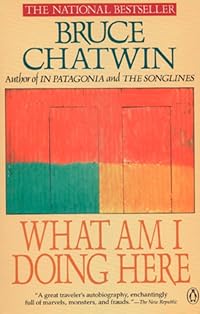
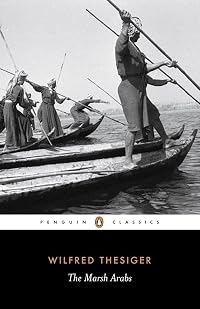
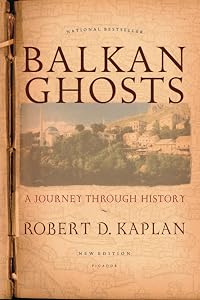
Member Recommendations
John_Vaughan Readers of Fermor, who died last year are still hopeful of the conclusion to his travels.

Member Reviews
The central Europe portion in this enchanting travelogue of Fermor's walk from the Hook of Holland to Constantinople between the World Wars, continues the discursive marvel that began in the first volume. I don't know where to begin with my love of this book--the lush descriptions of long-gone landscapes, the cheerful, attentive detail to the appearance and character of all he meets, or Fermor's encyclopedic knowledge of history, art, architecture, and language. Polyglot and a lover of words, here he is in the chapter entitled "Carpathian Uplands." On foot, Fermor falls in with a logger and joins him and his brother, a Rabbi and the latter's two sons, who inquire, "Why was I travelling? To see the world, to study, to learn languages? I show more wasn't quite clear myself. Yes, some of these things, but mostly--I couldn't think of the word at first--and when I found it--'for fun'--it didn't sound right and their brows still puckered. 'Also, Sie teiben so herum aus Vergnügen?' The foreman [logger] shrugged his shoulders and smiled and said something in Yiddish to the others; they all laughed and I asked what it was. 'Es ist a goyim naches!' they said. 'A goyim naches', they explained, is something that the goyim like but which leaves Jews unmoved; any irrational or outlandish craze, a goy's delight or a gentile's relish. It seemed to hit the nail on the head" (p. 227). He is a truly companionable guide through an evanescent past. Highly recommended! show less
The middle book of Fermor's memoir of his walk across Europe to Constantinople at the age of 19, in 1934. After I read the first one, I couldn't bear to go on, knowing what happened to the people and countries through which he passed--but I finally got up the courage for the next book, and indeed, another idyll, as Fermor crosses into Hungary and then Romania. He makes a big circle through the mountains of Transylvania, traveling sometimes alone, sometimes with friends, spending nights with shepherds or alone. Towards the end as Fermor heads down towards the Danube and Bulgaria, I got so excited by his description of the Kazan and the Iron Gates, the footpath path hewn in the rocks, Trajan's bridge remains, the incredible wildlife . . . show more I was devastated to learn it is all gone, gone, gone buried underwater--a huge hydroelectric dam blocks the Danube there and while I am sure it brought prosperity to people who needed it (am I??) I cannot help but feel sickened by the costs--costs which may be higher than we can imagine. A lyrical introduction to a Romania that was and a time that is no more. ***** show less
The young PLF's travels, begun in the more familiar western Europe and chronicled in "A Time of Gifts", continue - through Hungary and Rumania. I find I know almost nothing of these parts of Europe, which for most of my life were hidden behind the Iron Curtain. Here the young PLF, sometimes camping with shepherds and at others taken in by gentle aristocrats who let him loose in their libraries, unfurls a map of conquest and reconquest which sounds romantic but has left us with terrible ethnic tensions that resonate today. As well as planning nest to read the posthumously published "The Broken Road" that completes Leigh Fermor's trilogy, I think I will need to re-read A J Mackinnon's "The unlikely voyage of the Jack de Crow" which covers show more much of the same territory, by an equally impecunious and eccentric young man, about 70 years later... show less
This was nearly as lovely as A Time of Gifts. The writing’s still excellent, the descriptions of the land and the people still bring them to life in my mind, the adventures Fermor had are wonderful and like something out of fiction. I know there’s a healthy dose of nostalgia for Old Europe there, but still. I felt like perhaps he delved more into historical contexts in this one, bringing up past kingdoms and nobles and that sort of thing, but it’s interesting to read that, all the same. Heroes riding out of the mists of time and over the landscape, and so on.
I don’t think I felt as connected to this book as A Time of Gifts, though. I’m blaming my lack of personal familiarity with eastern Europe—in the last book, he was show more seeing things I or my family had seen, not so much in this one—and the fact that he stays largely with wealthy families instead of average people, and see the warning please. I’m inclined to forgive him somewhat for that, since he was writing thirty-odd years ago and capturing the mindset of eighty years ago and he presents the Romani as people without over-romanticizing or getting nasty, but … he’s pretty good about calling his past self out for other uncool things and doesn’t do as great of a job here.
Other than that, this was an enjoyable and educational read, with enough adventure and nature and history to satisfy. I’m looking forward to reading the third installment at some point.
Warnings: Anti-Romani racism, mostly reported stereotypes and warnings but also persistent use of the g-slur, one fearful moment born of believing said stereotypes, and the occasional unsavory mention of skin colour; one or two uses of “oriental” to refer to Asians …and to possibly Asian-descended Europeans; a page and a half summarizing historic antisemitism.
7/10 show less
I don’t think I felt as connected to this book as A Time of Gifts, though. I’m blaming my lack of personal familiarity with eastern Europe—in the last book, he was show more seeing things I or my family had seen, not so much in this one—and the fact that he stays largely with wealthy families instead of average people, and see the warning please. I’m inclined to forgive him somewhat for that, since he was writing thirty-odd years ago and capturing the mindset of eighty years ago and he presents the Romani as people without over-romanticizing or getting nasty, but … he’s pretty good about calling his past self out for other uncool things and doesn’t do as great of a job here.
Other than that, this was an enjoyable and educational read, with enough adventure and nature and history to satisfy. I’m looking forward to reading the third installment at some point.
Warnings: Anti-Romani racism, mostly reported stereotypes and warnings but also persistent use of the g-slur, one fearful moment born of believing said stereotypes, and the occasional unsavory mention of skin colour; one or two uses of “oriental” to refer to Asians …and to possibly Asian-descended Europeans; a page and a half summarizing historic antisemitism.
7/10 show less
This second part of Patrick Leigh Fermor's journey to Constantinople takes us through the idyllic summer of 1934, from Easter day in Esztergom to the beginning of Autumn at the Iron Gates. The style of travel has changed rather: although he is still mostly walking, in A time of gifts, he had been living the life of the impecunious student traveller, sleeping rough or in cheap hotels and hostels, but since Munich he has been caught up in a chain of letters of introduction, moving from castle to castle as he enjoys the generous hospitality of the central European aristocracy.
In other circumstances we might be inclined to be rather disparaging about this endless procession of good luck and connections, but since we know that most of these show more wonderful characters are living on borrowed time, we can just sit back and enjoy it with him. And there is a lot to enjoy. We follow the author riding a borrowed horse over the Hungarian plain, dredging up forgotten fragments of Hindi and George Borrow to communicate with Gypsies in their own language, romping in cornfields with farmgirls, pursuing a clandestine liaison with a married woman during a Dornford Yates-style motor tour of the Carpathians and discovering common ground with an orthodox Rabbi in a remote logging camp.
There's an extra layer of irony when we read this book now - Leigh Fermor couldn't know when he was writing in 1986 that the map of Eastern Europe was about to be redrawn yet again. Possibly it was this that broke the flow — in any event, we're still waiting for the promised third part of the journey to Constantinople. show less
In other circumstances we might be inclined to be rather disparaging about this endless procession of good luck and connections, but since we know that most of these show more wonderful characters are living on borrowed time, we can just sit back and enjoy it with him. And there is a lot to enjoy. We follow the author riding a borrowed horse over the Hungarian plain, dredging up forgotten fragments of Hindi and George Borrow to communicate with Gypsies in their own language, romping in cornfields with farmgirls, pursuing a clandestine liaison with a married woman during a Dornford Yates-style motor tour of the Carpathians and discovering common ground with an orthodox Rabbi in a remote logging camp.
There's an extra layer of irony when we read this book now - Leigh Fermor couldn't know when he was writing in 1986 that the map of Eastern Europe was about to be redrawn yet again. Possibly it was this that broke the flow — in any event, we're still waiting for the promised third part of the journey to Constantinople. show less
Although there are many beautifully evoked landscapes, as in [A Time of Gifts], as well a the highly memorable Island of the Turks,
the emphasis on the homes, architecture, books, and intricacies in the lives of the semi-rich doesn't measure up to peasants and sleeping in haystacks.
Redundant political history bordered on boring...
...and refusal to acknowledge the horror of Hitler felt contrived or incomprehensible...
...also hard to tell how he actually felt about "gypsies" and Jewish people.
the emphasis on the homes, architecture, books, and intricacies in the lives of the semi-rich doesn't measure up to peasants and sleeping in haystacks.
Redundant political history bordered on boring...
...and refusal to acknowledge the horror of Hitler felt contrived or incomprehensible...
...also hard to tell how he actually felt about "gypsies" and Jewish people.
I've not read the first part of Leigh Fermor's travel memoirs, but this second volume recounts his travels as a young man across central Europe in the summer of 1934—an epic journey by foot through a landscape that was about to be altered irrevocably by the Second World War, by Communism, and by the redrawing of national boundaries. His description of a vanished world is fascinating: a world where the aristocracy of the old Austria-Hungary still survived, albeit in reduced circumstances; where people farm a land that seems all but untouched by the Industrial Revolution; where Turkish and Jewish and Roma and Sinti populations still form a large proportion of the local inhabitants.
The one thing which made me squirm about the book was show more that, although written at the remove of some fifty years, and although Leigh Fermor clearly has a great deal of admiration and interest for the peoples he meets, there is quite a deal of unexamined prejudice going on—the Romans bring civilisation, but the Mongols (looking out at the world from beneath the 'epicanthic folds' of their eyelids, I kid you not) were barbarians; Judaism, compared to Christianity and Islam, is 'in the position of a [hag-ridden] King Lear.' A highly interesting read, but one very much of its (the author's?) time. show less
The one thing which made me squirm about the book was show more that, although written at the remove of some fifty years, and although Leigh Fermor clearly has a great deal of admiration and interest for the peoples he meets, there is quite a deal of unexamined prejudice going on—the Romans bring civilisation, but the Mongols (looking out at the world from beneath the 'epicanthic folds' of their eyelids, I kid you not) were barbarians; Judaism, compared to Christianity and Islam, is 'in the position of a [hag-ridden] King Lear.' A highly interesting read, but one very much of its (the author's?) time. show less
Members
- Recently Added By
Published Reviews
Unhurried and receptive, endlessly curious and with, as Philip Toynbee has said, ''a rapturous historical imagination,'' Mr. Leigh Fermor, who is in his 70's, was, and remains, an ideal witness to what is now a vanished world.
added by John_Vaughan
Lists

Best of Travel Narratives
142 works; 28 members

Best Travel Narrative
32 works; 20 members

Up the Rhine and down the Danube (or vice-versa)
8 works; 2 members

Recommend the 20 best books you've read in the last five years
2,168 works; 602 members

Adventure Travel & Exploration In Europe
18 works; 3 members

Best 19th and 20th Century Travel
22 works; 4 members

Folio Society
831 works; 48 members

Best Literary Walks
35 works; 7 members

Books Read in 2016
4,666 works; 197 members
Author Information

Patrick Leigh Fermor was born in London, England on February 11, 1915. During World War II, he was the architect of the kidnapping of the commander of the German garrison on Crete. He wrote several books including A Time of Gifts, Between the Woods and the Water, The Traveller's Tree, The Violins of Saint-Jacques, Mani, and Roumeli. He was also a show more translator. He received a military OBE in 1943. He died on June 10, 2011 at the age of 96. (Bowker Author Biography) show less
Some Editions
Awards and Honors
Awards
Series

Belongs to Publisher Series
Work Relationships
Is contained in
Inspired
Has as a commentary on the text
Common Knowledge
- Canonical title
- Between the Woods and the Water
- Original title
- Between the Woods and the Water
- Original publication date
- 1986
- People/Characters
- Patrick Leigh Fermor
- Important places
- Romania; Hungary; Budapest, Hungary
- Epigraph
- Völker verrauschen,
Namen verklingen
Finstre Vergessenheit
Breitet die dunkelnachtenden Schwingen
Über ganzen Geschlechtern aus
Schiller
from Die Braut von Messina
Ours is a great wild country:
If you climb to our castle's top,
I don't see where your eye can stop;
For when you've passed the corn-field country,
Where vineyards leave off, flocks are packed,
... (show all)
And sheep-range leads to cattle-tract,
And cattle-tract to open-chase,
And open-chase to the very base
Of the mountain, where, at a funeral pace,
Round about, solemn and slow,
One by one, row by row,
Up and up the pine trees go,
So, like black priests up, and so
Down the other side again
To another greater, wilder country.
Robert Browing
from The Flight of the Duchess - First words
- Perhaps I had made too long a halt on the bridge.
- Last words
- (Click to show. Warning: May contain spoilers.)A sailor leant over the rail and in a moment his hawser was skimming through the gulls like a lasso.
Classifications
- Genres
- Travel, Nonfiction, Biography & Memoir, General Nonfiction
- DDC/MDS
- 914.96 — History & geography Geography & travel Geography of and travel in Europe Other European Countries Balkan Peninsula
- LCC
- DJK76.4 .F47 — History of Europe, Asia, Africa and Oceania Eastern Europe (General) History of Eastern Europe (General) Local history and description Danube River Valley
- BISAC
Statistics
- Members
- 1,698
- Popularity
- 13,081
- Reviews
- 30
- Rating
- (4.29)
- Languages
- 8 — Czech, Dutch, English, French, German, Hungarian, Italian, Spanish
- Media
- Paper, Audiobook, Ebook
- ISBNs
- 27
- ASINs
- 12