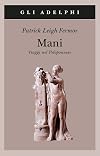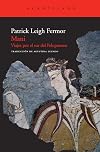
Mani: Travels in the Southern Peloponnese
by Patrick Leigh Fermor
On This Page
Description
This is Patrick Leigh Fermor's spellbinding part-travelogue, part inspired evocation of a part of Greece's past. Joining him in the Mani, one of Europe's wildest and most isolated regions, cut off from the rest of Greece by the towering Taygettus mountain range and hemmed in by the Aegean and Ionian seas, we discover a rocky central prong of the Peleponnese at the southernmost point in Europe. Bad communications only heightening the remoteness, this Greece - south of ancient Sparta - is one show more that maintains perhaps a stronger relationship with the ancient past than with the present. Myth becomes history, and vice versa. Leigh Fermor's hallmark descriptive writing and capture of unexpected detail have made this book, first published in 1958, a classic - together with its Northern Greece counterpart, Roumeli. show lessTags
Recommendations


































Member Recommendations


AfroFogey Mr. Fermor insights and wonderful writing will bring travel alive for you, no matter what nation or region he is traveling through. He is the definition of a traveler the opposite of a tourist.



Member Reviews
This is an odd sort of book - the experience is rather as one would imagine an evening with the author, sitting in a harbourside taverna where dinner doesn't end until about 2 a.m.
To start with, it's a fairly straightforward account of a journey to a remote and exotic part of Greece ("Here we are crossing the pass with the donkeys, ... these are a couple of young goatherds we met on top of the mountain..."), then we move into historical background about the Maniots' refusal to submit to the Turks, and their habit of inter-clan warfare; we speculate about the difficulty of supporting oneself in this harsh and infertile region, bring in a few memories of wartime experiences in Crete, and then, as the level of the wine gets lower, switch show more over to a rather pedantic lecture on popular superstition and the history of the Greek Church, with special reference to the different schools of icon painting (all a bit hard to follow if you don't happen to have any pictures to look at). Fortunately the next bottle arrives, things mellow a little bit, and we move on to more entertaining speculations about the role of the ship's cat in Greek society, but, as the author admits, we've rather lost track of the Mani by then.
The reason for the curious structure of the book seems to be that Leigh Fermor originally intended to write a single travel book on Greece in general, but found that he had far too much material. Thus the nominal subject was restricted to the Mani (for those, like myself, who need to check: it's the middle one of the three peninsulas sticking out from the south coast of the Peloponnese). However, there was room for a few general chapters, so he bunged them in anyway as "digressions". As he tells us in the introduction, there should also have been a chapter on Greek vampires, but that couldn't be squeezed in...
Structure apart, what shines through the whole of this book is the author's great, and comprehensive, love of Greece. He is not one of those British Hellenophiles who consider Greek history as extending from the Trojan to the Peloponnesian War, with a little bonus chapter in the 1820s. For him all of Greek history and culture is fascinating, and he's a mine of information on regional customs and dialects, dress, fortifications, eighteenth century poetry, obscure Byzantine and Ottoman governors, saints, pirates, guerillas, and much else. Although he's clearly glad that the radio and motor traffic hadn't reached the Mani when he was there in the 1950s, this isn't a diatribe against the modern age. He's simply taking pleasure in what he finds, and in looking at it against the background of what he knows about the past.
I imagine the Mani has changed a lot in the last fifty years, and I wouldn't expect this to be a very useful book to take on an actual journey. However, provided you don't have to get up early the next day, it could a very entertaining and satisfying read for the armchair traveller. show less
To start with, it's a fairly straightforward account of a journey to a remote and exotic part of Greece ("Here we are crossing the pass with the donkeys, ... these are a couple of young goatherds we met on top of the mountain..."), then we move into historical background about the Maniots' refusal to submit to the Turks, and their habit of inter-clan warfare; we speculate about the difficulty of supporting oneself in this harsh and infertile region, bring in a few memories of wartime experiences in Crete, and then, as the level of the wine gets lower, switch show more over to a rather pedantic lecture on popular superstition and the history of the Greek Church, with special reference to the different schools of icon painting (all a bit hard to follow if you don't happen to have any pictures to look at). Fortunately the next bottle arrives, things mellow a little bit, and we move on to more entertaining speculations about the role of the ship's cat in Greek society, but, as the author admits, we've rather lost track of the Mani by then.
The reason for the curious structure of the book seems to be that Leigh Fermor originally intended to write a single travel book on Greece in general, but found that he had far too much material. Thus the nominal subject was restricted to the Mani (for those, like myself, who need to check: it's the middle one of the three peninsulas sticking out from the south coast of the Peloponnese). However, there was room for a few general chapters, so he bunged them in anyway as "digressions". As he tells us in the introduction, there should also have been a chapter on Greek vampires, but that couldn't be squeezed in...
Structure apart, what shines through the whole of this book is the author's great, and comprehensive, love of Greece. He is not one of those British Hellenophiles who consider Greek history as extending from the Trojan to the Peloponnesian War, with a little bonus chapter in the 1820s. For him all of Greek history and culture is fascinating, and he's a mine of information on regional customs and dialects, dress, fortifications, eighteenth century poetry, obscure Byzantine and Ottoman governors, saints, pirates, guerillas, and much else. Although he's clearly glad that the radio and motor traffic hadn't reached the Mani when he was there in the 1950s, this isn't a diatribe against the modern age. He's simply taking pleasure in what he finds, and in looking at it against the background of what he knows about the past.
I imagine the Mani has changed a lot in the last fifty years, and I wouldn't expect this to be a very useful book to take on an actual journey. However, provided you don't have to get up early the next day, it could a very entertaining and satisfying read for the armchair traveller. show less
People with enquiring minds cannot but help looking at their surroundings and asking themselves "How did this place come to be? What sort of people made it? What was their life like? What did they eat? What was their art like? Their music? How did they come to be here?" and as many other questions of that sort as you can think of. Finding the answers to those questions can be a lifetime's work (or obsession). And then sometimes, this spirit of enquiry extends to other places, either nearby, or sometimes much further afield. The choice of these places may be down to a chance encounter, or a single visit that immerses you in a different life.
The British seem particularly prone to this sort of affliction. There have been generations of the show more British who have travelled to distant lands and immersed themselves in the life, the language and the history: some people call this "going native", but if this mania takes hold, I suspect it goes beyond that. In extreme cases, it can result in people being indistinguishable from local inhabitants. The Victorian adventurer Sir Richard Burton was one; T.E. Lawrence was another. To this list, we should add Patrick Leigh Fermor (PLF).
PLF was an adventurer; at the age of 17, he decided to drop out of school and walk from the Hook of Holland to Constantinople (as he constantly referred to Istanbul). He planned to be a sort of itinerant scholar, living off the land, sleeping in barns and under hedgerows, and conversing with peasants, priests and any other interesting person he came across. He was helped in this by the possession of some letters of introduction, which also gave him access to some of the lower strata of European aristocracy, which by the 1930s was becoming somewhat faded but which still retained many connections to regional and national art, culture and history. After arriving in Constantinople, PLF made for Mount Athos in Greece, and later travelled around the Balkans before settling with the daughter of a minor noble in Romania, until the outbreak of war when he made his way back to the UK to join up.
His army career saw him acting as a guerrilla fighter on Crete, building a reputation as one of Churchill's "gentleman buccaneers". After the war, he turned to writing and became a notable travel writer before settling in Greece, a country for which he had developed a great love.
By the time Mani was published in 1958, PLF had made a name for himself, and in reading this book it is easy to see why. He moves with ease through the Mani, one of the three peninsulas that jut out into the Cretan Sea from the south coast of the Peloponnese. This book is the account of a circumnavigation of the Mani, interspersed with various diversions on art and history. The Mani is a harsh landscape and the people who lived there, especially in the 1950s, were hardy folk who delighted in claiming descent from the ancient Spartans and whose reputation for ferocity bore that out. The Maniots embraced that reputation. A mere tourist could never have connected with the people the way PLF did, or have drawn out of them stories of their history and folklore.
In the 1950s, life in Mani was fairly basic; PLF writes of simple meals of black bread, eggs and olives, washed down liberally with wine. People still recollected family stories of the Greek War of Independence, and even further back to times of family vendettas and feuds. The Mani shares with Renaissance Italy the construction of towers in the many villages, from where disputatious families could pelt their enemies with rocks and cannon fire. In this remote part of Greece, there were no metalled roads and few creature comforts such as electricity or radios. This has changed, of course, but a brief look at online references will still show a stark land that seems a long way from civilisation.
And yet there was enough material found by PLF to provoke him into various digressions. A meeting with someone said to be the last descendent of the Byzantine Emperor provokes PLF into a daydream of an alternative reality with Byzantium restored; there are digressions into various byways of history, including a dissertation on Byzantine headgear and a quite detailed chapter on ikons and their relationship to Renaissance art.
As the book stands, it is very much the product of its time. This is not to say that it displays prejudices that might be found objectionable today, though occasionally my eyebrow twitched slightly; rather, PLF takes few prisoners when it comes to the complexity of his language, or displaying his learning openly and without restraint. There are no concessions to readability, and some of the lists in the 'digressions' are exhaustive. It is interesting to note that, although this book is about PLF's travels post-war, it was written before his account of his youthful "great trudge" across Europe. So if, like me, you came to PLF's writing through that account - A Time of Gifts, Between the Woods and the Water and The Broken Road, you may be taken slightly aback to find his writing style less developed. There are lengthy historical asides in these books, to be sure, but they are better handled and sit less heavily than here, because PLF did not start that writing exercise until nearly twenty years later; his writing style became more refined in that time.
This should not put the prospective reader off, however. PLF's ability to empathise with those he encounters comes over well, and his powers of description are prodigious. About half-way through reading this book, I finally looked up the Mani online and found pictures which looked pretty much as I had imagined them from the text. Having said that, though, the digression on Byzantine headgear, not to mention the chapter on ikons, really need some illustrations, and a simple re-set of the 1958 first edition just does not cut it. There is also a map which, like so many other maps in so many other books, does not show all the places named in the text. Indeed, for the first three chapters we are off the map, and only a handful of places named in those chapters appear as arrows pointing towards their approximate location well off the page.
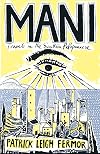
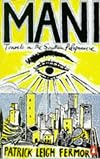
On the other hand, my paperback edition has the charming dustjacket illustration by John Craxton from the original hardback reproduced. It does a good job of setting the book in its time and place. show less
The British seem particularly prone to this sort of affliction. There have been generations of the show more British who have travelled to distant lands and immersed themselves in the life, the language and the history: some people call this "going native", but if this mania takes hold, I suspect it goes beyond that. In extreme cases, it can result in people being indistinguishable from local inhabitants. The Victorian adventurer Sir Richard Burton was one; T.E. Lawrence was another. To this list, we should add Patrick Leigh Fermor (PLF).
PLF was an adventurer; at the age of 17, he decided to drop out of school and walk from the Hook of Holland to Constantinople (as he constantly referred to Istanbul). He planned to be a sort of itinerant scholar, living off the land, sleeping in barns and under hedgerows, and conversing with peasants, priests and any other interesting person he came across. He was helped in this by the possession of some letters of introduction, which also gave him access to some of the lower strata of European aristocracy, which by the 1930s was becoming somewhat faded but which still retained many connections to regional and national art, culture and history. After arriving in Constantinople, PLF made for Mount Athos in Greece, and later travelled around the Balkans before settling with the daughter of a minor noble in Romania, until the outbreak of war when he made his way back to the UK to join up.
His army career saw him acting as a guerrilla fighter on Crete, building a reputation as one of Churchill's "gentleman buccaneers". After the war, he turned to writing and became a notable travel writer before settling in Greece, a country for which he had developed a great love.
By the time Mani was published in 1958, PLF had made a name for himself, and in reading this book it is easy to see why. He moves with ease through the Mani, one of the three peninsulas that jut out into the Cretan Sea from the south coast of the Peloponnese. This book is the account of a circumnavigation of the Mani, interspersed with various diversions on art and history. The Mani is a harsh landscape and the people who lived there, especially in the 1950s, were hardy folk who delighted in claiming descent from the ancient Spartans and whose reputation for ferocity bore that out. The Maniots embraced that reputation. A mere tourist could never have connected with the people the way PLF did, or have drawn out of them stories of their history and folklore.
In the 1950s, life in Mani was fairly basic; PLF writes of simple meals of black bread, eggs and olives, washed down liberally with wine. People still recollected family stories of the Greek War of Independence, and even further back to times of family vendettas and feuds. The Mani shares with Renaissance Italy the construction of towers in the many villages, from where disputatious families could pelt their enemies with rocks and cannon fire. In this remote part of Greece, there were no metalled roads and few creature comforts such as electricity or radios. This has changed, of course, but a brief look at online references will still show a stark land that seems a long way from civilisation.
And yet there was enough material found by PLF to provoke him into various digressions. A meeting with someone said to be the last descendent of the Byzantine Emperor provokes PLF into a daydream of an alternative reality with Byzantium restored; there are digressions into various byways of history, including a dissertation on Byzantine headgear and a quite detailed chapter on ikons and their relationship to Renaissance art.
As the book stands, it is very much the product of its time. This is not to say that it displays prejudices that might be found objectionable today, though occasionally my eyebrow twitched slightly; rather, PLF takes few prisoners when it comes to the complexity of his language, or displaying his learning openly and without restraint. There are no concessions to readability, and some of the lists in the 'digressions' are exhaustive. It is interesting to note that, although this book is about PLF's travels post-war, it was written before his account of his youthful "great trudge" across Europe. So if, like me, you came to PLF's writing through that account - A Time of Gifts, Between the Woods and the Water and The Broken Road, you may be taken slightly aback to find his writing style less developed. There are lengthy historical asides in these books, to be sure, but they are better handled and sit less heavily than here, because PLF did not start that writing exercise until nearly twenty years later; his writing style became more refined in that time.
This should not put the prospective reader off, however. PLF's ability to empathise with those he encounters comes over well, and his powers of description are prodigious. About half-way through reading this book, I finally looked up the Mani online and found pictures which looked pretty much as I had imagined them from the text. Having said that, though, the digression on Byzantine headgear, not to mention the chapter on ikons, really need some illustrations, and a simple re-set of the 1958 first edition just does not cut it. There is also a map which, like so many other maps in so many other books, does not show all the places named in the text. Indeed, for the first three chapters we are off the map, and only a handful of places named in those chapters appear as arrows pointing towards their approximate location well off the page.
On the other hand, my paperback edition has the charming dustjacket illustration by John Craxton from the original hardback reproduced. It does a good job of setting the book in its time and place. show less
Dense, informative, prosaic, lived and well written. A melding of PLF's travels in the 1930's and 40's, a classic Oxford man gone native. His writing is directed outside of himself toward his surroundings, the Greeks, and the multi-layered history and cultural aspects that pervade the Peloponnese. It makes me want to go.. A little tedious in places w all the lists but classic travel literature at its best.
Mani is the very southern part of Greece, an isolated peninsular surrounded by the Aegean and Ionian seas, and made more remote by the Taygettus mountain range. It is a harsh environment too; precious little grows here because of its rugged and barren landscape.
This isolation also means that the region has maintained much stronger links to its ancient past too. The myths and legends of history feel so much more alive here than in other parts of Greece. The language harks back to old dialects, and even thought the orthodox church has a strong influence, pagan and old habits still exist.
Mixed in with Fermor’s travels around Mani are several chapters on the history of the land and the people. Some of it is fascinating, in particular the show more reason that the towns are peppered with towers. These are the remanats of the long battles that used to take place between the various families and people of the region, who all seemed to have a long term running vendettas . That is until the Turks turned up and suddenly they were all fighting the common enemy.
The travel part is beautifully written, Fermor has a way with words that make what he is seeing so evocative and appealing. Overall 3.5 stars, as the history parts were a little tedious occasionally. show less
The Mani, at the tip of Greece’s–and Europe’s–southernmost promontory, is one of the most isolated regions of the world. Cut off from the rest of the country by the towering range of the Taygetus and hemmed in by the Aegean and Ionian seas, it is a land where the past is still very much a part of its people’s daily lives. Patrick Leigh Fermor, who has been described as “a cross between Indiana Jones, James Bond, and Graham Greene,” bridges the genres of adventure story, travel writing, and memoir to reveal an ancient world living alongside the twentieth century. Here, in the book that confirmed his reputation as one of the English language’s finest writers of prose, Patrick Leigh Fermor carries the reader with him on his show more journeys among the Greeks of the mountains, exploring their history and time-honored lore.Mani is a companion volume to Patrick Leigh Fermor’s celebrated Roumeli: Travels in Northern Greece. show less
I have enjoyed reading 'Mani' but it is a dense read. This is not really a review but some notes which I wanted to make so that I could return to them. The writing is interesting and sometimes I have had to re-read sentences several times in order to get the gist. Some of his sentences are extraordinarily long. Take this for example:
'Very often, wandering in the wilder parts of Greece, the traveller is astonished in semi-abandoned chapels where the liturgy is perhaps only sung on the yearly feast of the eponymous saint, by the beauty of te colouring of the wall-paintings and the subtlety with which the painter has availed himself of the sparse elbow-room for private inspiration that the formulae of Byzantine iconography allow him: a show more convention so strict that it was finally codified by a sixteenth-century painter-monk called Dionysios of Phourna. '( p.212 Chapter 15 Ikons).
On the other hand, they can be short like this- they are brilliantly expressive:
'Scholarship died. Spiritual development fossilized. Falling static at the time of the catastrophe, Orthodoxy became the most conservative of religions. All but rudimentary teaching vanished.' ( p. 218 Chapter 15 Ikons).
This chapter on Ikons is one of the ones I have most enjoyed. What he does really well in this chapter is contrast Greek icon painting with the way in which Christ and the saints are depicted in the Western painting tradition.
I was surprised to find on p.240 of the use of the word 'consubstantial'. This word has been used in the 'new' translation of the Nicene Creed. It is not a word in common usage in the 21st century. PLF writes:
'...and beyond the symbol to its essence, the Transcendent God, with whom, as they themselves had defined, He was consubstantial.'
PLF's use of language is amazingly broad and there are so many new words to learn if one is so-minded to look them all up as one reads. I didn't do that but noted a few such as:
klepht (p.236 and many other pages): an anti-Ottoman insurgent living in the mountains when Greece was a part of the Ottoman Empire.
hispid state (p.282): having stiff coarse hairs or bristles
pard-like stubble (p.282): chap or fellow. It is actually from an Ancient Greek word 'pardos'.
I tended to enjoy the later chapters best?? It really helped to use Google images to search for photos of some of the places that were mentioned such as Gytheion.
I appreciated being reminded on p.238 that the Parthenon and its statues, friezes etc. were all painted in brilliant colours.
On p.282 PLF talks about the 'un-Praxitelean aspect of modern Greeks'. For Hellenophiles it is always tempting to idealise the Greek of today and to expect them to be like the statues and the depiction of Homeric heroes.
A rewarding book even although it needs effort and care in reading. show less
'Very often, wandering in the wilder parts of Greece, the traveller is astonished in semi-abandoned chapels where the liturgy is perhaps only sung on the yearly feast of the eponymous saint, by the beauty of te colouring of the wall-paintings and the subtlety with which the painter has availed himself of the sparse elbow-room for private inspiration that the formulae of Byzantine iconography allow him: a show more convention so strict that it was finally codified by a sixteenth-century painter-monk called Dionysios of Phourna. '( p.212 Chapter 15 Ikons).
On the other hand, they can be short like this- they are brilliantly expressive:
'Scholarship died. Spiritual development fossilized. Falling static at the time of the catastrophe, Orthodoxy became the most conservative of religions. All but rudimentary teaching vanished.' ( p. 218 Chapter 15 Ikons).
This chapter on Ikons is one of the ones I have most enjoyed. What he does really well in this chapter is contrast Greek icon painting with the way in which Christ and the saints are depicted in the Western painting tradition.
I was surprised to find on p.240 of the use of the word 'consubstantial'. This word has been used in the 'new' translation of the Nicene Creed. It is not a word in common usage in the 21st century. PLF writes:
'...and beyond the symbol to its essence, the Transcendent God, with whom, as they themselves had defined, He was consubstantial.'
PLF's use of language is amazingly broad and there are so many new words to learn if one is so-minded to look them all up as one reads. I didn't do that but noted a few such as:
klepht (p.236 and many other pages): an anti-Ottoman insurgent living in the mountains when Greece was a part of the Ottoman Empire.
hispid state (p.282): having stiff coarse hairs or bristles
pard-like stubble (p.282): chap or fellow. It is actually from an Ancient Greek word 'pardos'.
I tended to enjoy the later chapters best?? It really helped to use Google images to search for photos of some of the places that were mentioned such as Gytheion.
I appreciated being reminded on p.238 that the Parthenon and its statues, friezes etc. were all painted in brilliant colours.
On p.282 PLF talks about the 'un-Praxitelean aspect of modern Greeks'. For Hellenophiles it is always tempting to idealise the Greek of today and to expect them to be like the statues and the depiction of Homeric heroes.
A rewarding book even although it needs effort and care in reading. show less
I first read this book while travelling in the Mani in 2003. This is a wonderful evocation of the Mani in the 1950's and although much had changed in 50 years both the book and the Mani were and are well worth a visit.
Members
- Recently Added By
Published Reviews
A really beautiful book of travel in an almost wholly unknown part of Europe, among people who still belong largely to the tough simple Middle Ages; and it shows not only their charm and vigor, but the delights which still await the explorer of Greece.
added by John_Vaughan
Lists

Best of Travel Narratives
142 works; 28 members

Adventure Travel & Exploration In Europe
18 works; 3 members

Recommend the 20 best books you've read in the last five years
2,168 works; 603 members

Books Read in 2020
4,379 works; 123 members

Greece - a reading list
83 works; 4 members
Author Information

28+ Works 9,755 Members
Patrick Leigh Fermor was born in London, England on February 11, 1915. During World War II, he was the architect of the kidnapping of the commander of the German garrison on Crete. He wrote several books including A Time of Gifts, Between the Woods and the Water, The Traveller's Tree, The Violins of Saint-Jacques, Mani, and Roumeli. He was also a show more translator. He received a military OBE in 1943. He died on June 10, 2011 at the age of 96. (Bowker Author Biography) show less
Some Editions
Awards and Honors
Awards
Series
Belongs to Publisher Series
Work Relationships
Is contained in
Common Knowledge
- Canonical title
- Mani: Travels in the Southern Peloponnese
- Original title
- Mani: Travels in the Southern Peloponnese
- Original publication date
- 1958
- People/Characters
- Patrick Leigh Fermor
- Important places
- Mani, Greece; Peloponnese, Greece
- Dedication
- With love to Joan
Classifications
- Genres
- Travel, Nonfiction, Biography & Memoir
- DDC/MDS
- 914.9522 — History & geography Geography & travel Geography of and travel in Europe Other European Countries Greece Peloponnese
- LCC
- DF901 .M34 .F47 — History of Europe, Asia, Africa and Oceania Greece History of Greece Modern Greece Local history and description Crete
- BISAC
Statistics
- Members
- 818
- Popularity
- 33,908
- Reviews
- 15
- Rating
- (3.98)
- Languages
- 8 — Dutch, English, French, German, Greek, Italian, Polish, Spanish
- Media
- Paper, Ebook
- ISBNs
- 25
- ASINs
- 12