A Time to Keep Silence
by Patrick Leigh Fermor
On This Page
Description
Patrick Leigh Fermor set off as a teenager to make his way across Europe, as recorded in his classic memoirs, A Time of Gifts and Between the Woods and the Water. Later he fought with local partisans against the Nazi occupiers of Crete. A Time to Keep Silence stands out among Leigh Fermor s various tales of travel and adventure because it is more an inward than an outward voyage. Here Leigh Fermor chronicles his several sojourns in some of Europe s oldest and most celebrated monasteries. He show more stays at the Abbey of Wandrille, a great repository of art and learning; at Solesmes, famous for its revival of Gregorian chant; and at the deeply ascetic Trappist monastery of La Grande Trappe, where monks take a vow of silence. Finally, he visits the rock monasteries of Cappadocia, hewn from the stony spires of a moonlike landscape, where he seeks some trace of the life of the earliest Christian anchorites. This beautiful short book is a meditation on the meaning of silence and solitude for modern life. Leigh Fermor writes, In the seclusion of a cell--an existence whose quietness is only varied by the silent meals, the solemnity of ritual, and long solitary walks in the woods--the troubled waters of the mind grow still and clear, and much that is hidden away and all that clouds it floats to the surface and can be skimmed away; and after a time one reaches a state of peace that is unthought of in the ordinary world. show lessTags
Recommendations






































Member Recommendations
Member Reviews
A time to keep silence by Patrick Leigh Fermor caught my attention because of his mention of Huysmans (he was reading him a lot at the time, Fermor notes), whose En route I recently read. Both Huysmans and Fermor write about their stays as guests in Trappist monasteries; Fermor also visited Solesmes (as did Huysmans), and observed the remnants of Byzantine monasteries and churches in Cappadocia. Well--whatever Fermor thought about or carried away from Huysmans is completely invisible in this tepid account, as is any personal engagement or disengagement with religion. I rarely had such a strong feeling of themes and opinions being actively AVOIDED, although, considering that Fermor might have been a Protestant or atheist seeking show more hospitality (repeatedly) among Catholics expressly withdrawn from the world in order to practise complete devotion, perhaps that is not so difficult to excuse. He does wonder briefly about the monkish life in regard to Freudianism (aren't they all horribly repressed, sexual bombs ticking away?), but in general, the monks seem to him out-of-this-world calm, benevolent, happy. Fermor himself, while keeping mum on what these retreats may be doing for his immortal soul, expands somewhat on the benefices of silence and quiet for a stressed-out 20th century body: first the discouraging onslaught of fatigue and boredom, the escape into drugged-like sleep, then the restoration of balance, lucidity, vitality. I believe this process has since been widely commercialised, with many a spa offering "the monastery experience".
There's one thing I want to remember from this book. Fermor asks a monk if he can sum up his way of life. The monk thinks for a bit, then asks Fermor if he had ever been in love. Yes, says Fermor. The monk smiles widely. It's exactly like that, he says. show less
There's one thing I want to remember from this book. Fermor asks a monk if he can sum up his way of life. The monk thinks for a bit, then asks Fermor if he had ever been in love. Yes, says Fermor. The monk smiles widely. It's exactly like that, he says. show less
I first came upon this book in a monastic guesthouse where I, a little over twenty, had washed up like the author - almost entirely ignorant of the life of the monks inside, and like him torn between a kind of hope and complete doubt. Like him, I found the monks humane and kind, slightly puzzled by me, and, in turn, a puzzle. I stayed there about a month, never intending to stay more; and the experience was entirely benign. Patrick Leigh Fermor's prose strikes me, now, as slightly romantic and overblown, but the emotions he records are those which I remember as precisely true, and the book itself - that copy back then a battered thing of faded elegance from 1957 - a precious find. Just as the monasteries now are not quite as they were show more and this text, too, reflects another age, so these short chapters evoke for me part of my own life which has passed away; but they are a bit of what has made me what I am, and on this day that their author has died, it is my memory of this book, and of its special place in my own spiritual quest, that I wish to offer as tribute to him. PLF: RIP 10th June 2011. show less
I picked this up in NYC's Westside Books on my layover Monday. Fermor, a British travel writer, spent some time in French monasteries during the 1940's for a period of sojourn and writing. This short book describes Fermor's descent into the silence of the Benedictine and more-arduous Cistercian monasteries he lived in.
This was a good book to read coming out of retreat. Fermor at first feels the strict schedule and silence of the Benedictines are confining, gets furious at it, and wants to run away. Silence in community is tough, as I found on my not-so-silent retreat! Yet Fermor then finds it liberating, and notices that the Benedictine monks, at first so prohibiting and hooded, were a jovial, luminous, and well-read bunch. Somehow show more without speaking they had a closer bond than the secular world of idle chatter.
Despite being so used to the Benedictine silence that returning to the outside world was painful, Fermor balks at the almost pathological strictness of the Cistercians. He describes their life as one long atonement, with almost the entire day taken up by arduous farm labor and hours of communal prayer. How could such an order exist? Are they repressing deep, deviant desires or truly integrated in their asceticism? Fermor writes:
"The psychological conundrum might be solved by an encounter of the champions of either side. A great mandarin of psychoanalysis should enter the arena with a cardinal expert in theology, dialectics, and mysticism, who had graduated to the Sacred College from fifty years in a Cistercian monastery. Alas, the terms of reference of the antagonists would be so different irreconcilable, so incapable of engaging, that the match might turn into a double exhibition of shadow-boxing: the psycho-analyst aiming murderous strokes with the repression of the libido, followed through by the Id, while the cardinal parried with the Action of Grace and the Paraclete, and drove his advantage home with Pseudo-Dionysios the Araeopagite; leaving the opponents panting, unharming and unharmed, and crowd and umpire more bewildered than before." (71)
There is much truth in this, and Fermor admits that he is not capable of understanding, and therefore judging, the Cistercian penances. He admits he would never have the capability to join it himself. While I wished for more personal reflections on the life of the monastery, Fermor gives enough to have interest. His reluctance to speak of his own religious views, preferring instead to give personal reflections on silence and contempation rather than the theology behind it, gives the book a broader appeal. In fact I plan to give this to a nonreligious uncle when finished. Not everyone's cup of tea, but a good short read. show less
This was a good book to read coming out of retreat. Fermor at first feels the strict schedule and silence of the Benedictines are confining, gets furious at it, and wants to run away. Silence in community is tough, as I found on my not-so-silent retreat! Yet Fermor then finds it liberating, and notices that the Benedictine monks, at first so prohibiting and hooded, were a jovial, luminous, and well-read bunch. Somehow show more without speaking they had a closer bond than the secular world of idle chatter.
Despite being so used to the Benedictine silence that returning to the outside world was painful, Fermor balks at the almost pathological strictness of the Cistercians. He describes their life as one long atonement, with almost the entire day taken up by arduous farm labor and hours of communal prayer. How could such an order exist? Are they repressing deep, deviant desires or truly integrated in their asceticism? Fermor writes:
"The psychological conundrum might be solved by an encounter of the champions of either side. A great mandarin of psychoanalysis should enter the arena with a cardinal expert in theology, dialectics, and mysticism, who had graduated to the Sacred College from fifty years in a Cistercian monastery. Alas, the terms of reference of the antagonists would be so different irreconcilable, so incapable of engaging, that the match might turn into a double exhibition of shadow-boxing: the psycho-analyst aiming murderous strokes with the repression of the libido, followed through by the Id, while the cardinal parried with the Action of Grace and the Paraclete, and drove his advantage home with Pseudo-Dionysios the Araeopagite; leaving the opponents panting, unharming and unharmed, and crowd and umpire more bewildered than before." (71)
There is much truth in this, and Fermor admits that he is not capable of understanding, and therefore judging, the Cistercian penances. He admits he would never have the capability to join it himself. While I wished for more personal reflections on the life of the monastery, Fermor gives enough to have interest. His reluctance to speak of his own religious views, preferring instead to give personal reflections on silence and contempation rather than the theology behind it, gives the book a broader appeal. In fact I plan to give this to a nonreligious uncle when finished. Not everyone's cup of tea, but a good short read. show less
Watching Fermor's transformation from an urban secular to someone with a great interest and respect for monasticism is especially interesting in light of the importance that he places on belief in the lives of monastics. Although he says several times that the monks with whom he stayed were praying or making penance for the secular world, this point lies in contrast to his own inability to believe in Christianity.
This opens a distance between him and his hosts, although one that may only be felt by Fermor himself -- a distance that he tries to bridge by universalizing the message of monasticism. No longer is monasticism about belief, but it's about peace and lightness of spirit. On the one hand, this makes the monasteries show more understandable to him, but on the other, it essentially empties them of content. (I had the same complaint with the movie "Into Great Silence," which I felt offered an exclusively aesthetic view of monasticism, thus making its subject far too easy to romanticize.)
Into this void of content, Fermor interjects such a lengthy string of metaphors that its hard not to sense a crisis of faith even in the style of writing that he carries out. In all his abstractions -- in his attempts to shunt attention away from the realities of monastic life -- I read a feeling of abjectness. Fermor is lost between two worlds in which he has lost faith: the belief in the supernatural and the belief in powerful, life-changing, romantic modes of writing; his intellect won't allow him to reconcile with the former, while his experience in the monasteries shake his faith in the latter as anything other than a cheap imitation of what life-changing events look like.
This vulnerability and rootlessness is where I found I was able to latch onto "A Time to Keep Silence." Fermor's sincerity in the midst of his obvious confusion made this book a pleasure to read for me. show less
This opens a distance between him and his hosts, although one that may only be felt by Fermor himself -- a distance that he tries to bridge by universalizing the message of monasticism. No longer is monasticism about belief, but it's about peace and lightness of spirit. On the one hand, this makes the monasteries show more understandable to him, but on the other, it essentially empties them of content. (I had the same complaint with the movie "Into Great Silence," which I felt offered an exclusively aesthetic view of monasticism, thus making its subject far too easy to romanticize.)
Into this void of content, Fermor interjects such a lengthy string of metaphors that its hard not to sense a crisis of faith even in the style of writing that he carries out. In all his abstractions -- in his attempts to shunt attention away from the realities of monastic life -- I read a feeling of abjectness. Fermor is lost between two worlds in which he has lost faith: the belief in the supernatural and the belief in powerful, life-changing, romantic modes of writing; his intellect won't allow him to reconcile with the former, while his experience in the monasteries shake his faith in the latter as anything other than a cheap imitation of what life-changing events look like.
This vulnerability and rootlessness is where I found I was able to latch onto "A Time to Keep Silence." Fermor's sincerity in the midst of his obvious confusion made this book a pleasure to read for me. show less
Patrick Leigh Fermor’s interest in monastic life began with a 1950s stay in a French monastery that he sought as a quiet, inexpensive place in which to write. This short volume focuses on his visits to the French religious communities of St. Wandrille de Fontanelle, Solesmes and La Grande Trappe, and the abandoned Rock Monasteries of Cappadocia in Turkey, combining an overview of their history with his own experiences and observations of monastic life.
Through much of history, the monasteries of Europe have reflected the turmoil of the broader society, not always having served as places of calm contemplation. Fermor touches on their extensive history of being repeatedly destroyed, buildings and libraries emptied out, rebuilt and show more reinstated - their peace assaulted by invaders, fire, revolutions, political favors and legislation. The invasion of the Normans, the Hundred Years War, Napoleon’s armies, the French Revolution and the allied bombers of WWII all contributed to instances of their physical destruction, but political forces were equally as devastating. In the 1500s, courtiers who were never monks, but who were rewarded by appointments as commendatory abbots, ravaged the resources of abbeys and priories. Monasteries were emptied by the French Revolution’s abolishment of all religious communities and again by the Waldeck-Rousseau government’s 1901 anti-monastic legislation. In between each event, the monastic orders returned and rebuilt.
By comparison, little is known of the history of the Rock Monasteries of Cappadocia, a long-abandoned site of early Christian coenobitic life. Carved into cones of volcanic rock are dozens of churches, brightly painted, decorated by frescoes, and complete with the features of classical cathedral architecture – arches, columns, domes, narthex, apse and basilica. The many hermitages nearby give a clear indication of an abundantly populated, although simple communal life.
Life at each monastery, as described by Fermor, follows a prescribed schedule of hours, activities and religious observances. While many contemplative orders exist within the overall structure of the Catholic Church, their focus and purposes vary greatly. The Benedictines focus on worship and prayer, and have played an important role over the centuries in preserving literature and the humanities. At the Benedictine Abbey of St. Wandrille De Fontanelle, guests mixed with the monks at meals and religious services, but were required to observe periods of silence and restricted from interaction with individuals without the Abbott’s permission. The monks spent 3.5-4 hours each day in church, with additional time devoted to reading, private prayer and meditation. Fermor’s impressions were of a balanced, gentle and erudite community, holding a deep respect for the order to which their lives are devoted, and guided by an abiding belief in the importance of prayer.
In contrast, the Cistercian Order of the Strict Observance, more commonly known as Trappists, followed a strict routine of long days that began at 1-2 a.m. and included 7 hours in church, hard manual labor with no leisure or recreation, primitive living conditions, strict discipline and nearly absolute silence. At La Grande Trappe, guests were fully separated from the monks, allowed only distant observation and no direct interaction except with a few members of the upper hierarchy. Other than a few superiors, those who sing the offices, and commands given to farm animals, the rule of silence was nearly absolute, with a special nonverbal language having evolved to provide for necessary communications. The average monk or lay-brother spent his entire career speaking only within the confessional or in spiritual consultation with the Abbott. The monks were required to publicly accuse each other and penances were of a primitive nature. Fermor observed that their lives were ones of “humble and completely unintellectual simplicity”, with every moment dedicated to God and reflecting the concept of vicarious penance where “they seek, by taking the sins of others on to their own shoulders, to lighten the burden of mankind.”
Fermor’s adaptation to life as a monastic guest was revealing of the extreme dissimilarities between a life of seclusion and silence and the outside world of chaos and noise. At first he experienced depression and sleep problems, gradually progressing to a sense of freedom and peace, as his tiredness dissipated and his desire to talk faded. While the conditions he encountered at St. Wandrille and Solesmes were comfortable in comparison to the austerity of La Grande Trappe, at each monastery his adjustment followed roughly the same course, ending with feelings of quiet and calm.
I found this book to be a fascinating and beautifully written introduction to the nature of monastic life, as viewed by an outsider. The introduction by Karen Armstrong, a religious scholar and prior member of a religious order, and the author’s own introduction and postscript add a broader context to the extreme nature of the monastic life and those who seek to renounce secular life. It is unfortunate that Fermor’s description of the monks’ daily routines and personal views is unavoidably sparse, being constrained by the structure and rules of the monasteries themselves. My only criticism is that in most of the few instances where the direct words of the monks are cited, they are in Latin or French, without interpretive footnotes. While my limited proficiency was sufficient for a basic sense of meaning, I would have appreciated a more nuanced understanding. show less
Through much of history, the monasteries of Europe have reflected the turmoil of the broader society, not always having served as places of calm contemplation. Fermor touches on their extensive history of being repeatedly destroyed, buildings and libraries emptied out, rebuilt and show more reinstated - their peace assaulted by invaders, fire, revolutions, political favors and legislation. The invasion of the Normans, the Hundred Years War, Napoleon’s armies, the French Revolution and the allied bombers of WWII all contributed to instances of their physical destruction, but political forces were equally as devastating. In the 1500s, courtiers who were never monks, but who were rewarded by appointments as commendatory abbots, ravaged the resources of abbeys and priories. Monasteries were emptied by the French Revolution’s abolishment of all religious communities and again by the Waldeck-Rousseau government’s 1901 anti-monastic legislation. In between each event, the monastic orders returned and rebuilt.
By comparison, little is known of the history of the Rock Monasteries of Cappadocia, a long-abandoned site of early Christian coenobitic life. Carved into cones of volcanic rock are dozens of churches, brightly painted, decorated by frescoes, and complete with the features of classical cathedral architecture – arches, columns, domes, narthex, apse and basilica. The many hermitages nearby give a clear indication of an abundantly populated, although simple communal life.
Life at each monastery, as described by Fermor, follows a prescribed schedule of hours, activities and religious observances. While many contemplative orders exist within the overall structure of the Catholic Church, their focus and purposes vary greatly. The Benedictines focus on worship and prayer, and have played an important role over the centuries in preserving literature and the humanities. At the Benedictine Abbey of St. Wandrille De Fontanelle, guests mixed with the monks at meals and religious services, but were required to observe periods of silence and restricted from interaction with individuals without the Abbott’s permission. The monks spent 3.5-4 hours each day in church, with additional time devoted to reading, private prayer and meditation. Fermor’s impressions were of a balanced, gentle and erudite community, holding a deep respect for the order to which their lives are devoted, and guided by an abiding belief in the importance of prayer.
In contrast, the Cistercian Order of the Strict Observance, more commonly known as Trappists, followed a strict routine of long days that began at 1-2 a.m. and included 7 hours in church, hard manual labor with no leisure or recreation, primitive living conditions, strict discipline and nearly absolute silence. At La Grande Trappe, guests were fully separated from the monks, allowed only distant observation and no direct interaction except with a few members of the upper hierarchy. Other than a few superiors, those who sing the offices, and commands given to farm animals, the rule of silence was nearly absolute, with a special nonverbal language having evolved to provide for necessary communications. The average monk or lay-brother spent his entire career speaking only within the confessional or in spiritual consultation with the Abbott. The monks were required to publicly accuse each other and penances were of a primitive nature. Fermor observed that their lives were ones of “humble and completely unintellectual simplicity”, with every moment dedicated to God and reflecting the concept of vicarious penance where “they seek, by taking the sins of others on to their own shoulders, to lighten the burden of mankind.”
Fermor’s adaptation to life as a monastic guest was revealing of the extreme dissimilarities between a life of seclusion and silence and the outside world of chaos and noise. At first he experienced depression and sleep problems, gradually progressing to a sense of freedom and peace, as his tiredness dissipated and his desire to talk faded. While the conditions he encountered at St. Wandrille and Solesmes were comfortable in comparison to the austerity of La Grande Trappe, at each monastery his adjustment followed roughly the same course, ending with feelings of quiet and calm.
I found this book to be a fascinating and beautifully written introduction to the nature of monastic life, as viewed by an outsider. The introduction by Karen Armstrong, a religious scholar and prior member of a religious order, and the author’s own introduction and postscript add a broader context to the extreme nature of the monastic life and those who seek to renounce secular life. It is unfortunate that Fermor’s description of the monks’ daily routines and personal views is unavoidably sparse, being constrained by the structure and rules of the monasteries themselves. My only criticism is that in most of the few instances where the direct words of the monks are cited, they are in Latin or French, without interpretive footnotes. While my limited proficiency was sufficient for a basic sense of meaning, I would have appreciated a more nuanced understanding. show less
A few quick little bits about monasteries, one Benedictine, one Trappist, and some monasteries carved out of stone in Cappadocia. This may not seem like much, and it's not, but it's also perfectly done; Fermor's prose (this is my first encounter) is wonderful and wonderfully English (syntax! clauses! subordination!). You get a bit of local color, a bit of the history of monasticism, and of the individual monasteries in question, and a bit of meditation on what a monastery could mean to a twentieth century visitor.
Just as importantly, Fermor treats the monks with respect but not unquestioning awe. He's obviously a little uncomfortable at La Trappe, which seems reasonable--whereas the Benedictines offer splendor, an obvious path back to show more the history of Christianity and, indeed, Western Civilization, the Trappists seem to offer little of anything other than suffering. But even then he's willing to see that there could be some attraction.
Karen Armstrong's preface is solid, too--she avoids the vaguely new-agey 'let's all just love one another' stuff that sometimes ruins her writing.
I only wish there'd been some pictures, particularly of Cappadocia, which is on the cover. show less
Just as importantly, Fermor treats the monks with respect but not unquestioning awe. He's obviously a little uncomfortable at La Trappe, which seems reasonable--whereas the Benedictines offer splendor, an obvious path back to show more the history of Christianity and, indeed, Western Civilization, the Trappists seem to offer little of anything other than suffering. But even then he's willing to see that there could be some attraction.
Karen Armstrong's preface is solid, too--she avoids the vaguely new-agey 'let's all just love one another' stuff that sometimes ruins her writing.
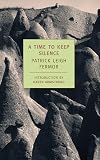
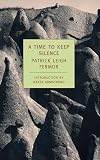
I only wish there'd been some pictures, particularly of Cappadocia, which is on the cover. show less
A Time to Keep Silence is an insightful memoir of the author's visits (and in some cases extended stays) in various monasteries. Leigh Fermor's journey begins when he arrives at the Benedictine Abbey of St. Wandrille de Fontanelle seeking a quiet place to focus on his writing. What begins as a work retreat turns into something else entirely as he becomes absorbed into the rhythms of monastic life.
Most of the book is taken up by his experiences at St. Wandrille and you can feel the genuine affection he has for it in his writing. Also visited are Solesmes, the great chant powerhouse, Trappe, the motherhouse of the Trappist Order, and the remains of a monastic community in Cappadocia, Turkey, where monks dug their community into the rock show more of a lunar landscape (similar to the one depicted on the cover of the NYRB edition).
The author's writing is superb and quickly draws you into his experiences. It makes for a profound, mediative read, which made me reevaluate my thoughts on monasticism. A note though that his journey took place before Vatican II, so much has probably changed since Leigh Fermor first made his way to Normandy in the 1950s, seeking a quiet place for work and reflection. I cannot recommend it enough. show less
Most of the book is taken up by his experiences at St. Wandrille and you can feel the genuine affection he has for it in his writing. Also visited are Solesmes, the great chant powerhouse, Trappe, the motherhouse of the Trappist Order, and the remains of a monastic community in Cappadocia, Turkey, where monks dug their community into the rock show more of a lunar landscape (similar to the one depicted on the cover of the NYRB edition).
The author's writing is superb and quickly draws you into his experiences. It makes for a profound, mediative read, which made me reevaluate my thoughts on monasticism. A note though that his journey took place before Vatican II, so much has probably changed since Leigh Fermor first made his way to Normandy in the 1950s, seeking a quiet place for work and reflection. I cannot recommend it enough. show less
Members
- Recently Added By
Published Reviews
More than a history or travel journal, however, this beautiful short book is a meditation on the meaning of silence and solitude for modern life.
added by John_Vaughan
Lists

Really Good Narrative Non-Fiction
65 works; 24 members

Best of Travel Narratives
142 works; 26 members

Tonikat reading completed on Librarything journals
329 works; 2 members

Books featuring monks and/or nuns
166 works; 33 members

1950s
340 works; 22 members
Author Information

28+ Works 9,759 Members
Patrick Leigh Fermor was born in London, England on February 11, 1915. During World War II, he was the architect of the kidnapping of the commander of the German garrison on Crete. He wrote several books including A Time of Gifts, Between the Woods and the Water, The Traveller's Tree, The Violins of Saint-Jacques, Mani, and Roumeli. He was also a show more translator. He received a military OBE in 1943. He died on June 10, 2011 at the age of 96. (Bowker Author Biography) show less
Some Editions
Awards and Honors
Notable Lists
Series
Belongs to Publisher Series
Common Knowledge
- Canonical title
- A Time to Keep Silence
- Original title
- A Time to Keep Silence
- Original publication date
- 1957
- People/Characters
- Patrick Leigh Fermor
- Important places
- Abbey of Saint Wandrille, Saint-Wandrille-Rançon, Normandy, France; La Trappe Abbey, Soligny-la-Trappe, Normandy, France; Urgub, Cappadocia, Turkey; St. Peter's Abbey, Solesmes, Pays de la Loire, France
- Dedication
- To my mother.
- First words
- With curiosity and misgiving I walked up the hill from the Rouen-Yvetot road towards the Abbey of St. Wandrille.
- Quotations
- In the seclusion of a cell . . . the troubled waters of the mind grow still and clear, and much that is hidden away and all that clouds it floats to the surface and can be skimmed away; and after a time one reaches a state of... (show all) peace that is unthought of in the ordinary world.
- Last words
- (Click to show. Warning: May contain spoilers.)The whole world seemed inside-out.
Classifications
- Genres
- Travel, Nonfiction, Religion & Spirituality, Biography & Memoir, General Nonfiction
- DDC/MDS
- 271.0092 — Religion History of Christianity Religious congregations and orders in church history
- LCC
- BX2435 .F43 — Philosophy, Psychology and Religion Christian Denominations Christian Denominations Catholic Church Monasticism. Religious orders
- BISAC
Statistics
- Members
- 951
- Popularity
- 28,006
- Reviews
- 34
- Rating
- (3.97)
- Languages
- 9 — Catalan, Czech, Dutch, English, French, German, Polish, Portuguese, Spanish
- Media
- Paper, Ebook
- ISBNs
- 21
- ASINs
- 12