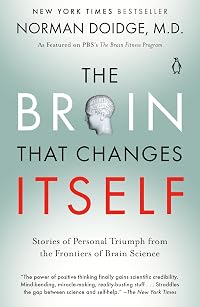
The Brain That Changes Itself : Stories of Personal Triumph from the Frontiers of Brain Science
by Norman Doidge
On This Page
Description
A new science called neuroplasticity is overthrowing the old notion that the human brain is immutable. Psychoanalyst Doidge traveled the country to meet both the brilliant scientists championing neuroplasticity and the people whose lives they've transformed--people whose mental limitations or brain damage were seen as unalterable. We see a woman born with half a brain that rewired itself to work as a whole, blind people who learn to see, learning disorders cured, IQs raised, aging brains show more rejuvenated, stroke patients learning to speak, children with cerebral palsy learning to move with more grace, depression and anxiety disorders successfully treated, and lifelong character traits changed. Using these stories to probe mysteries of the body, emotion, love, sex, culture, and education, Dr. Doidge has written an inspiring book that will permanently alter the way we look at our brains, human nature, and human potential.--From publisher description. show lessTags
Recommendations

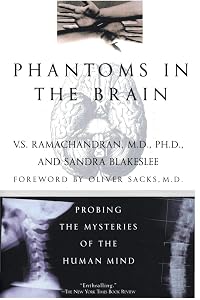



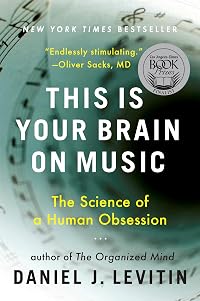
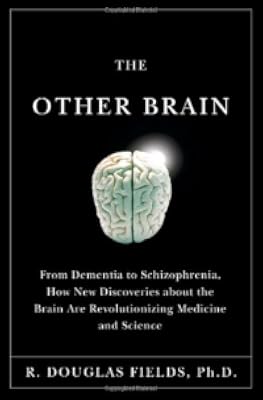
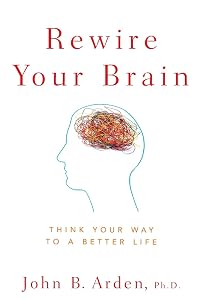

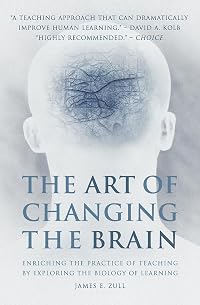
Member Recommendations
Brain School: Stories of Children with Learning Disabilities and Attention Disorders Who Changed Their Lives by Improving Their Cogn by Howard Eaton
AmberA Howard Eaton's "Brain School" offers an in-depth look into the Arrowsmith Program (for students with learning disabilities) described in Chapter 2 of Norman Doidge's "The Brain That Changes Itself."
Member Reviews
Well, this will make you think....
This book is based on the author's experience, learning, understanding, research and pioneering that followed on from restoring normal life to his father after he had suffered a debilitating stroke.
He shifted that idea that this specific bit of our brain controls just this specific bit of our body or behaviour and instead revealed that it is both true and not true or maybe better said as true but not fixed.
He broke new ground in stroke treatment, for sure, but also broke new ground in how strokes are thought about both by medical and lay people.
I am so glad I read when I did because shortly afterwards I had a stroke!
I kid you not.
As an experience it was terrifying in ways that words cannot convey. But show more where this book came into my experience was that I knew that whatever loss I suffered in that stroke would probably not be permanent, which was what I had always assumed would be the case.
Being told that you have suffered a serious stroke is not the best news you can get but slowly getting back what you thought might be gone forever more than makes up for it. Knowing that recovery is both possible and likely really helps.
This was only a few months ago but today you'd never know that anything had happened to me. From the outside I look, move and talk like I always did. Inside I've lost a chunk of my vision and I may not drive again but things could have been much worse.
There's an old saying that goes, "Old people are not afraid to die, only of what may happen to them beforehand". If you have ageing parents, recommend they read this book, it not only takes a lot of the fear out of strokes but gives a realistic and positive view of the possible outcomes. show less
This book is based on the author's experience, learning, understanding, research and pioneering that followed on from restoring normal life to his father after he had suffered a debilitating stroke.
He shifted that idea that this specific bit of our brain controls just this specific bit of our body or behaviour and instead revealed that it is both true and not true or maybe better said as true but not fixed.
He broke new ground in stroke treatment, for sure, but also broke new ground in how strokes are thought about both by medical and lay people.
I am so glad I read when I did because shortly afterwards I had a stroke!
I kid you not.
As an experience it was terrifying in ways that words cannot convey. But show more where this book came into my experience was that I knew that whatever loss I suffered in that stroke would probably not be permanent, which was what I had always assumed would be the case.
Being told that you have suffered a serious stroke is not the best news you can get but slowly getting back what you thought might be gone forever more than makes up for it. Knowing that recovery is both possible and likely really helps.
This was only a few months ago but today you'd never know that anything had happened to me. From the outside I look, move and talk like I always did. Inside I've lost a chunk of my vision and I may not drive again but things could have been much worse.
There's an old saying that goes, "Old people are not afraid to die, only of what may happen to them beforehand". If you have ageing parents, recommend they read this book, it not only takes a lot of the fear out of strokes but gives a realistic and positive view of the possible outcomes. show less
We generally accept that the brain is 'plastic' that is, that it can change its structure depending on the activities that we perform and the various inputs from our environments. But what does that mean from a purely medical perspective? As a psychiatrist and a psychoanalyst, Norman Doidge sheds some lights.
Overall, he outlines four different types of plasticity: map expansion; sensory-reassignment; alternative strategies; and mirror-region takeover. It sounds complicated and nerdy when put like that, but it's everything but. On the contrary, offering a wide array of examples, he shows himself not only enlightening, but entertaining too! I was deeply fascinated, for instance, by how our different sensory experiences can be translated show more and processed by seemingly unrelated pathways (e.g. how our tongues can be used as visual tools to navigate around...); how we can feel pain is not as straightforward as it is (e.g. how even very painful 'messages' from injured parts of our bodies cab be blocked by our brains...); or, again, by so-called 'thought translation' that is, how devices (e.g. computers, robots) can act on our behalf and by being merely controlled by thoughts (his detailing of experiments done with thirsty rats and monkeys playing with joysticks are truly riveting!).
Of course, it's not that simple either! And indeed, the author insists that if localizationism can be caricatural, and that describing our brains as being 'hardwired' for various tasks can be (is?) too simplistic, there are, nevertheless, critical periods for our brains to develop functionally. His examples about language acquisition (and sights in kittens) drive the point. He also exposes a key concept, what he calls the 'plastic paradox' that is, the fact that the plasticity of our brains is also what can lead us to be... inflexible!
There is more to it than that too. As someone working in care, for example, I was particularly engrossed by his chapters on OCD and the various approaches put forward to help impacted people; his views on psychotherapy (e.g. why can 'talking cures' be efficient -and it might not be for the reasons you may assume!); or, again, his demonstrating that if some medication work when addressing some mental health issues it may not be (it too!) for the reasons you may assume too...
All in all, then, this is a truly riveting book. His reliance on personal stories of various patients to demonstrate the relevance of brain plasticity in treating, or at least dealing, with various ailments (from physical health to mental health) makes it even more engaging. It can be tedious at times (being about neuroscience, you'll have to grip with some terminology), and I felt that, at times, he flirted with being too simplistic himself (I agree on the power of positive thinking, but it has its limits...). Nevertheless, it's a truly fascinating insight... and one that I warmly recommend! show less
Overall, he outlines four different types of plasticity: map expansion; sensory-reassignment; alternative strategies; and mirror-region takeover. It sounds complicated and nerdy when put like that, but it's everything but. On the contrary, offering a wide array of examples, he shows himself not only enlightening, but entertaining too! I was deeply fascinated, for instance, by how our different sensory experiences can be translated show more and processed by seemingly unrelated pathways (e.g. how our tongues can be used as visual tools to navigate around...); how we can feel pain is not as straightforward as it is (e.g. how even very painful 'messages' from injured parts of our bodies cab be blocked by our brains...); or, again, by so-called 'thought translation' that is, how devices (e.g. computers, robots) can act on our behalf and by being merely controlled by thoughts (his detailing of experiments done with thirsty rats and monkeys playing with joysticks are truly riveting!).
Of course, it's not that simple either! And indeed, the author insists that if localizationism can be caricatural, and that describing our brains as being 'hardwired' for various tasks can be (is?) too simplistic, there are, nevertheless, critical periods for our brains to develop functionally. His examples about language acquisition (and sights in kittens) drive the point. He also exposes a key concept, what he calls the 'plastic paradox' that is, the fact that the plasticity of our brains is also what can lead us to be... inflexible!
There is more to it than that too. As someone working in care, for example, I was particularly engrossed by his chapters on OCD and the various approaches put forward to help impacted people; his views on psychotherapy (e.g. why can 'talking cures' be efficient -and it might not be for the reasons you may assume!); or, again, his demonstrating that if some medication work when addressing some mental health issues it may not be (it too!) for the reasons you may assume too...
All in all, then, this is a truly riveting book. His reliance on personal stories of various patients to demonstrate the relevance of brain plasticity in treating, or at least dealing, with various ailments (from physical health to mental health) makes it even more engaging. It can be tedious at times (being about neuroscience, you'll have to grip with some terminology), and I felt that, at times, he flirted with being too simplistic himself (I agree on the power of positive thinking, but it has its limits...). Nevertheless, it's a truly fascinating insight... and one that I warmly recommend! show less
This is an important, comprehensive book about neuroplasticity. This concept refers to the fact that, as is now recognized, the brain can change its structure and in fact does so with each different activity it performs, “perfecting its circuits so it was better suited to the task it had”. The damaged brain can often reorganize itself so that when one part fails, another can often substitute. Thinking, learning and acting can turn our genes on and off.
We are introduced to Paul Bach-y-Rita, one of the great pioneers in understanding brain plasticity. He has devised amazing machines that have helped to cure people regarded as hopeless cases; among other things, he enabled people who had been blind from birth to see.
Previously, the show more brain was seen as made of parts, each in a pre-assigned location, each performing a single function, so that if one of those parts were damaged, nothing could be done to replace it. This theory was termed localizationism. Paul Bach-y-Rita rejected localizationism, showing that if one sense is damaged, another can sometimes take over for it - sensory substitution. “We can see with our brains, not with our eyes.”
The book is filled with inspiring stories of people recovering from incapacitating injuries by means of this “new” understanding that the brain can change itself. Bach-y-Rita’s own father had been seriously disabled after a massive stroke. Post-mortem examination of his brain revealed that the lesion in question had never healed, though through intensive training he had recovered many functions. Patients paralyzed for twenty years can make late recoveries with brain-stimulating exercises.
The brain is like a muscle that grows with exercise – education increases the number of branches among neurons.
Another brilliant expert in neuroplasticity is Michael Merzenich. He states that “practicing a new skill … can change hundreds of millions and possibly billions of the connections between the nerve cells in our brain maps”. He has designed the cochlear implant, which allows congenitally deaf children to hear. His series of computer programmes, Fast ForWord, has helped hundreds of thousands, including autistic children, after only 30-60 hours of treatment.
Merzenich started a company called Posit Science which helps people preserve the plasticity of their brains as they age. I myself have now begun to do these Posit Science exercises on the net every day to prevent cognitive decline. There are exercises for memory of words and language which rebuild the brain’s basic ability to process sound. They increase processing speed and “make basic signals stronger, sharper and more accurate, while stimulating the brain to produce the dopamine and acetylcholine”. Studies show that brain exercises do not only slow age-related cognitive decline but can lead to improved functioning.
Merzenich has also worked on eliminating problematic brain maps to help those with PTSD (post traumatic stress disorder), phobias, etc.
There is an interesting chapter about how childhood experiences influence our sexual behavior as adults. The author also discusses and explains pornography addiction.
Edward Taub opened a clinic to study strokes and developed valuable exercises to force those affected by strokes to use their paralyzed limbs. Patients wear mitts on their good hands and slings on their good arms. They drill six hours a day for 10-15 days. Treatment works for virtually all stroke survivors who are left with some ability to move their fingers. People have been trained to use completely paralyzed hands; 80% of stroke patients who have lost arm function can improve substantially.
Plasticity can also be used to stop worrying, obsessions, compulsions and bad habits. We also learn how phantom pain (in amputated limbs) can be overcome. This work was done by V.S. Ramachandran through use of a mirror box. Patients watch a mirror image reflection of their good hand, for instance, moving back and forth, and their paralyzed hand will thus also seem to move back and forth. The brain thus believes that the affected limb can move, and soon it does in fact start to move!
There is a chapter about imagination and one on how the brain changes through psychotherapy. Psychoanalysis is in fact a neuroplastic therapy.
This book contains much more than I have touched on here. I found it to be a fascinating, exceedingly readable book despite its scientific content, revealing amazing techniques and cures for people with incapacitating injuries. This is no dry technical account – the author describes the brain therapists he encounters in very personal, pictorial ways, depicting their various idiosyncrasies and making us feel we ourselves know them personally. He presents innumerable personal stories of the patients whose lives have been transformed.
One of the next books to be put on my reading list is another one about the brain, this time by V.S. Ramachandran.
I highly recommend that you read this fascinating, inspiring book which, though filled with scientific detail, I found exceedingly readable and unputdownable. show less
We are introduced to Paul Bach-y-Rita, one of the great pioneers in understanding brain plasticity. He has devised amazing machines that have helped to cure people regarded as hopeless cases; among other things, he enabled people who had been blind from birth to see.
Previously, the show more brain was seen as made of parts, each in a pre-assigned location, each performing a single function, so that if one of those parts were damaged, nothing could be done to replace it. This theory was termed localizationism. Paul Bach-y-Rita rejected localizationism, showing that if one sense is damaged, another can sometimes take over for it - sensory substitution. “We can see with our brains, not with our eyes.”
The book is filled with inspiring stories of people recovering from incapacitating injuries by means of this “new” understanding that the brain can change itself. Bach-y-Rita’s own father had been seriously disabled after a massive stroke. Post-mortem examination of his brain revealed that the lesion in question had never healed, though through intensive training he had recovered many functions. Patients paralyzed for twenty years can make late recoveries with brain-stimulating exercises.
The brain is like a muscle that grows with exercise – education increases the number of branches among neurons.
Another brilliant expert in neuroplasticity is Michael Merzenich. He states that “practicing a new skill … can change hundreds of millions and possibly billions of the connections between the nerve cells in our brain maps”. He has designed the cochlear implant, which allows congenitally deaf children to hear. His series of computer programmes, Fast ForWord, has helped hundreds of thousands, including autistic children, after only 30-60 hours of treatment.
Merzenich started a company called Posit Science which helps people preserve the plasticity of their brains as they age. I myself have now begun to do these Posit Science exercises on the net every day to prevent cognitive decline. There are exercises for memory of words and language which rebuild the brain’s basic ability to process sound. They increase processing speed and “make basic signals stronger, sharper and more accurate, while stimulating the brain to produce the dopamine and acetylcholine”. Studies show that brain exercises do not only slow age-related cognitive decline but can lead to improved functioning.
Merzenich has also worked on eliminating problematic brain maps to help those with PTSD (post traumatic stress disorder), phobias, etc.
There is an interesting chapter about how childhood experiences influence our sexual behavior as adults. The author also discusses and explains pornography addiction.
Edward Taub opened a clinic to study strokes and developed valuable exercises to force those affected by strokes to use their paralyzed limbs. Patients wear mitts on their good hands and slings on their good arms. They drill six hours a day for 10-15 days. Treatment works for virtually all stroke survivors who are left with some ability to move their fingers. People have been trained to use completely paralyzed hands; 80% of stroke patients who have lost arm function can improve substantially.
Plasticity can also be used to stop worrying, obsessions, compulsions and bad habits. We also learn how phantom pain (in amputated limbs) can be overcome. This work was done by V.S. Ramachandran through use of a mirror box. Patients watch a mirror image reflection of their good hand, for instance, moving back and forth, and their paralyzed hand will thus also seem to move back and forth. The brain thus believes that the affected limb can move, and soon it does in fact start to move!
There is a chapter about imagination and one on how the brain changes through psychotherapy. Psychoanalysis is in fact a neuroplastic therapy.
This book contains much more than I have touched on here. I found it to be a fascinating, exceedingly readable book despite its scientific content, revealing amazing techniques and cures for people with incapacitating injuries. This is no dry technical account – the author describes the brain therapists he encounters in very personal, pictorial ways, depicting their various idiosyncrasies and making us feel we ourselves know them personally. He presents innumerable personal stories of the patients whose lives have been transformed.
One of the next books to be put on my reading list is another one about the brain, this time by V.S. Ramachandran.
I highly recommend that you read this fascinating, inspiring book which, though filled with scientific detail, I found exceedingly readable and unputdownable. show less
Content warnings for animal harm, human disability, kink-shaming (as in he believes (as of 2007 publication) kink is a universal sign of childhood trauma and/or mental illness), a blanket anti-porn stance, Freudian psychiatry, and judgy ignorance of non-vanilla relationship norms. But if you can get through that, there's an excellent survey of how the brain grows, becomes rigid, adapts, etc.
This very readable book takes the layperson on a journey through a variety of cases and researchers involved with neuroplasticity. Where other texts have tended to focus on one aspect (e.g., brain injury, countering aging, psychotherapy), Doidge is unusual in that he combines rather different cases into one book. In this mix, you'll find the tales of recovery from stroke, the story of a girl born with only one brain hemisphere, and musings on neural changes after exposure to pornography. The brain is not set in stone in childhood; it continues to add new cells and form new connections between cells until the day we die.
Be warned, however; much of what we've learned about the workings of the brain has come from animal research, and the show more details aren't danced around in this book. In fact, the author spends quite a few pages defending the research using silverbacks conducted by Taub; he makes the case that PETA had its facts wrong and actually did more harm to the animals by taking them away from the lab. Readers will encounter examinations of the brains of sacrificed animals, but they will also find descriptions of human autopsies and their findings. For example, the findings of new cells in the final days of life aren't from indirect evidence, but direct observations from autopsies. Such descriptions do not make up the bulk of the book, but they are more than a few pages and particularly sensitive readers may want to find another book to read.
Weaving clinical anecdotes with background on prominent researchers, Doidge makes a very good case that research on humans and other animals can translate to improvements in quality of life for those with impaired development or brain injury. Well-referenced, the work tucks away literature citations at the end of the book so that they don't interrupt the flow of the narrative.
Although the chapters of the text cover a variety of cases, the commonalities of neuroplasticity come through clearly for the reader to make this work a unified whole. I recommend this book for any educated layperson who'd like to know more about the flexibility of the brain without learning a vast new terminology. show less
Be warned, however; much of what we've learned about the workings of the brain has come from animal research, and the show more details aren't danced around in this book. In fact, the author spends quite a few pages defending the research using silverbacks conducted by Taub; he makes the case that PETA had its facts wrong and actually did more harm to the animals by taking them away from the lab. Readers will encounter examinations of the brains of sacrificed animals, but they will also find descriptions of human autopsies and their findings. For example, the findings of new cells in the final days of life aren't from indirect evidence, but direct observations from autopsies. Such descriptions do not make up the bulk of the book, but they are more than a few pages and particularly sensitive readers may want to find another book to read.
Weaving clinical anecdotes with background on prominent researchers, Doidge makes a very good case that research on humans and other animals can translate to improvements in quality of life for those with impaired development or brain injury. Well-referenced, the work tucks away literature citations at the end of the book so that they don't interrupt the flow of the narrative.
Although the chapters of the text cover a variety of cases, the commonalities of neuroplasticity come through clearly for the reader to make this work a unified whole. I recommend this book for any educated layperson who'd like to know more about the flexibility of the brain without learning a vast new terminology. show less
Delightful book! It is a sort of compendium of interviews and stories of other neuroscientists' work, However, Doidge weaves all of the stories together with his own insights and experiences with his own patients in a thoughtful and thought-provoking way. The book is FUN to read and easy-to-understand.
I particularly enjoyed the chapter "Turning our Ghosts into Ancestors," because it explains the neuroscience behind how the unfortunately-often-maligned Psychoanalysis works.
Even the "Notes and References" section of the book itself is an enjoyable read - not just citations, but added information and insights.
A real treat! I read the book after reading Sharon Begley's "Train Your Mind, Change your Brain". Because they are both about show more plasticity, they complimented each other nicely.
Consider one additional piece of information from the book: When people of an "Eastern" culture live in a "Western" culture (or vice-versa), they begin to re-structure their brains in a way that adapts to the new culture to a great extent. I, personally, have such experience, having lived in Japan for two years. I wonder if more of us had such experiences, we might learn to empathize with each other more and therefore make the world a more compassionate place.
At the very least, we might be able to synthesize new and more creative ways of looking at things as we meld the supposedly more "focused Western brain" with the more "holistic Eastern brain". show less
I particularly enjoyed the chapter "Turning our Ghosts into Ancestors," because it explains the neuroscience behind how the unfortunately-often-maligned Psychoanalysis works.
Even the "Notes and References" section of the book itself is an enjoyable read - not just citations, but added information and insights.
A real treat! I read the book after reading Sharon Begley's "Train Your Mind, Change your Brain". Because they are both about show more plasticity, they complimented each other nicely.
Consider one additional piece of information from the book: When people of an "Eastern" culture live in a "Western" culture (or vice-versa), they begin to re-structure their brains in a way that adapts to the new culture to a great extent. I, personally, have such experience, having lived in Japan for two years. I wonder if more of us had such experiences, we might learn to empathize with each other more and therefore make the world a more compassionate place.
At the very least, we might be able to synthesize new and more creative ways of looking at things as we meld the supposedly more "focused Western brain" with the more "holistic Eastern brain". show less
This was actually my third attempt at this book. Not that it is not a good book. It is actually a fantastic book. Engaging, not hard to read, etc. It just seems to be one of those books you really need to be in the right mood for. January seemed to finally be it as I ran through half the book on the first day.
This book discusses breakthroughs in neuroplasticity, or the science of how our brain changes with input from the environment. Cognitive theorists viewed the adult brain as a 'machine' capable of very little actual change. Science shows our brains are constantly changing with new input for good (leaning to use skills again after a stroke, teaching the blind to 'see' with electronic input) or bad (repeating OCD compulsions deepens show more them further, watching hard pornography on a regular basis can make it harder to be aroused in a 'regular' sexual situation). It discusses many of the breakthroughs that help people lead normal lives and the research that discusses how neuroplasticity occurs. A great accessible read for the layperson, and a must read for anybody in psychology or medicine. show less
This book discusses breakthroughs in neuroplasticity, or the science of how our brain changes with input from the environment. Cognitive theorists viewed the adult brain as a 'machine' capable of very little actual change. Science shows our brains are constantly changing with new input for good (leaning to use skills again after a stroke, teaching the blind to 'see' with electronic input) or bad (repeating OCD compulsions deepens show more them further, watching hard pornography on a regular basis can make it harder to be aroused in a 'regular' sexual situation). It discusses many of the breakthroughs that help people lead normal lives and the research that discusses how neuroplasticity occurs. A great accessible read for the layperson, and a must read for anybody in psychology or medicine. show less
Members
- Recently Added By
Lists

Best Science Books for Non-Scientists
113 works; 57 members

Make it Stick's Suggested Books Reading
19 works; 2 members

Science: Health & Medical
100 works; 1 member

Books discovered on LibraryThing
256 works; 36 members

Books Read in 2023
5,638 works; 147 members

Books recommended by Calgary Public Library staff
1,588 works; 4 members

Men's healing resources
751 works; 1 member

Nervous system
43 works; 1 member

List of books for sex addicted partners
38 works; 1 member
Author Information

11+ Works 4,309 Members
Norman Doidge is a psychiatrist and psychoanalyst. He is on the research faculty at Columbia University's Center for Psychoanalytic Training and Research and on the faculty at the University of Toronto's Department of Psychiatry. He is the author of several books including The Brain That Changes Itself: Stories of Personal Triumph from the show more Frontiers of Brain Science and The Brain's Way of Healing: Remarkable Discoveries and Recoveries from the Frontiers of Neuroplasticity. (Bowker Author Biography) show less
Awards and Honors
Notable Lists
Work Relationships
Common Knowledge
- Canonical title
- The Brain That Changes Itself : Stories of Personal Triumph from the Frontiers of Brain Science
- Original publication date
- 2007
- People/Characters
- Barbara Arrowsmith-Young
- Dedication
- For Eugene L. Goldberg, M.D.,
because you said you might like to read it - First words
- Preface
This book is about the revolutionary discovery that the human brain can change itself, as told through the stories of the scientists, doctors, and patients who have together brought about these astonishing transfor... (show all)mations. - Last words
- (Click to show. Warning: May contain spoilers.)She's fine there just as she is.
Classifications
Statistics
- Members
- 3,570
- Popularity
- 4,621
- Reviews
- 81
- Rating
- (4.17)
- Languages
- 12 — Arabic, Czech, English, French, German, Hungarian, Italian, Korean, Portuguese, Russian, Serbian, Spanish
- Media
- Paper, Audiobook, Ebook
- ISBNs
- 58
- UPCs
- 1
- ASINs
- 30