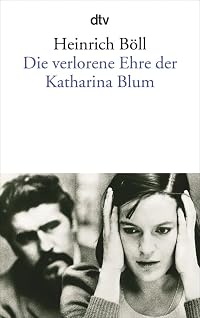
The Lost Honor of Katharina Blum
by Heinrich Böll
On This Page
Description
The Lost Honour of Katharina Blum, Or: How Violence Develops and Where It Can Lead was written by Heinrich Boll, one of Germany's most prolific postwar writers. Although Boll insisted that his characters were compositions and not psychological creations, they do have psychological reality. In this novel he tells the story of pretty, bright, young Katharina Blum, who becomes the center of intrigue with a big city newspaper when at a carnival party she falls in love with a young radical show more lawbreaker on the run from the police. show lessTags
Recommendations


















Member Recommendations

by chwiggy
Member Reviews
A brilliant narrative voice; a great reflection on the tricks and power--for good and bad--of narrative, particularly as used by journalists and crime writers; and a hilarious satire on conservatives, radicals, liberals and, particularly, middle aged men's penises. It reads well, which is a credit to the translator. Basically, this is the best novel I've read in a while, and I can't wait to pick up more Boll.
Although it says “story” on the title page, Böll himself referred to it as a ”pamphlet”, and that’s basically what it is. There’s a rudimentary plot about a young woman who finds herself mixed up in a police investigation when her new boyfriend turns out to be on the run and suspected of being a red terrorist (in fact he’s nothing more than an army deserter who took some of the regimental funds with him when he left, but it’s 1974 and everyone is nervous), but the whole point of the book is to express Böll’s anger at the opportunistic and irresponsible reporting of tabloid newspapers that value sensation over truth, specifically Axel Springer’s flagship, the Bild-Zeitung (it’s simply called the ZEITUNG in the show more text, but there’s never any doubt about which paper he means, or who owns it). Böll had his fun when the book came out and for a little while the Springer papers mysteriously stopped printing the German bestseller list every week. And again a year later when Volker Schlöndorff turned the book into a successful film…
Katharina is a model German of the Wirtschaftswunder period, a young woman who has risen above a terrible childhood and a failed early marriage to gain qualifications, build a career for herself, and buy a modern apartment and a Volkswagen. When she meets Ludwig at a carnival party, they both realise that they have found the person they want to be with, but after he slips away from her apartment in the early hours, Katharina is interviewed by the police, and before she knows what’s happening her picture is on the front page of the ZEITUNG, and her past life is being taken apart on pages 7-9, complete with information leaked by the police and selective misquotations from people she once knew. Böll gives the book a deliberately “objective” feel, as though it’s compiled from documents and statements of those involved — he uses the metaphor of a child building a system of waterways by connecting puddles on a beach. The text is supposed to jar as much as possible with the biased and sensational accounts of the ZEITUNG. Definitely still relevant, even though Böll and his near-contemporary Springer are both long gone (Bild is sadly still very much with us…). show less
Katharina is a model German of the Wirtschaftswunder period, a young woman who has risen above a terrible childhood and a failed early marriage to gain qualifications, build a career for herself, and buy a modern apartment and a Volkswagen. When she meets Ludwig at a carnival party, they both realise that they have found the person they want to be with, but after he slips away from her apartment in the early hours, Katharina is interviewed by the police, and before she knows what’s happening her picture is on the front page of the ZEITUNG, and her past life is being taken apart on pages 7-9, complete with information leaked by the police and selective misquotations from people she once knew. Böll gives the book a deliberately “objective” feel, as though it’s compiled from documents and statements of those involved — he uses the metaphor of a child building a system of waterways by connecting puddles on a beach. The text is supposed to jar as much as possible with the biased and sensational accounts of the ZEITUNG. Definitely still relevant, even though Böll and his near-contemporary Springer are both long gone (Bild is sadly still very much with us…). show less
This cool, calm, and collected short novel reads as a mixture of factual report and parable. It concerns the toxic combination of police overreaction, misogyny, and sensationalist newspaper reporting that destroy the life of one Katharina Blum. The narrative unfolds smoothly and inexorably in a series of short chapters. I was immediately immersed. Katharina herself was a sympathetic and fascinating character, whose reactions seemed to me wholly convincing. I couldn’t help feeling that brilliant writing made this novel more compelling than a murder mystery; there is never any mystery about whodunnit, just the the precise reasons why and the assignment of blame.
My mother recommended this book to me and I’m very glad she did. It will show more definitely linger in my mind. I also greatly appreciated the insult on page 132, “You can put your sympathy right back in the fridge where you keep all the rest of your feelings.” show less
My mother recommended this book to me and I’m very glad she did. It will show more definitely linger in my mind. I also greatly appreciated the insult on page 132, “You can put your sympathy right back in the fridge where you keep all the rest of your feelings.” show less
Boll's short scathing attack on how the media creates the news instead of, as it claims, just reporting it (I've refused to read "news" magazines for years because of just this fact). Since its 1974 the newspapers are the primary focus but you can transfer this to almost any "news" organization (the Arab Spring is a case in current events).
Poor Katharina Blum inadvertently commits a minor crime and eventually is implicated by the "News" to be a communist, brothel owner, prostitute, organized crime member (moll), embezzler, abbeter, Nazi, etc. The media drives her mother to an early grave, she can't get a job, receives threats, and is constantly being harrassed by the police, who already know she is innocent of the inital crime. In the show more ultimate creation of the news, Katharina is driven to end of her wits: she finally murders the badgering reporter who also made indecent advances to her. In the final insult the media insists on the premeditation of the crime when it is in fact a crime of passion.
The crimes are revealed from the start and the story evolves around how this relaively minor event ends up with such a tragic conclusion.
The story is told in a faux just-the-facts reportage to emphasize the subject matter. show less
Poor Katharina Blum inadvertently commits a minor crime and eventually is implicated by the "News" to be a communist, brothel owner, prostitute, organized crime member (moll), embezzler, abbeter, Nazi, etc. The media drives her mother to an early grave, she can't get a job, receives threats, and is constantly being harrassed by the police, who already know she is innocent of the inital crime. In the show more ultimate creation of the news, Katharina is driven to end of her wits: she finally murders the badgering reporter who also made indecent advances to her. In the final insult the media insists on the premeditation of the crime when it is in fact a crime of passion.
The crimes are revealed from the start and the story evolves around how this relaively minor event ends up with such a tragic conclusion.
The story is told in a faux just-the-facts reportage to emphasize the subject matter. show less
This book pissed me off!! Not Mr Heinrich Böll... not his language... not the story. The damn press that is the central 'bad guy' in this book! Böll did an excellent job presenting his case. I could feel his anger, his disdain. It was tangible. And did I mention... it pissed me off? I think I would have done the exact same thing if I were wearing her heels.
One thing i found evident, Böll did hold contempt for the press, for politics, for religion (but thought highly of art). It came out in this forensic-like detailed tale of an innocent victim of these powers. And like the plague, her relations and friends, those around her, were infected with it also and suffered.
Sad thing is this stuff really does go on and on and on... I'm not show more talking about the feeding frenzy around the Spears and Lohans who seem to invite such press, but the truly innocent ones who become unknowingly players in a game that is too big for them.
Good read, but it should make you angry. show less
One thing i found evident, Böll did hold contempt for the press, for politics, for religion (but thought highly of art). It came out in this forensic-like detailed tale of an innocent victim of these powers. And like the plague, her relations and friends, those around her, were infected with it also and suffered.
Sad thing is this stuff really does go on and on and on... I'm not show more talking about the feeding frenzy around the Spears and Lohans who seem to invite such press, but the truly innocent ones who become unknowingly players in a game that is too big for them.
Good read, but it should make you angry. show less
At the beginning of the novel, Katharina Blum arrives at a police inspector’s house and lets him know that she has killed a journalist whose body is in her apartment. In the rest of the novel, a very methodical and detached narrator takes us through the events of the last week that led up to this moment. Earlier in the week, Katharina spent the night with a man she just met at a party who was wanted by the police. The police question her very thoroughly and suspect that she is his accomplice. A less-than-reputable newspaper gets a hold of the story and exaggerates things to make Katharina and the people who are close to her look as bad as possible, and Katharina is not the only person whose life is ruined by the newspaper’s show more slander.
I really liked this book. The unique narrative style sucks you in and makes it hard to put down. I loved the narrator’s tone of voice and logical progression through the facts which made him seem like an independent and impartial observer. I was also struck by how relevant the topic is today. I was just reading an article about how in the age of the internet, it’s very easy for people to be publicly shamed and have their lives ruined for an offense that doesn’t deserve such a severe punishment (a badly worded or poorly thought out post, for example). I almost gave the book five stars, but it just fell a little short for me (there were a couple times when it was hard to keep the characters straight, but I may just have been reading with too many distractions). show less
I really liked this book. The unique narrative style sucks you in and makes it hard to put down. I loved the narrator’s tone of voice and logical progression through the facts which made him seem like an independent and impartial observer. I was also struck by how relevant the topic is today. I was just reading an article about how in the age of the internet, it’s very easy for people to be publicly shamed and have their lives ruined for an offense that doesn’t deserve such a severe punishment (a badly worded or poorly thought out post, for example). I almost gave the book five stars, but it just fell a little short for me (there were a couple times when it was hard to keep the characters straight, but I may just have been reading with too many distractions). show less
Zavarba ejtő írás - ha a keletkezésének idejét nézzük, méginkább. Azóta történtek már pro és contra nagy visszhangot kiváltó halálesetek a médiával kapcsolatban. Furcsa írásmű, mely valahol a hírlapi cikk és a bűnügyi tudósítás/kihallgatási jegyzőkönyv között lebeg. Nagyon erős hangsúlyt ad a véleménye kifejezésének, amely azonban indirekt marad mindvégig. A kiszolgáltatottság és a tehetetlenség regénye marad mindvégig, ahelyett, hogy egy szerelmi történet lenne...
Members
- Recently Added By
Published Reviews
Tras acudir a una fiesta, Katharina Blum pasa la noche con un hombre al que acaba de conocer. A la mañana siguiente, Katharina descubre que su acompañante es sospechoso de diversos delitos. A partir de entonces será acusada de ser cómplice. La prensa, la policía y la justicia se unirán para destrozar su reputación, hasta hacer de su vida un infierno. Con un estilo que combina el informe show more policial y el artículo periodístico, Heinrich Böll hace una apasionante crítica a los medios de comunicación sensacionalistas y al abuso de los mecanismos de poder. show less
added by Pakoniet
Lists

1001 Books You Must Read Before You Die
1,448 works; 1,134 members

Le Monde - Les 100 livres du siècle
121 works; 25 members

German Literature
518 works; 56 members

20th Century Literature
1,161 works; 55 members

Philosophical Fiction
97 works; 27 members

Female Protagonist
1,056 works; 57 members

1970s
657 works; 23 members
Nobel Price Winners
222 works; 20 members

Favourite Books
1,819 works; 316 members

Books Set in Germany
74 works; 12 members
Legal Stories
84 works; 12 members

EU Fiction: 1950-2022
223 works; 70 members

Short and Sweet
246 works; 24 members
1,001 BYMRBYD Concensus
723 works; 27 members
My list of 100 books to read next
100 works; 4 members

hopes
34 works; 1 member

Autores Alemanes en Librería
2 works; 1 member

Books Read in 2016
4,666 works; 199 members

Books Read in 2020
4,379 works; 124 members

Read in school
24 works; 1 member

Books Read in 2013
1,630 works; 51 members

My TBR
371 works; 3 members
Author Information

Heinrich Böll was born in Cologne, Germany on December 21, 1917. He studied German at the University of Cologne. He was drafted into military service in 1938 shortly after he finished his schooling and served several years in the infantry before his demobilization in 1945. His first novel, Der Zug war pünktlich (The Train Was on Time), was show more published in 1949. His other works include Billiards at Half-Past Nine, The Clown, Absent without Leave, Enter and Exit, and The Lost Honor of Katharina Blum. He received numerous awards including the Georg Büchner Prize in 1967 and the Nobel Prize for Literature in 1972. He died on July 16, 1985 at the age of 67. (Bowker Author Biography) show less
Some Editions
Awards and Honors
Notable Lists
Series
Belongs to Publisher Series
Work Relationships
Is contained in
Billiards at Half-Past Nine / Group Portrait With Lady / The Lost Honor of Katharina Blum by Heinrich Böll
El tren llegó puntual ; ¿Dónde estabas Adán? ; Y no dijo ninguna palabra ; Casas sin amo ; El pan de los aǫs mozos by Heinrich Böll
Billiards at Half-Past Nine / The Clown / Group Portrait With Lady / The Lost Honor of Katharina Blum by Heinrich Böll
Narrativa completa, tomo 3: Retrato de grupo con señora ; E·l honor perdido de Katharina Blum ; Asedio preventivo by Heinrich Böll
Heinrich Böll liest Die verlorene Ehre der Katharina Blum + Gruppenbild mit Dame + Berichte zur Gesinnungslage der Nation u.a. [sound recording] by Heinrich Böll
Is a retelling of
Is retold in
Has the adaptation
Inspired
Has as a commentary on the text
Has as a student's study guide
Reclam Erläuterungen und Dokumente : Heinrich Böll : Die verlorene Ehre der Katharina Blum by Werner Bellmann
Oldenbourg Interpretationen : Heinrich Böll : Die verlorene Ehre der Katharina Blum by Bernhard Sowinski
Königs Erläuterungen : Heinrich Böll : Die verlorene Ehre der Katharina Blum [1984 revised edition] by Gerd Ludwig
Königs Erläuterungen : Heinrich Böll : Die verlorene Ehre der Katharina Blum [1993 revised edition] by Gerd Ludwig
Has as a teacher's guide
Common Knowledge
- Canonical title
- The Lost Honor of Katharina Blum
- Original title
- Die verlorene Ehre der Katharina Blum: oder: Wie Gewalt entstehen und wohin sie führen kann
- Alternate titles
- Die verlorene Ehre der Katharina Blum
- Original publication date
- 1974 (original German) (original German); 1975 (English: Vennewitz) (English: Vennewitz)
- People/Characters
- Katharina Blum; Dr. Hubert Blorna; Dr. Trude Blorna; Peter Hach; Else Woltersheim; Ludwig Götten (show all 12); Walter Moeding; Erwin Beizmenne; Lüding; Konrad Beiters; Alois Sträubleder; Werner Tötges
- Important places
- Cologne, North Rhine-Westphalia, Germany; Germany
- Related movies
- Die verlorene Ehre der Katharina Blum oder: Wie Gewalt entstehen und wohin sie führen kann (1975 | IMDb); The Lost Honor of Kathryn Beck (1984 | IMDb)
- Epigraph
- Personen und Handlung dieser Erzählung sind frei erfunden. Sollten sich bei der Schilderung gewisser journalistischer Praktiken Ähnlichkeiten mit den Praktiken der "Bild"-Zeitung ergeben haben, so sind diese Ähnlichkeiten ... (show all)weder beabsichtigt noch zufällig, sondern unvermeidlich.
- First words
- Für den folgenden Bericht gibt es einige Neben- und drei Hauptquellen, die hier am Anfang einmal genannt, dann aber nicht mehr erwähnt werden.
- Quotations
- The characters and action is this story are purely fictitious. Should the description of certain journalistic practices result in a resemblance to the practices of the [tabloid papers], such resemblance is neither intentional... (show all) nor fortuitous, but unavoidable.
- Last words*
- (Click to show. Warning: May contain spoilers.)Und dann habe ich mich für den Kaffee bedankt, hab mir draußen ein Taxi genommen und bin zu diesem Moeding gefahren, der damals so nett war.
- Original language
- German
- Disambiguation notice
- 0070064253 1975 English McGraw-Hill hardcover
0070064296 1976 English McGraw-Hill softcover
0140046194 1978 English Penguin softcover
0140187286 1994 English Penguin softcover
014118406X 2001 English Penguin soft... (show all)cover
0245535470 1986 German Bange softcover (Modern World Literature series)
0436054523 1975 English Secker & Warburg hardcover
0749398981 1993 English Vintage softcover
1412812763 2009 English Transaction softcover large print
1560004630 2000 English Transaction hardcover large print
1852900172 1989 English Isis hardcover large print
2020016168 1976 French
2020058677 1875 French
2020291592 1996 French
2253018791 1978 French
225305626X 1991 French (German language)
2757885286 2021 French
3378001755 1987 German DTV softcover
3423011505 1995 German DTV softcover
3423025018 1977 German DTV softcover
3423146052 2017 German DTV hardcover
3423250011 1989 German DTV softcover
3462010336 1974 German Kiepenheuer & Witsch hardcover
3462016407 1992 German Kiepenheuer & Witsch softcover Mit Materialien und einem Nachwort des Autors
3462021842 1974 German Kiepenheuer & Witsch softcover
3462031457 1974 German Kiepenheuer & Witsch softcover
3462300563 2009 German Kiepenheuer & Witsch
*Some information comes from Common Knowledge in other languages. Click "Edit" for more information.
Classifications
- Genres
- Fiction and Literature, General Fiction
- DDC/MDS
- 833.914 — Literature & rhetoric German & related literatures German fiction 1900- 1900-1990 1945-1990
- LCC
- PT2603 .O394 .V413 — Language and Literature German, Dutch and Scandinavian literatures German literature Individual authors or works 1860/70-1960
- BISAC
Statistics
- Members
- 2,795
- Popularity
- 6,534
- Reviews
- 53
- Rating
- (3.77)
- Languages
- 24 — Czech, Danish, Dutch, English, Esperanto, Estonian, Finnish, French, German, Greek, Hebrew, Hungarian, Italian, Kurdish, Lithuanian, Norwegian (Bokmål), Norwegian, Farsi/Persian, Polish, Russian, Spanish, Swedish, Turkish, Portuguese (Portugal)
- Media
- Paper, Audiobook, Ebook
- ISBNs
- 93
- ASINs
- 41