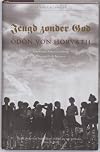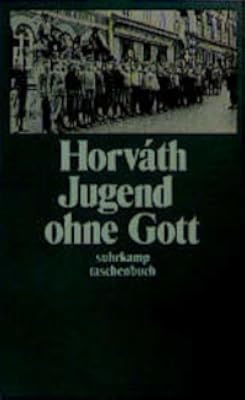
Youth Without God
by Ödön von Horváth
On This Page
Description
Originally published in 1938, Youth Without God explores the indoctrination of youth under a totalitarian regime. From the perspective of a disgruntled teacher, Horvath narrates a sinister tale of disillusionment, betrayal and dark despair. Set in a dystopian world of a pre-military camp for adolescents, names are replaced by letters; racial intolerance rages; freedom is denied; and everyone is a secret spy for the state. Without direct reference to the Third Reich, Horvath offers a stark show more and haunting portrait of paranoia in Nazi Germany. show lessTags
Recommendations
































Member Recommendations


by chwiggy

Member Reviews
I had never heard of Horvath before this year, and now this is the second book I've read by him? I'm totally blaming Neversink Library.
So yes, this is another selection from Neversink LIbrary at Melville House Books. I tell you, their website is dangerous. Six of the books I've read this year were published by them, five of which I bought (one was from the library), and I have at least one more on my shelves and at least two on back-order. (I'm afraid if I check on the back-orders, I'll end up buying five more books, so it's best just to wait.)
Okay, so I loved this one. Much more accessible than The Eternal Philistine, this is a dark, dark story, even without the seedy satire. Youth WIthout God reads more like classic morality tales show more from Kafka and Camus. It is all the more impressive for its depiction of the heartlessness of the rising Nazi state when one is reminded that it was written before either Germany's annexation of Austria or its invasion of Poland. It's a place where the cruelty of schoolchildren isn't corrected, but encouraged as long as it is in the direction of the scapegoats of the state. Opinions contrary to official propaganda are suppressed and erased. Individual morality and conscience disappear. So where is there room for God?
It would be easy to read this story as simplistic and shallow, because it is so accessible. But there is a lot going on here just under the surface. Mediations on culpability, conviction and man's capacity for evil. A rewarding, but disturbing read. show less
So yes, this is another selection from Neversink LIbrary at Melville House Books. I tell you, their website is dangerous. Six of the books I've read this year were published by them, five of which I bought (one was from the library), and I have at least one more on my shelves and at least two on back-order. (I'm afraid if I check on the back-orders, I'll end up buying five more books, so it's best just to wait.)
Okay, so I loved this one. Much more accessible than The Eternal Philistine, this is a dark, dark story, even without the seedy satire. Youth WIthout God reads more like classic morality tales show more from Kafka and Camus. It is all the more impressive for its depiction of the heartlessness of the rising Nazi state when one is reminded that it was written before either Germany's annexation of Austria or its invasion of Poland. It's a place where the cruelty of schoolchildren isn't corrected, but encouraged as long as it is in the direction of the scapegoats of the state. Opinions contrary to official propaganda are suppressed and erased. Individual morality and conscience disappear. So where is there room for God?
It would be easy to read this story as simplistic and shallow, because it is so accessible. But there is a lot going on here just under the surface. Mediations on culpability, conviction and man's capacity for evil. A rewarding, but disturbing read. show less
Falls squarely into the "should have cut the first 50 pages" basket. The first few chapters contain some fine polemic ("someone should invent a weapon that nullifies other weapons"), but the book really gets going once our narrator stops looking outward, and starts looking at himself. Despite the fascism, the anomy, the picture of disgusting youth (still relevant), the murder, and the turpitude of the narrator, this is ultimately a kind of farcical comedy: the narrator confesses to his wrongdoing, and that confession itself leads, after some time, to a kind of justice. As befits a man who fled the Nazis to Paris but was killed by a falling tree limb in 1939, the justice is bloody and discomforting, but justice nonetheless. The narrator show more himself enters a life of penitence, which will make very many contemporary readers very uncomfortable, and not in the silly "art must make us uncomfortable" way--instead, in the "life makes me rather too uncomfortable" way. show less
Ödön von Horváth's 1937 novel Jugend ohne Gott breathes the same atmosphere as William Golding's Lord of the Flies. In both novels a group of children degenerates into a lethal mob, culminating in the killing of one of their comrades. In Lord of the Flies, evil arises from within, as the children find themselves cut loose from civil society on an uninhabited island. In Jugend ohne Gott the children are the product of the increasingly fascist society. At the beginning of the book, the children rebel against their teacher, who is cowed into submission. Distrust and hatred come to a culmination point during a summer camp, and lead to the muder of one of the boys. While the teacher in anxious to conceal his role in the drama, he does show more have the moral strength to tell the truth in the end.
The two novels could be seen as pendants, with Lord of the Flies representing nature, versus Jugend ohne Gott representing nurture. As the parallels with Lord of the Flies, which was published in 1954, show, Jugend ohne Gott is a compelling book which still has a story to tell, sadly once more very apt in our time. show less
The two novels could be seen as pendants, with Lord of the Flies representing nature, versus Jugend ohne Gott representing nurture. As the parallels with Lord of the Flies, which was published in 1954, show, Jugend ohne Gott is a compelling book which still has a story to tell, sadly once more very apt in our time. show less
Schlichte Sprache, aber gezielt schlicht - denn es hat Melodie. Inhaltlich sehr poetisch; brennender Idealismus, von dem schmelzende Nihilismus tropft - in der Hinsicht erinnert es mich an "Fabian", auch wenn Horváth im Gegensatz zu Kästner ein optimistisches Ende wählt.
Erst durch die Anmerkungen wurde mir völlig klar, wie viele Anspielungen und Bilder zwischen den Zeilen vorhanden sind.
Wirklich großartiges Buch!
Erst durch die Anmerkungen wurde mir völlig klar, wie viele Anspielungen und Bilder zwischen den Zeilen vorhanden sind.
Wirklich großartiges Buch!
I'll always associate one bad memory with this very good book. It was one of the ten we had to read for our oral exams at finals, it was the only one I didn't have time to reread and, of course, it was the one my teacher chose to test me in. Because I had liked it when we read it, I thought I remembered everything. When I didn't know the easy answer to the question, "why did he kill?", it was obvious that I'd miscalculated. It's been 10 years since then and I don't think I'll ever forget why he killed. Because he wanted to see someone die. And just because. That said, it really is a good book.
... ma noto affinità inquietanti tra QUEI giovini e QUESTI ggiovani.
Al igual que hizo Michael Haneke muchos años después en La cinta blanca, Ödön von Horváth narra en Juventud sin Dios los orígenes del nacionalsocialismo. Nos muestra cómo la semilla del mal ya estaba presente en los jóvenes y en su educación. El narrador de Juventud sin Dios es un joven profesor a quien el director del colegio le pide que no corrija a un alumno que afirma que los negros son infrahumanos, y le recuerda, además, que su obligación es «educar para la guerra». Los valores patrióticos se inculcan en una especie de campamento paramilitar en el que se producirá un crimen misterioso. Horváth escribió esta obra en el verano de 1937, exiliado en Henndorf, en las proximidades de Salzburgo, y se publicó ese mismo show more año. La novela alcanzó rápidamente una gran popularidad, incluso en el extranjero. Fue traducida a diez idiomas en los dos años siguientes. Las referencias a la realidad del nazismo son el elemento central en una obra en la que el autor describe una curiosa mezcla de la Alemania nazi con la Austria prefascista. show less
Jun 6, 2019Spanish
Members
- Recently Added By
Lists

German Literature
518 works; 56 members

Books Set in Germany
74 works; 12 members

Books You Read During High School (For School)
301 works; 53 members

Five star books
1,767 works; 110 members

Books Read in 2016
4,666 works; 199 members

Read in school
24 works; 1 member

The Books I Read in 2016
54 works; 1 member

Books Read in 2018
4,360 works; 110 members

Die besten Werke der deutschsprachigen Erzählliteratur von 1924 bis 2024
100 works; 2 members

Liste Otto
107 works; 1 member
Author Information

128+ Works 1,822 Members
Some Editions
Series
Belongs to Publisher Series
Work Relationships
Is contained in
Has the adaptation
Has as a study
Has as a supplement
Common Knowledge
- Canonical title
- Youth Without God
- Original title
- Jugend ohne Gott
- Original publication date
- 1937-10-26
- Related movies
- Jugend ohne Gott (1991 | IMDb)
- First words
- 25. März. Auf meinem Tische stehen Blumen.
- Quotations*
- [...] was einer im Radio redet, darf kein Lehrer im Schulheft streichen.
Und während ich [die Schulaufsätze] weiterlese, höre ich immer das Radio: es lispelt, es heult, es bellt, es girrt, es droht - und die Zeitungen ... (show all)drucken es nach und die Kindlein, sie schreiben es ab.
[Abschnitt: "Die Neger"]
Seit es eine menschliche Gesellschaft gibt, kann sie aus Selbsterhaltungsgründen auf das Verbrechen nicht verzichten. Aber die Verbrechen wurden verschwiegen, vertuscht, man hat sich ihrer geschämt.
Heute ist man stolz a... (show all)uf sie.
Es ist eine Pest.
Wir sind alle verseucht, Freund und Feind. Unsere Seelen sind voller schwarzer Beulen, bald werden sie sterben. Dann leben wir weiter und sind doch tot.
[Abschnitt: "Die Pest"]
Ich trinke, ich trinke - Meine Damen und Herren, ich liebe den Frieden nicht! Ich wünsche uns allen den Tod! Aber keinen einfachen, sondern einen komplizierten - man müßte die Folter wieder einführen, jawohl: die Folter! ... (show all)Man kann nicht genug Schuldgeständnisse erpressen, denn der Mensch ist schlecht!
[Abschnitt: "Das Zeitalter der Fische"]
"Die Buben lesen alles. Aber sie lesen nur, um spötteln zu können. Sie leben in einem Paradies der Dummheit und ihr Ideal ist der Hohn. Es kommen kalte Zeiten, das Zeitalter der Fische."
"Der Fische?"
""Ich bin zwar n... (show all)ur ein Amateurastrolog, aber die Erde dreht sich in das Zeitalter der Fische hinein. Da wird die Seele des Menschen unbeweglich wie das Antlitz eines Fisches."
[Abschnitt: "Das Zeitalter der Fische"]
Die Pfade der Schuld berühren sich, kreuzen, verwickeln sich. Ein Labyrinth. Ein Irrgarten - mit Zerrspiegeln.
Jahrmarkt, Jahrmarkt!
Zahlt Buße und Strafe für die Schuld eures Daseins! Nur keine Angst, es ist zu spä... (show all)t! - -
[Abschnitt: "Der vorletzte Tag"]
Alle wollten den Z sehen.
Besonders die Damenwelt.
Vernachlässigt und elegant, waren sie geil auf Katastrophen, von denen sie kein Kind bekommen konnten.
Sie lagen mit dem Unglück anderer Leute im Bett und befriedi... (show all)gten sich mit einem künstlichen Mitleid.
[Abschnitt: "Mordprozeß Z oder N"]
Man feierte den Geburtstag des Oberplebejers.
Die Stadt hing voller Fahnen und Transparente.
[...]
Und wie ich so denke, konstatiere ich mit einer gewissen Befriedigung, daß auch aus meinem Fenster ein Fähnchen fla... (show all)ttert.
Ich hab es bereits gestern aben hinausgehängt.
Wer mit Verbrechern und Narren zu tun hat, muß verbrecherisch und närrisch handeln, sonst hört er auf. Mit Haut und Haar.
Er muß sein Heim beflaggen, auch wenn er kein Heim mehr hat.
Wenn kein Charakter mehr geduldet wird, sondern nur der Gehorsam, geht die Wahrheit, und die Lüge kommt.
Die Lüge, die Mutter aller Sünden.
Fahnen heraus!
Lieber Brot, als tot! -
[Abschnitt: "Fahnen"]
"Die Ansichten des Herrn Lehrer waren mir oft zu jung."
Der Präsident staunt.
"Wieso?"
"Weil der Herr Lehrer immer nur sagte, wie es auf der Welt sein sollte, und nie, wie es wirklich ist."
Der Präsident sieht d... (show all)en Z groß an. Fühlt er, daß nun ein Gebiet betreten wurde, wo das Radio regiert? Wo die Sehnsucht nach der Moral zum alten Eisen geworfen wird, während man vor der Brutalität der Wirklichkeit im Staube liegt?
[Abschnitt: "Schleier"]
"Herr Lehrer", höre ich den N, "erinnern Sie sich an eine Geschichtsstunde im vorigen Winter. Wir waren im Mittelalter und da erzählten Sie, daß der Henker, bevor er zur Hinrichtung schritt, den Verbrecher immer um Verzeih... (show all)ung bat, daß er ihm nun ein großes Leid antun müsse, denn eine Schuls kann nur durch Schuld getilgt werden."
[...]
"[...] In jener geheimnisvollen Stunde, da eine Schuld durch eine andere Schuld getilgt wird, verschmilzt der Henker mit dem Mörder zu einem Wesen, der Mörder geht gewissermaßen im Henker auf [...]"
[Abschnitt: "Das Gespenst"] - Last words
- (Click to show. Warning: May contain spoilers.)Der Neger fährt zu den Negern.
- Original language
- German
- Canonical DDC/MDS
- 833.912
- Disambiguation notice
- 3518065173 1971 softcover German suhrkamp taschenbuch 17
3518460196 2008 softcover German suhrkamp taschenbuch 4019
*Some information comes from Common Knowledge in other languages. Click "Edit" for more information.
Classifications
Statistics
- Members
- 640
- Popularity
- 45,473
- Reviews
- 13
- Rating
- (3.97)
- Languages
- 12 — Catalan, Danish, Dutch, English, Estonian, French, German, Hungarian, Italian, Norwegian (Bokmål), Spanish, Swedish
- Media
- Paper, Audiobook, Ebook
- ISBNs
- 56
- ASINs
- 17