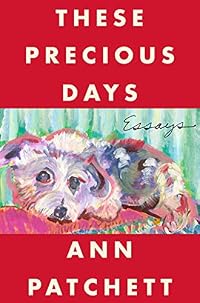
These Precious Days
by Ann Patchett
On This Page
Description
The beloved New York Times bestselling author reflects on home, family, friendships and writing in this deeply personal collection of essays. "Any story that starts will also end." As a writer, Ann Patchett knows what the outcome of her fiction will be. Life, however, often takes turns we do not see coming. Patchett ponders this truth in these wise essays that afford a fresh and intimate look into her mind and heart. At the center of These Precious Days is the title essay, a surprising and show more moving meditation on an unexpected friendship that explores "what it means to be seen, to find someone with whom you can be your best and most complete self." When Patchett chose an early galley of actor and producer Tom Hanks' short story collection to read one night before bed, she had no idea that this single choice would be life changing. It would introduce her to a remarkable woman-Tom's brilliant assistant Sooki-with whom she would form a profound bond that held monumental consequences for them both. A literary alchemist, Patchett plumbs the depths of her experiences to create gold: engaging and moving pieces that are both self-portrait and landscape, each vibrant with emotion and rich in insight. Turning her writer's eye on her own experiences, she transforms the private into the universal, providing us all a way to look at our own worlds anew, and reminds how fleeting and enigmatic life can be. From the enchantments of Kate DiCamillo's children's books (author of the upcoming The Beatryce Prophecy) to youthful memories of Paris; the cherished life gifts given by her three fathers to the unexpected influence of Charles Schultz's Snoopy; the expansive vision of Eudora Welty to the importance of knitting, Patchett connects life and art as she illuminates what matters most. Infused with the author's grace, wit, and warmth, the pieces in These Precious Days resonate deep in the soul, leaving an indelible mark-and demonstrate why Ann Patchett is one of the most celebrated writers of our time. show lessTags
Recommendations



Member Reviews
Ann Patchett can read to me any day of the week. I first listened to The Story of a Good Marriage. I really liked it, but I was eager to move on to her second essay collection. Five glorious stars! She writes from the heart and with the authenticity of a true friend. Her story about the purging of stuff from her life was funny, familiar, reflective and uplifting. She introduced me to so many fine people from her life, showing me joy and sorrow in one breath. My heart ached for her as she traveled the cancer road with a friend. Patchett does not put her life out there as perfect, inviting the reader in as she shares her flaws and misgivings. She gives all and then some. I bought this book because I knew I wanted to go back to it again show more and again. show less
I’m an Ann Patchett fan, having read most of her work over the years, so I didn’t think twice about reading her latest essay collection. Patchett writes with self-awareness and candor, comfortable both exploring emotions and standing up for her beliefs. Every reader will be affected by this collection, with some essays having greater impact than others.
The first essay, Three Fathers, is a lovely tribute to the three men her mother married. First Thanksgiving was a delightful look back at Patchett’s first year of college, in which she was one of only a few students spending the Thanksgiving holiday at school. Eudora Welty, an Introduction inspired me to immediately buy Welty’s Collected Stories for my Kindle. Patchett also show more writes about how knitting helped her through difficult times, and reluctance to preserve her body of work. Some essays provide a behind-the-scenes look at her career and her craft.
But the most powerful essay by far is the title piece, which explores Patchett’s friendship with Sooki Raphael. The two met when Sooki worked for Tom Hanks, and began a correspondence that blossomed into friendship. When Sooki came to Nashville for medical treatment, there was no question she would stay with Ann and her husband, Karl. This was early 2020, and lockdown measures suddenly meant Sooki would be staying with them indefinitely. For some people this would be very stressful, but in this case the time spent together had a profound impact on both women. The book’s epilogue is a moving denouement to their story, and is a fitting way to conclude this outstanding collection. show less
The first essay, Three Fathers, is a lovely tribute to the three men her mother married. First Thanksgiving was a delightful look back at Patchett’s first year of college, in which she was one of only a few students spending the Thanksgiving holiday at school. Eudora Welty, an Introduction inspired me to immediately buy Welty’s Collected Stories for my Kindle. Patchett also show more writes about how knitting helped her through difficult times, and reluctance to preserve her body of work. Some essays provide a behind-the-scenes look at her career and her craft.
But the most powerful essay by far is the title piece, which explores Patchett’s friendship with Sooki Raphael. The two met when Sooki worked for Tom Hanks, and began a correspondence that blossomed into friendship. When Sooki came to Nashville for medical treatment, there was no question she would stay with Ann and her husband, Karl. This was early 2020, and lockdown measures suddenly meant Sooki would be staying with them indefinitely. For some people this would be very stressful, but in this case the time spent together had a profound impact on both women. The book’s epilogue is a moving denouement to their story, and is a fitting way to conclude this outstanding collection. show less
"Paying close attention to the text, and realizing that books can save you, those were the lessons I learned my freshman year of college when school was closed. I then went on to use this newfound understanding to great advantage for the rest of my life. Books were not just my education and my entertainment, they were my partners. They told me what I was capable of. They let me stare a long way down the path of various possibilities so that I could make decisions."
“How other people live is pretty much all I think about. Curiosity is the rock upon which fiction is built.”
“As every reader knows, the social contract between you and a book you love is not complete until you can hand that book to someone else and say, Here, you’re show more going to love this.”
I adore Ann Patchett. Her last essay collection, This is the Story of a Happy Marriage was excellent. She returns to this format here, after writing a couple of novels and delivers a bullseye once again. Her writing is beautiful and insightful and draws the reader in, no matter how mundane the subject matter is. A book pal (Bonnie) recently commented that Patchett may be a better nonfiction writer. This is arguable but what is not, is that she is a helluva writer. This is also a terrific audiobook experience, with Patchett narrating herself. show less
“How other people live is pretty much all I think about. Curiosity is the rock upon which fiction is built.”
“As every reader knows, the social contract between you and a book you love is not complete until you can hand that book to someone else and say, Here, you’re show more going to love this.”
I adore Ann Patchett. Her last essay collection, This is the Story of a Happy Marriage was excellent. She returns to this format here, after writing a couple of novels and delivers a bullseye once again. Her writing is beautiful and insightful and draws the reader in, no matter how mundane the subject matter is. A book pal (Bonnie) recently commented that Patchett may be a better nonfiction writer. This is arguable but what is not, is that she is a helluva writer. This is also a terrific audiobook experience, with Patchett narrating herself. show less
Anne Padgett's novels have been favorites of mine for years, and this book extends my appreciation into her essays. She writes about her own past and about writing, but her most striking essays are about life and death. Sometimes, she is almost shockingly forthright and honest -- in discussing, for example, her own decision to remain childless. Even more resonant for me was her description of her reaction to her father's death. He died of a neurological disease called progressive supranuclear palsy or PSP, after an illness of several years during which one after another of his abilities was leached away. My husband died of the same illness, after almost 10 years of gradual and then accelerating decline. Ms. Padgett had the courage to show more say what I did not -- that her loved one's death was an occasion of joy. That was because he was finally released from his suffering, and because those who cared for him were freed from a demanding and hopeless task. I felt the same, but could never say so. This alone would make the book very meaningful to me, but there is much more in it that is wise, generous, and beautifully expressed. show less
Collection of twenty-four essays on such diverse topics as Patchett’s three fathers, literature, travel, disease, friendship, art, marriage, death, hobbies, and more. She weaves in observations about daily activities. I particularly enjoyed the piece on her decision to not have children, and the various responses and unsolicited advice she receives. The primary set piece of this collection is the title essay, where she tells of picking up Tom Hanks’s book (the short story collection Uncommon Type), and how that one decision led to a deep friendship with his assistant, Sooki, who ended up staying at her house during the pandemic while she obtained cancer treatments. She wrote these pieces during the pandemic, saying “death has no show more interest in essays.” They are not just random writings. They are connected through themes of life, death, and love. She writes of death without being morbid. Patchett comes across as observant, sincere, and interested in others. This collection is worth reading. show less
Summary: Essays on family, friendships, the life of writing and bookselling, and mortality.
I’ve read most of Ann Patchett’s fiction, loving the writing if not always the ways her stories resolve (or not). I personally consider The Dutch House one of her best, along with Bel Canto. This is my first foray into her non-fiction, and I thought these essays revealed more than the character of Ann Patchett, particularly of her love of friendship and love of both writing and bookselling. It was a collection that reflects on marriage, on our families, on the literary world, and on mortality.
The title essay does all of this. “These Precious Days” is a lengthy account of her unlikely and mutually transforming friendship with Sooki Raphael. show more Sooki was the personal assistant to Tom Hanks, who Patchett met on an interview with Hanks. Further contacts with Hanks, including asking him to narrate one of her audiobooks led to continued contacts. During one of these, she learned Sooki had undergone surgery and treatments for pancreatic cancer. Staying in touch she learned of the cancer’s recurrence and Sooki’s plans to explore clinical trials. Patchett’s husband, a physician at Vanderbilt, learned of this from Ann, and was aware that Vanderbilt was running a number of clinical trials for pancreatic cancer. This led to Sooki coming to live for several months in Ann and Karl’s basement suite (at the height of Covid-19). The essay beautifully recounts the ways this unexpected friendship transformed both of their lives, as well as the beauty of Ann and Karl accompanying this woman in ways that never diminished her dignity while generously supporting her as she fought this beastly cancer.
In other essays, Patchett describes her three fathers and how each influenced her life. She discusses her decision to not have children, the people who insisted she should, and the intrusive questions she sometimes has faced when she would prefer to talk about her work. She writes about her mother, who often was mistaken as one of Ann’s sisters, due to her youthful beauty. She introduces us to Tavia Cathcart, the bombshell high school friend who moved from acting to becoming a premier nature interpreter, and how their friendship evolved as both she and Ann grew into their adult selves.
There is a healthy dose of gentle humor. She recounts her adventures with her friend Marti in Paris, and the tattoo she never got. She tells the story of a caller who insists on bringing her a letter documenting an award she had received from the Veterans of Foreign Wars, found in a nightstand that had once belonged to her. Then there is an incident where Karl comforts a woman worried about her baby’s development by offering the woman $20,000 to adopt the child! No way, and the woman stopped worrying. She describes her year when she gave up shopping. She recalls the Thanksgiving when she stayed at her college and decided to cook Thanksgiving dinner for her friends–from scratch! She writes about her husband’s love of flying–and of his insistence on finding deals on used planes. She reveals her on again, off again embrace of knitting.
She offers us glimpses of the literary world. Under her hand you find yourself drawn successively into Kate DiCamillo’s works for children and the work of Eudora Welty. In “A Talk to the Association of Graduate School Deans in the Humanities” she chronicles her experience in the MFA program at the Iowa Writer’s Workshop with her friend Lucy, her one interview for a faculty position and how failing to get that position gave her the chance to write. She speaks of the joys of owning a bookstore and the important lesson she didn’t learn in grad school–“if you want to save reading, teach children to read.”
Patchett recounts her own memento mori moment upon being elected to the American Academy of Arts and Letters, an honor reserved to 250 living members. She describes the portrait gallery in the Academy with photos arranged in order of members induction, going back to Samuel Clemens in 1898 up to her own picture in 2017. As she went back in time she realized she was moving increasingly from the company of living members to the deceased. At some point they all were. She realizes this will be true of her. She describes the simple card she receives with the death of another member, forty between her induction and the time of writing, including John Updike, who she had been so thrilled to be seated with at her own induction. She remembers his handing her the certificate of membership, a check, and giving her a fatherly kiss on the cheek.
Patchett brings to these essays the same insightfulness into the complexities and wonders of human beings, their relationships, and their lives as she does to the characters in her novels. One senses we are seeing all of this woven together in another story, that of the author, who writes with increasing appreciation of “these precious days” in her circles of family, friends, and acquaintances. And it nudges us to be mindful of similar “precious days” with the people and in the work we love. show less
I’ve read most of Ann Patchett’s fiction, loving the writing if not always the ways her stories resolve (or not). I personally consider The Dutch House one of her best, along with Bel Canto. This is my first foray into her non-fiction, and I thought these essays revealed more than the character of Ann Patchett, particularly of her love of friendship and love of both writing and bookselling. It was a collection that reflects on marriage, on our families, on the literary world, and on mortality.
The title essay does all of this. “These Precious Days” is a lengthy account of her unlikely and mutually transforming friendship with Sooki Raphael. show more Sooki was the personal assistant to Tom Hanks, who Patchett met on an interview with Hanks. Further contacts with Hanks, including asking him to narrate one of her audiobooks led to continued contacts. During one of these, she learned Sooki had undergone surgery and treatments for pancreatic cancer. Staying in touch she learned of the cancer’s recurrence and Sooki’s plans to explore clinical trials. Patchett’s husband, a physician at Vanderbilt, learned of this from Ann, and was aware that Vanderbilt was running a number of clinical trials for pancreatic cancer. This led to Sooki coming to live for several months in Ann and Karl’s basement suite (at the height of Covid-19). The essay beautifully recounts the ways this unexpected friendship transformed both of their lives, as well as the beauty of Ann and Karl accompanying this woman in ways that never diminished her dignity while generously supporting her as she fought this beastly cancer.
In other essays, Patchett describes her three fathers and how each influenced her life. She discusses her decision to not have children, the people who insisted she should, and the intrusive questions she sometimes has faced when she would prefer to talk about her work. She writes about her mother, who often was mistaken as one of Ann’s sisters, due to her youthful beauty. She introduces us to Tavia Cathcart, the bombshell high school friend who moved from acting to becoming a premier nature interpreter, and how their friendship evolved as both she and Ann grew into their adult selves.
There is a healthy dose of gentle humor. She recounts her adventures with her friend Marti in Paris, and the tattoo she never got. She tells the story of a caller who insists on bringing her a letter documenting an award she had received from the Veterans of Foreign Wars, found in a nightstand that had once belonged to her. Then there is an incident where Karl comforts a woman worried about her baby’s development by offering the woman $20,000 to adopt the child! No way, and the woman stopped worrying. She describes her year when she gave up shopping. She recalls the Thanksgiving when she stayed at her college and decided to cook Thanksgiving dinner for her friends–from scratch! She writes about her husband’s love of flying–and of his insistence on finding deals on used planes. She reveals her on again, off again embrace of knitting.
She offers us glimpses of the literary world. Under her hand you find yourself drawn successively into Kate DiCamillo’s works for children and the work of Eudora Welty. In “A Talk to the Association of Graduate School Deans in the Humanities” she chronicles her experience in the MFA program at the Iowa Writer’s Workshop with her friend Lucy, her one interview for a faculty position and how failing to get that position gave her the chance to write. She speaks of the joys of owning a bookstore and the important lesson she didn’t learn in grad school–“if you want to save reading, teach children to read.”
Patchett recounts her own memento mori moment upon being elected to the American Academy of Arts and Letters, an honor reserved to 250 living members. She describes the portrait gallery in the Academy with photos arranged in order of members induction, going back to Samuel Clemens in 1898 up to her own picture in 2017. As she went back in time she realized she was moving increasingly from the company of living members to the deceased. At some point they all were. She realizes this will be true of her. She describes the simple card she receives with the death of another member, forty between her induction and the time of writing, including John Updike, who she had been so thrilled to be seated with at her own induction. She remembers his handing her the certificate of membership, a check, and giving her a fatherly kiss on the cheek.
Patchett brings to these essays the same insightfulness into the complexities and wonders of human beings, their relationships, and their lives as she does to the characters in her novels. One senses we are seeing all of this woven together in another story, that of the author, who writes with increasing appreciation of “these precious days” in her circles of family, friends, and acquaintances. And it nudges us to be mindful of similar “precious days” with the people and in the work we love. show less
Death "has no interest in essays," Ann Patchett says early in “These Precious Days” (2021), her latest collection of personal essays. She explains that whenever she's writing a novel, she fears dying before she can finish it. No such fear troubles her mind when she's writing essays, they being short enough to finish before death becomes an issue.
Yet if death has no interest in essays, her essays often show an interest in death, even as focused as they are on the joy of living. The title essay, easily the longest in the book, tells of the close friendship she established with Sooki Raphael, who worked as an assistant for the actor Tom Hanks. She met Hanks while promoting his book “Uncommon Type” and through him met Sooki.
The two show more women exchanged emails, but the friendship developed only after Sooki was diagnosed with pancreatic cancer. Patchett's husband, a physician, suggested Sooki could get the most advanced treatment for her particular cancer in Nashville. Patchett offered her a room in their home near the Nashville hospital. Sooki said she would stay with them for a few days but ended up living with them for months because of two developments: their intense friendship and Covid. These days were precious to both women, in part because they both knew Sooki's disease would likely soon end in death. It did.
In "Three Fathers" she writes about her father and her two stepfathers, all now deceased, and the influence each of them had on her life. Elsewhere she tells us more about her father, the Los Angeles police detective who arrested Sirhan Sirhan after the Robert F. Kennedy assassination.
The essay "What the American Academy of Arts and Letters Taught Me about Death" tells of her acceptance into the academy, which has no more than 250 members at one time. In other words, one American writer must die before another can be accepted.
Other essays show a lighter touch. "My First Thanksgiving" tells about her being stuck at college one year at Thanksgiving and preparing her first Thanksgiving dinner from recipe books, inviting several other stranded students to share it with her.
"My Year of No Shopping" tells how she abandoned all non-essential shopping for an entire year and how this helped her appreciate what she already had — and allowed her to donate more money for the benefit of others.
"There Are No Children Here" explains her decision not to have children.
In "Sisters" she writes not about her sister, as you might expect, but her mother, who has always looked so youthful that people frequently have asked if she and her daughter were sisters. (My ever-youthful wife was often asked if she and her son were siblings, so I know how this can happen.)
These and the other fine essays in the book confirm the truth of Patchett's title, even if death does lurk in the background, seemingly uninterested. show less
Yet if death has no interest in essays, her essays often show an interest in death, even as focused as they are on the joy of living. The title essay, easily the longest in the book, tells of the close friendship she established with Sooki Raphael, who worked as an assistant for the actor Tom Hanks. She met Hanks while promoting his book “Uncommon Type” and through him met Sooki.
The two show more women exchanged emails, but the friendship developed only after Sooki was diagnosed with pancreatic cancer. Patchett's husband, a physician, suggested Sooki could get the most advanced treatment for her particular cancer in Nashville. Patchett offered her a room in their home near the Nashville hospital. Sooki said she would stay with them for a few days but ended up living with them for months because of two developments: their intense friendship and Covid. These days were precious to both women, in part because they both knew Sooki's disease would likely soon end in death. It did.
In "Three Fathers" she writes about her father and her two stepfathers, all now deceased, and the influence each of them had on her life. Elsewhere she tells us more about her father, the Los Angeles police detective who arrested Sirhan Sirhan after the Robert F. Kennedy assassination.
The essay "What the American Academy of Arts and Letters Taught Me about Death" tells of her acceptance into the academy, which has no more than 250 members at one time. In other words, one American writer must die before another can be accepted.
Other essays show a lighter touch. "My First Thanksgiving" tells about her being stuck at college one year at Thanksgiving and preparing her first Thanksgiving dinner from recipe books, inviting several other stranded students to share it with her.
"My Year of No Shopping" tells how she abandoned all non-essential shopping for an entire year and how this helped her appreciate what she already had — and allowed her to donate more money for the benefit of others.
"There Are No Children Here" explains her decision not to have children.
In "Sisters" she writes not about her sister, as you might expect, but her mother, who has always looked so youthful that people frequently have asked if she and her daughter were sisters. (My ever-youthful wife was often asked if she and her son were siblings, so I know how this can happen.)
These and the other fine essays in the book confirm the truth of Patchett's title, even if death does lurk in the background, seemingly uninterested. show less
Members
- Recently Added By
Lists

Books recommended by Barack Obama
295 works; 28 members

Looking Forward to 2021
14 works; 2 members

Top Five Books of 2022
736 works; 272 members

Obama Reads
181 works; 3 members

Anticipated 2021 Reads
231 works; 7 members

Maybe This Year? Books to Look Forward To
407 works; 9 members

Books Read in 2021
5,361 works; 114 members

Library ebooks and electronic audio books
52 works; 1 member

Books Read in 2022
5,164 works; 113 members

Bitter Southerner Summer Reading Roundup
198 works; 8 members

Books Read in 2023
5,547 works; 145 members

Club Read's Recommended Nonfiction Written by Women
618 works; 30 members
Author Information

33+ Works 54,943 Members
Ann Patchett was born on December 2, 1963. She received the Orange Prize for Fiction and the PEN/Faulkner Award in 2002 for her novel Bel Canto. Her other novels include The Patron Saint of Liars, Taft, The Magician's Assistant, and State of Wonder. She has also written several nonfiction works including Truth and Beauty: A Friendship, The Getaway show more Car, The Bookshop Strikes Back, and This Is the Story of a Happy Marriage. Ann's title's Commonweatlth and The Patron Saint of Liars made the New York Time bestseller list. (Bowker Author Biography) show less
Awards and Honors
Awards
Distinctions
Work Relationships
Contains
Common Knowledge
- Canonical title
- These Precious Days
- Original publication date
- 2021
- Important places
- Nashville, Tennessee, USA
- Dedication
- To Maile Meloy
- First words
- The first time I remember seriously thinking about my own death, I was twenty-six years old and working on my first novel, The Patron Saint of Liars.
- Quotations
- As for death, I have remained lucky. Its indifference has nevere waned, though surely it will circle back for me later. Death always thinks of us eventually. The trick is to find the joy in the interim, and mak good use of th... (show all)e days we have. (p. 5)
Having someone who believed in my failure more than my success kept me alert. It made me fierce. Without ever meaning to, my father taught me at a very early age to give up on the idea of approval. I wish I could bottle that ... (show all)freedom now and give it to every young writer I meet, with an extra bottle for the women. I would give them the ability both to love and not to care.(p. 16)
It was as if he saw us, separately, equally, and found the wonder in each of us. (p. 24)
From each of the fathers I took the things I needed, and then turned them into stories -- my father gave me strength, Mike gave me adoration, Darrell gave me acceptance... (p. 27)
The things we buy and buy and buy are like a thick coat of Vaseline: we can see some shapes out there, light and dark, but in our constant craving of what we may still want, we miss to many of life's details. (p. 43)
You are not my problem to solve but my brother to love, all of you. (p. 57)
I did feel bad, but not for long. The feeling that came to take its place was lightness. This was the practice: I was starting to get rid of my possessions, at least the useless ones, because possessions stood between me and ... (show all)death. They did not protect me from death, but they created a barrier in my understanding like many layers of bubble wrap so that instead of thinking about what was coming and the beauty that was here, I was thinking about the pile of shiny trinkets I'd accumulated. I had begun the journey of digging out. (p. 69)
This is why we have to go back, because even as the text stays completely true to the writer's intention, we readers never cease to change. If you've read these stories before, I beg you, read them again. Chances are you'll f... (show all)ind them to be completely new. (p. 86)
For as many times as the horrible thing happens, a thousand times in every day the horrible thing passes us by. (p. 164)
We don't deserve anything -- not the suffering and not the golden light. It just comes. (p. 180)
...the future is not one thing. So many possibilities can arise as a result of intelligence, education, curiosity, and hard work. (p. 204)
That's what I got from these books, the ability to walk through the door where everything I thought had was in fact waiting for me. All of it. The trick was being brave enough to look. The books had given me that bravery whi... (show all)ch is another way of saying the ability to believe. (p. 223)
The human impulse is to look for order, but there isn't any. People come and go. When you try to find your place among all the living and dead, the numbers are unmanagable, but working within a fixed group -- two hundred fift... (show all)y people, one building, a roomful of framed photographs -- there's no fooling yourself. Is this my time? Maybe and maybe not, but my time is coming, and it should. Someone out there is waiting for my place. (p. 312)
That was the gift, not the award or the induction. It was the beautiful day, the view of the river, the long sloping lawn in the cemetary, the single cigarette, that kiss. (p. 313)
We're laughing because we're happy. We feel like we've gotten away with something. We managed to skip out on our sadness for a couple of hours and come to the beach, and that's the closest thing to a miracle we can drum up at... (show all) this point. (p. 316)
I don't know how many times this has happened -- I'm fine and then suddenly there is such a crack in my chest that I think I will lie down in the sand and never get up. The same thought flashes around the circle, I can feel t... (show all)he bright needle of sorrow stitching us together, but we sing the chorus anyway because it's all we know to do. (p. 317) - Last words
- (Click to show. Warning: May contain spoilers.)Sooki Raphael, Born June 13, 1955, died April 25, 2021.
- Original language
- English
Classifications
Statistics
- Members
- 1,262
- Popularity
- 19,291
- Reviews
- 75
- Rating
- (4.39)
- Languages
- English
- Media
- Paper, Audiobook, Ebook
- ISBNs
- 14
- ASINs
- 7