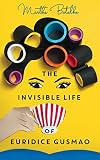
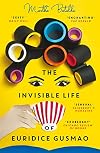
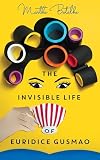
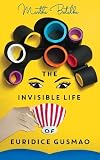
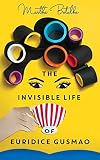
The Invisible Life of Euridice Gusmao
by Martha Batalha
On This Page
Description
Euridice is young, beautiful and ambitious, but when her rebellious sister Guida elopes, she sets her own aspirations aside and vows to settle down as a model wife and daughter. And yet as her husband's professional success grows, so does Euridice's feeling of restlessness. She embarks on a series of secret projects from creating recipe books to becoming the most sought-after seamstress in town -- but each is doomed to failure. Her tradition-loving husband is not interested in an independent show more wife. And then one day Guida appears at the door with her young son and a terrible story of hardship and abandonment. show lessTags
Recommendations


































Member Reviews
Um belo retrato da classe média carioca da década de 40, da vida de uma mulher que sofre os pesares de ser mulher, mas nem tanto quanto outras mulheres pinceladas no livro, que não tiveram a felicidade de nascer bem. Nem por isso deixa de ser brilhante e triste e cômico a vida invisível de Eurídice. A leitura é fluida e agradável, as personagens são bem apresentadas e descritas. É impossível não pensar nas vidas invisíveis que passaram, que passam e passarão pelo mundo.
Similar to the mythological Eurydice, Batalha’s Euridice Gusmao inhabits another world beyond the reach of her husband. This Euridice’s story takes place in Brazil during the 1950s/early 60s. While she marries, has children, and is a solid middle class housewife, she is a curious hybrid or perhaps a full original. Often in literature, an underdog female is a victim of circumstance. She is hemmed in by domestic duties, lack of access to education, poverty and/or a bone-laced restricted role in society. Some, such as Tita in Like Water for Chocolate, suffer meanness and unfairness silently until events allow movement. Some, like Madame Bovary, act out when feeling repressed and push the suffering to others, making terrible things show more happen. One is passive, and things ultimately turn out right. The other is active, and things go very, very badly. Euridice is neither or both. In response to a family scandal, Euridice tackles the role of dutiful daughter and, later on, proper wife. Any hopes she had for herself are folded up within herself until she hits upon ways to be active. When caught out, she hides in plain sight, sitting on the couch, doing nothing, saying nothing. The reader’s own breathing is restricted, knowing that only madness or unique resolution can result. Euridice so fully wins us over that it is upsetting to one’s own peace of mind whether she will give in to social pressure. Euridice is invisible only insofar as her intelligence and creativity are considered unnecessary accoutrements for her roles as daughter, wife, mother, even friend. Any pursuits involving her mind, separate from keeping hearth and home in order, have to be hidden, hence her invisible life.
Interplay and balance among the characters contribute to a story that goes beyond one woman’s private dilemma. Guida, the sister, provides a sharp counterpoint. Her circumstances are at times desperate; she is abandoned early on by her husband and shunned by her father. Both sisters live by intelligence and will. The journey to self-determination is paralleled by Guida’s son, Chico. He has been a sickly child and lives for books, an “eccentricity” shared by his aunt. He is probably worthy of a story in his own right, since he too is an outsider within family and society. And then there is Zelia, the foil. Her intelligence and creativity have been devoted to spewing vicious gossip, mostly the result of her own malicious interpretation of events, and bringing misery to others.
The heart of the story is about reality and control. We have an invisible interior world and a lived-in world, unseen thought and observable behavior—which is real? The double life splits Euridice into one who keeps the peace for the sake of others and another Euridice who will either break barriers through self-determination or be broken herself. Euridice Gusmao is not necessarily an historical Everyman given her comfortable circumstances. But she does embody the Everyman soul that seeks nourishment and salvation albeit of a different kind. Overall, a worthy woman and a worthy read. show less
Interplay and balance among the characters contribute to a story that goes beyond one woman’s private dilemma. Guida, the sister, provides a sharp counterpoint. Her circumstances are at times desperate; she is abandoned early on by her husband and shunned by her father. Both sisters live by intelligence and will. The journey to self-determination is paralleled by Guida’s son, Chico. He has been a sickly child and lives for books, an “eccentricity” shared by his aunt. He is probably worthy of a story in his own right, since he too is an outsider within family and society. And then there is Zelia, the foil. Her intelligence and creativity have been devoted to spewing vicious gossip, mostly the result of her own malicious interpretation of events, and bringing misery to others.
The heart of the story is about reality and control. We have an invisible interior world and a lived-in world, unseen thought and observable behavior—which is real? The double life splits Euridice into one who keeps the peace for the sake of others and another Euridice who will either break barriers through self-determination or be broken herself. Euridice Gusmao is not necessarily an historical Everyman given her comfortable circumstances. But she does embody the Everyman soul that seeks nourishment and salvation albeit of a different kind. Overall, a worthy woman and a worthy read. show less
 This review was written for LibraryThing Early Reviewers.
“She considered marriage something rather endemic, something that men and women caught between the age of eighteen and twenty-five. Like the flu, except not quite so bad. What Euridice truly wanted was to travel the world playing her recorder. She wanted to be an engineer and work with numbers. She wanted to transform her parents’ greengrocer’s into a general store, the general store into a franchise, the franchise into a conglomerate. But she didn’t know she wanted all that.”
Set in 1940s – 1960s Rio de Janeiro, sisters Euridice and her sister, Guida, grow up in a patriarchal society where roles for women are severely restricted. Euridice follows the traditional path. She marries and has two children. She attempts a few show more independent projects but bows to pressure from her husband to be the dutiful wife. Euridice quietly endures. Guida rebels. She becomes involved with a wealthy young man studying to be a doctor and runs off with him, which eventually leads to serious repercussions. It is a story of life and of attempting to overcome societal barriers.
The book involves a series of vignettes, with multiple brief appearances by quirky characters. Euridice disappears from the storyline for a significant portion of the book, almost as if she is disappearing from her own life. I enjoyed this look into the life of a repressed woman who feels she must restrain her spirit and ambitions. show less
Set in 1940s – 1960s Rio de Janeiro, sisters Euridice and her sister, Guida, grow up in a patriarchal society where roles for women are severely restricted. Euridice follows the traditional path. She marries and has two children. She attempts a few show more independent projects but bows to pressure from her husband to be the dutiful wife. Euridice quietly endures. Guida rebels. She becomes involved with a wealthy young man studying to be a doctor and runs off with him, which eventually leads to serious repercussions. It is a story of life and of attempting to overcome societal barriers.
The book involves a series of vignettes, with multiple brief appearances by quirky characters. Euridice disappears from the storyline for a significant portion of the book, almost as if she is disappearing from her own life. I enjoyed this look into the life of a repressed woman who feels she must restrain her spirit and ambitions. show less
For many years, the work of women, the unpaid work that they did or do, has been invisible. There is, of course, the old joke that a husband comes home from work one day and sees that the house is a mess, the kids are running rampant, and there's no dinner waiting for him because his wife has taken to heart that he thinks she does "nothing" all day long and so has decided to live up to his belief and therefore has actually done nothing that day. It's a scenario that makes a point very clearly. He never saw the work she did until the day she chose not to do it. Her work, important as it was, was invisible until it was left undone. Martha Batalha's novel The Invisible Life of Euridice Gusmao comes from this same place of women's work and show more lives being invisible unless they buck what society expects of them.
Euridice marries her husband Antenor because that is what is expected of her. She will become a housewife and mother in 1940s Rio. And she plays her role but she doesn't embrace it or truly enjoy it. Instead she spends a long time looking for her purpose in life within the societal constraints placed on her. Before her marriage she was an exceptional recorder player. The hope of a musical life had to go by the wayside as she married and became a mother. Then she learned to cook exotic and impressive dishes. But that wasn't her calling either, and unusual foods didn't please her children or her husband. Then she taught herself to sew and became quite an accomplished seamstress, dressing first herself and then neighborhood women. But her husband objected to her working from home. Finally she becomes an author, tickety tapping away on her typewriter, either destined for greatness or for obscurity as she retells the story of her life. She is a determined and intelligent woman who finds her prescribed role boring. Her beautiful sister Guida took a different, less conventional path through life but she cannot tell her story completely any more than Euridice could live her story completely as she wanted even after she came back to the path society required of her.
This is very much a domestic novel filled with quirky, often frustrated characters. Euridice is strong, flexible, and yearning as a a character. She absorbs the disappointments of her life, which are all of the spiritual variety rather than the physical disappointments and trials her sister weathers, as best she can while still being a woman of her time. She is different in her striving for more, in her quest to be seen, and sometimes that opens her up to gossip and innuendo from others but she perseveres in creating in herself the accomplished and fulfilled woman she needs to be. No matter where she is in her journey to herself, she remains a sympathetic character. The novel definitely has the feel of contemporary South American literature, a certain sensibility that comes through tying it to a long tradition of Latinx writing. Quite character driven, this novel is an interesting and insightful look at the life and dreams of one eccentric mid-twentieth century Brazilian woman as she becomes visible to her family, her neighbors, and most importantly, to herself. show less
Euridice marries her husband Antenor because that is what is expected of her. She will become a housewife and mother in 1940s Rio. And she plays her role but she doesn't embrace it or truly enjoy it. Instead she spends a long time looking for her purpose in life within the societal constraints placed on her. Before her marriage she was an exceptional recorder player. The hope of a musical life had to go by the wayside as she married and became a mother. Then she learned to cook exotic and impressive dishes. But that wasn't her calling either, and unusual foods didn't please her children or her husband. Then she taught herself to sew and became quite an accomplished seamstress, dressing first herself and then neighborhood women. But her husband objected to her working from home. Finally she becomes an author, tickety tapping away on her typewriter, either destined for greatness or for obscurity as she retells the story of her life. She is a determined and intelligent woman who finds her prescribed role boring. Her beautiful sister Guida took a different, less conventional path through life but she cannot tell her story completely any more than Euridice could live her story completely as she wanted even after she came back to the path society required of her.
This is very much a domestic novel filled with quirky, often frustrated characters. Euridice is strong, flexible, and yearning as a a character. She absorbs the disappointments of her life, which are all of the spiritual variety rather than the physical disappointments and trials her sister weathers, as best she can while still being a woman of her time. She is different in her striving for more, in her quest to be seen, and sometimes that opens her up to gossip and innuendo from others but she perseveres in creating in herself the accomplished and fulfilled woman she needs to be. No matter where she is in her journey to herself, she remains a sympathetic character. The novel definitely has the feel of contemporary South American literature, a certain sensibility that comes through tying it to a long tradition of Latinx writing. Quite character driven, this novel is an interesting and insightful look at the life and dreams of one eccentric mid-twentieth century Brazilian woman as she becomes visible to her family, her neighbors, and most importantly, to herself. show less
Martha Batalha escreveu vários livros sob esse único título, "A Vida Invisível de Eurídice Gusmão". A obra conta a história de duas irmãs da classe média do Rio de Janeiro dos anos 1940. Em menos de 200 páginas, porém, usando de uma sutileza extraordinária, humor refinado e maestria na escolha das palavras e construção das frases, expõe de maneira crítica a condição da mulher destinada ao papel de "prendada e do lar". E fala de preconceitos, papéis sociais pré-determinados, frustrações, racismo, injustiças sociais.
O texto, porém, nunca é panfletário. É fluido, saboroso e faz com que, ao longo do episódios que se sucedem, o leitor vá sendo dominado por um incômodo. Em que medida essa foi a vida de nossas show more mães, avós e eventuais "empregadas" que passaram por nossas casas? O que herdamos desse comportamento?
"A Vida Invisível de Eurídice Gusmão" repete uma saga que tem sido frequente entre autores estreantes no Brasil: foi comprado por dez editoras do exterior antes de aceito por uma nacional. Também teve seus direitos adquiridos para o cinema em 2016, antes da publicação por aqui. Foi produzido e lançado como "A Vida Invisível", em 2019. show less
O texto, porém, nunca é panfletário. É fluido, saboroso e faz com que, ao longo do episódios que se sucedem, o leitor vá sendo dominado por um incômodo. Em que medida essa foi a vida de nossas show more mães, avós e eventuais "empregadas" que passaram por nossas casas? O que herdamos desse comportamento?
"A Vida Invisível de Eurídice Gusmão" repete uma saga que tem sido frequente entre autores estreantes no Brasil: foi comprado por dez editoras do exterior antes de aceito por uma nacional. Também teve seus direitos adquiridos para o cinema em 2016, antes da publicação por aqui. Foi produzido e lançado como "A Vida Invisível", em 2019. show less
“She considered marriage something rather endemic, something that men and women caught between the age of eighteen and twenty-five. Like the flu, except not quite so bad. What Euridice truly wanted was to travel the world playing her recorder. She wanted to be an engineer and work with numbers. She wanted to transform her parents’ greengrocer’s into a general store, the general store into a franchise, the franchise into a conglomerate. But she didn’t know she wanted all that.”
Set in 1940s – 1960s Rio de Janeiro, sisters Euridice and her sister, Guida, grow up in a patriarchal society where roles for women are severely restricted. Euridice follows the traditional path. She marries and has two children. She attempts a few show more independent projects but bows to pressure from her husband to be the dutiful wife. Euridice quietly endures. Guida rebels. She becomes involved with a wealthy young man studying to be a doctor and runs off with him, which eventually leads to serious repercussions. It is a story of life and of attempting to overcome societal barriers.
The book involves a series of vignettes, with multiple brief appearances by quirky characters. Euridice disappears from the storyline for a significant portion of the book, almost as if she is disappearing from her own life. I enjoyed this look into the life of a repressed woman who feels she must restrain her spirit and ambitions. show less
Set in 1940s – 1960s Rio de Janeiro, sisters Euridice and her sister, Guida, grow up in a patriarchal society where roles for women are severely restricted. Euridice follows the traditional path. She marries and has two children. She attempts a few show more independent projects but bows to pressure from her husband to be the dutiful wife. Euridice quietly endures. Guida rebels. She becomes involved with a wealthy young man studying to be a doctor and runs off with him, which eventually leads to serious repercussions. It is a story of life and of attempting to overcome societal barriers.
The book involves a series of vignettes, with multiple brief appearances by quirky characters. Euridice disappears from the storyline for a significant portion of the book, almost as if she is disappearing from her own life. I enjoyed this look into the life of a repressed woman who feels she must restrain her spirit and ambitions. show less
Set in 1940's Rio de Janeiro, Martha Batalha's The Invisible Life of Euridice Gusmao follows a brilliant and passionate woman through her days of preparing food, tending to children, and altogether being overlooked and underappreciated. With a successful banker for a husband, she need only tend to the house and her offspring, passing her days with aimless monotony. While she struggles to find and develop an identity and talent of her own, we are introduced to many colorful characters along the way, namely women in the surrounding areas , some who have it better than Euridice, many who have it far, far worse. Their unspoken hardships and aspirations are woven throughout this rich tapestry of humor, pride, and perseverance.
At a time and show more place when women are to be beautiful, dutiful, and little more, Euridice exemplifies the restlessness of the modern woman. She loves her children and is grateful for her husband and the comfortable life he has provided for them but longs for more- for what exactly she is not certain. Batalha provides many foils to Euridice- other women who cannot bear what they perceive to be Euridice's arrogance and disdain for duty while others are so destitute that they can only aspire to have the type of problems Euridice has. Batalha introduces us to a chorus of women- those who have love and lost, those embittered by fate, those who refuse to be kept down, those who are brimming with undiscovered potential and passion. Many of them have little dialogue within the story, bearing their burdens with an admirable if not enraging silence.
I thoroughly enjoyed The Invisible Life of Euridice Gusmao. I saw myself not only in the restless yet determined Euridice, but in the deranged poetess who serves bananas for dinner- refusing to be the domestic goddess society would have her be- in Guida, Euridice's sister, who will do absolutely anything to ensure her son's well-being, and in countless other women who move relatively unseen through Batalha's book. They are a reminder to talk to people and to truly listen to what they have to say. show less
At a time and show more place when women are to be beautiful, dutiful, and little more, Euridice exemplifies the restlessness of the modern woman. She loves her children and is grateful for her husband and the comfortable life he has provided for them but longs for more- for what exactly she is not certain. Batalha provides many foils to Euridice- other women who cannot bear what they perceive to be Euridice's arrogance and disdain for duty while others are so destitute that they can only aspire to have the type of problems Euridice has. Batalha introduces us to a chorus of women- those who have love and lost, those embittered by fate, those who refuse to be kept down, those who are brimming with undiscovered potential and passion. Many of them have little dialogue within the story, bearing their burdens with an admirable if not enraging silence.
I thoroughly enjoyed The Invisible Life of Euridice Gusmao. I saw myself not only in the restless yet determined Euridice, but in the deranged poetess who serves bananas for dinner- refusing to be the domestic goddess society would have her be- in Guida, Euridice's sister, who will do absolutely anything to ensure her son's well-being, and in countless other women who move relatively unseen through Batalha's book. They are a reminder to talk to people and to truly listen to what they have to say. show less
This review was written for LibraryThing Early Reviewers.Members
- Recently Added By
Author Information

7 Works 263 Members
Some Editions
Awards and Honors
Common Knowledge
- Canonical title*
- het verborgen leven van Euridice Gusmao
- Original title
- A Vida Invisível de Eurídice Gusmão
- Original publication date
- 2016-04-20
- People/Characters
- Euridice Gusmao; Guida Gusmao; Antenor Campelo
- Important places
- Rio de Janeiro, Brazil
- Related movies
- Invisible Life (2019 | IMDb)
- Original language
- Portuguese
*Some information comes from Common Knowledge in other languages. Click "Edit" for more information.
Classifications
- Genres
- Fiction and Literature, General Fiction, Historical Fiction
- DDC/MDS
- 869.3 — Literature & rhetoric Spanish, Portuguese, Galician literatures Literatures of Portuguese and Galician languages Portuguese fiction
- LCC
- PQ9698.412 .A835 .V5413 — Language and Literature French, Italian, Spanish and Portuguese literatures Portuguese literature Provincial, local, colonial, etc.
- BISAC
Statistics
- Members
- 219
- Popularity
- 148,204
- Reviews
- 24
- Rating
- (3.89)
- Languages
- 8 — Catalan, Dutch, English, French, German, Italian, Portuguese, Spanish
- Media
- Paper, Audiobook, Ebook
- ISBNs
- 19
- ASINs
- 5