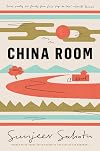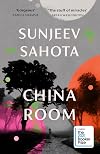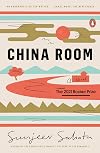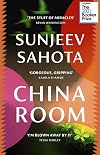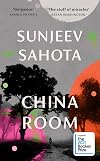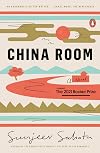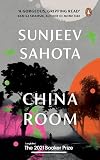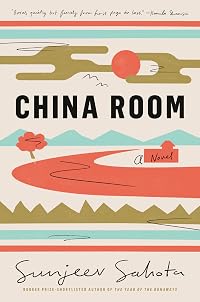
China Room
by Sunjeev Sahota
On This Page
Description
"A transfixing novel about two unforgettable characters seeking to free themselves-one from the expectations of women in early 20th century Punjab, and the other from the weight of life in the contemporary Indian diaspora Mehar, a young bride in rural 1929 Punjab, is trying to discover the identity of her new husband. Married to three brothers in a single ceremony, she and her now-sisters spend their days hard at work in the family's "china room," sequestered from contact with the men-except show more when their domineering mother-in-law, Mai, summons them to a darkened chamber at night. Curious and strong willed, Mehar tries to piece together what Mai doesn't want her to know. From beneath her veil, she studies the sounds of the men's voices, the calluses on their fingers as she serves them tea. Soon she glimpses something that seems to confirm which of the brothers is her husband, and a series of events is set in motion that will put more than one life at risk. As the early stirrings of the Indian independence movement rise around her, Mehar must weigh her own desires against the reality-and danger-of her situation. Spiraling around Mehar's story is that of a young man who arrives at his uncle's house in Punjab in the summer of 1999, hoping to shake an addiction that has held him in its grip for more than two years. Growing up in small-town England as the son of an immigrant shopkeeper, his experiences of racism, violence, and estrangement from the culture of his birth led him to seek a dangerous form of escape. As he rides out his withdrawal at his family's ancestral home-an abandoned farmstead, its china room mysteriously locked and barred-he begins to knit himself back together, gathering strength for the journey home. Partly inspired by award-winning author Sunjeev Sahota's family history, China Room is at once a deft exploration of how systems of power circumscribe individual lives and a deeply moving portrait of the unconquerable human capacity to resist them. At once sweeping and intimate, lush and propulsive, it is a stunning achievement from a contemporary master"-- show lessTags
Recommendations



































Member Reviews
Sunjeev Sahota's 2021 Booker-longlisted China Room begins in the rural Punjab with a harrowing portrait of three very young Indian women confined in a tiny, dark living space called the 'china room', so called because of a Mai's dowry collection of willow-patterned china on the shelves in this room where the women are commanded to do all the domestic work for the family. A small, even darker screened off area is where the three men to whom they have been married obey their mother Mai's commands: to make their way on separate nights, to consummate their marriages and sire a son to work the family farm.
It is 1929, and the women, Mehar aged 15, Harbans and Gurleen (the oldest), had never seen the men to whom they were married on the same show more day. They are always veiled so that they cannot see or be seen, and must never raise their eyes above their own feet when they go into the main house to serve meals, or when they complete farm duties outside. The brothers Jeet, (the oldest), Mohan, and Suraj (the youngest and least compliant) have never seen their wives' faces, although they do know their names and which is which.
If this sounds too bizarre to be true, it's based on the story of the author's own great-grandmother.
But even in 1929 and even under these conditions which are more like slavery at Mai's command than what we understand marriage to be, these three young women have spirit. They have never met before, but they learn to work together as a team to avoid Mai's brutal wrath, and they talk amongst themselves when they have opportunities away from eavesdroppers. Their story is disturbing, absorbing, and surprisingly eventful.
To read the rest of my review please visit https://anzlitlovers.com/2025/10/07/china-room-2021-by-sunjeev-sahota/ show less
It is 1929, and the women, Mehar aged 15, Harbans and Gurleen (the oldest), had never seen the men to whom they were married on the same show more day. They are always veiled so that they cannot see or be seen, and must never raise their eyes above their own feet when they go into the main house to serve meals, or when they complete farm duties outside. The brothers Jeet, (the oldest), Mohan, and Suraj (the youngest and least compliant) have never seen their wives' faces, although they do know their names and which is which.
On the wedding day itself no one in the family knew for sure who she'd ended up with. Mehar was shrouded from head to foot in her heavy red gown and gold drapes, her hands and even her feet wrapped in chenille, the material folded back and bound with gold threads around her ankles and wrists. She couldn't walk, talk or hear, and neither was she expected to, so Monty [Mehar's 17 year-old adopted brother] carried her across his arms, from the cart, up the steps, through the half-full temple and seated her beside the man waiting near the front of the hall. The groom wore his sehra, his curtain of white marigolds braided with crimson blooms, clipped to his turban and hanging down over his face. Monty tried to see if it was the same man who'd come to the house, and perhaps he managed to. Who knows? Even if he had succeeded, there was no way of delivering news to Mehar. Having carried her to the groom, he found no other opportunity to speak to her that day: once the ceremony was over she followed her husband into the cart, the driver kicked the horses into action, and Monty, determined not to cry, never saw his sister again. (p.39)
If this sounds too bizarre to be true, it's based on the story of the author's own great-grandmother.
But even in 1929 and even under these conditions which are more like slavery at Mai's command than what we understand marriage to be, these three young women have spirit. They have never met before, but they learn to work together as a team to avoid Mai's brutal wrath, and they talk amongst themselves when they have opportunities away from eavesdroppers. Their story is disturbing, absorbing, and surprisingly eventful.
To read the rest of my review please visit https://anzlitlovers.com/2025/10/07/china-room-2021-by-sunjeev-sahota/ show less
Dual timeline story set in rural Punjab. The modern story involves a young man’s struggle with heroin addiction. He travels from England to India to live on his uncle’s farm while he goes through withdrawal. While there, he develops a fondness for a female doctor and learns more about a family secret involving his great grandmother. Many years later, he writes this story.
The historic timeline is set in Punjab in 1929. Mehar (whom we later find out is the young man’s great grandmother) is one of three young women, in their teens, married to three brothers. They are housed in the China Room (named for the dishes), apart from the family’s central residence. Each woman does not know which brother is her husband. They are controlled show more by a domineering mother-in-law, and are expected to be fully veiled, silent, and dutiful. Mehar is a bit of a rebel. She assumes one brother is her husband and eventually finds herself in trouble. This storyline is based on the author’s own family history.
I quickly became engrossed in the timeline that features the three sisters. From the start, we know something bad will happen to Mehar, so the atmosphere is tense, almost suffocating. I feel like the modern story is not quite as well developed, though there are a few parallels. Each story features a person in seclusion, a love story, and youthful mistakes. Each contains a political element – in the older story, the Free India movement gains momentum and in the modern story, immigrants are blamed for economic issues in the UK.
The writing is evocative. I could picture the scenes in India in my mind, though I have never been there. It portrays how family trauma in one generation can impact future generations. It is particularly effective in conveying the way the human spirit attempts to break free of internally or externally imposed imprisonment. show less
The historic timeline is set in Punjab in 1929. Mehar (whom we later find out is the young man’s great grandmother) is one of three young women, in their teens, married to three brothers. They are housed in the China Room (named for the dishes), apart from the family’s central residence. Each woman does not know which brother is her husband. They are controlled show more by a domineering mother-in-law, and are expected to be fully veiled, silent, and dutiful. Mehar is a bit of a rebel. She assumes one brother is her husband and eventually finds herself in trouble. This storyline is based on the author’s own family history.
I quickly became engrossed in the timeline that features the three sisters. From the start, we know something bad will happen to Mehar, so the atmosphere is tense, almost suffocating. I feel like the modern story is not quite as well developed, though there are a few parallels. Each story features a person in seclusion, a love story, and youthful mistakes. Each contains a political element – in the older story, the Free India movement gains momentum and in the modern story, immigrants are blamed for economic issues in the UK.
The writing is evocative. I could picture the scenes in India in my mind, though I have never been there. It portrays how family trauma in one generation can impact future generations. It is particularly effective in conveying the way the human spirit attempts to break free of internally or externally imposed imprisonment. show less
This is another book that takes place in two eras--but for reasons that make it a little less annoying than usual. The novel opens in 1929 in a small Indian town. Three teenage girls, Mehar, Gurleen and Harbans, have been sent to marry three brothers, sight unseen. They spend their days working on the farm, mainly in what is called the China Room, a tiny kitchen with blue and white dishes lined up on the shelves. Their mother-in-law Mai rules the roost and keeps them in line. When a husband wants to sleep with his wife, he makes a request to Mai, and the bride is sent to a dark room to wait. The girls watch the men through the window slats during the daytime, each wondering which of the three is their husband. Mehar, the youngest at 15, show more believes that the youngest son, Suraj is her husband, and it takes little time for the two to fall passionately in love.
Fast forward to 2019, and we see a man looking back on a pivotal episode in his past. Twenty years earlier, he had become addicted to heroin. His parents, immigrants from India, had settled into an industrial town in the north of England, where racism was still rampant. He and his family struggled to get by and were faced with constant discrimination, bullying, and even physical attacks. The pressure was just too much, and he finally succumbed to the drug dealers who had been approaching him for years. The summer before he was to enter university, his parents decide to send him to live with his uncle in India for withdrawal and recovery. Unfortunately, the uncle and his family aren't told the real reason he has arrived. At first, they are distressed to find out that he is "sick" and call in the local doctor, who diagnoses him with dengue fever, but it soon becomes apparent that something else is going on. He is constantly drunk, and after a young child suffers serious neglect in his care, he is sent to live on the long-abandoned family farm. All he knows of the farm's history is that his grandmother, Mehar, had spent most of her life locked into the china room. He has seen only one photograph of her, taken on a visit to England: a white-haired old woman holding a squalling baby that is himself.
The novel alternates between Mehar's story and that of her grandson's quest to learn more about his family history during his recovery period. Sahota creates a detailed vision of life in rural India in 1929. It's a country still tied to tradition while on the verge of religious civil war and revolution against English colonialist rule. While I was somewhat less interested in the young man's story (which is loosely based on events in the author's family), the external reason for the trip to India made it more acceptable than the usual two-era framework in which a modern day person--often a scholar, sometimes a descendant--goes on a quest sparked by the discovery of a letter, diary, or other "mysterious" artifact. The writing is quite fine and the story overall kept me captivated. It's not surprising that [China Room] was longlisted for the Man Booker Prize. I will be looking for more works by this author. show less
Fast forward to 2019, and we see a man looking back on a pivotal episode in his past. Twenty years earlier, he had become addicted to heroin. His parents, immigrants from India, had settled into an industrial town in the north of England, where racism was still rampant. He and his family struggled to get by and were faced with constant discrimination, bullying, and even physical attacks. The pressure was just too much, and he finally succumbed to the drug dealers who had been approaching him for years. The summer before he was to enter university, his parents decide to send him to live with his uncle in India for withdrawal and recovery. Unfortunately, the uncle and his family aren't told the real reason he has arrived. At first, they are distressed to find out that he is "sick" and call in the local doctor, who diagnoses him with dengue fever, but it soon becomes apparent that something else is going on. He is constantly drunk, and after a young child suffers serious neglect in his care, he is sent to live on the long-abandoned family farm. All he knows of the farm's history is that his grandmother, Mehar, had spent most of her life locked into the china room. He has seen only one photograph of her, taken on a visit to England: a white-haired old woman holding a squalling baby that is himself.
The novel alternates between Mehar's story and that of her grandson's quest to learn more about his family history during his recovery period. Sahota creates a detailed vision of life in rural India in 1929. It's a country still tied to tradition while on the verge of religious civil war and revolution against English colonialist rule. While I was somewhat less interested in the young man's story (which is loosely based on events in the author's family), the external reason for the trip to India made it more acceptable than the usual two-era framework in which a modern day person--often a scholar, sometimes a descendant--goes on a quest sparked by the discovery of a letter, diary, or other "mysterious" artifact. The writing is quite fine and the story overall kept me captivated. It's not surprising that [China Room] was longlisted for the Man Booker Prize. I will be looking for more works by this author. show less
In the summer of 1929, a 15 years old girl is married in the Punjab. 70 years later her 18 years great-grandson ends up in the same house, trying to kick out his addiction. Between the two summers, the world changes and yet, there seem to be enough lines that can be drawn between the two teenagers. Sahota does not reveal the relationship immediately, not completely - but the hints are there and it is spelled out early enough. It is not really needed in order for the novel to work - if anything I think it was one of the things that weakens it - but I will get back to it in a bit.
Mehar grew up in a small village in the Punjab and as was the tradition, she is promised/engaged when she was 5. Her new family gives her 10 more years at home show more but when she is 15, the wedding finally happens. Except that she has no idea who she married - there are 3 brothers, there are 3 weddings and noone knows who was married to whom. The 3 women live separately, they are always veiled around the brothers and the only time they meet them as husbands is in a dark room, when they are sent to wait for their husbands - because they need sons. Outside of this room, the 3 girls are interchangeable - they are there to serve their mother-in-law and the three brothers and to give birth to the next generation. And none of them finds that unusual.
Mehar really wants to know who her husband is - so she spends a lot of time trying to guess it. And while doing that she falls in love with one of the brothers.
That story of a bygone era is combined with the narration of a never named man - the great grandson of Mehar who tells us the story of his summer 20 years earlier - the hot summer of 1999 which he spent in the Punjab and in the house of his own family, learning a lot of that 1929 story. He was an addict and was sent to India to be kept away from everything. He finds the past, finds love and then goes back home.
While I was reading I was wondering just how many love stories can be added to a short book like this one - and every time I thought that we saw all of them, we got more. But this is not a happy end kind of book - that's not the point and it will not fit. In a lot of ways it is not a happy book at all - the man who is ready to throw everything for love never gets a chance, the woman who loves someone nearby needs to marry someone else, the boy who falls in love gets disappointed. Love is not something that anyone cares about - family, obligations and duty are more important.
The novel should have worked but I think that in the attempt to connect the two timelines, Sahota overdid it a bit. Mehar's story and the story of her world is overshadowing the other story and the connections you are supposed to make between the two of them seem to diminish the newer story even more. There are two separate stories here, both of them could have worked on their own but bungling them together somehow ended up less than the two of them separately.
I wish Sahota had spent more time in the 1929 - we see the world changing there through the eyes of Mehar and the men who love her but it is just a glimpse. That is normal - the small village is not a place where things happen and it takes awhile for things to trickle from the big cities. And yet, had it been any other year, Mehar's story may have been different. At the same time, the newer story is almost perfect in its depiction of its own past - as the narrator is talking from 2019, he goes back not just to his 18 years old self in the Punjab but back to his childhood - the story of a brown boy in a town in England where there was no Indian diaspora. You almost can see why he rebelled and ended up addicted - and it is a story that we all had seen in the papers way too often. Sahota's style is somewhat sparse and it works beautifully - he does not need to explain the feelings of the boy who is not allowed into a birthday celebration because of who he was but is still given some cake or the parents who try to make their life in a new place; neither he needs a lot of words to explain the unhappy marriage of the uncle in the Punjab.
It is a fascinating novel - the depiction of 1929 Punjab is not something I often see in novels. The dust jacket of the novel says that the novel was partially based on the author's family story. One wonders how much of what we saw really happened and where reality and imagination crossed. It has its problems but it is still worth a read. show less
Mehar grew up in a small village in the Punjab and as was the tradition, she is promised/engaged when she was 5. Her new family gives her 10 more years at home show more but when she is 15, the wedding finally happens. Except that she has no idea who she married - there are 3 brothers, there are 3 weddings and noone knows who was married to whom. The 3 women live separately, they are always veiled around the brothers and the only time they meet them as husbands is in a dark room, when they are sent to wait for their husbands - because they need sons. Outside of this room, the 3 girls are interchangeable - they are there to serve their mother-in-law and the three brothers and to give birth to the next generation. And none of them finds that unusual.
Mehar really wants to know who her husband is - so she spends a lot of time trying to guess it. And while doing that she falls in love with one of the brothers.
That story of a bygone era is combined with the narration of a never named man - the great grandson of Mehar who tells us the story of his summer 20 years earlier - the hot summer of 1999 which he spent in the Punjab and in the house of his own family, learning a lot of that 1929 story. He was an addict and was sent to India to be kept away from everything. He finds the past, finds love and then goes back home.
While I was reading I was wondering just how many love stories can be added to a short book like this one - and every time I thought that we saw all of them, we got more. But this is not a happy end kind of book - that's not the point and it will not fit. In a lot of ways it is not a happy book at all - the man who is ready to throw everything for love never gets a chance, the woman who loves someone nearby needs to marry someone else, the boy who falls in love gets disappointed. Love is not something that anyone cares about - family, obligations and duty are more important.
The novel should have worked but I think that in the attempt to connect the two timelines, Sahota overdid it a bit. Mehar's story and the story of her world is overshadowing the other story and the connections you are supposed to make between the two of them seem to diminish the newer story even more. There are two separate stories here, both of them could have worked on their own but bungling them together somehow ended up less than the two of them separately.
I wish Sahota had spent more time in the 1929 - we see the world changing there through the eyes of Mehar and the men who love her but it is just a glimpse. That is normal - the small village is not a place where things happen and it takes awhile for things to trickle from the big cities. And yet, had it been any other year, Mehar's story may have been different. At the same time, the newer story is almost perfect in its depiction of its own past - as the narrator is talking from 2019, he goes back not just to his 18 years old self in the Punjab but back to his childhood - the story of a brown boy in a town in England where there was no Indian diaspora. You almost can see why he rebelled and ended up addicted - and it is a story that we all had seen in the papers way too often. Sahota's style is somewhat sparse and it works beautifully - he does not need to explain the feelings of the boy who is not allowed into a birthday celebration because of who he was but is still given some cake or the parents who try to make their life in a new place; neither he needs a lot of words to explain the unhappy marriage of the uncle in the Punjab.
It is a fascinating novel - the depiction of 1929 Punjab is not something I often see in novels. The dust jacket of the novel says that the novel was partially based on the author's family story. One wonders how much of what we saw really happened and where reality and imagination crossed. It has its problems but it is still worth a read. show less
An enjoyable, accessible, and relatively brief work of literary fiction set in the Punjab that concerns itself with marriage, sexual passion and possessiveness, sibling relationships. rivalry, and the historically constricted lives of women. As engaging as it is, the novel feels rather thin and soap-opera-ish, requiring considerable suspension of disbelief.
One of the two stories, set in the late ‘90s has a young British man of South Asian descent visiting his uncle and aunt in the Punjab, apparently to sweat out his heroin addiction. Well aware of his aunt’s displeasure at having him there, he asks his uncle if he can stay on the abandoned ancestral farm, which he partially renovates with friends he makes in the village. The other show more story concerns his great-grandmother, Mehar, who as a young wife in 1930, lived on the farm with two other young women, their nasty, domineering mother-in-law, and her three sons. The girls don’t know which of the three brothers each is married to, as the husbands visit their wives on separate nights in total darkness in a room set aside to accommodate the “procreative aspect” of marriage. Heirs and future labourers will be needed. It is the young wives responsibility to produce them, and enjoyment of the duty isn’t part of the deal apparently. On nights when none of the girls is engaged, they all sleep together in a storeroom, the china room of the novel’s title. During the day, the wives are labourers and interact little with the men. The reader is required to accept that Mehar mistakes the youngest brother for her husband.She subsequently meets him regularly during the day and the two make a plan to escape the farm. I accepted this Shakespearean device of mistaken identity, but did I believe a woman, even a young one, could be so oblivious about the body of her husband? Frankly, no.
Re: the 1990s narrative—I also didn’t fully buy that parents would send a teenage heroin addict in the immediate throes of opioid withdrawal to another continent to stay with relatives he’d not seen in years, one of whom was extremely embittered and angered by the young mans’s presence.
Thanks to Net Galley and the publisher. I enjoyed the book, but I don’t think it merits an award. show less
One of the two stories, set in the late ‘90s has a young British man of South Asian descent visiting his uncle and aunt in the Punjab, apparently to sweat out his heroin addiction. Well aware of his aunt’s displeasure at having him there, he asks his uncle if he can stay on the abandoned ancestral farm, which he partially renovates with friends he makes in the village. The other show more story concerns his great-grandmother, Mehar, who as a young wife in 1930, lived on the farm with two other young women, their nasty, domineering mother-in-law, and her three sons. The girls don’t know which of the three brothers each is married to, as the husbands visit their wives on separate nights in total darkness in a room set aside to accommodate the “procreative aspect” of marriage. Heirs and future labourers will be needed. It is the young wives responsibility to produce them, and enjoyment of the duty isn’t part of the deal apparently. On nights when none of the girls is engaged, they all sleep together in a storeroom, the china room of the novel’s title. During the day, the wives are labourers and interact little with the men. The reader is required to accept that Mehar mistakes the youngest brother for her husband.
Re: the 1990s narrative—I also didn’t fully buy that parents would send a teenage heroin addict in the immediate throes of opioid withdrawal to another continent to stay with relatives he’d not seen in years, one of whom was extremely embittered and angered by the young mans’s presence.
Thanks to Net Galley and the publisher. I enjoyed the book, but I don’t think it merits an award. show less
Liked the writing. Two stories, lightly interwoven, about a woman in India and her college-aged great-grandson who leaves England to live in her village for a while. She’s already dead, they never meet. I didn’t understand some, and other parts I figured out slowly, but really liked the stories and the people.
This book has its heart in the right place, and there is a great novel in there somewhere. Unfortunately, all the blueprints are too clearly visible - plot devices a, b, and c are put in just so, and "here the reader is to feel emotion x, and here emotion z". There was a sense of incompleteness, as if I was reading a rough draft that would go back to the author for further shaping and moulding. I did like the way Sunjeev Sahota writes. There were beautiful moments in this book - there just wasn't enough of them.
Members
- Recently Added By
Lists

Anticipated 2021 Reads
231 works; 7 members

Favourite Booker Prize contenders
73 works; 21 members

Fiction: Asia
85 works; 2 members
Talk Discussions
Past Discussions
2021 Booker Prize Longlist: China Room by Sunjeev Sahota in Booker Prize (August 2021)
Author Information

5 Works 1,293 Members
Sunjeev Sahota was born in Derbyshire, England in 1981. His novels include Ours Are the Streets and The Year of the Runaways, which was shortlisted for the 2015 Man Booker Prize. (Bowker Author Biography)
Some Editions
Awards and Honors
Common Knowledge
- Canonical title
- China Room
- Original publication date
- 2021
- Important places
- India
Classifications
Statistics
- Members
- 371
- Popularity
- 84,638
- Reviews
- 23
- Rating
- (3.62)
- Languages
- English, German
- Media
- Paper, Audiobook, Ebook
- ISBNs
- 18
- ASINs
- 5