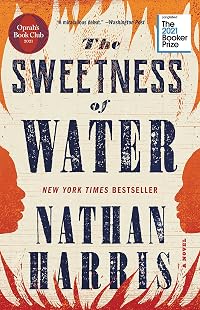
The Sweetness of Water
by Nathan Harris
On This Page
Description
"In the waning days of the Civil War, brothers Prentiss and Landry, freed by the Emancipation Proclamation, seek refuge on the homestead of George Walker and his wife, Isabelle. The Walkers, wracked by the loss of their only son to the war, hire the brothers to work their farm, hoping through an unexpected friendship to stanch their grief. Prentiss and Landry, meanwhile, plan to save money for the journey north and a chance to reunite with their mother, who was sold away when they were boys. show more Parallel to their story runs a forbidden romance between two Confederate soldiers. The young men, recently returned from the war to the town of Old Ox, hold their trysts in the woods. But when their secret is discovered, the resulting chaos, including a murder, unleashes convulsive repercussions on the entire community. In the aftermath of so much turmoil, it is Isabelle who emerges as an unlikely leader, proffering a healing vision for the land and for the newly free citizens of Old Ox"-- show lessTags
Recommendations










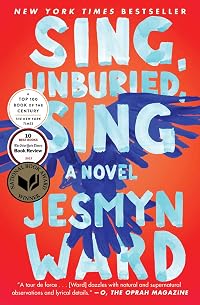

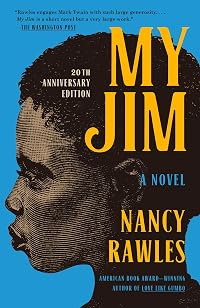

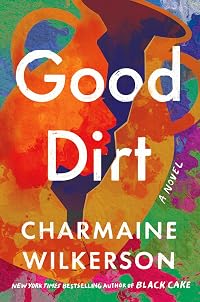
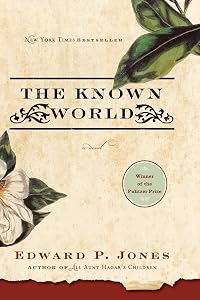


Member Recommendations
Member Reviews
The war is over and the men have started to return. In a rural Georgia community, that means occupation of a sort, and previously enslaved people camping out where they can. For George, a solitary-minded man who lives peacefully with his wife and who prefers to live off of the sale of lands accumulated by his father, rather than work or own human beings, this means an incomprehensible loss. His son's best friend has carried the news of his death home to George and, unable to face his wife with the news, George heads out into the wilds of his unfarmed property. Which is where he meets two men, who have left the plantation next door and who intend to go north, but not yet. Which causes George to ask,
"...I just wonder why, really. You show more could go anywhere."
"We plan to. It's just nice."
"What's that?"
Prentiss looked at George as if the answer was right before him.
"To be left alone for a time."
And, in this way, two unlikely pairs form a tenuous connection. George, in his grief, decides to take up work for the first time, planting peanuts. He hires Prentiss and Landry to work with him, paying them what he would pay any man for his labor and by living in the barn, Prentiss and Landry save up money to start life up north. George's wife, Isabelle, is unable to forgive him for taking so long to share the news of his son's death, but as things in the nearby town change with the tumultuous times, and even the dead return, she finds her own courage to push back against the traditions she's lived with all her life.
I really liked this book. The time and place were well described and the characters felt real to that earlier time and to where they lived. The upheaval of the end of the Civil War is well-described along with the plantation owners desperate attempts to hold on to the power they once held, sometimes with the help of the occupying forces now there to keep the peace and allow the newly-freed to remain free. Harris looks at what freedom might have felt like to someone who has been enslaved their entire life and the sense of dislocation and uncertainty. George remains the center of the book; a man who has avoided work and involvement in the world beyond his own acres, but who discovers a capacity for change with the changes in the world around him. A surprising book in many ways and I look forward to the author's next book. show less
"...I just wonder why, really. You show more could go anywhere."
"We plan to. It's just nice."
"What's that?"
Prentiss looked at George as if the answer was right before him.
"To be left alone for a time."
And, in this way, two unlikely pairs form a tenuous connection. George, in his grief, decides to take up work for the first time, planting peanuts. He hires Prentiss and Landry to work with him, paying them what he would pay any man for his labor and by living in the barn, Prentiss and Landry save up money to start life up north. George's wife, Isabelle, is unable to forgive him for taking so long to share the news of his son's death, but as things in the nearby town change with the tumultuous times, and even the dead return, she finds her own courage to push back against the traditions she's lived with all her life.
I really liked this book. The time and place were well described and the characters felt real to that earlier time and to where they lived. The upheaval of the end of the Civil War is well-described along with the plantation owners desperate attempts to hold on to the power they once held, sometimes with the help of the occupying forces now there to keep the peace and allow the newly-freed to remain free. Harris looks at what freedom might have felt like to someone who has been enslaved their entire life and the sense of dislocation and uncertainty. George remains the center of the book; a man who has avoided work and involvement in the world beyond his own acres, but who discovers a capacity for change with the changes in the world around him. A surprising book in many ways and I look forward to the author's next book. show less
“Perhaps that was the great ill of the world, that those prone to evil were left untouched by guilt to a degree so vast that they might sleep through a storm, while better men, conscience-stained men, lay awake as though that very storm persisted unyieldingly in the furthest reaches of their soul.”
Beautifully written debut set just after the American Civil War in Old Ox, Georgia. Reconstruction has just begun. It is a time of massive social change. Former slaves and brothers, Prentiss and Landry, are living in the woods on homesteader George Walker’s property. George and his wife, Isabelle, have been told their son was killed in the war. George is not all that interested in farming but hires the brothers to help him plant a crop show more of peanuts, which provides solace to all three through the routines inherent in working together side-by-side. By treating former slaves well, he becomes a pariah in the eyes of the town.
The first half of this book is exceptional. The characters are deeply drawn. The writing is superb. I found it easy to become engrossed in the story. I particularly enjoyed the way the characters challenge the status quo. This, of course, creates conflict, especially in the American South, where the old guard does not wish to change. In fact, they are just waiting for the Yankee troops to leave so they can go back to their old ways.
The second half drifts into a more plot-driven narrative, where a murder occurs, and a racist sheriff gets involved in the pursuit of innocent men. In this section, several standard tropes appear. Even so, I very much enjoyed this book. It is so refreshing to find a book set in this period that celebrates friendship and compassion. Harris does not ignore the horrors of the era, but he offers a tiny ray of hope, which perhaps we can all use these days.
4.5 show less
Beautifully written debut set just after the American Civil War in Old Ox, Georgia. Reconstruction has just begun. It is a time of massive social change. Former slaves and brothers, Prentiss and Landry, are living in the woods on homesteader George Walker’s property. George and his wife, Isabelle, have been told their son was killed in the war. George is not all that interested in farming but hires the brothers to help him plant a crop show more of peanuts, which provides solace to all three through the routines inherent in working together side-by-side. By treating former slaves well, he becomes a pariah in the eyes of the town.
The first half of this book is exceptional. The characters are deeply drawn. The writing is superb. I found it easy to become engrossed in the story. I particularly enjoyed the way the characters challenge the status quo. This, of course, creates conflict, especially in the American South, where the old guard does not wish to change. In fact, they are just waiting for the Yankee troops to leave so they can go back to their old ways.
The second half drifts into a more plot-driven narrative, where a murder occurs, and a racist sheriff gets involved in the pursuit of innocent men. In this section, several standard tropes appear. Even so, I very much enjoyed this book. It is so refreshing to find a book set in this period that celebrates friendship and compassion. Harris does not ignore the horrors of the era, but he offers a tiny ray of hope, which perhaps we can all use these days.
4.5 show less
Book on CD performed by William DeMerritt
In his debut work, Harris explores rural Georgia shortly after the end of the Civil War, when slaves had been emancipated and Union soldiers moved in to enforce the terms of surrender and “reconstruct” the South. Prentiss and Landry are freedmen, brothers released from the only home they’ve ever known. On leaving the plantation where they were born and raised, they find refuge with the neighboring landowner, George Walker. George and his wife, Isabelle could use the help of two able-bodied men. So, they agree to hire the brothers, and allow them to live in the barn.
This is a marvelous debut. Full of complex characters and gripping scenes that move the plot forward. Harris explores moral show more dilemmas and the difficulties of trying to do the right thing against a post-war upheaval and tension. He gives us characters with strong principles who can be blind to their flaws, some of whom overcome and some who give in to those weaknesses.
If I have any complaint, it’s that the villain(s) in the piece are so obviously villainous. But that is a quibble. I loved George, Landry and Prentiss. I came to appreciate Caleb and his struggles. And Isabelle … this is one strong woman.
William DeMerritt does a fine job performing the audiobook. He has a lot of characters to handle and he gives each a unique voice. Unfortunately, two of his voices sound remarkably like real persons – one sounds like former President Bill Clinton, and another like John Wayne. This was definitely a distraction as I could not help but picture those famous persons in these roles. Harris’s writing still shone through, and I may re-read it in text format. show less
In his debut work, Harris explores rural Georgia shortly after the end of the Civil War, when slaves had been emancipated and Union soldiers moved in to enforce the terms of surrender and “reconstruct” the South. Prentiss and Landry are freedmen, brothers released from the only home they’ve ever known. On leaving the plantation where they were born and raised, they find refuge with the neighboring landowner, George Walker. George and his wife, Isabelle could use the help of two able-bodied men. So, they agree to hire the brothers, and allow them to live in the barn.
This is a marvelous debut. Full of complex characters and gripping scenes that move the plot forward. Harris explores moral show more dilemmas and the difficulties of trying to do the right thing against a post-war upheaval and tension. He gives us characters with strong principles who can be blind to their flaws, some of whom overcome and some who give in to those weaknesses.
If I have any complaint, it’s that the villain(s) in the piece are so obviously villainous. But that is a quibble. I loved George, Landry and Prentiss. I came to appreciate Caleb and his struggles. And Isabelle … this is one strong woman.
William DeMerritt does a fine job performing the audiobook. He has a lot of characters to handle and he gives each a unique voice. Unfortunately, two of his voices sound remarkably like real persons – one sounds like former President Bill Clinton, and another like John Wayne. This was definitely a distraction as I could not help but picture those famous persons in these roles. Harris’s writing still shone through, and I may re-read it in text format. show less
The Sweetness of Water, Nathan Harris, author; narrator William DeMeritt
This is such a powerfully written book that the reader is immediately intellectually and emotionally captivated by the author’s prose. The history is accurate, the characters are authentically presented and their lives so carefully depicted that most soon endear themselves to the reader, many even with their idiosyncrasies. Those that are evil are marked from the beginning.
George and Isabel Walker march to the beat of their own drummer. They often speak their minds to the consternation of other townspeople. Their son Caleb follows his best friend into the army to fight for the South in the Civil War. Caleb does not behave well on the field of war, while August is show more thrilled by the prospect of violence. August and Caleb have had a secret relationship that is ongoing when the novel begins. August’s dad is the most influential and powerful man in town, and he has made arrangements to ensure that neither his son nor Caleb will see violence. However, in the fog of war, all things are not predictable, and when danger descends upon the boys, Caleb acts poorly. When the South is defeated and August returns home, he tells George that Caleb is dead. When pressed, he tells him he was a coward who had run from the battle and from August whom he had sworn to stand by and protect.
George likes to wander alone in the forest, searching for a beast that he believes he saw as a child. On one of these excursions, he discovers two freedmen, two brothers, Landry and Prentiss. He asks for their help to get him home. He was tired and unable to find his way. As time passes, they help him to plant a peanut farm on his property. He pays them a fair wage, like any other man, and the townspeople are so furious, they turn on George. Isabel also treats the brothers well and when confronted by the womenfolk she socializes with, she alienates them with her defiance. Isabel and George are rarely demonstrative; however, she is fiercely loyal to George even when his ways are contrary to customary behavior. The town soon turns against both of them.
The brothers are former slaves of a neighbor, and that neighbor wants them back. He pays the freedmen a pittance for the privilege of working for him, while George pays a fair wage, the same as any other man would earn. The brothers are now free. They do not want to return to Mr. Morton or his Majesty’s Palace, the place with the beautiful fountain responsible for a grievous injury to Landry, that disfigured his face.
When Caleb, returns home, not dead after all, he too bears the scars of battle on his face. With few other options, he begins to work the fields with his father and the brothers. He believes that this is another of his father’s harebrained schemes, doomed to fail. When he hears of his friend August’s impending marriage, he is devastated. They still meet clandestinely, believing they are safe from prying eyes, but it is in an area that Landry has discovered and loves. He adores water and swims in the pond there. During their lovemaking, August realizes that Landry has witnessed their forbidden behavior. If he tells, they will be shamed. He would be ruined. What follows from this accidental moment of truth is disastrous. One thing leads to another as secret, selfish deals are made with the result that someone is murdered, Prentiss is wrongfully arrested and Caleb finds his backbone. An escape, further violence and a fire bring about the conclusion of the book.
Isabel is strong and soldiers on even after death and destruction face her. She is determined to fulfill the legacy she knows George desired; she will serve the cause of justice and right many wrongs. When the book ends, it feels like there is the possibility of a sequel. There are many unanswered questions. Will Isabel ever see her son again. Will George’s confidant mistress, Clementine, meet up with Prentiss again? Will Caleb find August again? What will happen if he does, disaster or capitulation? Like George, will Caleb and Prentiss conquer their demons? They are both haunted by their dreams and nightmares. I have simplified what is an amazingly well written commentary of the times so as not to give away pertinent parts of the novel. It deals with racism, homophobia, murder, relationships, loyalty, friendship, devotion, justice and its counterpart, injustice, strength and courage, among many other important human circumstances and dilemmas.
Women and freedmen are the more noble characters in this book, with the powerful men abusing their positions and making foolish, dangerous decisions. The book is recommended by both Obama and Oprah. I usually do not read those books since they generally have a political purpose and are used as propaganda. This book is different. It is a well written commentary on the period at the end of the Civil War exposing the bitterness, the hope, and the despair of the times for the newly freed and the newly vanquished. Those no longer in power flout the newly written laws. Those who won, also flout ethics and decency, using the need to achieve their goals as an excuse for breaking the rules they are mandated to uphold. Is that not the way it still is today? Will the brotherly relationship between Caleb and Prentiss, white and black brethren, be allowed to stand, or will the powerful continue to corrupt the justice system as we move into the future? Conditions today can provide those answers. Do we simply transfer power or equalize it?
This author has genuinely captured the emotions and thoughts of the characters as they deal with the consequences of the end of the Civil War. It will be hard to read it without taking a break and a breath because the hopelessness of some, coupled with the evil of others, bears witness to how hard it is for those who believe in freedom and justice to succeed.
The freedmen lack the tools to succeed, they are meek and obedient, still fearful, but overwhelmingly grateful for the breadcrumbs they are receiving instead of the loaf they deserve. All they want is hope and the possibility of fulfilling their own dreams, just like ordinary people. There will be times you will want to throw the book against a wall in protest against the abuse and injustice, but you will be compelled to read on. The righteous are punished for their idealism, often unrealistically, while the racists are rewarded by those with the power, to continue the unjust practices of years gone by. Foolish pranks, vengeance, arrogance, obstinacy, misunderstandings, shame, humiliation and hate create havoc for everyone.
The narrator used just the right amount of stress and emotion, but often gave the same voice and accent to a particular group of Confederacy supporters. Although Obama is credited with urging us to promote our better angels, an idea taken from Lincoln’s speech in which he says “The mystic chords of memory will swell when touched, as surely they will be, by the better angels of our nature.”, he has been largely responsible for dividing us. Less emphasis on identity politics and more on unity would better serve an angel's purpose. In addition, the effort to frame our history in a better way, does a disservice to actual history. Accuracy and truth should be first and foremost, not a political agenda. show less
This is such a powerfully written book that the reader is immediately intellectually and emotionally captivated by the author’s prose. The history is accurate, the characters are authentically presented and their lives so carefully depicted that most soon endear themselves to the reader, many even with their idiosyncrasies. Those that are evil are marked from the beginning.
George and Isabel Walker march to the beat of their own drummer. They often speak their minds to the consternation of other townspeople. Their son Caleb follows his best friend into the army to fight for the South in the Civil War. Caleb does not behave well on the field of war, while August is show more thrilled by the prospect of violence. August and Caleb have had a secret relationship that is ongoing when the novel begins. August’s dad is the most influential and powerful man in town, and he has made arrangements to ensure that neither his son nor Caleb will see violence. However, in the fog of war, all things are not predictable, and when danger descends upon the boys, Caleb acts poorly. When the South is defeated and August returns home, he tells George that Caleb is dead. When pressed, he tells him he was a coward who had run from the battle and from August whom he had sworn to stand by and protect.
George likes to wander alone in the forest, searching for a beast that he believes he saw as a child. On one of these excursions, he discovers two freedmen, two brothers, Landry and Prentiss. He asks for their help to get him home. He was tired and unable to find his way. As time passes, they help him to plant a peanut farm on his property. He pays them a fair wage, like any other man, and the townspeople are so furious, they turn on George. Isabel also treats the brothers well and when confronted by the womenfolk she socializes with, she alienates them with her defiance. Isabel and George are rarely demonstrative; however, she is fiercely loyal to George even when his ways are contrary to customary behavior. The town soon turns against both of them.
The brothers are former slaves of a neighbor, and that neighbor wants them back. He pays the freedmen a pittance for the privilege of working for him, while George pays a fair wage, the same as any other man would earn. The brothers are now free. They do not want to return to Mr. Morton or his Majesty’s Palace, the place with the beautiful fountain responsible for a grievous injury to Landry, that disfigured his face.
When Caleb, returns home, not dead after all, he too bears the scars of battle on his face. With few other options, he begins to work the fields with his father and the brothers. He believes that this is another of his father’s harebrained schemes, doomed to fail. When he hears of his friend August’s impending marriage, he is devastated. They still meet clandestinely, believing they are safe from prying eyes, but it is in an area that Landry has discovered and loves. He adores water and swims in the pond there. During their lovemaking, August realizes that Landry has witnessed their forbidden behavior. If he tells, they will be shamed. He would be ruined. What follows from this accidental moment of truth is disastrous. One thing leads to another as secret, selfish deals are made with the result that someone is murdered, Prentiss is wrongfully arrested and Caleb finds his backbone. An escape, further violence and a fire bring about the conclusion of the book.
Isabel is strong and soldiers on even after death and destruction face her. She is determined to fulfill the legacy she knows George desired; she will serve the cause of justice and right many wrongs. When the book ends, it feels like there is the possibility of a sequel. There are many unanswered questions. Will Isabel ever see her son again. Will George’s confidant mistress, Clementine, meet up with Prentiss again? Will Caleb find August again? What will happen if he does, disaster or capitulation? Like George, will Caleb and Prentiss conquer their demons? They are both haunted by their dreams and nightmares. I have simplified what is an amazingly well written commentary of the times so as not to give away pertinent parts of the novel. It deals with racism, homophobia, murder, relationships, loyalty, friendship, devotion, justice and its counterpart, injustice, strength and courage, among many other important human circumstances and dilemmas.
Women and freedmen are the more noble characters in this book, with the powerful men abusing their positions and making foolish, dangerous decisions. The book is recommended by both Obama and Oprah. I usually do not read those books since they generally have a political purpose and are used as propaganda. This book is different. It is a well written commentary on the period at the end of the Civil War exposing the bitterness, the hope, and the despair of the times for the newly freed and the newly vanquished. Those no longer in power flout the newly written laws. Those who won, also flout ethics and decency, using the need to achieve their goals as an excuse for breaking the rules they are mandated to uphold. Is that not the way it still is today? Will the brotherly relationship between Caleb and Prentiss, white and black brethren, be allowed to stand, or will the powerful continue to corrupt the justice system as we move into the future? Conditions today can provide those answers. Do we simply transfer power or equalize it?
This author has genuinely captured the emotions and thoughts of the characters as they deal with the consequences of the end of the Civil War. It will be hard to read it without taking a break and a breath because the hopelessness of some, coupled with the evil of others, bears witness to how hard it is for those who believe in freedom and justice to succeed.
The freedmen lack the tools to succeed, they are meek and obedient, still fearful, but overwhelmingly grateful for the breadcrumbs they are receiving instead of the loaf they deserve. All they want is hope and the possibility of fulfilling their own dreams, just like ordinary people. There will be times you will want to throw the book against a wall in protest against the abuse and injustice, but you will be compelled to read on. The righteous are punished for their idealism, often unrealistically, while the racists are rewarded by those with the power, to continue the unjust practices of years gone by. Foolish pranks, vengeance, arrogance, obstinacy, misunderstandings, shame, humiliation and hate create havoc for everyone.
The narrator used just the right amount of stress and emotion, but often gave the same voice and accent to a particular group of Confederacy supporters. Although Obama is credited with urging us to promote our better angels, an idea taken from Lincoln’s speech in which he says “The mystic chords of memory will swell when touched, as surely they will be, by the better angels of our nature.”, he has been largely responsible for dividing us. Less emphasis on identity politics and more on unity would better serve an angel's purpose. In addition, the effort to frame our history in a better way, does a disservice to actual history. Accuracy and truth should be first and foremost, not a political agenda. show less
The town of Old Ox, Georgia is reckoning with the aftermath of the American Civil War. Landowners are forced to manage without enslaved labor. Formerly enslaved people are cautiously trying to forge a new, independent life. And George Walker and his wife, Isabelle, are reeling from news that their son Caleb was killed in action. When George, who did not own slaves, comes across two brothers in the woods, he offers them shelter and paid work on his farm, a move that angers many townspeople. Prentiss and Landry become surrogates for the boy he’s lost until Caleb reappears, injured but very much alive.
The family begins rebuilding their lives, but they find themselves socially ostracized because of their employment practices. And they are show more further tested when there’s a murder, and Caleb is completely betrayed by his closest friend. These two incidents set off a cascade of consequences that push the family to their limits.
I enjoyed most of this book, particularly the character development, the exploration of racism during this period in history, and a well-crafted plot. The end fell a bit short of my expectations, as debut author Nathan Harris seemed determined to tie in a few themes that were not fully developed earlier in the novel. But for the most part, this was an interesting story, well told. show less
The family begins rebuilding their lives, but they find themselves socially ostracized because of their employment practices. And they are show more further tested when there’s a murder, and Caleb is completely betrayed by his closest friend. These two incidents set off a cascade of consequences that push the family to their limits.
I enjoyed most of this book, particularly the character development, the exploration of racism during this period in history, and a well-crafted plot. The end fell a bit short of my expectations, as debut author Nathan Harris seemed determined to tie in a few themes that were not fully developed earlier in the novel. But for the most part, this was an interesting story, well told. show less
'Yet sometimes - just sometimes - hope was enough'
Review: Book #5 for #bookstagramreadsthebooker The Sweetness of Water by Nathan Harris
The Sweetness of Water will reinforce your love for historical fiction and if you aren't in love with it already, It will surely put you on the track towards loving it.
I don't want to get into the details about the story because it isn't exactly what spoke to me, however strong it was. What spoke to me was how well written the characters were.
We are talking about a time after the civil war when slavery had recently been abolished but not everyone were out of the 'Superiority complex'. (It's funny how it's still the case)
With a forbidden romance, hardworking brothers employed by a humble and honest show more man which doesn't sit well with the society, a murder and everything that follows, the novel ensures to keep us enthralled as it is unravelled.
Have you ever seen anyone being distressed by someone's pure and calm intentions? It's funny how we live in a world where we need to preach to 'live, let live'. It's hilarious how not only will someone voluntarily choose not to extend a helping hand but also goes to great lengths to make sure that others don't either.
This book celebrates the good in people. It celebrates the strength that comes with pure intentions and the power that reverberates with kindness.
Now, I am not sure if it's the situations I am surrounded by at the moment that made me focus on this aspect more or it is what I would have connected with irrespective of the situations. Whatever the reason, I am glad to picked this book up and celebrated the 'Good' as I read it.
This is a brilliant debut novel by Nathan Harris. I cannot wait to read more from him. This is definitely a contender for the shortlist. show less
Review: Book #5 for #bookstagramreadsthebooker The Sweetness of Water by Nathan Harris
The Sweetness of Water will reinforce your love for historical fiction and if you aren't in love with it already, It will surely put you on the track towards loving it.
I don't want to get into the details about the story because it isn't exactly what spoke to me, however strong it was. What spoke to me was how well written the characters were.
We are talking about a time after the civil war when slavery had recently been abolished but not everyone were out of the 'Superiority complex'. (It's funny how it's still the case)
With a forbidden romance, hardworking brothers employed by a humble and honest show more man which doesn't sit well with the society, a murder and everything that follows, the novel ensures to keep us enthralled as it is unravelled.
Have you ever seen anyone being distressed by someone's pure and calm intentions? It's funny how we live in a world where we need to preach to 'live, let live'. It's hilarious how not only will someone voluntarily choose not to extend a helping hand but also goes to great lengths to make sure that others don't either.
This book celebrates the good in people. It celebrates the strength that comes with pure intentions and the power that reverberates with kindness.
Now, I am not sure if it's the situations I am surrounded by at the moment that made me focus on this aspect more or it is what I would have connected with irrespective of the situations. Whatever the reason, I am glad to picked this book up and celebrated the 'Good' as I read it.
This is a brilliant debut novel by Nathan Harris. I cannot wait to read more from him. This is definitely a contender for the shortlist. show less
I had hesitated reading this novel, passing it by. Then, I was seeing it mentioned over and over. I went back and claimed my ‘read now’ privilege, late to the party.
The writing is wonderful. It is set after the end of the Civil War, just before Federal troops arrive to reconstruct the South. Freedmen have fled the plantations and their previous owners can’t accept they no longer own them. In the town of Old Ox, sons are returning from the war, even a son who was believed to have died.
George Walker holds dear the memory of his childhood friend who was sold away to a man bent on misusing the girl. George has never amounted to much, preferring books to farming. At night, he walks the woods searching for the monster who haunted him show more since childhood.
One night, lost and exhausted, he is found by two freedmen who have been living in the woods. They help him home. He offers them a remarkable chance: help him plant a field of peanuts, and he will pay them a white man’s wages. Prentiss understands this mean the money for traveling North and a new life for him and his brother Landry, brutally deformed from when he was the scapegoat for his fellow slaves. George’s wife accepts the boys as well, forging a special bond with the silent Landry.
Unexpectedly, son Caleb comes home. He had gone to war to follow his boyhood friend and love, the son of a wealthy and powerful man. They have a secret life which is observed by Landry, resulting in tragedy. And from here, the story spirals and pulls the reader along.
The book drew me in and kept my interest. As it unfolded, I understood George’s motivation. I also felt the story was a wish fulfillment fantasy, with poetic justice dealt. And, I find myself thinking that George’s wife had the best parts and was the real hero of the story. George suffered horribly for his beliefs and acts. But it was Isabell who had the strength to fulfill his legacy. She allows herself to turn to women in town for insight and support in some of the most satisfyingly scenes.
There is violence in the book–no surprise because of its subject matter and time setting. But it is the acceptance and love and bravery that remains in my mind. The courage of people who follow their better angels.
Although Prentiss is a strong and brave character, I wish he had been given a bigger presence in the novel. Landry is short-lived in the story, his character almost more a symbol than real, but who is never forgotten by Isabell.
I can understand why this novel has garnered so much attention. It is an engrossing, emotional read. The white people are inspirational characters who risk everything for their convictions. We can trace the depicted racism to today’s headlines. I expect great things to come from this young author.
I received a free egalley from the publisher thought NetGalley. My review is fair and unbiased. show less
The writing is wonderful. It is set after the end of the Civil War, just before Federal troops arrive to reconstruct the South. Freedmen have fled the plantations and their previous owners can’t accept they no longer own them. In the town of Old Ox, sons are returning from the war, even a son who was believed to have died.
George Walker holds dear the memory of his childhood friend who was sold away to a man bent on misusing the girl. George has never amounted to much, preferring books to farming. At night, he walks the woods searching for the monster who haunted him show more since childhood.
One night, lost and exhausted, he is found by two freedmen who have been living in the woods. They help him home. He offers them a remarkable chance: help him plant a field of peanuts, and he will pay them a white man’s wages. Prentiss understands this mean the money for traveling North and a new life for him and his brother Landry, brutally deformed from when he was the scapegoat for his fellow slaves. George’s wife accepts the boys as well, forging a special bond with the silent Landry.
Unexpectedly, son Caleb comes home. He had gone to war to follow his boyhood friend and love, the son of a wealthy and powerful man. They have a secret life which is observed by Landry, resulting in tragedy. And from here, the story spirals and pulls the reader along.
The book drew me in and kept my interest. As it unfolded, I understood George’s motivation. I also felt the story was a wish fulfillment fantasy, with poetic justice dealt. And, I find myself thinking that George’s wife had the best parts and was the real hero of the story. George suffered horribly for his beliefs and acts. But it was Isabell who had the strength to fulfill his legacy. She allows herself to turn to women in town for insight and support in some of the most satisfyingly scenes.
There is violence in the book–no surprise because of its subject matter and time setting. But it is the acceptance and love and bravery that remains in my mind. The courage of people who follow their better angels.
Although Prentiss is a strong and brave character, I wish he had been given a bigger presence in the novel. Landry is short-lived in the story, his character almost more a symbol than real, but who is never forgotten by Isabell.
I can understand why this novel has garnered so much attention. It is an engrossing, emotional read. The white people are inspirational characters who risk everything for their convictions. We can trace the depicted racism to today’s headlines. I expect great things to come from this young author.
I received a free egalley from the publisher thought NetGalley. My review is fair and unbiased. show less
Members
- Recently Added By
Lists

Favourite Booker Prize contenders
73 works; 21 members
Booker Prize
491 works; 62 members

Books recommended by Barack Obama
295 works; 28 members

Top Five Books of 2022
736 works; 272 members

ALA Reading List: Historical Fiction 2021-2026
30 works; 4 members

Netgalley Reads
468 works; 3 members

Obama Reads
181 works; 3 members

Fiction: Historical
288 works; 3 members

Books Read in 2021
5,361 works; 113 members

Books With Water Words in the Title
186 works; 12 members

Top Five Books of 2023
767 works; 317 members

Barack Obama's Summer Reading List 2021
11 works; 2 members

Fiction: BLM
60 works; 1 member
Talk Discussions
Past Discussions
2021 Booker Prize Longlist: The Sweetness of Water by Nathan Harris in Booker Prize (August 2021)
Author Information

2+ Works 1,373 Members
Some Editions
Awards and Honors
Awards
Distinctions
Notable Lists
Common Knowledge
- Canonical title
- The Sweetness of Water
- Original publication date
- 2021
- People/Characters
- George Walker; Isabelle Walker; Caleb Walker; Prentiss; Landry
- Important places
- Georgia, USA
- First words
- An entire day had passed since George Walker had spoken to his wife.
- Last words
- (Click to show. Warning: May contain spoilers.)She might hope for more but had long ago learned to live with whatever came to pass. Yet sometimes-just sometimes-hope was enough.
- Blurbers
- McCracken, Elizabeth; Peña, Daniel; Weathersbee, Avis; Roy, Nilanjana; Winfrey, Oprah
- Original language
- English
Classifications
Statistics
- Members
- 1,289
- Popularity
- 18,933
- Reviews
- 40
- Rating
- (4.12)
- Languages
- 6 — English, French, German, Italian, Spanish, Swedish
- Media
- Paper, Audiobook, Ebook
- ISBNs
- 23
- ASINs
- 4