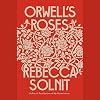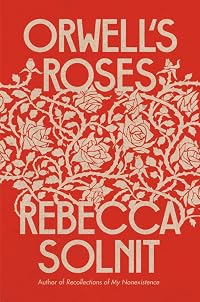
Orwell's Roses
by Rebecca Solnit
On This Page
Description
"A fresh take on George Orwell as a far more nature-loving figure than is often portrayed, and a dazzlingly rich meditation on roses, gardens, and the value and use of beauty and pleasure in the face of brutality and horror. "In the spring of 1936 a man planted roses." That man was George Orwell, shortly before he went off to fight against fascism in Spain. Today, those rosebushes are still thriving. This is the starting point for Rebecca Solnit's new book, which presents another side of show more Orwell, a neglected arcadian Orwell who took enormous pleasure in the natural world and found great meaning and value in it. Orwell's planting of the roses is an axle from which Solnit's chapters radiate out like spokes as she brilliantly explores its various contexts, perspectives, and meanings, following the contours of Orwell's life and tracking how deeply enmeshed the love of nature is in all his writing. Journeying to the cottage in Wallingford where Orwell lived in 1936, she examines his desire to be agrarian and settled, how gardening restored him, and how planting something can be an act of fidelity and faith. Probing at the beauty and meaning of roses, she draws in the revolutionary photography and politics of Tina Modotti and makes a clandestine visit to a Columbian rose factory, where 80% of America's roses for sale are grown. She tracks the history of gardening, showing how the desire to garden is culturally determined and often rooted in class, recounts the immense battles over breeding and genetics in Russia during Stalin's time, and probes into the colonialist roots of Orwell's forebears, who worked in opium production in India and profiteered from sugar and slavery in Jamaica. Solnit shows how these points of intersection illuminate Orwell's work, and how that illumination shines forth on larger questions about beauty, pleasure, meaning, relationship, and hope. Her book establishes that "Orwellian" could stand for something more than ominous, corrupt, and sinister"-- show lessTags
Recommendations














Member Reviews
"In 1936, a man planted roses." George Orwell - originally a pen name taken by Eric Blair, but which became the name he used as he distanced himself from his birth family - is now best known for political works such as Animal Farm and Nineteen Eighty-Four. Those even more familiar with his biography may realize he took part in the Spanish Civil War, that he was a socialist and was critical of authoritarianism on both sides of the political spectrum.
But what Rebecca Solnit does here is use the fact that Orwell had a rose garden as a jumping off point for her own series of essays to investigate not only lesser-known aspects of Orwell's life, but also a photograph "Roses, Mexico", the history and impact of walling off private property and show more gardens in England, or rose growing in Colombia. They all come back to this central theme - Orwell and/or roses - and roughly chronologically, you do make it through Orwell's adult life and works. But to go in expecting a biography, even an unconventional one, will most likely leave you disappointed. Because really, the tangents are part of the point. The personal is political, and a simple act, like planting roses, has more far-reaching causes and consequences than one person can know. If you enjoy that sort of meandering thought process, sharp writing, and a bit of biography and literary criticism thrown in, it's well worth a read. show less
But what Rebecca Solnit does here is use the fact that Orwell had a rose garden as a jumping off point for her own series of essays to investigate not only lesser-known aspects of Orwell's life, but also a photograph "Roses, Mexico", the history and impact of walling off private property and show more gardens in England, or rose growing in Colombia. They all come back to this central theme - Orwell and/or roses - and roughly chronologically, you do make it through Orwell's adult life and works. But to go in expecting a biography, even an unconventional one, will most likely leave you disappointed. Because really, the tangents are part of the point. The personal is political, and a simple act, like planting roses, has more far-reaching causes and consequences than one person can know. If you enjoy that sort of meandering thought process, sharp writing, and a bit of biography and literary criticism thrown in, it's well worth a read. show less
I've never read a book where I was so tempted to underline passages or add comments in the margin - in fact, I've never been tempted to do this - until now. Resisting, my book is now bristling with post-it notes. Solnit touches on many topics: climate change, women's suffrage, art, social conditions, nature, all in some way connected to Orwell, his roses, politics, and opinions. This is an excellent celebration of Orwell who took pleasure in the simple life while fighting against the big things. Solnit has reminded the reader that there is more to Orwell than his handful of novels but that his substantial essays, diaries, letters, and reviews provide a bigger picture from which she has drawn for this articulate book.
Includes an index, show more something I always appreciate.
Personal note: the first time I heard about George Orwell was when I was in my early teens. My father, in defence of my question about why he was buying roses from Woolworth's, which seemed to me to be a strange source, told me about Orwell's article in Tribune and again in the essay A Good Word for the Vicar of Bray where he praised Woolworth's roses for price and success. show less
Includes an index, show more something I always appreciate.
Personal note: the first time I heard about George Orwell was when I was in my early teens. My father, in defence of my question about why he was buying roses from Woolworth's, which seemed to me to be a strange source, told me about Orwell's article in Tribune and again in the essay A Good Word for the Vicar of Bray where he praised Woolworth's roses for price and success. show less
It's somehow comforting to discover that George Orwell loved roses. This man, with one of the bleakest perspectives on his times and the future, found solace in that most elemental of human activities, cultivating a garden, the solution preferred by another philosopher in another turbulent age.
In April, 1936, Orwell moved to a small rented cottage in Wallington, one with a tin roof, lacking gas, electricity, and indoor toilet. While fairly standard rural living for the times, it was not exactly easy living. He immediately planted a garden, one focussed mainly on food, but he also planted roses; not an obvious choice given the circumstances. Later there would be goats.
Orwell left for Spain and its Civil Was at the end of that year, but show more he would return to the cottage and its garden, saying in 1940 Outside my work, the thing I care about most is gardening... In 2009, the [George Orwell Diaries] were published, filled with accounts of this domestic life.
Solnit suggests this was a way of remaining grounded, focussed.
At first they seem to meander, but then suddenly they return to the subject, and everything falls into place. How else does Ralph Lauren's 1980s insistence on chintz and roses morph into a discussion of the imperial passion for importing the products of empire, and then connect to Jamaica Kincaid and her visceral reaction to the colonisation of her Antigua home? Solnit suggests The Road to Wigan Pier] provides the parallel and the answer, with Orwell saying You have got to choose between liberating India and having extra sugar. Which do you prefer?
Another essay. "In the Rose Factory", quotes Orwell on coal, saying It is only very rarely, when I make a great mental effort, that I connect this coal with the far-off labor in the mines. Solnit visited an actual rose factory in Bogata, describing the process of growing roses for the floral industry, and the condition under which the female workers work, ending with ...it was even more rarely that anyone connected the roses to the invisible toil in these greenhouses. They were the invisible factories of visual pleasure.
Orwell's Roses is not by any means a standard biography. Rather, it is an exploration and a meditation on the writer, his works, and how he is viewed today. Solnit certainly knows her subject and his writing. Her thoughts often provide a different way of viewing them; ideas that definitely inspire another look at Orwell.
As for those roses he planted, they were still there at the cottage when Solnit visited in 2016. show less
In April, 1936, Orwell moved to a small rented cottage in Wallington, one with a tin roof, lacking gas, electricity, and indoor toilet. While fairly standard rural living for the times, it was not exactly easy living. He immediately planted a garden, one focussed mainly on food, but he also planted roses; not an obvious choice given the circumstances. Later there would be goats.
Orwell left for Spain and its Civil Was at the end of that year, but show more he would return to the cottage and its garden, saying in 1940 Outside my work, the thing I care about most is gardening... In 2009, the [George Orwell Diaries] were published, filled with accounts of this domestic life.
Solnit suggests this was a way of remaining grounded, focussed.
Pursuits like that can bring you back to Earth from the ether and the abstractions. They could be imagined as the opposite of writing.Gardens are full of life and death, but also of hope. This is the influence on Orwell and his writings Solnit examines in these essays.
...
A garden offers the opposite of the disembodied uncertainties of writing. It's vivid to all the senses, it's a space of bodily labor, of getting dirty in the best and most literal way, an opportunity to see immediate and unarguable effect.
At first they seem to meander, but then suddenly they return to the subject, and everything falls into place. How else does Ralph Lauren's 1980s insistence on chintz and roses morph into a discussion of the imperial passion for importing the products of empire, and then connect to Jamaica Kincaid and her visceral reaction to the colonisation of her Antigua home? Solnit suggests The Road to Wigan Pier] provides the parallel and the answer, with Orwell saying You have got to choose between liberating India and having extra sugar. Which do you prefer?
Another essay. "In the Rose Factory", quotes Orwell on coal, saying It is only very rarely, when I make a great mental effort, that I connect this coal with the far-off labor in the mines. Solnit visited an actual rose factory in Bogata, describing the process of growing roses for the floral industry, and the condition under which the female workers work, ending with ...it was even more rarely that anyone connected the roses to the invisible toil in these greenhouses. They were the invisible factories of visual pleasure.
Orwell's Roses is not by any means a standard biography. Rather, it is an exploration and a meditation on the writer, his works, and how he is viewed today. Solnit certainly knows her subject and his writing. Her thoughts often provide a different way of viewing them; ideas that definitely inspire another look at Orwell.
As for those roses he planted, they were still there at the cottage when Solnit visited in 2016. show less
A beautiful literary love letter to, and exploration of the works of, a fellow political essayist. Solnit takes the reader on a journey to discover her joy in reading George Orwell’s essay about planting roses, and why this is not trivial, but core to both Orwell’s pursuit of truth saying and the reader’s political being.
Easily readable but meandering essays combine the literary and personal, using, as a starting point, Orwell’s essays about planting rose bushes and fruit trees. Having read these essays about 35 years ago, and also fondly remembering them, I was captivated by this book. Solnit says at the end of her introductory essay:
I had not thought hard enough about those roses I had first read about more than a third of a show more century before. They were roses, and they were saboteurs of my own long acceptance of a conventional version of Orwell and invitations to dig deeper. They were questions about who he was and who we were and where pleasure and beauty and hours with no quantifiable practical result fit into the life of someone, perhaps of anyone, who also cared about justice and truth and human rights and how to change the world.
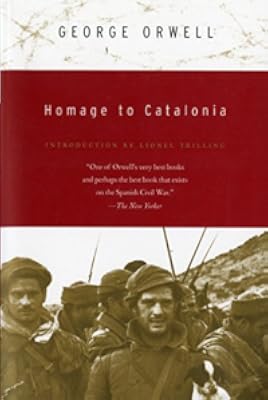
Solnit examines Orwell’s love of gardening, which he expanded to what in England we would call a smallholding, to postulate how it underpins his politics, as an “Anarchist Tory”. She references Orwell’s The Road to Wigan Pier to consider his concern for the working poor, but also from a contemporary standpoint linking it to the industrial revolution’s ecological degradation. His Homage to Catalonia recounts, as an active participant his putting his political beliefs into practice, but also allowed him to “find a set of possibilities and ideals”.
Solnit initially digresses in her Roses and Revolution essay, which considers a photograph of roses from 1924 by Tina Modotti, to write about various aspects of roses, including a little repetition of observations made earlier in the book. However, Solnit builds and builds comment and analysis on slavery, colonialism, opium and the British Empire up from Orwell’s essay about roses, linking it to Orwell’s experience in Burma and his gentleman ancestors, before returning to Orwell’s roses again to enlarge her argument.
Solnit expands upon gardening to discuss eighteenth century landscape garden, and whilst reading this book, I visited Stowe landscape gardens in Buckinghamshire. I walked around the gardens for hours, admiring the beautifully fashioned and maintained man-made landscapes, embellished with statues, columns, temples, fanes, caves, cascades and bridges to create points of interest and views. I enjoyed the experience of being in an idealised natural world (complete with ha-has to allow the view to extend for miles without the interruption of fences). But I could also wonder about the source of the wealth/oppression that made this beauty possible.
I have read a lot of Joan Didion’s books in the last couple of years, and in this book Solnit creates a similar tight focus on a subject by approaching it in multiple and sometimes oblique ways, and also by including reportage (for example, about the Colombian rose growing business), writing as an observer (although not as personal as Didion).
Solnit completes our journey with consideration of Orwell’s late essays, Animal Farm, diaries and Nineteen Eighty-Four, but does so always returning to the context of Orwell’s joy from the small pleasures and beauty and hours with no quantifiable practical results. A wonderful book which definitely benefits from familiarity with Orwell’s work. show less
Easily readable but meandering essays combine the literary and personal, using, as a starting point, Orwell’s essays about planting rose bushes and fruit trees. Having read these essays about 35 years ago, and also fondly remembering them, I was captivated by this book. Solnit says at the end of her introductory essay:
I had not thought hard enough about those roses I had first read about more than a third of a show more century before. They were roses, and they were saboteurs of my own long acceptance of a conventional version of Orwell and invitations to dig deeper. They were questions about who he was and who we were and where pleasure and beauty and hours with no quantifiable practical result fit into the life of someone, perhaps of anyone, who also cared about justice and truth and human rights and how to change the world.
Solnit examines Orwell’s love of gardening, which he expanded to what in England we would call a smallholding, to postulate how it underpins his politics, as an “Anarchist Tory”. She references Orwell’s The Road to Wigan Pier to consider his concern for the working poor, but also from a contemporary standpoint linking it to the industrial revolution’s ecological degradation. His Homage to Catalonia recounts, as an active participant his putting his political beliefs into practice, but also allowed him to “find a set of possibilities and ideals”.
Solnit initially digresses in her Roses and Revolution essay, which considers a photograph of roses from 1924 by Tina Modotti, to write about various aspects of roses, including a little repetition of observations made earlier in the book. However, Solnit builds and builds comment and analysis on slavery, colonialism, opium and the British Empire up from Orwell’s essay about roses, linking it to Orwell’s experience in Burma and his gentleman ancestors, before returning to Orwell’s roses again to enlarge her argument.
Solnit expands upon gardening to discuss eighteenth century landscape garden, and whilst reading this book, I visited Stowe landscape gardens in Buckinghamshire. I walked around the gardens for hours, admiring the beautifully fashioned and maintained man-made landscapes, embellished with statues, columns, temples, fanes, caves, cascades and bridges to create points of interest and views. I enjoyed the experience of being in an idealised natural world (complete with ha-has to allow the view to extend for miles without the interruption of fences). But I could also wonder about the source of the wealth/oppression that made this beauty possible.
I have read a lot of Joan Didion’s books in the last couple of years, and in this book Solnit creates a similar tight focus on a subject by approaching it in multiple and sometimes oblique ways, and also by including reportage (for example, about the Colombian rose growing business), writing as an observer (although not as personal as Didion).
Solnit completes our journey with consideration of Orwell’s late essays, Animal Farm, diaries and Nineteen Eighty-Four, but does so always returning to the context of Orwell’s joy from the small pleasures and beauty and hours with no quantifiable practical results. A wonderful book which definitely benefits from familiarity with Orwell’s work. show less
I tweeted* the other day that sometimes reading is sheer bliss, and linked to my Sensational Snippets from Rebecca Solnit's Orwell's Roses. It's been a while since I interrupted The Spouse's to read an excerpt from a book, but I'll start this review by quoting the most recent, from Solnit's chapter about visiting a rose factory in Colombia:
Isn't that just brilliant? Solnit's book about Orwell (and other things) is full of striking turns of phrases like that. Quite apart from the originality of her ideas and her passionate commitment to important values, it makes for intense pleasure in the reading.
It's an unconventional biography. That chapter about the industrialisation and corporatisation of floristry is relevant to a book about Orwell and his writing because Orwell, from the time he penned The Road to Wigan Pier in 1937, was hyper-alert to the ugliness that lay behind Britain's prosperity, international status, military power and its empire. In a biography that disposes of the dour prophet of doom and introduces Orwell as a man who loved beauty and the joys of the garden, Solnit shows how we in the 21st century are just as oblivious to the ugliness behind much of our comfortable lives, just as Britons were oblivious to the human and environmental costs of producing coal. (Reviewer Gaby Hinsliff at The Guardian took exception to this chapter, but I thought it was wonderful.)
It is, however, indicative of Solnit's discursive style. If, like me, you have a mind like a butterfly, flitting from one loosely related topic to another, with ideas fertilised apparently at random, you will love it. I enjoyed reading chapters which seemed to have nothing to do with anything and then finding that — apart from being interesting in their own right — actually they illuminated some aspect of Orwell's life and writing in ways I hadn't thought of before.
To read the rest of my review please visit https://anzlitlovers.com/2023/08/26/orwells-roses-2021-by-rebecca-solnit/ show less
The workers have a slogan, "The lovers get the roses, but we workers get the thorns." A rose is beautiful, but a greenhouse with thousands upon thousands of roses, a place producing millions per year, with stems and leaves and petals all strewn on the floor and heaped together in bins as byproduct, was not. Insofar as these roses were beautiful, their beauty was meant to occur somewhere else, forshow more
someone else, a continent away. Some of them were grown in paper bags to protect the petals from light, and we saw a row of rosebushes whose stems culminated in brown sacks, like divas backstage with their hair in curlers. (p.202, underlining mine.)
Isn't that just brilliant? Solnit's book about Orwell (and other things) is full of striking turns of phrases like that. Quite apart from the originality of her ideas and her passionate commitment to important values, it makes for intense pleasure in the reading.
It's an unconventional biography. That chapter about the industrialisation and corporatisation of floristry is relevant to a book about Orwell and his writing because Orwell, from the time he penned The Road to Wigan Pier in 1937, was hyper-alert to the ugliness that lay behind Britain's prosperity, international status, military power and its empire. In a biography that disposes of the dour prophet of doom and introduces Orwell as a man who loved beauty and the joys of the garden, Solnit shows how we in the 21st century are just as oblivious to the ugliness behind much of our comfortable lives, just as Britons were oblivious to the human and environmental costs of producing coal. (Reviewer Gaby Hinsliff at The Guardian took exception to this chapter, but I thought it was wonderful.)
It is, however, indicative of Solnit's discursive style. If, like me, you have a mind like a butterfly, flitting from one loosely related topic to another, with ideas fertilised apparently at random, you will love it. I enjoyed reading chapters which seemed to have nothing to do with anything and then finding that — apart from being interesting in their own right — actually they illuminated some aspect of Orwell's life and writing in ways I hadn't thought of before.
To read the rest of my review please visit https://anzlitlovers.com/2023/08/26/orwells-roses-2021-by-rebecca-solnit/ show less
Unconventional biography of George Orwell that examines his life through his love of gardening, and the way he used it as a respite from his biting social critiques and involvement in wars. This narrative non-fiction is occasionally rambling and digressive, but these rabbit trails eventually come back to the main point. It is a book to be read slowly, savoring the beauty of the writing style, and appreciating the many thought-provoking observations, covering class, race, empire, politics, totalitarianism, horticulture, history, Orwell’s writings, and so much more. Solnit takes seemingly disparate topics and links them together in an interesting way. I really enjoyed it, but I think those that like to stick closely to the topic at hand show more may find it a bit frustrating. show less
Analysts of Orwell’s legacy are now so common that they can focus on finding the holes in each other’s works (Richard Bradford‘s “Orwell, A Man Of Our Time”, recently reviewed here, is one example). Solnit picks out in particular Orwell’s pleasure in gardening and growing, identifying this as an appreciation of beauty in commonplace life, and these sentiments as a key component of his more widely celebrated opposition to the ideological or totalitarian mindset. Solnit’s focus is diverse, making sweeping but softly-linked connections and themes, gently stated unlike the bombast she is identifying and resisting. The “Roses” of her title are a recurring example, for their inherent beauty, but also as image of non-uniform show more joy and of thinking from and valuing first hand experience. The case she makes is persuasive, both as to Orwell himself and in wider contexts; her thoughtful and historical description of aspects of climate change, for example, has made me think anew of this contemporary issue. Similarly, this book’s wide sweep of interest leads one to want to learn more of the many figures and occurrences covered. E.g the fascinating Tina Modotti in section III - her energy, her work, her motives, her overlapping associations in the revolutionary ferment of interwar Mexico City with Rivera, the Spanish Civil War, and the Russian NKVD in its brutal ideological gangsterism. show less
Members
- Recently Added By
Published Reviews
Perhaps the greatest political writer of modern times was also an avid gardener. It might seem contrived to build a biography around his passion, but this is Solnit so it succeeds. Certain that democratic socialism represented the only humane political system, Orwell lived among other like-minded leftists whose shortcomings infuriated him—especially (most being middle-class) their ignorance show more of poverty and (this being the 1930s and 1940s) their irrational attraction to a particularly nasty delusion in Stalin’s regime. Unlike many idealists, Orwell never assumed that it was demeaning to enjoy yourself while remaining attuned to the suffering of others, and he made no secret of his love of gardening. Wherever he lived, he worked hard to plant a large garden with flowers as well as vegetables and fruit. Solnit emphasizes this side of his life with frequent detours into horticultural topics with political lessons. The author grippingly describes Stalin’s grotesque plan to improve Soviet food production through wacky, quasi-Marxist genetics, and readers will be fascinated to learn about artists, writers, and photographers whose work mixes plants and social reform. show less
added by VivienneR
Lists

Top Five Books of 2022
736 works; 272 members

Anticipated 2021 Reads
231 works; 7 members

Top Five Books of 2021
604 works; 181 members

Maybe This Year? Books to Look Forward To
412 works; 9 members

Netgalley Reads
460 works; 3 members

Books Read in 2022
5,168 works; 114 members

Best Gardening Books
133 works; 45 members

Top Five Books of 2023
767 works; 317 members

On Books
70 works; 1 member
Author Information

48+ Works 17,177 Members
Rebecca Solnit writes extensively on photography and landscape. She is a contributing editor to Art Issues and Creative Camera and is the author of three books. She has contributed essays to several museum catalogues including Crimes and Splendors: The Desert Cantos of Richard Misrach and the Whitney Museum's Beat Culture and the New America. She show more was a 1993 recipient of a National Endowment for the Arts Fellowship. (Bowker Author Biography) show less
Some Editions
Awards and Honors
Awards
Distinctions
Common Knowledge
- Original title
- Orwell's Roses
- Original publication date
- 2021
- People/Characters
- George Orwell
- First words
- In the year 1936 a writer planted roses.
- Quotations
- “Much of the left of the first half of the twentieth century was akin to someone who has fallen in love, and whose beloved has become increasingly monstrous and controlling,”
Classifications
- Genres
- Home & Garden, Literature Studies and Criticism, Biography & Memoir, Nonfiction
- DDC/MDS
- 828.91209 — Literature & rhetoric English & Old English literatures English miscellaneous writings English miscellaneous writings 1900- English miscellaneous writings 1900-1999 English miscellaneous writings 1900-1945 Individual authors not limited to or chiefly identified with one specific form.
- LCC
- PR6029 .R8 — Language and Literature English English Literature 1900-1960
- BISAC
Statistics
- Members
- 603
- Popularity
- 48,593
- Reviews
- 18
- Rating
- (4.08)
- Languages
- 5 — Catalan, English, German, Polish, Spanish
- Media
- Paper, Audiobook, Ebook
- ISBNs
- 14
- ASINs
- 6