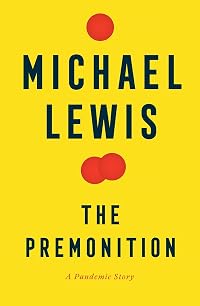
The Premonition: A Pandemic Story
by Michael Lewis
On This Page
Description
"For those who could read between the lines, the censored news out of China was terrifying. But the president insisted there was nothing to worry about. Fortunately, we are still a nation of skeptics. Fortunately, there are those among us who study pandemics and are willing to look unflinchingly at worst-case scenarios. Michael Lewis's taut and brilliant nonfiction thriller pits a band of medical visionaries against the wall of ignorance that was the official response of the Trump show more administration to the outbreak of COVID-19. The characters you will meet in these pages are as fascinating as they are unexpected. A thirteen-year-old girl's science project on transmission of an airborne pathogen develops into a very grown-up model of disease control. A local public-health officer uses her worm's-eye view to see what the CDC misses, and reveals great truths about American society. A secret team of dissenting doctors, nicknamed the Wolverines, has everything necessary to fight the pandemic: brilliant backgrounds, world-class labs, prior experience with the pandemic scares of bird flu and swine flu...everything, that is, except official permission to implement their work. Michael Lewis is not shy about calling these people heroes for their refusal to follow directives that they know to be based on misinformation and bad science. Even the internet, as crucial as it is to their exchange of ideas, poses a risk to them. They never know for sure who else might be listening in"-- show lessTags
Recommendations
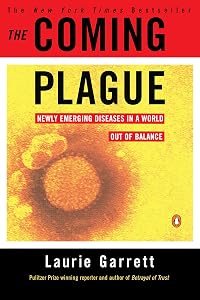
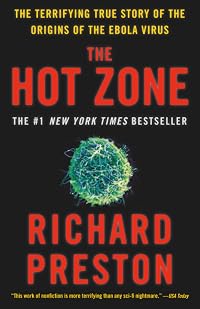
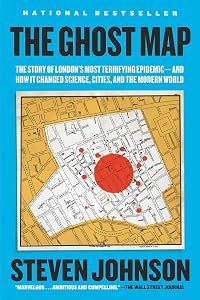


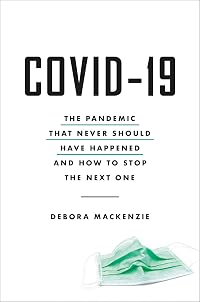
Member Recommendations
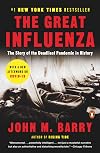
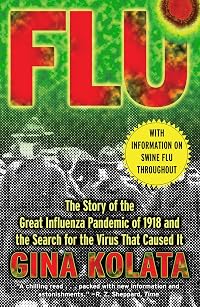
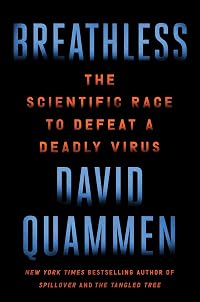
M_Clark This book by John Barry is mentioned several times in the Michael Lewis book and is given credit for inspiring George W Bush to create a pandemic preparation plan as well as causing Bush's task force to look at the critical issues of timing and social distancing.
Member Reviews
It was with a sense of kindred familiarity that I opened Michael Lewis’ new book The Premonition, subtitled A Pandemic Story. Lewis is among the distinguished contemporary writers of narrative nonfiction, and the dust jacket blurb suggested a story close to my own experience. A group of rogue experts saw the COVID-19 pandemic coming before most did, including those tasked with the job. This sounded like The Pandemic Meets The Big Short - the latter Lewis’ fascinating and famous story of those in the financial world who saw what few others did during the subprime mortgage meltdown of 2008. While I was oblivious to that coming financial crisis, I too recoiled at the inevitability of a catastrophic pandemic in January of 2020. As an show more observer versed but non-expert in emerging viral threats, I was eager to read about the foresight of savants.
The Premonition invites us into the thinking of some brilliant outside-the-box thinkers. These doctors, public health officials, and administrators understood early on the threat we in the US faced, and were in a position to try to take some action. But propelled by Lewis’ characteristically irresistible storytelling, it turns out that in the most meaningful sense, these accounts are the mere scaffolding for a far darker and more urgent revelation. Because if I knew by mid-January 2020 that we were facing no less than a viral disaster, why was the country so ill-prepared? Where was the testing, the messaging, the preparation of the public for what would need to be done? Where was the truth-telling that would bring us together for the necessary NPIs - non-pharmaceutical Interventions - that would buy time, slow the spread, and prevent the hundreds of thousands of deaths that would otherwise occur before a vaccine could protect us?
That is the real message of The Premonition. At multiple levels, the institutions and leaders who could have made a difference failed the people they were charged with protecting. The politicization and culture of the CDC - despite its continued capacity to produce world class academic research - meant suppression of the truth, unreadiness for testing or necessary medical supplies, a craven obedience to an incompetent Administration primarily concerned with the next election, and not to put too fine a point on it, gross negligence.
We may have thought we had a functioning public health system. But the pandemic revealed the shocking absence of such a cohesive arrangement. Instead, early on what constituted public health amounted to a balkanized set of sometimes dedicated but always local offices. In most cases, individual officials in local public health leadership waited for advice from on high that never came. In January and February 2020, the truth was actively suppressed. That the virus was already spreading within the US was not a mystery to the Administration or to its leading health officials. Federal and many state leaders calculated that keeping the public in the dark was a better policy than entrusting them with the information that might have enabled them to protect themselves. Those within the health system who understood the reality found themselves silenced and shuttled to the side, or simply ignored.
The protagonists in Lewis’ telling deserve a medal, but no doubt they would say they were just trying to do their jobs. This is an eye-opening book. It’s an intelligent page-turner with a mission. If we are to be better prepared for the next one, we had better be clear about two matters: what went wrong, and the perilous, regrettable condition of our public health institutions. Oh, and I’ll add one more thing. Can we deeply acknowledge the hazard that the next time may be much worse? show less
The Premonition invites us into the thinking of some brilliant outside-the-box thinkers. These doctors, public health officials, and administrators understood early on the threat we in the US faced, and were in a position to try to take some action. But propelled by Lewis’ characteristically irresistible storytelling, it turns out that in the most meaningful sense, these accounts are the mere scaffolding for a far darker and more urgent revelation. Because if I knew by mid-January 2020 that we were facing no less than a viral disaster, why was the country so ill-prepared? Where was the testing, the messaging, the preparation of the public for what would need to be done? Where was the truth-telling that would bring us together for the necessary NPIs - non-pharmaceutical Interventions - that would buy time, slow the spread, and prevent the hundreds of thousands of deaths that would otherwise occur before a vaccine could protect us?
That is the real message of The Premonition. At multiple levels, the institutions and leaders who could have made a difference failed the people they were charged with protecting. The politicization and culture of the CDC - despite its continued capacity to produce world class academic research - meant suppression of the truth, unreadiness for testing or necessary medical supplies, a craven obedience to an incompetent Administration primarily concerned with the next election, and not to put too fine a point on it, gross negligence.
We may have thought we had a functioning public health system. But the pandemic revealed the shocking absence of such a cohesive arrangement. Instead, early on what constituted public health amounted to a balkanized set of sometimes dedicated but always local offices. In most cases, individual officials in local public health leadership waited for advice from on high that never came. In January and February 2020, the truth was actively suppressed. That the virus was already spreading within the US was not a mystery to the Administration or to its leading health officials. Federal and many state leaders calculated that keeping the public in the dark was a better policy than entrusting them with the information that might have enabled them to protect themselves. Those within the health system who understood the reality found themselves silenced and shuttled to the side, or simply ignored.
The protagonists in Lewis’ telling deserve a medal, but no doubt they would say they were just trying to do their jobs. This is an eye-opening book. It’s an intelligent page-turner with a mission. If we are to be better prepared for the next one, we had better be clear about two matters: what went wrong, and the perilous, regrettable condition of our public health institutions. Oh, and I’ll add one more thing. Can we deeply acknowledge the hazard that the next time may be much worse? show less
I read this book faster than I read most novels. It was so well-written with such fascinating real-life characters and improbable, seemingly unsolvable situations. For people who don't think they want to read nonfiction, think of a Michael Crichton novel with the emphasis on technology, medical emergencies and scientific research.
Unfortunately, it is not fiction. I can only hope that people who read it will be appalled at the way in which politics and for-profit enterprises have weakened the ability of qualified, competent government employees to handle and solve problems for which they are trained and employed. As Richard Hatchett is quoted near the end of the book, "Government--and the value government provides--isn't just the whim of show more whoever happens to be elected at the moment...That government provides continuity across administrations and should be the repository of accumulated institutional experience and wisdom."
Health care decisions should not be made based on one's political views and should not be funded in order to make money for corporations. show less
Unfortunately, it is not fiction. I can only hope that people who read it will be appalled at the way in which politics and for-profit enterprises have weakened the ability of qualified, competent government employees to handle and solve problems for which they are trained and employed. As Richard Hatchett is quoted near the end of the book, "Government--and the value government provides--isn't just the whim of show more whoever happens to be elected at the moment...That government provides continuity across administrations and should be the repository of accumulated institutional experience and wisdom."
Health care decisions should not be made based on one's political views and should not be funded in order to make money for corporations. show less
If you want to read non fiction about pandemics that doesn’t read like non-fiction, try The Premonition. At its heart, it’s the story of several people and their experiences preparing and dealing with epidemics and pandemics, followed by their response to the COVID-19 pandemic. It’s a gripping read of missed chances, clandestine teleconferences and most of all, people who want to make things better for all of society.
About half of the book is about the lead up to COVID-19 and the preparedness for epidemics and pandemics. The reader meets a public health physician in California, who describes the limited ability of the system to respond to outbreaks. There’s an ICU doctor with a talent for finding problems and solving them. There show more are doctors and people in the White House preparing a pandemic plan after the President of the time reads a book about the influenza pandemic of 1918. There’s the CDC (Centers for Disease Control), there’s private labs working on obscure bug genomes and there’s the White House. Then COVID-19 hits and the focus on the book changes to leadership and more specifically, who is leading the country through this. Is it the CDC? Is it the White House? Or is it a small group of learned people, who know about disease, trying to influence state and federal government (often to no avail)?
As an outsider (i.e., non-American), I don’t feel I can comment on the CDC’s response, or lack of optimal response as Lewis suggests. Like many other countries I’m sure, the response to COVID-19 has not been optimal 100% of the time. Pandemic planning has long been an unsexy part of health. There were still some parts mentioned on America’s response that I found jaw-dropping. A shortage of nasal swabs for COVID-19 testing has some shipped across the country out of the national stockpile – but they turn out to be cotton buds (Q-tips). A free testing lab can’t get enough swabs because the private hospitals and healthcare don’t allow anything to be free (or 1 cent) in their billing systems. The book hints at the issues with private, market-driven healthcare in America, but the critique is primarily focused on the response. The focus turns more to the CDC and the state governors, rather than Donald Trump’s White House.
Overall, The Premonition is a fascinating read made horrifying because it’s non-fiction. It almost needs a sequel to explore 2021’s response to the pandemic, including Delta and Omicron variants of COVID-19. I enjoyed meeting the people who worked so hard to be heard, and their strategies for mitigating risk and minimising infections. With recent restrictions, I’ve understood why choices have been made locally and the science behind them.
http://samstillreading.wordpress.com show less
About half of the book is about the lead up to COVID-19 and the preparedness for epidemics and pandemics. The reader meets a public health physician in California, who describes the limited ability of the system to respond to outbreaks. There’s an ICU doctor with a talent for finding problems and solving them. There show more are doctors and people in the White House preparing a pandemic plan after the President of the time reads a book about the influenza pandemic of 1918. There’s the CDC (Centers for Disease Control), there’s private labs working on obscure bug genomes and there’s the White House. Then COVID-19 hits and the focus on the book changes to leadership and more specifically, who is leading the country through this. Is it the CDC? Is it the White House? Or is it a small group of learned people, who know about disease, trying to influence state and federal government (often to no avail)?
As an outsider (i.e., non-American), I don’t feel I can comment on the CDC’s response, or lack of optimal response as Lewis suggests. Like many other countries I’m sure, the response to COVID-19 has not been optimal 100% of the time. Pandemic planning has long been an unsexy part of health. There were still some parts mentioned on America’s response that I found jaw-dropping. A shortage of nasal swabs for COVID-19 testing has some shipped across the country out of the national stockpile – but they turn out to be cotton buds (Q-tips). A free testing lab can’t get enough swabs because the private hospitals and healthcare don’t allow anything to be free (or 1 cent) in their billing systems. The book hints at the issues with private, market-driven healthcare in America, but the critique is primarily focused on the response. The focus turns more to the CDC and the state governors, rather than Donald Trump’s White House.
Overall, The Premonition is a fascinating read made horrifying because it’s non-fiction. It almost needs a sequel to explore 2021’s response to the pandemic, including Delta and Omicron variants of COVID-19. I enjoyed meeting the people who worked so hard to be heard, and their strategies for mitigating risk and minimising infections. With recent restrictions, I’ve understood why choices have been made locally and the science behind them.
http://samstillreading.wordpress.com show less
Ho. Lee. Crap. I was worried I'd have a hard time reading this book because it was "too soon," but I don't think it was ever too soon for this book. It focuses on the early pandemic response, or lack thereof. I never thought COVID could have been contained because that was never the narrative coming from on high, so to hear that it could have been?
How. Fucking. Devastating.
775,000 in the US are dead, and to think their deaths could have been prevented? Not to mention the fallout from remote teaching and learning, the health care professionals who have been devastated through their jobs... and the hostility from the anti-mask anti-vaccine crowd? All of this could have been avoided? 🤦🏻♀️
How. Fucking. Devastating.
775,000 in the US are dead, and to think their deaths could have been prevented? Not to mention the fallout from remote teaching and learning, the health care professionals who have been devastated through their jobs... and the hostility from the anti-mask anti-vaccine crowd? All of this could have been avoided? 🤦🏻♀️
This book ostensibly tells the story of covid 19 through a history of viruses including the 1918 flu. In telling the story of covid 19, Lewis inevitably discusses the Trump administration’s bungling of its response to the crisis. But this isn’t another Trump bashing book. To Lewis’ credit, he probably saw Trump for what he was during the pandemic rollout: an insignificant buffoon. And that would be fine except that after reading the book, I’m convinced, as I’m sure just about every reader will be, Trump is singularly responsible for at least half the deaths due to covid. Lewis shows us that among the most effective weapons short of a vaccine against this or any virus is isolation and, when that isn’t possible, social show more distancing. All the American public and our elected officials seemed willing to discuss in fighting the pandemic was a vaccine. And that is why we now have more than half a million deaths in the U.S. and more than three million world-wide from the disease. History will not be kind to Trump. History will not be kind to those who fought science and scientists while ICU wards filled and bodies were stacked in refrigerator trucks outside hospitals. Lewis has shown us that we are our own worst enemy, and chances are pretty good that we haven’t learned a thing from the past 15 months. show less
I just finished reading The Premonition: A Pandemic Story by Michael Lewis, which was on the N.Y. Times Bestseller list for a while last spring. I generally consider books written about currently developing events to have their problems. Barbara Tuchman, in her great into to Practicing History: Selected Essays by Barbara W. Tuchman illustrates why that is; the writers typically have some agenda of their own, some axe to grind. While I give Premonition "four stars", it is because it is well-written and the writing flows well enough that I could finish its 304 pages in one week. I strongly disagree with its conclusions.
Michael Lewis is implicitly saying that we should have performed NON-PHARMACEUTICAL INTERVENTIONS ("NPIs"). When I say show more "implicitly" he faults the CDC for not utilizing NPIs in threatened pandemics as early as swine flu (1976) on including the 2003 SARS and 2009 H1N1. NPIs are essentially lockdowns; closures of schools, businesses, places of assembly, mandating social distancing and restricting travel. The problem is obvious; society cannot function for lengthy periods or frequently in lockdown. Nowhere was the educational or social cost of the remedy discussed. The book's focus was purely on epidemiology.
Just because I think Michael Lewis is wrong does not mean The Premonition is not worth reading.
Quite the contrary. And despite my quibbles, the book appears to be a reasonably good discussion of recent events. I just don't think that Mr. Lewis's or the hero of the book, Dr. Charity Dean's nostrums would have worked much more than a rain dance. show less
Michael Lewis is implicitly saying that we should have performed NON-PHARMACEUTICAL INTERVENTIONS ("NPIs"). When I say show more "implicitly" he faults the CDC for not utilizing NPIs in threatened pandemics as early as swine flu (1976) on including the 2003 SARS and 2009 H1N1. NPIs are essentially lockdowns; closures of schools, businesses, places of assembly, mandating social distancing and restricting travel. The problem is obvious; society cannot function for lengthy periods or frequently in lockdown. Nowhere was the educational or social cost of the remedy discussed. The book's focus was purely on epidemiology.
Just because I think Michael Lewis is wrong does not mean The Premonition is not worth reading.
Quite the contrary. And despite my quibbles, the book appears to be a reasonably good discussion of recent events. I just don't think that Mr. Lewis's or the hero of the book, Dr. Charity Dean's nostrums would have worked much more than a rain dance. show less
I devoured this book like a thriller. It's fascinating and tense as it peels back the layers on the last 15-20 years of pandemic planning, the narrow miss that swine flu presented, and then, at the halfway point of the book, the main event at last arrives: COVID-19.
The book is not a story of institutions, nor is it a story of politics; it's a story of individuals. A scientist father helping his daughter with a science fair project to model community-spread infection in a way nobody had done before.
Two scientists who re-evaluate Philadelphia's and St. Louis' responses to the 1918 flu and realize that although accepted wisdom said that social-distancing had failed, the key was in the timing of the interventions.
One public health officer show more in California walking the tight-rope between sounding the alarm and being black-balled by her superiors.
A loosely connected group of doctors and scientists in an email group spending the first 3 months of 2020 extrapolating infection data and desperate to find someone--anyone--to do something about it.
The biochemist who organizes an entire system for free and fast COVID testing and sequencing and then struggles to find anyone to take him up on it.
All of these stories intertwine in a way that makes for a taut and page-turning narrative.
It's obviously not a story with a happy ending.
But it was satisfying in the sense that it gave me a look behind the curtain, to understanding how we got to now. If you have any interest at all in data, epidemiology, human psychology, and most of all the intriguing, genius minds that somehow exist buried within layers of institutions, you'll probably find this interesting. I know I did.
To me, one of the most frustrating things is when people (yes, myself included!) do research in their own heads--what they've heard, what they think they've heard, what they feel, and what they can or can't imagine--and then take all of those things and believe that they have a grasp on the truth of a matter. Evidently, it's part of being human to be really, really bad at risk assessment, and not to suss out real information. To most of us, what seems unthinkable simply is unthinkable. That's why it was so riveting to read about those who have spent their whole lives with the data and can face up to what it says. Unsettling, important stuff.
Content note: A lot of strong language in some quotes. Extremely medically graphic description of a postmortem tissue collection near the beginning of the book. This book will not be for everyone. show less
The book is not a story of institutions, nor is it a story of politics; it's a story of individuals. A scientist father helping his daughter with a science fair project to model community-spread infection in a way nobody had done before.
Two scientists who re-evaluate Philadelphia's and St. Louis' responses to the 1918 flu and realize that although accepted wisdom said that social-distancing had failed, the key was in the timing of the interventions.
One public health officer show more in California walking the tight-rope between sounding the alarm and being black-balled by her superiors.
A loosely connected group of doctors and scientists in an email group spending the first 3 months of 2020 extrapolating infection data and desperate to find someone--anyone--to do something about it.
The biochemist who organizes an entire system for free and fast COVID testing and sequencing and then struggles to find anyone to take him up on it.
All of these stories intertwine in a way that makes for a taut and page-turning narrative.
It's obviously not a story with a happy ending.
But it was satisfying in the sense that it gave me a look behind the curtain, to understanding how we got to now. If you have any interest at all in data, epidemiology, human psychology, and most of all the intriguing, genius minds that somehow exist buried within layers of institutions, you'll probably find this interesting. I know I did.
To me, one of the most frustrating things is when people (yes, myself included!) do research in their own heads--what they've heard, what they think they've heard, what they feel, and what they can or can't imagine--and then take all of those things and believe that they have a grasp on the truth of a matter. Evidently, it's part of being human to be really, really bad at risk assessment, and not to suss out real information. To most of us, what seems unthinkable simply is unthinkable. That's why it was so riveting to read about those who have spent their whole lives with the data and can face up to what it says. Unsettling, important stuff.
Content note: A lot of strong language in some quotes. Extremely medically graphic description of a postmortem tissue collection near the beginning of the book. This book will not be for everyone. show less
Members
- Recently Added By
Lists

Phi Beta Kappa reading list
260 works; 8 members

Science: Health & Medical
100 works; 1 member

Books Read in 2021
5,361 works; 114 members

W. W. Norton & Company
47 works; 2 members

Top Five Books of 2024
795 works; 264 members

Books That Changed Our Perspective
423 works; 168 members
Author Information

33+ Works 35,690 Members
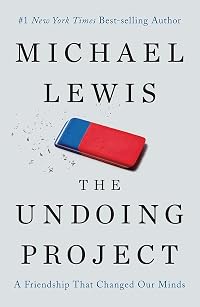
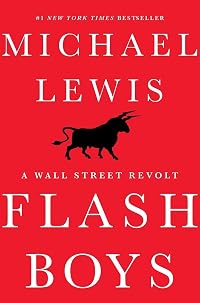
Michael Lewis was born in New Orleans, Louisiana on October 15, 1960. He received a BA in art history from Princeton University in 1982 and a Masters in economics from the London School of Economics in 1985. He is a non-fiction author/journalist of mostly financial themes. His books include Liar's Poker, Moneyball: The Art of Winning an Unfair show more Game, The Blind Side: Evolution of a Game, The Money Culture, Boomerang, Flash Boys: A Wall Street Revolt, The Big Short: Inside the Doomsday Machine and The Undoing Project: A Friendship That Changed Our Minds. (Bowker Author Biography) show less
Some Editions
Awards and Honors
Awards
Distinctions
Common Knowledge
- Canonical title*
- The Premonition : A Pandemic Story
- Original publication date
- 2021
- People/Characters
- Charity Dean; Carter Mecher; Richard Hatchett; Bob Glass; Joe DeRisi; Rajeev Venkayya (show all 8); Lisa Koonin; Laura Glass
- Important events
- COVID-19 pandemic
- Epigraph
- Every surgeon carries within himself a small cemetery, where from time to time he goes to pray--a place of bitterness and regret, where he must look for an explanation for his failures.
--Rene Leriche,
The Philosophy... (show all) of Surgery, 1951 - Dedication
- To my parents, Diana Monroe Lewis and J. Thomas Lewis.
Thank you for surviving this. - First words
- This book began with an unholy mix of obligation and opportunism.
- Last words
- (Click to show. Warning: May contain spoilers.)Then she made an incision in the ground, buried a piece of herself, and moved on.
- Original language
- English
- Canonical DDC/MDS
- 614.592414
- Canonical LCC
- RA644.C67
*Some information comes from Common Knowledge in other languages. Click "Edit" for more information.
Classifications
- Genres
- General Nonfiction, Nonfiction
- DDC/MDS
- 614.592414 — Applied science & technology Medicine & health Epidemics, Poisons, Alternative Medicine Incidence of and public measures to prevent specific diseases and kinds of diseases Diseases of regions, systems, organs; other diseases
- LCC
- RA644 .C67 — Medicine Public aspects of medicine Public aspects of medicine Public health. Hygiene. Preventive medicine Disease (Communicable and noninfectious) and public
- BISAC
Statistics
- Members
- 1,238
- Popularity
- 19,917
- Reviews
- 54
- Rating
- (4.32)
- Languages
- English, Spanish
- Media
- Paper, Audiobook, Ebook
- ISBNs
- 10
- ASINs
- 5