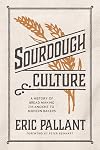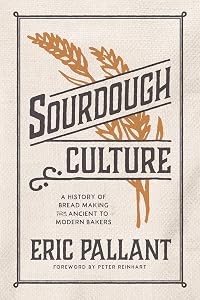
Sourdough Culture: A History of Bread Making from Ancient to Modern Bakers
by Eric Pallant
On This Page
Description
Sourdough bread fueled the labor that built the Egyptian pyramids. The Roman Empire distributed free sourdough loaves to its citizens to maintain political stability. More recently, amidst the Covid-19 pandemic, sourdough bread baking became a global phenomenon as people contended with being confined to their homes and sought distractions from their fear, uncertainty, and grief. In Sourdough Culture, environmental science professor Eric Pallant shows how throughout history, sourdough bread show more baking has always been about survival. Sourdough Culture presents the history and rudimentary science of sourdough bread baking from its discovery more than six thousand years ago to its still-recent displacement by the innovation of dough-mixing machines and fast-acting yeast. Pallant traces the tradition of sourdough across continents, from its origins in the Middle East's Fertile Crescent to Europe and then around the world. Pallant also explains how sourdough fed some of history's most significant figures, such as Plato, Pliny the Elder, Louis Pasteur, Marie Antoinette, Martin Luther, and Antonie van Leeuwenhoek, and introduces the lesser-known-but equally important-individuals who relied on sourdough bread for sustenance: ancient Roman bakers, medieval housewives, Gold Rush miners, and the many, many others who have produced daily sourdough bread in anonymity. Each chapter of Sourdough Culture is accompanied by a selection from Pallant's own favorite recipes, which span millennia and traverse continents, and highlight an array of approaches, traditions, and methods to sourdough bread baking. Sourdough Culture is a rich, informative, engaging read, especially for bakers-whether skilled or just beginners. More importantly, it tells the important and dynamic story of the bread that has fed the world. show lessTags
Recommendations






Member Reviews
The author owns a sourdough that is supposed to date 110 years and be from a gold rush in Colorado. As he seeks to authenticate this story he goes through a review of bread baking to modern day bakeries and gene technology. The ancient information about bread was not news for me but the more modern inventions were fascinating. There are dedicated gene banks for sourdough and beer cultures, new studies on how sourdough cultures change over time and other interesting facts.
Fun for the dedicated bread baker.
Fun for the dedicated bread baker.
A fascinating food history book that regards the history of bread, sourdough in particular, across the span of human history, as the author seeks to authenticate and understand the storied sourdough starter that's been in his possession for decades. There are scattered recipes throughout, but this is not a cookbook, but a fine example of creative nonfiction, with a personal story woven into a broader tale.
A wide ranging and engaging history, easy and fun to read with a great mix of science, anecdote, history, and travelogue. It’s exactly what it says it is in the blurb, and I feel satisfied having read it. Makes me appreciate in new ways my bread making hobby.
Not that impressive. It is definitely a history of the bread, but not at all helpful if you want to make it well.
Ratings
Members
- Recently Added By
Lists

Food
133 works; 2 members
Author Information
1 Work 36 Members
Classifications
- Genres
- Nonfiction, History, Food & Cooking, General Nonfiction
- DDC/MDS
- 641.815 — Applied science & technology Home economics & family management Food, Cooking & Recipes / Meals, Picnics Cooking specific kinds of dishes and preparing beverages Cooking side dishes, sauces, garnishes Bread and bread-like foods
- LCC
- TX770 .S66 .P35 — Technology Home economics Home economics Cooking
- BISAC
Statistics
- Members
- 36
- Popularity
- 799,244
- Reviews
- 4
- Rating
- (3.80)
- Languages
- English
- Media
- Paper, Audiobook, Ebook
- ISBNs
- 4
- ASINs
- 2