On This Page
Description
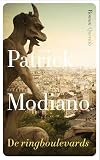
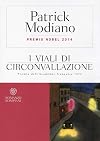
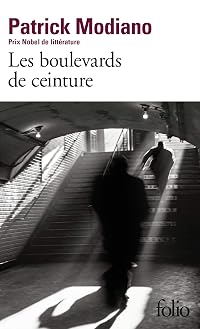
Ring Roads, for which Modiano was awarded the French Academy's Grand Prix du Roman (1972), is the story of a young Jew, Serge, in search of his father, Chalva, who disappeared from his life ten years earlier. He finds him trying to survive the war years in the unlikely company of black marketeers, anti-Semites and prostitutes, putting his meagre and not entirely orthodox business skills at the service of those who have no interest in him or his survival. Ring Roads is a brilliant, almost show more hallucinatory evocation of the uneasy, corrupt years of the Occupation and like The Night Watch is both cruel and tender - savage in its depiction of the anti-Semitic newspaper editor, the bullying ex-Foreign Legionnaire and the former prostitute, who treat Chalva with ever more threatening contempt; tender in its attempt to understand and identify with the Jew who cannot see the danger he courts. show lessTags
Recommendations




















Member Reviews
If one of the more annoying subgenres of LitFic is “Middle-aged introvert contemplates adultery”, then this book can be described as “Middle-aged introvert contemplates their daddy issues” -- another subgenre I have very little patience with.
That is the reason that this relatively short novel just didn't work for me. Other aspects of the book are decent to good -- the writing, the structure, the atmosphere, the gradual build-up to a reveal that makes you re-evaluate the entire story. All of that works: the portions of the book that deal with world-building and setting are excellent. I just don’t think it gelled well with the the main story, which, indeed, deals with a thirty-ish male introvert whining about their daddy show more issues: the bloated self-importance of those parts enervated me instead of engaging my interest.
So the main character grew up without his daddy, briefly ran a semi-successful antiques con together after high school, and then he just up and left his daddy. At the time of the main events, that was ten years ago, and now he’s tracked daddy down again, only for some unexplained reason daddy doesn't recognize him. And so we get to watch as the main character strikes up an awkward, spiteful acquaintance with his estranged father and his circle of unpleasant friends.
This one was not for me. Too much self-pity, too much whining, too much artificial mysteries generated by withholding information -- I just couldn't care. Modiano is good at invoking atmosphere, and there’s a late-ish reveal about the background that kinda sorta explains some of the mysteries, but, in my opinion, that was not enough to offset my annoyance. Better luck next time. show less
That is the reason that this relatively short novel just didn't work for me. Other aspects of the book are decent to good -- the writing, the structure, the atmosphere, the gradual build-up to a reveal that makes you re-evaluate the entire story. All of that works: the portions of the book that deal with world-building and setting are excellent. I just don’t think it gelled well with the the main story, which, indeed, deals with a thirty-ish male introvert whining about their daddy show more issues: the bloated self-importance of those parts enervated me instead of engaging my interest.
So the main character grew up without his daddy, briefly ran a semi-successful antiques con together after high school, and then he just up and left his daddy. At the time of the main events, that was ten years ago, and now he’s tracked daddy down again, only for some unexplained reason daddy doesn't recognize him. And so we get to watch as the main character strikes up an awkward, spiteful acquaintance with his estranged father and his circle of unpleasant friends.
This one was not for me. Too much self-pity, too much whining, too much artificial mysteries generated by withholding information -- I just couldn't care. Modiano is good at invoking atmosphere, and there’s a late-ish reveal about the background that kinda sorta explains some of the mysteries, but, in my opinion, that was not enough to offset my annoyance. Better luck next time. show less
Pochi metri piu' in la', di nuovo la penombra. Le case che distinguevo mi sembravano abbandonate. Il fruscio del vento tra le foglie. Forse aveva addirittura dimenticato, in quei dieci anni, la mia esistenza. Quante preoccupazioni e quanti sotterfugi per camminare accanto a quell'uomo... (51)
E ora che siamo seduti uno di fronte all'altro come due cani di terracotta e che posso a mio agio osservare la tua grossa testa levantina HO PAURA. (93)
... i figli uccidevano i padri per dimostrare a se stessi di possedere dei muscoli. Ma, al giorno d'oggi, contro chi rivolgere i nostri colpi? Eccoci condannati, da orfani quali siamo, a inseguire un fantasma alla ricerca di una paternita'. Impossibile raggiungerlo. Se la squaglia sempre. show more
Probabilmente i libri successivi sono migliori... show less
E ora che siamo seduti uno di fronte all'altro come due cani di terracotta e che posso a mio agio osservare la tua grossa testa levantina HO PAURA. (93)
... i figli uccidevano i padri per dimostrare a se stessi di possedere dei muscoli. Ma, al giorno d'oggi, contro chi rivolgere i nostri colpi? Eccoci condannati, da orfani quali siamo, a inseguire un fantasma alla ricerca di una paternita'. Impossibile raggiungerlo. Se la squaglia sempre. show more
Probabilmente i libri successivi sono migliori... show less
These Modiano books are highly weird. The premises, the situations, the people, the interactions. Can't wait for the next one!
Discard by the Library Board of Western Australia. Why? This is an excellent book and hard to find in English. I found this copy on a Friday night in Freo. Made my day and the following day when I read it.
Patrick lyckas verkligen måla upp stämningarna i berättelsens olika scener. Tyvärr tycker jag den är lite för "hoppig" och lite för kort för att man ska hinna få någon relation till karaktärerna.
Jan 6, 2015Swedish
Sujuvaa kerrontaa, mukava lukea. Jotenkin en innostunut, nuorempana ehkä olisin enemmänkin voinut tykätä. Ei mitään elämää suurempaa mutta ihan ok "välipala". Tämän perusteella en aio lukea enempää Modianoa.
Apr 22, 2018Finnish
Ratings
Members
- Recently Added By
Lists

Books Read in 2022
5,168 works; 114 members
Author Information

83+ Works 11,090 Members
Paul Modiano is a French writer who was born on July 30, 1945, in Boulogne-Billancourt. He won the Nobel Prize for Literature in 2014 for his lifetime body of work. He previously won the Austrian State Prize for European Literature in 2012 and the Prix mondial Cino Del Duca from the Institut de France for his lifetime achievement in 2010. His show more other awards include the Prix Goncourt in 1978 for his novel Rue des boutiques obscures and the Grand prix du roman de l'Académie française in 1972 for Les Boulevards de ceinture. Modiano's works explore the traumas of the Nazi occupation of France and the puzzle of identity. His preoccupation with the theme of identity can be seen throughout many of his works including his 2005 memoir entitled Un Pedigree. Modiano was greatly influenced by his parents' relationship. His mother and father began their clandestine relationship during occupied France. Growing up, his father was absent for most of his life and his mother was away frequently while on tour acting. He was alone much of the time and went to school because of government aid. His younger brother died of a disease at age 10 and this added to his "lost identity" feelings while growing up. Modiano first came to prominence in France when he wrote the 1968 book La Place de L'Étoile. He has published over 30 works which include novels, screenplays and children's books. His other works include: La Ronde de nuit (1969), English translation: Night Rounds; Rue des boutiques obscures (1978), English translation: Missing Person; and Quartier Perdu (1984), English translation: A Trace of Malice. Although he is well known in France, only about 12 of his works have been translated into English. (Bowker Author Biography) show less
Awards and Honors
Series

Belongs to Publisher Series
Work Relationships
Common Knowledge
- Canonical title
- Ring Roads
- Original title
- Les boulevards de ceinture
- Original publication date
- 1972-10-06 (1e édition originale française ∙ Blanche ∙ Gallimard) (1e édition originale française ∙ Blanche ∙ Gallimard); 1978-06-09 (Réédition française ∙ Folio ∙ Gallimard) (Réédition française ∙ Folio ∙ Gallimard)
- Important places*
- Paris, France
- Epigraph*
- Si j'avais des antécédents à un point quelconque de l'histoire de France !
Mais non, rien.
Rimbaud - Dedication*
- Pour Rudy
Pour Dominique - First words*
- Le plus gros des trois, c'est mon père, lui pourtant si svelte à l'époque. Murraille est penché vers lui comme pour lui dire quelque chose à voix basse. Marcheret, debout à l'arrière-plan, esquisse un sourire, le torse... (show all) légèrement bombé, les mains aux revers du veston. [...]
- Original language*
- Français
*Some information comes from Common Knowledge in other languages. Click "Edit" for more information.
Classifications
Statistics
- Members
- 241
- Popularity
- 134,984
- Reviews
- 6
- Rating
- (3.58)
- Languages
- 8 — Dutch, English, Finnish, French, Italian, Portuguese, Romanian, Swedish
- Media
- Paper, Ebook
- ISBNs
- 22
- ASINs
- 5