
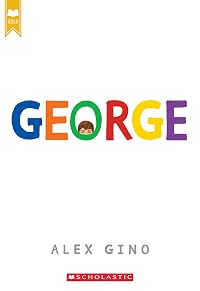
Melissa
by Alex Gino
On This Page
Description
"When people look at Melissa, they think they see a boy named George. But she knows she's not a boy. She knows she's a girl. Melissa thinks she'll have to keep this a secret forever. Then her teacher announces that their class play is going to be Charlotte's Web. Melissa really, really, REALLY wants to play Charlotte. But the teacher says she can't even try out for the part . . . because she's a boy. With the help of her best friend, Kelly, Melissa comes up with a plan. Not just so she can show more be Charlotte -- but so everyone can know who she is, once and for all"--Provided by publisher. show lessTags
Recommendations
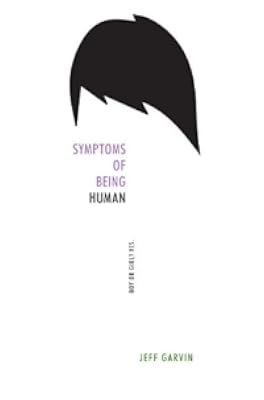
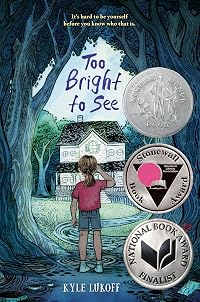
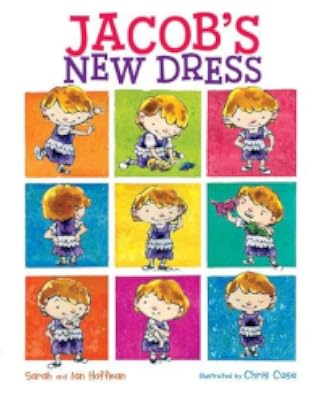
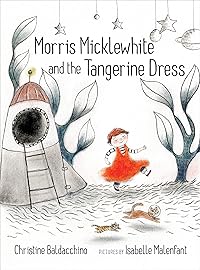
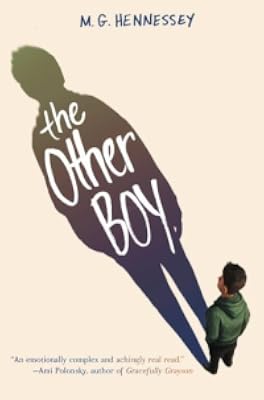
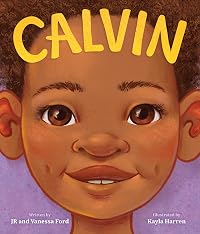
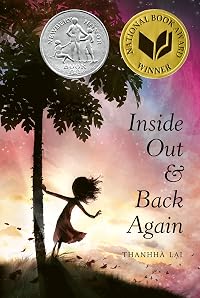
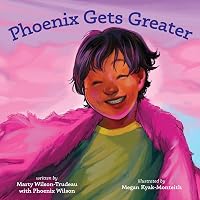
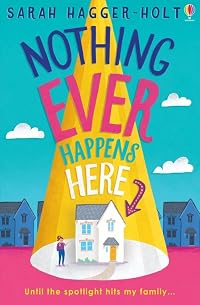
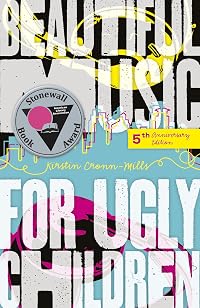
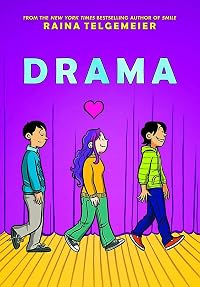

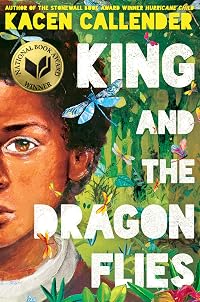
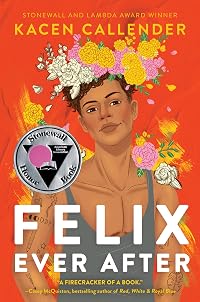
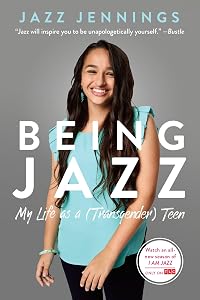
Member Recommendations
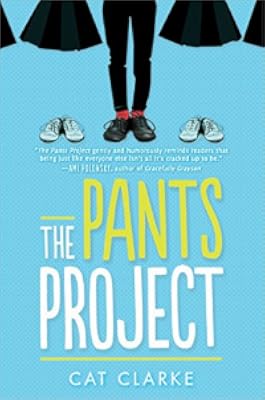
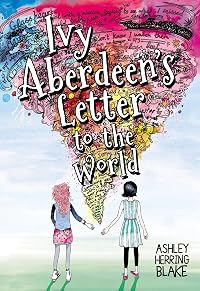
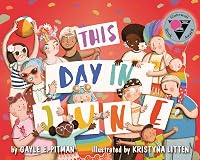
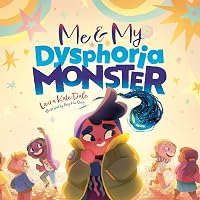
anonymous user Another upper elementary novel about a transgender child, this one who identifies as non-binary.
Member Reviews
I loved how Gino chose to depict Melissa's story starting from her first really starting to want to express her girlhood to other people to the full acceptance. It was made better by the great support system Melissa ends up having, but made better by how flawed they are. Scott is using the wrong language but he has the spirit. Her best friend Kelly is an honest godsend. Her mom needs to take time to reconcile and in the most realistic part of the book (to me) talks about how she just doesn't want Melissa's life to be harder. She still has bullies. I feel like it can be tempting in books aimed at younger audiences to play up a conclusion where everyone is so understanding and accepting, whereas Gino went for some great friends and the show more jerks are still jerks. It felt like a better representation of what its like to grow up queer and I really appreciated it. show less
George, a fourth-grader who knows she is a girl, despite appearances, begins to tell her secret.
The word “transgender” is used midway through, but far more work is done by the simple choice to tell George’s story using third-person narration and the pronouns “she” and “her.” Readers then cringe as much as George herself when bullies mock her or—perhaps worse—when well-meaning friends and family reassure her with sentiments like “I know you’ll turn into a fine young man.” Each year the fourth-graders at George’s school perform a dramatized version of Charlotte’s Web, the essentials of which are lovingly recapped (and tear-inducing ending revealed) for readers unfamiliar with the tale. George becomes convinced show more that if she plays Charlotte, her mom will finally see her as a girl. George’s struggles are presented with a light, age-appropriate, and hopeful touch. The responses she gets when she begins to confide in those closest to her are at times unexpected but perfectly true-to-character—most notably her crude older brother’s supportive observation that, “No offense, but you don’t make a very good boy.” A coda to the Charlotte’s Web story, in which George presents herself as a girl for the first time, is deeply moving in its simplicity and joy. (This review was updated to reflect a change to the title.)
Warm, funny, and inspiring. (Fiction. 9-12)
-Kirkus Review show less
The word “transgender” is used midway through, but far more work is done by the simple choice to tell George’s story using third-person narration and the pronouns “she” and “her.” Readers then cringe as much as George herself when bullies mock her or—perhaps worse—when well-meaning friends and family reassure her with sentiments like “I know you’ll turn into a fine young man.” Each year the fourth-graders at George’s school perform a dramatized version of Charlotte’s Web, the essentials of which are lovingly recapped (and tear-inducing ending revealed) for readers unfamiliar with the tale. George becomes convinced show more that if she plays Charlotte, her mom will finally see her as a girl. George’s struggles are presented with a light, age-appropriate, and hopeful touch. The responses she gets when she begins to confide in those closest to her are at times unexpected but perfectly true-to-character—most notably her crude older brother’s supportive observation that, “No offense, but you don’t make a very good boy.” A coda to the Charlotte’s Web story, in which George presents herself as a girl for the first time, is deeply moving in its simplicity and joy. (This review was updated to reflect a change to the title.)
Warm, funny, and inspiring. (Fiction. 9-12)
-Kirkus Review show less
George does not feel like she fits in. She's always felt this way, but when the school is putting on a play of Charlotte's Webb, George wants to play the part of Charlotte more than anything. She wants it so badly she is willing to take a huge risk and audition for Charlotte's part in the play. While her teacher doesn't grant George the part because too many "actual" girls want it, George gets the chance to play her dream role after all thanks to the help of her best friend Kelly. Throughout the story, George begins to reveal her secret to more and more of her loved ones, finally reaching acceptance at the end of the book.
This book dives into transgender and gender identity, which is a very delicate topic, especially because of how show more (relatively) new the conversation surrounding it is. The use of the pronoun "she" throughout the book was a really well thought out detail on Gino's part, since it's written in George's perspective and it expresses how she sees herself. All the little, well-meaning but extremely gendered comments Gino includes from others in the book show that words are very powerful, and something well intentioned can be very hurtful, which is a point often forgotten. Another detail that was very thoughtful was the Rainbow LGBTQ poster in the principal's office that made George wonder if there really was a safe space with other people like her out there. The principals comments such as the one to George's mom saying, "you can't control who your children are, but you certainly can support them" and her offer to George that "her door is always open" show what a positive and supportive school official can do for a child struggling with their gender identity. I was surprised at how relatable this book seems to be because even if someone does not understand exactly what George is going through, everyone can relate to feeling different than how others feel you're "supposed" to be or to having to keep something hidden. show less
This book dives into transgender and gender identity, which is a very delicate topic, especially because of how show more (relatively) new the conversation surrounding it is. The use of the pronoun "she" throughout the book was a really well thought out detail on Gino's part, since it's written in George's perspective and it expresses how she sees herself. All the little, well-meaning but extremely gendered comments Gino includes from others in the book show that words are very powerful, and something well intentioned can be very hurtful, which is a point often forgotten. Another detail that was very thoughtful was the Rainbow LGBTQ poster in the principal's office that made George wonder if there really was a safe space with other people like her out there. The principals comments such as the one to George's mom saying, "you can't control who your children are, but you certainly can support them" and her offer to George that "her door is always open" show what a positive and supportive school official can do for a child struggling with their gender identity. I was surprised at how relatable this book seems to be because even if someone does not understand exactly what George is going through, everyone can relate to feeling different than how others feel you're "supposed" to be or to having to keep something hidden. show less
Ms. Udell passed by George's desk. "To be honest, I'm not sure what I think of a person who doesn't cry at the end of Charlotte's Web."
"You didn't," George mumbled.
"I did the first three times ... and a good number of times since." Ms. Udell paused, and for a moment it looked as if she might tear up right then. "My point is, it takes a special person to cry over a book. It shows compassion as well as imagination." Ms. Udell patted George's shoulder. "Don't ever lose that, George, and I know you'll turn into a fine young man."
- Chapter II
The problem is, George considers herself a girl. And even well-meaning people, like her 4th-grade teacher, hurt her feelings without realizing it. Throughout the book, the narrator refers to George show more using female pronouns - the same way George refers to herself. This reinforces for the reader the sense of George being a girl. We see George, during private moments looking at women's magazines and being herself. This contrasts with George's public life with her mom and older brother and with everyone at school. George really wants to play Charlotte in the school play and the teacher refuses to even consider her because she is a boy. George finds acceptance in her best friend who helps her find ways to be true to herself.
This is a touching story about a child trying to get people to accept her for who she is. Her struggle is presented in an age-appropriate way that while difficult at times, remains hopeful.
The reason I became interested in this book is because a third-grade teacher at school was complaining about it. She didn't like that one of the students in her class was reading it. She came into the library to ask if we had the book and to point out that she thought it was inappropriate for third-graders. I looked into it and School Library Journal recommends it to grades 4-6, Kirkus Reviews says ages 9-12 and Publishers Weekly says ages 8-12. The student got the book from home so it wasn't really an issue.
I am glad I read the book. I believe it is well thought out and appropriate for kids. As I learned in my grad school class, books like this can be mirrors or windows, depending on the reader. It helps children who might be transgender to understand themselves and have a character they can relate to (mirror). It also helps children empathize with what others might be going through (window).
Recommended to:
Generally, 4th grade and up, but as always parents know their own kids best. show less
"You didn't," George mumbled.
"I did the first three times ... and a good number of times since." Ms. Udell paused, and for a moment it looked as if she might tear up right then. "My point is, it takes a special person to cry over a book. It shows compassion as well as imagination." Ms. Udell patted George's shoulder. "Don't ever lose that, George, and I know you'll turn into a fine young man."
- Chapter II
The problem is, George considers herself a girl. And even well-meaning people, like her 4th-grade teacher, hurt her feelings without realizing it. Throughout the book, the narrator refers to George show more using female pronouns - the same way George refers to herself. This reinforces for the reader the sense of George being a girl. We see George, during private moments looking at women's magazines and being herself. This contrasts with George's public life with her mom and older brother and with everyone at school. George really wants to play Charlotte in the school play and the teacher refuses to even consider her because she is a boy. George finds acceptance in her best friend who helps her find ways to be true to herself.
This is a touching story about a child trying to get people to accept her for who she is. Her struggle is presented in an age-appropriate way that while difficult at times, remains hopeful.
The reason I became interested in this book is because a third-grade teacher at school was complaining about it. She didn't like that one of the students in her class was reading it. She came into the library to ask if we had the book and to point out that she thought it was inappropriate for third-graders. I looked into it and School Library Journal recommends it to grades 4-6, Kirkus Reviews says ages 9-12 and Publishers Weekly says ages 8-12. The student got the book from home so it wasn't really an issue.
I am glad I read the book. I believe it is well thought out and appropriate for kids. As I learned in my grad school class, books like this can be mirrors or windows, depending on the reader. It helps children who might be transgender to understand themselves and have a character they can relate to (mirror). It also helps children empathize with what others might be going through (window).
Recommended to:
Generally, 4th grade and up, but as always parents know their own kids best. show less
Originally seen on Emily Reads Everything
I loved this book! I'm so excited to have read it and be able to recommend it to everyone! However, its really difficult for me to review a book like this. I don't know how to say enough nice things about it. The writing is top notch. The story is told from George's perspective. I loved reading about her thoughts and feelings. She knows she is really Melissa inside but she's afraid that no one will understand. She spends all her time focusing on hiding her true self. while at the same time she hates who the world says she is.
This is an important book. Every school should have a copy. Every library should have one. This book should be everywhere, for one simple reason. There are children out show more there who feel just like George. If just one child who needs this book, has it available to them and reads it, it will be worth it. Having this book, will show trans children that they aren't alone; that there are other children out there that feel the same way. According to the American Foundation for Suicide Prevention, the suicide rate among Transgender and Gender Non-Conforming Adults is 41% when it's only 4.6 percent in the overall US population. This book could literally save lives. You don't say that every day. show less
I loved this book! I'm so excited to have read it and be able to recommend it to everyone! However, its really difficult for me to review a book like this. I don't know how to say enough nice things about it. The writing is top notch. The story is told from George's perspective. I loved reading about her thoughts and feelings. She knows she is really Melissa inside but she's afraid that no one will understand. She spends all her time focusing on hiding her true self. while at the same time she hates who the world says she is.
This is an important book. Every school should have a copy. Every library should have one. This book should be everywhere, for one simple reason. There are children out show more there who feel just like George. If just one child who needs this book, has it available to them and reads it, it will be worth it. Having this book, will show trans children that they aren't alone; that there are other children out there that feel the same way. According to the American Foundation for Suicide Prevention, the suicide rate among Transgender and Gender Non-Conforming Adults is 41% when it's only 4.6 percent in the overall US population. This book could literally save lives. You don't say that every day. show less
When I saw this book on a list of most banned books, I wanted to read it as I could. I remember being told by my pediatrician when I had a physical for kindergarten that I was a boy. I immediately started to cry and did not until I got home. That was the first memory about gender identity that I had. I also remember playing with a train set in kindergarten and being picked up by a teacher and carried over to a play set of a sink and dishes.
What does matter what a child like to play with? We are all individuals, and that does not seem important to me. What is significant is who you think you are. I knew that I was a female, luckily, I had a matching body. But there are people who do not match their assigned gender identity. Christine show more Jorgensen. I read her biography in graduate school. I remember crying for her while I read it.
Children need to be able to find books similar to themselves in libraries.
I thought that Alex Gino did a great job in figuring out how to write this book. The only thing that could have been better would be a book about the experience of being defined as a male when you are female. There needs be room for everyone, like girls who hate dresses but know that they are female. We require diversity, acceptance and empathy for everyone. show less
What does matter what a child like to play with? We are all individuals, and that does not seem important to me. What is significant is who you think you are. I knew that I was a female, luckily, I had a matching body. But there are people who do not match their assigned gender identity. Christine show more Jorgensen. I read her biography in graduate school. I remember crying for her while I read it.
Children need to be able to find books similar to themselves in libraries.
I thought that Alex Gino did a great job in figuring out how to write this book. The only thing that could have been better would be a book about the experience of being defined as a male when you are female. There needs be room for everyone, like girls who hate dresses but know that they are female. We require diversity, acceptance and empathy for everyone. show less
Man, this was good. Painful and uplifting and beautiful. Gino nails it*—what it’s like being a trans-girl, the ten-year-old voice and mentality, the microaggressions, the outright bullies, the adults who mean well but don’t get it. I was sucked in from the start and even one chapter in was gunning for George to get her happy ending. This should be in every school library so that every George can find it and every kid who isn’t a George can read it and have a good long think.
* she says, as a cis-woman who probably gets all sorts of gender stuff wrong
8/10
* she says, as a cis-woman who probably gets all sorts of gender stuff wrong
8/10
Members
- Recently Added By
Lists

Transgender Characters
91 works; 5 members

4th Grade Books
312 works; 5 members

Sexuality & Gender
160 works; 3 members

Books Read in 2015
3,299 works; 129 members
Books Read in 2016
4,666 works; 197 members

Banned Books 2019
10 works; 4 members

Banned or Challenged Books
400 works; 41 members

School library books removed after TX state legislator inquiry
429 works; 6 members

Bullies
44 works; 2 members

Florida's Book Bans and Challenges
311 works; 4 members

Sex Positive Sex-Ed books
35 works; 1 member

Pride Wishlist
54 works; 1 member

Middle Grade Books With Trans Characters
2 works; 1 member
Author Information

7+ Works 3,145 Members
Some Editions
Awards and Honors
Awards
Distinctions
Notable Lists
Series
Belongs to Publisher Series
Common Knowledge
- Canonical title
- Melissa
- Original title
- George
- Alternate titles
- Melissa's Story
- Original publication date
- 2015
- People/Characters
- George Mitchell; Kelly Arden; Scott Mitchell; Jeff Forrester; Ms. Udell; Principle Maldonado
- Important places
- Bronx Zoo, New York, New York, USA
- Dedication
- TO YOU,
FOR WHEN YOU FELT
DIFFERENT - First words
- George pulled a silver house key out of the smallest pocket of a large red backpack.
- Last words
- (Click to show. Warning: May contain spoilers.)So far.
- Publisher's editor
- Levithan, David
- Original language
- English
- Disambiguation notice
- The title has changed since the work's initial publication to Melissa. See the author's note (as of 2022).
Classifications
- Genres
- LGBTQ+, Kids, Tween, Fiction and Literature, Children's Books
- DDC/MDS
- 813.6 — Literature & rhetoric American literature in English American fiction in English 2000-
- LCC
- PZ7.1 .G576 .G — Language and Literature Fiction and juvenile belles lettres Fiction and juvenile belles lettres Juvenile belles lettres
- BISAC
Statistics
- Members
- 2,323
- Popularity
- 8,499
- Reviews
- 291
- Rating
- (4.19)
- Languages
- 11 — Catalan, Danish, Dutch, English, French, German, Italian, Polish, Portuguese, Spanish, Swedish
- Media
- Paper, Audiobook, Ebook
- ISBNs
- 50
- ASINs
- 10