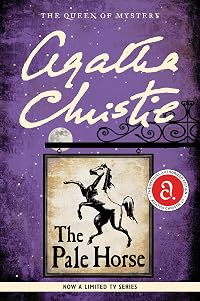
On This Page
Description
When an elderly priest is murdered, the killer searches the victim so roughly that his already ragged cassock is torn in the process. What was the killer looking for? And what had a dying woman confided to the priest on her deathbed only hours earlier? Mark Easterbrook and his sidekick Ginger Corrigan are determined to find out. Maybe the three women who run The Pale Horse public house, and who are rumored to practice the "Dark Arts," can provide some answers?Tags
Recommendations

















Member Recommendations
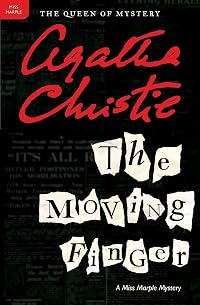
Porua The narrator of The Pale Horse, Mark Easterbrook, reminds me of the narrator of another Agatha Christie book. Jerry Barton from The Moving Finger. In both of these stories the urban hero goes to a small town and gets entangled in a spine chilling mystery. Another thing that these two books have in common is an unconventional old lady named Mrs. Dane Calthrop, one of the more unique creations of Christie.
40
Member Reviews
I watched the new adaptation on Prime. I've also seen the ITV's two versions, a not-good 1990s film and the weirdly contorted Agatha Christie's Marple version; and oddly enough the book was cheap on Kindle a few years ago, so I gave that a peruse when I saw this version was coming; I should, at this point, be able to teach a workshop in Christie Adaptations.
The new one is very, very pretty. Rufus Sewell, as Mark Easterbrook, is very, very pretty. Mark's flat, the village of Much Deeping, his Lagonda 3-litre drophead coupé, all of it, very, very pretty. Deviations from the novel include doing away with Ariadne Oliver (*barely* present in the book, anyway!) and the Dane Calthorps and the peculiar appendix that is the Ginger/lawyer show more subplot; the ending isn't even remotely like the novel's, and is quite...murky. I will say that the scene where Easterbrook puts together the clues that lead to the solution was hair-raising, pitch-perfect Christie (even though it's absolutely nowhere in the book).
The Agatha Christie's Marple version hewed more closely to the ending of the novel. It was actually very good, and the two-hour episode was darn good at creating the eerie atmosphere needed to sell the misdirection at the heart of the story.
The 1990s movie was flat, uninspired. The whole thing reeked of budget woes.
The book...a 1961 publication so squarely in Christie's best years...is delightfully twisty. The plot is not the point, as when is it ever in a Christie book; the plot makes her point: we destroy others to live, whether or not we know it, and leave a wake of carnage that only a change in perspective reveals. It is masterful, and beautifully hidden in plain sight.
Enjoy the read for what it is; then, without letting your inner book-snob turn you into a harsher critic than is called for, enjoy the new films. Yes, the text is changed; no, the story is not. The point is still very much the point and it's still turned around to stab you as well as the other victims. show less
The new one is very, very pretty. Rufus Sewell, as Mark Easterbrook, is very, very pretty. Mark's flat, the village of Much Deeping, his Lagonda 3-litre drophead coupé, all of it, very, very pretty. Deviations from the novel include doing away with Ariadne Oliver (*barely* present in the book, anyway!) and the Dane Calthorps and the peculiar appendix that is the Ginger/lawyer show more subplot; the ending isn't even remotely like the novel's, and is quite...murky. I will say that the scene where Easterbrook puts together the clues that lead to the solution was hair-raising, pitch-perfect Christie (even though it's absolutely nowhere in the book).
The Agatha Christie's Marple version hewed more closely to the ending of the novel. It was actually very good, and the two-hour episode was darn good at creating the eerie atmosphere needed to sell the misdirection at the heart of the story.
The 1990s movie was flat, uninspired. The whole thing reeked of budget woes.
The book...a 1961 publication so squarely in Christie's best years...is delightfully twisty. The plot is not the point, as when is it ever in a Christie book; the plot makes her point: we destroy others to live, whether or not we know it, and leave a wake of carnage that only a change in perspective reveals. It is masterful, and beautifully hidden in plain sight.
Enjoy the read for what it is; then, without letting your inner book-snob turn you into a harsher critic than is called for, enjoy the new films. Yes, the text is changed; no, the story is not. The point is still very much the point and it's still turned around to stab you as well as the other victims. show less
The scholar Mark Easterbrook is taking a break in a Chelsea cafe when a fight breaks out between two young women, one of whom is seen pulling the other’s hair out by the roots. He thinks nothing of this until a couple of weeks later, when he reads the obituary of the second woman, who had seemed in perfect health when he witnessed the fight. Shortly after that, someone mentions “the pale horse” as an answer to how to remove unwanted people, and soon after *that* Mark happens to be visiting a country house and discovers that an old inn, known as the Pale Horse, has been converted into the dwelling of three middle-aged women, who might or might not be witches and who might or might not have the means of causing mysteriously show more ordinary-seeming deaths…. I came across this book after a critic mentioned it in response to someone who had suggested that Mrs. Christie only wrote cozies; this book was cited as anything *but* cozy and since it’s one of hers that I hadn’t read (or even heard of), I decided to give it a try. It is indeed not a cozy; it’s quite dark and full of weird pseudoscience mixed in with primitive “magic.” Although it is somewhat dated (having been published in 1961) with several attitudes toward women and non-Europeans that wouldn’t pass muster today, if one can ignore those aspects as simply being of their time and place, this is a quite entertaining read. And, of course, Mrs. Christie was a master plotter and story-teller; I didn’t guess the culprit until almost the very end! Recommended! show less
I'm incredibly creeped out at the moment. I'm not sure if it's something I caught from the main character of the novel or if the conjuring in the middle was just too much, but I'm intensely glad that it's sunny right now. I should probably add that I am not one who gets scared for fun. But, after a few lower-rated Christies, this was one of her better works and I am suitably terrified and shocked that I following the red herrings.
It all begins when Mark, bored as most of her POV main characters are, gets tangled up in the murder of a kindly parish priest. He doesn't think much of it until, aided and abetted by the self-caricature she creates in Ariadne Oliver---who really wasn't featured as much as I would have wished, he runs into a show more historic tavern run by three local "witches" that claim they can eliminate surplus people through spectacular means.
I'm still shuddering at it all... I think that may have been one of the "closest calls" I've ever read. As the pages left to be read on the left started getting fewer and fewer I was starting to get a bit panicky and wonder how I would sleep tonight if the mystery wasn't solved; but Agatha came through. Highly appropriate in view of the upcoming Halloween weekend. show less
It all begins when Mark, bored as most of her POV main characters are, gets tangled up in the murder of a kindly parish priest. He doesn't think much of it until, aided and abetted by the self-caricature she creates in Ariadne Oliver---who really wasn't featured as much as I would have wished, he runs into a show more historic tavern run by three local "witches" that claim they can eliminate surplus people through spectacular means.
I'm still shuddering at it all... I think that may have been one of the "closest calls" I've ever read. As the pages left to be read on the left started getting fewer and fewer I was starting to get a bit panicky and wonder how I would sleep tonight if the mystery wasn't solved; but Agatha came through. Highly appropriate in view of the upcoming Halloween weekend. show less
"Evil is not something superhuman, it's something less than human."
A priest takes a confession from a dying woman in a boarding house. How much of what he's just heard is true and how much is delirium. What he does know is that he must write down a list of names the woman has given him before he forgets them which he does at a small cafe. However, on his way home, he is murdered but the culprit does not find the list secreted in his shoe. This then becomes the only clue into his murder.
Mark Easterbrook is friends with the police pathologist working on the case, Jim Corrigan, and finds himself drawn into the mystery by a few mysterious coincidences. Moving from chic Chelsea coffee houses to an old inn known as The Pale Horse in the show more sleepy countryside outside of Bournemouth. The inn has closed and is now lived in by a trio of women akin to the witches in MacBeth who claim to have super-natural gifts. Easterbrook realises that something sinister is linked with the Pale Horse and suspects that there is a criminal mastermind behind the operation so along with a female friend sets out to try and unmask this murdering maniac. All appears to be failing until a chance remark suddenly sets everything into place with typical Agatha Christie twist and style.
The book was first published in the early 1960's and the reader clearly gets a feel for place and time. You can just imagine yourself sat in the chic coffee houses of Chelsea surrounded by their "cool" clientele but also the rural countryside where the vicarage becomes the centre of village life with their fetes etc.
Most of the characters are well developed and perhaps best of all there is no Marple or Poirot in sight. There is no flowery sequences and the plot line is taut throughout. I felt like a fish on a hook being methodically reeled in. What the three witches profess to be able to do initially sounds totally far-fetched yet as the action progresses you cannot help but wonder as to whether or not there really is any truth in it.
I did NOT guess the identity of the killer and was totally caught out by the final twist. Each time I thought that I had worked it out I was proved wrong which is as it should be. If I had one complaint it is that the end came a bit too quickly. Murder mysteries are not really my usual fayre but all the same I found this an enjoyable read and believe that any real fans of the genre will do so too. show less
A priest takes a confession from a dying woman in a boarding house. How much of what he's just heard is true and how much is delirium. What he does know is that he must write down a list of names the woman has given him before he forgets them which he does at a small cafe. However, on his way home, he is murdered but the culprit does not find the list secreted in his shoe. This then becomes the only clue into his murder.
Mark Easterbrook is friends with the police pathologist working on the case, Jim Corrigan, and finds himself drawn into the mystery by a few mysterious coincidences. Moving from chic Chelsea coffee houses to an old inn known as The Pale Horse in the show more sleepy countryside outside of Bournemouth. The inn has closed and is now lived in by a trio of women akin to the witches in MacBeth who claim to have super-natural gifts. Easterbrook realises that something sinister is linked with the Pale Horse and suspects that there is a criminal mastermind behind the operation so along with a female friend sets out to try and unmask this murdering maniac. All appears to be failing until a chance remark suddenly sets everything into place with typical Agatha Christie twist and style.
The book was first published in the early 1960's and the reader clearly gets a feel for place and time. You can just imagine yourself sat in the chic coffee houses of Chelsea surrounded by their "cool" clientele but also the rural countryside where the vicarage becomes the centre of village life with their fetes etc.
Most of the characters are well developed and perhaps best of all there is no Marple or Poirot in sight. There is no flowery sequences and the plot line is taut throughout. I felt like a fish on a hook being methodically reeled in. What the three witches profess to be able to do initially sounds totally far-fetched yet as the action progresses you cannot help but wonder as to whether or not there really is any truth in it.
I did NOT guess the identity of the killer and was totally caught out by the final twist. Each time I thought that I had worked it out I was proved wrong which is as it should be. If I had one complaint it is that the end came a bit too quickly. Murder mysteries are not really my usual fayre but all the same I found this an enjoyable read and believe that any real fans of the genre will do so too. show less
WARNING: This review contains spoilers.
If you've read Agatha Christie's Why Didn't They Ask Evans? (aka The Boomerang Clue), you may note that The Pale Horse is similar in structure. Both novels involve a dynamic duo of plucky young(ish) people investigating a situation they have deemed suspicious, both have a surprising twist reveal of the killer, and both end with the plucky young people deciding to get married. This is not necessarily a bad thing, as both stories are sufficiently different from each other that it does not feel repetitive.
This story is decidedly more sinister than Evans. The story begins with narrator Mark Easterbrook, historian and writer of some merit, witnessing a catfight in a Chelsea coffee bar. He notices that show more one of the girls, Thomasina, has her hair pulled out in handfuls in the altercation, and he is shocked by this, especially when she claims it did not hurt. He is even more surprised a week later when he reads her name in the paper and learns that she has died before coming of age, and since she was due to receive a substantial fortune at that time, someone profited handsomely by her death.
Meanwhile, a dying Catholic woman sends for a priest to read her the last rites and hear her confession. Evidently there is something particularly amiss in her confession, because the priest writes down a list of names that the dying woman mentions. He leaves after the woman dies, then he himself is killed on his way home. What did the woman confess? What was the priest silenced for?
Well! It is quite the story. The listed persons all died seemingly of natural causes, and all the deaths provided a benefit to someone. And there's a group of three women claiming that they have supernatural power, and that they can kill someone merely by activating that person's "death wish". The person will then get sick and die, seemingly because their body wants them to die. But Mark's not so sure about this. He has to investigate what's happening...
As you can see, this is quite the crackerjack plot. Black magic, amateur detectives, a cameo appearance by Christie caricature Ariadne Oliver? Bring it on. The story did suffer from some pacing issues, although that could have been me being impatient because I already knew how all the victims died; I was just waiting to see how it was inserted into the story. The ending definitely did not disappoint, with me doing a double-take at the end. "Wait, what?! How is HE the murderer??" And the suspense of not knowing when Ginger would be taken ill was quite agonizing at a couple of points -- I almost couldn't keep reading because I couldn't bear to see the plucky young amateur detectives getting hurt. But it was worth it. show less
If you've read Agatha Christie's Why Didn't They Ask Evans? (aka The Boomerang Clue), you may note that The Pale Horse is similar in structure. Both novels involve a dynamic duo of plucky young(ish) people investigating a situation they have deemed suspicious, both have a surprising twist reveal of the killer, and both end with the plucky young people deciding to get married. This is not necessarily a bad thing, as both stories are sufficiently different from each other that it does not feel repetitive.
This story is decidedly more sinister than Evans. The story begins with narrator Mark Easterbrook, historian and writer of some merit, witnessing a catfight in a Chelsea coffee bar. He notices that show more one of the girls, Thomasina, has her hair pulled out in handfuls in the altercation, and he is shocked by this, especially when she claims it did not hurt. He is even more surprised a week later when he reads her name in the paper and learns that she has died before coming of age, and since she was due to receive a substantial fortune at that time, someone profited handsomely by her death.
Meanwhile, a dying Catholic woman sends for a priest to read her the last rites and hear her confession. Evidently there is something particularly amiss in her confession, because the priest writes down a list of names that the dying woman mentions. He leaves after the woman dies, then he himself is killed on his way home. What did the woman confess? What was the priest silenced for?
Well! It is quite the story. The listed persons all died seemingly of natural causes, and all the deaths provided a benefit to someone. And there's a group of three women claiming that they have supernatural power, and that they can kill someone merely by activating that person's "death wish". The person will then get sick and die, seemingly because their body wants them to die. But Mark's not so sure about this. He has to investigate what's happening...
As you can see, this is quite the crackerjack plot. Black magic, amateur detectives, a cameo appearance by Christie caricature Ariadne Oliver? Bring it on. The story did suffer from some pacing issues, although that could have been me being impatient because I already knew how all the victims died; I was just waiting to see how it was inserted into the story. The ending definitely did not disappoint, with me doing a double-take at the end. "Wait, what?! How is HE the murderer??" And the suspense of not knowing when Ginger would be taken ill was quite agonizing at a couple of points -- I almost couldn't keep reading because I couldn't bear to see the plucky young amateur detectives getting hurt. But it was worth it. show less
Imagine: a Christie I hadn't read. Ever. But I've re-read enough Christie in my adult life to know that sometimes she works well, sometimes less so. Which would this be?
It turns out, a strange mix of classic Christie, modern Christie, Christie commentary and something unfinished that makes it a most odd kind of book.
It begins with Christie's traditional rather anonymous, milquetoast narrator, something along the lines of Roger Ackroyd. He is supposed to be working on his latest manuscript on Mogul architecture when he "had suffered from one of those sudden revulsions that all writers know.... --all the fascinating problems it raised, become suddenly as dust and ashes. What did they matter? Why did I want to write about them?" He takes show more a coffee in Chelsea, musing on the sinister noise of modern conveniences, when two of the 'off-beat' (and we chuckle a little at the naivete of the narrator) clientele get in a fighting match over a boy one has stolen from the other. I was struck by how present Christie seemed in his words, Mark's musing on writing, the lament of "contemporary noises," and dress styles of the new generation no doubt echoing her own.
Only a week later, Mark is reading the obituaries and realizes one of the young ladies who was in the fight has suddenly died, and will not be getting her kicks in Chelsea any longer. He feels sympathy, but then notes, "Yet after all, I reminded myself, how did I know that my view was the right one? Who was I to pronounce it a wasted life? Perhaps it was my life, my quiet scholarly life, immersed in books, shut off from the world, that was the wasted one. Life at second hand. Be honest now, was I getting kicks out of life?"
Really quite brilliant, both in hearing the author's experience and age coming through, and in justification for Mark's future actions. But not right away, of course. First he must pay a visit to his friend Ariadne Oliver. And once again, I heard Christie loud and clear: "Or, it might be someone wanting an interview--asking me all those embarrassing questions which are always the same every time. What made you first think of taking up writing? How many books have you written? How much money do you make. Etc. etc." Just as I was chuckling over that, she launches in the oddness of murder in real life compared to books:
"Say what you like, it's not natural for five or six people to be on the spot when B is murdered and all to have a motive for killing B-unless, that is, B is absolutely madly unpleasant and in that case nobody will mind whether he's been killed or not..."
'I see your problem,' I said. 'But if you've dealt with it successfully fifty-five times, you will manage to deal with it once again.'
'That's what I tell myself,' said Mrs. Oliver, 'over and over again, but every single time I can't believe it and so I'm in agony.'
Really, the beginning bit of the story feels so clearly Christie commentary, that though the murder came along by page twenty, I was enjoying the digression and insight. So I was all set to adore, the meta and the concrete blending so nicely, when it turns out that a large portion of the plot is the new-fangled notion of the psychology of the individual (echoes of Poirot) being convinced through a combination of psychology and superstitious belief that they are ill, soon becoming truly physically ill, only to finally die. That sort of pre-60s, recast 1900s mysticism. Yes, there is a séance.
Then she interjects herself again, in the form of a chemist who is very excited to be a witness to the murder, having practiced memorizing faces for just such an opportunity. Oh, Christie, you sly dog. I might have giggled when he came along.
The Pale Horse was, I believe, was close to her fifty-fifth book, and just lacked something for me in terms of plot translation. Add to that that the transitions between sections was particularly abrupt, it wasn't the charming, insightful read I first thought. The plot meandered for a bit, following the local coroner and detective, the coroner conveniently a friend of Mark's. There is more than a bit of atmospheric silliness at the end that completely failed to develop much of an atmosphere for me--had we been talking decades earlier, perhaps I could have taken it more seriously--but there were a solid couple of plot twists at the end that I appreciated. So, mark down as enjoyable, diverting; worthy of thoughts on a long career and social change, but not one to add to my own library.
Three-and-a-half stars, rounding up for authorial voice. show less
It turns out, a strange mix of classic Christie, modern Christie, Christie commentary and something unfinished that makes it a most odd kind of book.
It begins with Christie's traditional rather anonymous, milquetoast narrator, something along the lines of Roger Ackroyd. He is supposed to be working on his latest manuscript on Mogul architecture when he "had suffered from one of those sudden revulsions that all writers know.... --all the fascinating problems it raised, become suddenly as dust and ashes. What did they matter? Why did I want to write about them?" He takes show more a coffee in Chelsea, musing on the sinister noise of modern conveniences, when two of the 'off-beat' (and we chuckle a little at the naivete of the narrator) clientele get in a fighting match over a boy one has stolen from the other. I was struck by how present Christie seemed in his words, Mark's musing on writing, the lament of "contemporary noises," and dress styles of the new generation no doubt echoing her own.
Only a week later, Mark is reading the obituaries and realizes one of the young ladies who was in the fight has suddenly died, and will not be getting her kicks in Chelsea any longer. He feels sympathy, but then notes, "Yet after all, I reminded myself, how did I know that my view was the right one? Who was I to pronounce it a wasted life? Perhaps it was my life, my quiet scholarly life, immersed in books, shut off from the world, that was the wasted one. Life at second hand. Be honest now, was I getting kicks out of life?"
Really quite brilliant, both in hearing the author's experience and age coming through, and in justification for Mark's future actions. But not right away, of course. First he must pay a visit to his friend Ariadne Oliver. And once again, I heard Christie loud and clear: "Or, it might be someone wanting an interview--asking me all those embarrassing questions which are always the same every time. What made you first think of taking up writing? How many books have you written? How much money do you make. Etc. etc." Just as I was chuckling over that, she launches in the oddness of murder in real life compared to books:
"Say what you like, it's not natural for five or six people to be on the spot when B is murdered and all to have a motive for killing B-unless, that is, B is absolutely madly unpleasant and in that case nobody will mind whether he's been killed or not..."
'I see your problem,' I said. 'But if you've dealt with it successfully fifty-five times, you will manage to deal with it once again.'
'That's what I tell myself,' said Mrs. Oliver, 'over and over again, but every single time I can't believe it and so I'm in agony.'
Really, the beginning bit of the story feels so clearly Christie commentary, that though the murder came along by page twenty, I was enjoying the digression and insight. So I was all set to adore, the meta and the concrete blending so nicely, when it turns out that a large portion of the plot is the new-fangled notion of the psychology of the individual (echoes of Poirot) being convinced through a combination of psychology and superstitious belief that they are ill, soon becoming truly physically ill, only to finally die. That sort of pre-60s, recast 1900s mysticism. Yes, there is a séance.
Then she interjects herself again, in the form of a chemist who is very excited to be a witness to the murder, having practiced memorizing faces for just such an opportunity. Oh, Christie, you sly dog. I might have giggled when he came along.
The Pale Horse was, I believe, was close to her fifty-fifth book, and just lacked something for me in terms of plot translation. Add to that that the transitions between sections was particularly abrupt, it wasn't the charming, insightful read I first thought. The plot meandered for a bit, following the local coroner and detective, the coroner conveniently a friend of Mark's. There is more than a bit of atmospheric silliness at the end that completely failed to develop much of an atmosphere for me--had we been talking decades earlier, perhaps I could have taken it more seriously--but there were a solid couple of plot twists at the end that I appreciated. So, mark down as enjoyable, diverting; worthy of thoughts on a long career and social change, but not one to add to my own library.
Three-and-a-half stars, rounding up for authorial voice. show less
The murder of a priest on his way home from administering last rights to a dying woman piques the curiosity of historian Mark Easterbrook. The priest’s killer searched the body of the murdered man, but he didn’t find the list of names hidden in the priest’s shoe. As Mark searches for connections between the names on the list, he discovers several people of the same names who had died following a sudden illness. He also discovers a connection to The Pale Horse, a former pub now home to three self-proclaimed witches. Might witchcraft have caused all these deaths? Are Mark and his friend Ginger getting too close to evil?
I had long been under the impression that this is one of Christie’s standalone mysteries, so I was pleasantly show more surprised when Ariadne Oliver appeared as an acquaintance of Mark Easterbook’s. Mrs. Oliver is one of my favorite Christie characters and is considered to be Christie’s alter ego.I wasn’t taken in by the supernatural trappings of the story. I was always suspicious of the chemist as the only eyewitness to the priest’s murder, and I knew Ginger was in danger as soon as she mentioned she had talked to a data collector who asked questions about the cosmetic brands she used. show less
I had long been under the impression that this is one of Christie’s standalone mysteries, so I was pleasantly show more surprised when Ariadne Oliver appeared as an acquaintance of Mark Easterbook’s. Mrs. Oliver is one of my favorite Christie characters and is considered to be Christie’s alter ego.
Members
- Recently Added By
Lists

Crime and Mysteries to Read
746 works; 31 members

Anthony Boucher's Best Crime Fiction of the Year
115 works; 5 members

British Mystery
469 works; 14 members

Agatha Christie
28 works; 3 members

Books About Murder
313 works; 7 members

Detective Stories
343 works; 5 members

Animals in the Title
498 works; 11 members

Books Read in 2019
4,052 works; 110 members

TBR
77 works; 1 member

Books Read in 2024
4,727 works; 128 members
Must Read Detective Stories (Nick Fuller)
278 works; 2 members

Agatha Christie Chronology
93 works; 1 member
Author Information

2,205+ Works 443,067 Members
One of the most successful and beloved writer of mystery stories, Agatha Mary Clarissa Christie was born in 1890 in Torquay, County Devon, England. She wrote her first novel, The Mysterious Affair at Styles, in 1920, launching a literary career that spanned decades. In her lifetime, she authored 79 crime novels and a short story collection, 19 show more plays, and six novels written under the name of Mary Westmacott. Her books have sold over a billion copies in the English language with another billion in 44 foreign languages. Some of her most famous titles include Murder on the Orient Express, Mystery of the Blue Train, And Then There Were None, 13 at Dinner and The Sittaford Mystery. Noted for clever and surprising twists of plot, many of Christie's mysteries feature two unconventional fictional detectives named Hercule Poirot and Miss Jane Marple. Poirot, in particular, plays the hero of many of her works, including the classic, The Murder of Roger Ackroyd (1926), and Curtain (1975), one of her last works in which the famed detective dies. Over the years, her travels took her to the Middle East where she met noted English archaeologist Sir Max Mallowan. They married in 1930. Christie accompanied Mallowan on annual expeditions to Iraq and Syria, which served as material for Murder in Mesopotamia (1930), Death on the Nile (1937), and Appointment with Death (1938). Christie's credits also include the plays, The Mousetrap and Witness for the Prosecution (1953; film 1957). Christie received the New York Drama Critics' Circle Award for 1954-1955 for Witness. She was also named Dame Commander of the Order of the British Empire in 1971. Christie died in 1976. (Bowker Author Biography) show less
Some Editions
Awards and Honors
Distinctions
Series

Belongs to Publisher Series
Work Relationships
Is contained in
Poirot: The Complete Ariadne Oliver: Vol 2: Third Girl, Halloween Party, Elephants Can Remember, The Pale Horse by Agatha Christie
Agatha Christie Crime Collection: The Pale Horse / The Big Four / The Secret Adversary by Agatha Christie
1950s Omnibus: They Came to Baghdad, Destination Unknown, Ordeal by Innocence, The Pale Horse by Agatha Christie
Common Knowledge
- Canonical title
- The Pale Horse
- Original title
- The Pale Horse
- Original publication date
- 1961-11-06
- People/Characters
- Ariadne Oliver; Mark Easterbrook; Katherine "Ginger" Corrigan; Rev. Dane Calthrop; Mrs. Dane Calthrop; Rhoda Dawes (show all 20); Hugh Despard (colonel); Thyrza Grey; Bella; Sybil Stamfordis; Mr. Venables; Detective Inspector Lejeune; Dr. Jim Corrigan; Zachariah Osborne; Hermia Redcliffe; Poppy Stirling; Father Gorman; Mrs. Davis; Eileen Brandon; C. R. Bradley
- Important places
- Much Deeping, England, UK; London, England, UK; Bournemouth, Dorset, England, UK
- Related movies
- The Pale Horse (2020 | IMDb)
- Dedication
- To
John and Helen Mildmay White
with many thanks for the opportunity
given me to see justice done - First words
- There are two methods, it seems to me, of approaching this strange business of the Pale Horse.
- Quotations
- Your criminal is someone who wants to be important, but who will never be important, because he’ll always be less than a man.
- Last words
- (Click to show. Warning: May contain spoilers.)"If you want to go to the Old Vic in future," she said firmly, "you'll go with me."
- Blurbers
- Grafton, Sue
- Original language
- English UK
Classifications
Statistics
- Members
- 3,347
- Popularity
- 5,090
- Reviews
- 76
- Rating
- (3.63)
- Languages
- 24 — Catalan, Chinese, Czech, Danish, Dutch, English, Estonian, Finnish, French, German, Greek, Hungarian, Indonesian, Italian, Japanese, Norwegian (Bokmål), Norwegian, Polish, Portuguese, Croatian, Spanish, Swedish, Tamil, Turkish
- Media
- Paper, Audiobook, Ebook
- ISBNs
- 139
- UPCs
- 6
- ASINs
- 74