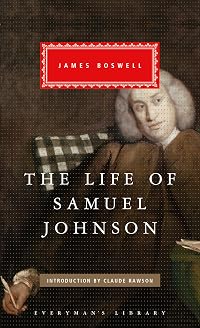
The Life of Samuel Johnson LL.D., with marginal comments and markings . . . by Hester Lynch Thrale Piozzi
by James Boswell (Author)  , Hester Lynch Thrale Piozzi (Annotator), Ernest Rhys (Editor)
On This Page
Description
Boswell's biography of his friend and hero Samuel Johnson is an acknowledged classic, full of humorous anecdote and rich characterisation. Johnson's complex humanity (his depression, fear of death, intellectual brilliance and rough humour) is set within a vivid picture of eighteenth-century London, peopled by personalities of the time such as Sir Joshua Reynolds, John Wilkes, Oliver Goldsmith and David Garrick.Tags
Recommendations















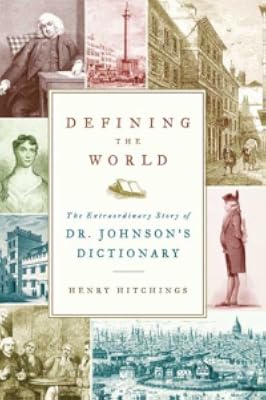



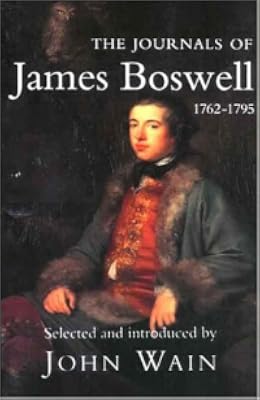



Member Recommendations

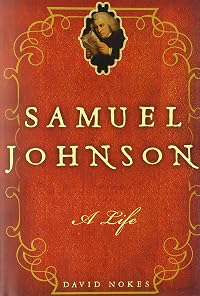
uncultured Easier to read than Life of Johnson, more fun
21

uncultured Learn how Dr. Johnson, 18th century poet, dictionary writer, and wit, turned ghostbuster! Great social history from the wild 18th century.
Cecrow The story behind Boswell's writing of Johnson's autobiography.
Member Reviews
James Boswell and Samuel Johnson were unlikely friends: Boswell was a young Scottish nobleman with a penchant for drinking and whoring, while Johnson was poorer, much more devout (in theory, at least), and a good 30 years older. Yet throughout the course of this monumental work, Boswell describes his reverence for Johnson's intelligence, morality, and literary talents -- a reverence so extreme that Boswell took notes on almost every conversation he ever had with the older man. As a result, this biography is stuffed full of Boswell's personal anecdotes, letters both to and from Johnson, and first-person accounts of other contemporaries who knew him. Near the end of the book, Boswell states: "The character of Samuel Johnson has, I trust, show more been so developed in the course of this work, that they who have honoured it with a perusal, may be considered as well acquainted with him." And indeed, anyone who reads this book will come away with an extremely vivid picture of a remarkable man.
This book is so huge and deals with so many things that I don't quite know what to say about it. At first I was very intimidated, both by its length and by Boswell's flowery 18th-century prose. But even though it's not a quick read, this book contains a wealth of fascinating details about Johnson and the age in which he lived. I was struck by how literary the 18th century was, in the sense that seemingly anyone with a claim to intelligence was churning out books and pamphlets. In that way, Johnson's time is very similar to our own, where everybody can (and does) publish blogs, tweets, and other forms of instantaneous literature. I was also fascinated by Johnson's unique character; though intelligent, he was often pompous, narrow-minded, and abrasive. I frequently found myself underlining various Johnsonian sayings that were wise, or funny, or both -- but I would have hated to be forced to converse with him! Overall, I would recommend this book to anyone interested in the time period or who enjoys very thorough biographies! show less
This book is so huge and deals with so many things that I don't quite know what to say about it. At first I was very intimidated, both by its length and by Boswell's flowery 18th-century prose. But even though it's not a quick read, this book contains a wealth of fascinating details about Johnson and the age in which he lived. I was struck by how literary the 18th century was, in the sense that seemingly anyone with a claim to intelligence was churning out books and pamphlets. In that way, Johnson's time is very similar to our own, where everybody can (and does) publish blogs, tweets, and other forms of instantaneous literature. I was also fascinated by Johnson's unique character; though intelligent, he was often pompous, narrow-minded, and abrasive. I frequently found myself underlining various Johnsonian sayings that were wise, or funny, or both -- but I would have hated to be forced to converse with him! Overall, I would recommend this book to anyone interested in the time period or who enjoys very thorough biographies! show less
Fascinating, for several reasons: that Johnson is an extraordinary character, that London in the 1760s was an exciting place, that Boswell’s anecdotal voice is pleasurable to read - not least because of the cross-currents of ideas (current today) that were being tested as they flowed through and around what is quite an intimate relationship between the two men.
On the one hand, Boswell, when invited to dinner at Johnson’s house had low expectations:
Perhaps it’s that the anecdotes include so many notable encounters amidst the daily routines of eating and visiting that this ‘Life’ can't help but be consumed, not just as an intellectual journey but where tangible remnants in the physical world prompt other depths: I've been fortunate to have visited Dr Johnson's house in London at 17 Gough Square, my sister once gave me a William Hogarth illustration from [b:The Analysis of Beauty|23672505|The Analysis of Beauty (Dover Books of Fine Art)|William Hogarth|https://i.gr-assets.com/images/S/compressed.photo.goodreads.com/books/1429097330l/23672505._SY75_.jpg|916332], and from my maternal grandfather, I have a complete 1805 set of The Plays of William Shakespeare which includes Dr Johnson's Preface.
I'll now exhume my memories of Gough Square, explore Hogarth's The Analysis of Beauty, and read Dr Johnson's Preface to Shakespeare. The danger is that I'll become obsessed with 18th Century London. show less
On the one hand, Boswell, when invited to dinner at Johnson’s house had low expectations:
I supposed we scarcely have knives and forks…but the fact was we had very good soup, a boiled leg of lamb and spinach, a veal pie. and a rice pudding. (p.164)and on the other the pervasive influences of Rousseau (dismissed by Johnson as nonsense)
…the happiness of a savageshow more
life;…’Here I am free and unrestrained, amidst the rude magnificence of Nature, with this Indian woman by my side, and this gun with which I can procure food when I want it: what more can be desired for human happiness?’…Johnson. …gross absurdity. It is sad stuff; it is brutish…(p.166)Johnson has a tendency to make assertions with little foundation or evidence other than the weight of a turn of phrase or contrarian obstinance.
…he loved to display his ingenuity in argument; and therefore would sometimes in conversation maintain opinions which he was sensible were wrong, but in supporting which, his reasoning and wit would be most conspicuous. (p. 209)I found myself noting many passages. One I thought applied to me and I'll note is here for reference
'Sir, a man may be so much of every thing, that he is nothing of any thing'. (p.288)
Perhaps it’s that the anecdotes include so many notable encounters amidst the daily routines of eating and visiting that this ‘Life’ can't help but be consumed, not just as an intellectual journey but where tangible remnants in the physical world prompt other depths: I've been fortunate to have visited Dr Johnson's house in London at 17 Gough Square, my sister once gave me a William Hogarth illustration from [b:The Analysis of Beauty|23672505|The Analysis of Beauty (Dover Books of Fine Art)|William Hogarth|https://i.gr-assets.com/images/S/compressed.photo.goodreads.com/books/1429097330l/23672505._SY75_.jpg|916332], and from my maternal grandfather, I have a complete 1805 set of The Plays of William Shakespeare which includes Dr Johnson's Preface.
I'll now exhume my memories of Gough Square, explore Hogarth's The Analysis of Beauty, and read Dr Johnson's Preface to Shakespeare. The danger is that I'll become obsessed with 18th Century London. show less
At the end of his Life of Johnson, James Boswell admits to many of his subject's faults: Johnson's irascibility, his prejudices, his narrow-mindedness in religion and politics. Johnson was a conservative with a capital C, and he is outright dismissive of many of the important philosophical ideas of his time (there is little consideration of Locke, Hume or Smith, much less Kant).
Instead, Johnson is known has the foremost literary figure of 18th Century London. He was not a man of ideas; rather, he was a man of language, and his greatest achievement was to codify that language in his Dictionary. Again, this project was an essentially conservative endeavor, an attempt to protect and elevate the language so that the uneducated masses could show more be kept in their linguistic place.
The Romantics that followed represented a rebellion against this staid, elitist, infighting group of literati that includes Addison, Steele, Pope and Johnson. Instead of engaging in a game of wits against their intellectual rivals, the Romantics sought to expand the possibilities of language by infusing it with a more natural, vernacular, personal and passionate approach. The writers of the Age of Johnson were essentially backwards looking, translating and retranslating the Greeks and Romans, writing criticism on Shakespeare. The Romantics were visionary and progressive. johnson would have probably scoffed at the likes of a Keats or a Blake as being too radical and impolite in their poetic visions.
Boswell's life of Johnson is confusing in that, while it is a warts and all depiction of the good doctor, the reader is a left with a sense that Boswell looks at his subject through the rose-colored lenses of a literary acolyte. What are we meant to think of this complicated man? show less
Instead, Johnson is known has the foremost literary figure of 18th Century London. He was not a man of ideas; rather, he was a man of language, and his greatest achievement was to codify that language in his Dictionary. Again, this project was an essentially conservative endeavor, an attempt to protect and elevate the language so that the uneducated masses could show more be kept in their linguistic place.
The Romantics that followed represented a rebellion against this staid, elitist, infighting group of literati that includes Addison, Steele, Pope and Johnson. Instead of engaging in a game of wits against their intellectual rivals, the Romantics sought to expand the possibilities of language by infusing it with a more natural, vernacular, personal and passionate approach. The writers of the Age of Johnson were essentially backwards looking, translating and retranslating the Greeks and Romans, writing criticism on Shakespeare. The Romantics were visionary and progressive. johnson would have probably scoffed at the likes of a Keats or a Blake as being too radical and impolite in their poetic visions.
Boswell's life of Johnson is confusing in that, while it is a warts and all depiction of the good doctor, the reader is a left with a sense that Boswell looks at his subject through the rose-colored lenses of a literary acolyte. What are we meant to think of this complicated man? show less
I probably couldn't have stomached an unabridged version of this classic, so it was good to read this abridged version. It is a classic, and I see and know why, but it really should be "Boswell's Conversations with Johnson and some Anecdotes I Picked Up From Others." Sometimes he makes good points, sometimes he is funny. But mostly he is curmudgeonly. As a society we've progressed well past people seeing Johnson's greatness and Boswell's usefulness. It was good to read some bons mot I've seen before in context, discover where some things come from, and find some new ones. For instance, in the 1964 film Zulu the surgeon tells Hook: "Brandy is for heroes." It's here in Boswell's Johnson. Who knew? But, I wouldn't call this mind-altering show more or even an essential text anymore. A good one, but well past the ken of usefulness and entertainingness. Glad I read it, but I'd only recommend it to super-nerds with nothing to do and a love of the eighteenth century. This edition is an old, post-War illustrated edition (from 1946), with some pretty color plates and line drawings, though the latter seemed to peter out early on in the book. It looks like some printing restrictions were still in place, like chapters starting on the same page the previous one ended, etc. (I learned that from reading a new edition of Stewart's Names on the Land).
[I bought this edition, too, for like a dollar at a book sale for the friends of the Dick Smith Library at Tarleton State University in Stephenville, Texas, in about 2002 or so, when i was a senior getting my B.A. in history. So, there is a bit of sentimental attachment to the old hunk of book.] show less
[I bought this edition, too, for like a dollar at a book sale for the friends of the Dick Smith Library at Tarleton State University in Stephenville, Texas, in about 2002 or so, when i was a senior getting my B.A. in history. So, there is a bit of sentimental attachment to the old hunk of book.] show less
This is an abridgment of Boswell’s Life of Samuel Johnson, which as it is runs to over 500 pages. I am glad I read it, but I’m also glad I read an abridgment (an ebook downloaded for free from The Gutenberg Project). In the preface the editor tells us he “omitted most of Boswell’s criticisms, comments, and notes, all of Johnson’s opinions in legal cases, most of the letters, and parts of the conversation dealing with matters which were of greater importance in Boswell’s day than now.” I don’t know I’d have been able to endure the full text--at least first time around. The book grew on me.
Johnson was famous as a literary critic (particularly of Shakespeare) and for his assembly of A Dictionary of the English Language. show more Boswell’s biography of the man has been described as “the most famous single work of biographical art in the whole of literature.” I decided to read it because its one of the works in Good Reading’s “100 Significant Books” and I found it practically a college education by itself reading the books on that list.
I did find it enormously entertaining. Johnson is known for his wit, which is good because Boswell in his narrative initially struck me as singularly humorless--and far too adoring. At one point Boswell admits he “cannot help worshipping” Johnson. And although I in the end I found him rather endearing, at first it was hard for me to find much to adore in Johnson, who seemed through much of this to be such a sanctimonious, misogynist prig. Mind you, Boswell does warn that Johnson loved to be contrary, play devil’s advocate, so it can be hard at times to know what should be taken seriously. Nevertheless, a lot of Johnson’s views, his love of rank and monarchy, with everyone keeping their place, his contempt for democracy, was pretty consistent. I could put it down to the times, were I not aware that after all this is a contemporary of Benjamin Franklin. As an American, Johnson makes me glad we separated from the Mother Country. He was a devout Anglican and Tory and after reading his views I can have no doubt in his place and time I’d be a Whig, his bete noir. For example:
“Sir, a woman’s preaching is like a dog’s walking on his hinder legs. It is not done well; but you are surprized to find it done at all.”
And:
I asked him if it was not hard that one deviation from chastity should so absolutely ruin a young woman. Johnson. "Why no, Sir; it is the great principle which she is taught. When she has given up that principle, she has given up every notion of female honour and virtue, which are all included in chastity.
And:
He thought portrait-painting an improper employment for a woman. “Publick practice of any art... and staring in men’s faces, is very indelicate in a female.” (He also believed a husband would be disgraced by allowing his wife to sing publicly for hire.)
And:
[Johnson] had long indulged most unfavourable sentiments of our fellow-subjects in America. For as early as 1769... he had said of them, “Sir, they are a race of convicts, and out to be thankful for anything we allow them short of hanging. (Johnson wrote a pamphlet attacking the American patriots: Taxation No Tyranny.)
At the same time there were lines that made me smile, or that I did find wise. For instance, Johnson, that compiler of a dictionary, put in this definition of a Lexicographer: “a writer of dictionaries, a harmless drudge.” And I was taken with these two passages:
After we came out of the church, we stood talking for some time together of Bishop Berkeley's ingenious sophistry to prove the non-existence of matter, and that every thing in the universe is ideal. I observed, that though we are satisfied his doctrine is not true, it is impossible to refute it. I shall never forget the alacrity with which Johnson answered, striking his foot with mighty force against a large stone, till he rebounded from it, "I refute it THUS."
And:
To my question, whether we might not fortify our minds for the approach of death, he answered, in a passion, No, Sir, let it alone. It matters not how a man dies, but how he lives. The act of dying is not of importance, it lasts so short a time.” He added (with an earnest look,) 'A man knows it must be so, and submits. It will do him no good to whine.’
And there are so many sayings I’d heard of that I found could be traced to this biography--about second marriages: “the triumph of hope over experience.” “Patriotism is the last refuge of a scoundrel.” “Hell is paved with good intentions.” “No man but a blockhead ever wrote, except for money.”
And this paints not just a picture of Johnson, but his times and contemporaries and companions: Oliver Goldsmith, the writer, David Garrick the actor, Sir Joshua Reynolds, the painter, politician Edmund Burke, in particular, but mentions of historians Edward Gibbons and Mrs Macaulay, novelists Richardson and Fielding and Fanny Burney and Richard Sheridan the playwright--even King George III. I don’t know that I can say I closed the book loving Samuel Johnson--but I did wind up loving Boswell’s biography of him. show less
Johnson was famous as a literary critic (particularly of Shakespeare) and for his assembly of A Dictionary of the English Language. show more Boswell’s biography of the man has been described as “the most famous single work of biographical art in the whole of literature.” I decided to read it because its one of the works in Good Reading’s “100 Significant Books” and I found it practically a college education by itself reading the books on that list.
I did find it enormously entertaining. Johnson is known for his wit, which is good because Boswell in his narrative initially struck me as singularly humorless--and far too adoring. At one point Boswell admits he “cannot help worshipping” Johnson. And although I in the end I found him rather endearing, at first it was hard for me to find much to adore in Johnson, who seemed through much of this to be such a sanctimonious, misogynist prig. Mind you, Boswell does warn that Johnson loved to be contrary, play devil’s advocate, so it can be hard at times to know what should be taken seriously. Nevertheless, a lot of Johnson’s views, his love of rank and monarchy, with everyone keeping their place, his contempt for democracy, was pretty consistent. I could put it down to the times, were I not aware that after all this is a contemporary of Benjamin Franklin. As an American, Johnson makes me glad we separated from the Mother Country. He was a devout Anglican and Tory and after reading his views I can have no doubt in his place and time I’d be a Whig, his bete noir. For example:
“Sir, a woman’s preaching is like a dog’s walking on his hinder legs. It is not done well; but you are surprized to find it done at all.”
And:
I asked him if it was not hard that one deviation from chastity should so absolutely ruin a young woman. Johnson. "Why no, Sir; it is the great principle which she is taught. When she has given up that principle, she has given up every notion of female honour and virtue, which are all included in chastity.
And:
He thought portrait-painting an improper employment for a woman. “Publick practice of any art... and staring in men’s faces, is very indelicate in a female.” (He also believed a husband would be disgraced by allowing his wife to sing publicly for hire.)
And:
[Johnson] had long indulged most unfavourable sentiments of our fellow-subjects in America. For as early as 1769... he had said of them, “Sir, they are a race of convicts, and out to be thankful for anything we allow them short of hanging. (Johnson wrote a pamphlet attacking the American patriots: Taxation No Tyranny.)
At the same time there were lines that made me smile, or that I did find wise. For instance, Johnson, that compiler of a dictionary, put in this definition of a Lexicographer: “a writer of dictionaries, a harmless drudge.” And I was taken with these two passages:
After we came out of the church, we stood talking for some time together of Bishop Berkeley's ingenious sophistry to prove the non-existence of matter, and that every thing in the universe is ideal. I observed, that though we are satisfied his doctrine is not true, it is impossible to refute it. I shall never forget the alacrity with which Johnson answered, striking his foot with mighty force against a large stone, till he rebounded from it, "I refute it THUS."
And:
To my question, whether we might not fortify our minds for the approach of death, he answered, in a passion, No, Sir, let it alone. It matters not how a man dies, but how he lives. The act of dying is not of importance, it lasts so short a time.” He added (with an earnest look,) 'A man knows it must be so, and submits. It will do him no good to whine.’
And there are so many sayings I’d heard of that I found could be traced to this biography--about second marriages: “the triumph of hope over experience.” “Patriotism is the last refuge of a scoundrel.” “Hell is paved with good intentions.” “No man but a blockhead ever wrote, except for money.”
And this paints not just a picture of Johnson, but his times and contemporaries and companions: Oliver Goldsmith, the writer, David Garrick the actor, Sir Joshua Reynolds, the painter, politician Edmund Burke, in particular, but mentions of historians Edward Gibbons and Mrs Macaulay, novelists Richardson and Fielding and Fanny Burney and Richard Sheridan the playwright--even King George III. I don’t know that I can say I closed the book loving Samuel Johnson--but I did wind up loving Boswell’s biography of him. show less
The best way to read Boswell's Life of Johnson is this way: via a somewhat cheesy, "classic library" volume of a Great Classics type of series. The book looks like one of those books you would find in the movie set of a lawyer's office, trying to look distinguished and old, although it feels plasticy.
We learn from other sources (outside of Boswell) that Boswell himself was something of an annoying 18th century star f__ker, but thank God he was - because reading this book is like being a part of a hundred dinner and parlour conversations with the wits and men of power in 18th century England. Funny bastards some of them were, too.
Skill in the art of conversation was the most highly prized talent, and Johnson was considered king of them show more all. This is a world steeped in The Classics, post Renaissance but pre Industrial/Scientific Revolution - that sweet spot where men were expected to venture to come up with a theory and interpretation about anything: how to talk, the way to cook a meal, where to travel, you name it. And Johnson always had an interesting and strong Theory of Anything.
Somehow it seems like nobody worked, they were just able to go to each other's houses, eat too much, drink hard, and talk smack about each other full time. Good times.
Today, Johnson would be considered a blowhard; narrow minded, reactionary, pompous, and egotistical. But that's why he's actually interesting.
This was a cool era because you would address your best friend as "Sir".
Ironically, Boswell's writing holds up better than Johnson's himself, but who cares about that history of literature crap.
If each book had a smell, this book would smell like really good roast beef, with some hard licks thrown in.
Sir, I am,
Your most humble reviewer,
&tc &tc show less
We learn from other sources (outside of Boswell) that Boswell himself was something of an annoying 18th century star f__ker, but thank God he was - because reading this book is like being a part of a hundred dinner and parlour conversations with the wits and men of power in 18th century England. Funny bastards some of them were, too.
Skill in the art of conversation was the most highly prized talent, and Johnson was considered king of them show more all. This is a world steeped in The Classics, post Renaissance but pre Industrial/Scientific Revolution - that sweet spot where men were expected to venture to come up with a theory and interpretation about anything: how to talk, the way to cook a meal, where to travel, you name it. And Johnson always had an interesting and strong Theory of Anything.
Somehow it seems like nobody worked, they were just able to go to each other's houses, eat too much, drink hard, and talk smack about each other full time. Good times.
Today, Johnson would be considered a blowhard; narrow minded, reactionary, pompous, and egotistical. But that's why he's actually interesting.
This was a cool era because you would address your best friend as "Sir".
Ironically, Boswell's writing holds up better than Johnson's himself, but who cares about that history of literature crap.
If each book had a smell, this book would smell like really good roast beef, with some hard licks thrown in.
Sir, I am,
Your most humble reviewer,
&tc &tc show less
Boswell is a good biographer, better than most modern ones. Samuel Johnson was quite a character, one who, even today, would be interesting to know. Whether discussing the rebellion in the North American colonies, what words to place in his dictionary, a critique of Goldsmith's latest drama or what he likes to eat, Johnson lives in this book. So does London.
Members
- Recently Added By
Lists

100 Books to Read in a Lifetime (That Are Older Than 200 Years)
415 works; 176 members

Best Biographies, Autobiographies and Memoirs
465 works; 160 members

Best Biographies
216 works; 26 members

Books to Read in 2015
13 works; 1 member

Favourite Books
1,820 works; 316 members

The Complete Rory Gilmore Reading List
506 works; 5 members

Recommended Reading : 600 Classics Reviewed, Editors of Salem Press, 2015
634 works; 6 members

New Lifetime Reading Plan by Fadiman and Major
225 works; 5 members

Philip Ward's Lifetime Reading Plan
592 works; 22 members
My List
302 works; 1 member

Mustich's 1000 Books to Read Before You Die: A Life Changing List
1,001 works; 20 members

Recommended Literary Books
111 works; 1 member

Greatest Books, allegedly
484 works; 9 members

1964 College Preparatory Reading List
202 works; 8 members
How to Read a Book's Recommended Reading List
309 works; 10 members
Folio Society
831 works; 53 members

The Road to Freedom (Will Durant's 100 Best Books for an Education)
100 works; 8 members

Trinity College Booklist (1951): Class Six, Biography
119 works; 4 members

Harold Bloom - The Western Canon: B. The Aristocratic Age
231 works; 13 members

W. S. Maugham's Reading Suggestions for Spiritual Enrichment: British
24 works; 3 members

Allie's Wishlist
217 works; 2 members
The Telegraph's 110 Best Books: The Perfect Library
101 works; 18 members

CCE 100 Great Books List
145 works; 8 members

CCE 1000 Good Books List
1,033 works; 12 members

GreatBooks Worldview Academy Lists
133 works; 4 members

.
396 works; 1 member
Author Information

James Boswell was born in Edinburgh, Scotland, in 1740 of an old and honored family. As a young man, Boswell was ambitious to have a literary career but reluctantly obeying the wishes of his father, a Scottish Judge, he followed a career in the law. He was admitted to the Scottish bar in 1766. However, his legal practice did not prevent him from show more writing a series of periodical essays, The Hypochondriac (1777-83), and his Journal of a Tour of the Hebrides (1785), was an account of the journey to the outer islands of Scotland undertaken with Samuel Johnson in 1773. In addition, Boswell wrote the impulsively frank Journals, private papers lost to history until they were discovered by modern scholars and issued in a multivolume set. Known during much of his life as Corsican Boswell for his authorship of An Account of Corsica in 1768, his first considerable work, Boswell now bears a name that is synonymous with biographer. The reason rests in the achievement of his Life of Samuel Johnson published in 1791, seven years after the death of Johnson. Boswell recorded in his diary the anxiety of the long-awaited encounter with Johnson, on May 16, 1763, in the back parlor of a London bookstore, and upon their first meeting he began collecting Johnson's conversations and opinions. Johnson was a daunting subject for a biographer, in part because of his extraordinary, outsized presence and, in part because Johnson himself was a pioneer in the art of literary biography. Boswell met the challenge by taking an anecdotal, year-by-year approach to the wealth of biographical material he gathered. show less
James Boswell has a Legacy Library. Legacy libraries are the personal libraries of famous readers, entered by LibraryThing members from the Legacy Libraries group.

All Editions
Some Editions
Awards and Honors
Notable Lists
Series
Belongs to Publisher Series
Work Relationships
Is contained in
Contains
Is abridged in
That Celebrated Letter - from The Life of Johnson - (Interpreting Literature - 5th Edition) by James Boswell
A Good-Humored Fellow - from The Life of Johnson (Interpreting Literature - 5th Edition) by James Boswell
I Mind My Belly Very Studiously - from The Life of Johnson - (Interpreting Literature - 5th Edition) by James Boswell
Has as a supplement
Has as a commentary on the text
Common Knowledge
- Canonical title
- The Life of Samuel Johnson L.L.D. {complete}; The Life of Samuel Johnson LL.D., with marginal comments and markings . . . by Hester Lynch Thrale Piozzi
- Original title
- The Life of Samuel Johnson, LL.D.
- Alternate titles
- The Life of Samuel Johnson, LL.D.
- Original publication date
- 1791
- People/Characters
- Samuel Johnson; James Boswell; Edward Gibbon; Edmund Burke; Oliver Goldsmith; David Garrick
- Important places
- London, England, UK; Lichfield, Staffordshire, England, UK
- First words
- To write the Life of him who excelled all mankind in writing the lives of others, and who, whether we consider his extraordinary endowments, or his various works, has been equalled by few in any age, is an arduous, and may be... (show all) reckoned in me a presumptuous task.
- Quotations
- After we came out of the church, we stood talking for some time together of Bishop Berkeley's ingenious sophistry to prove the nonexistence of matter, and that every thing in the universe is merely ideal. I observed, that tho... (show all)ugh we are satisfied his doctrine is not true, it is impossible to refute it. I never shall forget the alacrity with which Johnson answered, striking his foot with mighty force against a large stone, till he rebounded from it -- "I refute it THUS."
- Last words
- (Click to show. Warning: May contain spoilers.)Such was Samuel Johnson, a man whose talents, acquirements, and virtues, were so extraordinary, that the more his character is considered, the more he will be regarded by the present age, and by posterity, with admiration and reverence.
- Original language
- English
- Disambiguation notice
- Please do not combine this work with its abridged editions, e.g., the Modern Library edition or some Penguin Classics editions.
Classifications
- Genres
- Biography & Memoir, Literature Studies and Criticism, Nonfiction
- DDC/MDS
- 828.609 — Literature & rhetoric English & Old English literatures English miscellaneous writings English miscellaneous writings 1745-1799
- LCC
- PR3533 .B6 — Language and Literature English English Literature 17th and 18th centuries (1640-1770)
- BISAC
Statistics
- Members
- 4,341
- Popularity
- 3,475
- Reviews
- 46
- Rating
- (4.19)
- Languages
- 10 — Chinese, Danish, English, Finnish, French, German, Italian, Norwegian, Spanish, Swedish
- Media
- Paper, Audiobook, Ebook
- ISBNs
- 111
- UPCs
- 1
- ASINs
- 238
